
A college must decide if it wants to offer more evening and weekend classes. This
decision involves answering the economic question of “for whom to produce.”
According to the benefits-received principle, those who receive the benefits from a
government program should pay the taxes that support the program.
“An increase in the price of gasoline will increase the demand for hybrid vehicles.” This
statement is an example of a positive economic statement.
An external benefit is created when you pursue a college education.
If a monopolist engages in first-degree price discrimination, it will produce the same
output level as a perfectly competitive industry.
The total amount of consumer surplus in a market is equal to the below above the
market demand curve and above the market price.
The term “market” refers to trading arrangements by which buyers and sellers come
together.
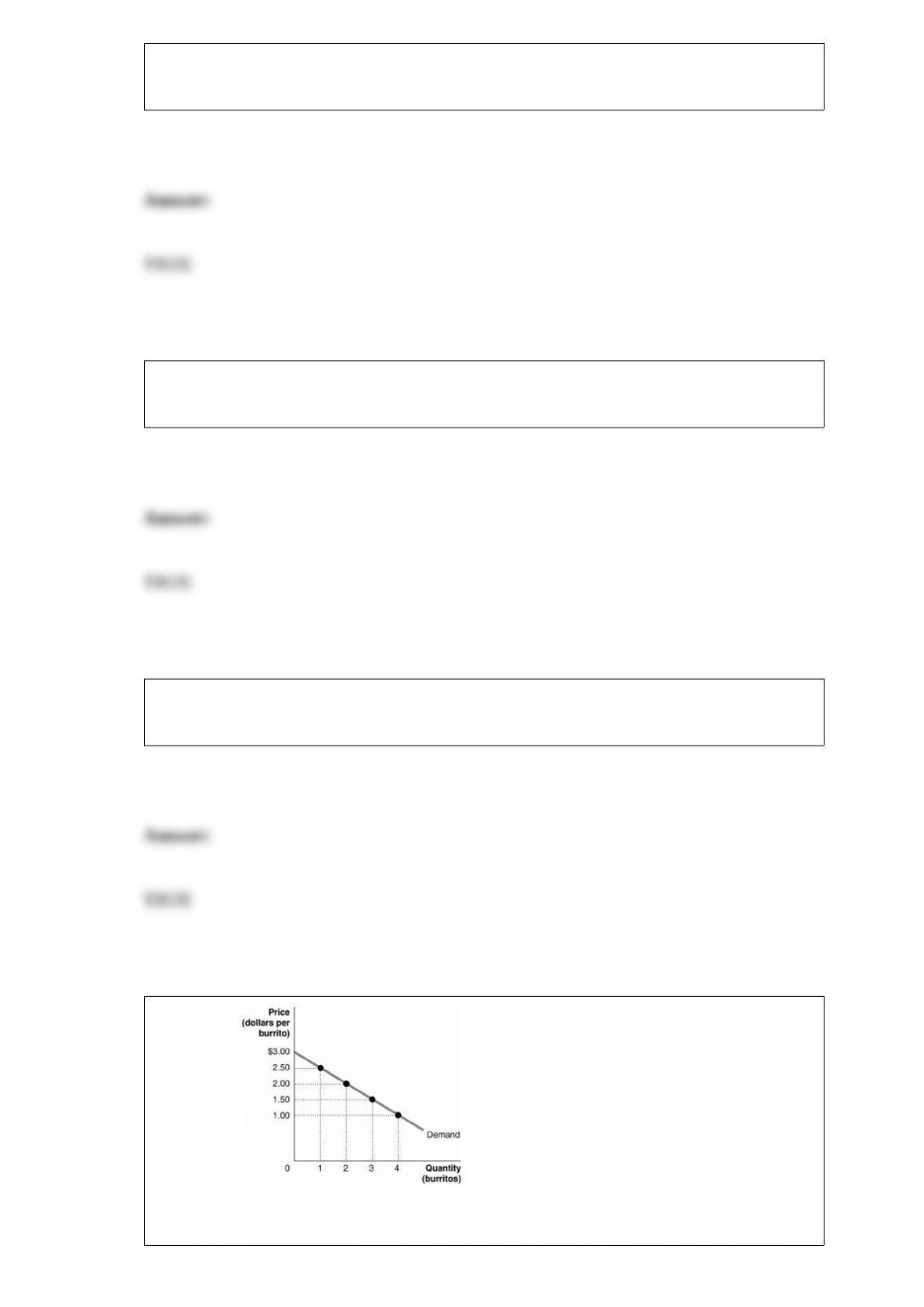
Figure 4-1 Figure 4-1 shows Arnold’s demand curve for
burritos.
What is the total amount that Arnold is willing to pay for 2 burritos?
A) $2.00
B) $4.50
C) $7.50
D) $10.00
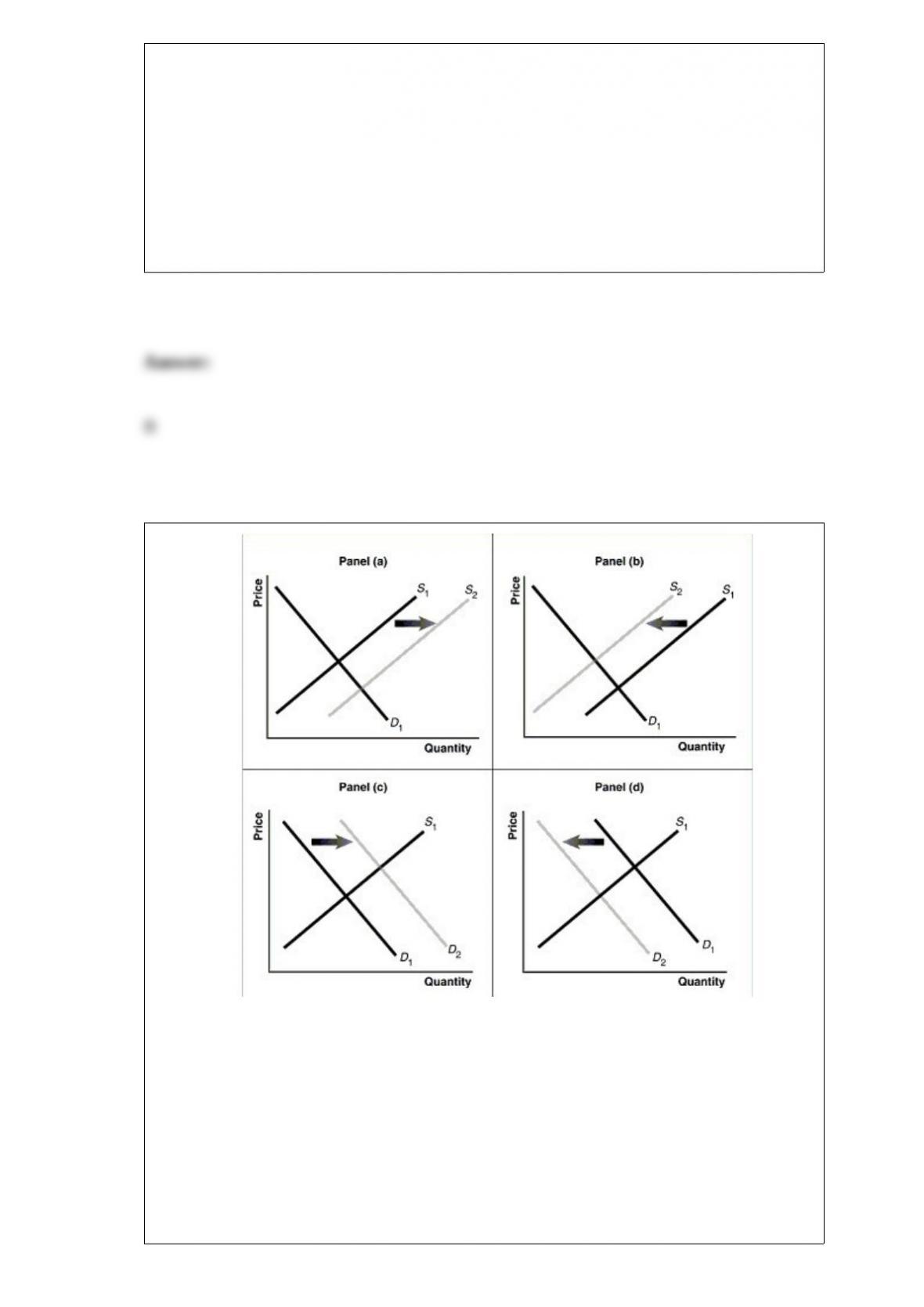
Figure 3-7
Assume that the graphs in this figure represent the demand and supply curves for
coffee. What happens in this market if buyers expect the price of coffee to rise?
A) Panel (a)
B) Panel (b)
C) Panel (c)
D) Panel (d)
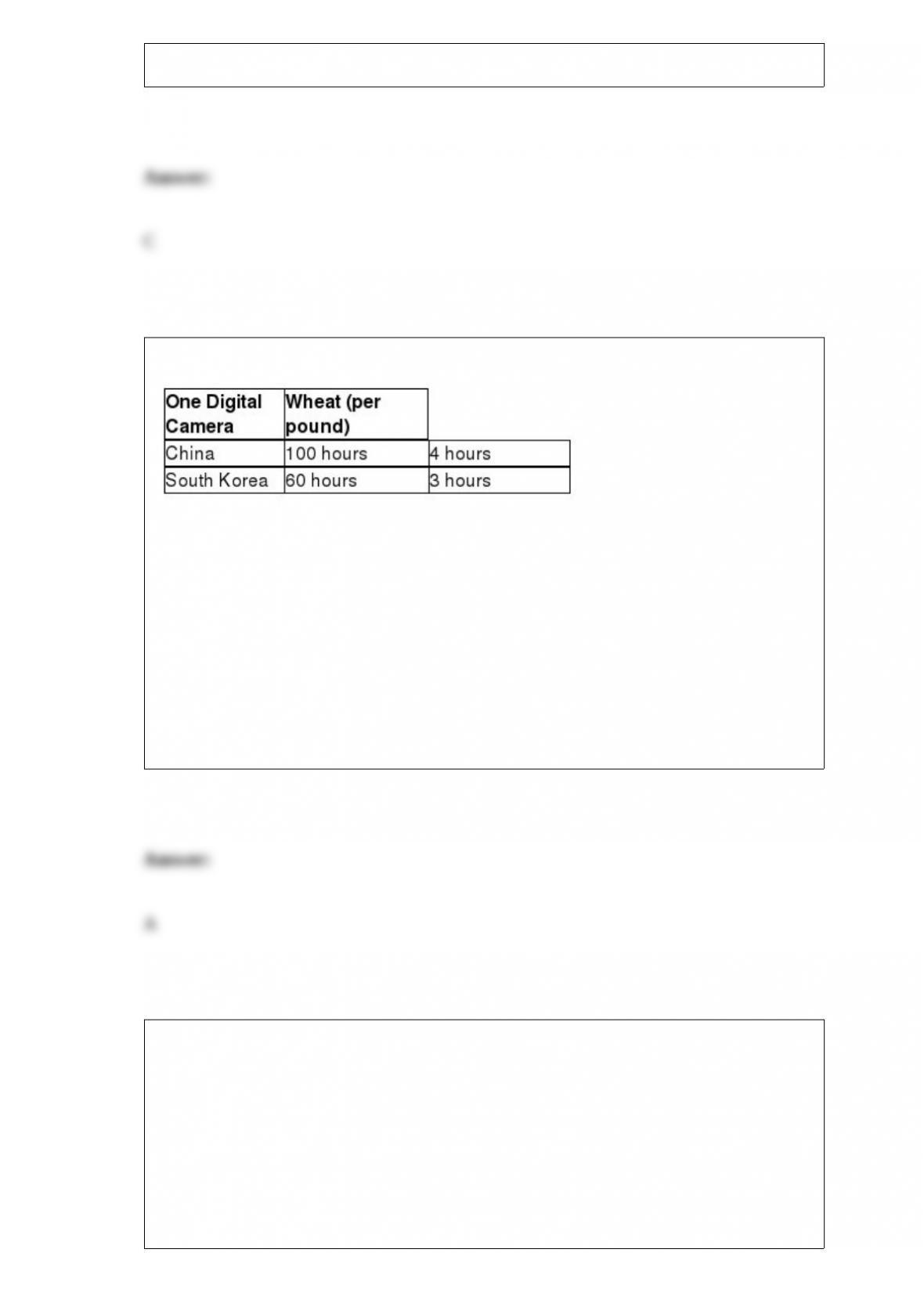
Table 2-8
Table 2-8 shows the number of labor hours required to produce a digital camera and a
pound of wheat in China and South Korea. China has a comparative advantage in the
production of
A) wheat.
B) digital cameras.
C) both products.
D) neither product.
If real GDP in a small country in 2012 is $8 billion and real GDP in the same country in
2013 is $8.3 billion, the growth rate of real GDP between 2012 and 2013
A) is 3.0%.
B) is 3.6%.
C) is 3.75%.
D) cannot be determined from the information given.
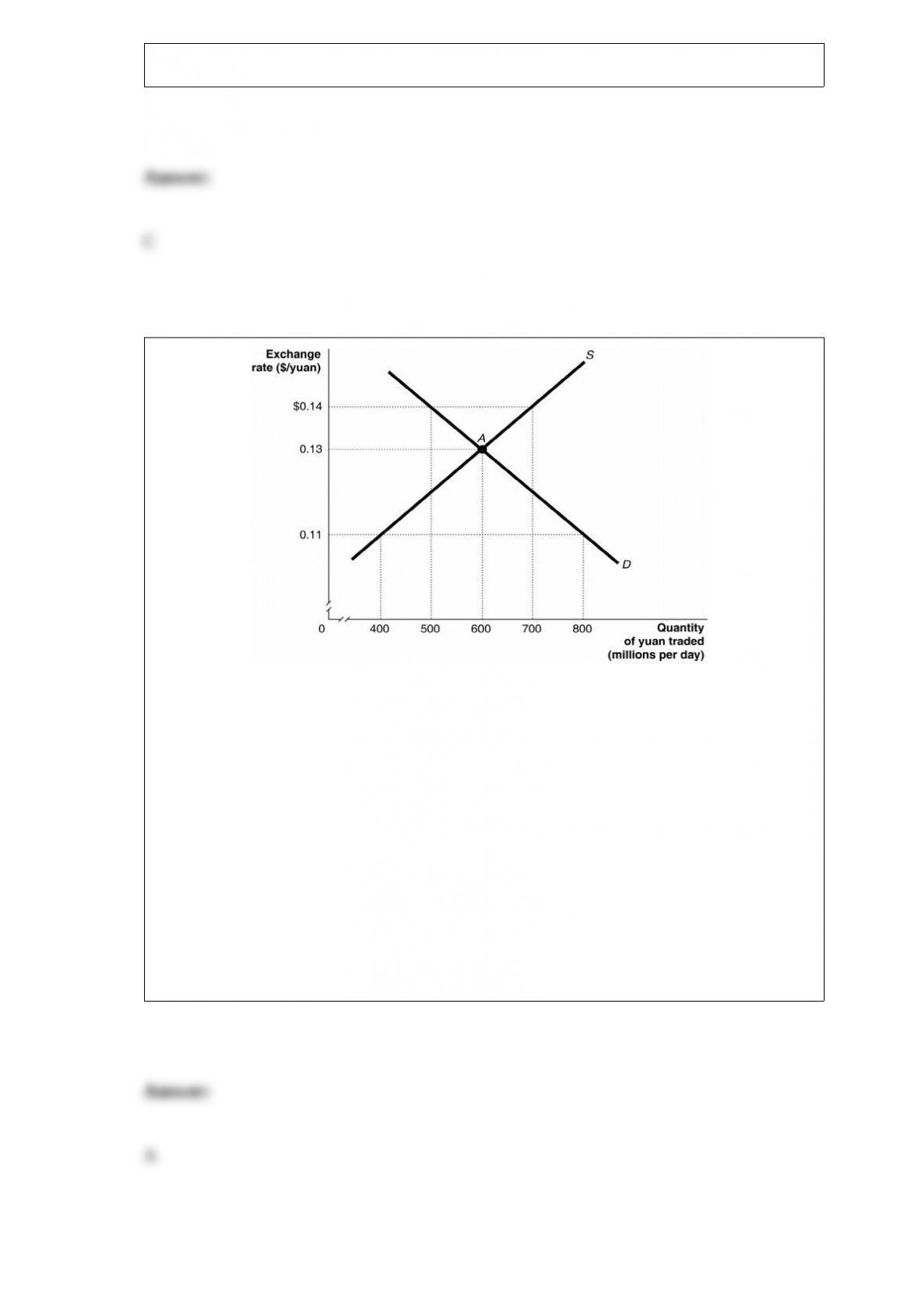
Figure 19-5
The Chinese government pegs the yuan to the dollar, at one of the specified exchange
rates on the graph, such that it undervalues its currency. Using the figure above, this
would generate
A) a shortage of yuan equal to 400 million.
B) a shortage of yuan equal to 200 million.
C) a surplus of yuan equal to 200 million.
D) a surplus of yuan equal to 400 million.
E) a surplus of yuan equal to 300 million.
According to the quantity theory of money, if the money supply grows at 6%, real GDP
grows at 2%, and the velocity of money is constant, then the inflation rate will be
A) 8%.
B) 6%.
C) 4%.
D) 2%.
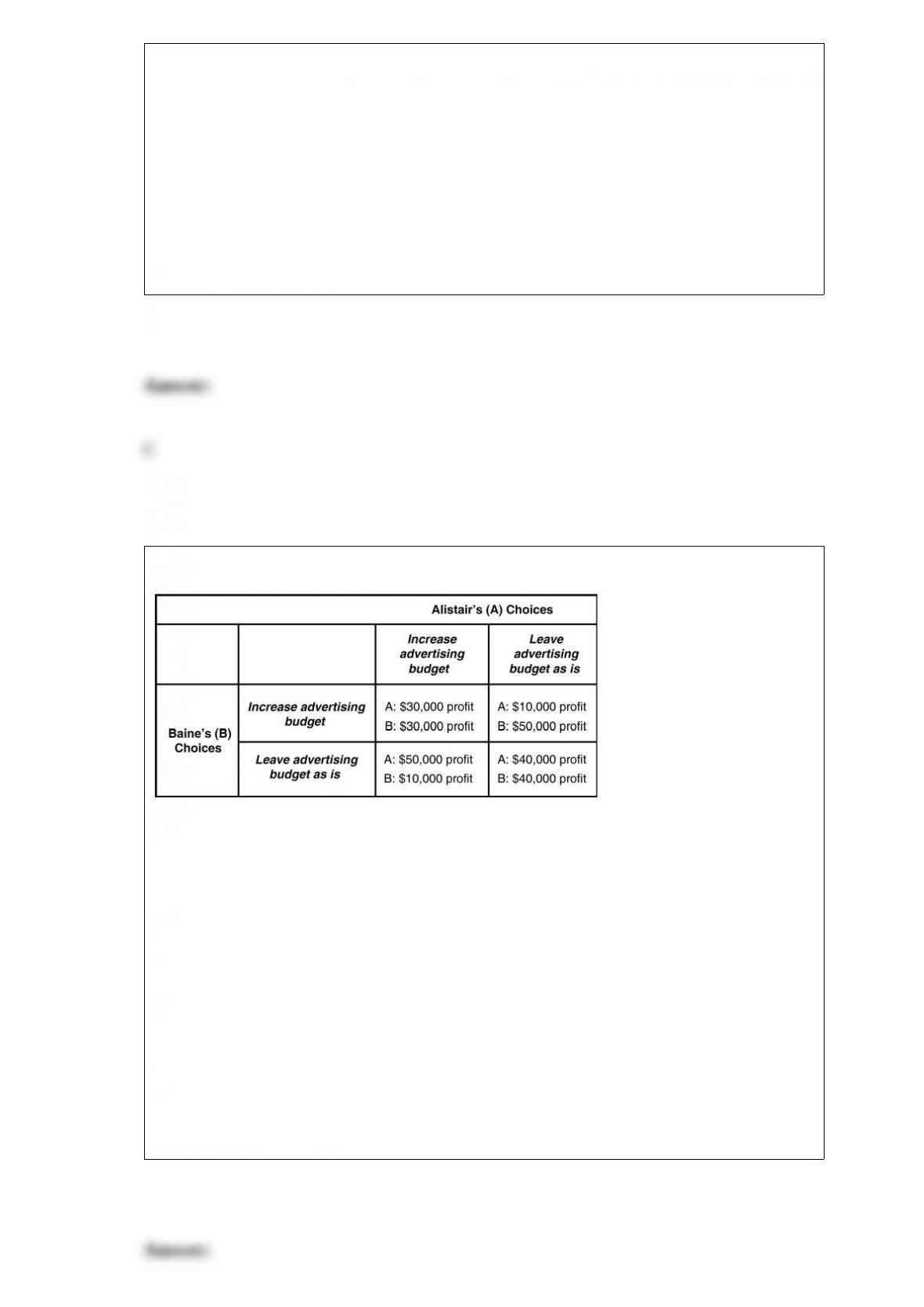
Table 14-4
Alistair Luggage and Baine
Baggage are the only firms selling luggage in the upscale town of Montecito. Each firm
must decide on whether to increase its advertising spending to compete for customers.
If one firm increases its advertising budget but the other does not, then the firm with the
higher advertising budget will increase its profit. Table 14-4 shows the payoff matrix
for this advertising game. Does Alistair have a dominant strategy and if so, what is it?
A) Yes, Alistair should increase its advertising budget.
B) Yes, Alistair should keep its advertising budget as is.
C) There are two dominant strategies: if Baine increases its advertising budget, then
Alistair’s best bet is to keep its budget the same but if Baine does not increase its
spending then Alistair should raise its advertising budget
D) No, there is no dominant strategy.
Scenario 1-2
Suppose a hat manufacturer currently sells 2,000 hats per week and makes a profit of
$5,000 per week. The plant owner observes, “Although the last 300 hats we produced
and sold increased our revenue by $1,000 and our costs by $1,100, we are still making
an overall profit of $5,000 per week so I think we’re on the right track. We are
producing the optimal number of hats.”
Using marginal analysis terminology, another economic term for the incremental
revenue received from the sale of the last 300 hats is
A) gross earnings.
B) marginal revenue.
C) sales revenue.
D) gross profit.
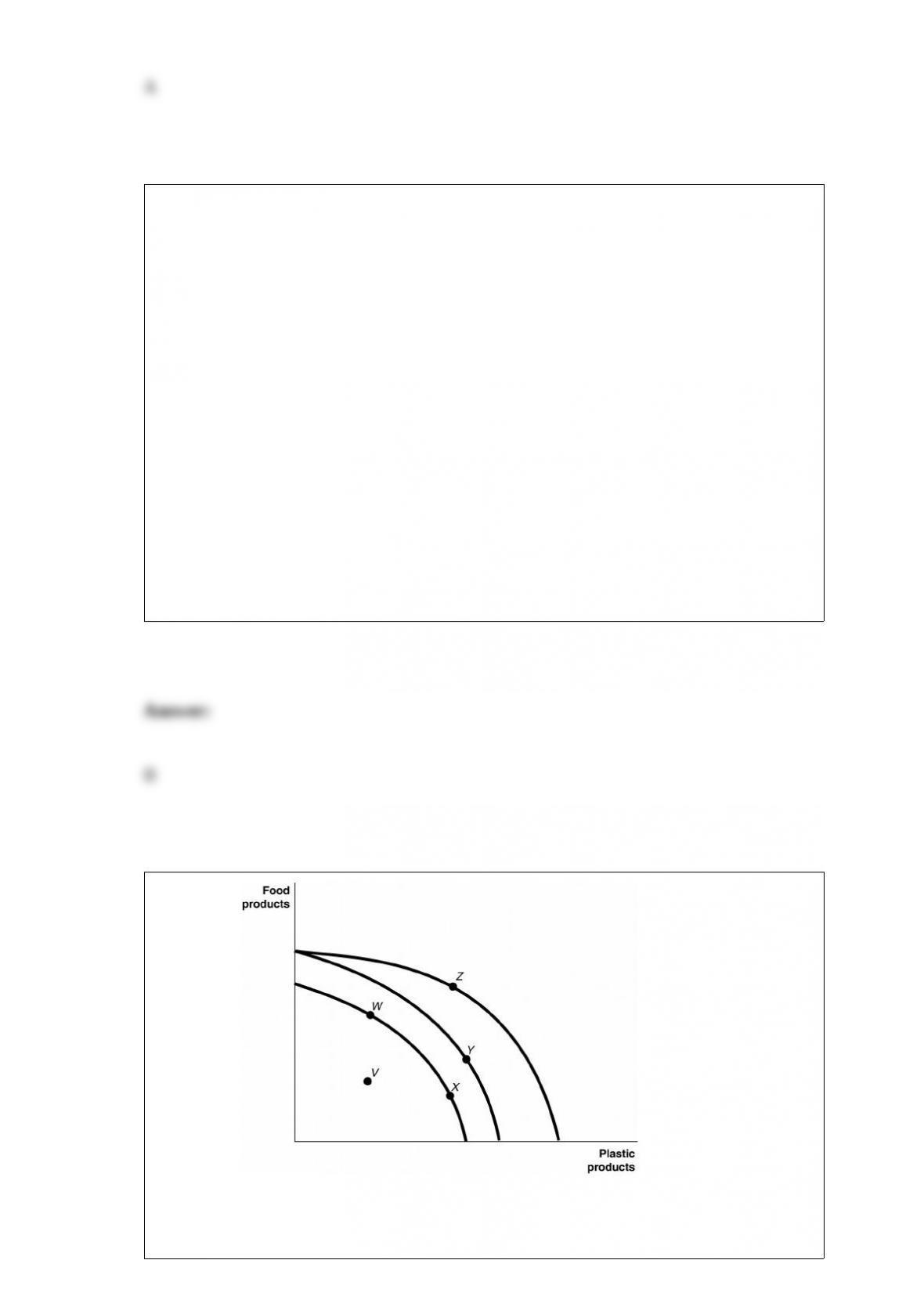
Figure 2-4 Figure 2-4 shows
various points on three different production possibilities frontiers for a nation. A
movement from ________ could occur because of an influx of immigrant labor.

A) X to W
B) X to Y
C) W to V
D) W to X
If the painting firms in a city sign a contract outlining a pricing plan, they are involved
in
A) price competition.
B) a legal form of business contract in the United States.
C) collusion.
D) price regulation.
During 2008, oil price increases
A) shifted the short-run aggregate supply curve farther to the left than similar increases
had 30 years earlier.
B) shifted the aggregate demand curve farther to the right than similar increases had 30
years earlier.
C) did not shift the short-run aggregate supply curve as far to the left as similar
increases had 30 years earlier.

D) shifted the aggregate demand curve farther to the left than similar increases had 30
years earlier.
Studies have shown that drinking one glass of red wine per day may help prevent heart
disease. Assume this is true, and a fungal disease destroys a large portion of the grape
harvest of California vineyards. In the market for red wine, these two developments
would
A) increase demand and increase supply, resulting in an increase in the equilibrium
quantity and a decrease in the equilibrium price of red wine.
B) increase demand and decrease supply resulting in a decrease in both the equilibrium
quantity and the equilibrium price of red wine.
C) increase demand and decrease supply, resulting in an increase in the equilibrium
price and an uncertain effect on the equilibrium quantity of red wine.
D) increase demand and decrease supply, resulting in an increase in both the
equilibrium price and the equilibrium quantity of red wine.
Which of the following offers the best reason why restaurants are not considered to be
perfectly competitive firms?
A) Restaurants do not sell identical products.
B) Restaurants compete in small market areas€neighborhoods and cities€rather than in
regional or national markets. Therefore, restaurants are not small relative to their market
size.
C) Restaurants usually have entry barriers in the form of zoning restrictions and health

regulations.
D) Restaurants have significant liability costs that perfectly competitive firms do not
have; for example, customers may sue if they suffer from food poisoning.
Which of the following is motivated by an efficiency concern?
A) In 2009, the Obama administration increased unemployment benefits.
B) As part of an economic stimulus package, each taxpayer received a $3,000 tax rebate
check.
C) Following a six-month drought, a city banned homeowners from watering their
lawns in an effort to conserve water.
D) Some U.S. colleges have cut back on merit scholarships since these programs siphon
money from need-based programs, thus harming lower-income students with greater
financial need.
How were countries whose industries competed with Chinese industry affected by a
yuan that was pegged to the dollar?
A) Because the yuan was undervalued at the pegged exchange rate, the level of Chinese
exports remained higher than they would have been if the exchange rate was allowed to
float freely.
B) Because the yuan was overvalued at the pegged exchange rate, competing firms
from other countries feared that abandoning the peg would lead to an increase in
Chinese exports.
C) Competitors feared that the declining value of the dollar would continue to make
Chinese goods more expensive.
D) Because China’s population is so large relative to other countries, the pegged
exchange rate made the goods of foreign competing firms much less expensive than
domestic Chinese goods.
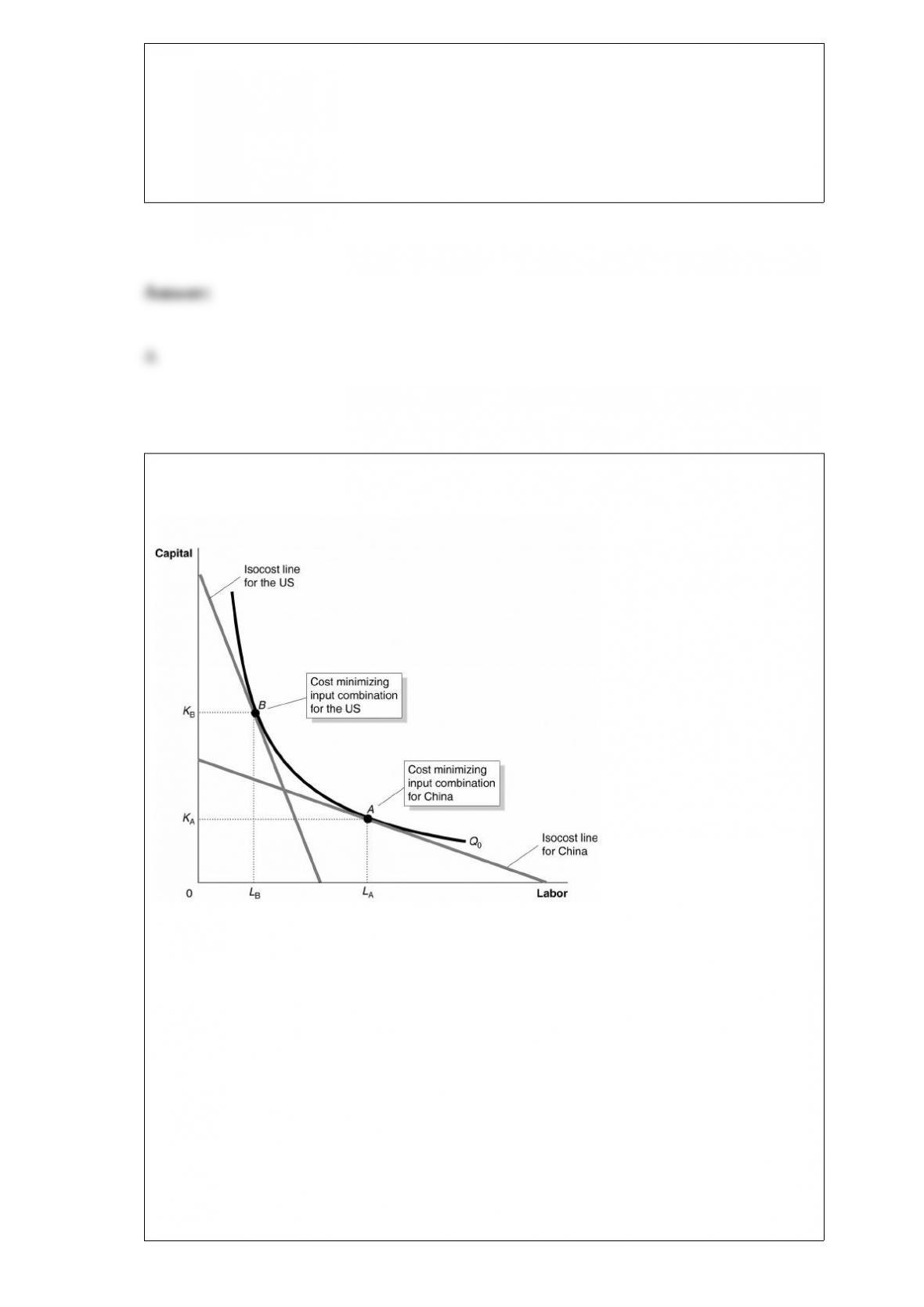
Figure 11-14
Figure 11-14 shows the
optimal input combinations for the production of a given quantity of cotton in the
United States and in China. Which of the following could explain why the United States
and China use different input combinations to produce a given quantity of cotton and
yet, each country produces that quantity at the lowest possible cost?
A) because the prices of inputs are not the same for the two countries: labor is relatively
lower-priced and capital is relatively higher priced in the United States
B) because the prices of inputs are not the same for the two countries: labor is relatively
lower-priced and capital is relatively higher priced in China
C) because the United States has more sophisticated technology and therefore is more
efficient in cotton production

D) because the marginal product per dollar spent on capital yields a higher return in the
United States than in China
If a corporation earns a profit, how do owners of the firm share in the profit?
A) through coupon payments on that firm’s bonds
B) through dividend payments on shares of that firm’s stock
C) by selling any bonds or stocks owned and realizing a capital gain
D) by raising the interest rate on bonds
When individuals use ________ about an economic variable to make a decision,
expectations are rational.
A) only historical information
B) only information announced by the Fed
C) all available information
D) only information garnered in the private sector
What is cost-plus pricing? Why do some firms use cost-plus pricing even when the
firms’ managers have the resources to devise a pricing strategy that would result in
greater profits?
How do economists generally rate the Fed’s performance in the 1980s, 1990s, and the
early 2000s? Has the public been supportive of their policies? Is there anything on the
horizon for the Fed that might cause the public concern?
How does a firm raise external funds through direct finance?
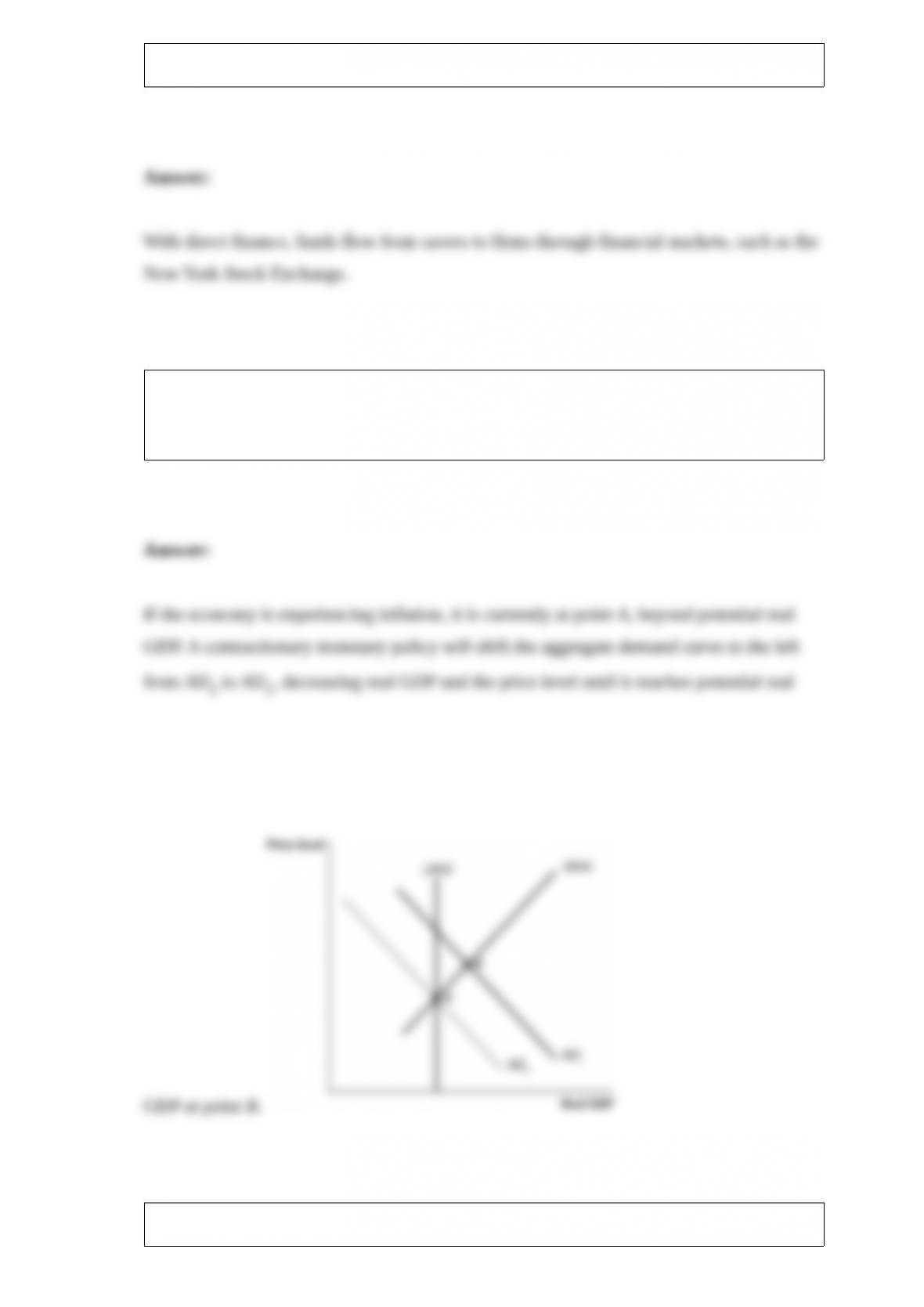
Use a graph to show the effects of a contractionary monetary policy to reduce inflation
and move an economy back to potential real GDP. Explain what happens to aggregate
demand, real GDP, and the price level.
What is producer surplus? What does producer surplus measure?
Describe the pattern of growth rates in real GDP per hour worked in the United States
since the early nineteenth century. Has output per hour worked consistently increased at
the same rate? Explain.