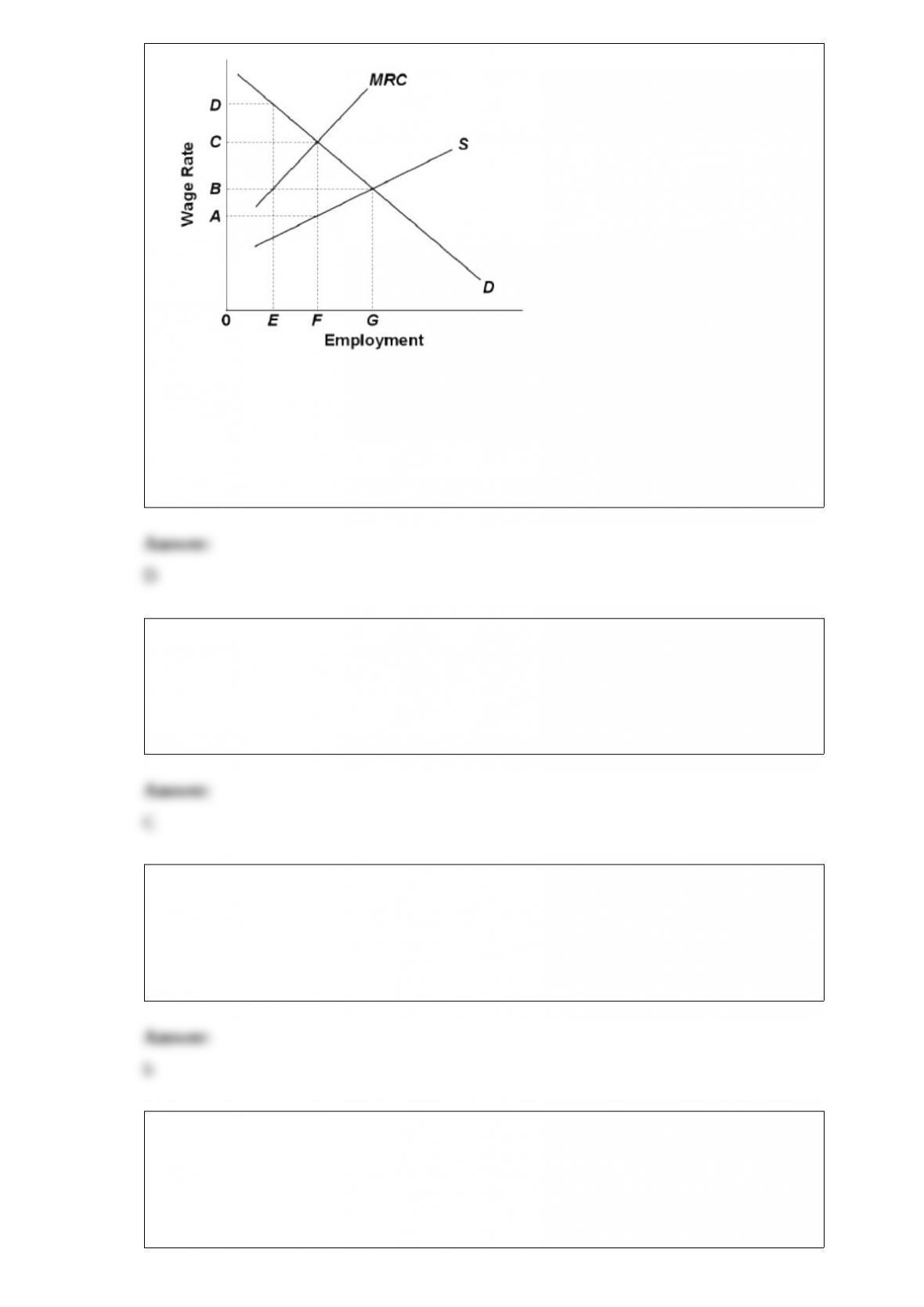
1)
Refer to the above diagram. If this labor market is monopsonistic, the wage rate and
level of employment respectively will be:
A.D and E.
B.C and F.
C.B and F.
D.A and F.
2) The economist who advocated a single tax on land was:
A.Adam Smith.
B.John Maynard Keynes.
C.Henry George.
D.Milton Friedman.
3) an economy is enlarging its stock of capital goods:
a.when net investment exceeds gross investment.
b.when gross investment exceeds replacement investment.
c.whenever gross investment is positive.
d.when replacement investment exceeds gross investment.
4) the short-run shut-down point for a purely competitive firm occurs:
a.at any point where price is less than the minimum avc.
b.between the two break-even points.
c.at any point where total revenue is less than total cost.
d.at any point where the firm is not making an economic profit.
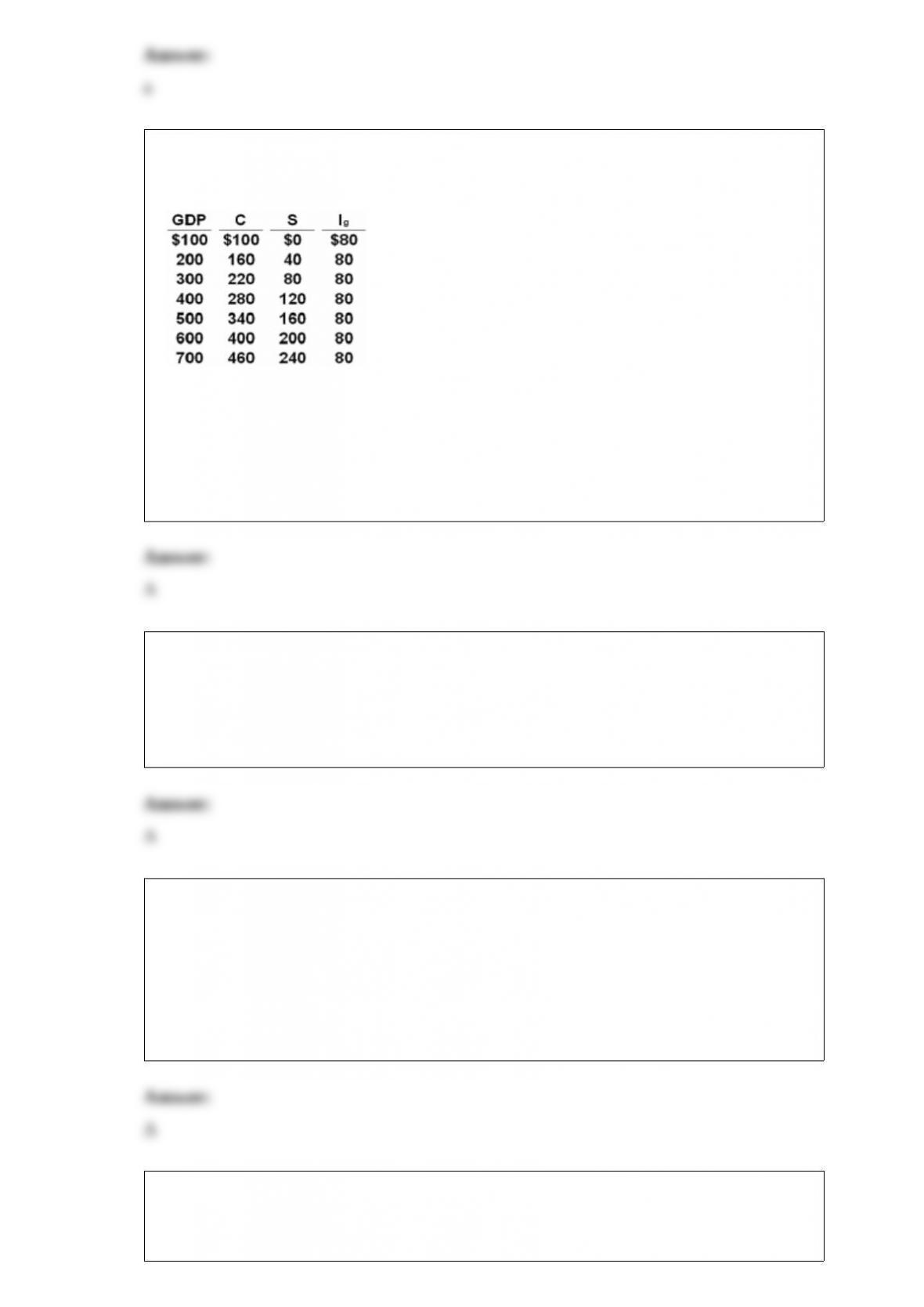
5) The following information is for a closed economy:
Refer to the above information. If in addition to spending $80 billion at each level of
GDP, government imposes a lump-sum tax of $100:
A.equilibrium GDP will now be $350.
B.equilibrium GDP will now be $400.
C.equilibrium GDP will now be $300.
D.the equilibrium GDP cannot be determined.
6) The crowding model is primarily concerned with explaining:
A.occupational discrimination.
B.human-capital discrimination.
C.the size of the discrimination coefficient.
D.why affirmative action is reverse discrimination.
7) Which of the following is most likely to increase the 4-firm concentration ratio of a
particular industry?
A.a horizontal merger between two of the industry’s largest firms.
B.a vertical merger between one of an industry’s largest firms and one of the many input
suppliers in the resource market.
C.a conglomerate merger involving one of the industry’s major firms.
D.an agreement by all the industry firms to divide up the market among them.
8) The following consolidated balance sheet for the commercial banking system.
Assume the required reserve ratio is 30 percent. All figures are in billions.
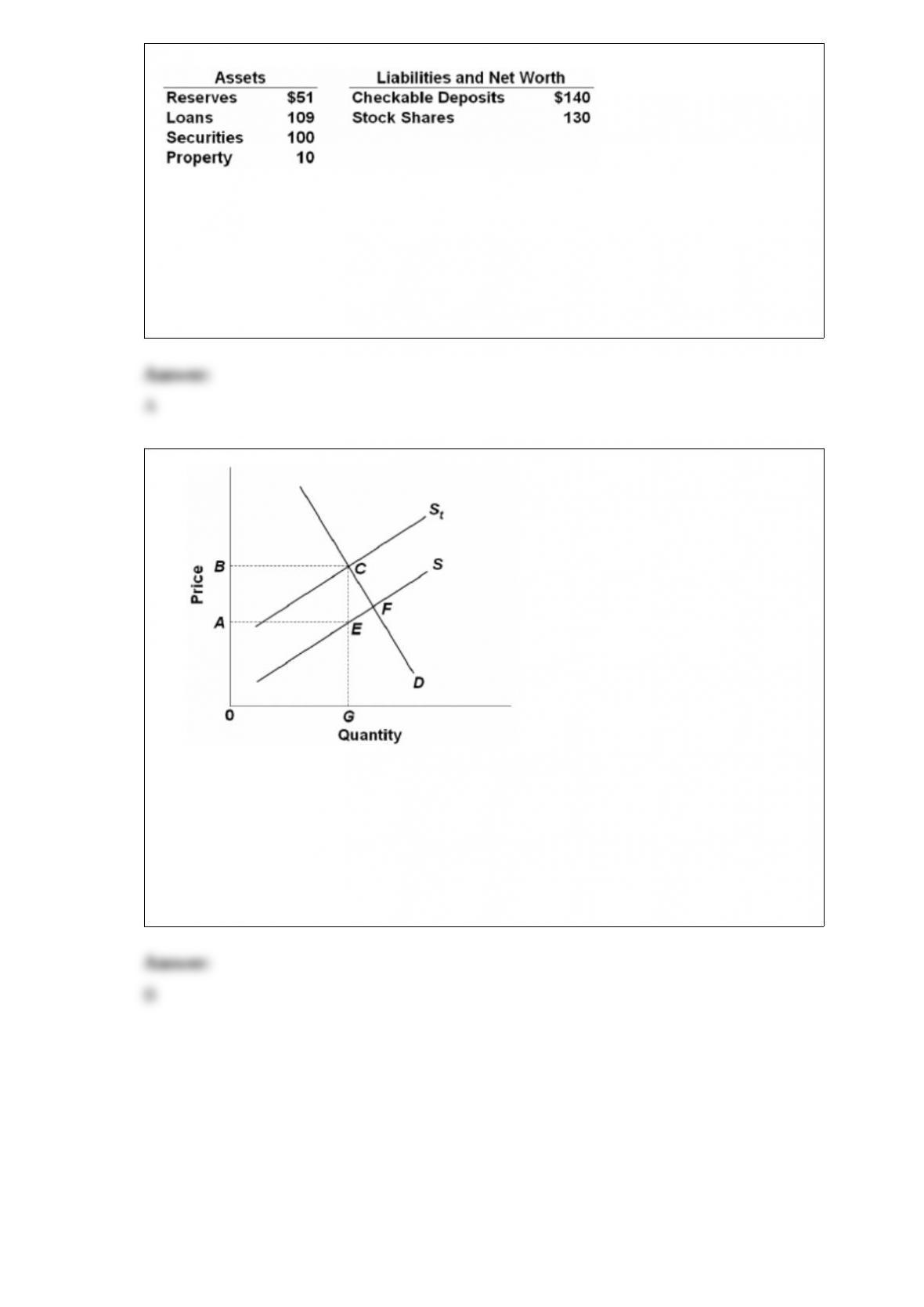
Refer to the above data. The maximum amount by which the commercial banking
system can expand the supply of money by lending is:
A.$30 billion.
B.$23.1 billion.
C.$27 billion.
D.$15 billion.
9)
Refer to the above figure in which S is the before-tax supply curve and St is the supply
curve after an excise tax is imposed. The total tax collection from this excise tax will be
area:
A.ABCE + ECF.
B.ABCE.
C.ECF.
D.0BCG.
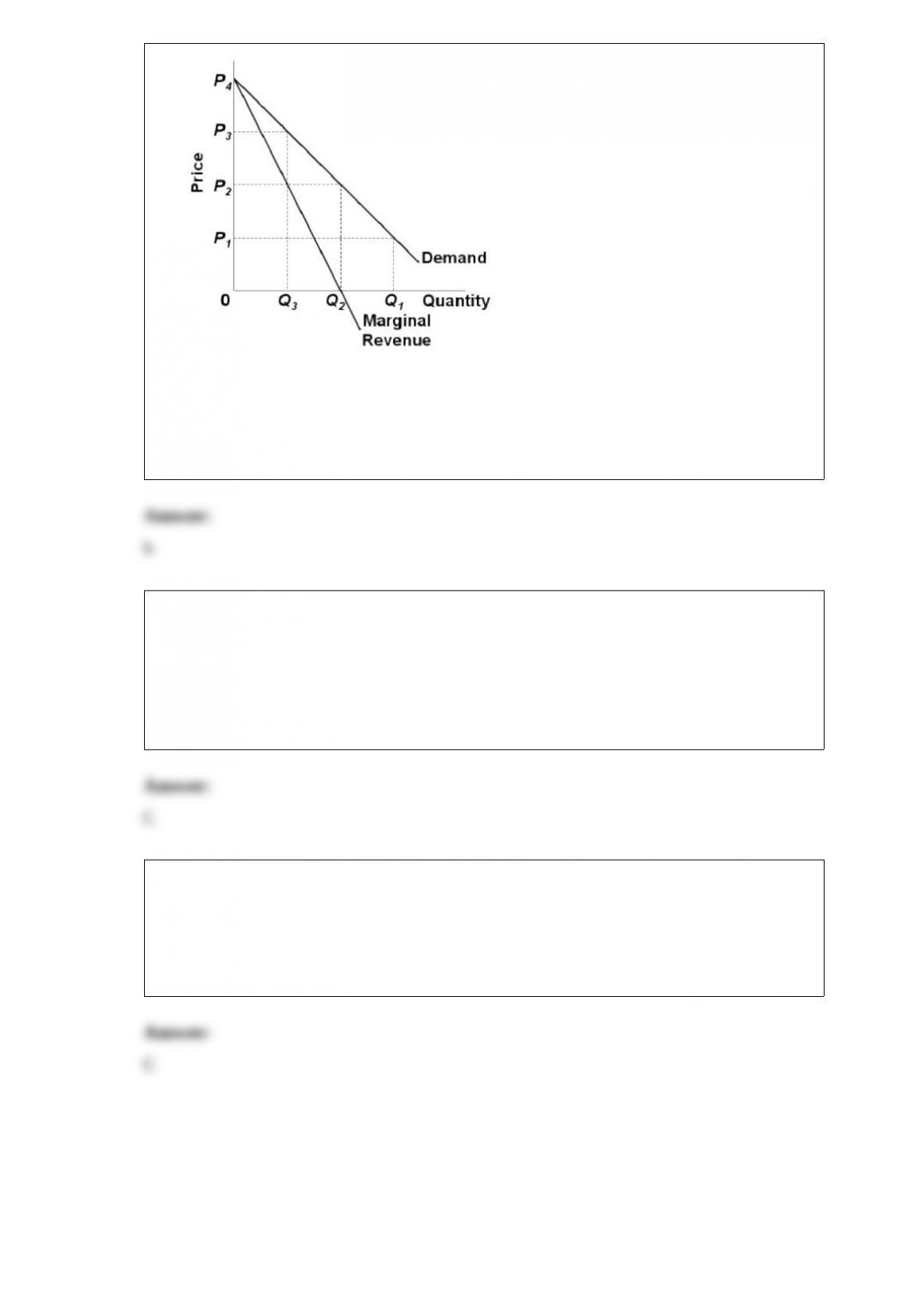
10)
refer to the above diagram. demand is relatively inelastic:
a.at price p3.
b.at any price below p2.
c.in the p2p4 price range.
d.in the p2p3 price range.
11) If investment increases by $10 billion and the economy’s MPC is .8, the aggregate
demand curve will shift:
A.leftward by $50 billion at each price level.
B.rightward by $10 billion at each price level.
C.rightward by $50 billion at each price level.
D.leftward by $40 billion at each price level.
12) Which of the following describes the identity embodied in a balance sheet?
A.Net worth plus assets equal liabilities
B.Assets plus liabilities equal net worth
C.Assets equal liabilities plus net worth
D.Assets plus reserves equal net worth
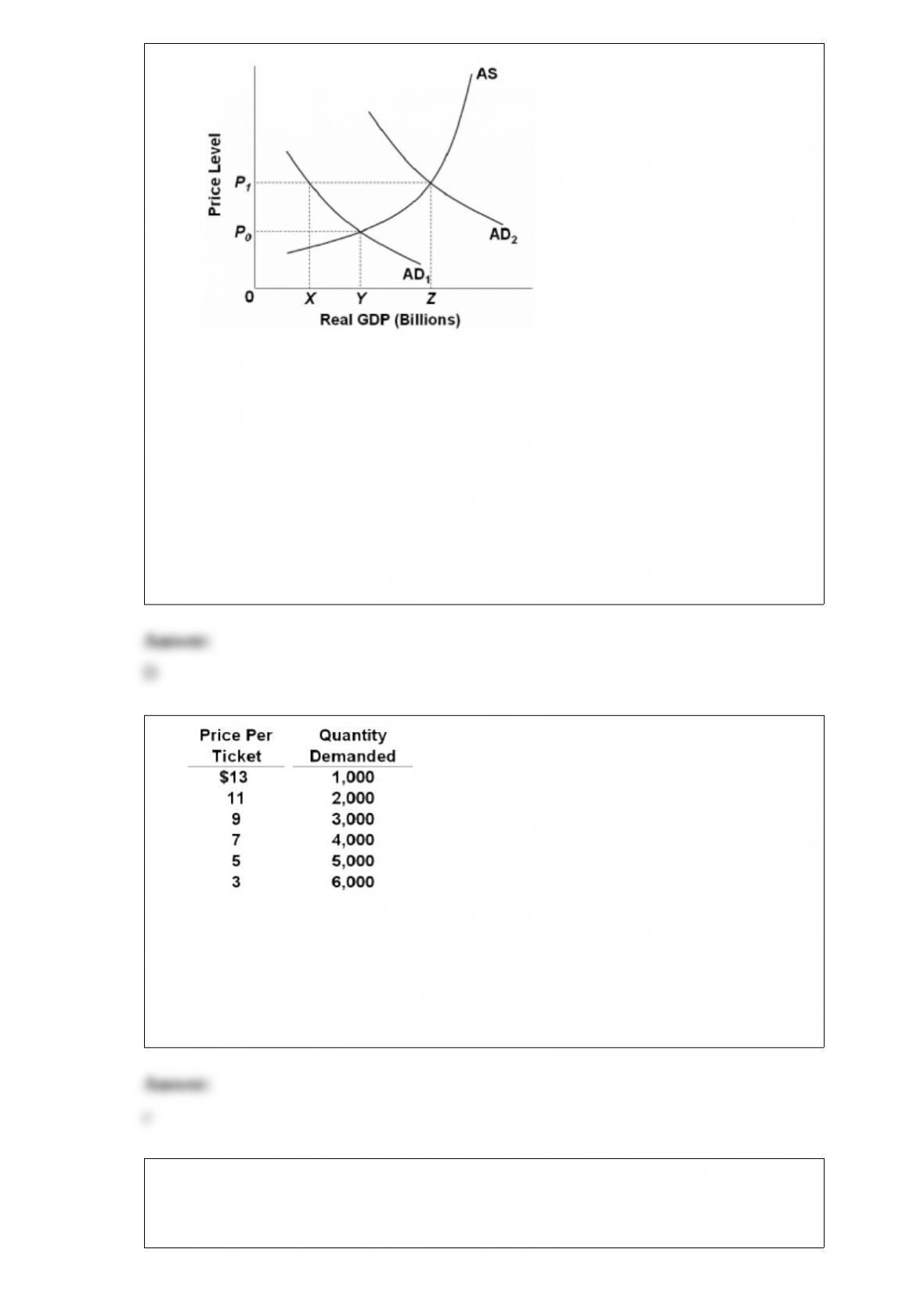
13)
Refer to the above figure. Suppose that the economy is currently operating at the
intersection of AS and AD2, and that the full employment level of output is Y. Because
of the ratchet effect:
A.it is impossible to enact fiscal policy that will both reduce output to Y and reduce
demand-pull inflation.
B.fiscal policy will need to be more contractionary to reduce output to Y than if no
ratchet effect occurred.
C.tax increases will be more effective at reducing demand-pull inflation than cuts in
government spending.
D.contractionary fiscal policy that shifts aggregate demand to AD1 will cause real GDP
to fall below its full employment level.
14)
refer to the above information and assume the stadium capacity is 5,000. if the
mudhens’ management charges $7 per ticket:
a.some fans who want to see the game will find that tickets are not available.
b.there will be 2,000 empty seats.
c.there will be 1,000 empty seats.
d.the game will be sold out.
15) The aggregate demand curve is:
A.vertical if full employment exists.
B.horizontal when there is considerable unemployment in the economy.
C.downsloping because of the interest-rate, real-balances, and foreign purchases effects.
D.downsloping because production costs decrease as real output rises.
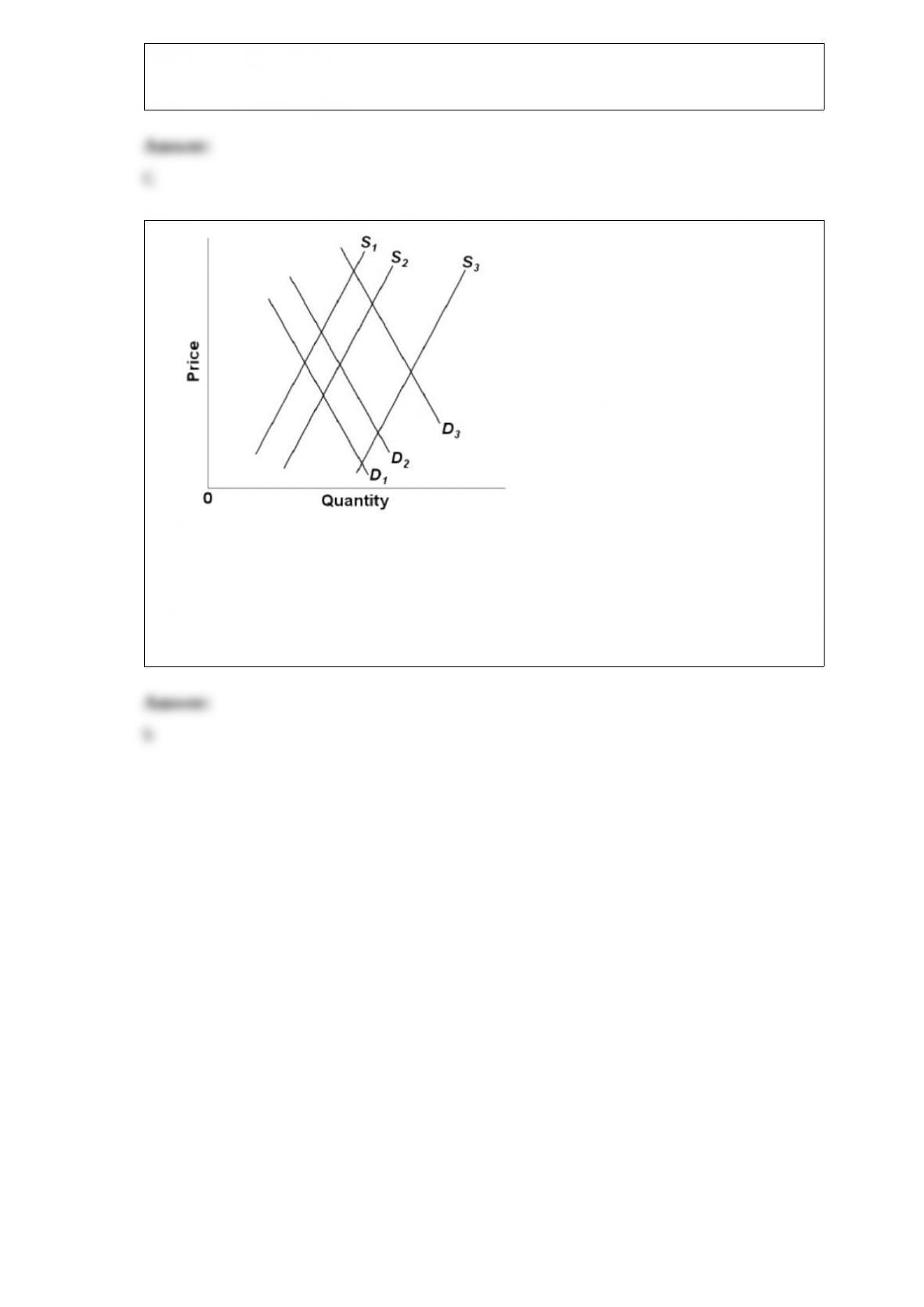
16)
refer to the above diagram that shows the market for u.s. health care. other things equal,
which of the following would shift the demand curve for medical care from d1 to d2?
a.higher copayments and deductibles in insurance policies.
b.an aging population.
c.cutbacks in the government’s medicaid program.
d.restrictions by firms on the eligibility of part-time workers for medical benefits.