Other things constant, the price elasticity of demand for a product will be smaller (more
inelastic) if:
a. people spend a large share of their income on the product.
b. people spend an insignificant share of their income on the product.
c. the population in the market area is large.
d. there are many good substitutes for the product.
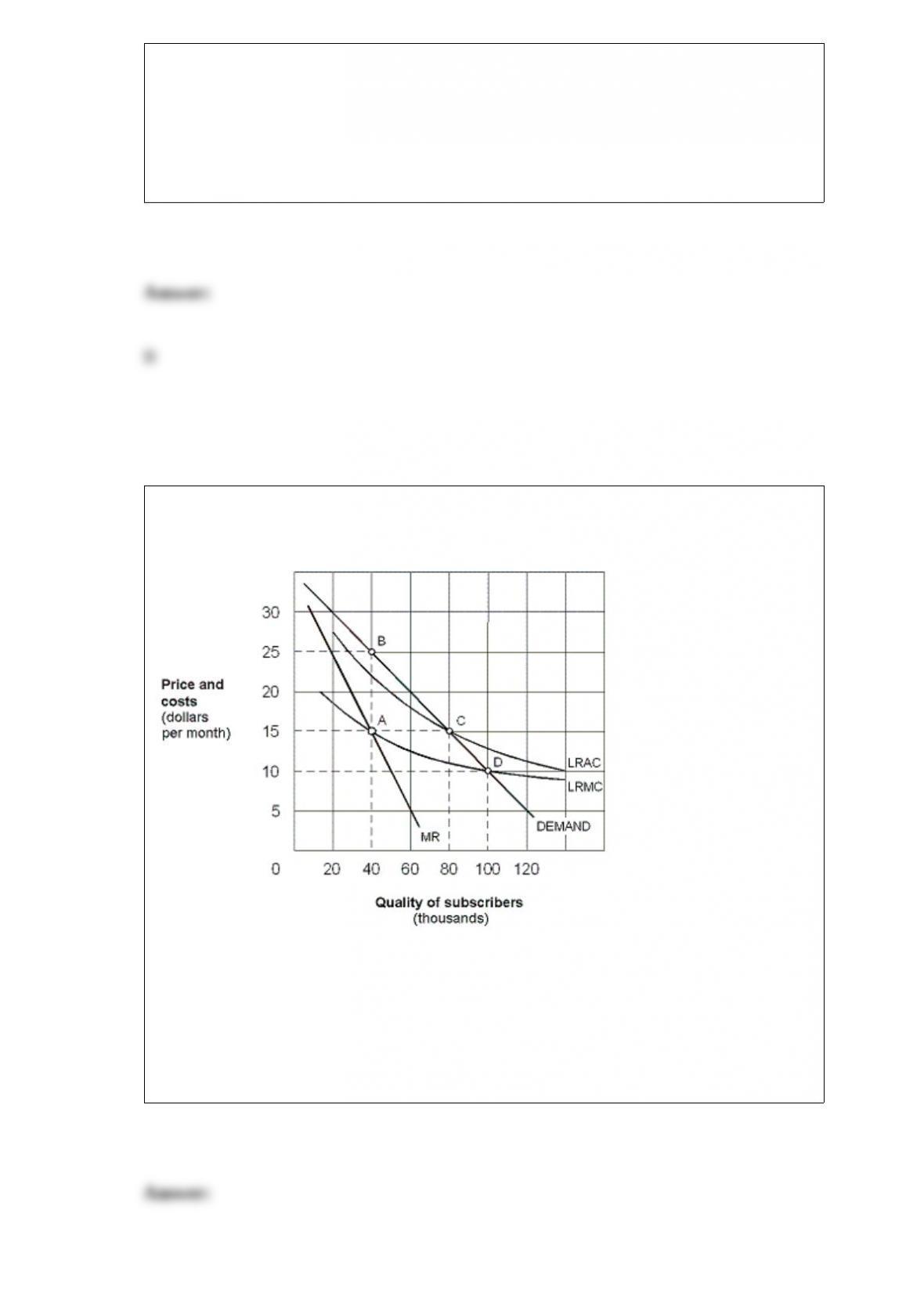
Exhibit 13-1 Cable television monopolist
As shown in Exhibit 13-1, an unregulated cable television monopolist would operate at
which point on its demand curve:
a. A. c. C.
b. B. d. D.

The law of supply states that:
a. there is a negative relationship between the price of a good and the quantity of it
purchased by suppliers.
b. there is a positive relationship between the price of a good and the quantity that
buyers choose to purchase.
c. there is a positive relationship between the price of a good and the quantity of it
offered for sale by suppliers.
d. at a lower price, a greater quantity will be supplied.
For a competitive firm, workers’ marginal revenue product equals the marginal product
of labor times the:
a. wage rate.
b. price of the firm’s product.
c. interest rate.
d. firm’s total revenue.
Which of the following would be most likely to improve the standard of living of
people in less-developed nations?
a. The development of strong labor unions.
b. An increase in foreign investment.

c. An increase in the share of the population under 15 years of age.
d. Higher tariffs and the imposition of other restraints designed to restrict international
trade.
Which of the following is not included in the current account?
a. Exports of goods. c. U.S. capital inflow and outflow.
b. Imports of goods. d. Unilateral transfers.
A demand curve shows the relationship between:
a. price and quantity demanded.
b. the demand and supply schedules.
c. demand and supply equilibrium.
d. leakages and injections.
e. price and technology.
If a decrease in the price of theater tickets increases the total revenue earned by the

theater, this is evidence that demand is:
a. price elastic. c. unitary elastic.
b. price inelastic. d. perfectly inelastic.
Pricing and output determination under an oligopoly is more complicated than pricing
and output determinations in other industries. The primary reason for the complication
is the:
a. fewness of firms.
b. brand loyalty of consumers.
c. powerful effect of advertising.
d. variability of concentration ratios.
e. mutual interdependence of firms.
Which of the following is not a characteristic of the structure of perfectly competitive
markets?
a. Each individual firm is small in size relative to the overall market.
b. Few sellers.
c. Homogeneous product.
d. Easy, low cost entry and exit.

Alcoa had a monopoly in the U.S. aluminum market from the late nineteenth century
until the end of World War II. Which barrier to entry was the source of Alcoa’s
monopoly power?
a. Ownership of a vital resource.
b. Government franchises and licenses.
c. Patents and copyrights.
d. Economies of scale.
A monopolist earns an economic profit only when:
a. average total cost equals than price.
b. marginal cost equals price.
c. marginal revenue equals price.
d. average total cost is less than price.
According to Garrett Hardin’s view of The Tragedy of the Commons:
a. Externalities will be internalized by the market.
b. Individuals will use the commons up to the point where marginal benefits equal
marginal social costs.

c. Individuals will create institutions to prevent the collapse of the commons.
d. Individual will use the commons beyond the socially efficient point.
Because a competitive firm is a price taker, it faces a demand curve that is:
a. perfectly inelastic.
b. relatively inelastic.
c. relatively elastic.
d. perfectly elastic.
Under the Clayton Act,
a. the same person cannot sit on the boards of directors of competing corporations.
b. mergers are illegal.
c. monopoly is illegal.
d. the Sherman Antitrust Act was repealed.