1) which of the following has been a significant factor in ipods replacing portable cd
players?
a.ipods are now less than one-half the price of cd players.
b.a scarcity of production capacity has curtailed the manufacture of cd players.
c.most consumers perceive ipod portability and storage to be superior to cd players.
d.the price of ipods has increased dramatically.
2) normative statements are concerned with:
a.facts and theories.
b.what ought to be.
c.what is.
d.rational choice involving costs and benefits.
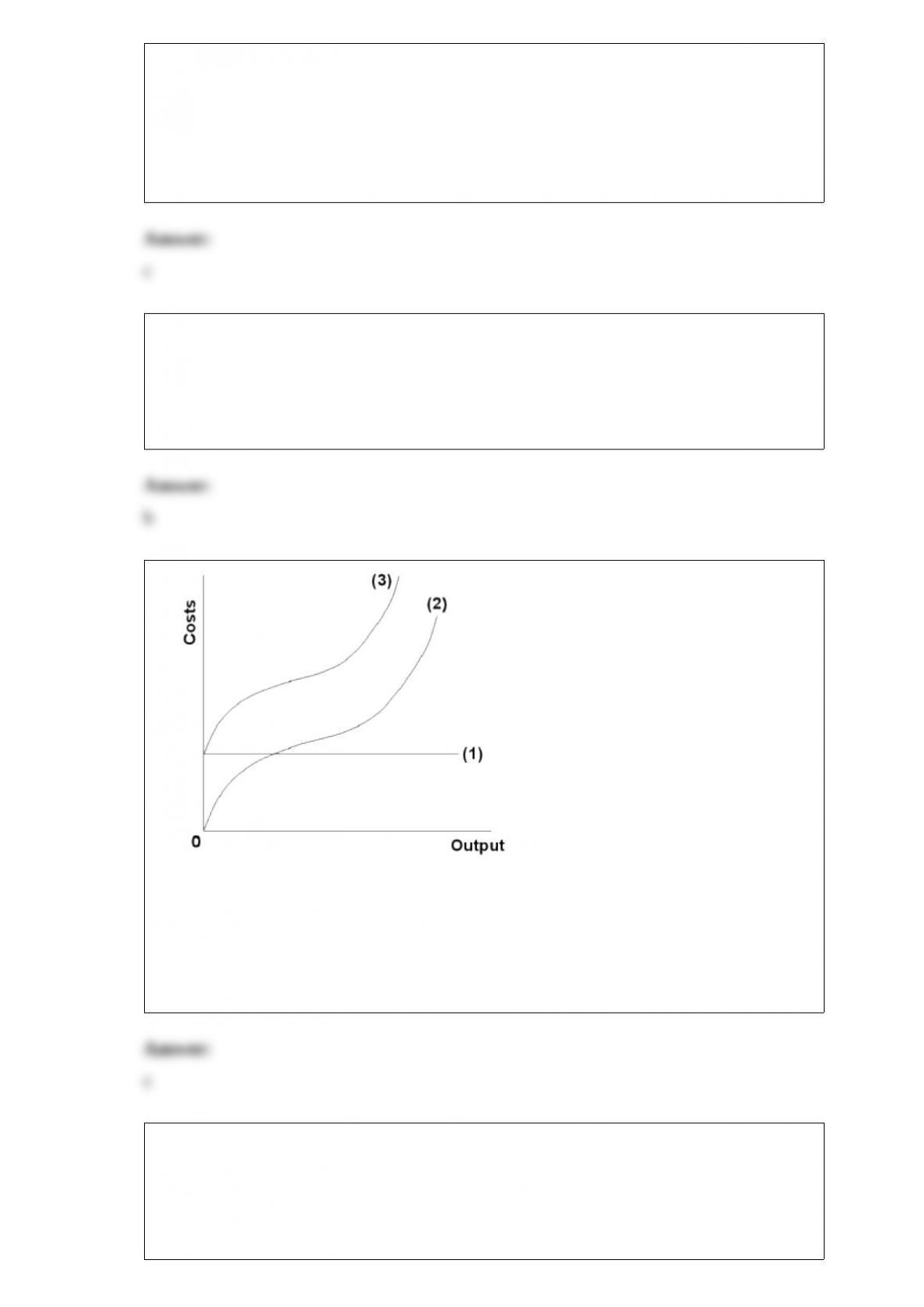
3)
in the above diagram curves 1, 2, and 3 represent:
a.average variable cost, marginal cost, and average fixed cost respectively.
b.total variable cost, total fixed cost, and total cost respectively.
c.total fixed cost, total variable cost, and total cost respectively.
d.marginal product, average variable cost, and average total cost respectively.
4) An example of direct foreign investment is:
A.a U.S. bank granting a loan to a Guatemalan firm.
B.General Motors building an auto production facility in China.
C.a U.S. government foreign aid grant to Bangladesh.
D.the purchase of debt issued by the Panamanian government.
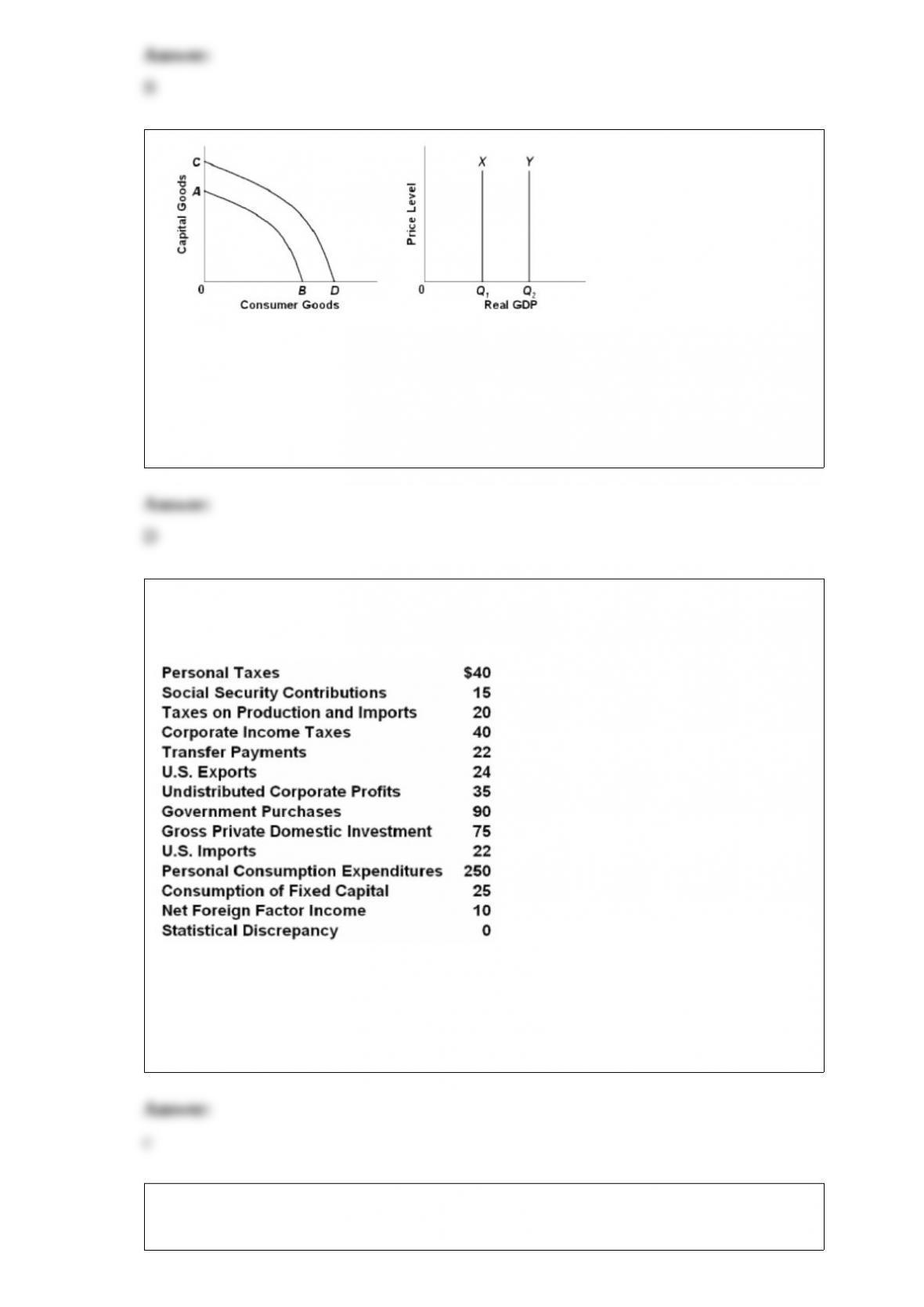
5)
Refer to the above graphs. An increase in the economy’s human capital would shift
curve:
A.AB to CD and curve Y to X
B.CD to AB and curve X to Y
C.X to Y while leaving curve AB in place.
D.AB to CD and curve X to Y
6) answer the next question(s) on the basis of the following data. all figures are in
billions of dollars.
refer to the above data. di is:
a.$284.
b.$329.
c.$274.
d.$402.
7) (Advanced analysis) Answer the next question(s) on the basis of the following data
for a private closed economy. The letters Y, C, S, and I are used to represent real GDP,
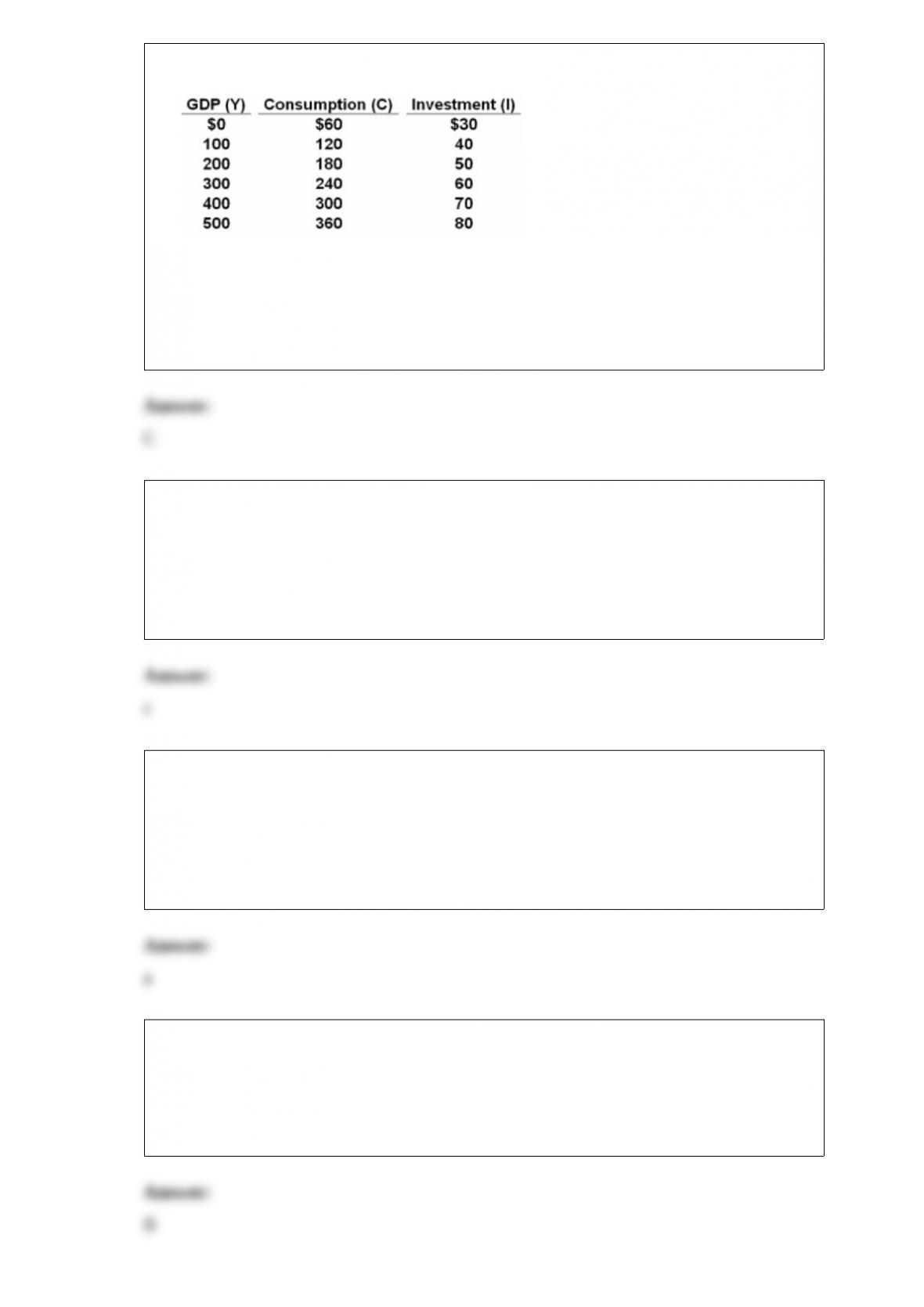
consumption, saving, and investment respectively.
The equation representing the investment schedule for the above economy is:
A.I = .3Y.
B.I = 80 – .3Y.
C.I = 30 + .1Y.
D.I = I0 = 30.
8) the short-run profit maximizing position of an unregulated pure monopolist is
characterized by:
a.p = minimum atc.
b.p = mc.
c.mr = mc.
d.mc = atc.
9) if the exchange rate changes from $1 = 2 euros to $1 = 3 euros:
a.the dollar has appreciated in value.
b.the dollar has depreciated in value.
c.the dollar has neither appreciated nor depreciated, but the euro has appreciated in
value.
d.u.s. exports to europe will increase.
10) A nation’s import demand curve for a specific product:
A.is upsloping.
B.shows the amount of the product it will import at prices below its domestic price.
C.lies above its export supply curve for the product.
D.depends on domestic demand for the product, but not on domestic supply.
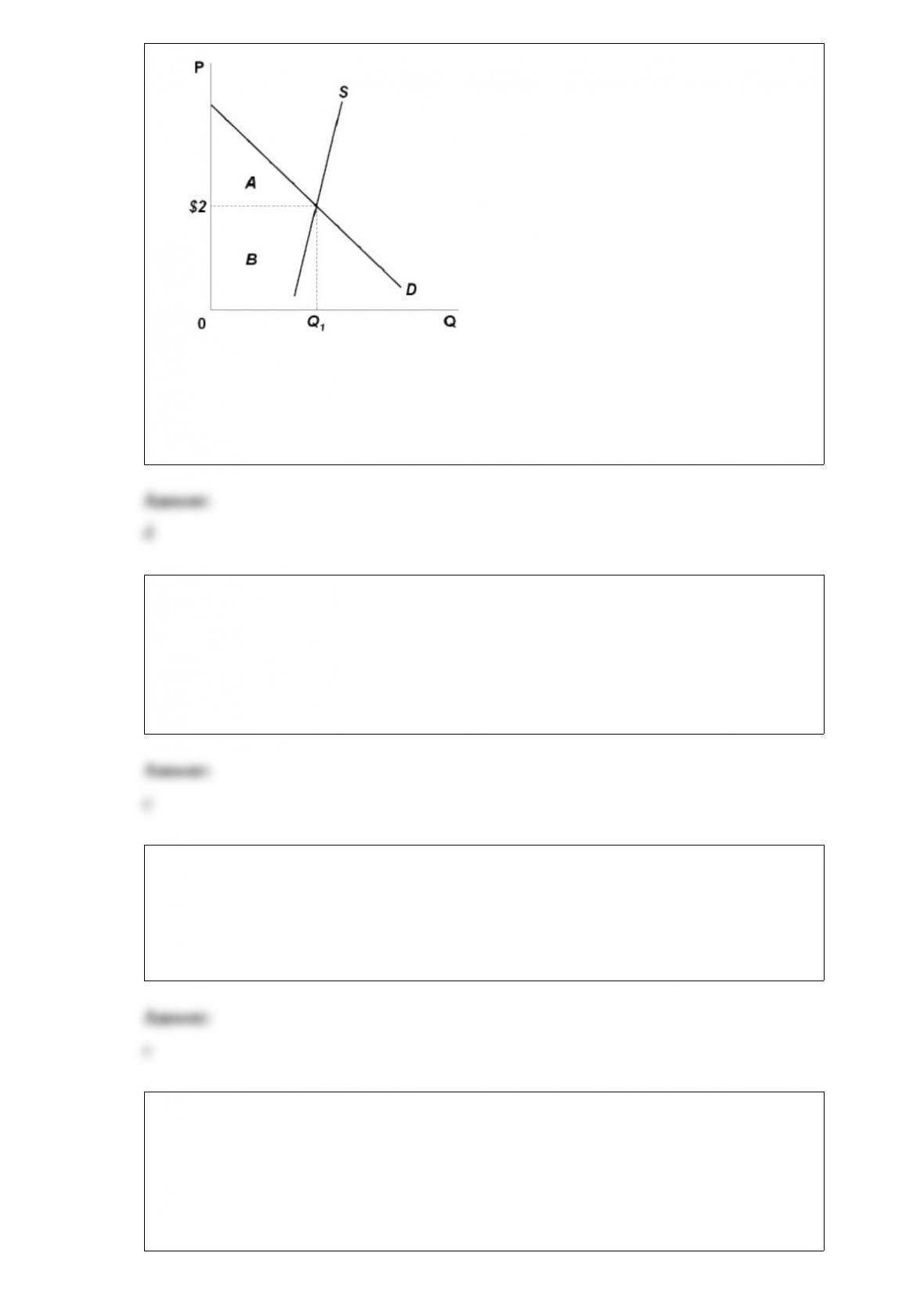
11)
refer to the above graph of the market for asparagus. producer surplus in this market:
a.is $2.
b.is $2 times q1.
c.is equal to area b
d.cannot be determined with the information given.
12) if the price of product l increases, the demand curve for close-substitute product j
will:
a.shift downward toward the horizontal axis.
b.shift to the left.
c.shift to the right.
d.remain unchanged.
13) if z is an inferior good, an increase in money income will shift the:
a.supply curve for z to the left.
b.supply curve for z to the right.
c.demand curve for z to the left.
d.demand curve for z to the right.
14) Each of the following has contributed to growing income inequality in the United
States since 1970 except:
A.the decline in unionism.
B.greater demand for highly skilled workers.
C.stronger international competition from imports.
D.government transfers.
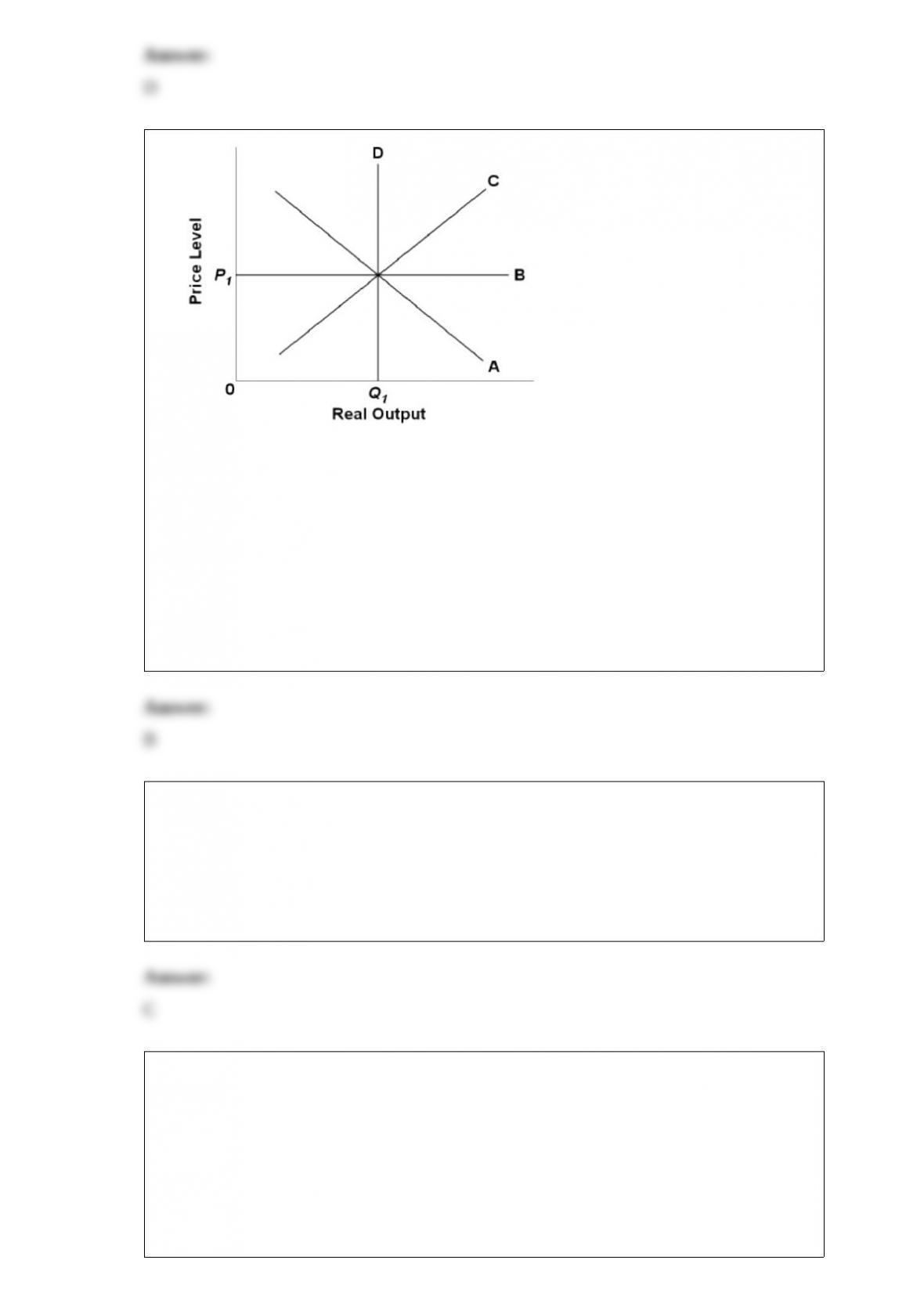
15)
Refer to the above diagram and assume that prices and wages are flexible both upward
and downward in the economy. In the extended AD-AS model:
A.demand-pull inflation would involve a rightward shift of curve A, followed by a
rightward shift of curve C
B.cost-push inflation would involve first a leftward shift of curve C, then a rightward
shift of curve C
C.recession would involve a leftward shift of curve A followed by a leftward shift of
curve C
D.recession would involve a rightward shift of curve D, followed by leftward shifts of
curves A and C
16) In which of the following situations is it certain that the quantity of money
demanded by the public will decrease?
A.nominal GDP decreases and the interest rate decreases
B.nominal GDP increases and the interest rate decreases
C.nominal GDP decreases and the interest rate increases
D.nominal GDP increases and the interest rate increases
17) The table below shows the marginal utility schedules for old product X and new
product Y for a hypothetical consumer. The price of X is $4 and the price of good Y is
$2. The income of the consumer is $20.
(a)If the consumer can only buy old product X, how much will the consumer buy and
what will be the total utility per dollar spent?
(b)If the consumer buys both old product X and new product Y, how much will the
consumer buy of each to maximize utility?
(c)If the consumer purchases the utility-maximizing combination of old product X and

new product Y, total utility will be ___________.
(d)The consumer was originally limited to purchasing old product X but now can also
purchase new product Y. What is the increase in total utility from the original situation
when the consumer purchases the utility-maximizing combination of both X and Y?