1) Suppose the government cuts taxes to keep the economy’s standardized budget in
balance when the economy is expanding. The government is engaging in a(n):
A.contractionary fiscal policy.
B.expansionary fiscal policy.
C.low-interest rate policy.
D.neutral fiscal policy.
2) negative externalities arise:
a.when firms pay more than the opportunity cost of resources.
b.when the demand curve for a product is located too far to the left.
c.when firms “use” resources without being compelled to pay for their full costs.
d.only in capitalistic societies.
3) the spending by americans while traveling in europe best illustrates a:
a.trade flow.
b.labor flow.
c.financial flow.
d.technology flow.
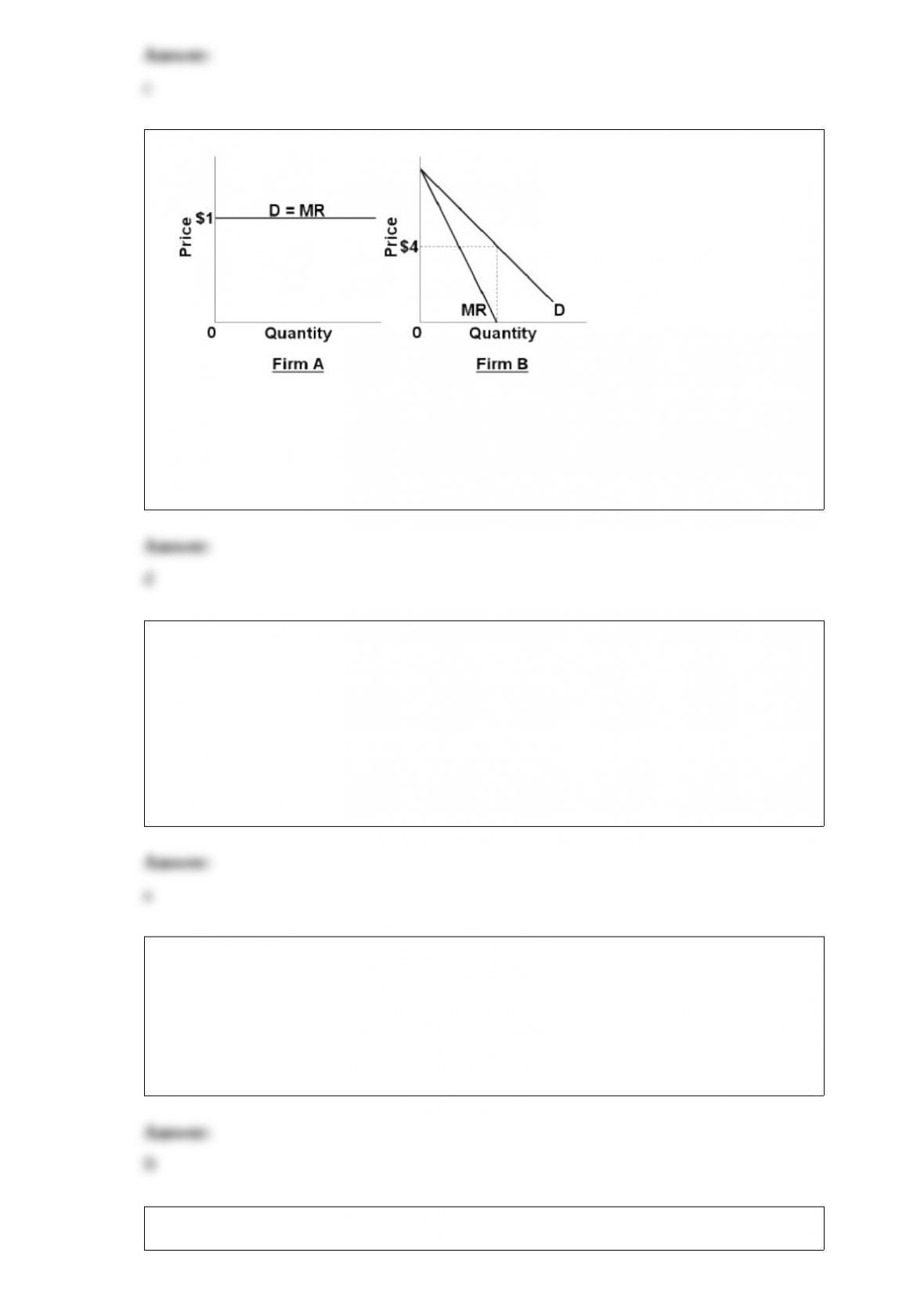
4)
refer to the above diagram. diseconomies of scale:
a.begin at output q1.
b.occur over the q1q3 range of output.
c.begin at output q3.
d.are in evidence at all output levels.
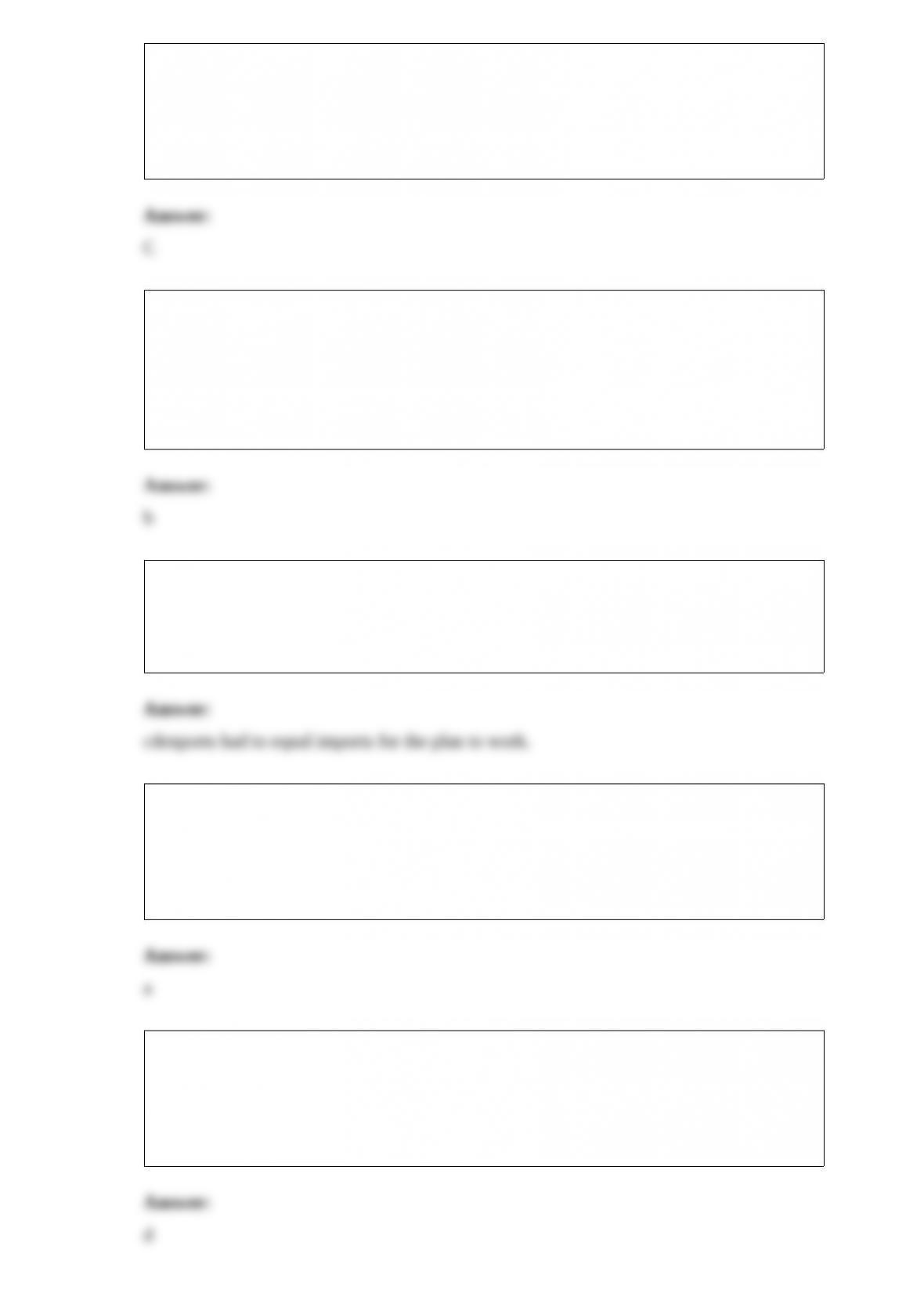
5)
refer to the above diagrams. if $4 is firm b’s profit-maximizing price, its:
a.atc must be $4.
b.mc must be $4.
c.mr must be $4.
d.mc must be zero.
6) while eating at alex’s “pizza by the slice” restaurant, kara experiences diminishing
marginal utility. she gained 10 units of satisfaction from her first slice of pizza
consumed, and would only receive 5 units of satisfaction from consuming a second
slice. based on this information we can conclude that:
a.alex may have to lower the price to convince kara to buy a second slice.
b.kara will not eat a second slice, even if it is given to her at no charge.
c.kara will definitely want to buy a second slice of pizza.
d.even if kara buys a second slice, she will not buy a third slice.
7) If an industrial union is formed to bargain with a monopsonistic employer, then in
this labor market:
A.the resulting wage rate will necessarily be above the competitive level.
B.employment may either increase or decrease.
C.employment will increase.
D.employment will decrease.
8) Other things equal, the stock of capital inherited by future generations is likely to be
smaller when government spending:
A.increases during a period of recession, rather than prosperity.
B.is primarily for capital-type goods.
C.is financed by borrowing.
D.is financed by taxation.
9) which of the following represents a long-run adjustment?
a.a farmer uses an extra dose of fertilizer on his corn crop
b.unable to meet foreign competition, a u.s. watch manufacturer sells one of its branch
plants
c.a steel manufacturer cuts back on its purchases of coke and iron ore
d.a supermarket hires four additional clerks
10) innovation lagged in the centrally planned economies because:
a.there was too much domestic business competition.
b.there was too much competition from foreign firms.
c.enterprises resisted innovation in fear that their production targets would be raised.
11) utility refers to the:
a.satisfaction that a consumer derives from a good or service.
b.rate of decline in a product demand curve.
c.relative scarcity of a product.
d.usefulness of a product.
12) from society’s point of view the economic function of profits and losses is to:
a.promote the equal distribution of real assets and wealth.
b.achieve full employment and price level stability.
c.contribute to a more equal distribution of income.
d.reallocate resources from less desired to more desired uses.

13) Which of the following countries recently joined the ranks of the world’s leading
trading nations by total dollar volume?
A.China
B.Chile
C.Ireland
D.Belgium
14) final goods and services refer to:
a.goods and services that are unsold and therefore added to inventories.
b.goods and services whose value has been adjusted for changes in the price level.
c.goods and services purchased by ultimate users, rather than for resale or further
processing.
d.the excess of u.s. exports over u.s. imports.