
1) Assume the Standard Internet Company negotiates a loan for $5,000 from the Metro
National Bank and receives a checkable deposit for that amount in exchange for its
promissory note (IOU). As a result of this transaction:
A.the supply of money is increased by $5,000.
B.the supply of money declines by the amount of the loan.
C.a claim has been “demonetized.”
D. the Metro Bank acquires reserves from other banks.
2) Large agricultural subsidies for food and fiber in IACs hurt the economies of the
DVCs by:
A.causing higher prices for imported food products.
B.lowering saving rates in the DVCs.
C.encouraging “brain drains” from the DVCs.
D.reducing world agricultural prices and thus export income of the DVCs.
3) An increase in input productivity will:
A.shift the aggregate supply curve leftward.
B.reduce the equilibrium price level, assuming downward flexible prices.
C.reduce the equilibrium real output.
D.reduce aggregate demand.
4) In the U.S. economy the money supply is controlled by the:
A.U.S. Treasury.
B.Federal Reserve System.
C.Senate Committee on Banking and Finance.
D.Congress.
5) The last few years of the 1990s in the United States were characterized by:
A.low inflation and high unemployment.
B.stagflation.
C.low inflation and low unemployment.
D.a high misery index.
6)
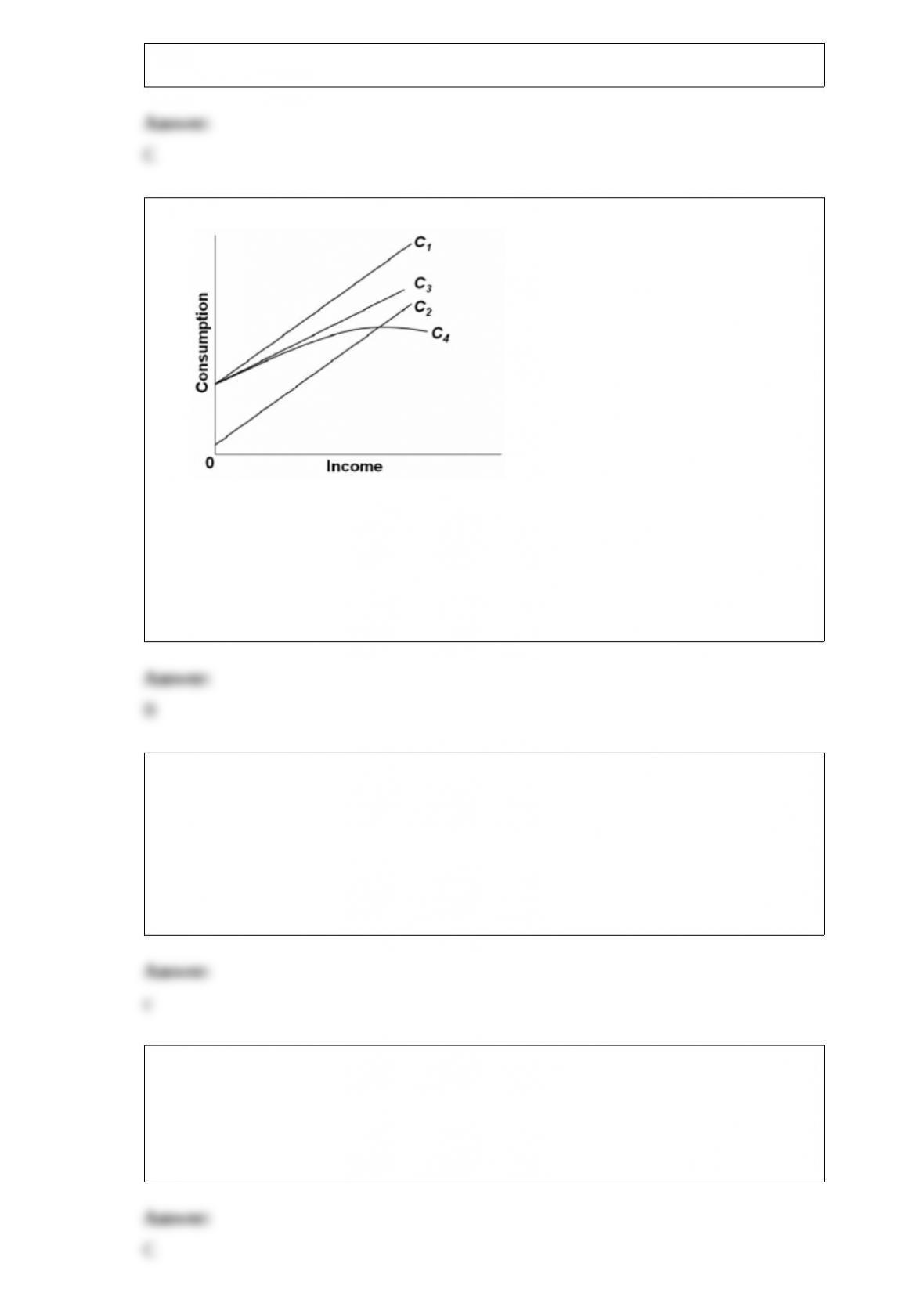
(Advanced analysis) Refer to the above diagram, in which C1 is the before-tax
consumption schedule. The consumption schedule represented by C3 reflects:
A.a progressive tax system.
B.a proportional tax system.
C.a regressive tax system.
D.a higher MPC than is embodied in C1.
7) (consider this) according to the consider this box on patents and innovation, the cost
for u.s. and european drug companies to research, patent, and safety-test a new drug is
about:
a.$100 million.
b.$750 million.
c.$1 billion.
d.$10 billion.
8) The interest-rate and real-balances effects are important because they help explain:
A.rightward and leftward shifts of the aggregate demand curve.
B.why fiscal policy cannot be used effectively to curb inflation.
C.the shape of the aggregate demand curve.
D.the shape of the aggregate supply curve.
9) in a competitive economy, prices:
a.influence consumers in their purchases of goods and services.
b.influence businesses in their purchases of economic resources.
c.influence workers in making occupational choices.
d.do all of these.
10) Suppose the courts declare that XYZ Corporation violated the antitrust laws and as
a result the ABC Corporation lost $100 million of profits. XYZ Corporation will have
to pay ABC Corporation a monetary award of:
A.$100 million.
B.$33.3 million.
C.$150 million.
D.$300 million.
11)
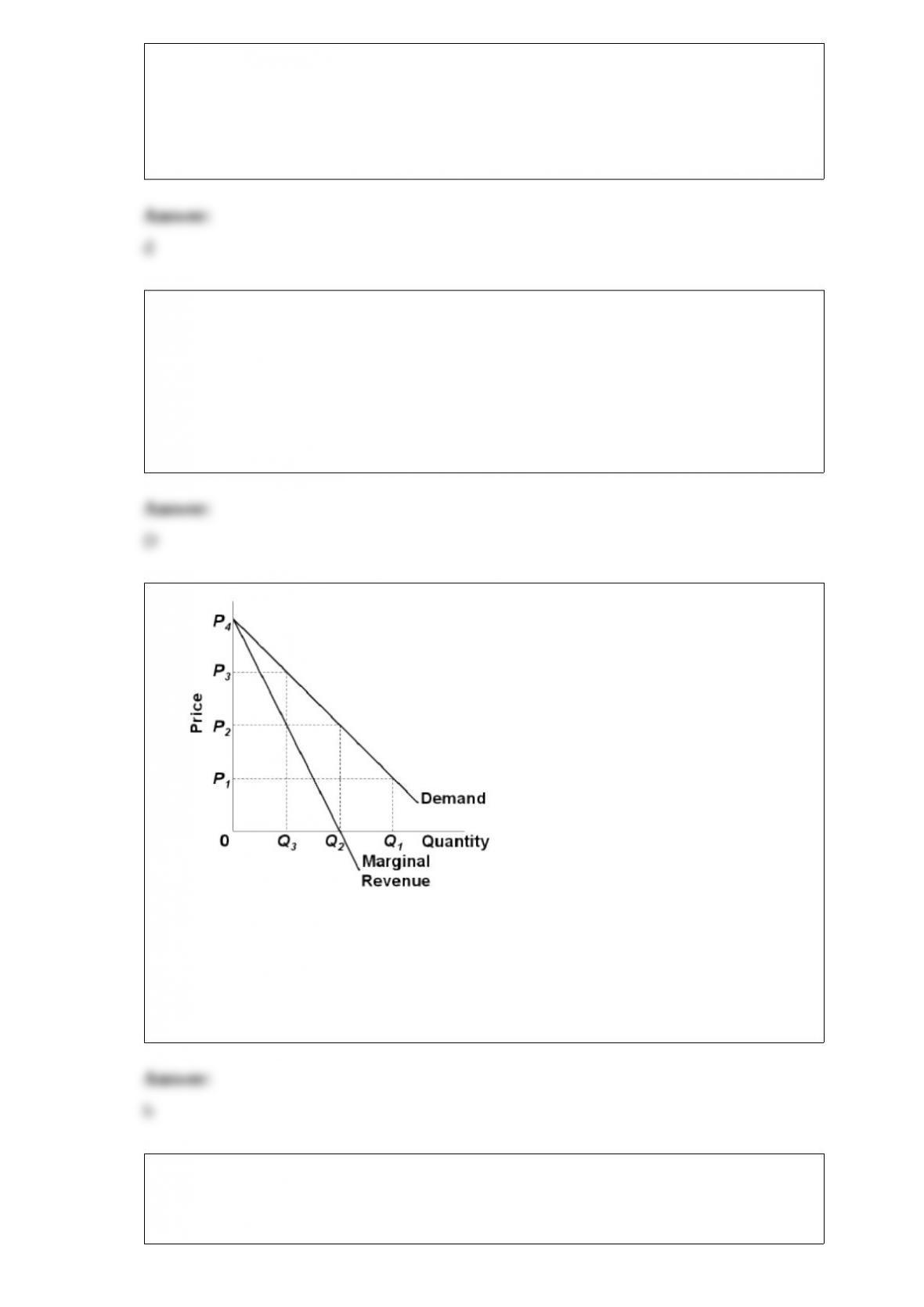
refer to the above diagram. this firm is selling in:
a.a market in which there are an extremely large number of other firms producing the
same product.
b.an imperfectly competitive market.
c.a market in which demand is elastic at all prices.
d.a purely competitive market.
12) which of the following is a land resource?
a.a computer programmer
b.a computer
c.silicon (sand) used to make computer chips
d.a piece of software used by a firm
13) during periods of full employment the:
a.burden of unemployment is quite evenly distributed among males and females,
african-americans and whites, and young and old workers.
b.unemployment rate for teenagers is below the rate for the labor force as a whole.
c.unemployment rate for women is considerably lower than that for men.
d.unemployment rate for african-americans is about twice the rate for whites.
14) In the United States:
A.African-Americans have higher unionization rates than whites.
B.women have higher unionization rates than men.
C.managers have higher unionization rates than transportation workers.
D.workers in mining have higher unionization rates than workers in government.
15)
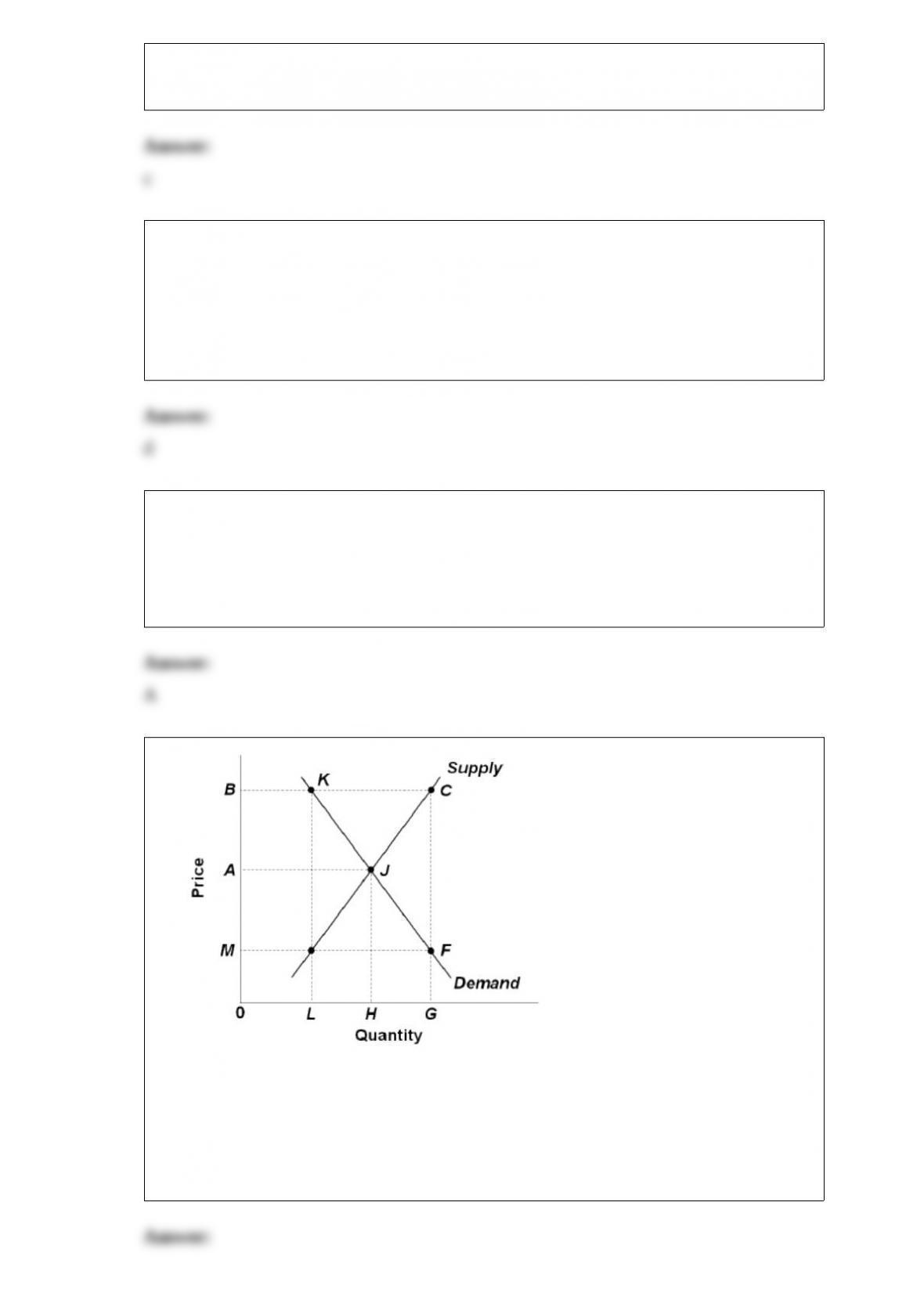
Refer to the above diagram for the corn market. Assuming no externalities, a price
support of B causes:
A.economies of scale.
B.production to be less profitable to farmers.
C.an underallocation of resources to this product.
D.an overallocation of resources to this product.

16) an increase in demand will increase equilibrium price to a greater extent:
a.if the product is a normal good.
b.if the product is an inferior good.
c.the less elastic the supply curve.
d.the more elastic the supply curve.
17) a market for human organs (rather than the current volunteer-donor system) would
be expected to:
a.reduce the quantity of organs supplied.
b.increase total health care spending.
c.decrease the demand for physicians who do transplants.
d.create a surplus of organs.