
On the 45-degree line diagram, for points that lie below the 45-degree line,
A) planned aggregate expenditure is greater than GDP.
B) planned aggregate expenditure is less than GDP.
C) planned aggregate expenditure is equal to GDP.
D) planned aggregate expenditure is less than aggregate income.
Which of the following explains why fluctuations in real GDP have become less
volatile in the United States since 1950?
A) Services have become a smaller fraction of GDP since the 1950s.
B) Unemployment insurance and other government transfer programs are more
prevalent since the 1950s.
C) The government has become more reluctant to intervene when real GDP declines
and unemployment rises since the 1950s.
D) both B and C
Since the 1950s,
A) the United States has not experienced a business cycle.
B) U.S. business cycle fluctuations have becomes more volatile.
C) U.S. business cycle fluctuations have become milder.

D) U.S. business cycle fluctuations have not changed.
What is investment in a closed economy if you have the following economic data?
Y = $10 trillion
C = $5 trillion
TR = $2 trillion
G = $2 trillion
A) $2 trillion
B) $3 trillion
C) $5 trillion
D) cannot be determined without information on taxes (T)
Figure 4-1
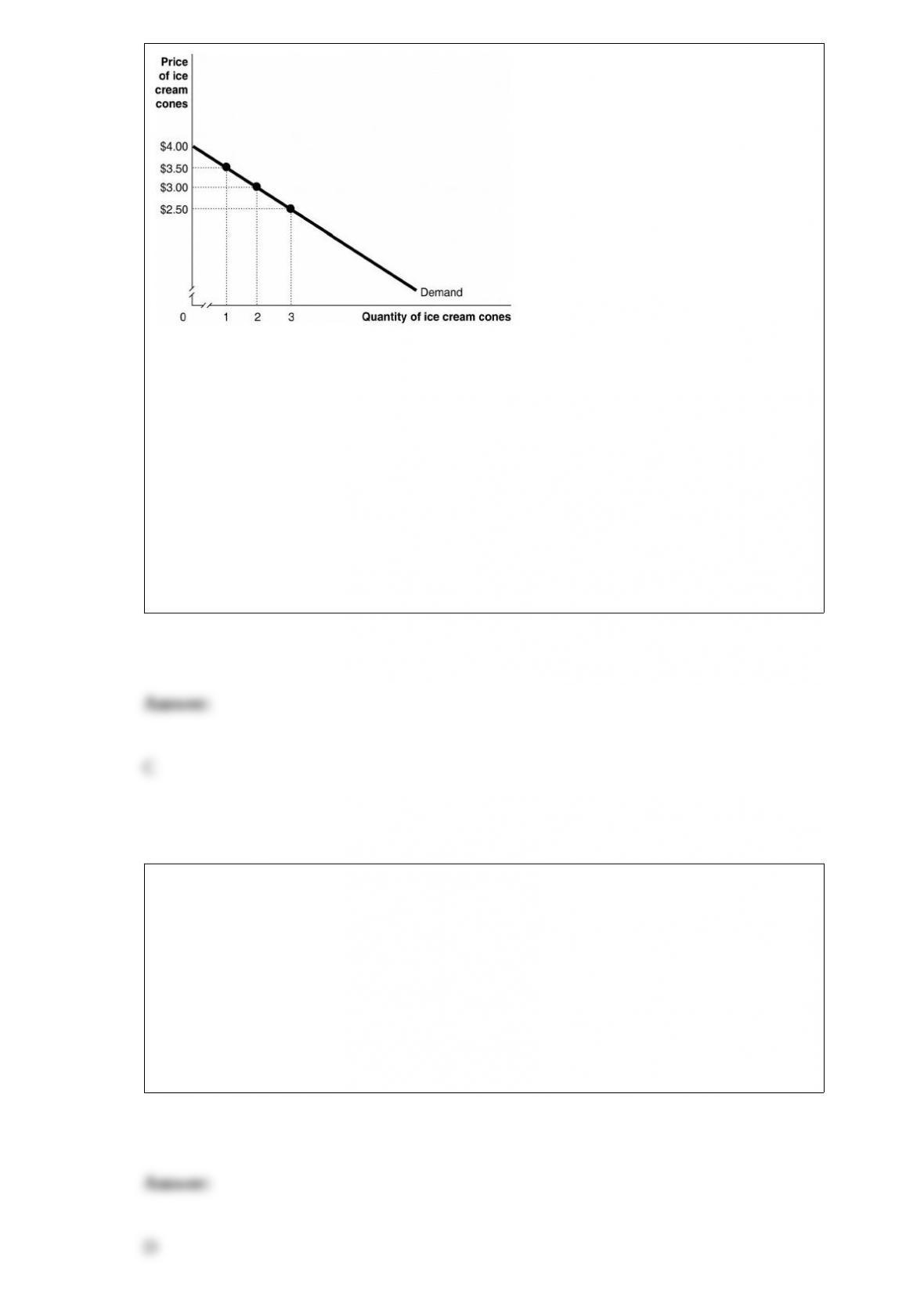
Figure 4-1 shows Kendra’s demand curve for ice-cream cones.
Refer to Figure 4-1. If the market price is $2.50, what is the maximum number of ice
cream cones that Kendra will buy?
A) 1
B) 2
C) 3
D) 4
The long-run aggregate supply curve
A) has a negative slope.
B) has a steep but positive slope.
C) is horizontal.
D) is vertical.

An increase in aggregate demand causes an increase in ________ only in the short run,
but causes an increase in ________ in both the short run and the long run.
A) the price level; real GDP
B) real GDP; real GDP
C) the price level; the price level
D) real GDP; the price level
Social Security began as a “pay-as-you-go” system, meaning that payments to current
retirees were paid
A) from taxes collected from current workers.
B) from taxes collected from retired workers.
C) as long as the government had funds available.
D) as the government collected revenues from tariffs and excise taxes in the years
Social Security payments were made.
Figure 11-2
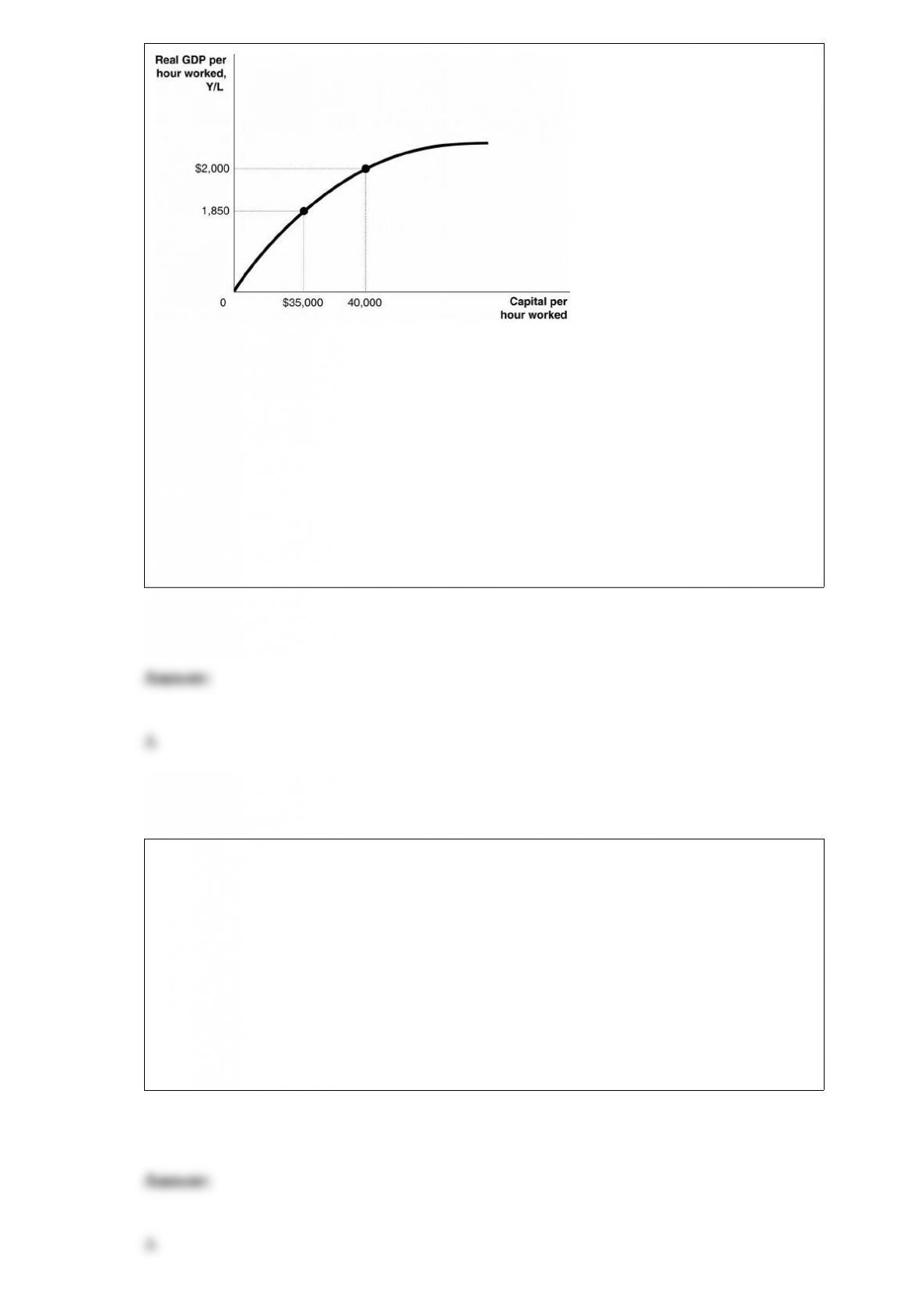
Refer to Figure 11-2. Based on the per-worker production function above, if the
economy raises capital per hour worked from $35,000 to $40,000, by how much will
real GDP per hour worked increase?
A) $150
B) $1,850
C) $2,000
D) $5,000
Calculate the government purchases multiplier if the marginal propensity to consume
equals 0.75, the tax rate is 0.2, and the marginal propensity to import equals 0.3.
A) 1.43
B) 1.6
C) 3.33
D) 4

In cities with rent controls, the actual rents paid can be ________ than the legal
maximum. One explanation for this is because there is a ________ of apartments,
tenants are ________.
A) higher; shortage; often willing to pay rents higher than the law allows
B) higher; surplus; often forced to pay rents higher than the law allows
C) lower; surplus; never willing to pay rents below the legal maximum
D) lower; shortage; rarely willing to pay rents lower than the law allows
If society decides it wants more of one good and ________, then it has to give up some
of another good and incur some opportunity costs.
A) technology advances
B) resources are underutilized
C) all resources are fully utilized
D) new resources are discovered
Which of the following would increase the size of the government purchases
multiplier?
A) an increase in the tax rate

B) an increase in the quantity of imports purchased by households from an increase in
income
C) a decrease in the amount of consumption spending by households from an increase
in income
D) a decrease in the amount saved by households from an increase in income
An “omitted variable” is
A) a variable which is purposely omitted from an economic analysis.
B) a variable which is inadvertently omitted from an economic analysis.
C) a variable that has no impact on other variables in an economic analysis.
D) a variable that affects other variables and its omission from economic analysis can
lead to false conclusions about cause and effect.