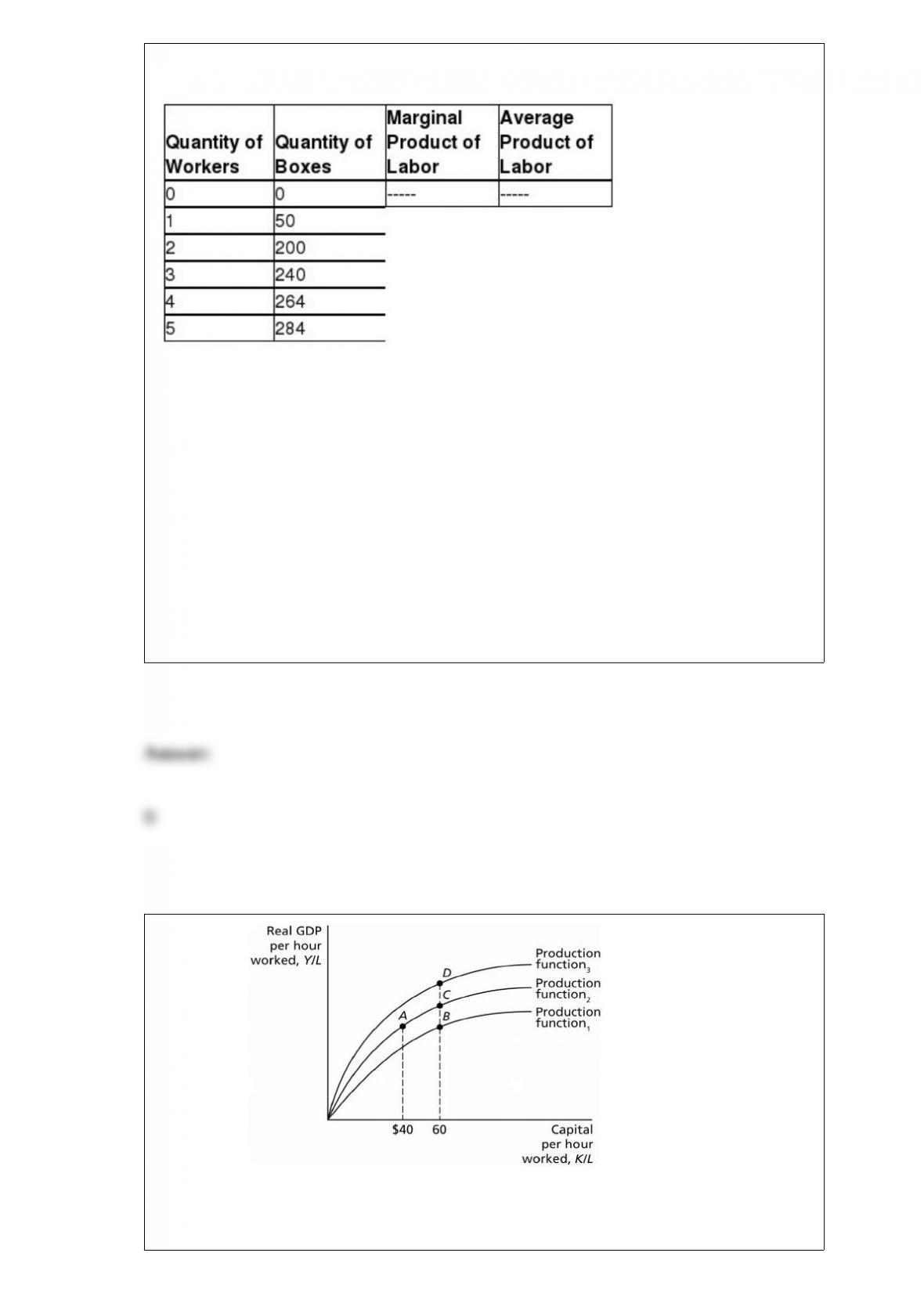
Table 11-3
The table above refers to the relationship between the quantity of workers employed
and the number of cardboard boxes produced per day by Manny’s House of Boxes. The
capital used to produce the boxes is fixed. Diminishing returns to labor are first
observed in this example after Manny hires the ________ worker.
A) second
B) third
C) fourth
D) fifth
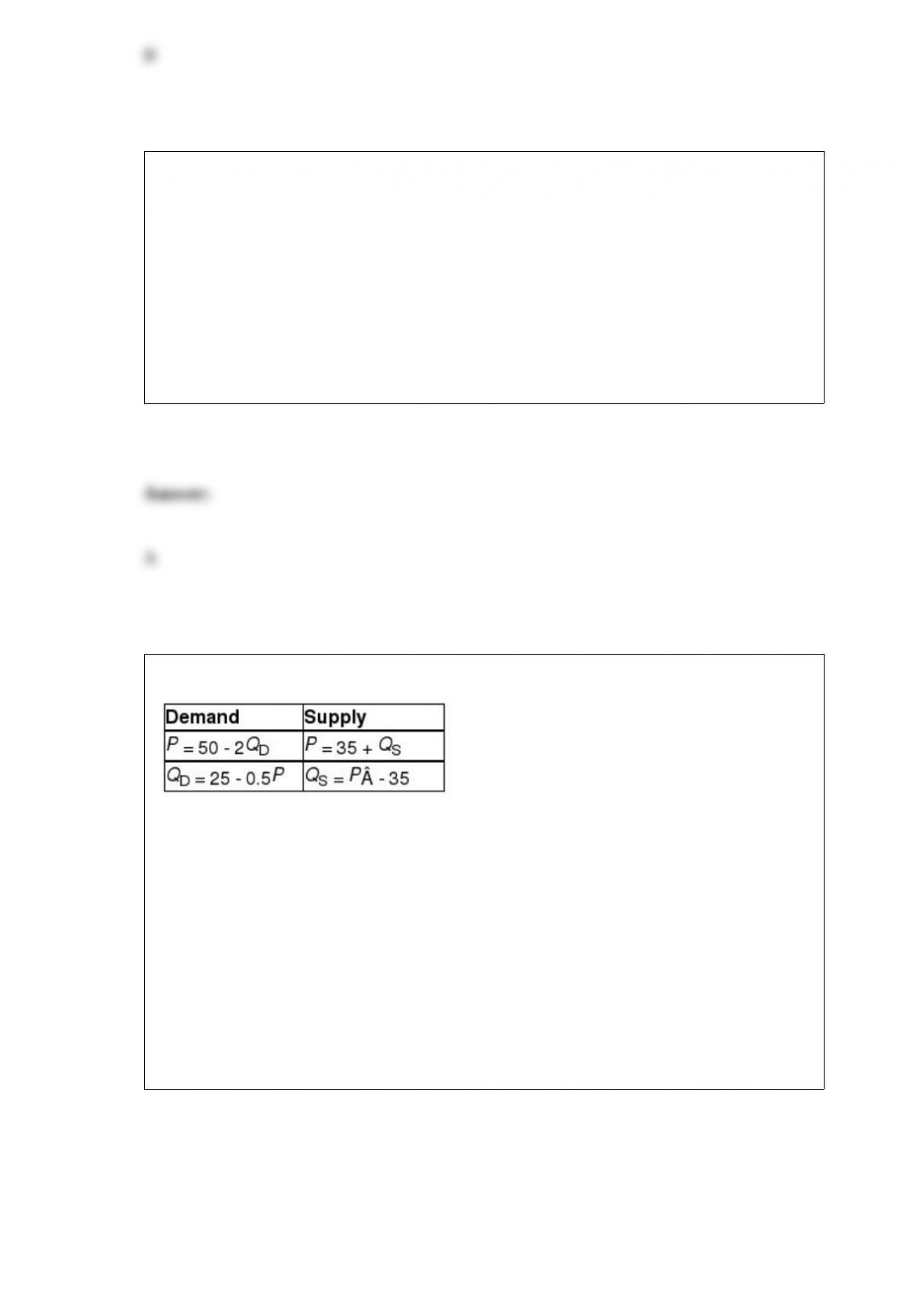
Figure 11-1
Technological change is illustrated in the per-worker production function in the figure
above by a movement from

A) A to B.
B) B to C.
C) B to A.
D) D to C.
In 2012, employees covered by company-provided health insurance paid ________
percent of the cost of their own health insurance.
A) 3
B) 18
C) 37
D) 65
A financial asset is considered ________ if it can be sold in a secondary market.
A) a commodity
B) a security

C) a liability
D) durable
The Federal Reserve’s narrowest definition of the money supply is
A) M0.
B) M1.
C) M2.
D) M3.
Since 1994, obesity rates in the United States
A) have been on a slow and steady decline.
B) have increased in all 50 states.
C) have primarily increased in the Southeast and remained constant or slightly
decreased in the remainder of the country.
D) have remained fairly constant throughout the country.
If the current unemployment rate is 5%, under which of the following circumstances
would you expect the Fed to use expansionary monetary policy?
A) if the natural rate of unemployment is below 5%
B) if the natural rate of unemployment is above 5%
C) if the inflation rate is above 5%
D) if the inflation rate is below 5%
Table 4.7
The equations above describe the demand and supply for Bubba’s Fried Jellybeans. The
equilibrium price and quantity for Bubba’s Fried Jellybeans are $40 and 5 thousand
units. What is the value of producer surplus?
A) $5 thousand
B) $12.5 thousand
C) $25 thousand
D) $37.5 thousand
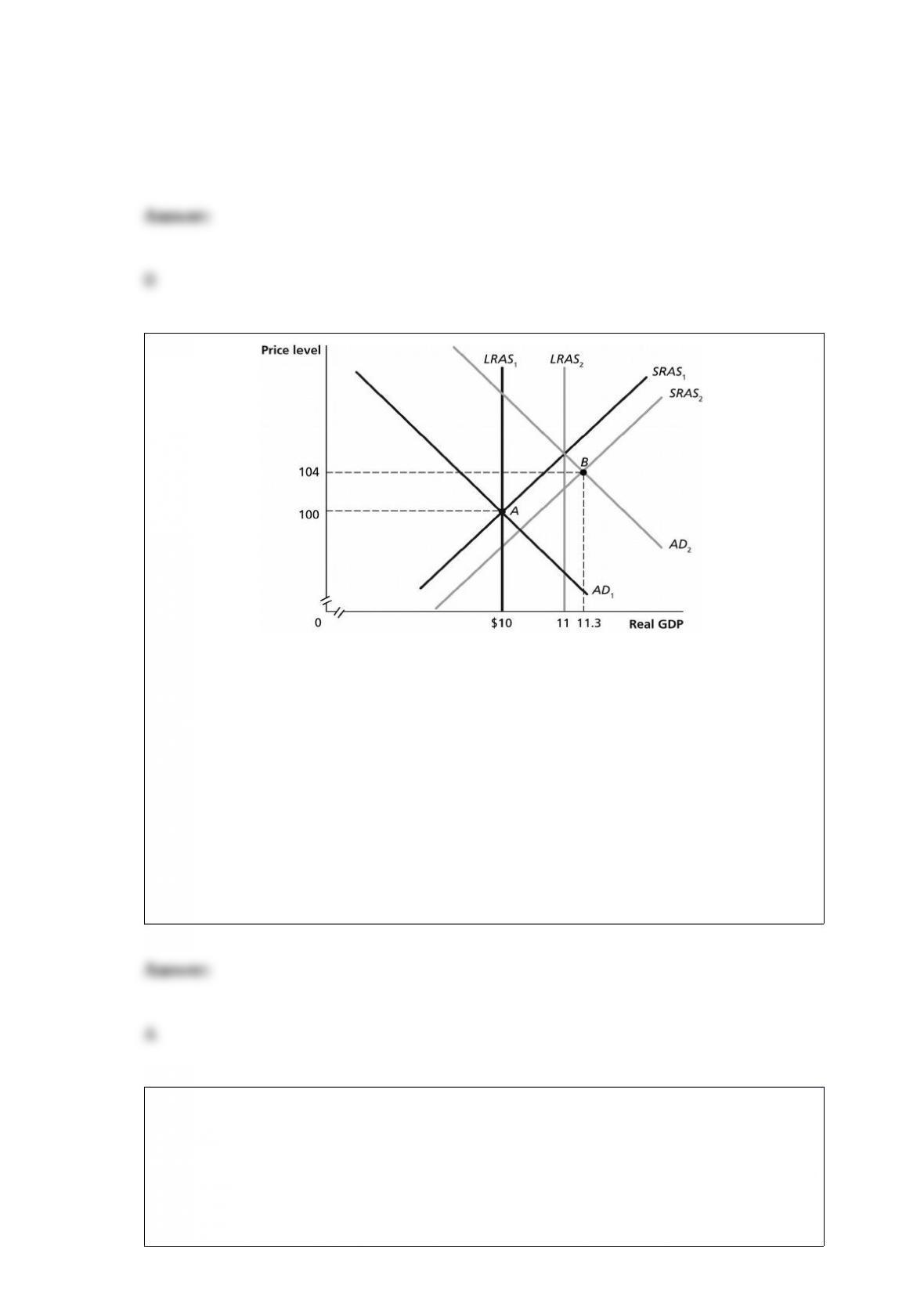
Figure 26-12
In the dynamic AD–AS model, the economy is at point A in year 1 and is expected to go
to point B in year 2, and the Federal Reserve pursues policy. This will result in
A) unemployment rates higher than what would occur if no policy had been pursued.
B) inflation rates higher than what would occur if no policy had been pursued.
C) potential real GDP levels lower than what would occur if no policy had been
pursued.
D) real GDP levels higher than what would occur if no policy had been pursued.
A quota
A) makes domestic consumers better off.
B) makes both domestic producers and consumers better off.

C) makes everyone worse off.
D) makes domestic producers better off.