1)
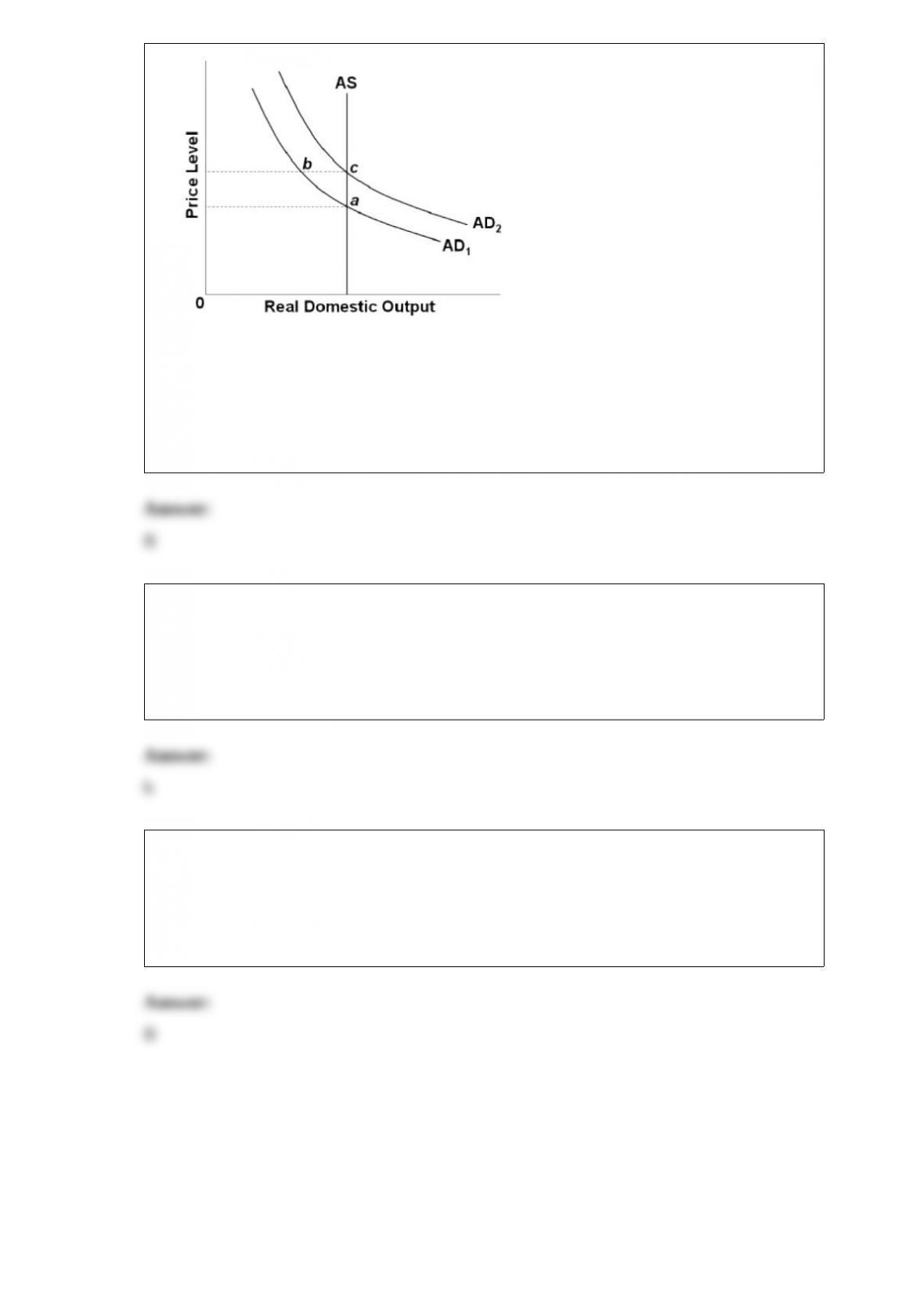
Refer to the above diagram. Rational expectations theory says that a fully anticipated
shift in aggregate demand from AD1 to AD2 will:
A.move the economy from a to b to c.
B.move the economy directly from a to c.
C.move the economy from a to new equilibrium at b.
D.shift the AS curve to the right.
2) the law of diminishing marginal utility explains why:
a.supply curves slope upward.
b.demand curves slope downward.
c.drug addicts can never get enough.
d.people will only consume their favorite goods and not try new things.
3) Power plants with the lowest operating costs tend to:
A.have the lowest fixed costs in terms of construction.
B.have the highest fixed costs in terms of construction.
C.operate on the smallest scale of energy production.
D.generate the cleanest energy.

4)
refer to the above figure that shows the market for u.s. health care. other things equal,
which of the following would shift the demand curve for medical care from d2 to d1?
a.an aging population.
b.loss of medical insurance benefits by part-time workers and early retirees.
c.expansion of the medicaid program.
d.higher medical malpractice premiums.
5) suppose an economist says that “other things equal, the lower the price of bananas,
the greater the amount of bananas purchased.” this statement indicates that:
a.the quantity of bananas purchased determines the price of bananas.
b.all factors other than the price of bananas (for example, consumer tastes and incomes)
are assumed to be constant.
c.economists can conduct controlled laboratory experiments.
d.one cannot generalize about the relationship between the price of bananas and the
quantity purchased.
6) A firm will employ more of an input whose relative price has fallen and, conversely,
will use less of an input whose relative price has risen. Thus a fall in the price of capital
will increase the relative price of labor and thereby reduce the demand for labor. This
describes the:
A.output effect.
B.substitution effect.
C.idea of derived demand.
7)
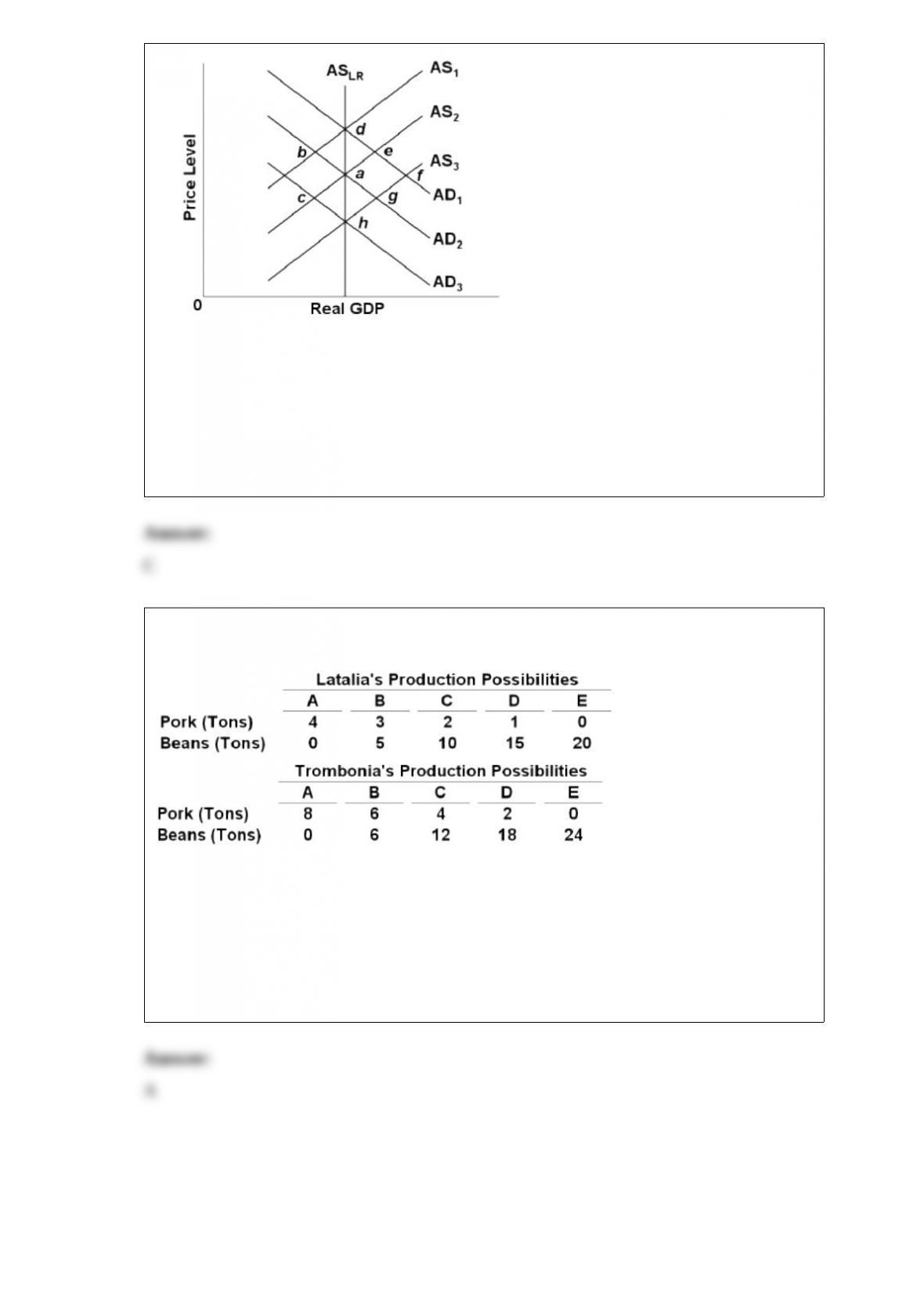
Refer to the above figure and assume the economy initially is in equilibrium at point a.
In the new classical theory, an unanticipated increase in aggregate demand from AD2 to
AD1 would move the economy:
A.directly from a to d
B.from a to b to d
C.from a to e to d
D.directly from a to f
8) The following production possibilities tables for two countries, Latalia and
Trombonia:
The above data indicate that production in:
A.both Latalia and Trombonia is subject to constant opportunity costs.
B.Trombonia is subject to decreasing costs, but production in Latalia occurs under
increasing opportunity costs.
C.Latalia is subject to increasing costs, but production in Trombonia occurs under
constant opportunity costs.
D.both Latalia and Trombonia are subject to the law of increasing opportunity costs.
9)
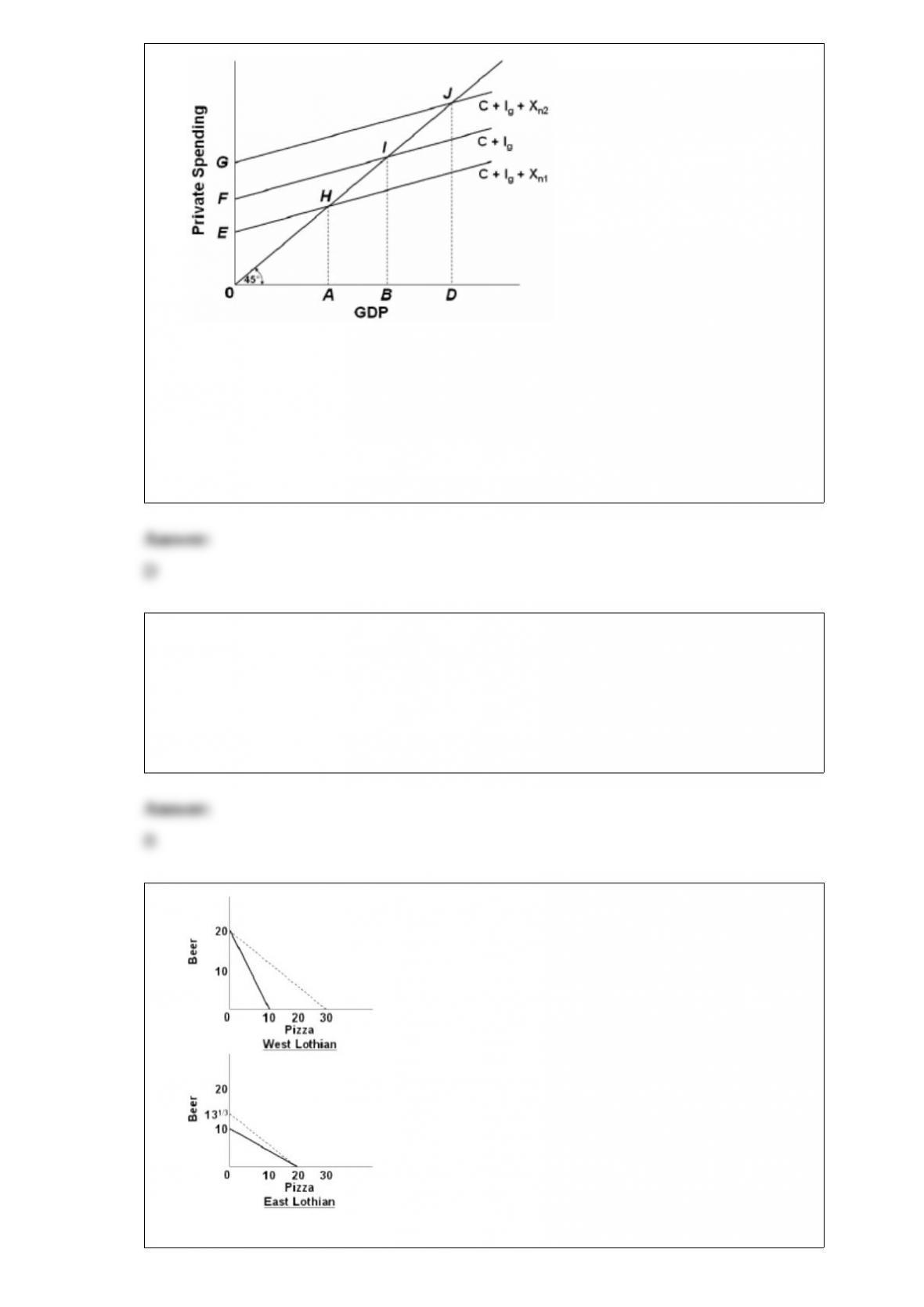
Refer to the above diagram. If aggregate expenditures in this economy are (C + Ig +
Xn2), then the equilibrium levels of GDP and aggregate expenditures respectively will
be:
A.0A and 0E.
B.0B and 0F.
C.0A and AH.
D.0D and DJ.
10) Which of the following is not an effect of an above-equilibrium price support on a
farm product?
A.the quantity supplied of the product will exceed the quantity demanded
B.the consumer will pay a lower price and consume more of the product
C.the gross incomes of farmers will rise
D.the consumer will pay a higher price and consume less of the product
11)
Refer to the above diagrams. The solid lines are production possibilities curves; the
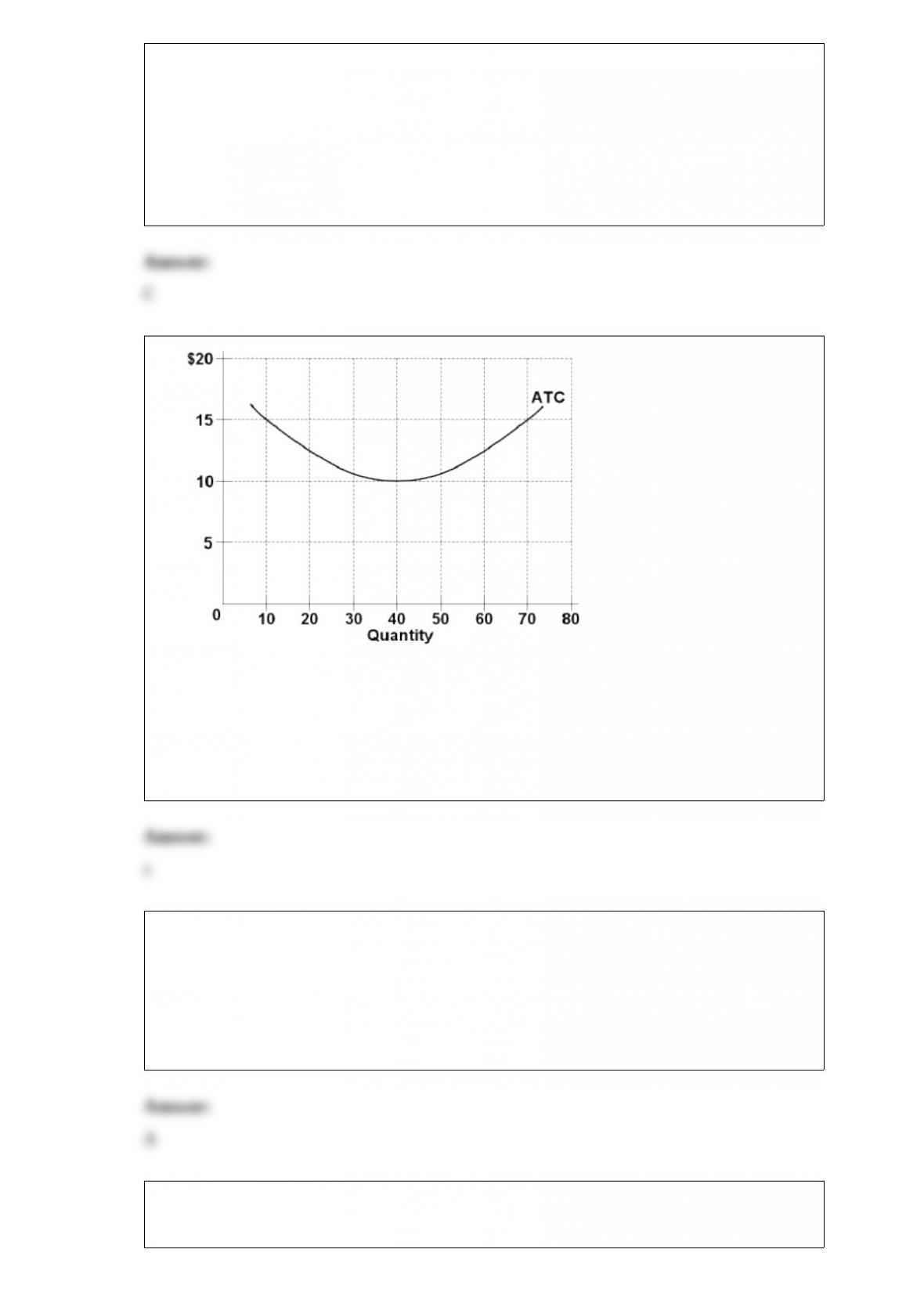
dashed lines are trading possibilities curves. The trading possibilities curves imply that:
A.both countries have a trade surplus that will result in economic growth.
B.the domestic production possibilities curves entail unemployment and/or the
domestic misallocation of resources.
C.world resources will be allocated more efficiently if the two nations specialize and
trade based on comparative advantage.
D.both nations will be worse off as a result of international specialization and trade.
12)
refer to the above diagram showing the average total cost curve for a purely competitive
firm. at the long-run equilibrium level of output, this firm’s total revenue:
a.is $10.
b.is $40.
c.is $400.
d.cannot be determined from the information provided.
13) If the dollar price of foreign currencies falls (that is, the dollar appreciates), we
would expect:
A.aggregate demand to decrease and aggregate supply to increase.
B.both aggregate demand and aggregate supply to decrease.
C.both aggregate demand and aggregate supply to increase.
D.aggregate demand to increase and aggregate supply to decrease.
14) the demand for commodity x is represented by the equation p = 100 – 2q and supply
by the equation p = 10 + 4q.
refer to the above information. the equilibrium quantity is:
a.10.
b.20.
c.15.
d.30.
15) The purpose of a restrictive monetary policy is to:
A.alleviate recessions.
B.raise interest rates and restrict the availability of bank credit.
C.increase aggregate demand and GDP.
D.increase investment spending.
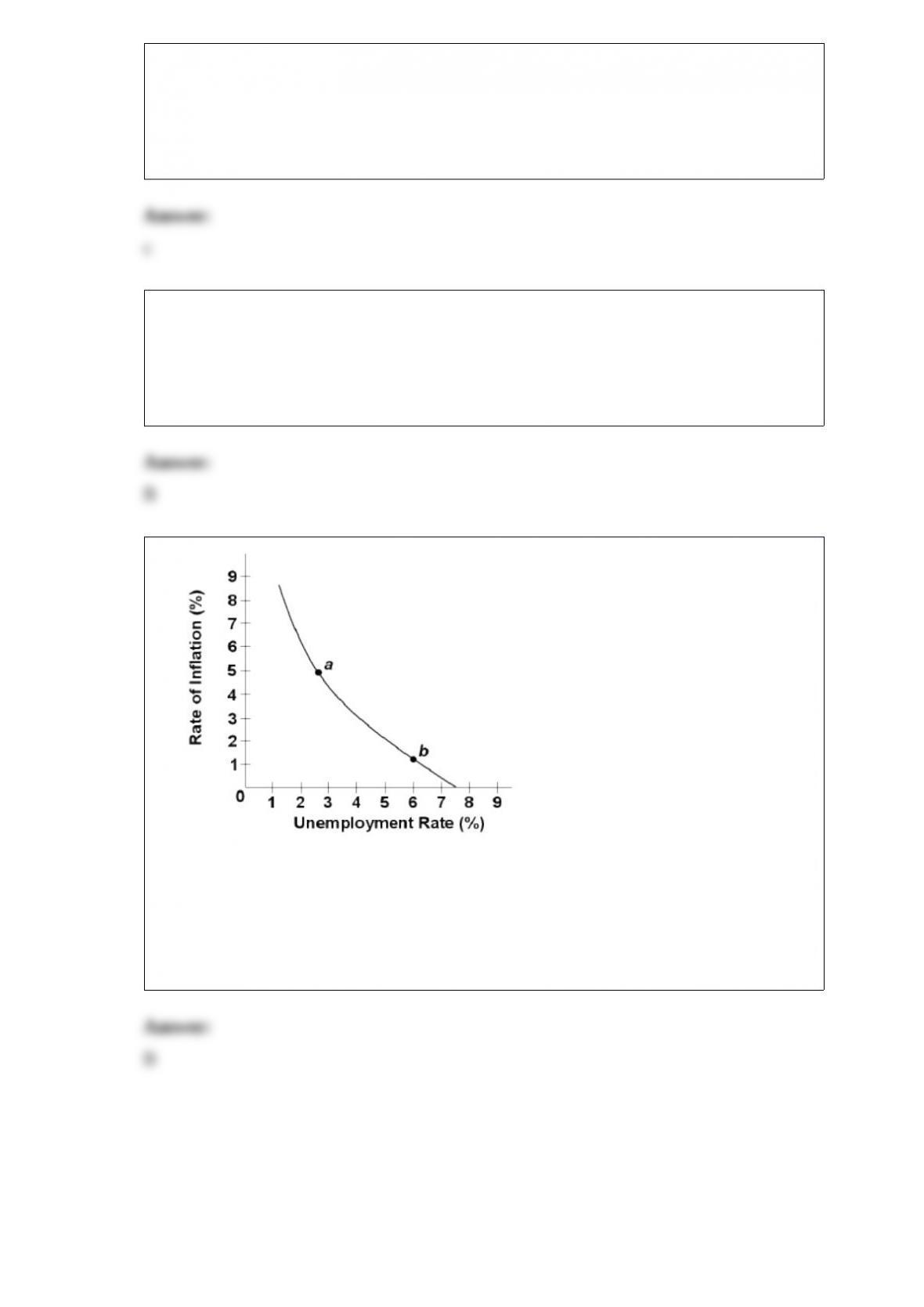
16)
Refer to the above diagram for a specific economy. A reduction in structural
unemployment or bottleneck problems in labor markets will:
A.shift this curve to the right.
B.shift this curve to the left.
C.move this economy southeast along the curve.
D.move this economy northwest along the curve.
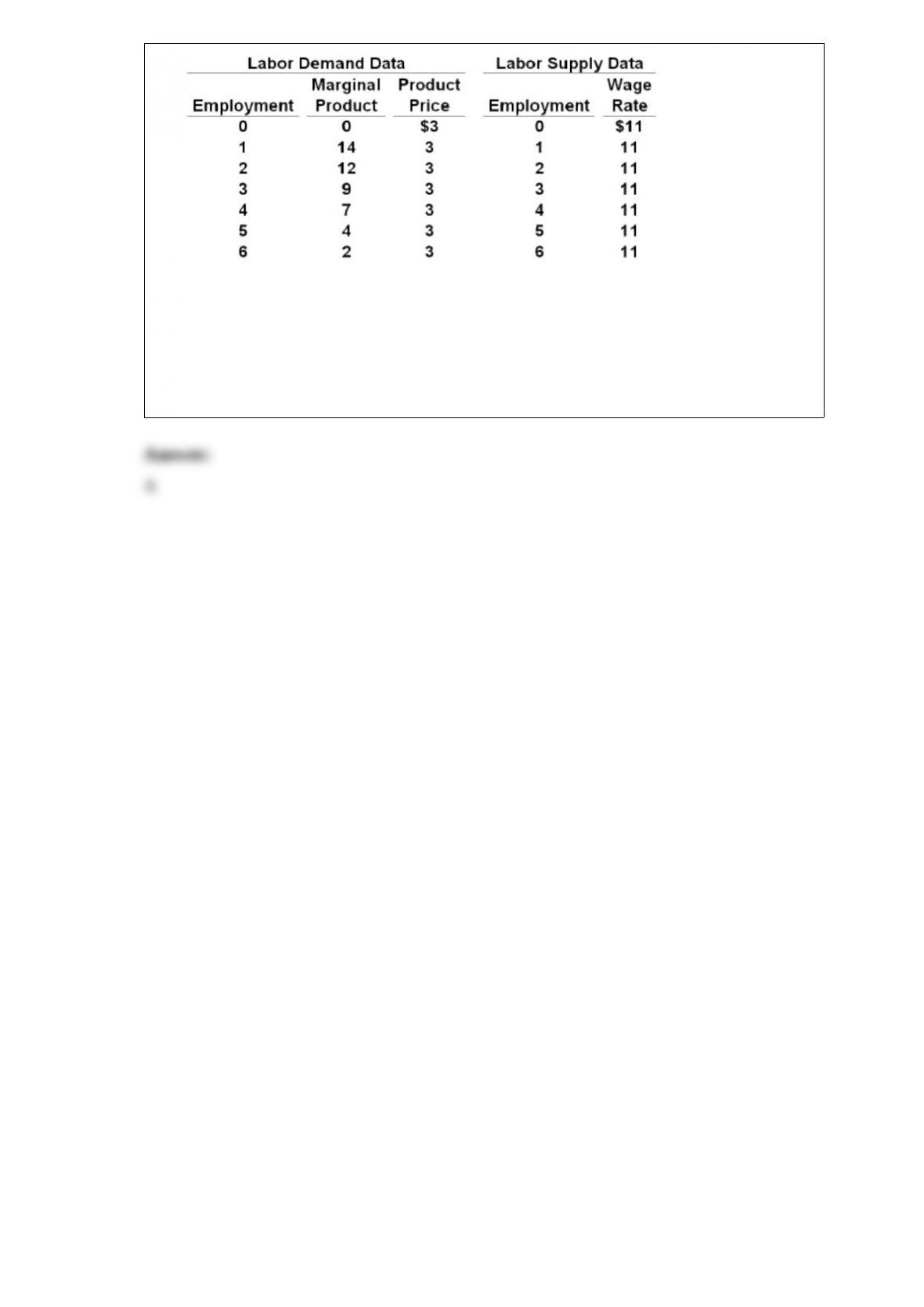
17)
Refer to the above data. The firm will maximize profits (or minimize losses) by
employing:
A.5 workers.
B.4 workers.
C.3 workers.
D.2 workers.