
The quantity demanded of good A rises as income rises. It follows that income elasticity
of demand is __________than 0, and good A is a(n) __________ good.
a. greater; inferior
b. greater; normal
c. greater; substitute
d. greater; complementary
e. less; normal
In recent years, industries with high four- and eight-firm concentration ratios include
cars, cereal breakfast foods, and farm machinery.
a. True
b. False
Tariffs raise the price of imported goods, but quotas rarely do.
a. True
b. False
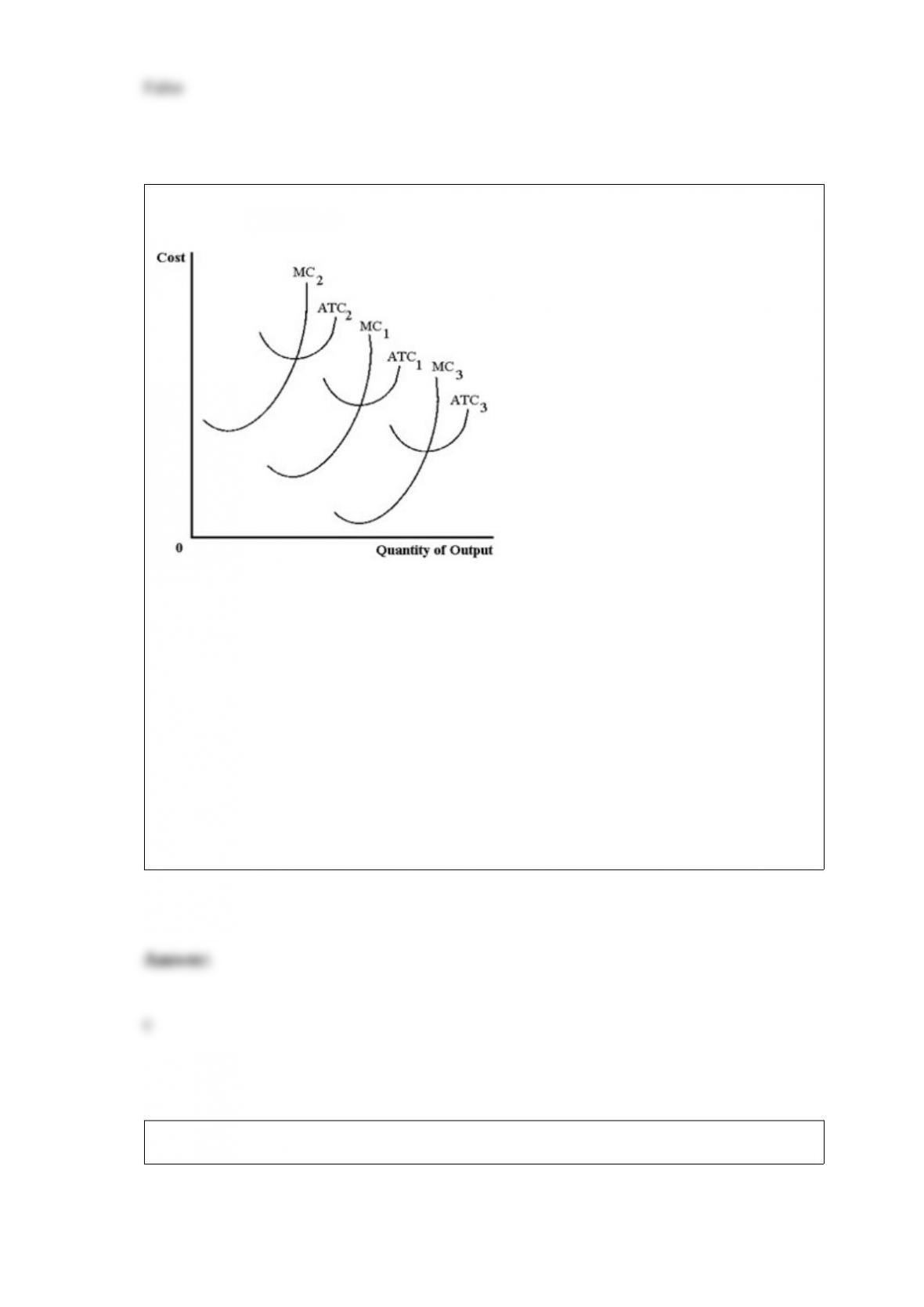
Exhibit 22-9
Let MC1 and ATC1 represent the initial cost curves of an aluminum can producer. In
which of the following cases is it most likely that the curves will shift rightward
fromMC1, and ATC1 to MC3 and ATC3?
a. A new tax of $0.03 per can is imposed on the producer.
b. There is an increase in energy costs.
c. A new supplier offers to supply aluminum to the firm at a lower price.
d. a and b
Exhibit 3-2
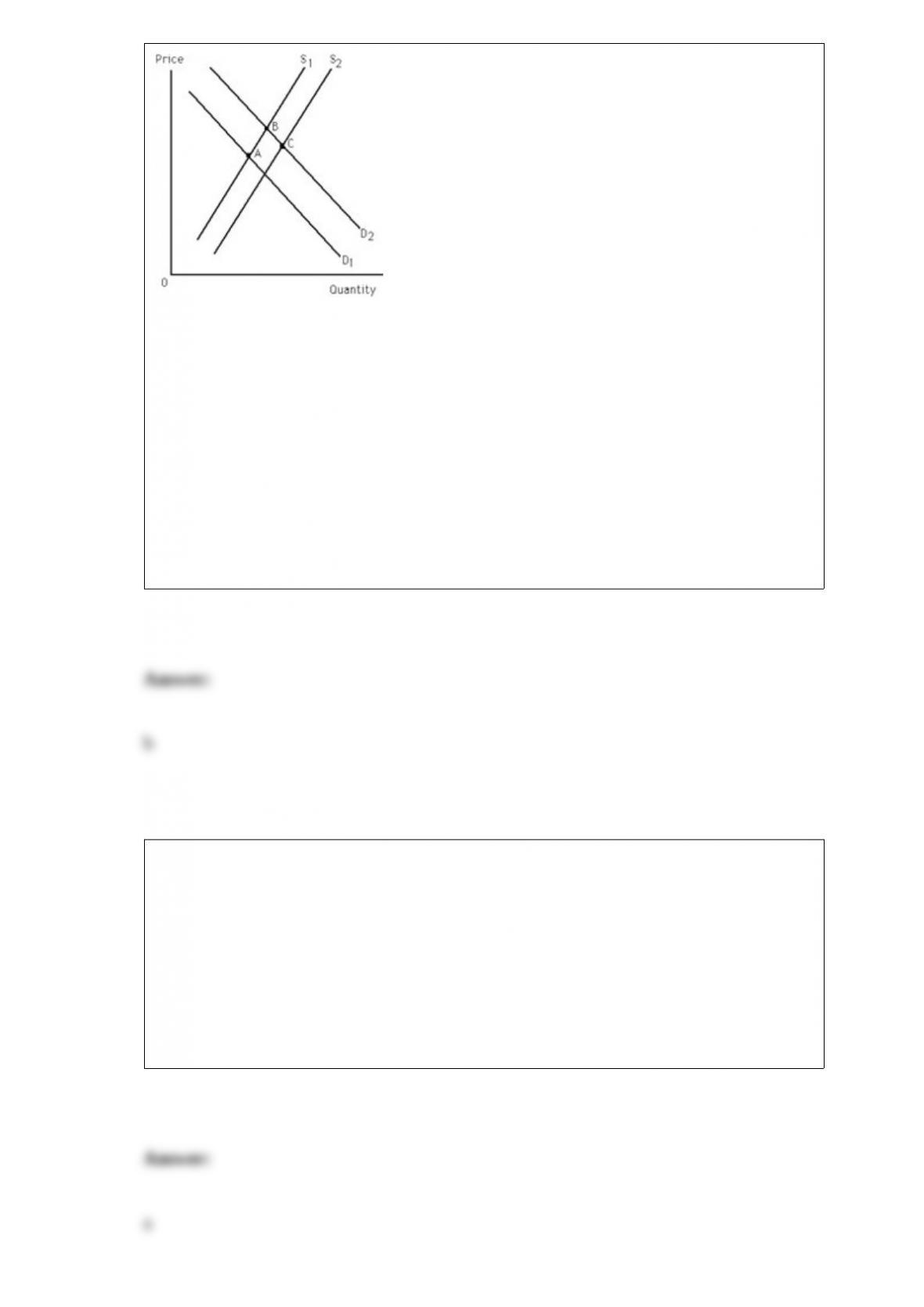
Suppose equilibrium is at point B. Something then changes and equilibrium becomes
point C. Which of the following is consistent with the change in equilibrium from point
B to C (assuming that good X is a normal good)?
a. There was an increase in resource prices and income stayed constant.
b. There was a decrease in resource prices and income stayed constant.
c. There was an increase in resource prices and income decreased.
d. There was an increase in resource prices and income increased.
The concept that relates how much one variable changes as another variable changes is
a. slope.
b. line.
c. curve.
d. graph.

On a supply-and-demand diagram, consider a price for which the horizontal distance to
the supply curve exceeds the horizontal distance to the demand curve. There is a
__________ at that price and the current price must be __________ the equilibrium
price.
a. shortage; above
b. shortage; below
c. surplus; above
d. surplus; below
In 2009, the top 20 percent of households in the United States earned collectively
approximately what percent of the total income of all households?
a. 20 percent
b. 30 percent
c. 40 percent
d. 50 percent
e. 60 percent
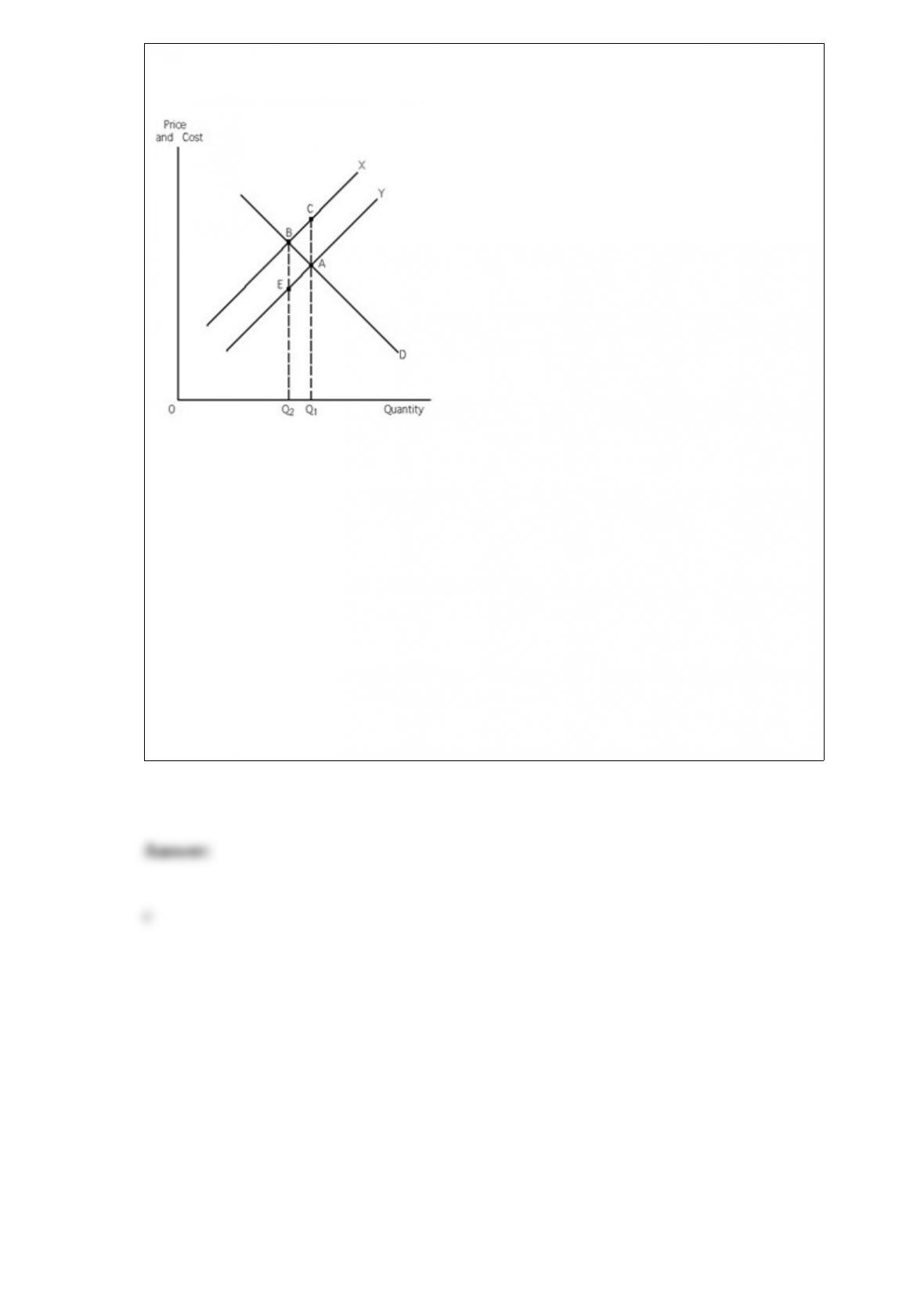
Exhibit 31-1
If the exhibit represents a negative externality situation, then what is Q1?
a. It is the quantity of output at which marginal social costs (
b. It is the quantity of output at which MPC >
c. It is the market output; it is the quantity of output that exists if the external costs
associated with the negative externality are not taken into account.
d. It is the socially optimal output; it is the quantity of output that exists if the external
costs associated with the negative externality are taken into account.
e. none of the above
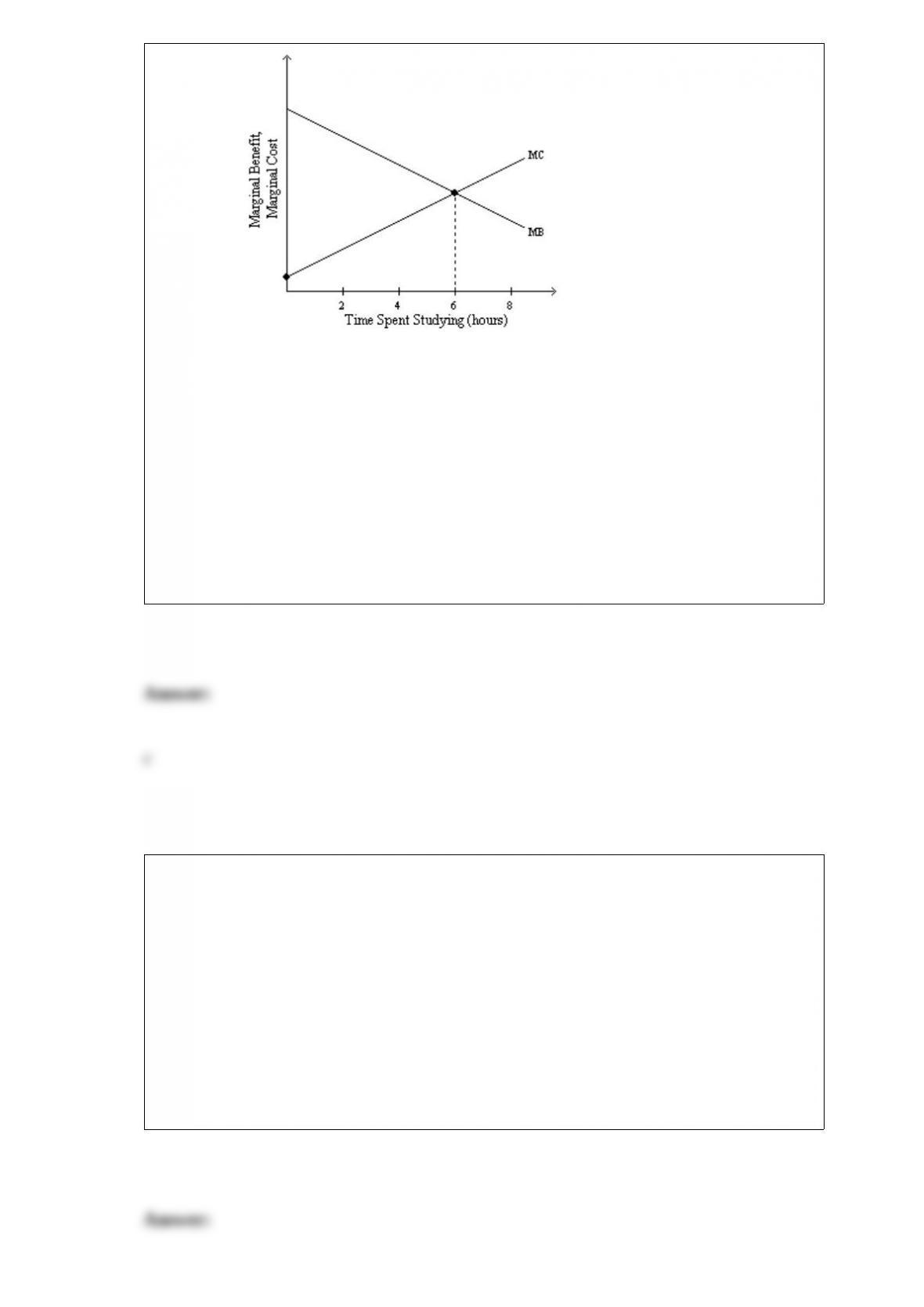
Exhibit 1-1
The student whose study habits are illustrated here will maximize the net benefits of
studying when she has studied
a. 2 hours
b. 4 hours
c. 6 hours
d. 8 hours
The acreage allotment program involves
a. no direct payments to farmers.
b. direct payments to farmers.
c. the government leasing land to farmers that is to be cultivated by the farmers.
d. the government leasing land from farmers that is to be cultivated by the government.
e. none of the above
Monopolists are guaranteed to earn a positive economic profit because they are the only
seller in their industry.
a. True
b. False
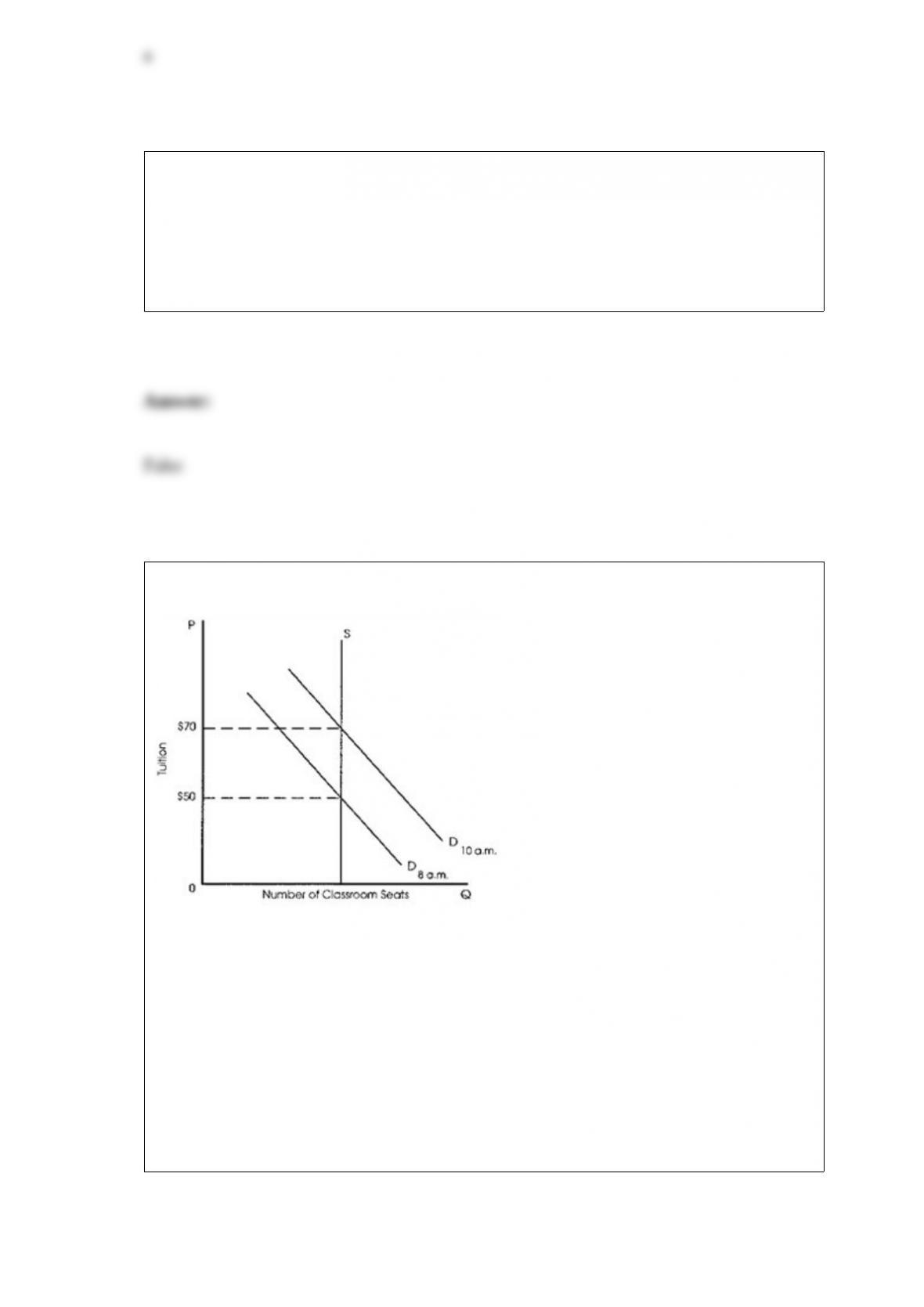
Exhibit 5-2
If the tuition is set at $40, there will need to be some kind of non-price rationing device
used for
a. 8 a.m. classes.
b. 10 a.m. classes.
c. a and b
d. none of the above

A tax credit given to first-time home buyers would result in a _____________ shift in
the ______________ curve for housing, which would lead to the unintended result of
a(n) _____________ in the price of housing.
a. leftward; supply; increase
b. leftward; demand; decrease
c. rightward; supply; decrease
d. rightward; demand; increase
e. none of the above
A perfectly competitive firm will maximize its profits by hiring factors up to the point
at which
a. MRP > MFC.
b. VMP > MFC.
c. MRP = MFC.
d. VMP = MFC.
e. c and d

A cost of resources used in production for which no actual monetary payment is made is
a(n) __________ cost.
a. tacit
b. implicit
c. covert
d. explicit
Consider two points on the PPF: point A, at which there are 10 apples and 20 pears, and
point B, at which there are 7 apples and 21 pears. If the economy is currently at point A,
the opportunity cost of moving to point B is
a. 1 pear.
b. 7 apples.
c. 3 apples.
d. 21 pears.
What is the difference between uncertainty and risk?
a. Risk deals with people, uncertainty with events.

b. Uncertainty deals with people, risk deals with events.
c. Risk exists when the probability of a given event cannot be estimated, whereas
uncertainty exists when the probability of a given event can be estimated.
d. Uncertainty exists when the probability of a given event cannot be estimated,
whereas risk exists when the probability of a given event can be estimated.
e. b and d
Making a manager a residual claimant is often a way of
a. forming a partnership.
b. increasing the efficiency of a nonprofit firm.
c. reducing the incentive of the manager to shirk.
d. redirecting the firm to the objective of revenue maximization.
For the perfectly price-discriminating monopolist, its __________ curve is the same as
its __________ curve.
a. marginal cost; average fixed cost
b. average variable cost; average total cost
c. demand; marginal revenue
d. demand; marginal cost

e. marginal revenue; marginal product of labor