1) If the income effect counteracts the substitution effect, we know that the good in
question is a(n)
a.complementary good.
b.inferior good.
c.luxury good.
d.normal good.
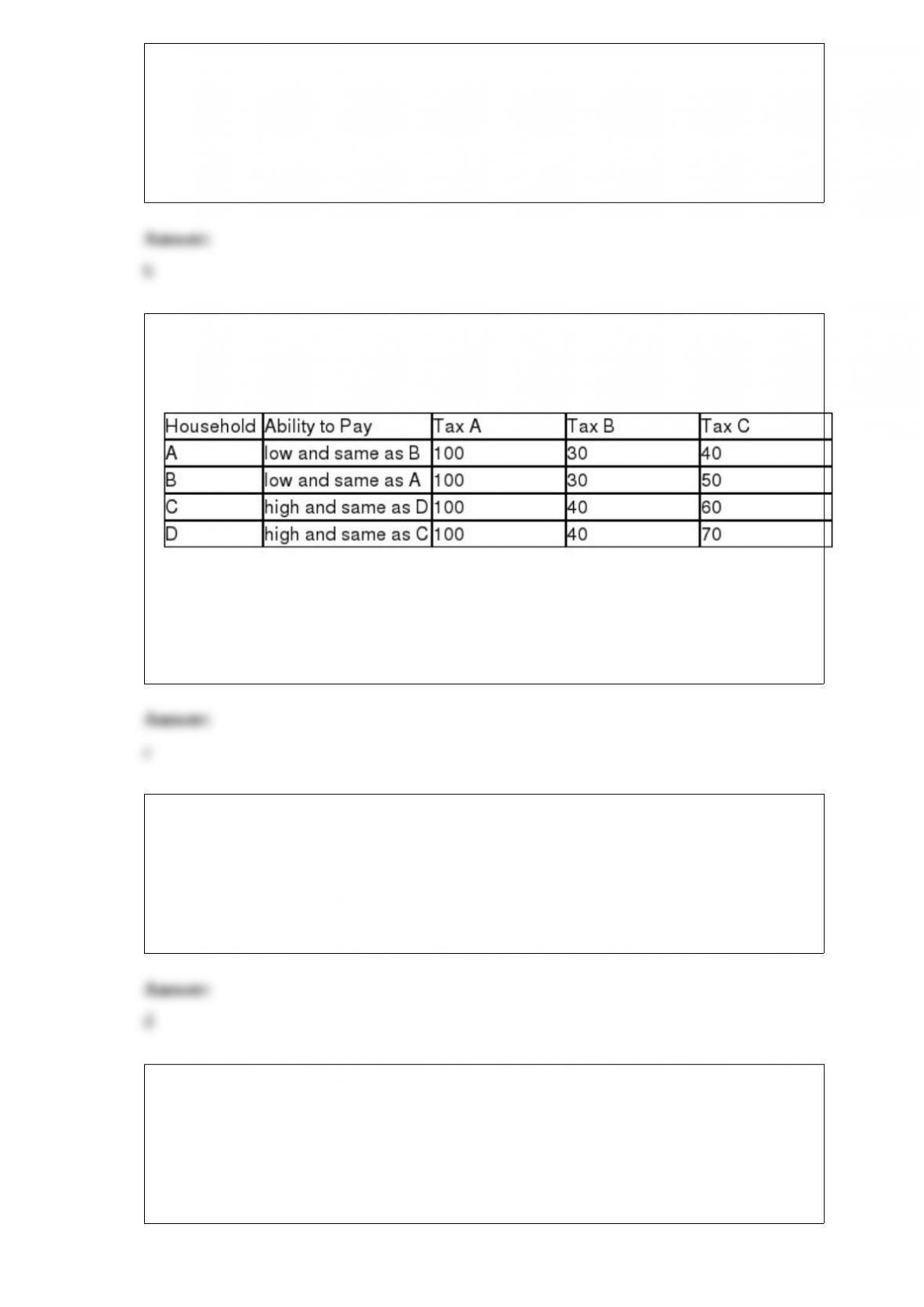
2) Table 12-13
The table below provides information on the 4 households that make up a small
economy and how much they would pay in taxes under 3 types of taxes.
In this economy Tax C exhibits
a.horizontal and vertical equity.
b.horizontal equity but not vertical equity.
c.vertical equity but not horizontal equity.
d.neither horizontal nor vertical equity.
3) When economists refer to a production cost that has already been committed and
cannot be recovered, they use the term
a.implicit cost.
b.explicit cost.
c.variable cost.
d.sunk cost.
4) Which of the following events could cause an increase in the supply of ceiling fans?
a.The number of sellers of ceiling fans increases.
b.There is an increase in the price of air conditioners, and consumers regard air
conditioners and ceiling fans as substitutes.
c.There is an increase in the price of the motor that powers ceiling fans.
d.All of the above are correct.

5) In monopolistic competition as well as in monopoly,
a.price exceeds marginal revenue for each firm.
b.profit is zero in a long-run equilibrium for each firm.
c.entry and exit by firms are unrestricted.
d.there are at most a few firms in each market.
6) Which of the following statements about markets is most accurate?
a.Markets are usually a good way to organize economic activity.
b.Markets are usually inferior to central planning as a way to organize economic
activity.
c.Markets fail and are therefore not an acceptable way to organize economic activity.
d.Markets are a good way to organize economic activity in developed nations, but not in
less developed nations.
7) In 2011, social insurance taxes represented approximately what percentage of total
receipts for the federal government?
a.5%
b.12%
c.36%
d.44%
8) Suppose that a worker in Boatland can produce either 5 units of wheat or 25 units of
fish per year, and a worker in Farmland can produce either 25 units of wheat or 5 units
of fish per year. There are 10 workers in each country. Political pressure from the fish
lobby in Farmland and from the wheat lobby in Boatland has prevented trade between
the two countries on the grounds that cheap imports would kill the fish industry in
Farmland and the wheat industry in Boatland. As a result, Boatland produces and
consumes 25 units of wheat and 125 units of fish per year while Farmland produces and
consumes 125 units of wheat and 25 units of fish per year. If the political pressure were
overcome and trade were to occur, each country would completely specialize in the
product in which it has a comparative advantage. If trade were to occur, the combined
output of the two countries would increase by
a.25 units of wheat and 25 units of fish.
b.50 units of wheat and 50 units of fish.
c.75 units of wheat and 75 units of fish.
d.100 units of wheat and 100 units of fish.
9) Good X is a Giffen good. When the price of X increases, the consumer will consume
a.more X.
b.the same amount of X.
c.less X.
d.more or less X depending on the size of the income effect relative to the size of the
substitution effect.
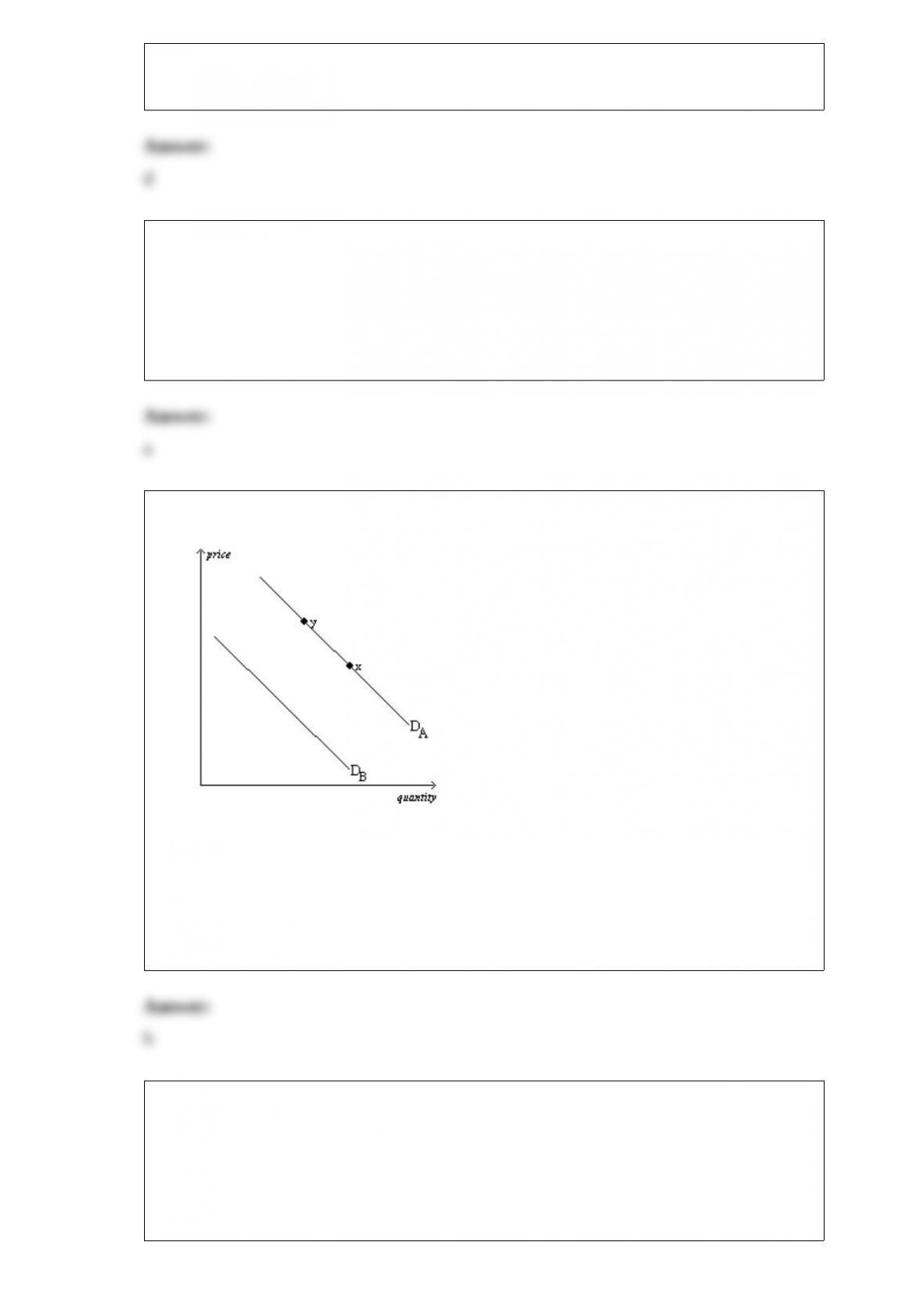
10) The diagram below pertains to the demand for turkey in the United States.
All else equal, the approach of Thanksgiving would cause a move from
a.DA to DB.
b.DB to DA.
c.x to y.
d.y to x.
11) Market economies are distinguished from other types of economies largely on the
basis of
a.the political affiliations of government officials.
b.the process by which government officials are elected or appointed.
c.the ways in which scarce resources are allocated.
d.the number of retail outlets available to consumers.
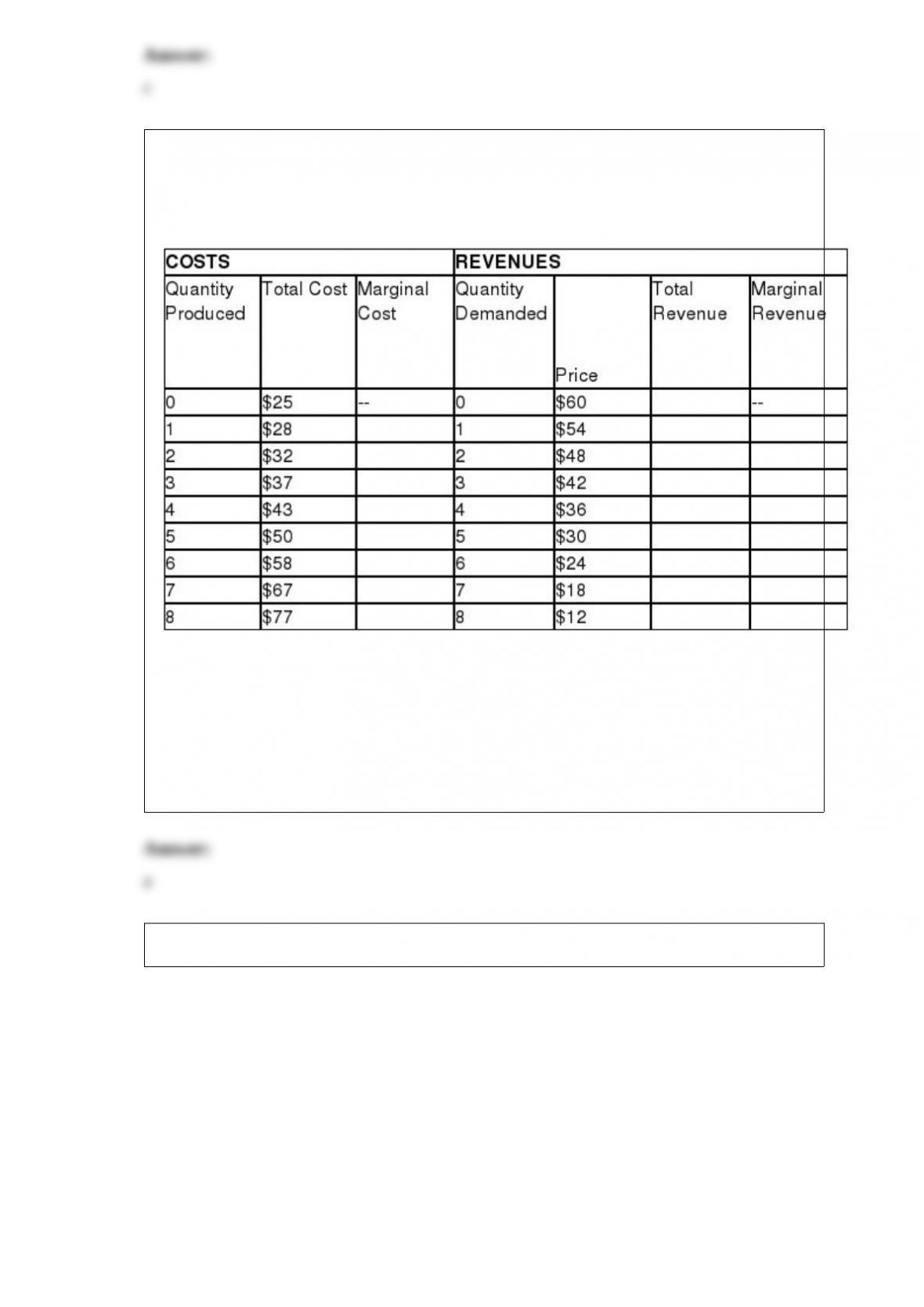
12) Table 16-6
Beatrice’s Birthday Cakes is one bakery among many in the market for birthday cakes.
The following table presents cost and revenue data for birthday cakes at Beatrice’s.
Given the cost and revenue data, Beatrice’s is
a.not in a long-run equilibrium. More businesses will enter the bakery market in the
long-run.
b.not in a short-run equilibrium.
c.not in a long-run equilibrium. Some businesses currently in the bakery market will
exit the market in the long- run.
d.in a long-run equilibrium.
13) Figure 15-23
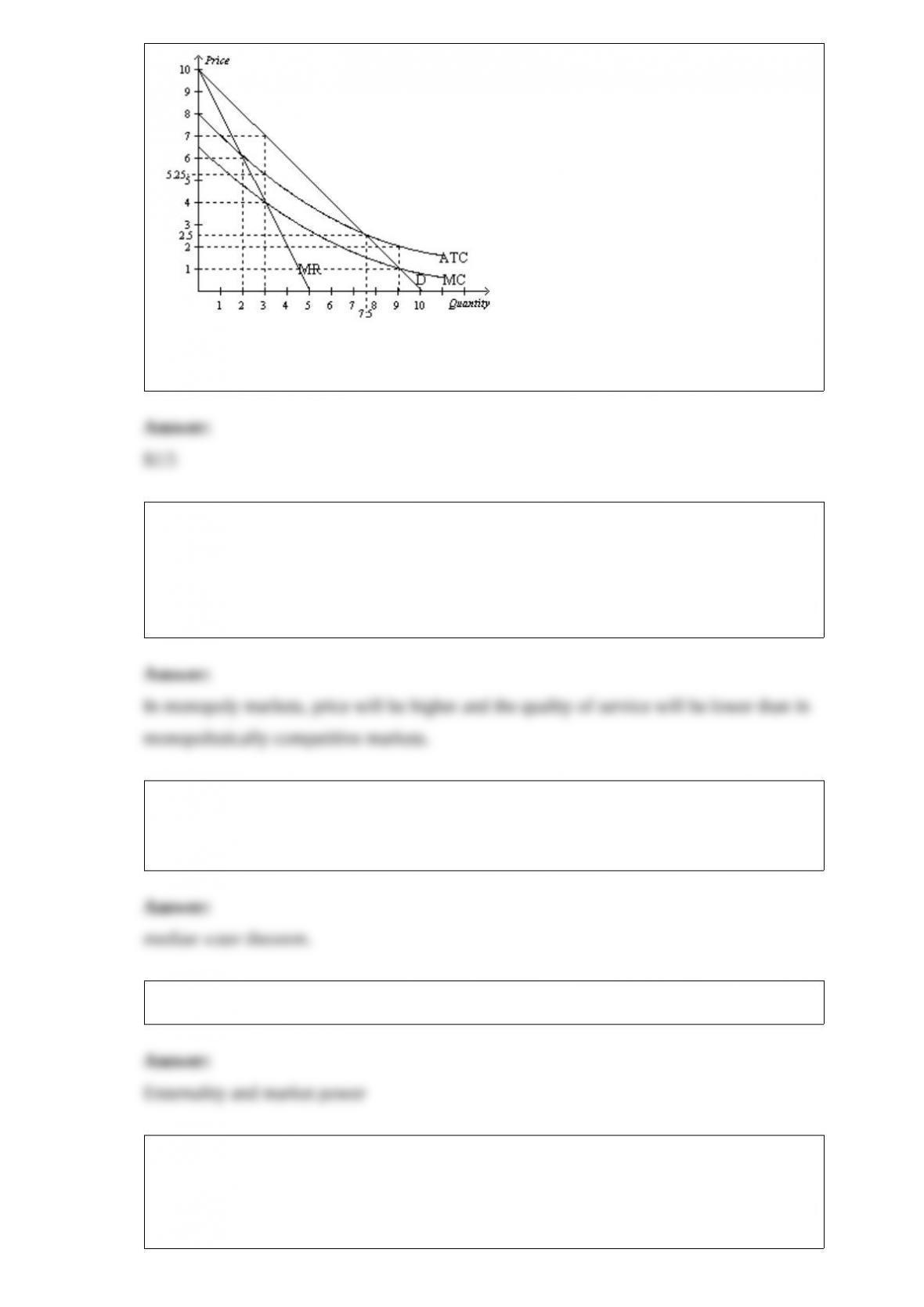
If a regulator requires the firm to charge an average cost price, what price will the firm
charge?
14) In many college towns, private independent bookstores typically locate on the
periphery of the college campus. However, in some college towns, the university has
used political power to restrict private bookstores near campus through community
zoning laws. Use your knowledge of markets to predict the price and quality of service
differences in the market for college textbooks under the two different market regimes.
15) The mathematical result showing that a majority rule voting system will produce
the outcome most preferred by the voter exactly in the middle of the distribution is
called the
16) What are the two possible causes of market failure?
17) In country A a worker who works 40 hours can produce 200 pounds of rice or 100
pounds of broccoli. In country B a worker who works 40 hours can produce 160 pounds
of rice or 120 pounds of broccoli.
Which country, if either, has an absolute advantage producing broccoli? Defend your

answer.
18) Does the phenomenon of externalities strengthen the argument that we should rely
upon the €invisible hand€ of the marketplace, or does it weaken that argument?