
1) (consider this) the main point of the consider this box about hypothetical countries
slogo, sumgo, and speedo is that over several decades differing:
a.inflation rates create large differences in real gdp per capita.
b.economic growth rates create large differences in real gdp per capita.
c.ratios of defense spending to gdp create large differences in real gdp per capita.
d.unemployment rates create large differences in real gdp per capita.
2) The claims of the owners of a firm against the firm’s assets are called:
A.working capital.
B.assets.
C.net worth.
D.liabilities.
3) Even where imitation is possible, a firm may gain advantage from being the first to
introduce an innovative product because of:
A.long-lasting brand-name recognition.
B.a time lag between innovation and imitation by rivals.
C.trade secrets that limit the ability of rivals to imitate the product.
D.all of these.
4) As it applies to insurance, the moral hazard problem is the tendency for:
A.those most likely to collect on insurance to buy it.
B.those who buy insurance to take less precaution in avoiding the insured risk.
C.sellers to price discriminate.
D.sellers to restrict output and charge high prices.
5) which of the following sets of countries were among those admitted to the european
union in 2004?
a.spain, portugal, and turkey
b.estonia, bulgaria, and switzerland
c.poland, hungary, and the czech republic
d.belgium, the netherlands, and luxembourg
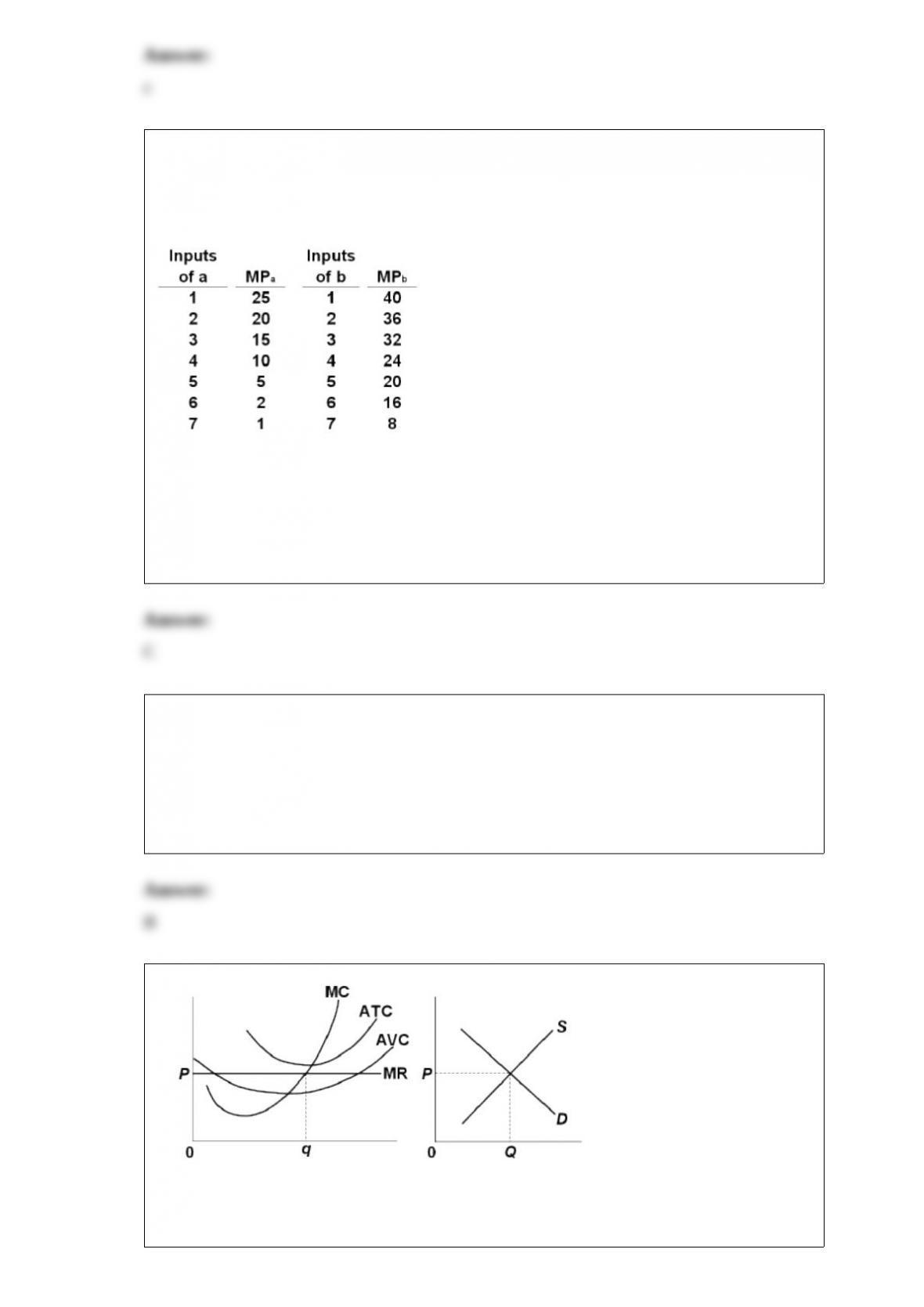
6) Answer the question on the basis of the following marginal product data for
resources a and b. The output of these independent resources sells in a purely
competitive market at $1 per unit.
Refer to the above data. Assuming the prices of resources a and b are $5 and $8
respectively, what is the profit-maximizing combination of resources?
A.7 of a and 7 of b
B.6 of a and 4 of b
C.5 of a and 7 of b
D.4 of a and 4 of b
7) From 2004 to 2006 the Fed raised the Federal funds rate gradually in a series of
steps. The Fed’s purpose was to raise the prime interest rate so that:
A.high inflation rates would fall.
B.aggregate demand would continue to grow consistently and with low inflation.
C.aggregate supply would grow, increasing output and lowering the price level.
D.banks would reduce lending that was building up unmanageable consumer debt.
8)
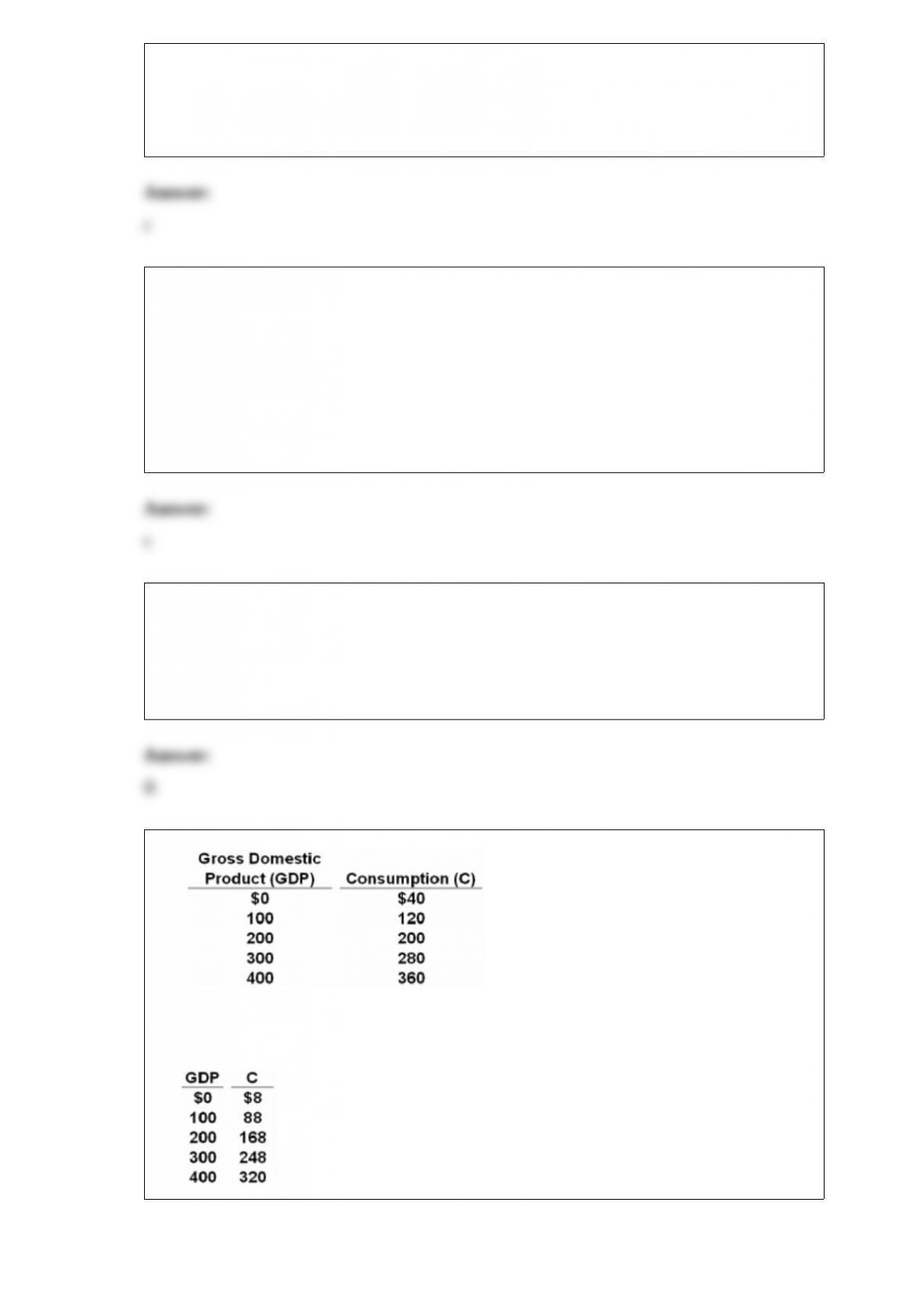
refer to the above diagrams, which pertain to a purely competitive firm producing
output q and the industry in which it operates. the predicted long-run adjustments in this
industry might be offset by:
a.a decline in product demand.
b.an increase in resource prices.
c.a technological improvement in production methods.
d.entry of new firms into the industry.
9) national income measures:
a.nominal gdp after it has been inflated or deflated for changes in the value of the
dollar.
b.the after-tax income of resource suppliers.
c.the total of all sources of private income plus government revenue from taxes on
production and imports.
d.the amount of wage, rent, interest, and profits income actually received by
households.
10) Which of these sets of nations are low-income developing nations?
A.Brazil, Australia, South Africa
B.Uganda, India, and Madagascar
C.Canada, Switzerland, and France
D.Germany, South Korea, and Mexico
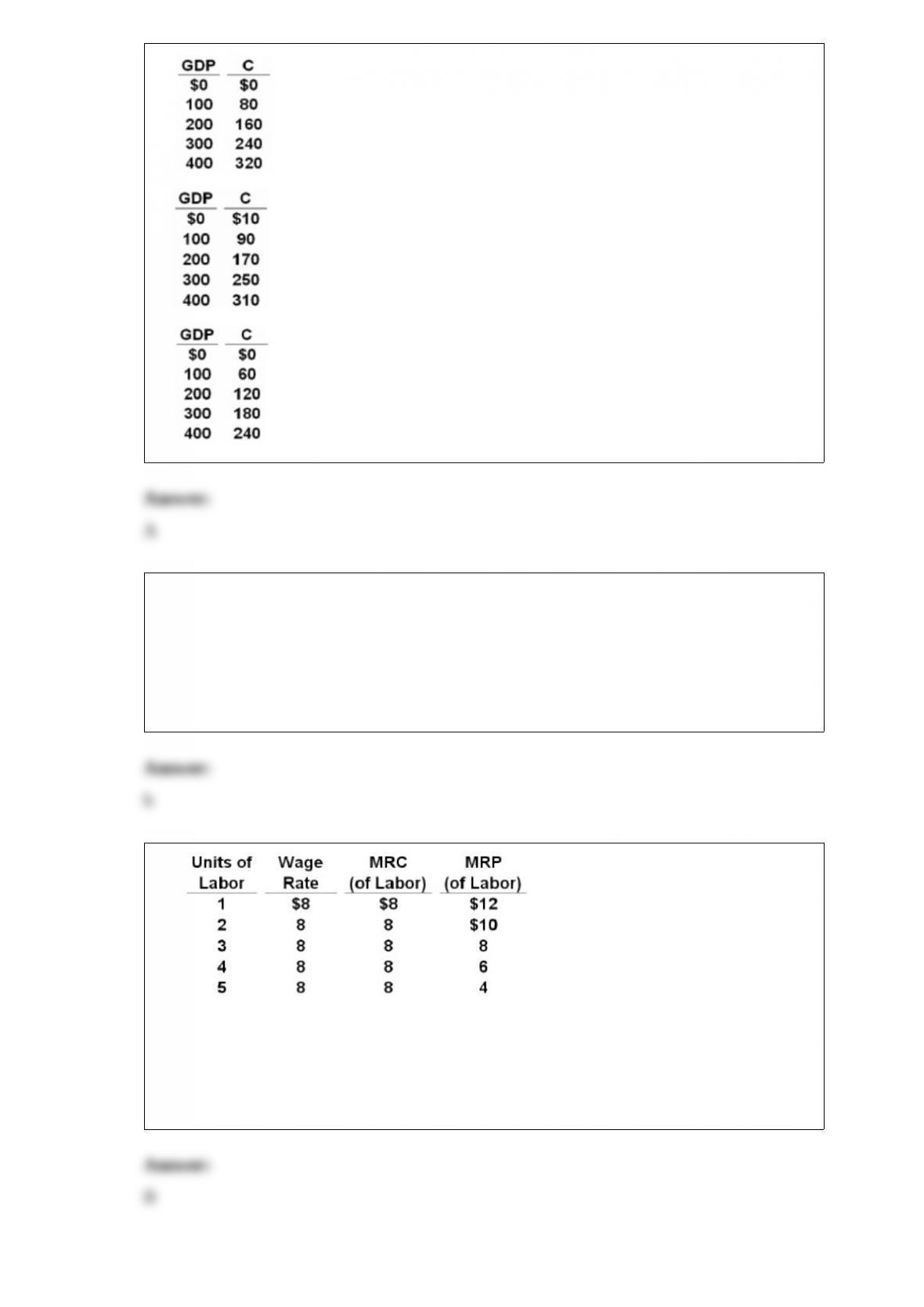
11)
Refer to the above data. If a lump-sum tax (the same tax amount at each level of GDP)
of $40 is now imposed in this economy, the consumption schedule will be:
A.
B.
C.
D.
12) the economy characterized by the above data is:
a.experiencing inflation because disposable income exceeds personal income.
b.experiencing declining production capacity because net investment is negative.
c.in a depression because personal income exceeds disposable income.
d.experiencing expanding production capacity because net private domestic investment
is positive.
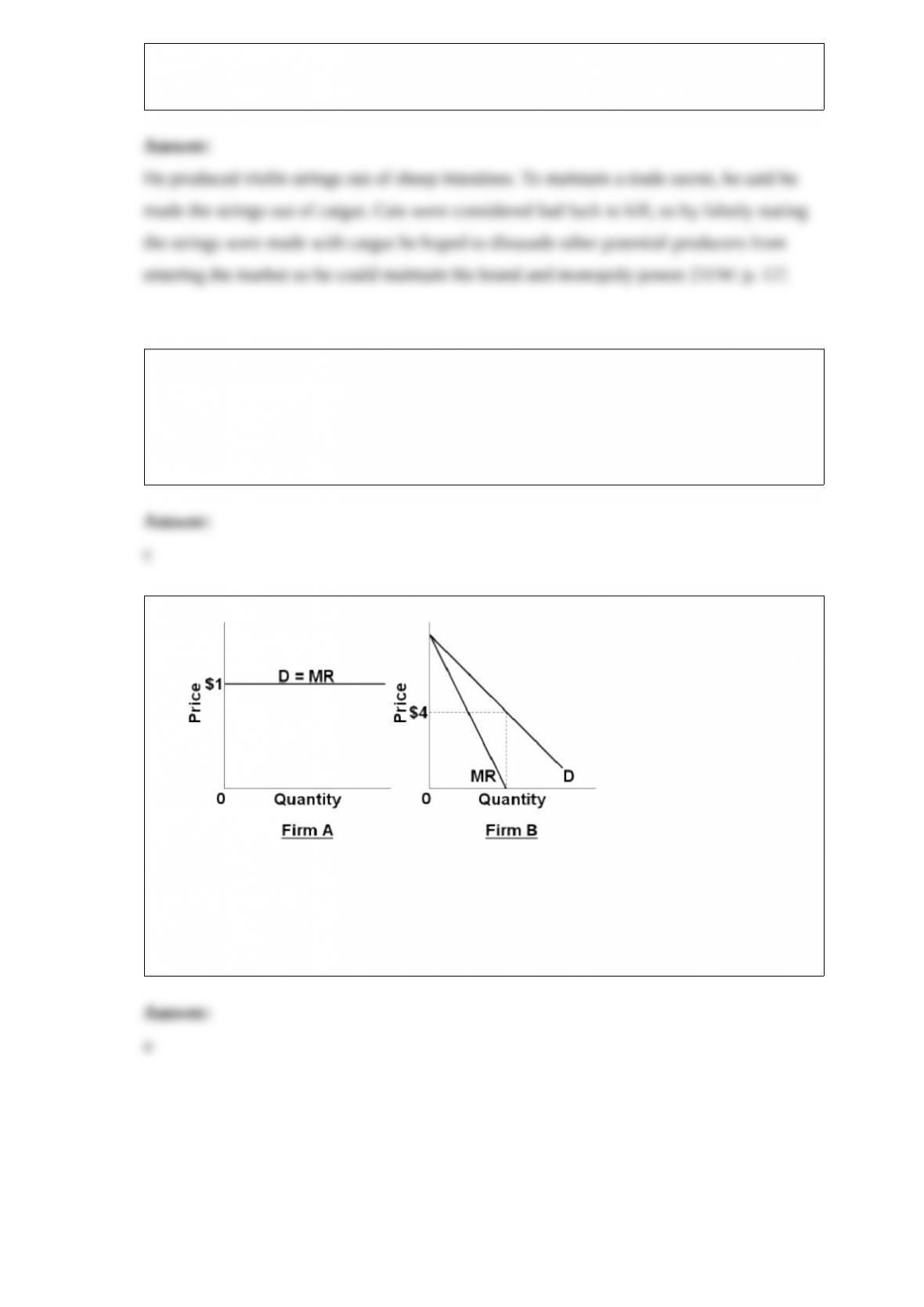
13)
Refer to the above data. In maximizing its profit, this firm will employ:
A.2 units of labor.
B.3 units of labor.
C.4 units of labor.
D.5 units of labor.
14) (Consider This) What product did the Roman citizen Erasmo (c. 130 A.D.) produce
and how did he maintain his trade secret?
15) which of the following is a supply factor in the health care market?
a.defensive medicine
b.the aging of the population
c.slow productivity growth in the health care industry
d.asymmetric information
16)
refer to the above diagrams. firm a is a:
a.pure competitor and firm b is a pure monopoly.
b.pure competitor, as is firm b.
c.pure monopoly and firm b is a pure competitor.
d.pure monopoly, as is firm b.
17)
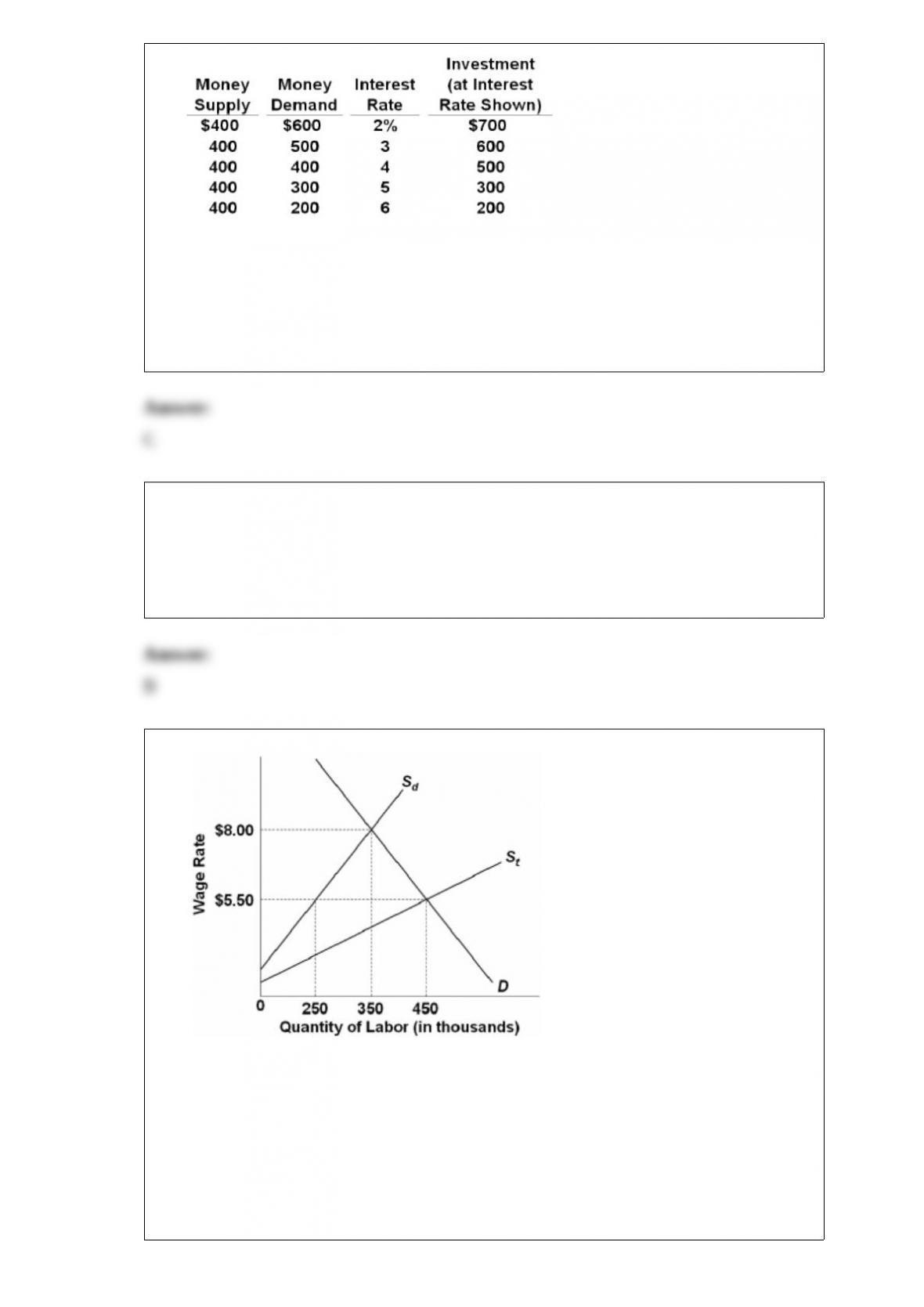
Refer to the above table. The amount of investment that will be forthcoming in this
economy at equilibrium is:
A.$700.
B.$600.
C.$500.
D.$300.
18) Dumping of goods abroad:
A.constitutes a general case for permanent tariffs.
B.may be part of a firm’s price discrimination strategy.
C.may be part of a nation’s strategy to rectify its trade deficit.
D.drives up prices of the dumped goods.
19)
assumptions: 1) employers in this market are willing and able to ignore minimum wage
laws; 2) sd represents the supply of domestically-born (and legal immigrant) workers;
3) st represents the total supply of workers in this labor market (sd plus illegal
immigrants); and 4) unless otherwise stated, illegal immigration is not effectively
blocked by the government.
refer to the above figure. how many illegal immigrant workers will be hired at
equilibrium?

a.200,000
b.250,000
c.350,000
d.450,000