1) economic research consistently finds that immigration negatively impacts the
average american wage.
2) An increase in the price of capital will reduce the demand for labor if capital and
labor are complementary resources.
3) Modernizing economies that have declining birthrates may still experience
population growth because of rapidly declining death rates.
4) Built-in stability is synonymous with discretionary fiscal policy.
5)
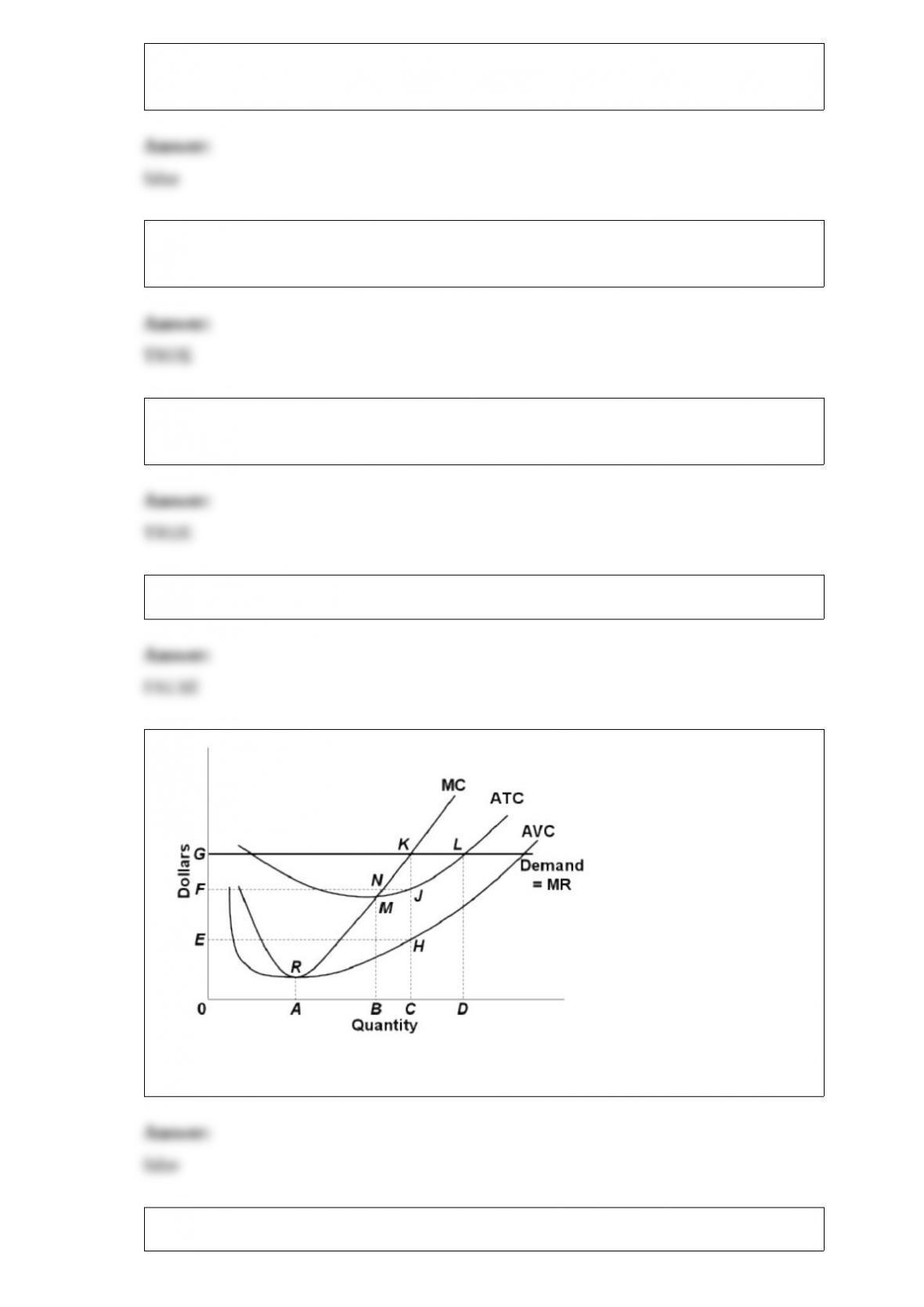
refer to the above diagram. if this firm is producing at the profit-maximizing level of
output in the short run, then it is achieving productive and allocative efficiency.
6) Equal increases in government expenditures and tax collections will leave the
equilibrium GDP unchanged.
7) the income effect explains an exception to the law of demand.
8) certain inherently desirable products such as education and health care should be
produced so long as resources are available.
9)
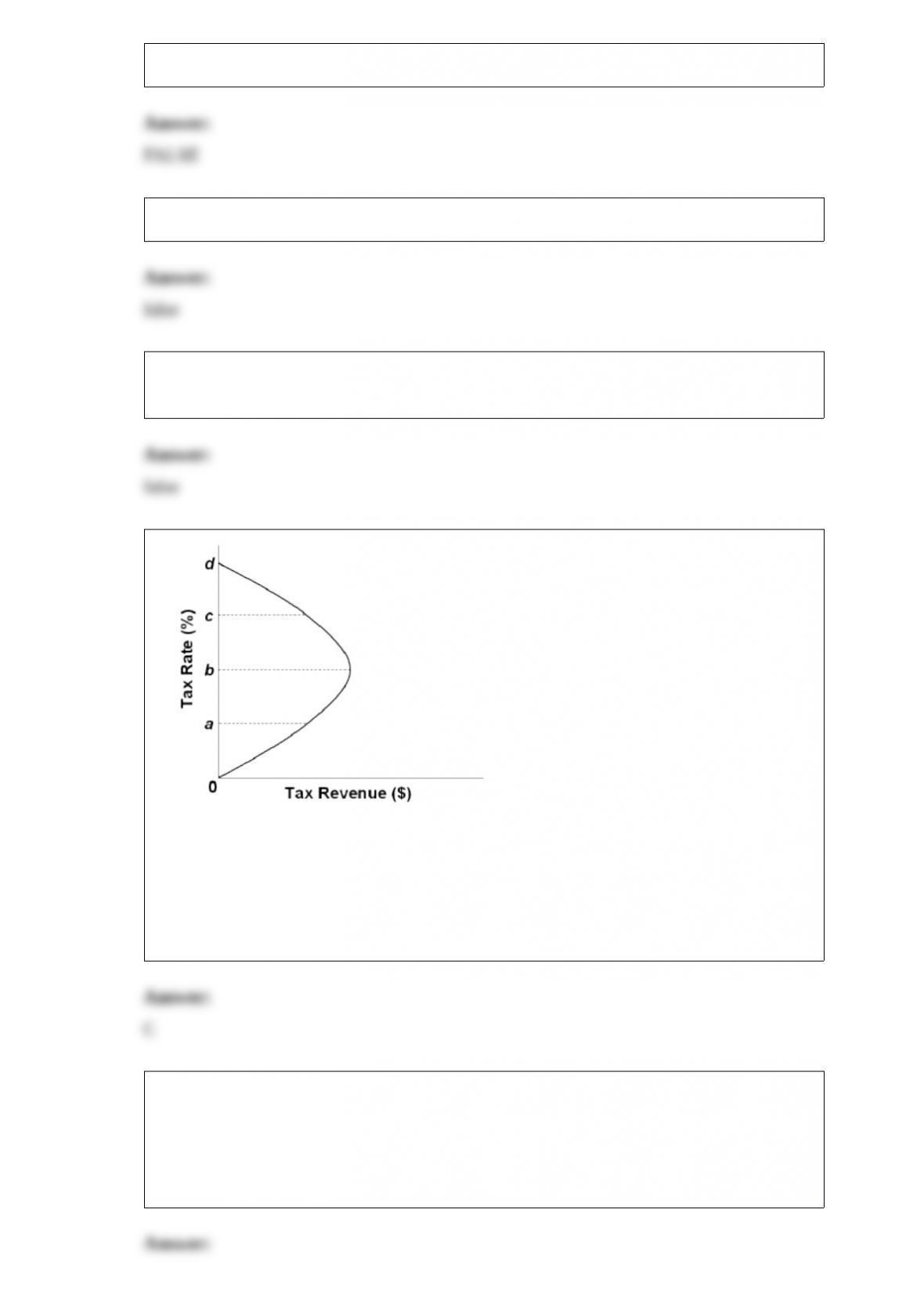
Refer to the above diagram. If the tax rate is currently c and the government wants to
maximize tax revenue, it should:
A.leave the tax rate at c
B.increase the tax rate to d
C.reduce the tax rate to b
D.reduce the tax rate to a
10) Which of the following is correct?
A.Both the granting and repaying of bank loans expand the aggregate money supply.
B.Granting and repaying bank loans do not affect the money supply.
C.Granting a bank loan destroys money; repaying a bank loan creates money.
D.Granting a bank loan creates money; repaying a bank loan destroys money.
11)
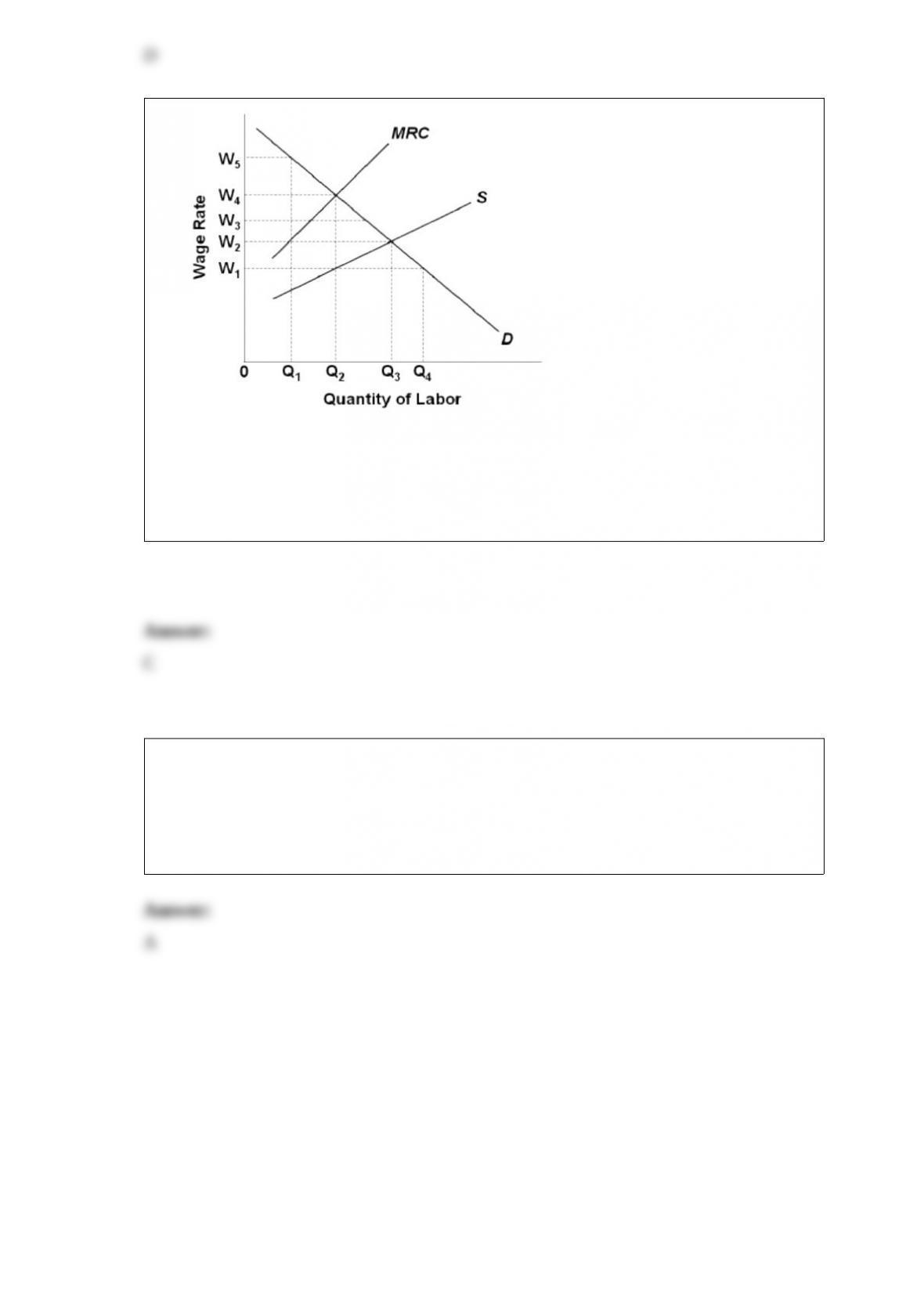
Refer to the above diagram. The MRC curve lies above the labor supply curve because:
A.any number of workers can be hired at the going equilibrium wage rate.
B.the firm must lower product price to increase its sales.
C.the higher wage needed to attract additional workers must also be paid to the workers
already employed.
D.there is an inverse relationship between wage rate and the amount of labor employed.
12) The economy’s long-run AS curve assumes that wages and other resource prices:
A.eventually rise and fall to match upward or downward changes in the price level.
B.are flexible upward but inflexible downward.
C.rise and fall more rapidly than the price level.
D.are relatively inflexible both upward and downward.
13)
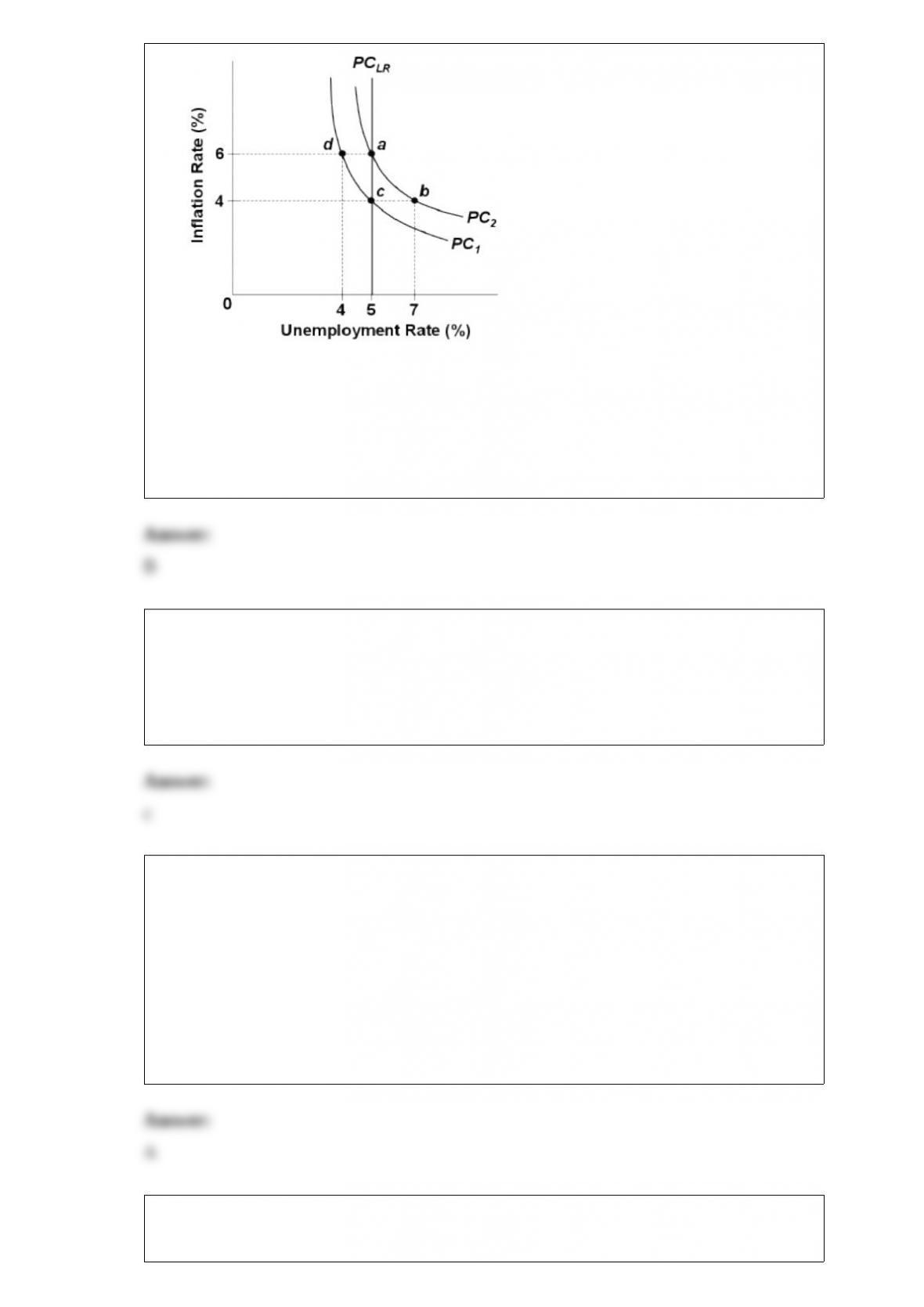
Refer to the above diagram. Point b would not be permanent because the:
A.economy would move from b to a on PC1.
B.short-run Phillips Curve would shift from PC1 to PC2 and unemployment would
increase to the natural rate at c
C.economy would immediately move from b to c to d
D.economy would move from b directly to d
14) if competitive industry z is making substantial economic profit, output will:
a.fall in industry z, and firms will likely leave the market.
b.fall in all industries except industry z.
c.expand in industry z, as more resources will move to that industry.
d.expand in industry z, but no new firms will enter the market.
15) Which of the following is a true statement?
A.Surpluses in the Federal budget between 1998 and 2001 gave way to a budget deficit
in 2002.
B.Surpluses in the Federal budget between 1992 and 1997 gave way to budget deficits
between 1998 and 2002.
C.The swing from budget surpluses in the late 1990s to budget deficits in the early
2000s resulted exclusively because of a downturn in the economy.
D.The swing from budget surpluses in the late 1990s to budget deficits in the early
2000s resulted exclusively from deep tax cuts by the Bush administration.
16) The following balance sheet for the ABC National Bank in answering the next
question(s). Assume the required reserve ratio is 20 percent.
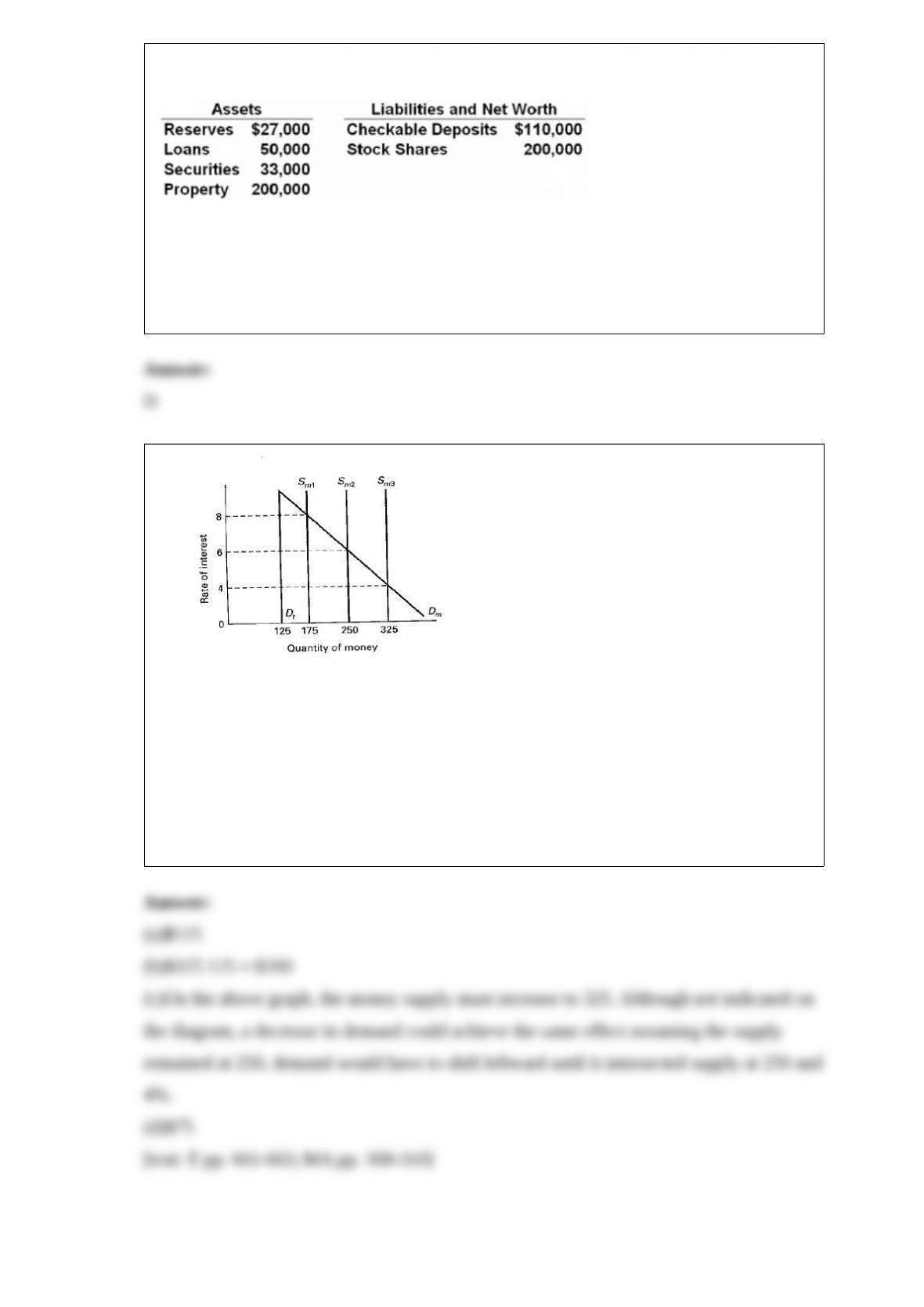
Refer to the above data. This commercial bank has excess reserves of:
A.$0.
B.$3,000.
C.$12,000.
D.$5,000.
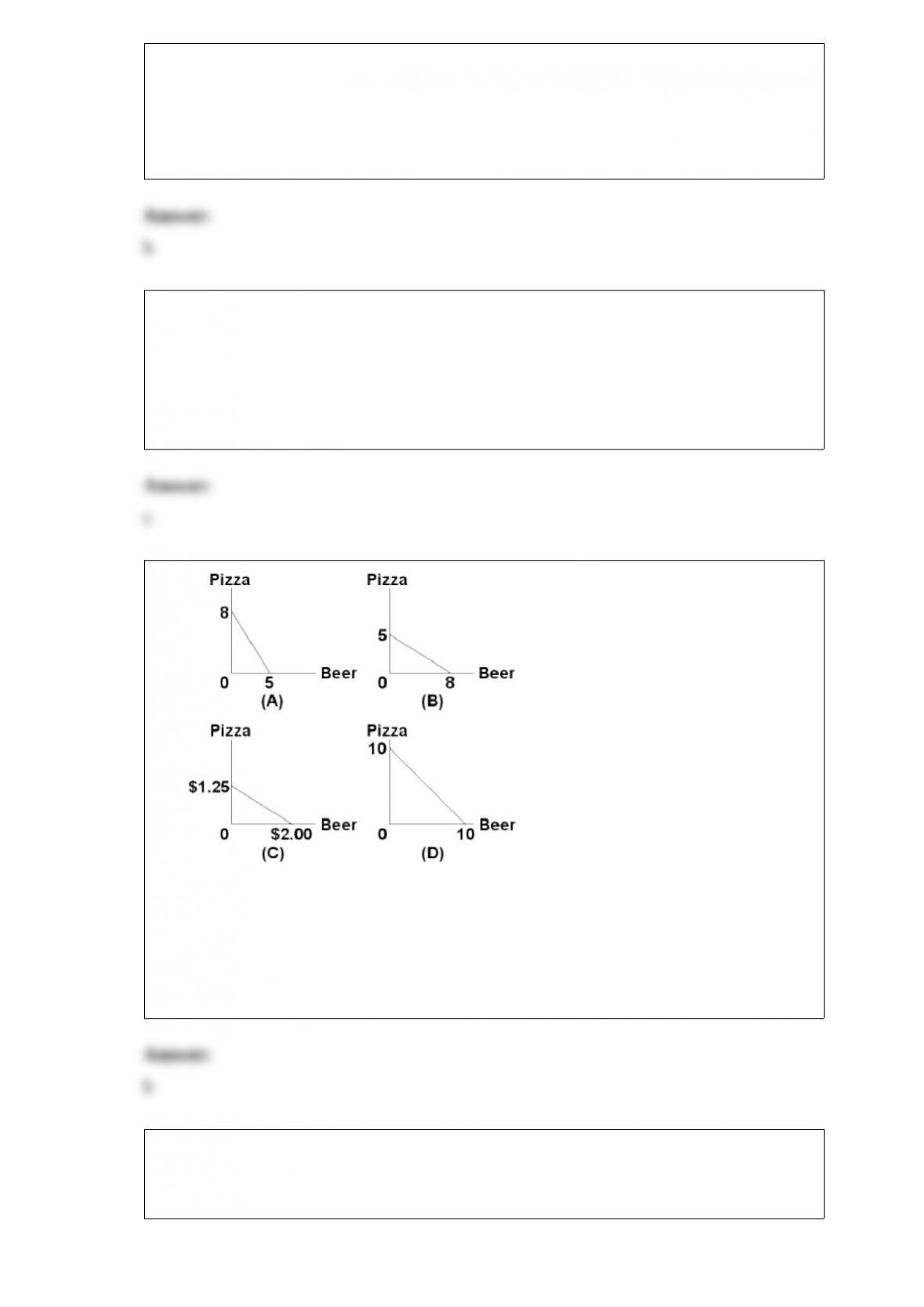
17) Use the graph below to answer the following
questions. Dt is the transactions demand for money, Dm is the total demand for money,
and Sm is the supply of money.
(a)What is the transactions demand for money in this market?
(b)What is the asset demand for money if the interest rate is 4%?
(c)If the money market is in equilibrium at 6%, describe the change that must occur for
the equilibrium rate to change to 4%.
(d)If the money market is in equilibrium at 6% and the money supply has increased to
Sm3, by how much has total demand for money changed?
18) at the current price there is a shortage of a product. we would expect price to:
a.increase, quantity demanded to increase, and quantity supplied to decrease.
b.increase, quantity demanded to decrease, and quantity supplied to increase.
c.increase, quantity demanded to increase, and quantity supplied to increase.
d.decrease, quantity demanded to increase, and quantity supplied to decrease.
19) if production is occurring where marginal cost exceeds price, the purely competitive
firm will:
a.maximize profit, but resources will be underallocated to the product.
b.maximize profit, but resources will be overallocated to the product.
c.fail to maximize profit and resources will be overallocated to the product.
d.fail to maximize profit and resources will be underallocated to the product.
20)
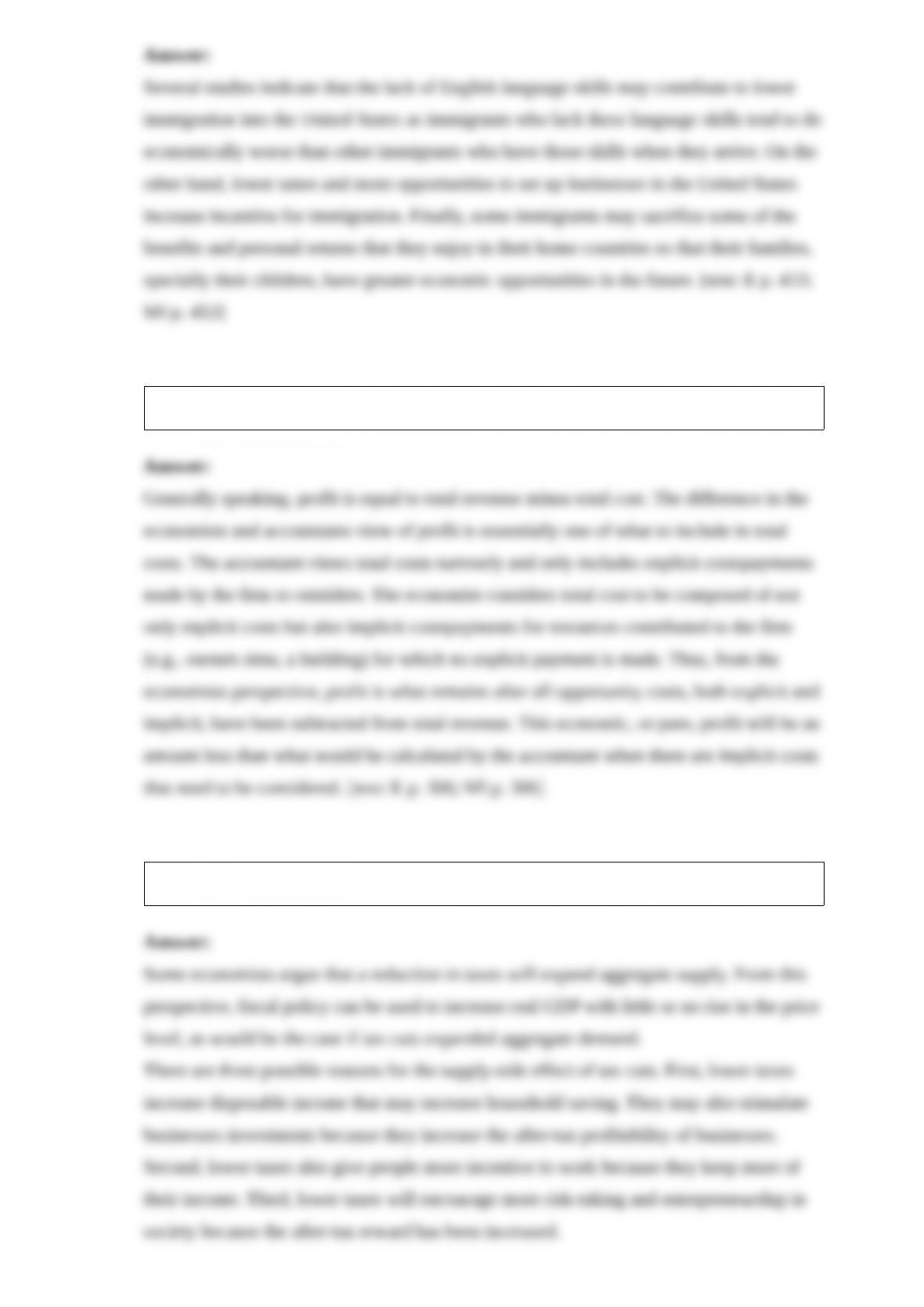
refer to the above graphs. assume that pizza is measured in slices and beer in pints. in
which of the graphs is the opportunity cost of a pint of beer the lowest?
a.graph a
b.graph b
c.graph c
d.graph d
21) Identify at least two factors, other than distance and the age of prospective
migrants, that may affect the cost and benefit calculations of emigrants to the United
States.
22) Explain the difference between the economists and the accountants view of profit.
23) What is supply-side economics? What is the rationale for it? Is it effective?

24) Describe how a firms revenues and profits are increased through product
innovation. What three other points should be noted about these results?
25) Explain why the demand for food is inelastic in terms of the substitution effect and
diminishing returns.
26) What are the characteristics of the recent productivity acceleration that distinguish it
from the economy of previous periods?
27) What economic events and policies led to the emergence of the U.S. economy from
the stagflation of the late 1970s and early 1980s? Depict the effect of these events using
the extended ADAS model.
28) What are the basic differences between public choice theory and the economics of
taxation?