
Profit can be earned by buying _____________ and selling ____________________.
a. at one price; at the same price
b. low; high
c. high: low
d. none of the above
Suppose the production of a good results in positive externalities. If output occurs at the
intersection of the supply curve and the marginal social benefits curve, then
a. the socially optimal level of output will be produced.
b. society will incur a net social cost.
c. society will want less produced, and producers will be willing to satisfy that desire.
d. there is market failure.
If, under a fixed exchange rate system, the dollar price of a Mexican peso is above its
equilibrium level, then the
a. dollar is undervalued.
b. peso is undervalued.
c. dollar has appreciated.
d. peso has depreciated.
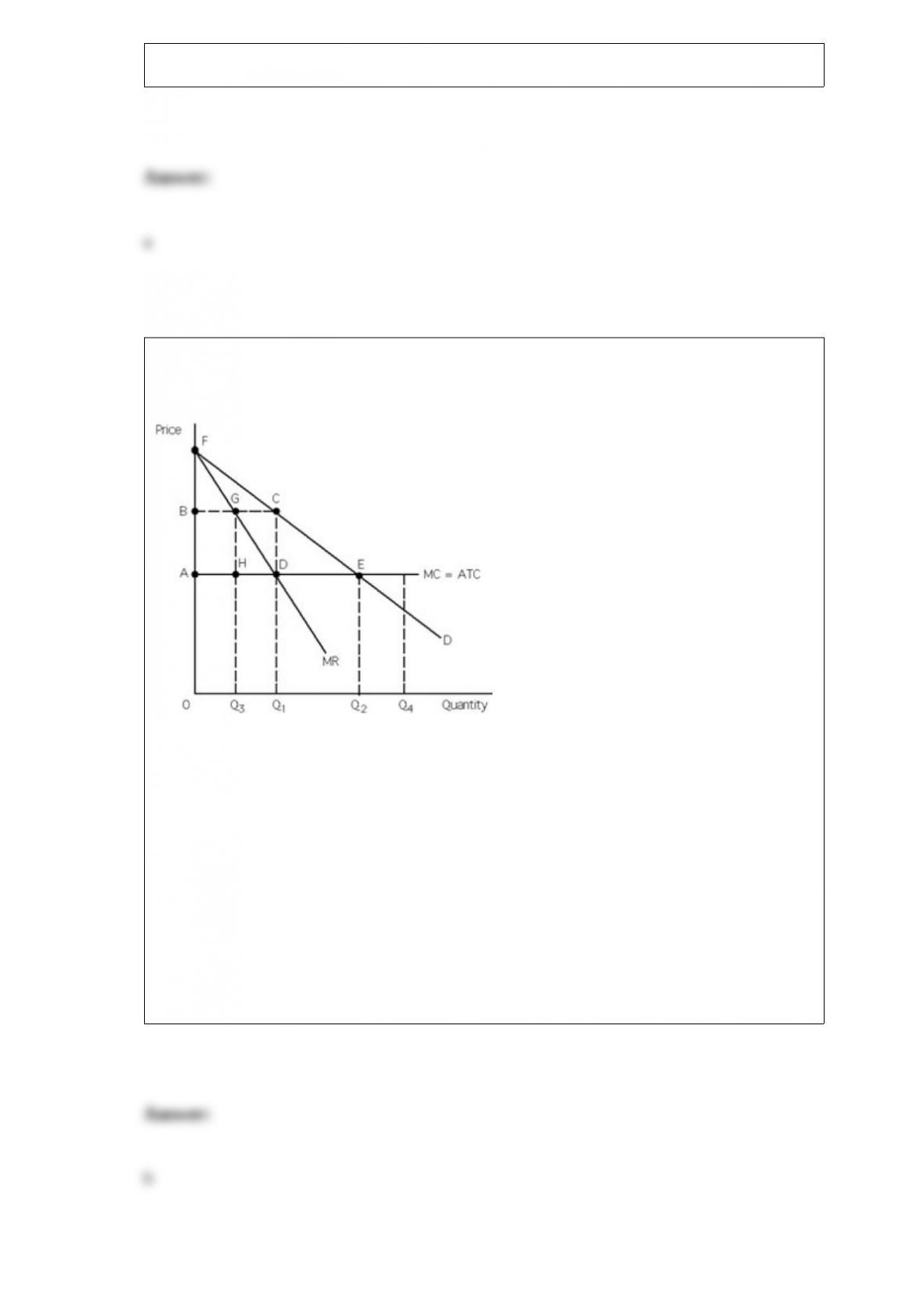
Exhibit 24-10
The profit-maximizing single-price monopolist incurs total cost equal to what area?
a. 0BCQ1
b. 0ADQ1
c. 0AEQ2
d. ABCD
e. GFC

Suppose that the price of peanut butter is $3 per pound and the price of almond butter is
$5 per pound.If the price of peanut butter rises to $3.60 and the price of almond butter
rises to $5.50, then the absolute price of peanut butter has _______________ and the
relative price of peanut butter has _______________.
a. risen; fallen
b. fallen; risen
c. risen; risen
d. fallen; fallen
The public interest theory of regulation holds that regulators will
a. make regulatory decisions that benefit them at the expense of the special interests
they are regulating.
b. be slow to adopt sound economic principles to guide their regulatory
decision-making.
c. do through regulation what is in the public’s best interest.
d. say they are doing what is right for the public, but in reality they are doing what is
right for themselves.
e. often take vacations at taxpayer’s expense.
Exhibit 34-11
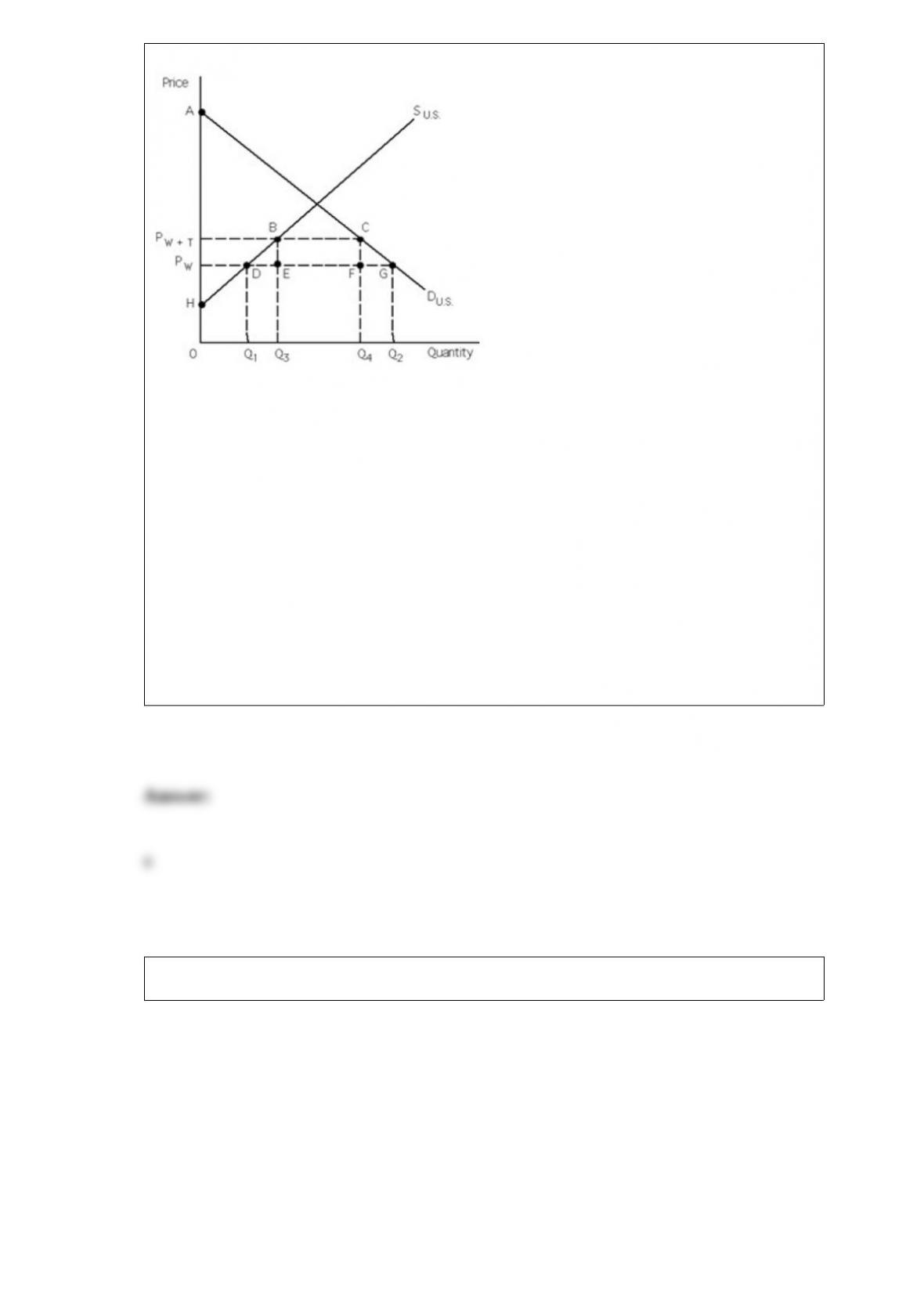
PW is the price that exists in the market before a tariff is imposed and PW + T is the price
that exists in the market after a tariff is imposed. The tariff results in a net loss to
society equal to area(s)
a. DBE + FCG.
b. EBCF.
c. DBE + EBCF.
d. FCG + EBCF.
e. none of the above
Exhibit 28-10
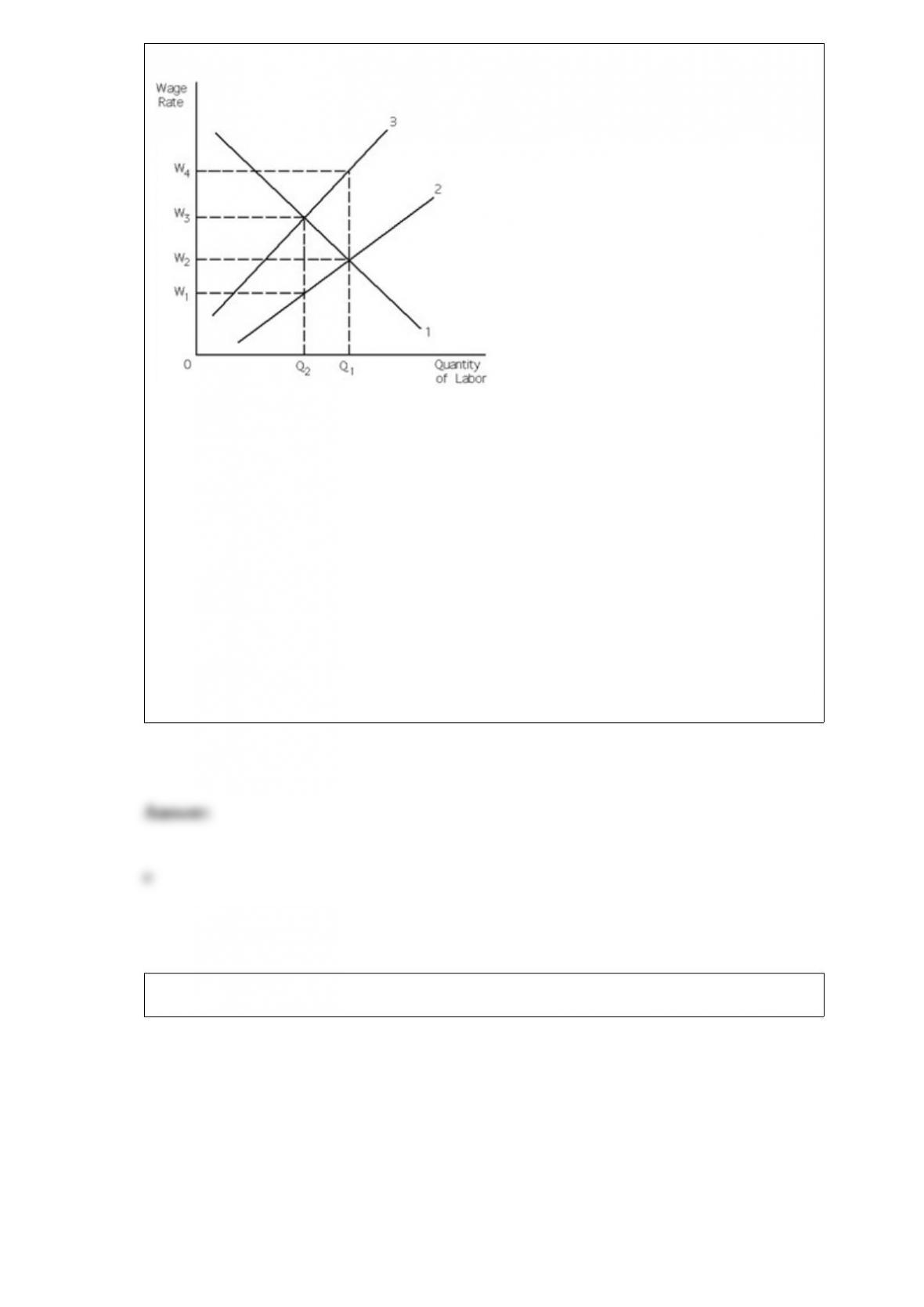
If the firm in the exhibit is a monopsony, then the curve represented by the number 2 is
its __________ curve, and the curve represented by the number 3 is its __________
curve.
a. marginal factor cost; factor supply
b. factor supply; marginal revenue product
c. marginal revenue product; average total cost
d. marginal cost; marginal factor cost
e. factor supply; marginal factor cost
Exhibit 5-3

which shows the demand and supply of a college athlete.If the college is allowed to pay
this student athlete its market equilibrium wage of $10,000, what is the consumers’
surplus for the college that buys this one athlete’s services at this wage?
a. area 1
b. area 2
c. area 3
d. area 1 + 2
The profit-maximizing perfectly competitive firm charges a price equal to __________
while the profit-maximizing monopolistic competitive firm charges a price
__________.
a. marginal revenue; equal to marginal cost
b. marginal cost; greater than marginal cost
c. marginal revenue; greater than marginal revenue
d. average fixed cost; greater than average total cost
e. b and c
Economies of scale are said to exist when inputs are increased by some percentage and
output increases by a(n) __________ percentage, causing unit costs to __________.
a. greater; fall
b. smaller; fall
c. greater; rise
d. smaller; rise
e. equal; fall
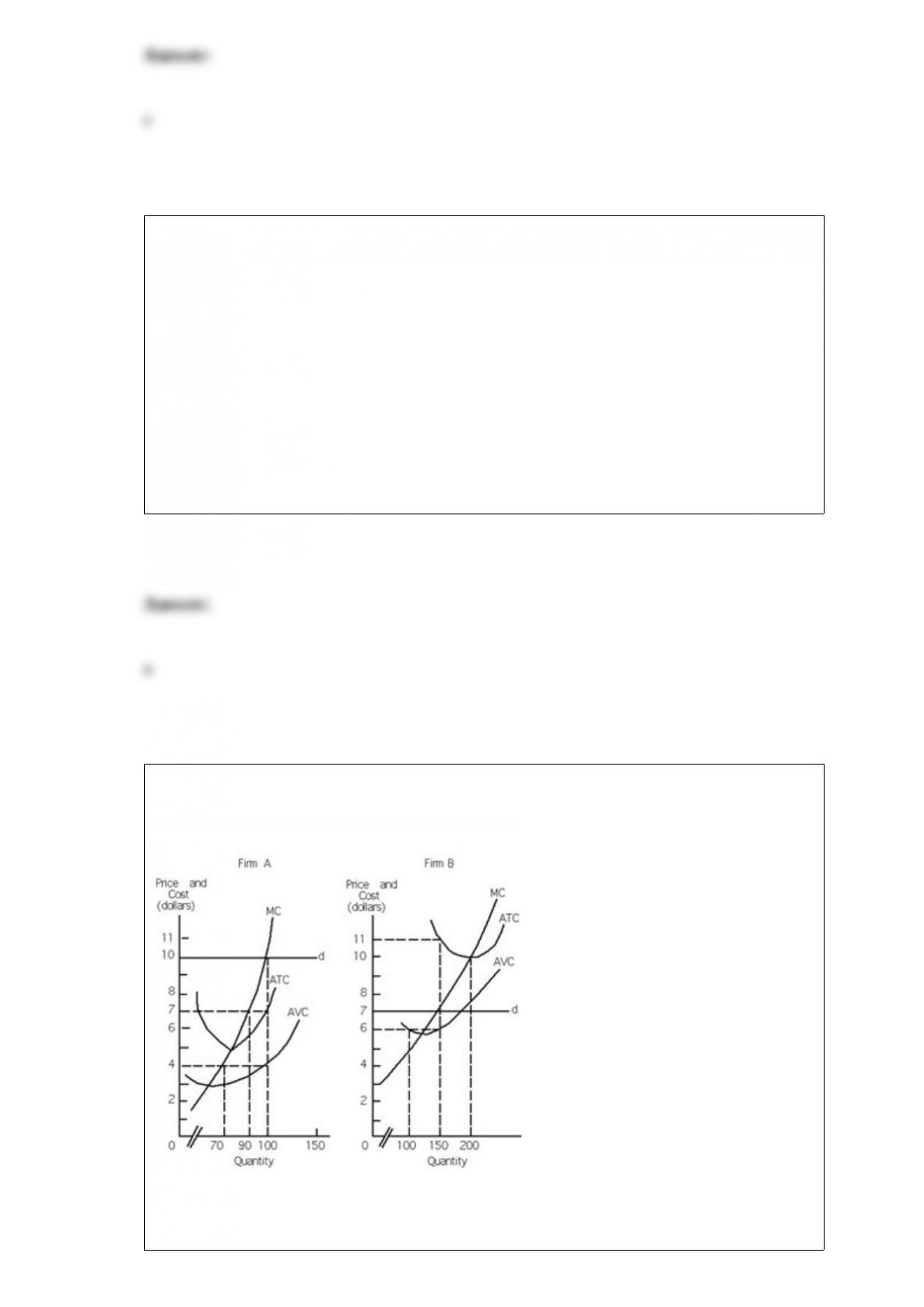
Exhibit 23-8
What is the total revenue of firm B at profit-maximizing (or loss-minimizing) level of
output?

a. $300
b. $700
c. $1,050
d. $400
Which of the following statements is false?
a. There are fewer farms in this country today than there were earlier in this century.
b. In 2000, there were 8 million farms in the United States.
c. Bad weather reduces the supply of foodstuffs and leads to greater farmer total
revenue, assuming demand for the foodstuffs is inelastic.
d. b and c
If 1 percent inflation rather than zero percent inflation is expected by both the suppliers
and demanders of loanable funds, then the nominal interest rate will
a. fall, ceteris paribus.
b. remain constant.
c. rise.
d. rise, ceteris paribus.

Exhibit 20-9
What is the price elasticity of demand between $2 and $4?
a. 2.0
b. 0.75
c. 1.33
d. 0.50
A normal good is
a. any good that consumers normally buy.
b. any good for which other goods can substitute.
c. a good for which the demand rises as income falls.
d. a good for which the demand rises as income rises.
e. a good for which the quantity demanded rises as its price falls.