
A firm using a two-part tariff can produce the economically efficient outcome by
A) making the fixed-fee portion of the price as low as possible.
B) setting the per-unit portion of the price equal to the marginal cost of production.
C) setting the per-unit portion of the price equal to the average cost of production.
D) setting the fixed-fee portion of the price at some proportion to the fixed cost of
production.
A perfectly competitive wheat farmer in a constant-cost industry produces 3,000
bushels of wheat at a total cost of $36,000. The prevailing market price is $15. What
will happen to the market price of wheat in the long run?
A) The price remains constant at $15.
B) The price falls to $12.
C) The price rises above $15.
D) There is insufficient information to answer the question.
Firms use information on labor’s marginal revenue product to determine
A) how much to produce at each output price.
B) how many workers to hire at each wage rate.
C) how much marginal product to produce at each wage rate.

D) how much labor services to supply at each wage rate.
The Arrow impossibility theoremstates that
A) no system of voting can be devised that will always consistently represent the
underlying preferences of voters.
B) it is impossible for a majority voting system not to consistently represent the
preferences of voters.
C) it is impossible to separate corporate desires from public bureaucracy.
D) no system of voting can be devised that will ensure a 100 percent voter turnout.
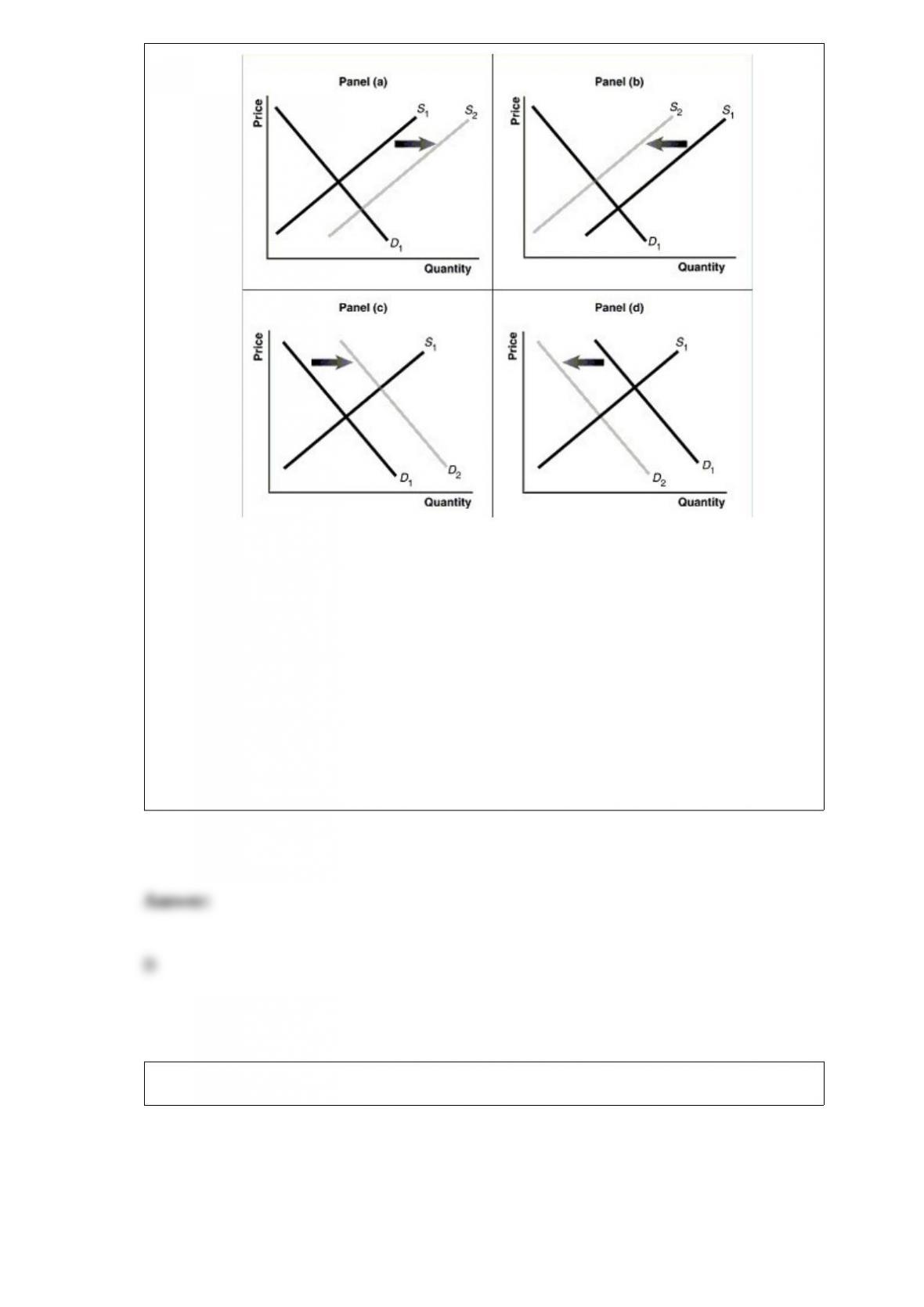
Figure 3-7
Assume that the graphs in this figure represent the demand and supply curves for tuna.
Which panel best describes what happens in this market when there is a decrease in the
productivity of commercial fishermen?
A) Panel (a)
B) Panel (b)
C) Panel (c)
D) Panel (d)
Figure 2-12
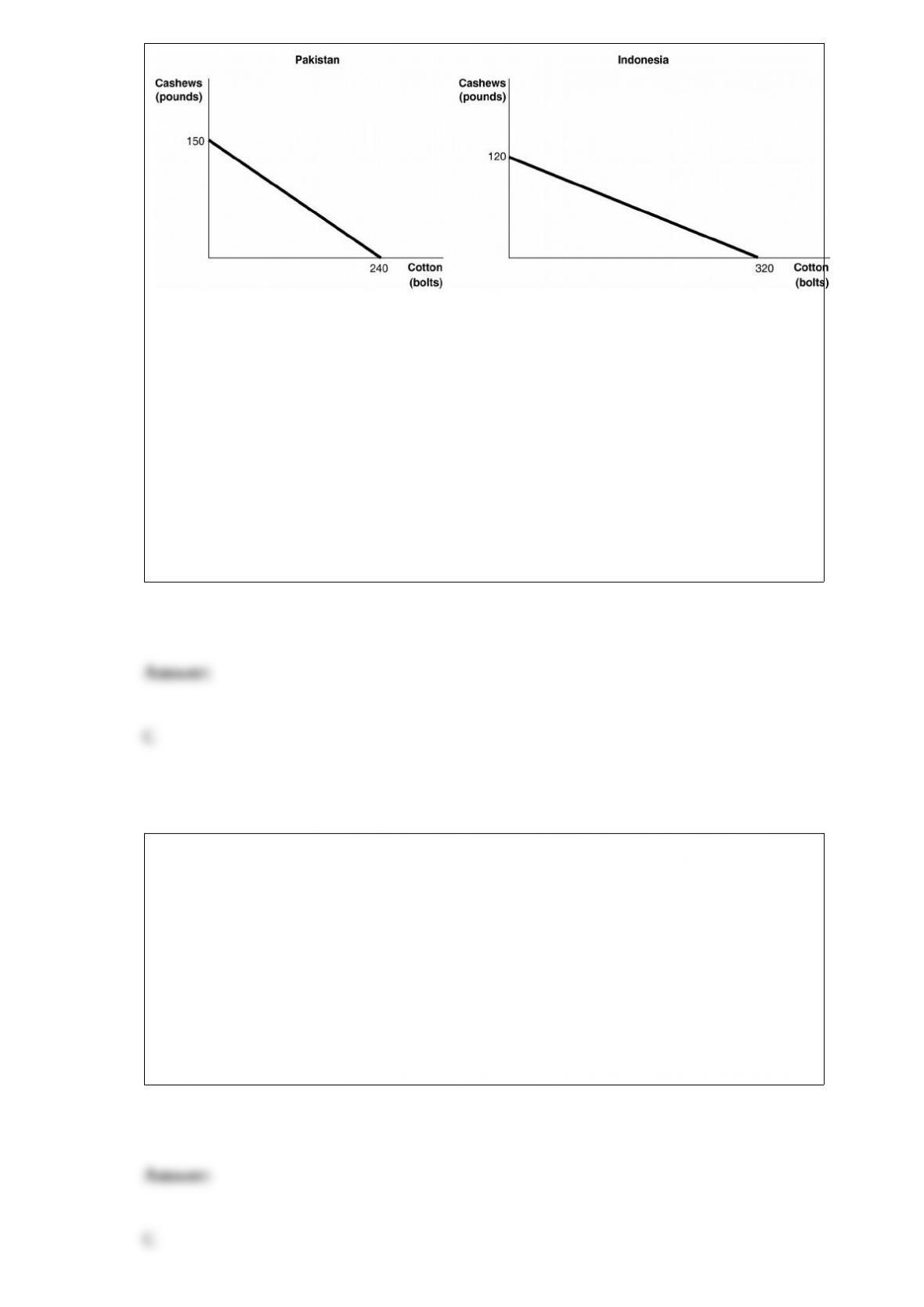
Figure 2-12 shows the production possibilities frontiers for Pakistan and Indonesia.
Each country produces two goods, cotton and cashews.
What is the opportunity cost of producing 1 pound of cashews in Indonesia?
A) 3/8 of a bolt of cotton
B) 5/8 of a bolt of cotton
C) 2 2/3 bolts of cotton
D) 320 bolts of cotton
If, for a given percentage decrease in price, quantity supplied decreases by a
proportionately smaller percentage, then supply is
A) unit-elastic.
B) perfectly elastic.
C) relatively inelastic.
D) elastic.
Which of the following is included in gross domestic product for an economy in a given
year?
A) the value of intermediate goods produced in that year
B) the value of used goods sold in that year
C) the value of final goods produced in that year
D) All of the above would be included in gross domestic product for an economy in a
given year.
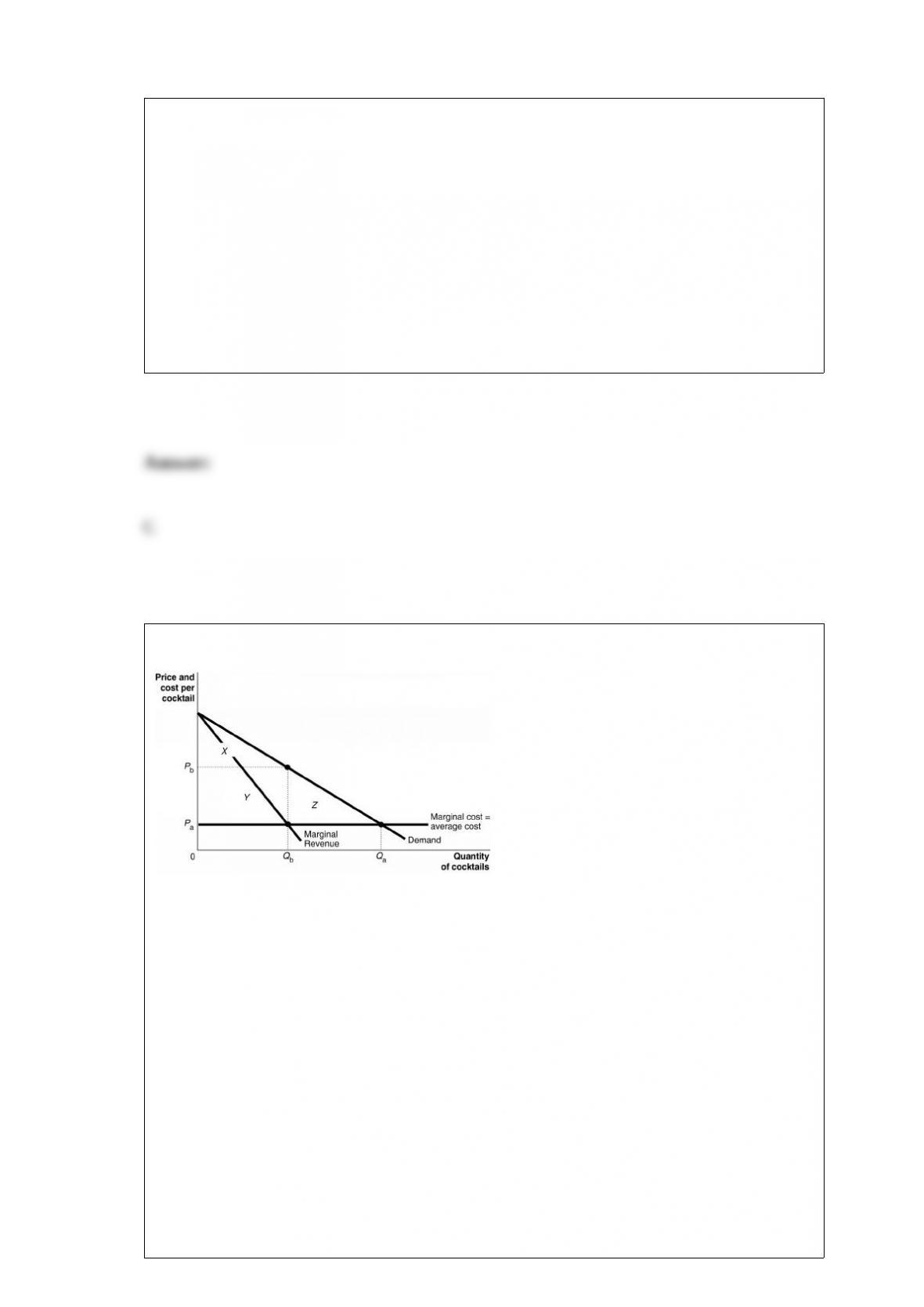
Figure 16-7
The Lizard Lounge is well known for its
exotic cocktails. Figure 16-7 shows its estimated demand curve for cocktails. The
owners of the Lizard Lounge are considering the following four pricing options:
a. A single price scheme where the price of cocktails equals the monopoly price.
b. A single price scheme where the cocktail price equals the competitive price.
c. A two-part tariff: a monopoly price for cocktails and a cover charge that will generate
total revenue equal to the area X.
d. A two-part tariff: a competitive price for cocktails and a cover charge that will
generate total revenue equal to the area X + Y + Z. Which scheme will earn the largest
profit?
A) scheme a
B) scheme b
C) scheme c
D) scheme d
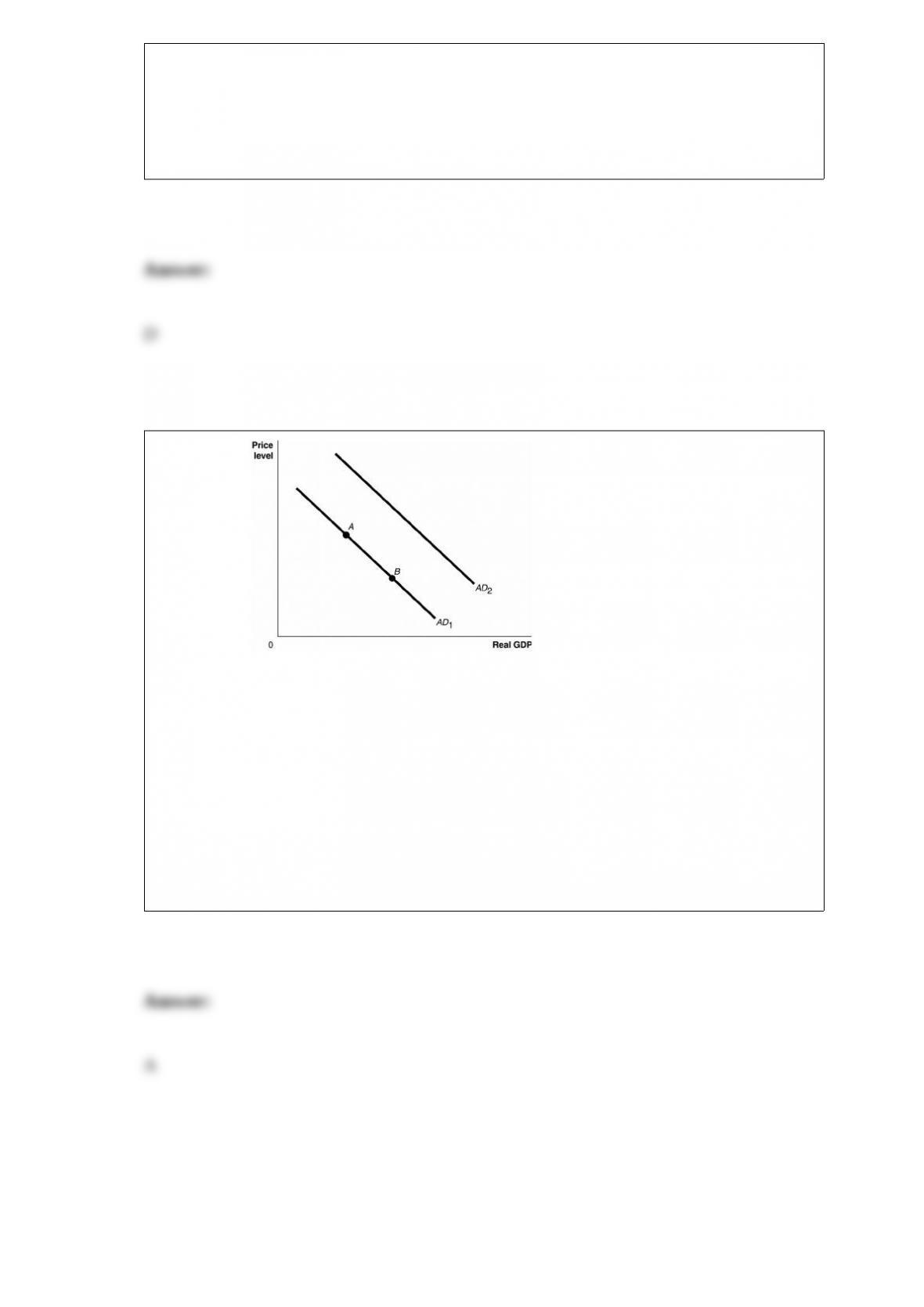
Figure 24-1
Ceteris paribus, an increase in households’ expectations of their future income would be
represented by a movement from
A) AD1 to AD2.
B) AD2 to AD1.
C) point A to point B.
D) point B to point A.
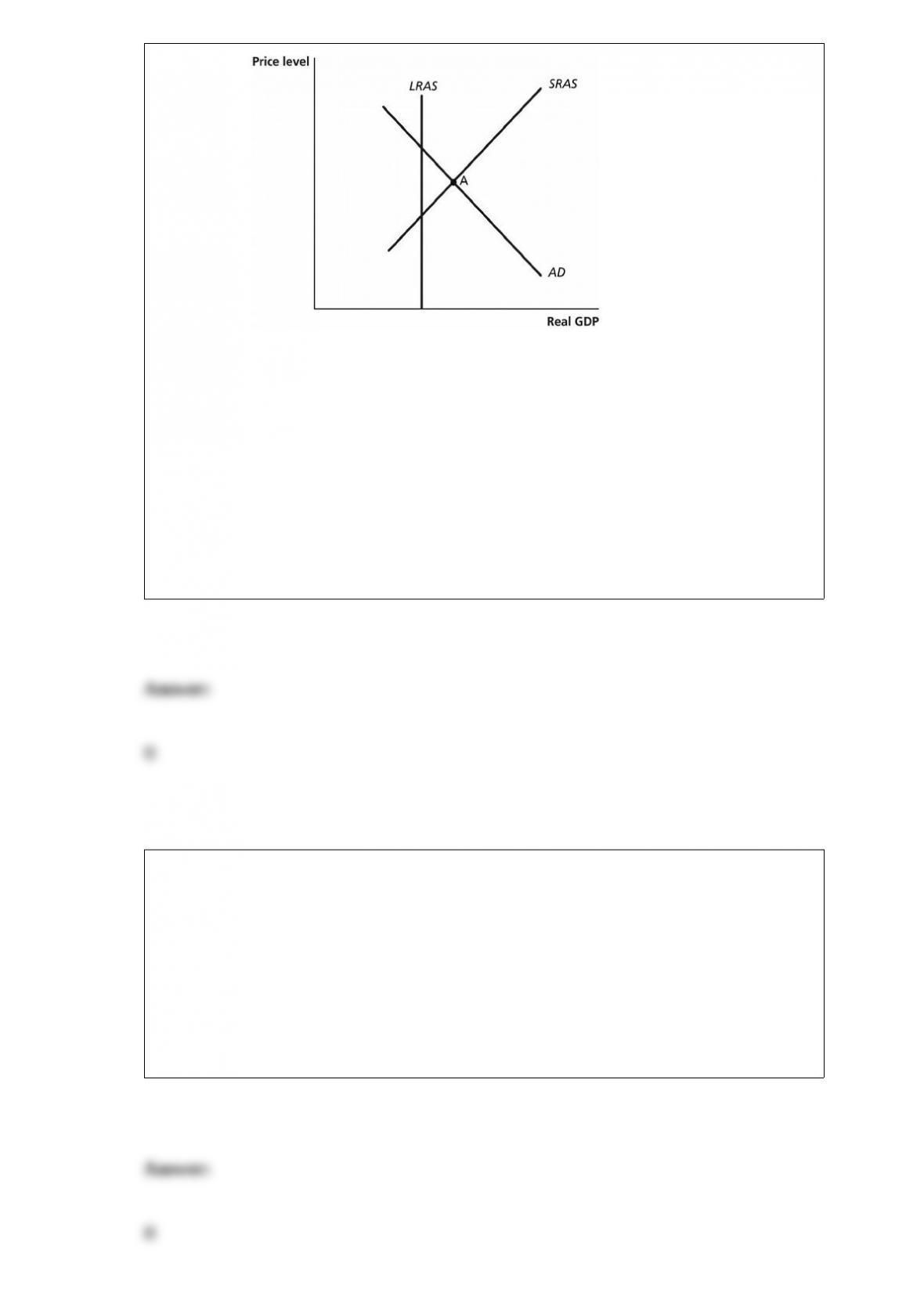
Figure 15-8
In the figure above, if the economy is at point A, the appropriate monetary policy by the
Federal Reserve would be to
A) lower interest rates.
B) raise interest rates.
C) lower income taxes.
D) raise income taxes.
A market economy benefits from market power
A) if the majority of the population are entrepreneurs.
B) if firms with market power do research and development with the profits earned.
C) if market power gets so bad the government creates public enterprises.
D) under no circumstances.

If, in an economy experiencing inflation, the government decided to tax real interest
income rather than nominal interest income, this change would cause the real interest
rate to ________ and the equilibrium quantity of loanable funds to ________.
A) fall; rise
B) fall; fall
C) rise; fall
D) rise; rise
Which of the following is an example of a Pigovian tax?
A) payments by utilities to obtain tradable emissions allowances
B) a payroll tax
C) payments for licenses to pollute
D) a tax imposed on a utility that internalizes the cost of externalities caused by the
utility