
Which of the following is not an example of a commercial bank’s liabilities?
a. Checking account deposits.
b. Any type of demand deposit.
c. Loans.
d. a and b.
e. None of the above.
If British real GDP fell, there would be
a. a rightward movement along the supply of British pounds curve in the dollar-pound
market
b. a leftward movement along the supply of British pounds curve in the dollar-pound
market
c. an increased supply of British pounds to the dollar-pound market
d. a decreased supply of British pounds to the dollar-pound market
e. the tendency for the supply of British pounds curve to become steeper in the
dollar-pound market
Refer to Figure 9-15. What causes the supply to change from S1to S2at the same time
demand changes from D1to D2?
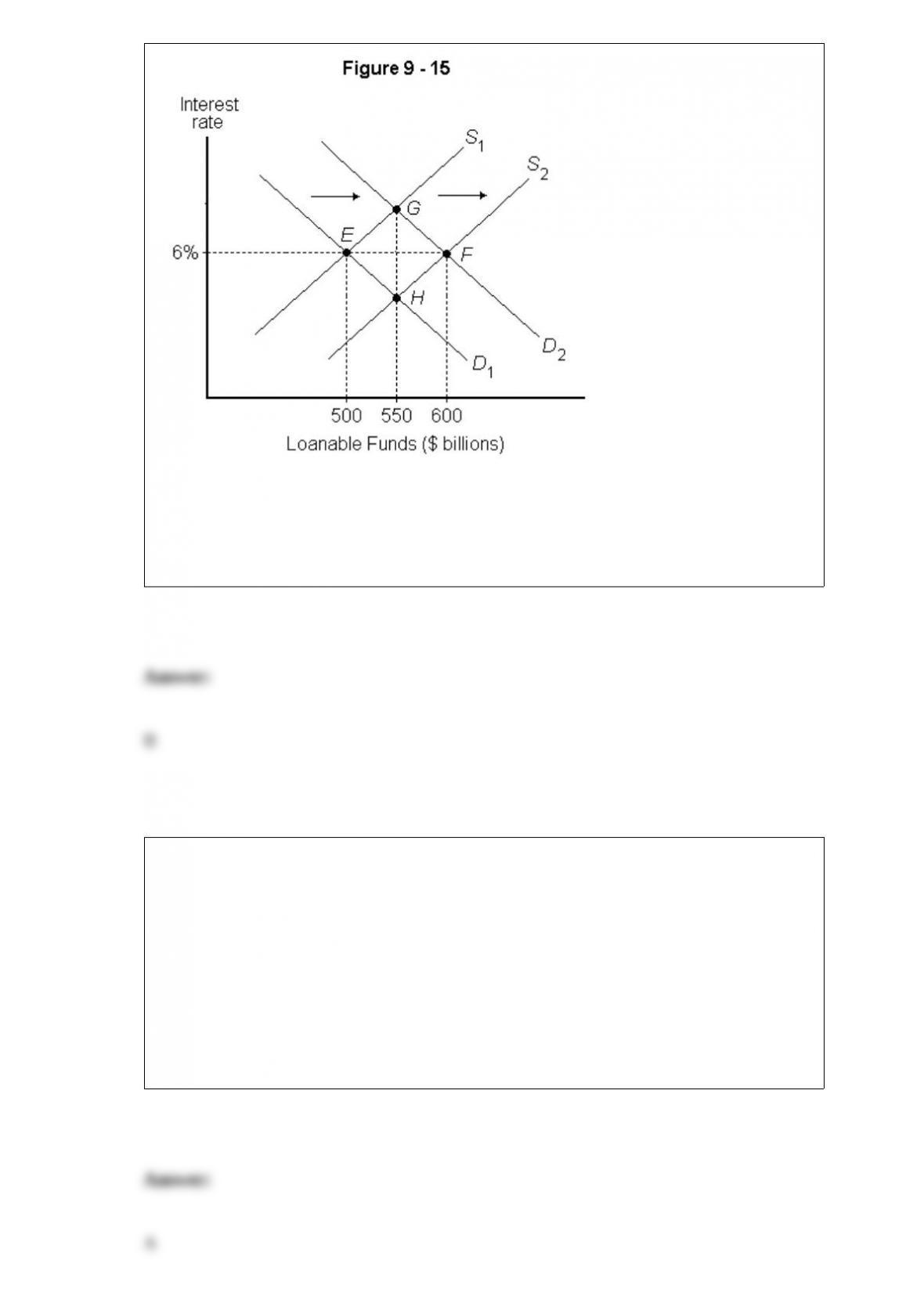
a. The investment tax credit increases.
b. The capital gains tax decreases while the corporate profits tax decreases.
c. The capital gains tax increases while the investment tax credit increases.
d. The capital gains tax decreases while the investment tax credit stays constant.
e. The capital gains tax decreases while the corporate profits tax increases.
What would happen to a production possibilities frontier (with capital goods measured
on the vertical axis and consumption goods on the horizontal axis) if there is an increase
in the labor force?
a. The entire frontier would shift outward.
b. The upper part of the frontier would shift outward while the lower part would shift
inward.
c. Nothing, there would be no movement of the frontier.
d. The entire frontier would shift inward.
e. The lower part of the curve would shift outward while the upper part would shift
inward.
The most important factor that influences total spending is
a. the interest rate
b. real wealth
c. expectations regarding future income
d. the income tax rate
e. real disposable income
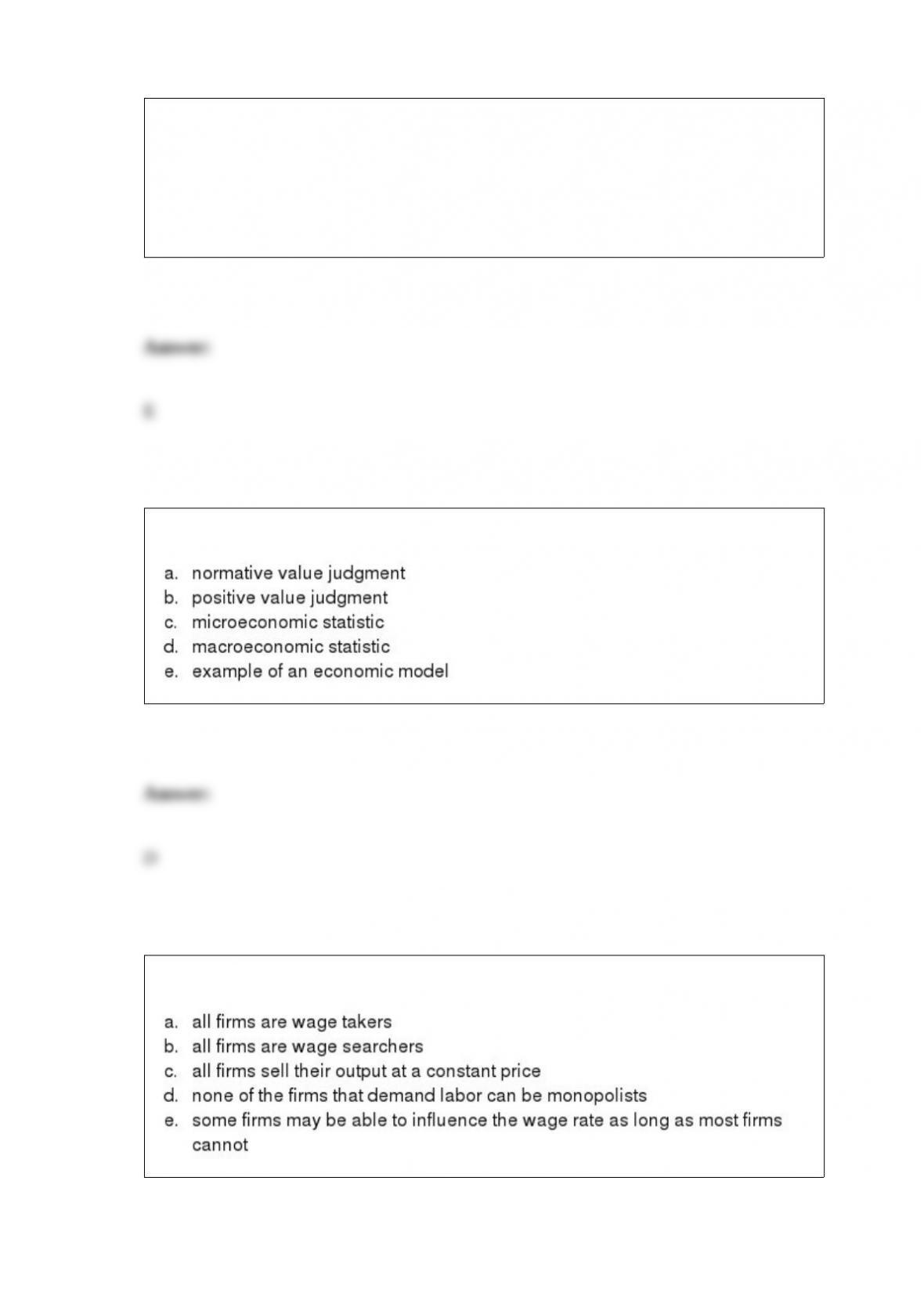
The unemployment rate for the economy as a whole is a(n)
In a perfectly competitive labor market

Which of the following describes what would happen after an increase in oil prices?
a. A downward shift of the aggregate supply curve as unit costs decrease, followed by a
gradual increase in the wage as employment increases, leading to a leftward shift of the
aggregate supply curve
b. An upward shift of the aggregate supply curve as unit costs increase, followed by a
gradual decrease in the wage as employment decreases, leading to a leftward shift of the
aggregate supply curve
c. An upward shift of the aggregate supply curve as unit costs increase, followed by a
gradual decrease in the wage as employment decreases, leading to a rightward shift of
the aggregate supply curve
d. A downward shift of the aggregate supply curve as unit costs decrease, followed by a
gradual decrease in the wage as employment decreases, leading to a rightward shift of
the aggregate supply curve
e. An upward shift of the aggregate supply curve as unit costs increase, followed by a
gradual decrease in the wage as employment increases, leading to a rightward shift of
the aggregate supply curve
Suppose the economy consists of two distinct groups: wage earners and goods sellers. If
the price level increases by 30 percent and real wages increase by 30 percent,
a. there will be no redistribution of purchasing power between goods sellers and wage
earners
b. purchasing power will be redistributed from wage earners to goods sellers
c. purchasing power will be redistributed from goods sellers to wage earners
d. nominal wages will increase by 90 percent
e. nominal wages will decrease by 60 percent
If marginal utility from consuming an extra unit of a good is positive, then the
consumer’s total utility must increase as more of the good is consumed.
If a firm is experiencing constant returns to scale
If imports increased by $100 million while GDP remained the same, which of the
following could have occurred, all else being the same?
a. Exports decreased by $100 million.
b. Consumption increased by $100 million.
c. Government spending decreased by $100 million.
d. Net exports increased by $100 million.
e. Private investment decreased by $100 million.
If a good is excludable and nonrival,
To produce a firm’s current output level, total cost is $600, and the total variable cost is
$450. Therefore, the firm has