
All of the following are ways in which health insurance companies can potentially
reduce adverse selection except
A) by insuring only large groups of people.
B) by lowering the co-payments and deductibles on the policies they issue.
C) by refusing to insure some applicants, for example based on prior health conditions.
D) by finding out as much information about a person applying for insurance, for
example requiring a medical examination.
Which of the following is not a result of imposing a rent ceiling?
A) Some consumer surplus is converted to producer surplus.
B) There is a reduction in the quantity supplied of apartments.
C) There is an increase in the quantity demanded of apartments.
D) The marginal benefit of the last apartment rented is greater than the marginal cost of
supplying it.
If a typical firm in a perfectly competitive industry is incurring losses, then
A) all firms will continue to lose money.

B) some firms will exit in the long run, causing market supply to decrease and market
price to rise increasing profits for the remaining firms.
C) some firms will exit in the long run, causing market supply to decrease and market
price to fall increasing losses for the remaining firms.
D) some firms will enter in the long run, causing market supply to increase and market
price to rise increasing profit for all firms.
Some economists argue that Microsoft become a monopoly in the market for computer
software by developing MS-DOS, an operating system used for the first IBM personal
computers. The more people who used MS-DOS-based programs, the greater the
usefulness of a using a computer with an MS-DOS operating system. The explanation
for Microsoft’s monopoly is
A) the development of new technology that other firms could not copy.
B) control of a key resource which, in this case, is the MS-DOS operating system.
C) network externalities.
D) patents Microsoft obtained when it developed the MS-DOS operating system.
Expansionary fiscal policy involves
A) increasing government purchases or decreasing taxes.
B) increasing taxes or decreasing government purchases.
C) increasing the money supply and decreasing interest rates.

D) decreasing the money supply and increasing interest rates.
Liquidity refers to
A) the ease with a stock can be traded for a bond.
B) the ease with which a financial security can be traded for cash.
C) the number of times a dollar changes hands in the creation of GDP in an economy.
D) the number of shares of stock a corporation issues.
How does a decrease in value of a country’s currency relative to other currencies affect
its balance of trade?
A) A decrease in value of a country’s currency relative to other currencies raises
imports, reduces exports, and reduces the balance of trade.
B) A decrease in value of a country’s currency relative to other currencies reduces
imports, raises exports, and reduces the balance of trade.
C) A decrease in value of a country’s currency relative to other currencies reduces
imports, raises exports, and increases the balance of trade.
D) A decrease in value of a country’s currency relative to other currencies raises
imports, reduces exports, and increases the balance of trade.
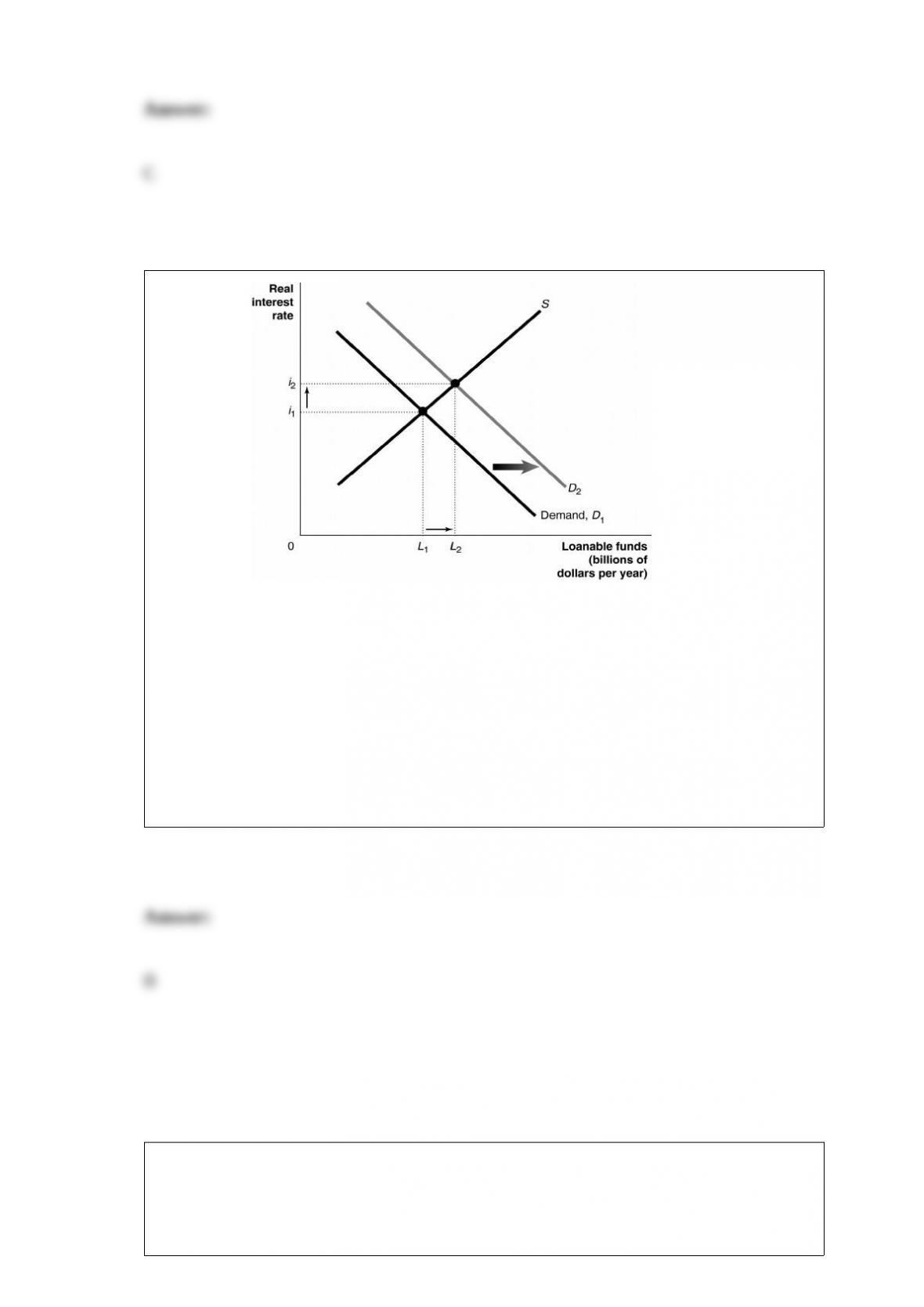
Figure 10-1
Which of the following is consistent with the graph depicted above?
A) An expected recession decreases the profitability of new investment.
B) Technological change increases the profitability of new investment.
C) The government runs a budget surplus.
D) Households become spendthrifts and begin to save less.
Free trade refers to trade between countries
A) that is without shipping costs.
B) that is licensed by both governments.
C) that is without restrictions.
D) of products which are free to low-income consumers.
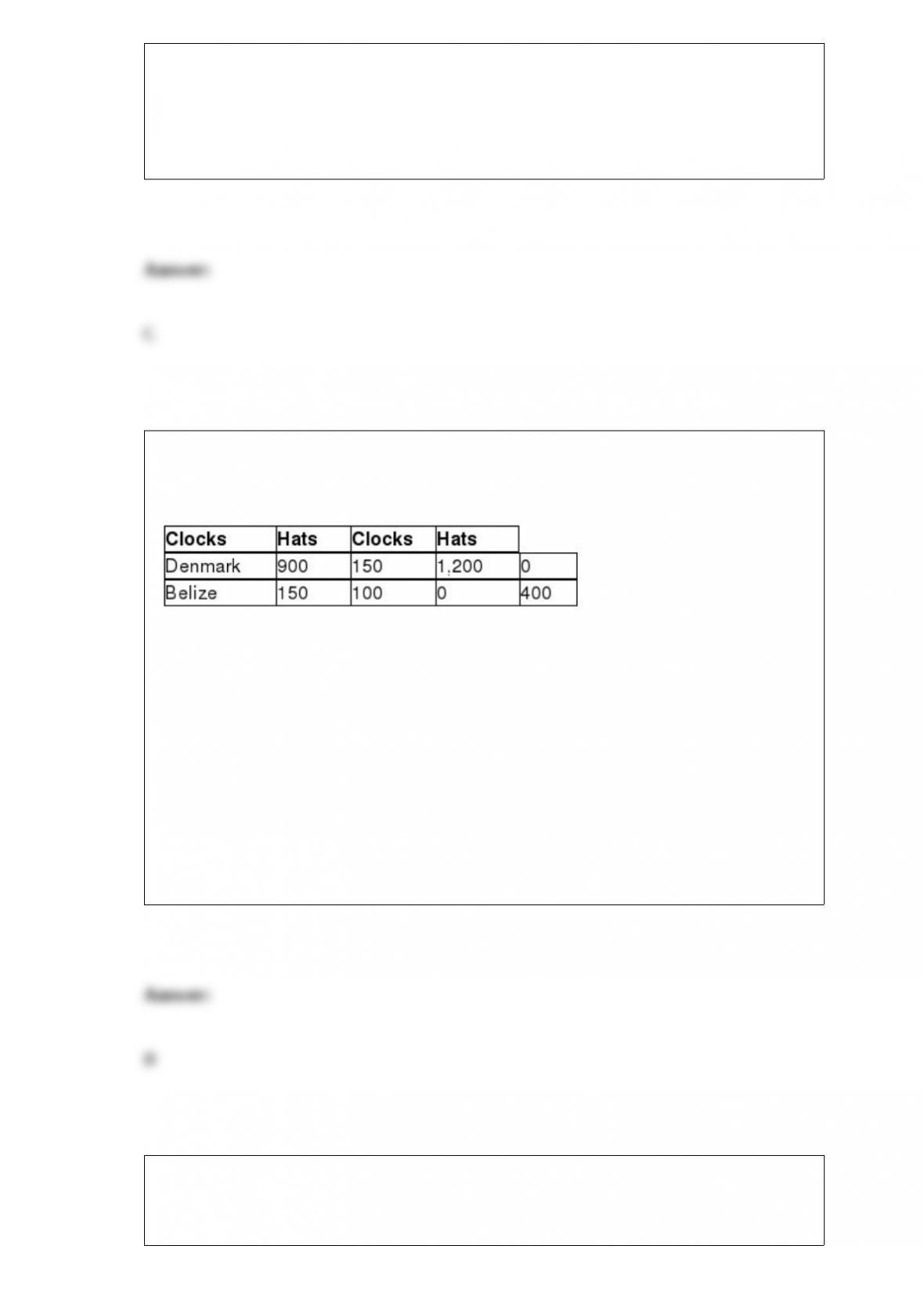
Table 9-11 Production and
Consumption Production
Without Trade With Trade
Denmark and Belize can produce both clocks and hats. Table 9-11 shows the production
and consumption quantities without trade, and the production numbers with trade.
Which country has a comparative advantage in producing hats?
A) Denmark
B) Belize
C) both countries
D) neither country
Cost-plus pricing is a reasonable way to determine the optimal price when
A) marginal cost and average cost are roughly equal.

B) fixed cost and variable costs are roughly equal.
C) fixed costs vary.
D) fixed costs are high.
If Molly Bee increases her work hours when her wage increases, then
A) the income effect of the wage increase outweighs the substitution effect.
B) the substitution effect of the wage increase outweighs the income effect.
C) leisure is an inferior good to Molly.
D) Molly is spending beyond her means.
When Mr. Peabody decides on the companies to which he will donate his time and
money, a ________ issue is being addressed.
A) microeconomic
B) macroeconomic
C) positive economic
D) normative economic

Dividends are
A) financial securities which represent ownership in a corporation.
B) the yearly payments associated with bonds.
C) the interest rate paid on shares of stock.
D) payments by a corporation to its shareholders.
Economist Kenneth Arrow has shown mathematically that no system of voting will
consistently represent the underlying preferences of voters. This finding is called
A) the Arrow impossibility theorem.
B) Arrow’s median voter model.
C) Arrow’s Amendment to the public choice model.
D) Arrow’s majority vote paradox.
The slope of the indifference curve is referred to as

A) the marginal rate of substitution.
B) the price ratio.
C) the marginal rate of consumption.
D) the marginal tradeoff rate.
When Disneyland opened in 1955, what prices were charged for admission and rides?
A) Admission was free; customers paid for rides.
B) All customers paid the same price for admission; rides were free.
C) Admission prices varied by your age, home address and occupation; rides were free.
D) All customers paid the same low price for admission; customers were also charged
prices for rides.
Table 4-8
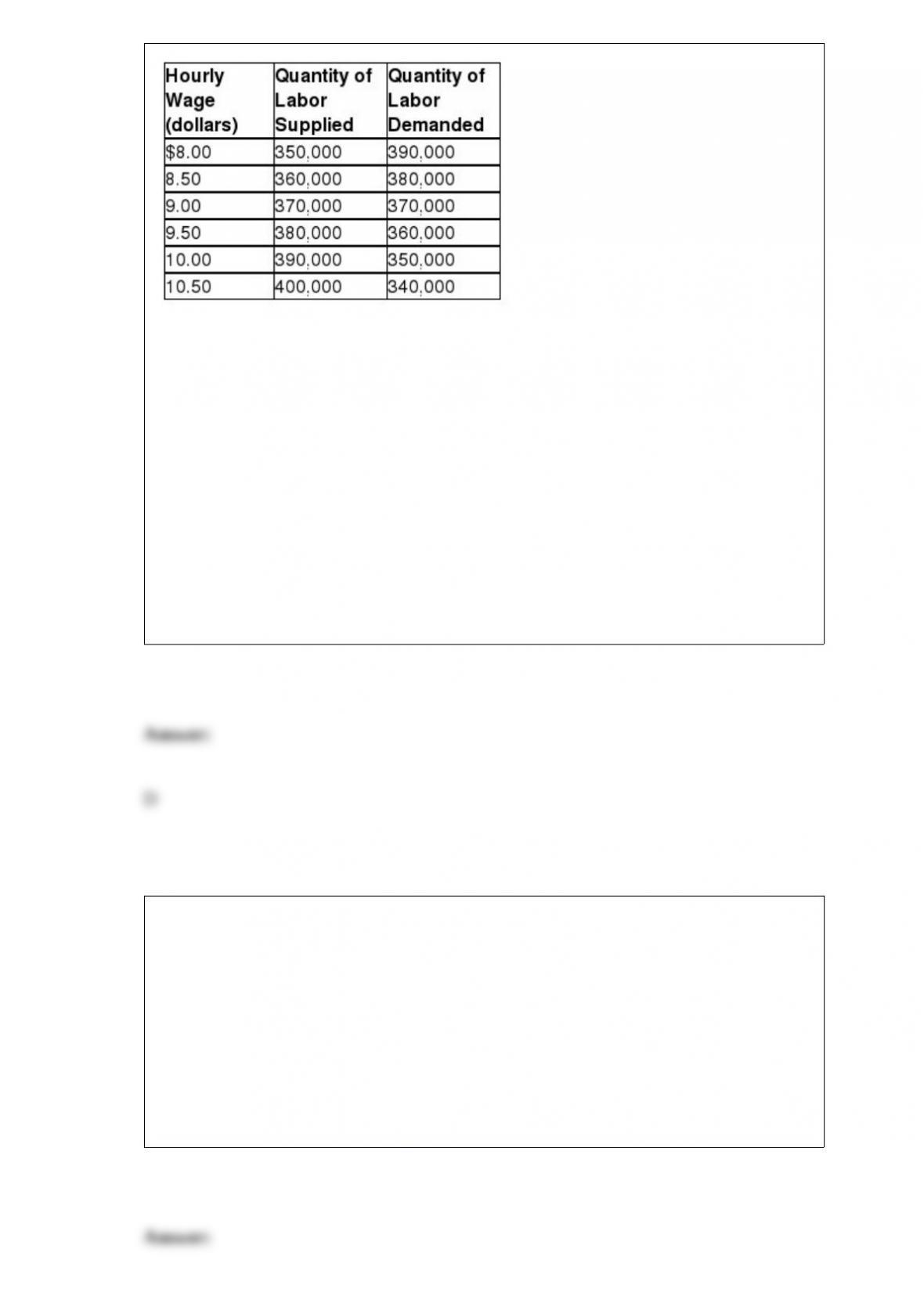
Table 4-8 shows the demand and supply schedules for the low-skilled labor market in
the city of Westover.
Suppose that the quantity of labor demanded decreases by 40,000 at each wage level.
What are the new free market equilibrium hourly wage and the new equilibrium
quantity of labor?
A) W = $10.00; Q = 390,000
B) W = $9.50; Q = 380,000
C) W = $8.50; Q = 340,000
D) W = $8.00; Q = 350,000
When additions of input to a fixed quantity of another input lead to progressively
smaller increases in output, we say we are facing
A) diminishing returns.
B) negative returns.
C) accelerating returns.
D) decreasing production.

Suppose a positive technological change in the production of disease-resistant corn
caused the price of corn to fall. Holding everything else constant, how would this affect
the market for wheat (a substitute for corn)?
A) The supply of wheat would increase, and the equilibrium price of wheat would
decrease.
B) The demand for wheat would decrease, and the equilibrium price of wheat would
decrease.
C) The demand for wheat would increase because consumers could afford to buy more
wheat and corn.
D) The demand for wheat would decrease, and the equilibrium price of wheat would
increase.