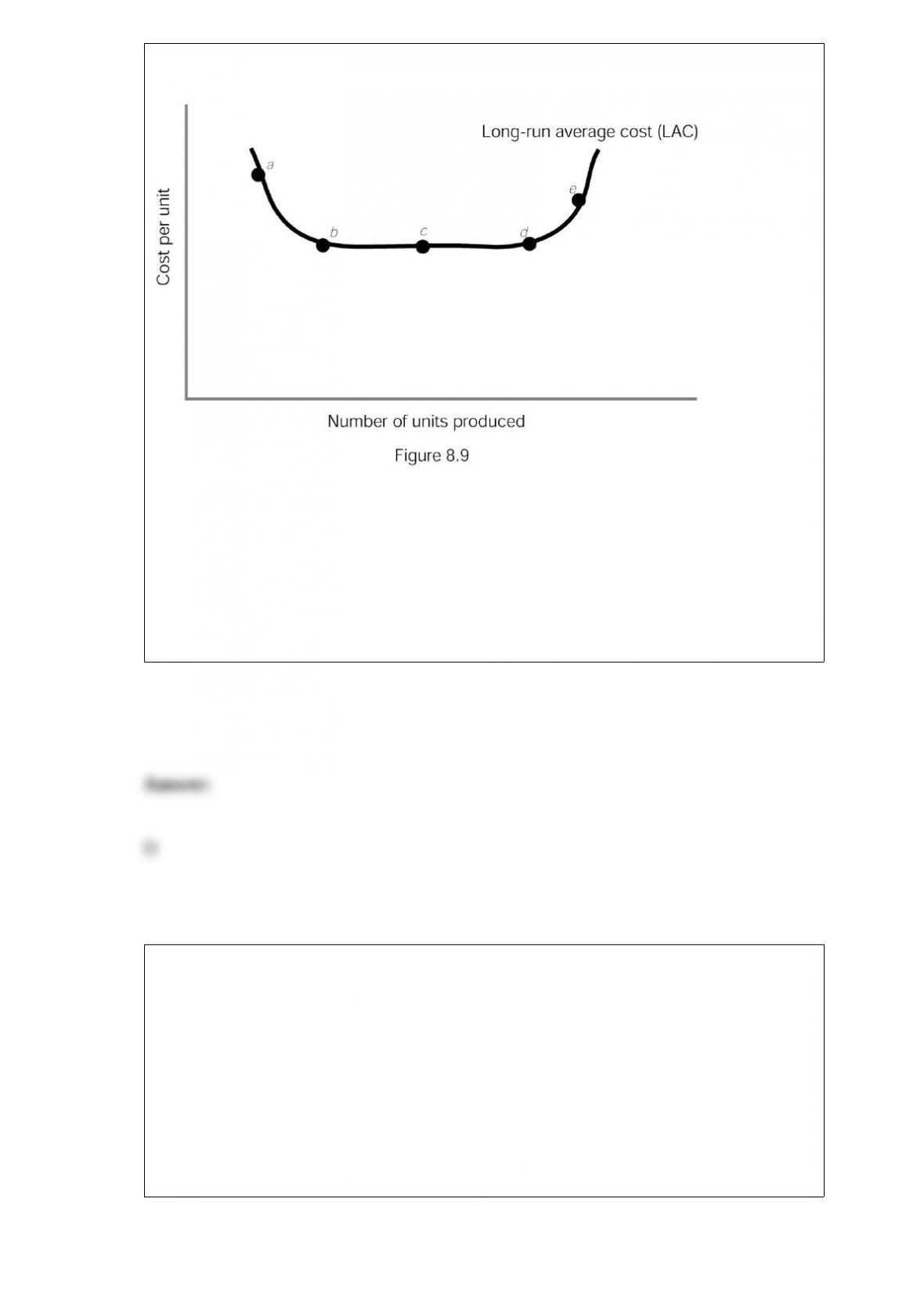
Refer to Figure 8.9. Which point of the LAC represents diseconomies of scale?
A) a
B) b
C) c
D) e
Assume that the price of a DVD player is $50. If Joshua is willing to pay $50 for that
DVD player, his consumer surplus is:
A) $0.
B) $1.
C) $10.
D) $50.

Suppose that / < / . This implies that:
A) spending a dollar less on Y and spending a dollar more on X increases utility.
B) spending a dollar less on X, and spending a dollar more on Y increases utility.
C) X is more expensive than Y.
D) Y is more expensive than X.
In a perfectly competitive market:
A) the government imposes price ceilings on the products produced and buyers and
sellers are price takers.
B) buyers set the price and sellers take the price.
C) both buyers and sellers are price takers.
D) the market demand for products produced is perfectly elastic.

Chris buys more new jewelry when her income rises. This means that, for Chris:
A) new jewelry is an inferior good.
B) the income elasticity of demand for new jewelry is positive.
C) the income elasticity of demand for new jewelry is negative.
D) none of the above
On a linear demand curve, demand is ________ at large quantities than it is at the
middle of the demand curve.
A) more elastic
B) less elastic
C) equally elastic
D) impossible to tell
Refer to Table 17.1. The marginal product of the fourth worker is:

Table 17.1
A) 30.
B) 20.
C) 10.
D) 5.
In an increasing-cost industry, the long-run market supply curve is:
A) positively sloped.
B) negatively sloped.
C) vertical.
D) horizontal.

According to the Application, the policies proposed to help raise the price of wool
focuses on:
A) lowering the demand for wool.
B) raising the supply for synthetic fibers.
C) raising the demand for wool.
D) raising the supply for wool.
Pollution taxes reduce pollution by:
A) decreasing the amount sold of the good that causes the pollution.
B) causing firms to produce less of the good that generates the pollution.
C) encouraging firms to modify their production process to reduce emissions.
D) all of the above.
A firm has the opportunity for price discrimination when:
A) the firm has market power.
B) the firm is subject to price controls.

C) the firm is able to promote the resale of the good or service.
D) All of the above are correct.
A specialized worker doesn’t spend time switching from one task to another. This source
of productivity increase is called:
A) continuity.
B) innovation.
C) functionality.
D) repetition.
A carbon tax on fossil fuels is likely to cause the price of goods produced by firms that
use fossil fuels to:
A) decrease.
B) not change.
C) increase.
D) change, but in a way that cannot be determined.
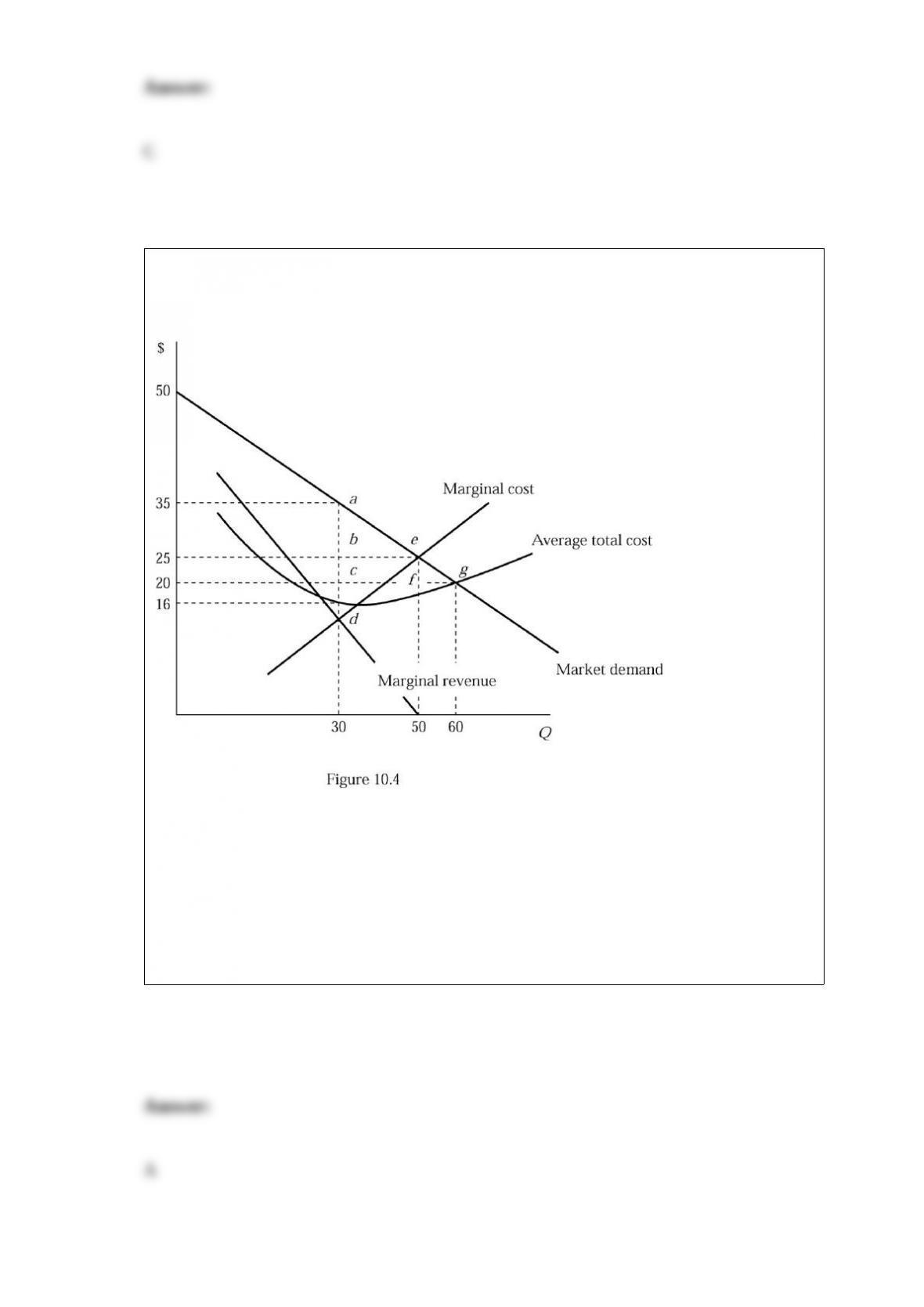
Suppose that Figure 10.4 shows a monopolist’s demand curve, marginal revenue, and its
costs. The monopolist would maximize its profit by charging a price of:
A) $35.
B) $25.
C) $20.
D) $16.
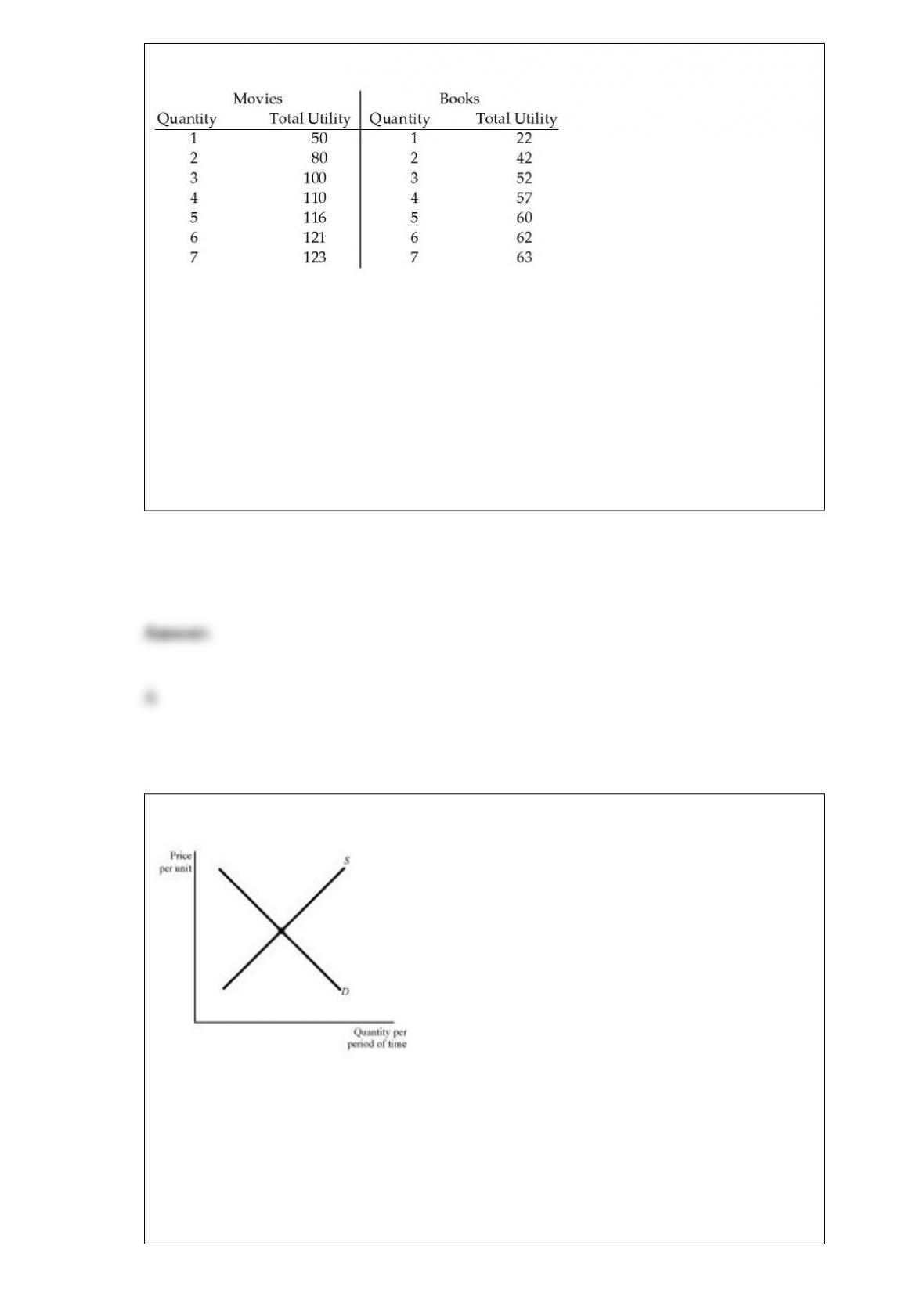
Refer to Table 7.3. The effect of the law of diminishing marginal utility is seen after:
Table 7.3
A) the first movie and the first book.
B) the fifth movie and the second book.
C) the eighth movie and eighth book.
D) None of the above; this is a case where the law does not apply.
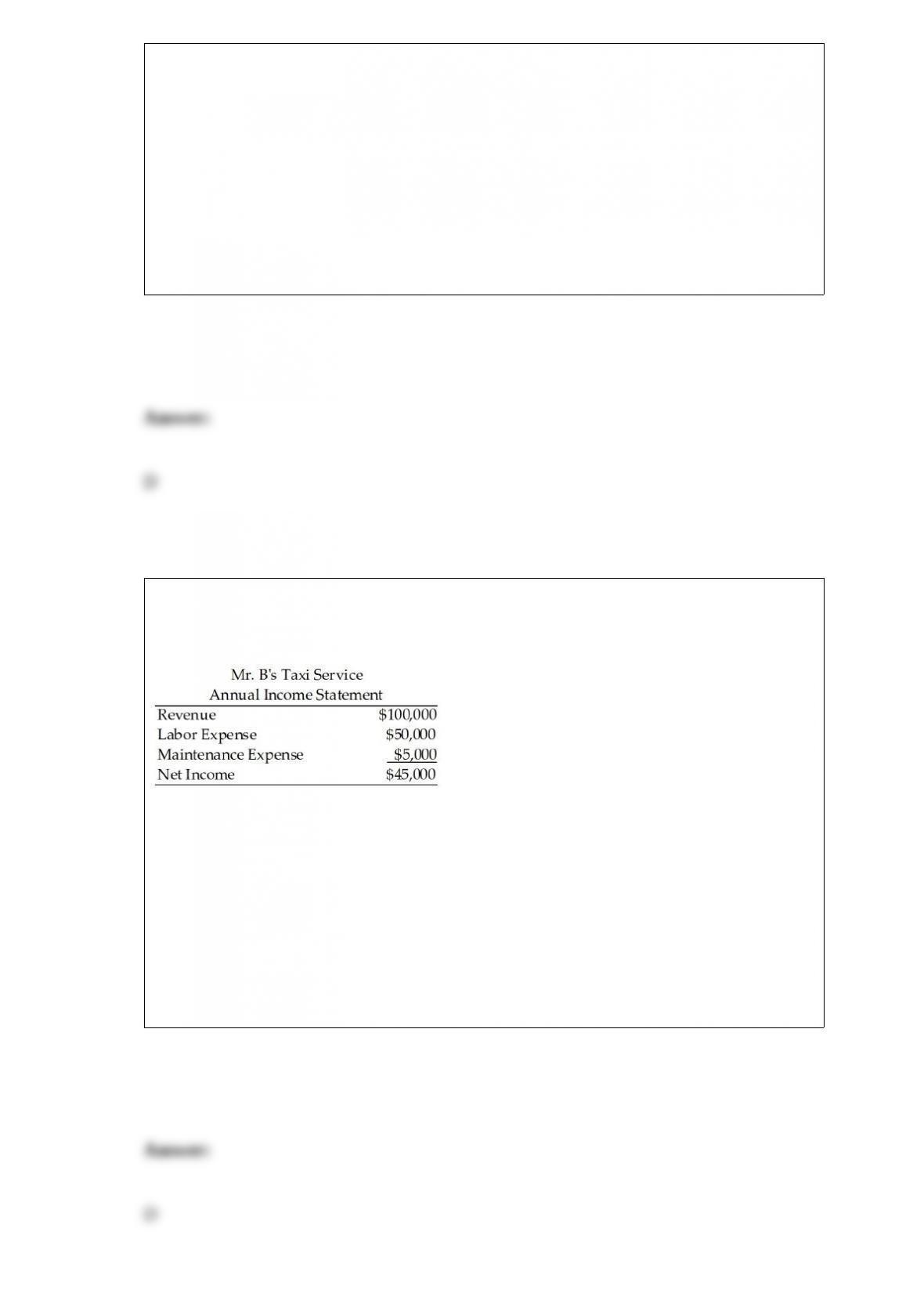
If demand increases in Figure 4.7, then the equilibrium:
Figure 4.7
A) price and quantity rise.
B) price rises and quantity falls.

C) price falls and quantity rises.
D) price and quantity fall.
When the price of a good falls, the ratio of the marginal utility of that good divided by
its price ________ and as a result, consumers purchase ________ of that good.
A) rises; more
B) falls; more
C) rises; less
D) falls; less
Oligopolists that follow the price leadership model:
A) are engaging in implicit, but not explicit, price fixing.
B) are violating antitrust laws.
C) have chosen to follow the grim-trigger strategy.
D) will be unable to overcome the duopolists’ dilemma because firms will have an
incentive to underprice the firm that is the price leader.

The primary source of smog-causing pollutants is:
A) power plants.
B) automobiles.
C) charcoal grills.
D) airplanes.
Market power is the power to:
A) control prices.
B) gain another firm’s customers.
C) reduce price below cost to deter entry.
D) control output.
Based on the Application, if the total cost of sailing a ship faster exceeds the total
benefit of sailing the ship faster, then:
A) the captain ship sail the ship faster.
B) the captain should sail the ship slower.
C) should keep the speed the same.
D) None of the answers above are correct.
Refer to Table 8.1. Suppose Mr. B withdrew $50,000 from his account that earned 10%
to invest into this business. He quit his full-time job that paid $40,000 to manage this
business. If Mr. B is excited about his $45,000 profit, an economist would:
Table 8.1
A) celebrate with him.
B) mention the $90,000 he has given up.
C) tell him his economic profit is indeed positive but not as big as $45,000.
D) tell him he made zero economic profit.

An increase in supply of a product results when:
A) more companies produce the product.
B) the companies that produce the product have reduced input costs.
C) technological innovations are introduced in the manufacturing.
D) all of the above
Suppose in the city of Blacksburg, music stores operate in a monopolistically
competitive market. If the price of CDs in Blacksburg is currently equal to $20 per CD
and the average cost of CDs is $15, in the long run we expect the price of CDs to:
A) increase.
B) stay the same.
C) decrease, and the average cost of selling CDs to increase.
D) decrease, and the average cost of selling CDs to decrease.
If the government converted the highway from 4 lanes into 6 lanes, then using the
midpoint method, the percentage increase would have been ________ percent. If the
government converted the highway from 6 lanes into 4 lanes, then using the midpoint

method, the percentage increase would have been ________ percent.
A) 40; 40
B) 33; 50
C) 100; 50
D) 33; 33
An example of a public good is:
A) national defense.
B) Pay-Per-View broadcasts.
C) an apple.
D) a seat in a bus.
Figure 16.3 depicts a market for electricity. Assume electricity production incurs
external costs. If the government imposes a pollution tax $T per mega kilowatt:
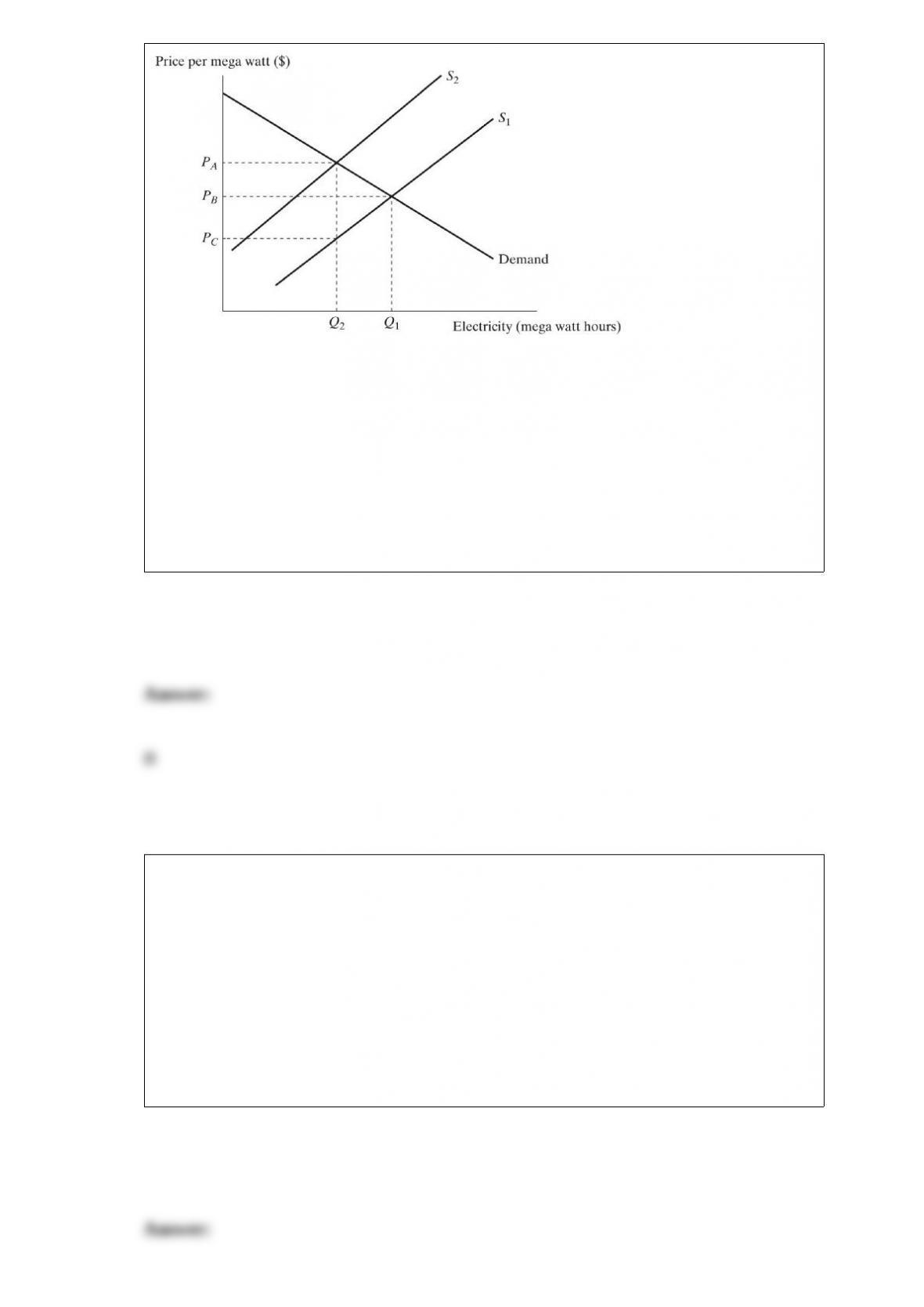
Figure 16.3
A) the supply curve will shift to the right.
B) the supply curve will shift to the left.
C) demand curve will shift to the right.
D) demand curve will shift to the left.
Differences in innate skills and the benefits associated with the division of labor result
in:
A) differences in productivity.
B) absolute advantage.
C) self-sufficiency.
D) diminishing returns.

When a firm increases output and accepts a lower price to keep new firms from
entering, it is engaging in:
A) limit pricing.
B) cartel behavior.
C) collusion.
D) price fixing.
According to the Application about productivity in the nation of Latvia in the
1990s, workers in the EU were more productive than workers in Latvia in the 1990s,
yet EU nations still purchased products from Latvia. This is because Latvia ________
in the production of the products it sold to EU nations.
A) had an absolute advantage
B) had a comparative advantage
C) used fewer resources
D) had a higher opportunity cost

Two government organizations that are responsible for initiating actions against
possible antitrust cases are:
A) the Department of Justice and the Department of Commerce.
B) the Department of Commerce and the Federal Reserve.
C) the Department of Justice and the Federal Trade Commission.
D) the Department of Labor and the Department of Commerce.
The price elasticity of demand is calculated by:
A) the change in price divided by the change in quantity demanded.
B) the change in quantity demanded divided by the change in price.
C) the percentage change in price divided by the percentage change in quantity
demanded.
D) the percentage change in quantity demanded divided by the percentage change in
price.
Joe runs a business and needs to decide how many hours to stay open. Figure 2.4
illustrates his marginal benefit of staying open for each additional hour. Suppose that
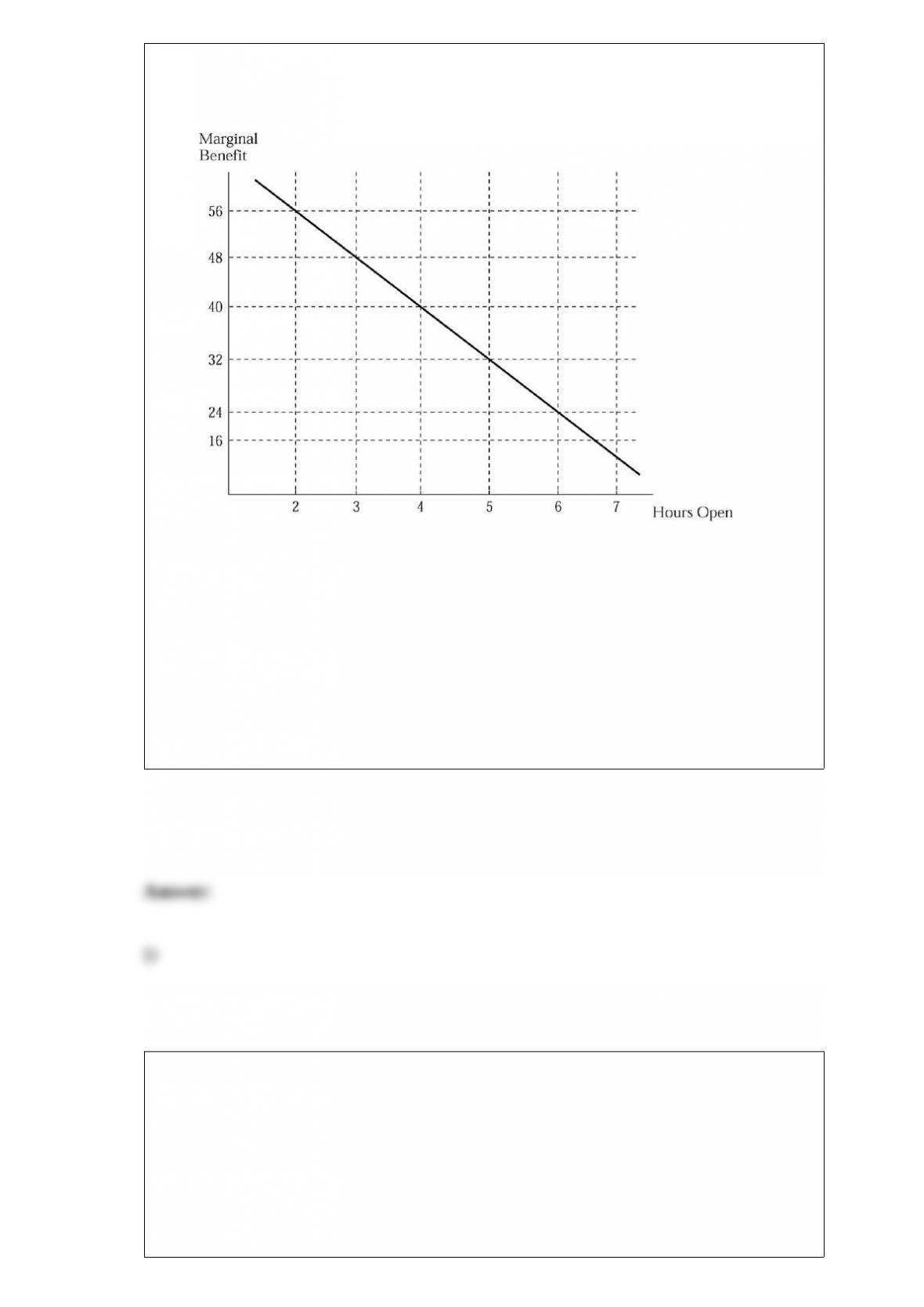
Joe’s marginal cost of staying open per hour is $24. How many hours should Joe stay
open?
Figure 2.4
A) 3 hours
B) 4 hours
C) 5 hours
D) 6 hours
The real value of money:
A) is another word for the face value.
B) reflects the purchasing power of money.
C) matters less to people than its nominal value.

D) is the same as its nominal value.
Which of the following is a characteristic of a monopolistically competitive market?
I. Firms sell differentiated products.
II. Each firm is earning a zero economic profit in the long run.
III. Potential entrants face artificial barriers to entry.
A) I only
B) I and II only
C) II and III only
D) I, II, and III