
1) if the marginal propensity to save equals 0.2 and the marginal propensity to import
equals 0.3, an autonomous decrease in investment spending of $1 million leads to a $2
million decrease in domestic income and a $600,000 decrease in imports.
a.true
b.false
2) for the commodity terms of trade to improve, a country’s export price index must rise
relative to its import price index over a given time period.
a.true
b.false
3) with economies of scale and decreasing unit costs, a country has the incentive to:
a.specialize completely in the product of its comparative advantage
b.specialize partially in the product of its comparative advantage
c.specialize completely in the product of its comparative disadvantage
d.specialize partially in the product of its comparative disadvantage
4) according to the strategic- trade- policy hypothesis, governmental subsidies granted
to domestic producers can help them in capturing economic profits from foreign
competitors.
a.true
b.false
5) in autarky equilibrium, a nation realizes the lowest possible level of satisfaction
given the constraint of its production possibilities schedule.
a.true
b.false
6) ____ is the ability of a firm/industry, under free and fair market conditions, to design,
produce, and market goods and services that are better and/or cheaper than those of
other firms/industries.
a.competitiveness
b.protectionism
c.comparative advantage
d.absolute advantage
7) changes in a country’s net exports, investment spending, or government spending
will cause its aggregate demand curve to shift.
a.true
b.false
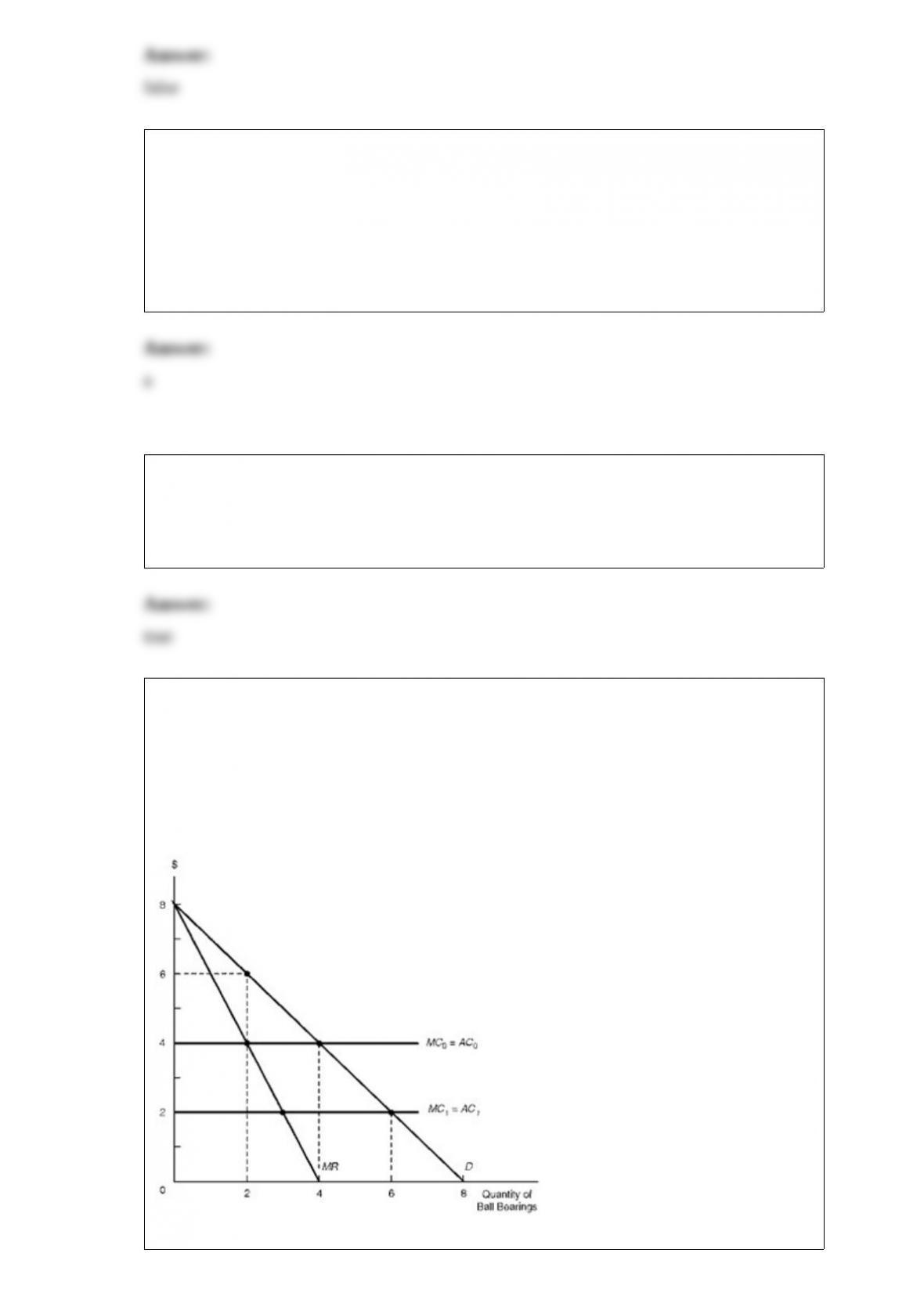
8) figure 9.1 illustrates the market conditions facing sony company and american
company initially operating as competitors in the domestic ball bearing market. each
firm realizes constant long-run costs, mc0=ac0.
figure 9.1. international joint venture
consider figure 9.1. compared to the market equilibrium position achieved by sony

company and american company as competitors, venture company as a monopoly leads
to a deadweight loss of consumer surplus of:
a.$2
b.$4
c.$6
d.$8
9) which of the following could partially explain why the terms of trade of developing
countries might deteriorate over time?
a.developing-country exports mainly consist of manufactured goods
b.developing-country imports mainly consist of primary products
c.commodity export prices are determined in highly competitive markets
d.commodity export prices are solely determined by developing countries
10) by the 1990s, the british pound had replaced the u.s. dollar as the world’s key
currency.
a.true
b.false
11) if the u.s. government pursued a “knowledge-based growth policy,” it would
subsidize particular firms to help them compete in the world economy.
a.true
b.false
12) the u.s. demand for pounds is derived from u.s. exports to the united kingdom, u.k.
investments in the united states, and u.k. tourist expenditures in the united states.
a.true
b.false