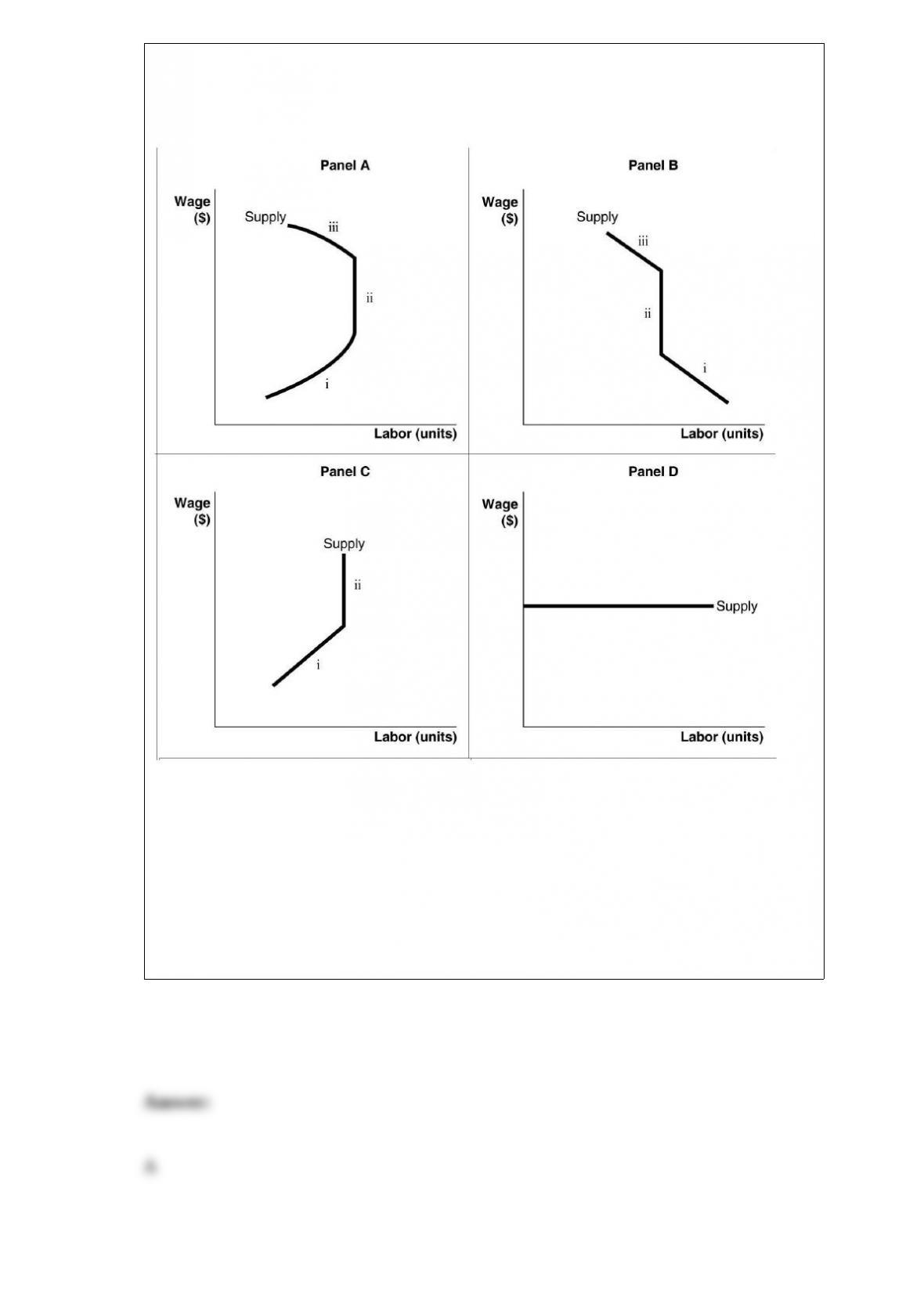
Figure 17-3
Refer to Figure 17-3. In Panel A, at low wages (segment i)
A) the substitution effect outweighs the income effect.
B) the income effect outweighs the substitution effect.
C) the substitution effect offsets the income effect.
D) labor suppliers demand more leisure as wages increase.
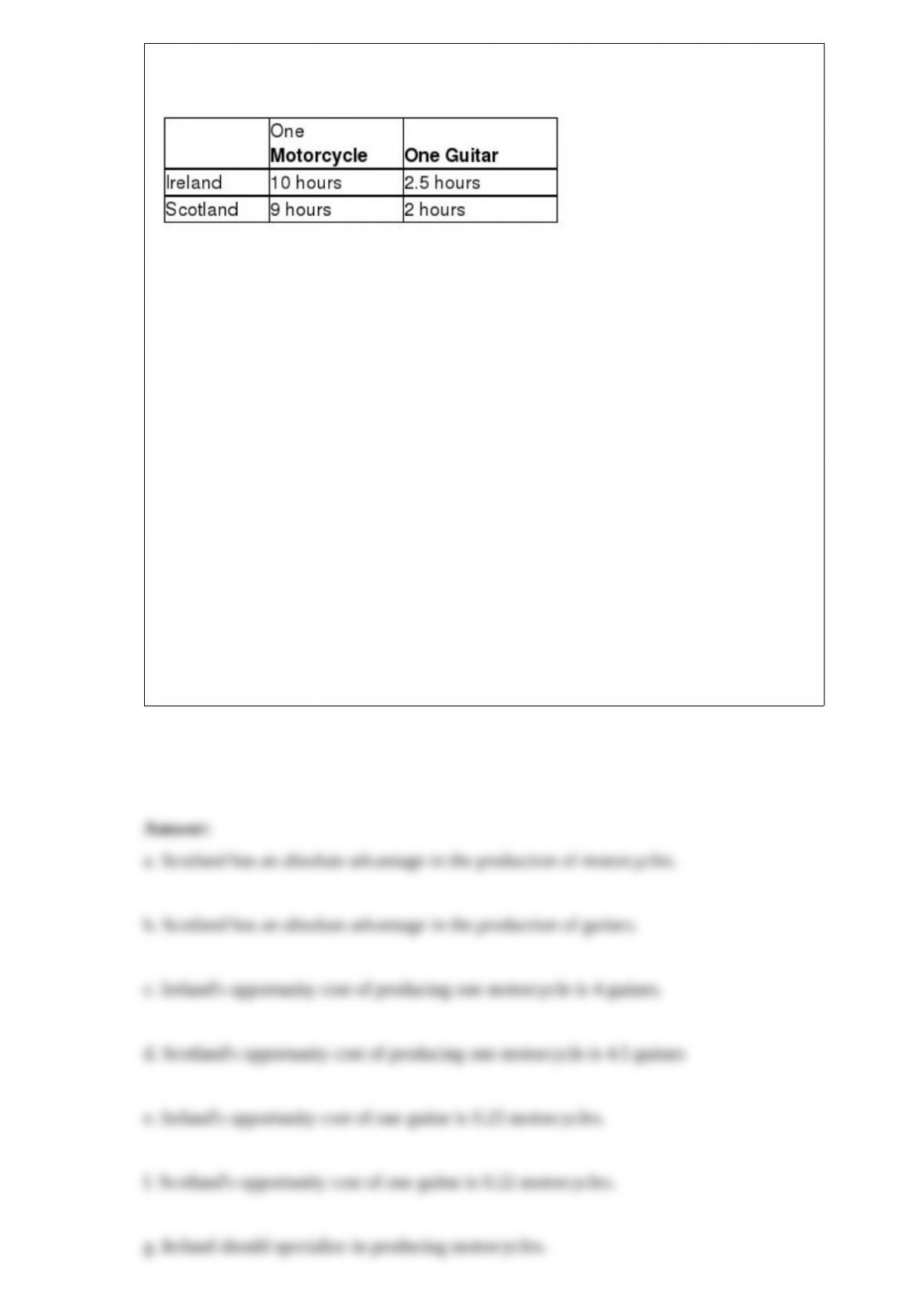
Table 2-16
Refer to Table 2-16. This table shows the number of labor hours required to produce a
motorcycle and a guitar in Ireland and Scotland.
a. Which country has an absolute advantage in the production of motorcycles?
b. Which country has an absolute advantage in the production of guitars?
c. What is Ireland’s opportunity cost of producing one motorcycle?
d. What is Scotland’s opportunity cost of producing one motorcycle?
e. What is Ireland’s opportunity cost of producing one guitar?
f. What is Scotland’s opportunity cost of producing one guitar?
g. If each country specializes in the production of the product in which it has a
comparative advantage, which country should produce motorcycles?
h. If each country specializes in the production of the product in which it has a
comparative advantage, which country should produce guitars?

The marginal utility per dollar that Harold Stratton receives from oranges is greater than
the marginal utility per dollar Harold receives from pears. To maximize his utility, what
should Harold do?
A) He should acquire more income so that he can afford to buy more oranges and pears.
B) He should reduce his consumption of both oranges and pears so that he can buy a
greater variety of goods.
C) He should buy fewer pears and more oranges.
D) He should buy fewer oranges and more pears.
Erin and Deidre, two residents of Ithaca, New York, are planning a trip to Boston. Erin,
the sales manager for a large retailer, has to attend a business meeting. Deidre, a college
student on vacation, is planning a leisurely trip to visit friends and relatives. Which of
the following statements is true?
A) An airline that price discriminates will charge Erin a higher price.
B) An airline that price discriminates will charge Deidre a higher price.
C) Since there is no difference in the cost of producing air travel, airlines will not
charge different prices to Erin and Deidre.
D) An airline cannot price discriminate because buyers can resell their tickets through
the Internet.
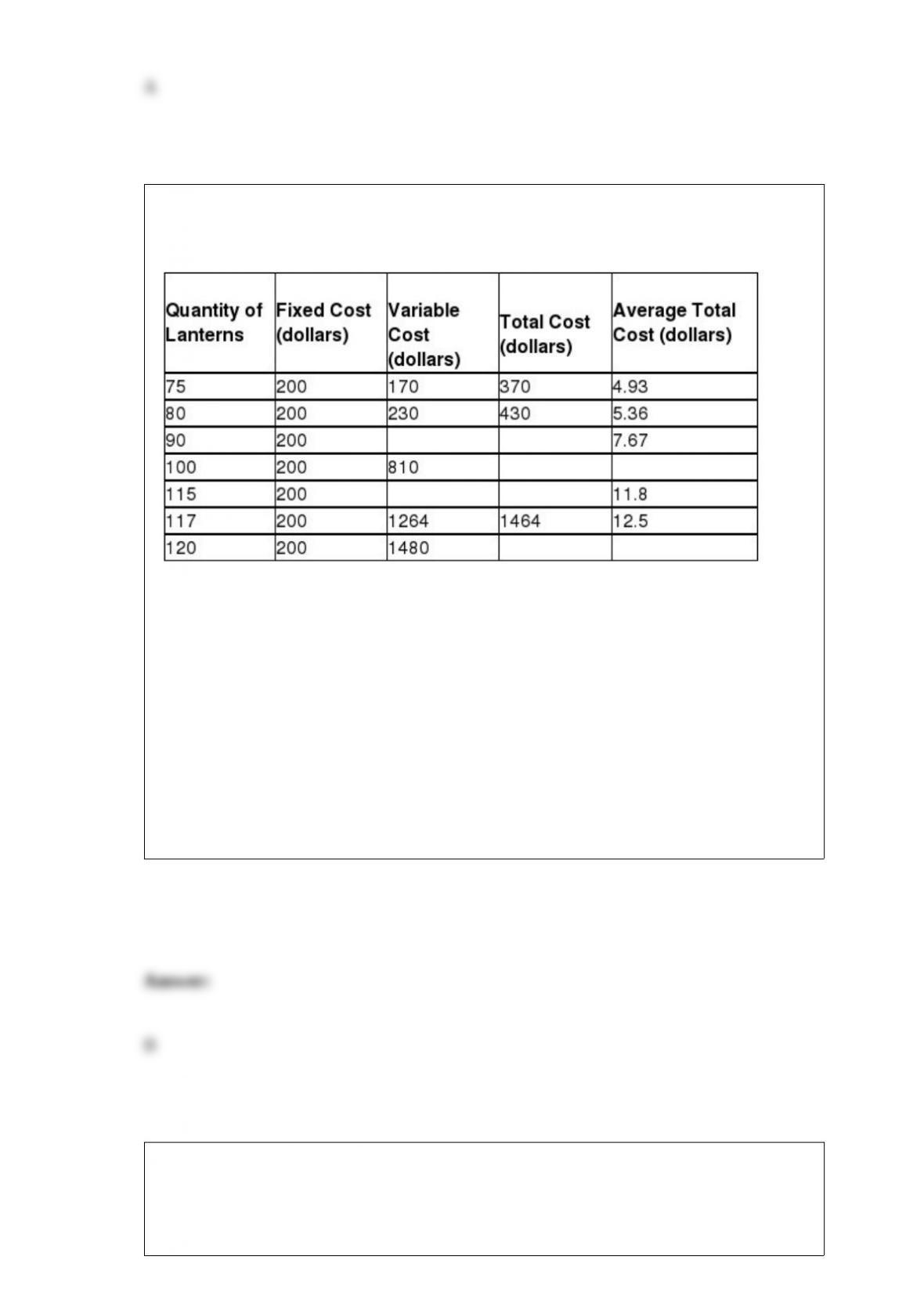
Table 11-7
Table 11-7 shows cost data for Lotus Lanterns, a producer of whimsical night lights.
Refer to Table 11-7. What is the marginal cost per unit of production when the firm
produces 100 lanterns?
A) $420
B) $32
C) $11.1
D) $8.1
An oligopolist’s demand curve is
A) identical to that of a perfectly competitive firm.

B) identical to that of a monopolistically competitive firm.
C) vertical on a price-quantity diagram.
D) unknown because a response of firms to price changes by rivals is uncertain.
Suppose the California Nurses Union successfully secured a 12 percent increase in the
wages of registered nurses. If a hospital responds by reducing the quantity of registered
nurses hired and increasing the quantity of physician’s assistants hired, what conclusion
can you draw?
A) Physician’s assistants are more valuable in terms of their productivity.
B) The price elasticity of demand for registered nurses is negative while the price
elasticity of demand for physician’s assistants is positive.
C) The cross-price elasticity of demand between registered nurses and physician’s
assistants is positive.
D) The cross-price elasticity of demand between registered nurses and physician’s
assistants is negative.
Suppose the demand for milk is relatively inelastic. What happens to sales revenue if
the government imposes a price floor above the free-market equilibrium price in the
market for milk?
A) Sales revenue falls.
B) Sales revenue rises.
C) Sales revenue remains unchanged.
D) It cannot be determined without information on prices.
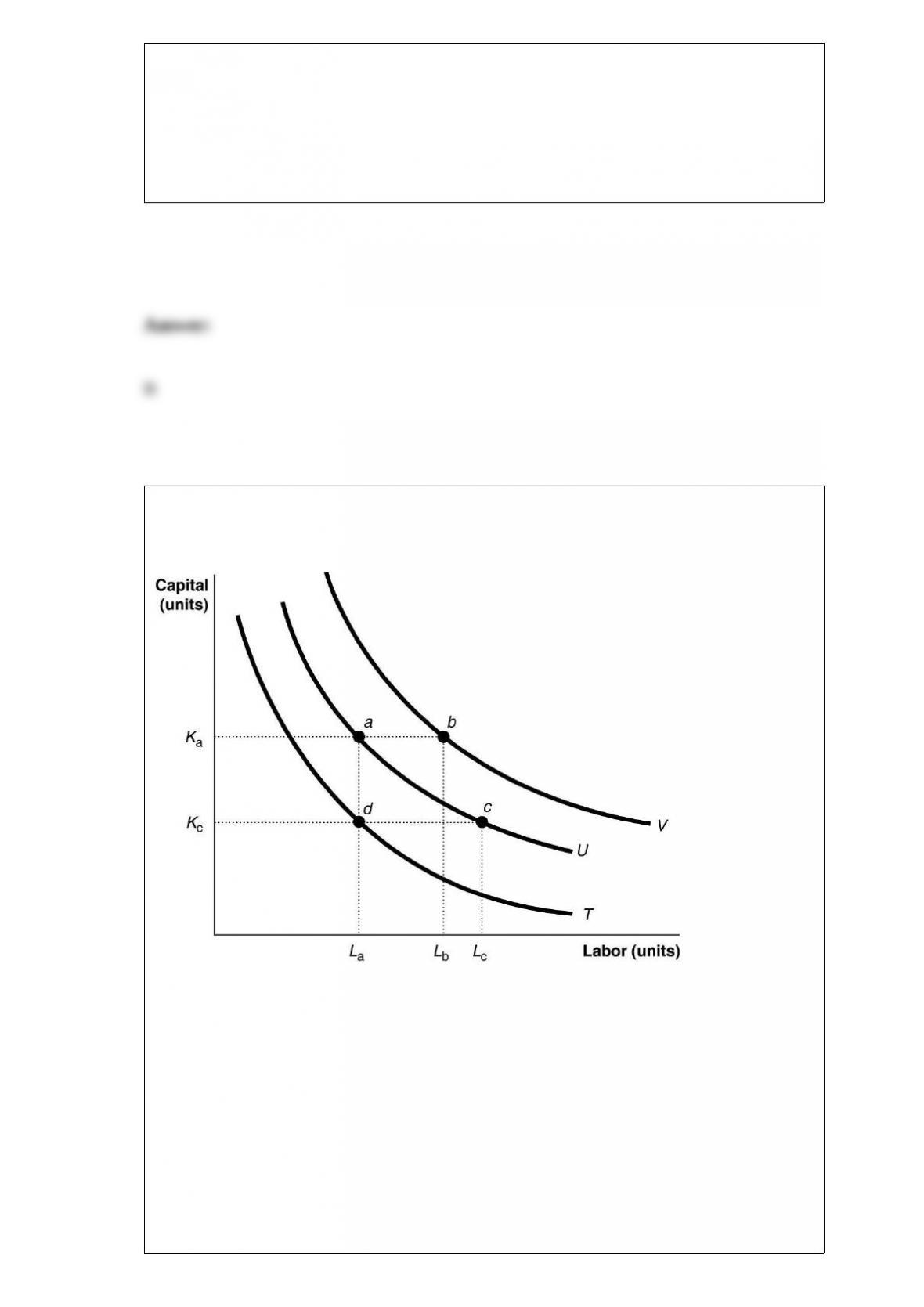
Figure 11-12
Refer to Figure 11-12. Which of the following statements about the input combinations
shown in the diagram is false?
A) The firm produces a higher output level when it uses input combination b compared
to input combination a.
B) The firm produces a lower output level when it uses input combination d compared
to input combination a.
C) The firm produces the same output level when it uses input combination a or c.
D) The firm incurs the same total cost when it uses input combination a or c to produce

a given quantity of output.
The De Beers diamond mining and marketing company of South Africa became one of
the most profitable and longest-lived monopolies in history. Which of the following has
always threatened De Beers’ control of the diamond market?
A) Since few diamonds are ever destroyed, De Beers has constantly faced possible
competition from other firms reselling diamonds.
B) Competition from imitation diamonds. Technology has made it possible to make
fake diamonds look exactly like real diamonds.
C) Competition from other gemstones, including rubies and emeralds, that have become
more popular over time.
D) At different times in the past some countries have banned the importation of
diamonds from South Africa for political reasons.
Figure 12-4
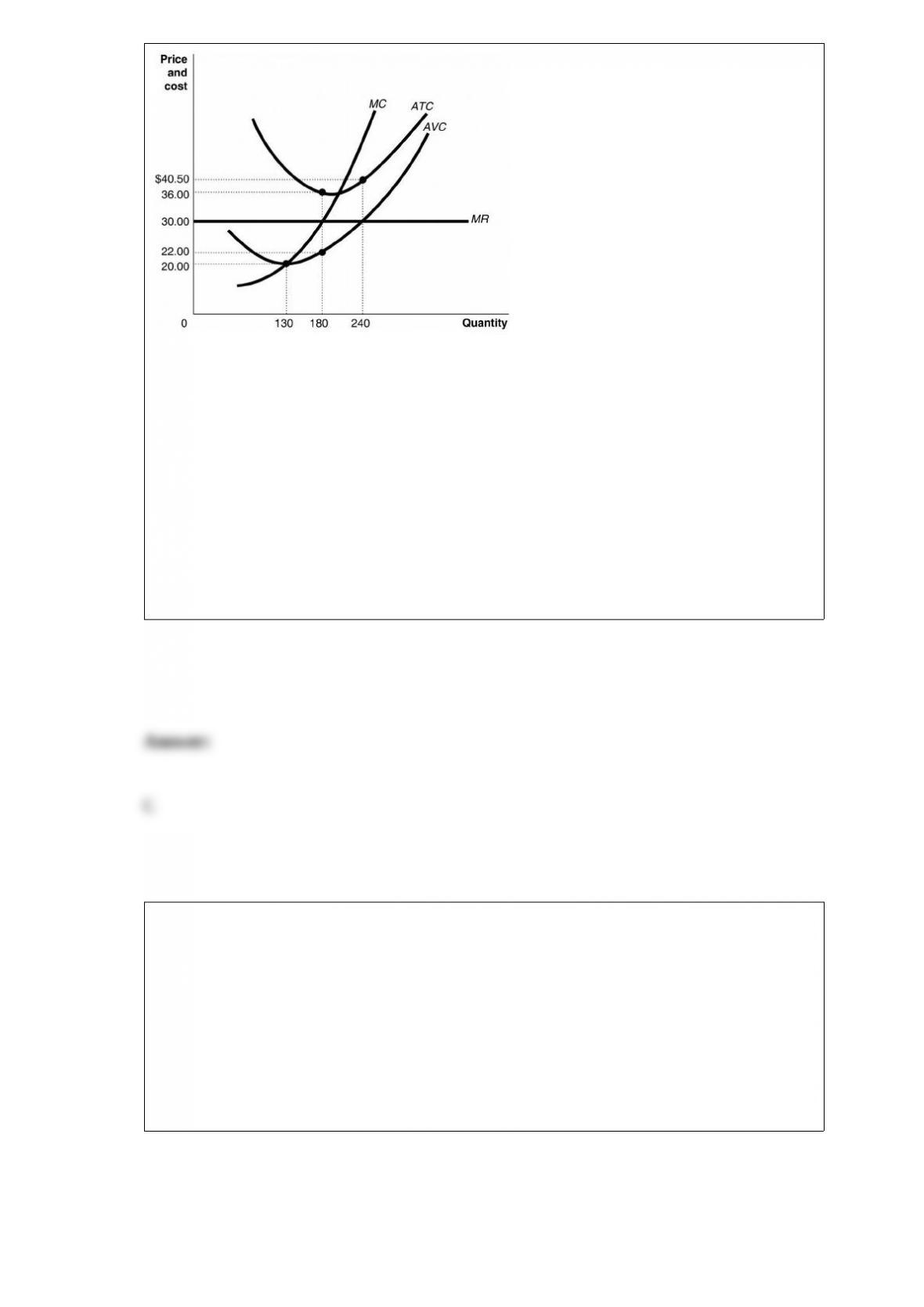
Figure 12-4 shows the cost and demand curves for a profit-maximizing firm in a
perfectly competitive market.
Refer to Figure 12-4. What is the amount of its total fixed cost?
A) $1,080
B) $1,440
C) $2,520
D) It cannot be determined.
If the social cost of producing a good or service exceeds the private cost
A) a positive externality exists.
B) the sum of consumer surplus and producer surplus is maximized.
C) the market achieves economic efficiency.
D) a negative externality exists.
The production function shows
A) the total cost of producing a given quantity of output.
B) the maximum output that can be produced from each possible quantity of inputs.
C) the technology used to produce output.
D) the incremental output gained by improving the production process.
Suppose Argyle Sachs has to choose between building a smaller sweater factory and a
larger sweater factory. In the following graph, the relationship between costs and output
for the smaller factory is represented by the curve ATC1, and the relationship between
costs and output for the larger factory is represented by the curve ATC2.
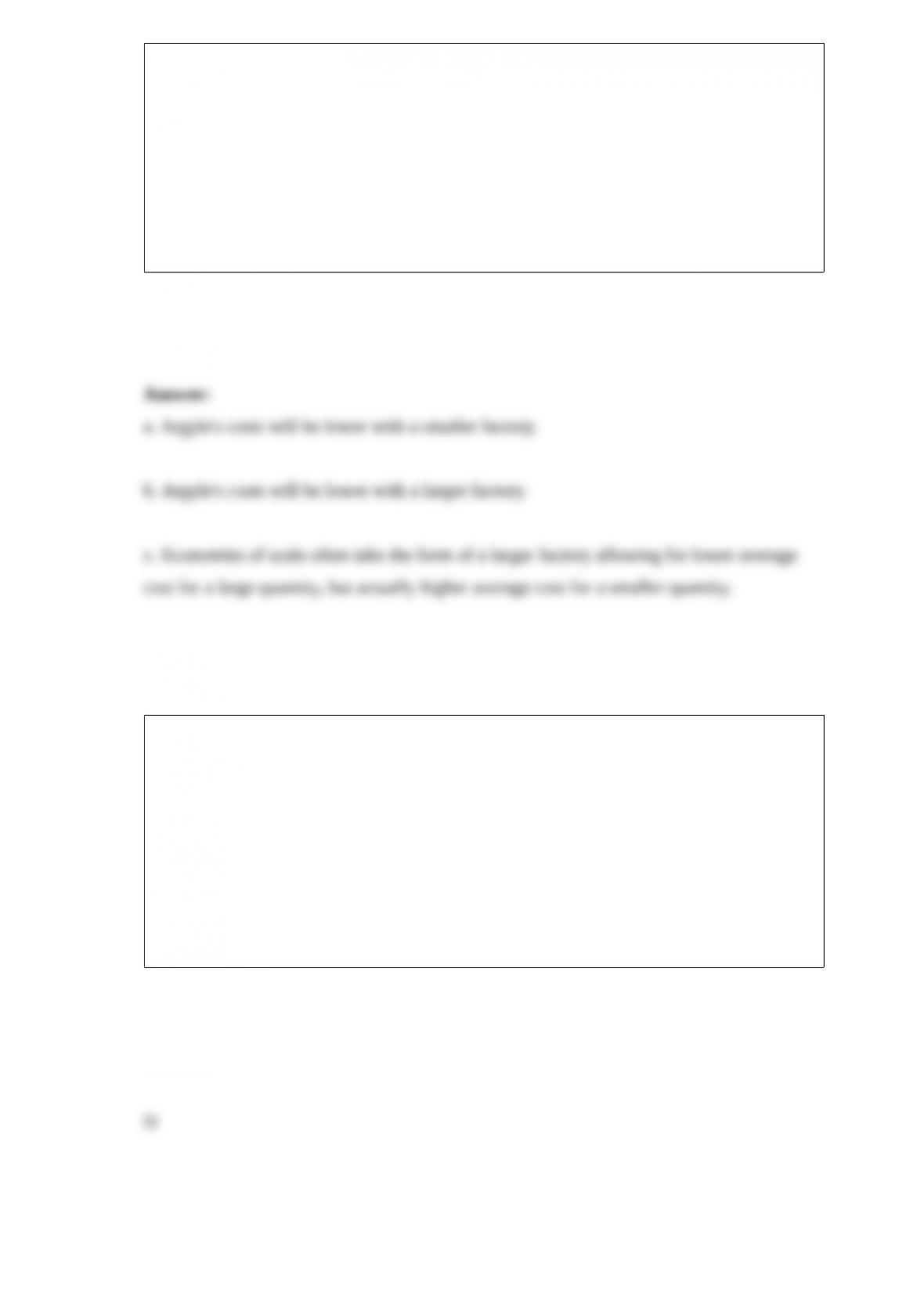
a. If Argyle expects to produce 3,600 sweaters per month, should he build a smaller
factory or a larger factory? Briefly explain?
b. If Argyle expects to produce 5,000 sweaters per month, should he build a smaller
factory or a larger factory? Briefly explain.
c. If the average cost of producing sweaters is lower in the larger factory when Argyle
produces 6,500 sweaters per week, why isn’t it also lower when Argyle produces 4,000
sweaters per week?
A firm in a market economy must do all of the following to succeed except
A) produce the goods and services that consumers want at a lower cost than consumers
themselves can produce.
B) organize the factors of production into a functioning, efficient unit.
C) have access to sufficient funds.
D) be organized as a corporation.
One result of the financial meltdown of the late 2000s was that mortgage institutions
________ and ________ were brought under direct control of the government.
A) Fannie Mae; Freddie Mac
B) Glass Steagall; Sarbanes Oxley
C) Goldman Sachs; Morgan Stanley
D) Lehman Brothers; FDIC
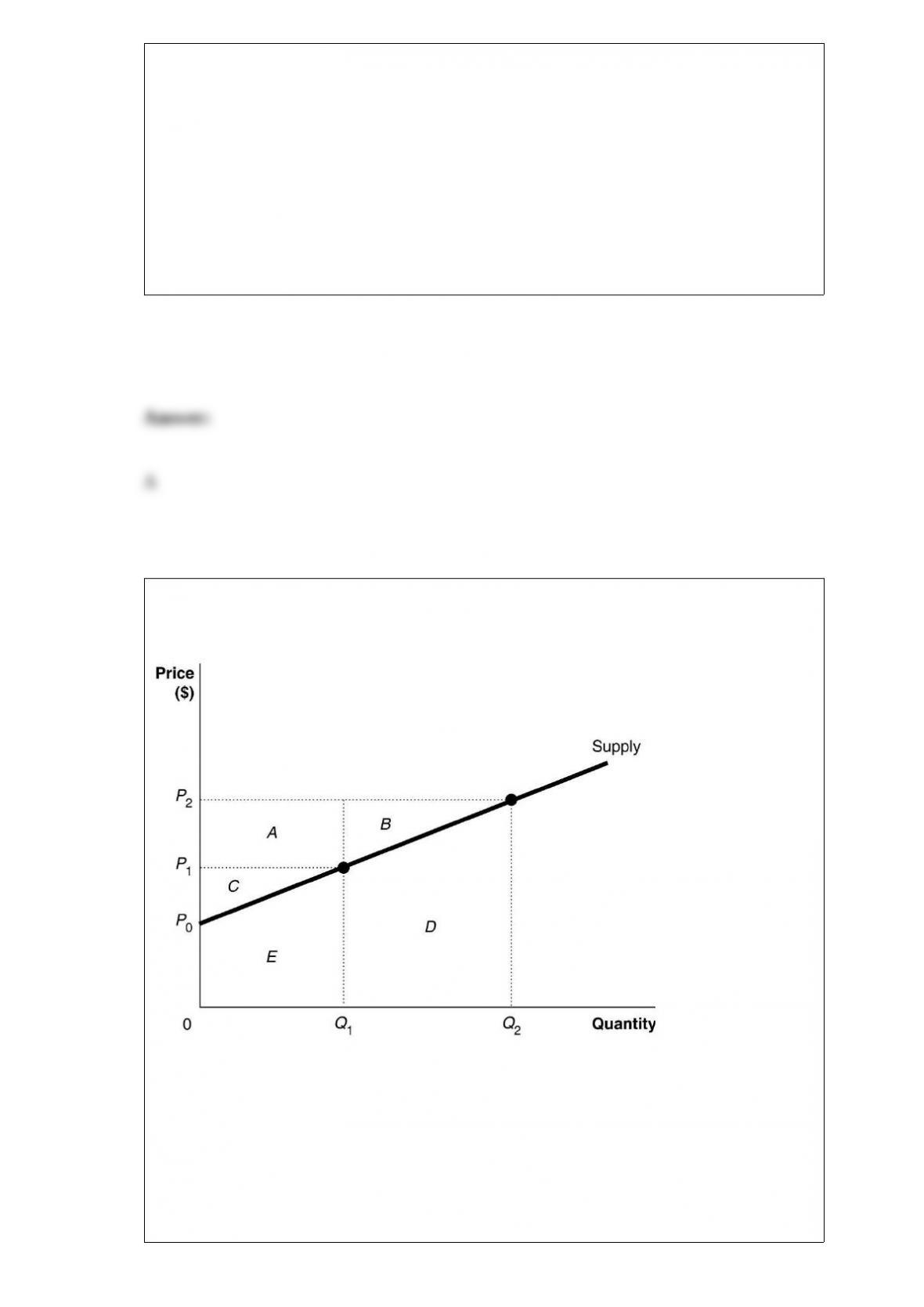
Figure 4-2
Refer to Figure 4-2. What area represents producer surplus at a price of P2?
A) A + B
B) B + D
C) A + B + C
D) A + B + C + D + E
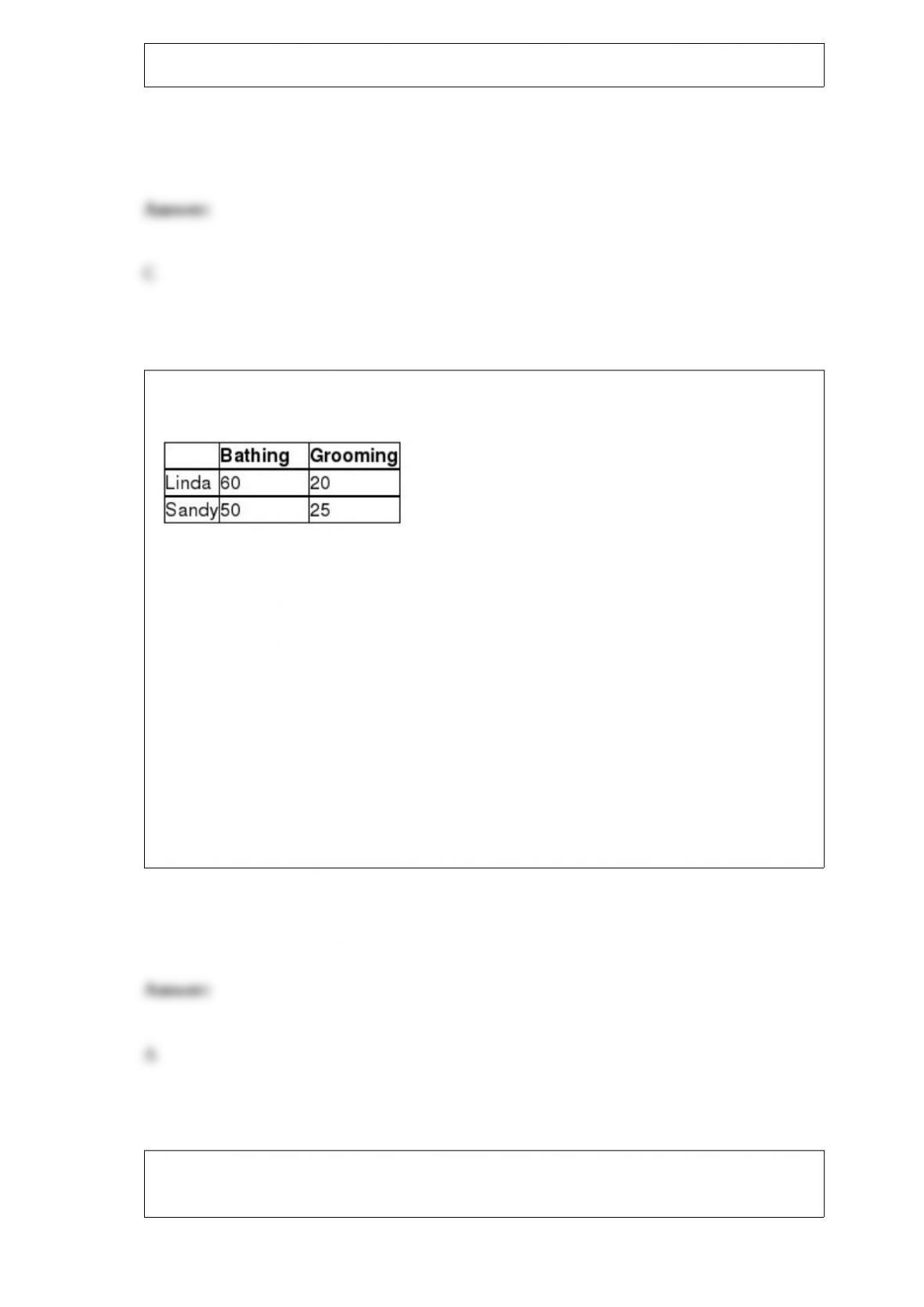
Table 9-1
Linda and Sandy own The Preppy Puppy, a dog grooming business. Table 9-1 lists the
number of dogs Linda and Sandy can each bathe and groom in one week.
Refer to Table 9-1. Select the statement that accurately interprets the data in the table.
A) Linda has an absolute advantage in dog bathing and Sandy has an absolute
advantage in dog grooming.
B) Sandy has an absolute advantage in dog bathing and Linda has an absolute
advantage in dog grooming.
C) Sandy has an absolute advantage in dog bathing and dog grooming.
D) Linda has an absolute advantage in dog bathing and dog grooming.
Figure 15-9
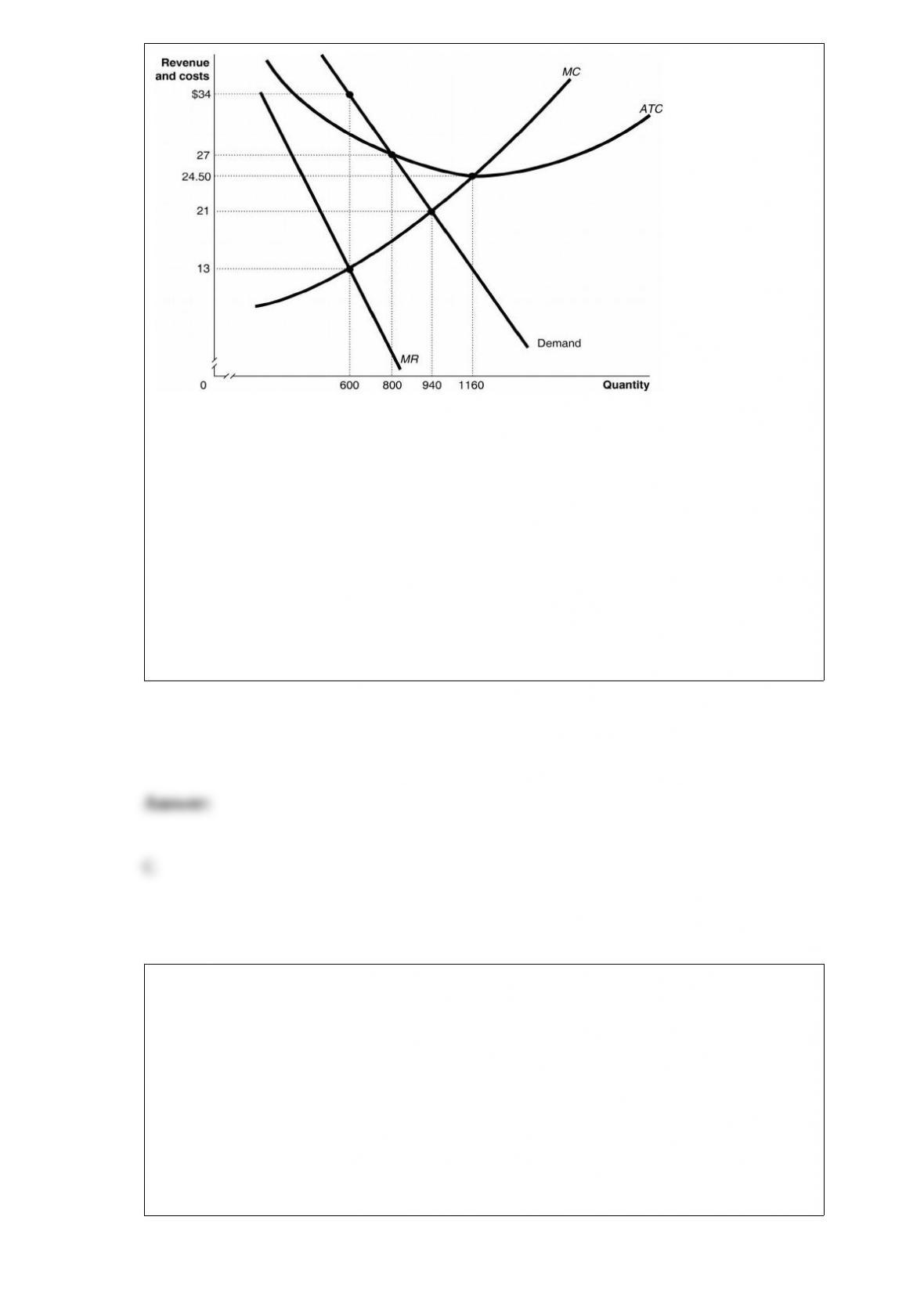
Figure 15-9 shows the demand and cost curves for a monopolist.
Refer to Figure 15-9. What is the difference between the monopoly output and the
perfectly competitive output?
A) 140 units
B) 240 units
C) 340 units
D) 560 units
An economic ________ is a simplified version of some aspect of economic life used to
analyze an economic issue.
A) market
B) trade-off
C) variable
D) model

The price elasticity of supply for umbrellas is 2. Suppose you’re told that following a
price increase, quantity supplied increased by 30 percent. What was the percentage
change in price that brought this about?
A) 60 percent
B) 15 percent
C) 7 percent
D) impossible to determine without additional information
Figure 12-9
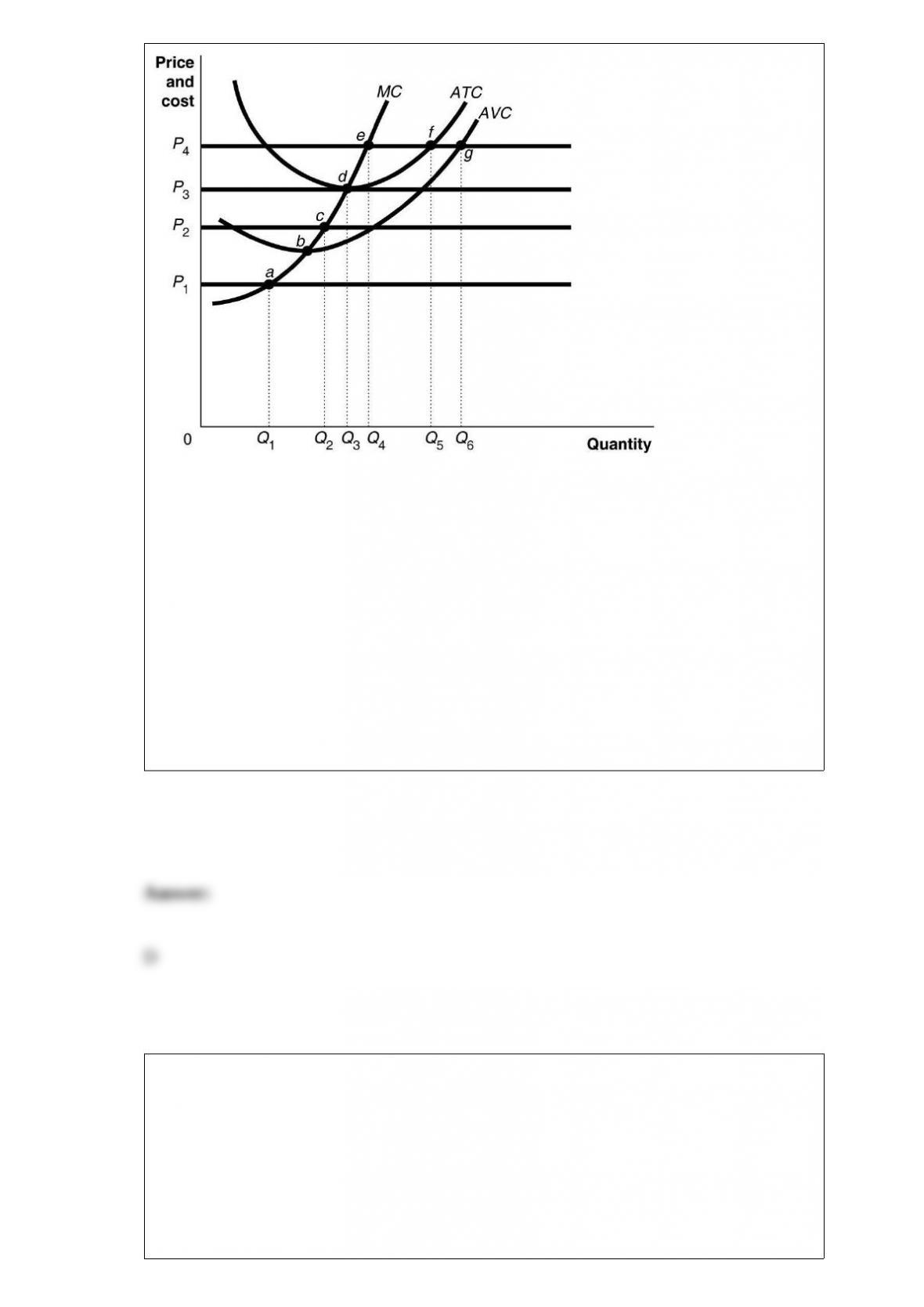
Figure 12-9 shows cost and demand curves facing a profit-maximizing, perfectly
competitive firm.
Refer to Figure 12-9. At price P1, the firm would produce
A) Q1 units
B) Q3 units.
C) Q5 units.
D) zero units.
The average price of gasoline in your neighborhood is $2.15 per gallon. Your neighbor,
Diana tells you that you can ‘save a lot” by frequenting a gas station 20 miles outside
your neighborhood where the price of gasoline is $2.06 per gallon However, she
cautions you that there are usually long lines at that station. Is her suggestion beneficial
to you?
A) Yes, since gasoline is a necessity for car owners, the total cost savings would be
relatively substantial.

B) No, if one factors in the non-monetary opportunity costs (driving time and waiting in
line), it could prove more costly to go to the lower-priced gasoline station.
C) Yes, the lower price of gasoline at the rival station increases my purchasing power
and enables me to consume more of other goods.
D) No, my friend is misled; clearly, the lower-priced gasoline must be of inferior
quality and could damage vehicles.
Marge buys 5 CDs and 7 DVDs. The marginal utility of the 5th CD and the marginal
utility of the 7th DVD are both equal to 30 utils. Can we say that this is the optimal
combination of CDs and DVDs for Marge?
A) No. We need to know her preferences for CDs and DVDs.
B) Yes.
C) No. We need to know the prices of the CDs and DVDs.
D) No. If this was the optimal combination, the marginal utility per dollar of the 5th CD
and the 7th DVD would be equal.
Article Summary
In an attempt to get approval for a $6.3 billion merger with Office Depot, Staples met

with FTC regulators to discuss the possible sale of assets so the merger can proceed.
The Competition Bureau of the FTC had previously indicated that it would not approve
the merger as initially structured, but Staples expressed optimism that it would be able
to reach a settlement with the FTC. Critics have argued that a merger of Staples and
Office Depot will result in higher prices for office supplies.
Source: Josh Kosman, “Staples still angling for Office Max merger,” New York Post,
October 14, 2015.
Refer to the Article Summary above. The standards used by the Department of Justice
and the FTC to evaluate a potential merger such as the one between Staples and Office
Depot are based on market concentration as determined by the
A) Herfindahl-Hirschman Index.
B) Clayton Antitrust Act.
C) Anti-Collusion Task Force.
D) Robinson-Patman Act.
Consider a downward-sloping demand curve. When the price of a normal good
increases, the income and substitution effects
A) work in the same direction to increase quantity demanded.
B) work in the same direction to decrease quantity demanded.
C) work in opposite directions and quantity demanded increases.
D) work in opposite directions and quantity demanded decreases.
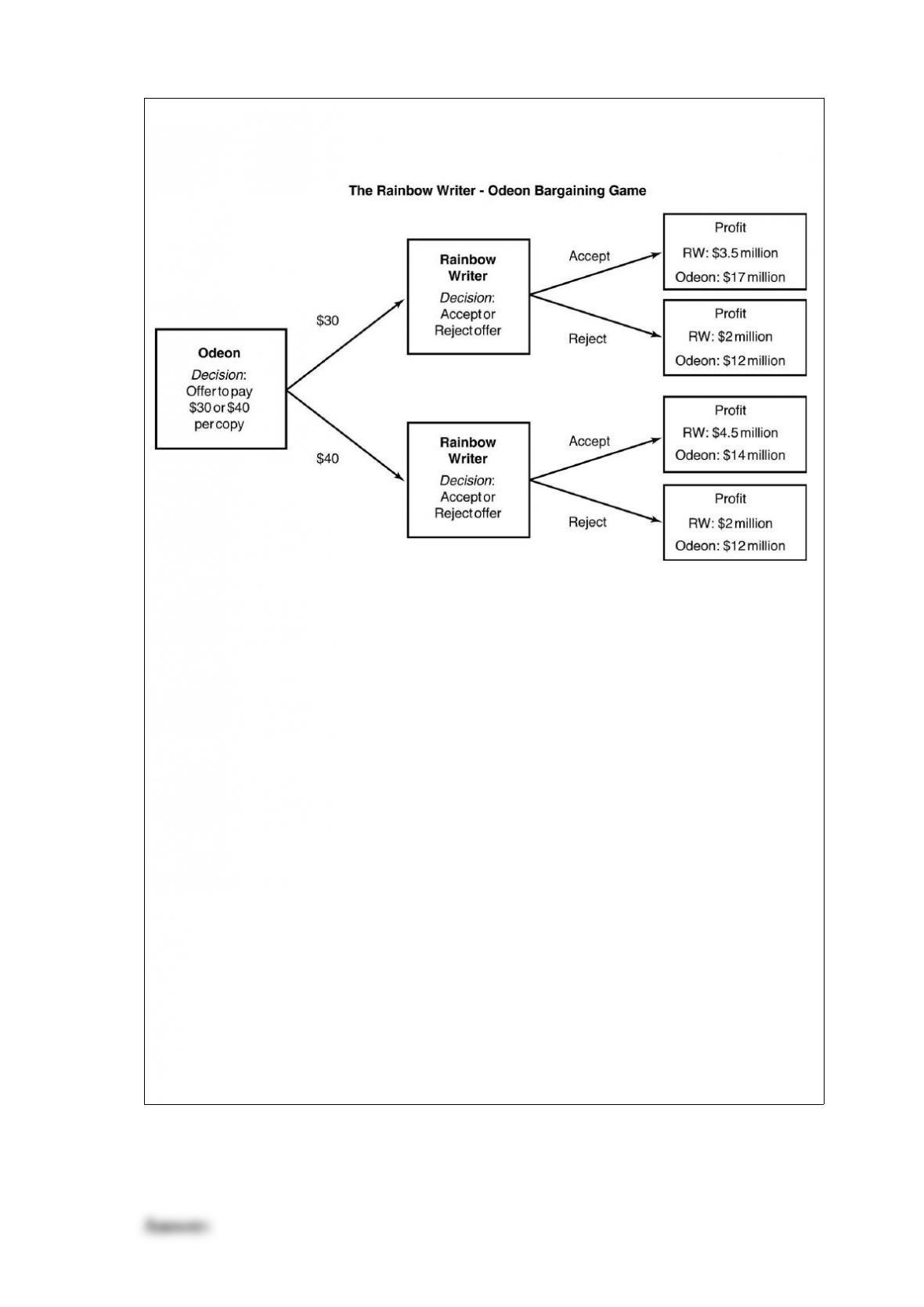
Figure 14-4
Rainbow Writer (RW) is a small online company selling a highly rated software
package for engraving words onto objects produced by 3D printers. The firm currently
earns a profit of $2 million per year selling its package exclusively on its Website.
Odeon, the producer of the most popular 3D printers has expressed interest in bundling
Rainbow Writer’s product with its printers. Odeon expects that bundling would further
boost its sales and allow it to sell its printers at a higher price, thus raising its profits
beyond its current profit of $12 million. Figure 14.4 shows the decision tree for the
Rainbow Writer-Odeon bargaining game.
Refer to Figure 14-4. What is the equilibrium outcome in this game and is this a
subgame-perfect equilibrium?
A) In the equilibrium, neither offer is accepted as Rainbow Writer holds out for a better
deal. The two rejection outcomes are subgame-perfect equilibria.
B) In the equilibrium, Odeon offers $40 per copy of the software package and is
accepted but this is not a subgame-perfect equilibrium.
C) Either offer of $30 or $40 per copy of the software package is accepted and these
two equilibria are subgame-perfect equilibria.
D) Either offer of $30 or $40 per copy of the software package is accepted but these are
not are subgame-perfect equilibria.

Juicy Couture has been successful in selling women’s clothing using an unusual
strategy.
According to an article in the Wall Street Journal, the key to the firm’s strategy is to
“limit distribution to maintain the brand’s exclusive cachet, even if that means
sacrificing sales, a brand-management technique once used only for high-end luxury
brands.” In 2006, Juicy clothes were sold in only four department stores: Neiman
Marcus, Saks, Bloomingdale’s, and Nordstrom. In 2006, its sales have more than
quadrupled since 2002.
Source: Rachel Dodes, “From Track Suits to Fast Track,” Wall Street Journal,
September 13, 2006.
How does limiting the number of stores in which Juicy’s products are sold contribute to
its success?
A) By sacrificing sales, the company was able to focus on producing high-quality
products.
B) It enables Juicy to price its products at a premium and differentiate them from
lower-priced products.
C) It helps establish Juicy’s products as luxury items favored by the very wealthy.
D) Maintaining the exclusivity of a product increases the demand for the product.
Countries that engage in trade will tend to specialize in the production of goods and
services in which they have ________ and will ________ these goods and services.
A) a comparative advantage; import
B) an absolute advantage; export
C) a comparative advantage; export
D) an absolute advantage; import
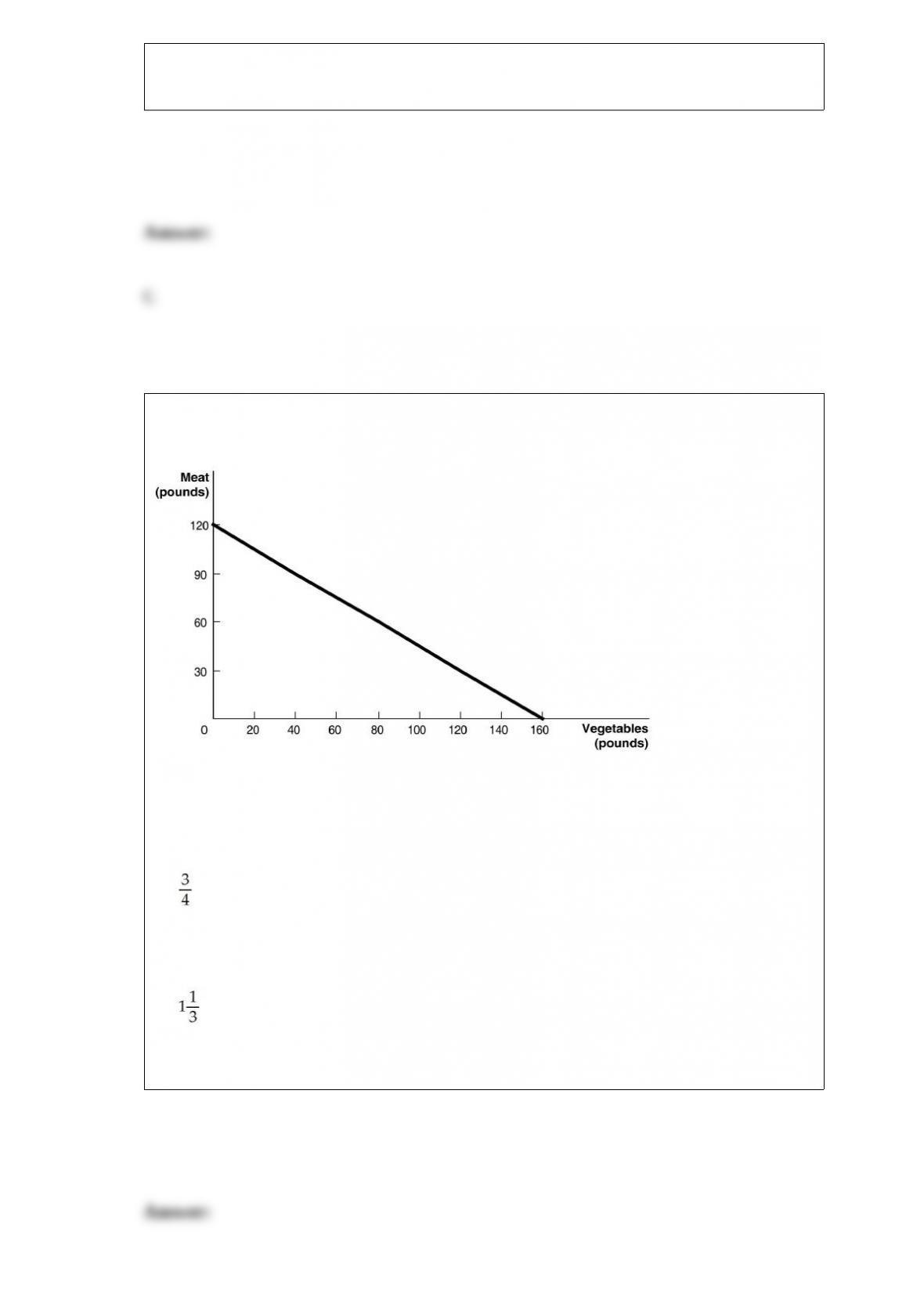
Figure 2-2
Figure 2-2 above shows the production possibilities frontier for Mendonca, an agrarian
nation that produces two goods, meat and vegetables.
Refer to Figure 2-2. What is the opportunity cost of one pound of vegetables?
A) pound of meat
B) 2 pounds of meat
C) pounds of meat
D) 12 pounds of meat

Using a broad definition, a firm would have a monopoly if
A) it produced a product that has no close substitutes.
B) it does not have to collude with any other producer to earn an economic profit.
C) there is no other firm selling a substitute for its product close enough that its
economic profits are competed away in the long run.
D) it can make decisions regarding price and output without violating antitrust laws.
Which of the following statements is true?
A) An explicit cost is an actual cost; an implicit cost is a theoretical cost.
B) Economic costs include both explicit costs and implicit costs.
C) An explicit cost is more important, dollar for dollar, than an implicit cost.
D) Explicit costs are accounting costs, not economic costs; implicit costs are economic
costs, not accounting costs.
A firm will make a profit when
A) P > AVC.
B) P > ATC.
C) P = ATC.
D) P = MC.
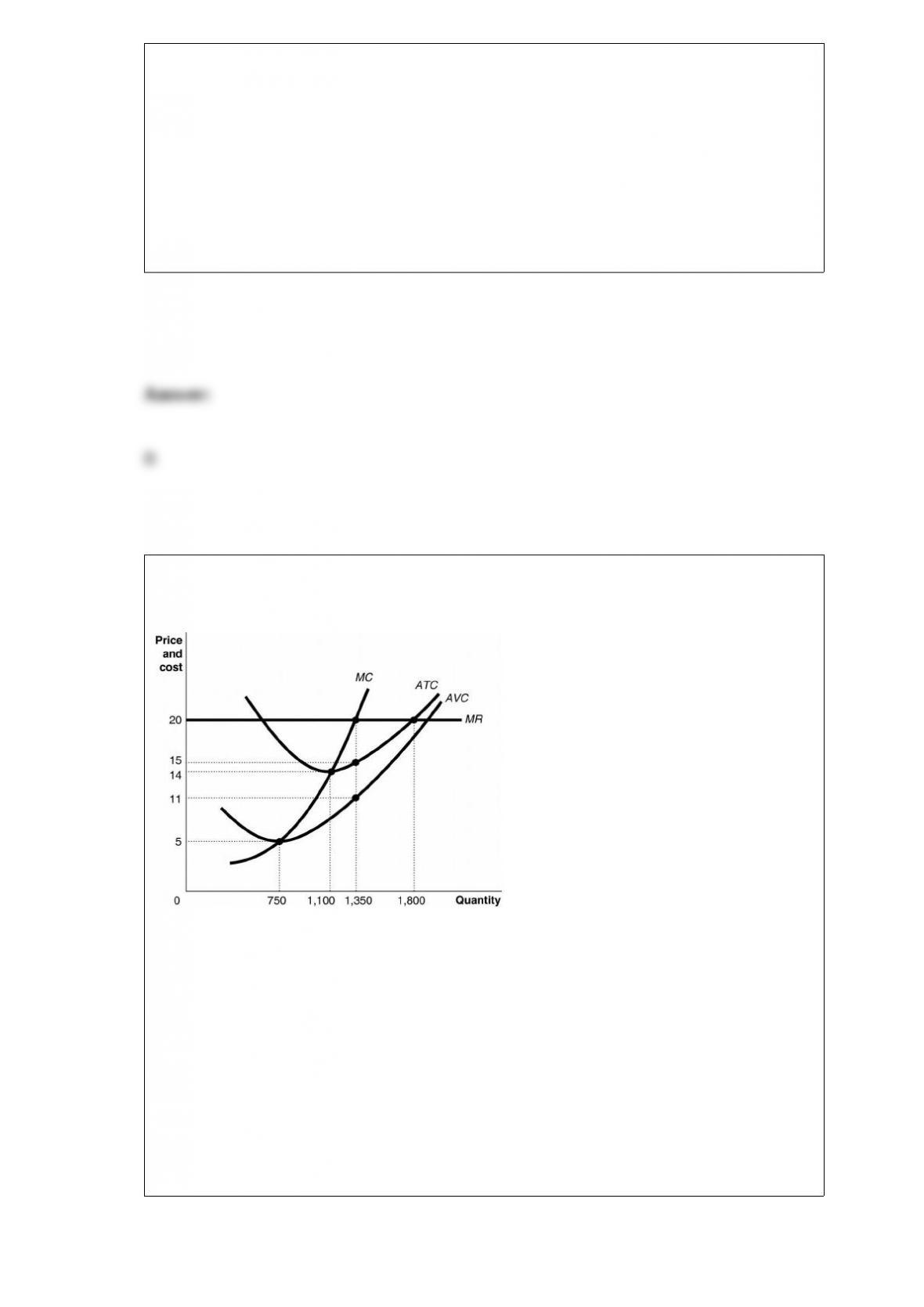
Figure 12-5
Figure 12-5 shows cost and demand curves facing a typical firm in a constant-cost,
perfectly competitive industry.
Refer to Figure 12-5. What is the amount of the firm’s fixed cost of production?
A) $5,400
B) $6,750
C) $8,100
D) It cannot be determined.