
Exhibit 34-10
Who has the comparative advantage when it comes to mowing lawns?
a. Danielle
b. Jason
c. neither Jason nor Danielle
d. both Danielle and Jason
Exhibit 3-5
In the market shown, a rightward shift in demand from D1 to D2 could have been
caused by

a. an increase in the number of sellers in the market.
b. an improvement in technology in the production of this good.
c. a decrease in buyers’ income (assuming the good is an inferior good).
d. a decrease in buyers’ income (assuming the good is a normal good).
e. a and b
Suppose there is a decrease in U.S. income and Mexican income does not change. We
would expect to see
a. both the dollar and the peso depreciate.
b. both the dollar and the peso appreciate.
c. the dollar depreciate and the peso appreciate.
d. the dollar appreciate and the peso depreciate.
A line is parallel to the horizontal axis. The slope of the line is
a. infinite.
b. indicative of an inverse relationship between two variables.
c. indicative of a direct relationship between two variables.
d. zero.

e. b and d
The perfectly competitive firm produces the quantity of output at which __________,
and the single-price monopolist produces the quantity of output at which __________.
The perfectly price-discriminating monopolist is like the __________ in this regard.
a. P = MC; P > MC; single-price monopolist
b. P > MC; P = MC; perfectly competitive firm
c. P = MC; P > MC; perfectly competitive firm
d. P > MC; P = MC; single-price monopolist
Firm X is producing the quantity of output at which marginal revenue equals marginal
cost. It is earning
a. a positive economic profit.
b. an economic loss.
c. a normal profit.
d. There is not enough information to answer the question.

What is the relationship between the elasticity of demand for a product and the
elasticity of demand for labor (that is used in producing the product)?
a. The higher the price of the product, the higher the elasticity of demand for labor.
b. The higher the price of the product, the lower the elasticity of demand for labor.
c. The higher the elasticity of demand for the product, the lower the elasticity of
demand for the product.
d. The lower the elasticity of demand for the product, the lower the elasticity of demand
for the product.
e. There is not enough information to answer the question.
According to the marginal productivity theory, a perfectly competitive firm that is a
factor price taker pays its factors their
a. MRP.
b. VMP.
c. MPP.
d. a and b
e. all of the above
The diamond-water paradox holds that often things that have high __________ have a
__________ price and things that have a low __________ have a __________ price.
a. value in exchange; high; value in use; low
b. value in use; low; value in use; high
c. absolute price; low relative; relative price; low absolute
d. relative price; low absolute; relative price; high absolute
e. exchange value; high; exchange value; low
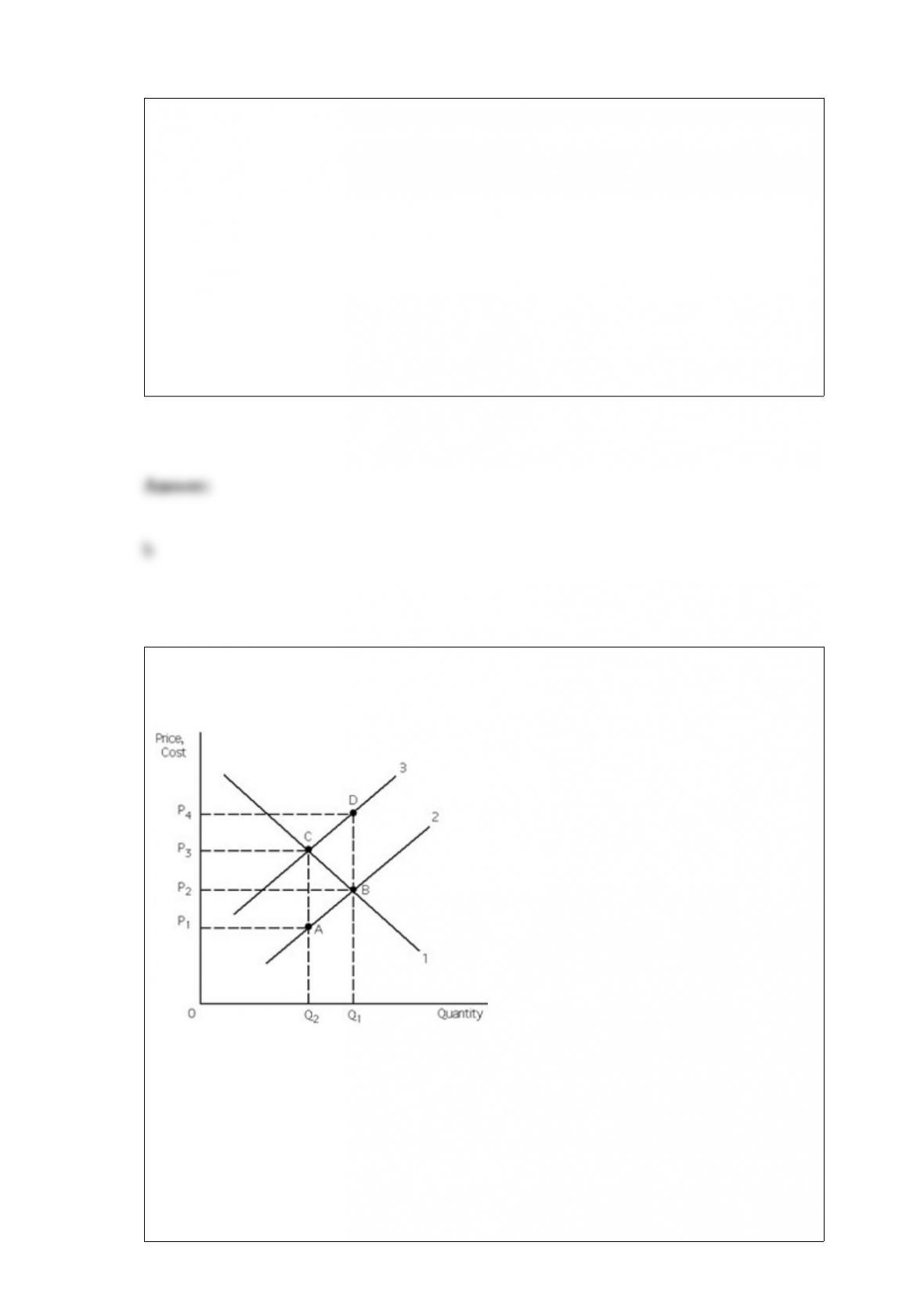
Exhibit 31-4
If a negative externality exists, then the socially optimal output is
a. Q1.
b. Q2.
c. Q1 – Q2.
d. Q2 – Q1.
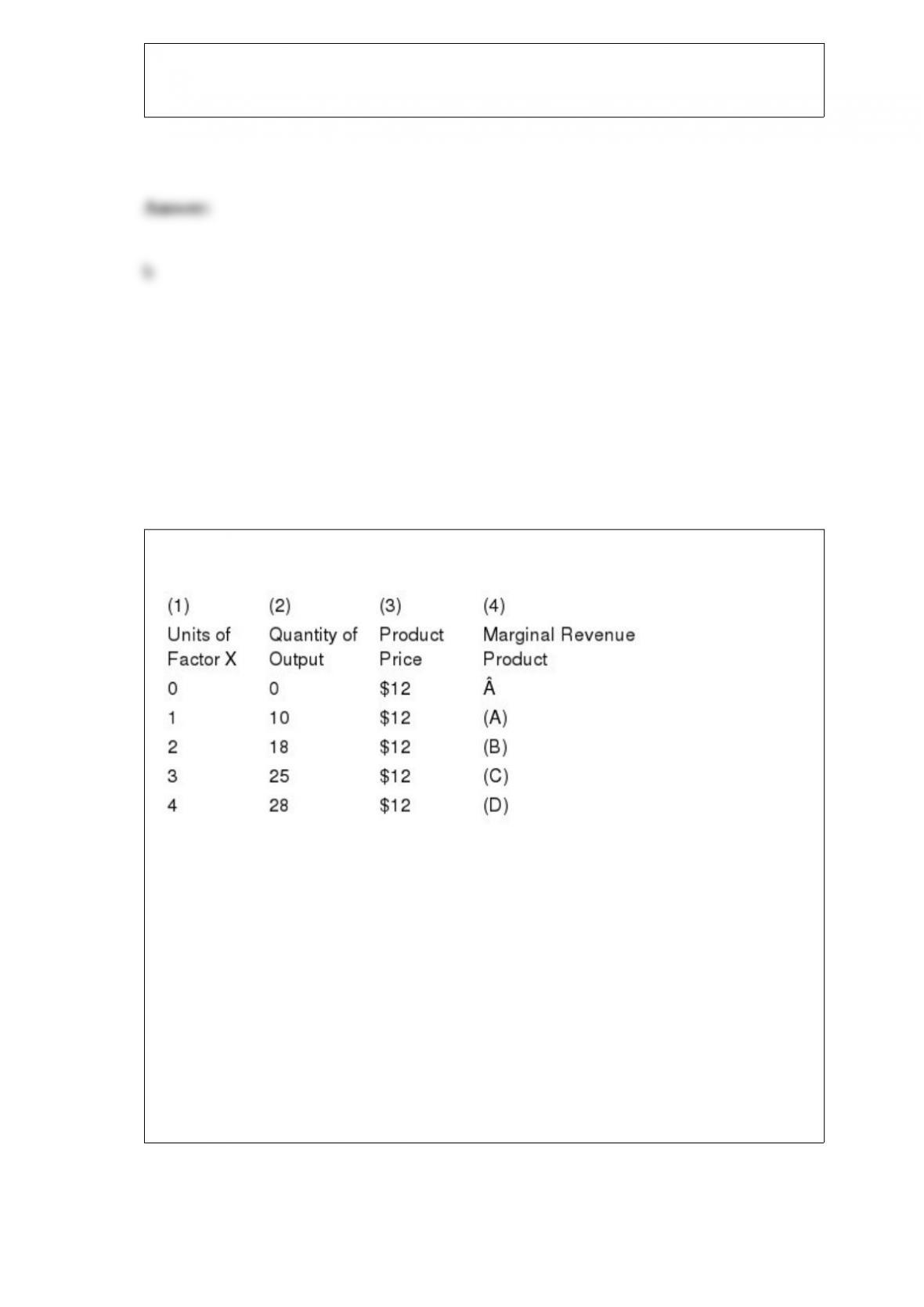
Exhibit 27-1
For this firm, the demand curve for factor X is
a. downward-sloping.
b. upward-sloping.
c. vertical.
d. horizontal.
e. There is not enough information given to determine the shape of the factor X demand
curve.
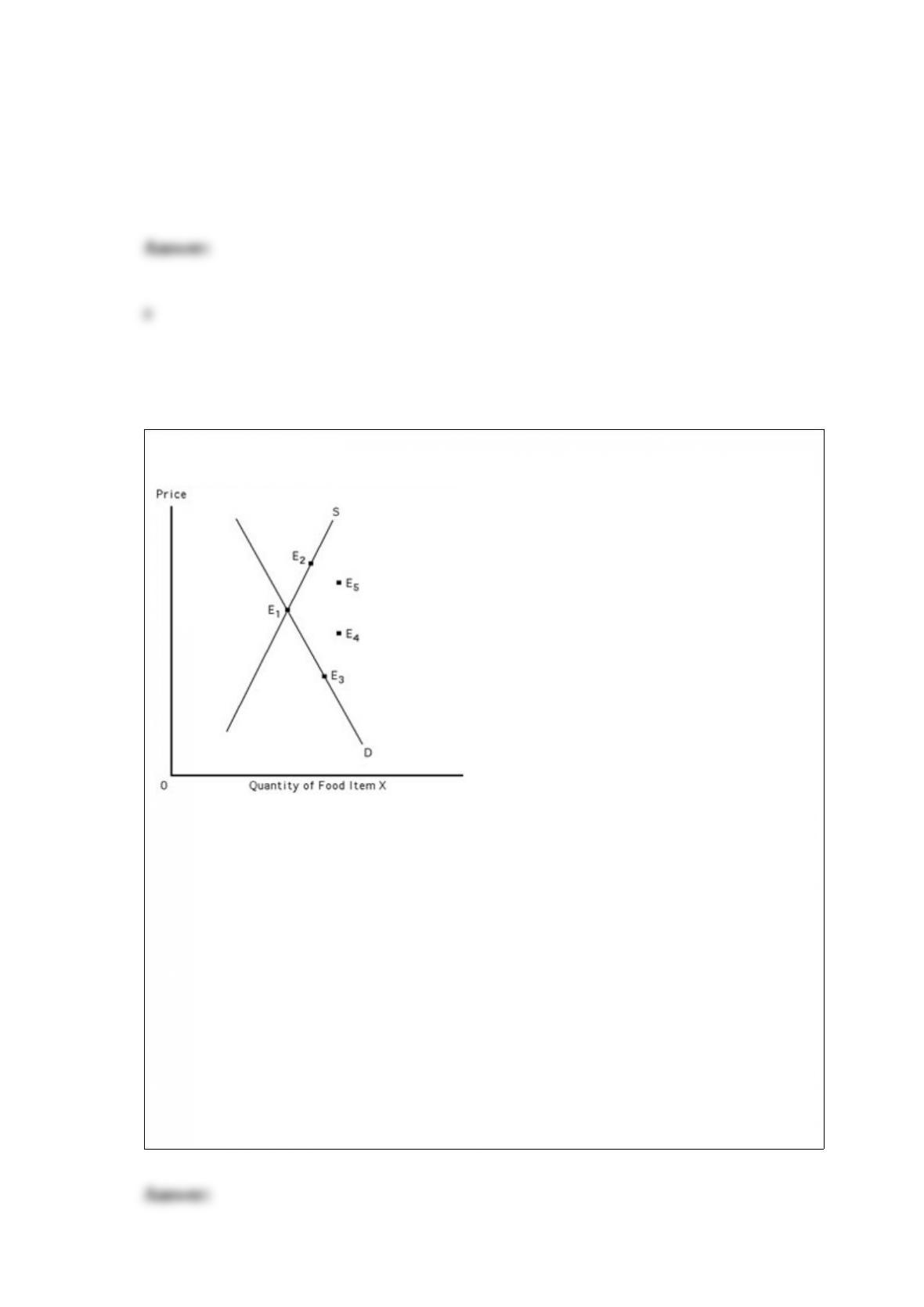
Exhibit 39-7
Let E1 represent the initial equilibrium in the market for X. A combination of
population growth and an increase in agricultural productivity will likely result in a new
equilibrium at
a. E2.
b. E3.
c. E4.
d. E5.
e. E4 or E5, depending on the extent of income elasticity of demand.

When a person is making a decision at the margin he or she is comparing the additional
benefit of that activity to the additional cost of the proposed action.
a. True
b. False
When people treat some dollars differently than others, they are said to be
compartmentalizing.
a. True
b. False
The firm’s factor demand curve is the
a. MRP curve if the firm is a price taker (perfectly competitive firm).
b. MFC curve if the firm is a price taker (perfectly competitive firm).
c. VMP curve if the firm is a price searcher (monopolist, monopolistic competitor,
oligopolist).
d. MFC curve if the firm is a price searcher (monopolist, monopolistic competitor,
oligopolist).