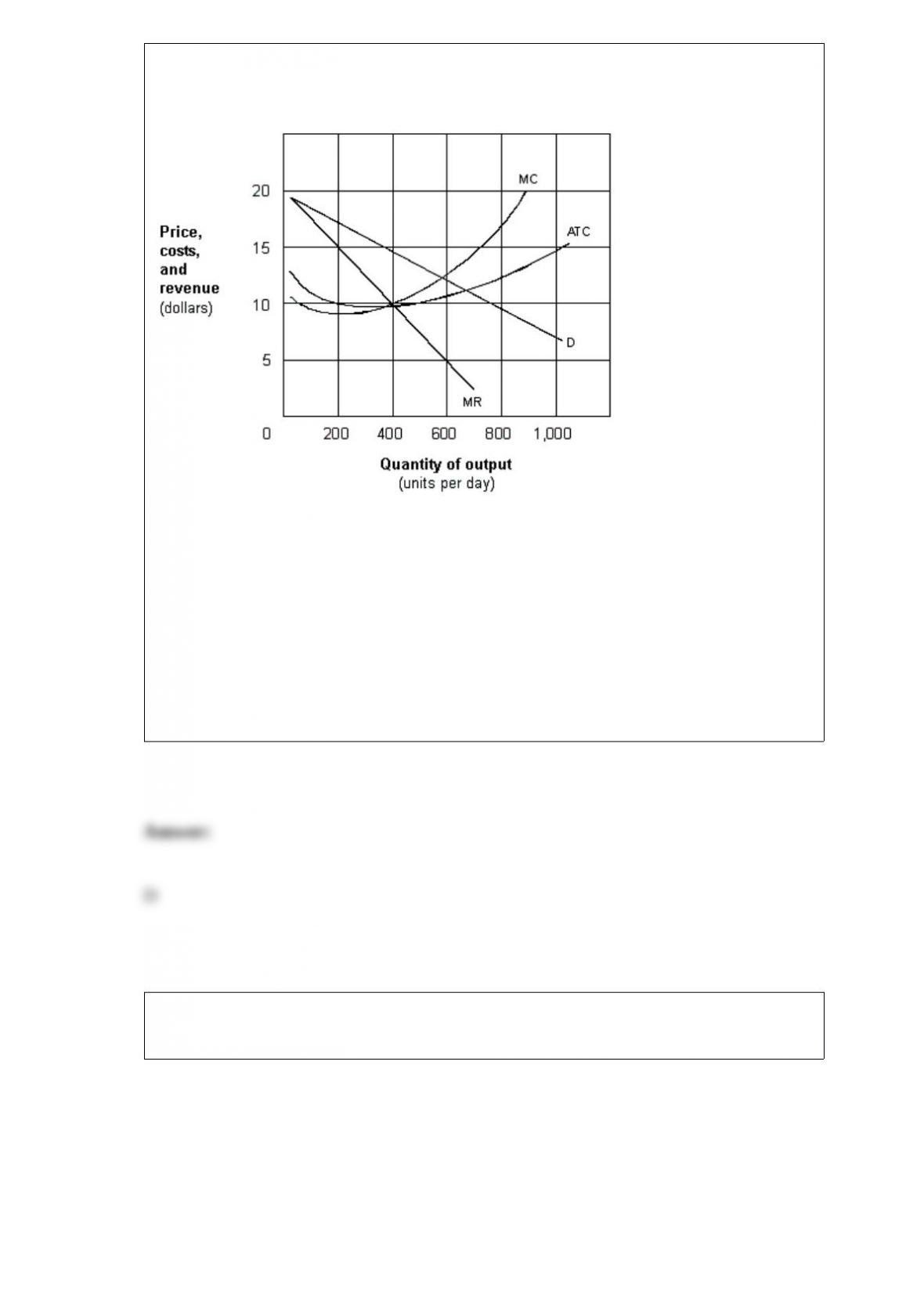
Exhibit 10-1 A monopolistic competitive firm
In the long run, which of the following is true for the firm shown in Exhibit 10-1?
a. The firm’s demand curve shifts leftward.
b. The firm’s average total cost curve shifts upward.
c. Neither a nor b are possible.
d. Both a and b are possible.
Exhibit 3-1 Market Demand
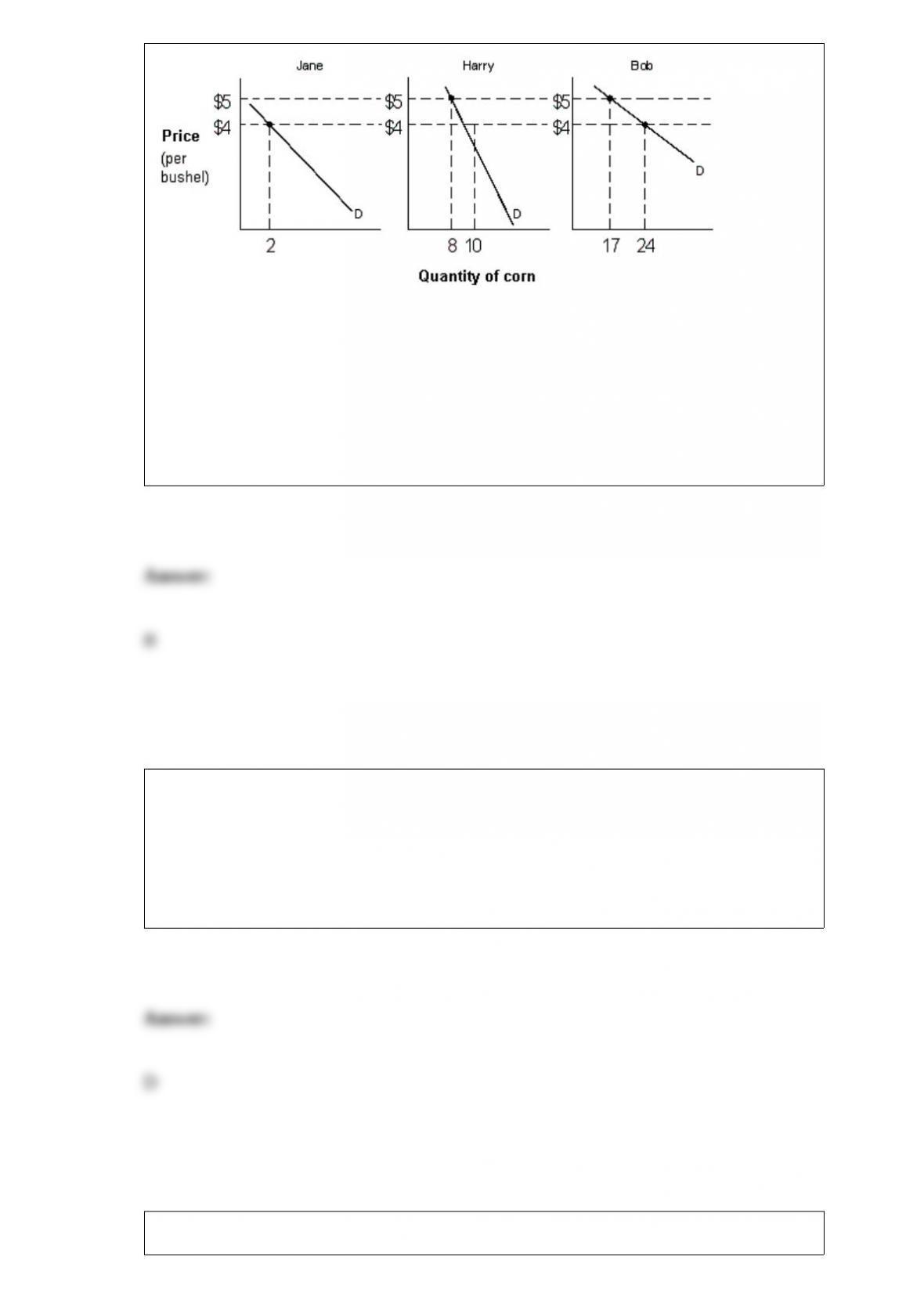
Suppose there are only three people in the economy: Jane, Harry, and Bob. The
individual demand for corn for each of these consumers is given in Exhibit 3-1. The
total quantity demanded of corn if the market price is $5 is ____.
a. 3
b. 25
c. 17
d. 8
e. 26
Which of the following will cause the demand curve for a good to shift to the right?
a. Decrease in income for a normal good.
b. Increase in the price of a complementary good.
c. Decrease in the price of the good.
d. Increase in the price of a substitute good.
e. Expectation of a future price decline.
Coke and Pepsi are an example of:

a. inferior goods. c. substitutes.
b. unrelated goods. d. complements.
Utility is:
a. easily measured, because all people derive the same utility from consumption.
b. easily measured, because it is an objective concept.
c. easily measured, because it is a subjective concept.
d. hard to measure, because it is a subjective concept.
e. hard to measure, because it is an objective concept.
If the cross-elasticity of demand for two goods is positive, this means that the goods
are:
a. normal goods. c. substitutes.
b. inferior goods. d. complements.

The absolute value of the slope of an indifference curve is called the:
a. marginal rate of transformation.
b. transitivity slope.
c. indifference rate of preference.
d. marginal rate of substitution.
The optimal hiring rule is to employ labor up to the point where:
a. wage = MFC.
b. wage = MP.
c. wage = MR
d. wage = MRP
e. wage = TWC.
Suppose a price floor is set by the government above the market equilibrium price.
Which of the following will result?
a. There will be a surplus.
b. The quantity demanded will exceed the quantity supplied.
c. The demand curve will shift to the left.
d. None of these.

A “kinked” demand curve reflects a tendency on the part of an oligopolist to:
a. follow price increases but not price reductions.
b. following price reductions but not price increases.
c. be unconcerned with rivals’ behavior.
d. None of these.
One method of correcting for ____ externalities is to create a ____ to make sure the
market accounts for all costs and benefits.
a. market failure; tax
b. negative; tax
c. positive; mechanism
d. positive; tax
e. negative; free market

Exhibit 3A-2 Comparison of Market Efficiency and Deadweight Loss
As shown in Exhibit 3A-2, if the market price falls from P1 to P2, then area ____
disappears.
a. ABEFD c. EGH
b. BEG d. BEF
Which of the following factors is not a barrier limiting the entry of potential
competitors into a market?
a. legally enforced patent rights
b. an inelastic demand for a product
c. licensing
d. control over an essential resource
Public goods are usually provided by:
a. private industry.
b. the government.
c. private citizens.
d. internal markets
e. local industry.
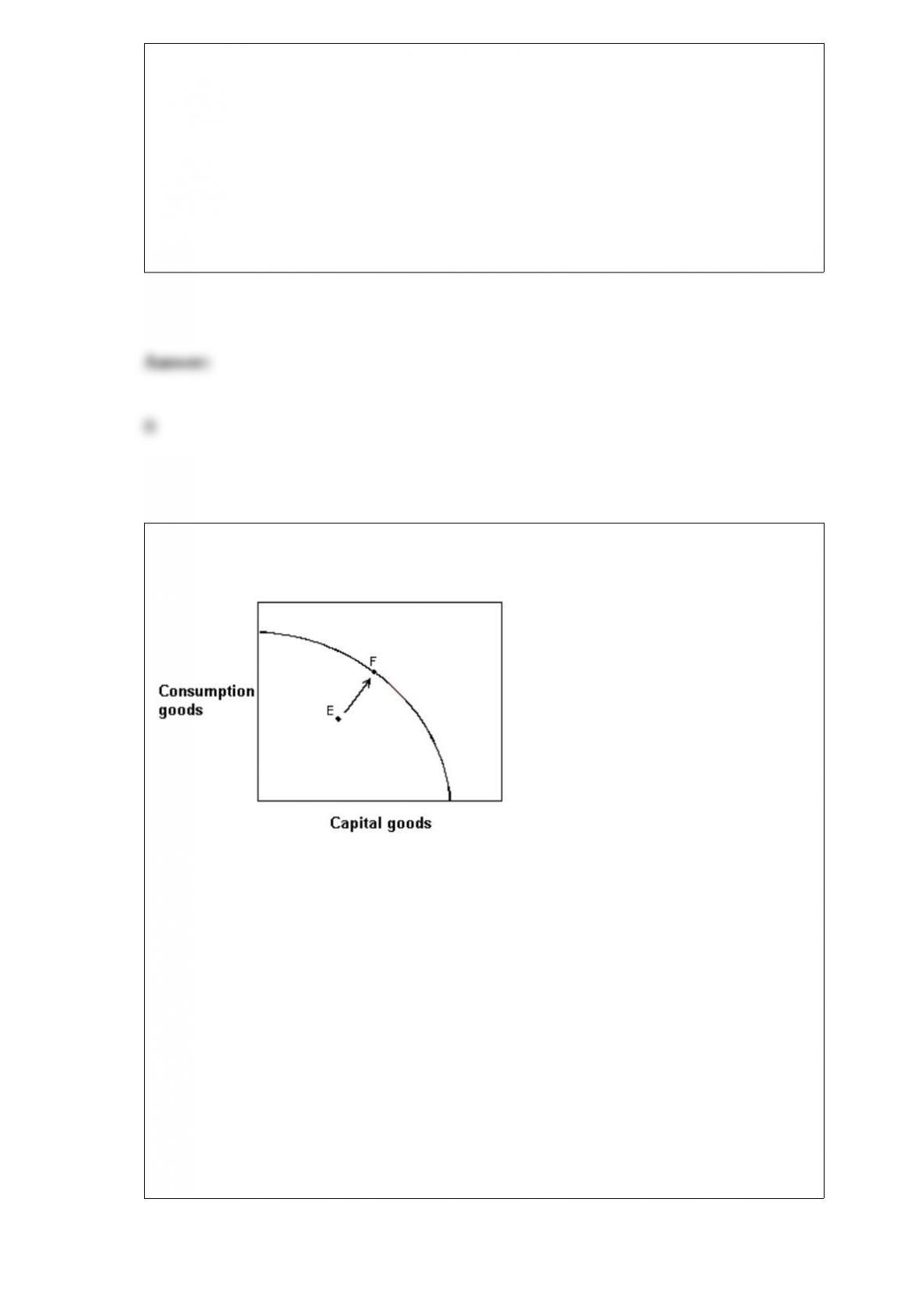
Exhibit 2-14 Production possibilities curve
In Exhibit 2-14, this economy was located at point E but has now moved to point F.
a. This would be an impossible move because the economy does not have sufficient
resources.
b. The rate of unemployment in this economy would have increased.
c. Consumption goods production has increased, but capital goods production has
decreased.
d. The economy has decreased unemployment, but some degree of unemployment still
exists.
e. This economy has achieved full employment.

Which of the following is not an argument used in favor of protectionism?
a. To protect an “infant” industry.
b. To protect domestic jobs.
c. To preserve national security.
d. To protect against “unfair” competition because of cheap foreign labor.
e. To reduce prices paid by domestic consumers.
To raise the most tax revenue, governments should consider taxing goods with:
a. income elastic demands.
b. price inelastic demands.
c. income elastic demands.
d. income inelastic demands.
e. cross price elastic demands.
The demand for the product of a competitive price-taker firm is:
a. perfectly inelastic.
b. perfectly elastic.
c. greater than zero but less than one.
d. dependent on the availability of substitutes for the firm’s product.

The monopsonist’s labor supply curve is the same as the:
a. wage rate.
b. marginal revenue product curve.
c. marginal product curve.
d. market labor demand curve.
e. market labor supply curve.
Under socialism, factories, farms, mines, and natural resources are owned by:
a. laborers. c. private stockholders.
b. government. d. no one.
Exhibit 15-7 Foreign exchange market for U.S. dollars and British pounds
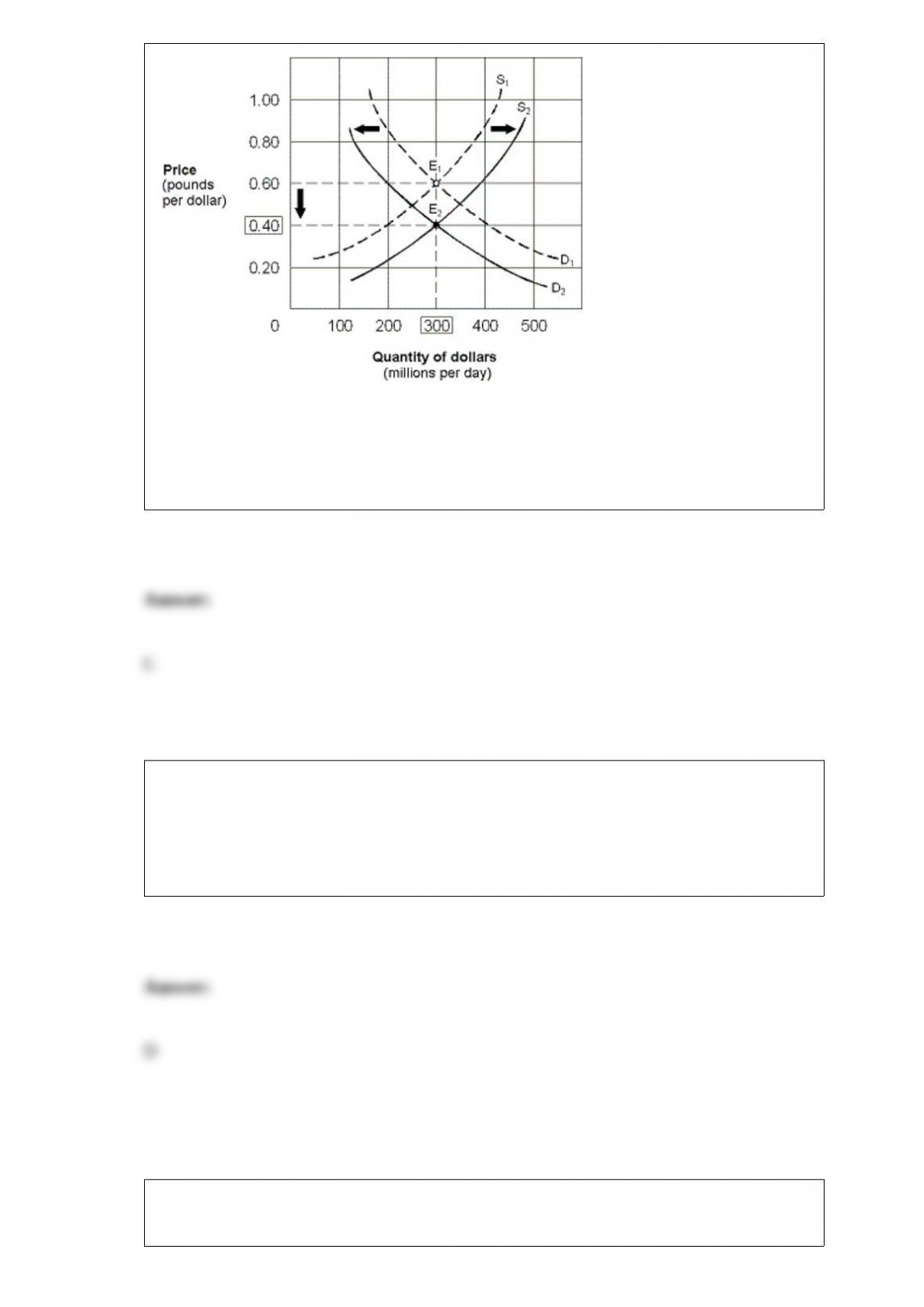
Exhibit 15-7 shows a situation in which:
a. both the dollar and the pound have depreciated.
b. both the dollar and the pound have appreciated.
c. the dollar has depreciated and the pound has appreciated.
d. the dollar has appreciated and the pound has depreciated.
A demand curve for The Steel Porcupines’ concert tickets would show the:
a. number of tickets the box office is willing to sell at various prices.
b. number of people who need tickets.
c. quality of people who want to buy these concert tickets.
d. number of tickets that will be purchased at various prices.
If a country has a lower opportunity cost of producing oranges, then this is:
a. inefficient resource use.

b. an absolute advantage.
c. a tariff.
d. a comparative advantage.
e. a situation where oranges should be imported.
A perfectly competitive firm sells its output for $100 per unit and marginal cost is $100
per unit. To maximize short-run profit, the firm should:
a. increase output.
b. decrease output.
c. maintain its current output.
d. shut down.
Long-run economies of scale exist over the range of output for which the long-run
average cost curve:
a. is constant.
b. is falling.
c. is rising.
d. does not exist.

Microeconomics and macroeconomics use different types of analysis.
Each point along an indifference curve represents the same level of total utility for a
consumer.
The Federal Trade Commission (FTC) was established to investigate unfair and
deceptive business practices.
A rational consumer will always shift a dollar from a good whose
marginal-utility-to-price ratio is lower to one whose marginal-utility-to-price is higher.

Under an exclusive buying arrangement, a retailer agrees not to sell a good at the
manufacturer’s suggested retail price.
Effluent taxes are not the most common approach used to control pollutants in the
United States.
Medicaid is an example of a cash assistance poverty program.
International specialization and trade according to the principle of comparative
advantage is mutually beneficial for all economies involved.

The Lorenz curve represents the distribution of income.