1) If Kelly deposits $10,000 into an account that pays 8 percent interest, compounded
annually, and she makes no further deposits or withdrawals, how much will Kelly have
in her account at the end of 5 years?
A.$14,000
B.$14,482
C.$14,693
D.$15,000
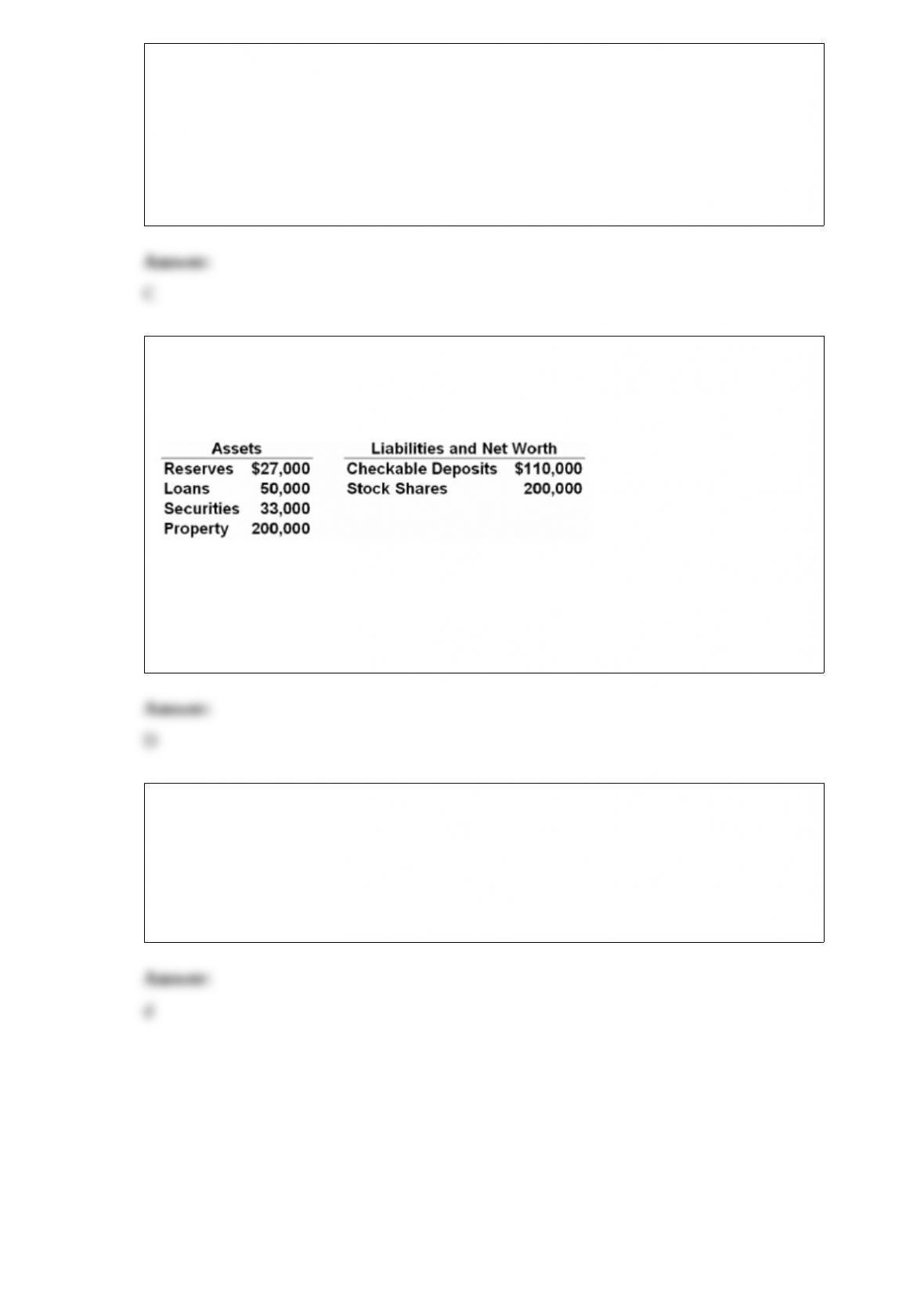
2) The following balance sheet for the ABC National Bank in answering the next
question(s). Assume the required reserve ratio is 20 percent.
Refer to the above data. This commercial bank has excess reserves of:
A.$0.
B.$3,000.
C.$12,000.
D.$5,000.
3) the uruguay round of gatt negotiations completed in late 1993:
a.established a free trade zone between the united states and mexico.
b.made the russian ruble convertible into other currencies.
c.created the european union (eu).
d.created international protections for intellectual property such as patents, copyrights,
and trademarks.
4)
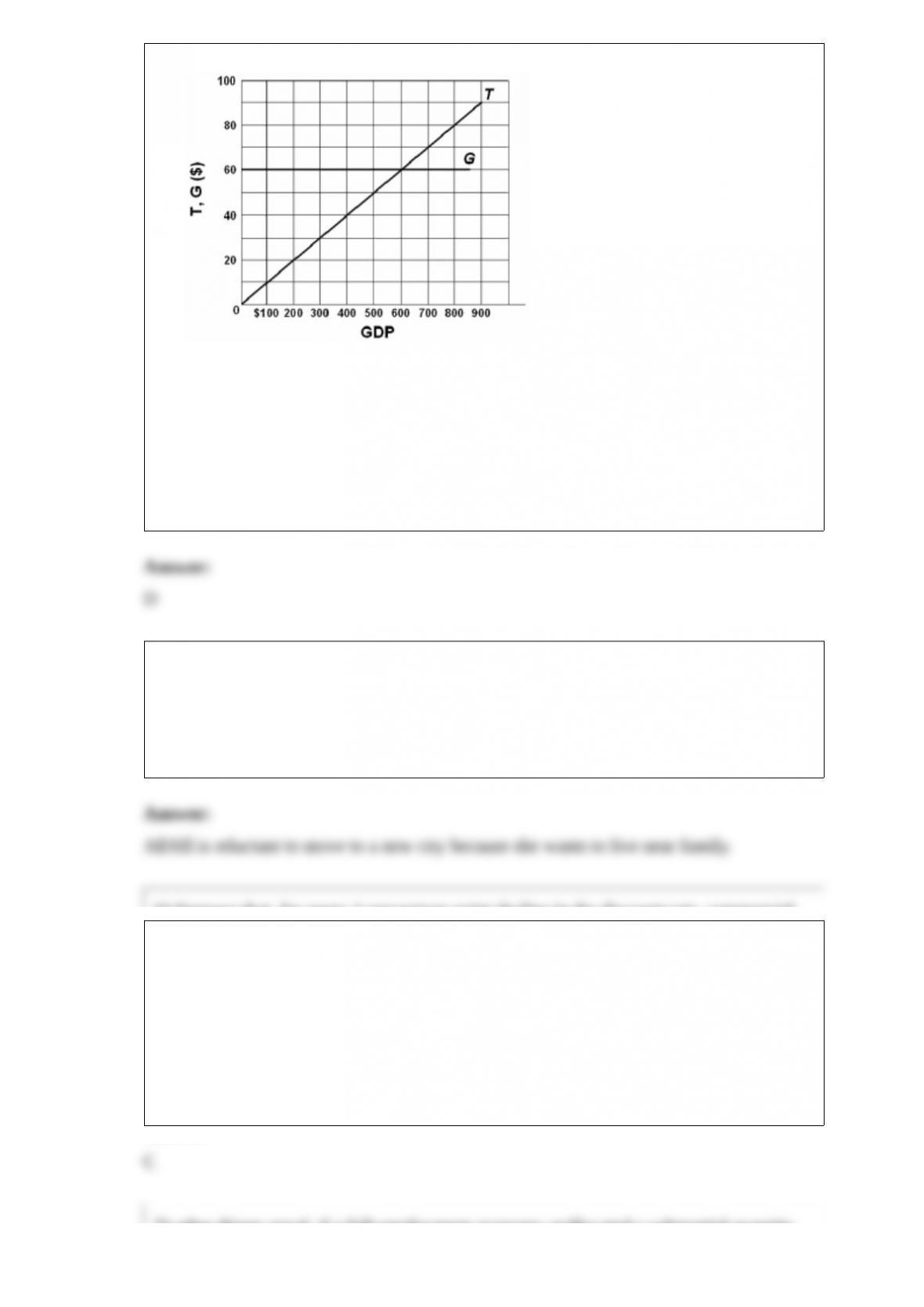
Refer to the above diagram where T is tax revenues and G is government expenditures.
All figures are in billions of dollars. If the full-employment GDP is $400 billion while
the actual GDP is $200 billion, the standardized budget deficit is:
A.$40 billion.
B.zero.
C.$60 billion.
D.$20 billion.
5) Jack and Jill have identical skills and training but Jill earns higher wages in her job.
Which of the following reasons would best explain why Jill earns more than Jack?
A.Jack has a chronic illness and would lose health care coverage if he changed jobs.
B.Jill suffers from gender discrimination in the workplace.
C.Jack has better access to information about available jobs in his field.
6) Suppose that, for every 1-percentage point decline in the discount rate, commercial
banks collectively borrow an additional $2 billion from Federal Reserve banks. Also
assume that reserve ratio is 10 percent. If the Fed lowers the discount rate from 4.0
percent to 3.5 percent, bank reserves will:
A.increase by $1 billion and the money supply will increase by $5 billion.
B.decline by $1 billion and the money supply will decline by $10 billion.
C.increase by $1 billion and the money supply will increase by $10 billion.
D.increase by $10 billion and the money supply will increase by $100 billion.
7) other things equal, if a full-employment economy reallocated a substantial quantity
of its resources to capital goods, we would expect:
a.present consumption to rise.
b.future consumption to fall.
c.a lower rate of growth of real gdp.
d.labor productivity to rise.
8)
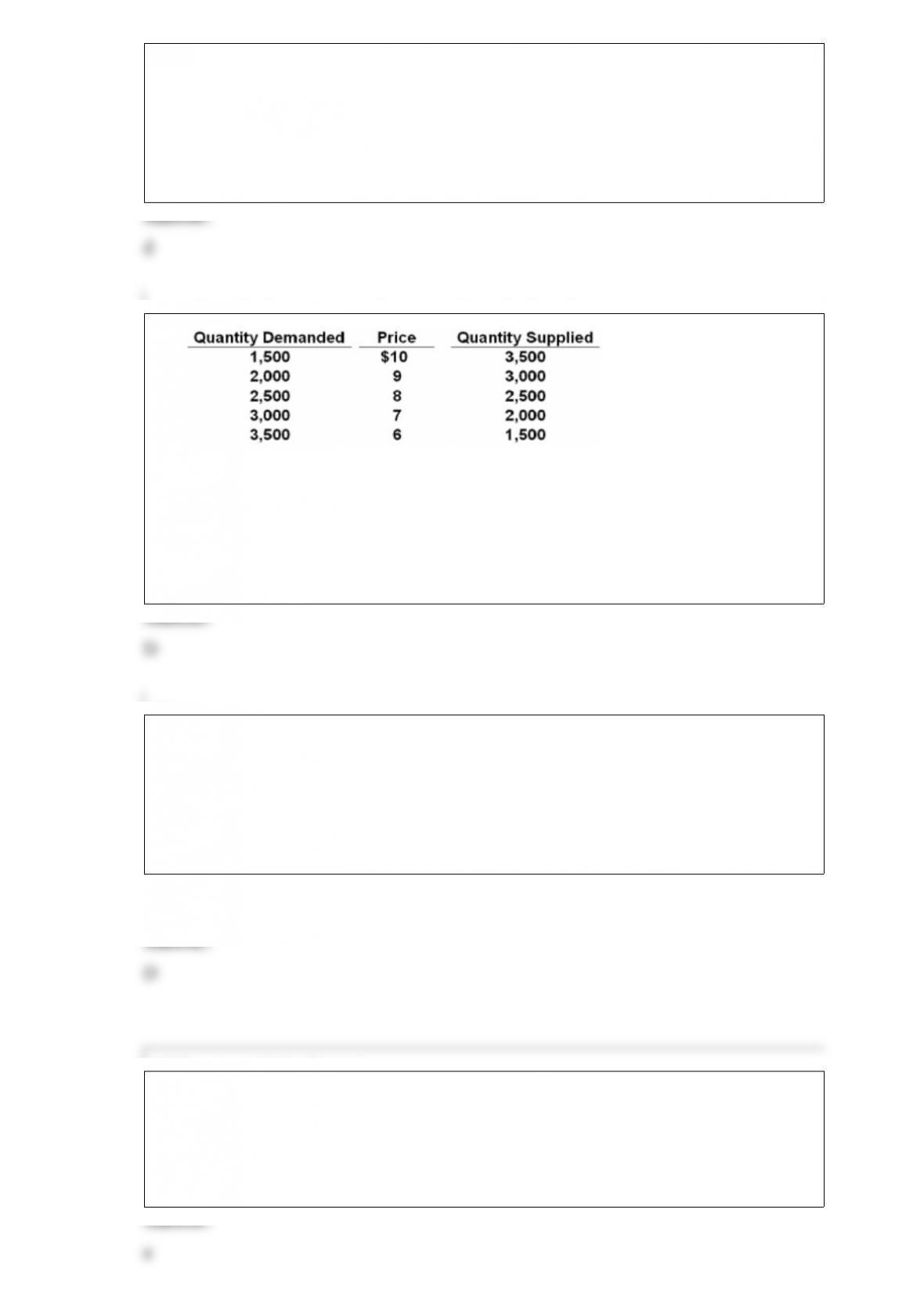
Refer to the above data. If government has instead provided a per unit subsidy of $2 to
suppliers of this product, equilibrium price and quantity would be:
A.$9 and 3,000.
B.$7.50 and 2,250.
C.$8.50 and 2,750.
D.$7 and 3,000.
9)
Which of the following statements is true? Other things equal, the demand for labor will
be less elastic the:
A.the easier it is to substitute capital for labor.
B.greater the elasticity of resource supply.
C.greater the elasticity of product demand.
D.smaller the ratio of labor costs to total costs.
10) human capital refers to:
a.the accumulated knowledge and skills that allow a person to be productive.
b.machinery that requires extensive human interaction to be productive.
c.the accumulated financial assets of people.
d.all of these things.
11) which of the following is most likely to be accompanied by external benefits?
a.the construction of a nuclear power plant
b.studying in the library
c.eating dinner at an expensive french restaurant
d.being immunized for measles
12) in recent decades, total health care spending in the united states has:
a.increased, but health care spending as a percentage of gdp has decreased.
b.increased, and so has health care spending as a percentage of gdp.
c.decreased, and so has health care spending as a percentage of gdp.
d.decreased, but health care spending as a percentage of gdp has increased.
13) the reciprocal trade agreements act:
a.exempted american exporters from the sherman antitrust act.
b.provided technological assistance to developing countries.
c.brought about considerable reductions in american trade barriers.
d.eliminated american subsidies to agricultural exports.
14)
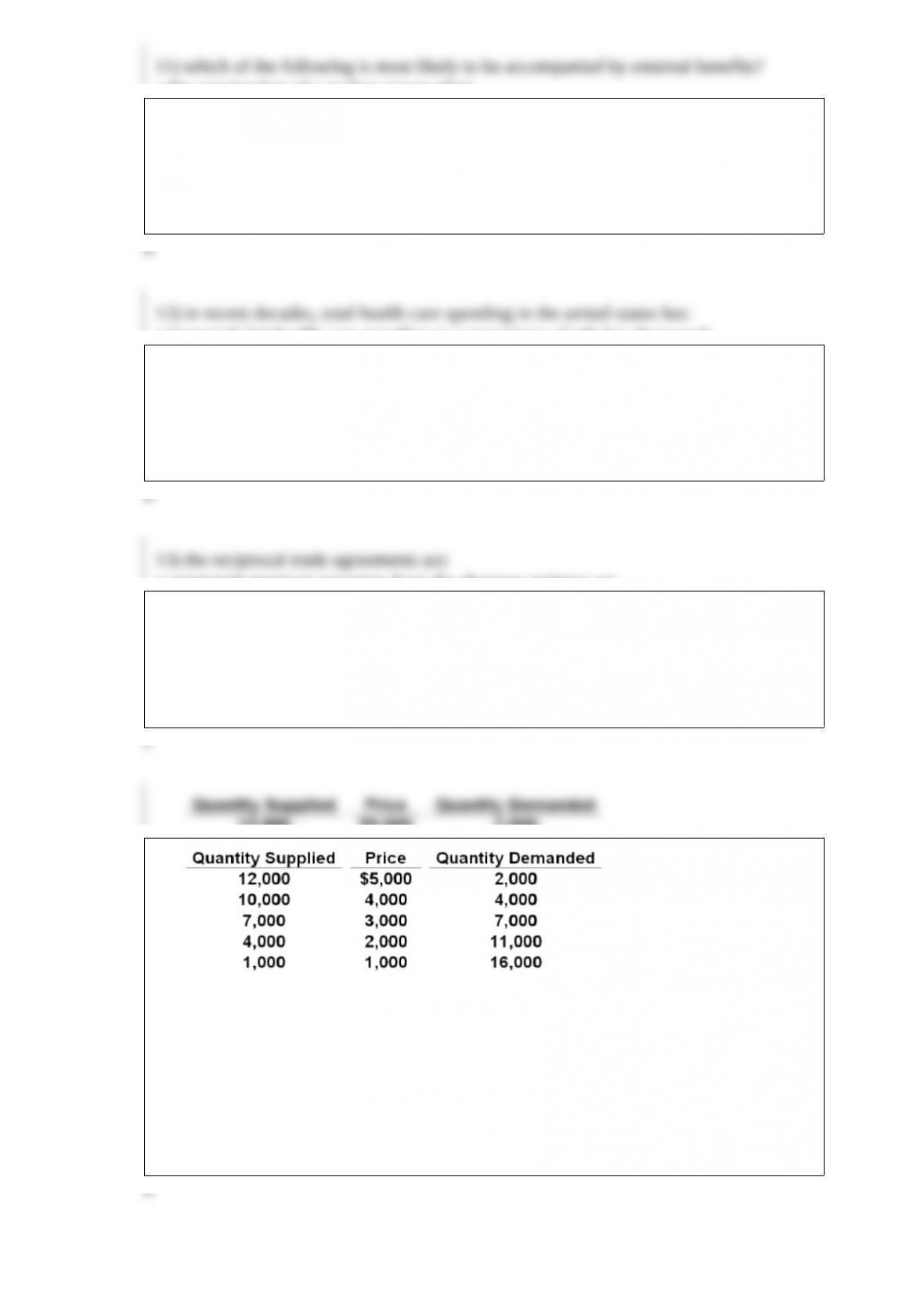
refer to the above supply and demand data for a certain elective surgical procedure. if
suppliers provide the quantity of health care demanded and insurance pays two-thirds of
the equilibrium price, the immediate price to the consumer and quantity of health care
consumed would be:
a.$4,000 and 10,000.
b.$3,000 and 7,000.
c.$2,000 and 11,000.
d.$1,000 and 16,000.
15) Which one of the following is not one of the so-called G8 nations?
A.Japan
B.Canada
C.United States
D.China
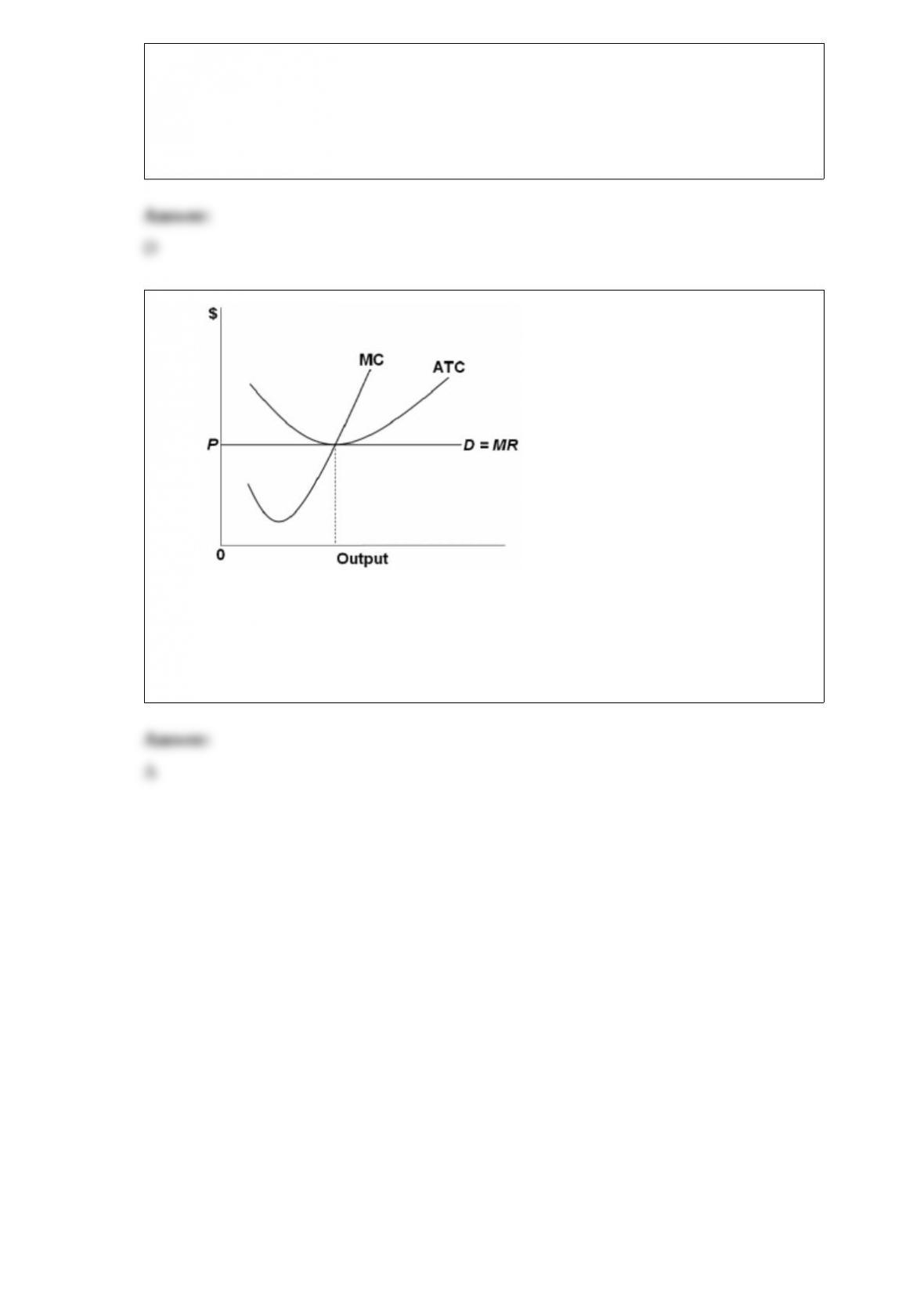
16)
On the basis of the above diagram we can say that the firm is earning:
A.a normal profit.
B.an economic profit.
C.neither a normal nor an economic profit.
D.total revenue insufficient to cover its total costs.