1) assume that the united states imports chemicals from germany. trade theory predicts
that if the german government grants an export subsidy to its chemical firms, the overall
welfare of the united states will increase.
a.true
b.false
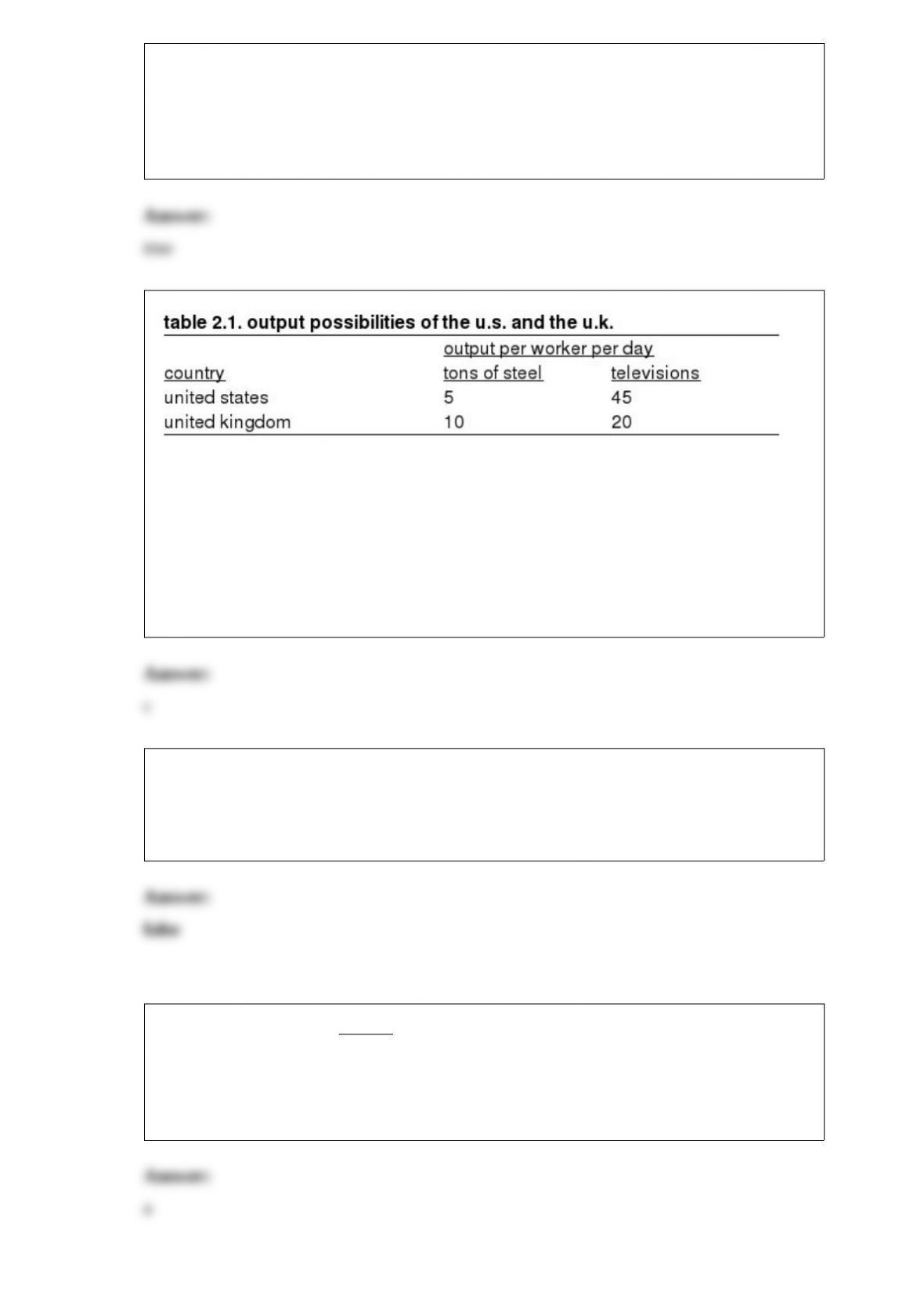
2) referring to table 2.1, the united states has the absolute advantage in the production
of:
a.steel
b.televisions
c.both steel and televisions
d.neither steel nor televisions
3) if a nation has an open economy, it means that the nation allows private ownership of
capital.
a.true
b.false
4) if canada runs a trade surplus with mexico and exchange rates are floating:
a.the peso will depreciate relative to the dollar
b.the dollar will depreciate relative to the peso
c.the prices of all foreign goods will fall for canadians
d.the prices of all foreign goods will rise for canadians
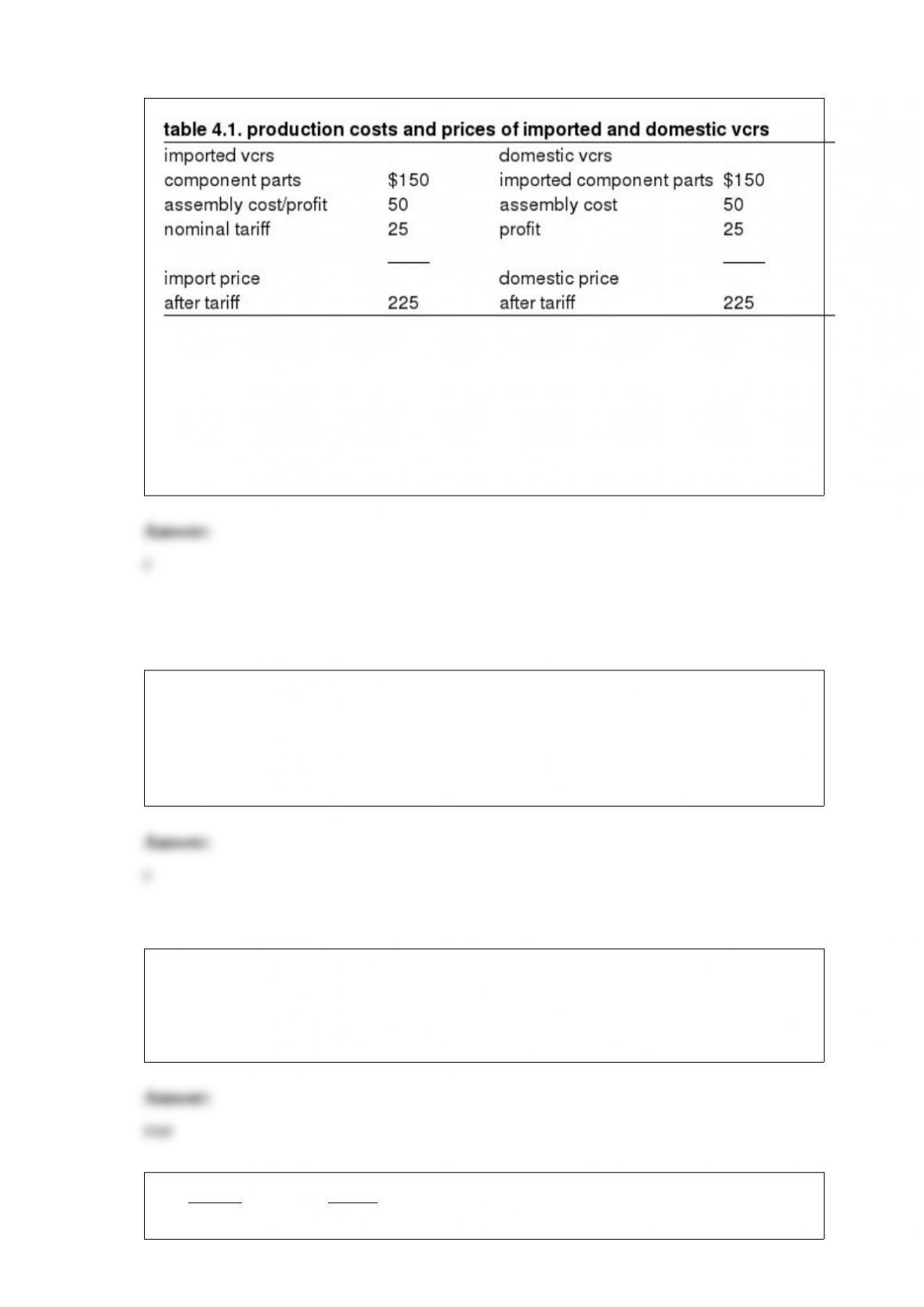
5) consider table 4.1. the effective tariff rate equals:
a.11.1 percent
b.16.7 percent
c.50.0 percent
d.100.0 percent
6) the united states was less open to international trade between:
a.1890 and 1910
b.1930 and 1950
c.1890 and 1950
d.1950 and 2013
7) international policy coordination is plagued by differing national economic
objectives, institutions, political climates, and phases in the business cycle.
a.true
b.false
8) a surplus nation can reduce its payments imbalance by:
a.applying tariffs and trade restrictions on imports
b.revaluing its national currency
c.increasing its labor productivity
d.setting higher interest rates than its trading partners
9) the movement to free international trade is most likely to generate short-term
unemployment in which industries?
a.industries in which there are neither imports nor exports
b.import-competing industries
c.industries that sell to domestic and foreign buyers
d.industries that sell to only foreign buyers
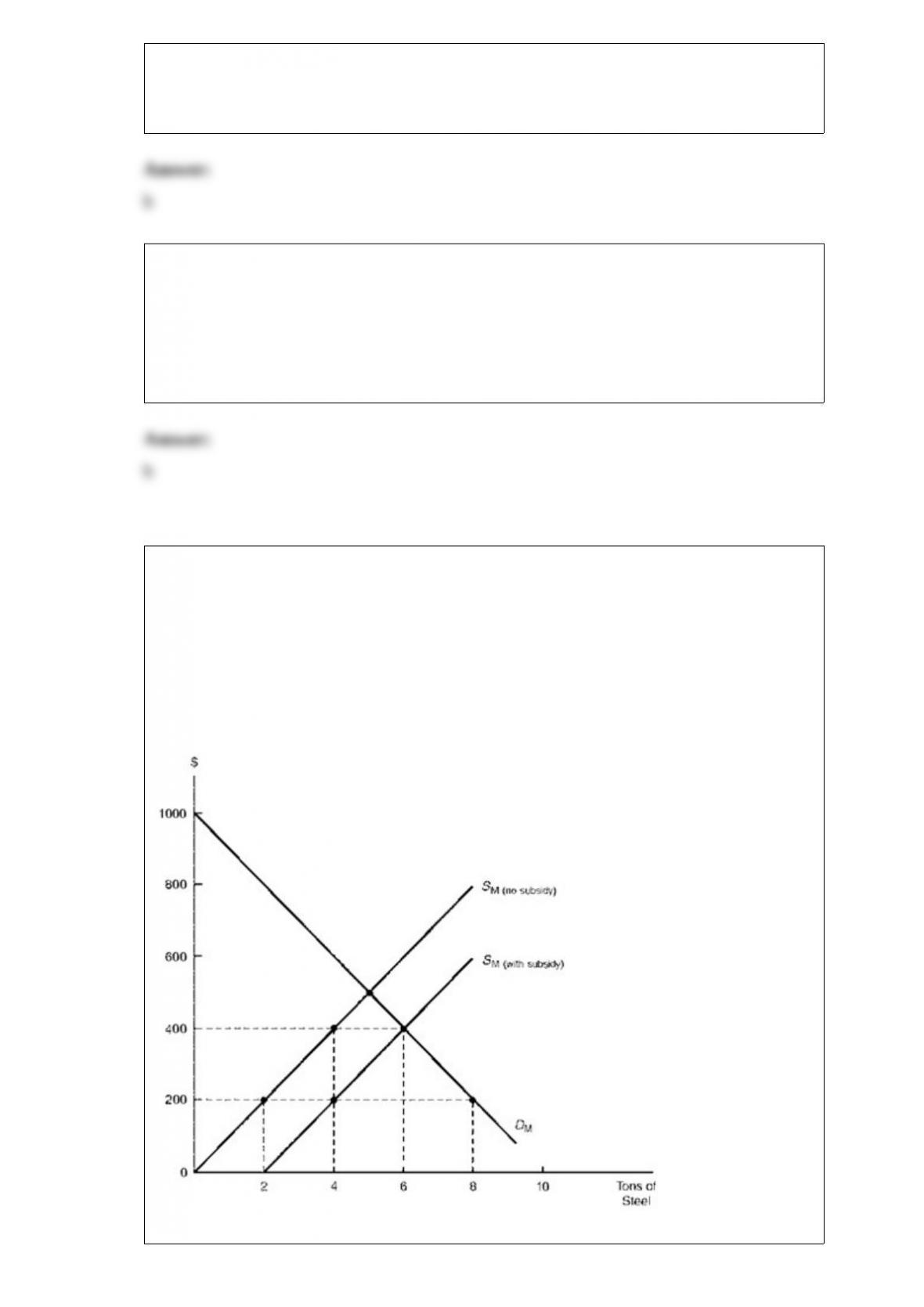
10) figure 5.1 illustrates the steel market for mexico, assumed to be a ‘small” country
that is unable to affect the world price. suppose the world price of steel is given and
constant at $200 per ton. now suppose the mexican steel industry is able to obtain trade
protection.
figure 5.1. alternative nontariff trade barriers levied by a ‘small” country
consider figure 5.1. suppose the rest of the world voluntarily agrees to reduce steel

shipments to mexico vis-a-vis an export quota equal to 2 tons.
assuming mexican importers behave as competitive buyers while foreign exporters
behave as monopoly sellers, the overall welfare loss of the quota to mexico is:
a.$200
b.$400
c.$600
d.$800