
If a corporation goes bankrupt, bondholders have ________ on the firm’s assets.
A) no claim
B) third claim, after the IRS and stockholders,
C) second claim, after stockholders,
D) first claim
In a market economy, those who are willing and able to buy what is produced
A) receives what the government allows them to receive.
B) receive the most of what is produced.
C) receive no more than everyone else in the market.
D) solely determine what is produced.
Why is a dollar today more valuable than a dollar a year from now?
A) The dollar today can be immediately used to buy something.
B) A dollar a year from now will likely have less purchasing power because of inflation.
C) The unknown future is riskier than the known present.
D) all of these

Which of the following is not part of the ‘state health exchanges” provision of the
Patient Protection and Affordable Care Act (ACA)?
A) Each state is required to establish an Affordable Insurance Exchange by 2014.
B) Small businesses with fewer than 50 employees will be exempt from being required
to participate in the program.
C) Low-income individuals will be eligible for tax credits to offset the costs of buying
health insurance.
D) Health insurance policies that meet certain specified requirements will be offered by
state-run agencies, by non-profit firms, or by the federal government.
The ability of the Federal Reserve to use monetary policy to affect economic variables
such as real GDP ultimately depends upon its ability to affect
A) tax rates.
B) real interest rates.
C) nominal interest rates.
D) foreign exchange rates.
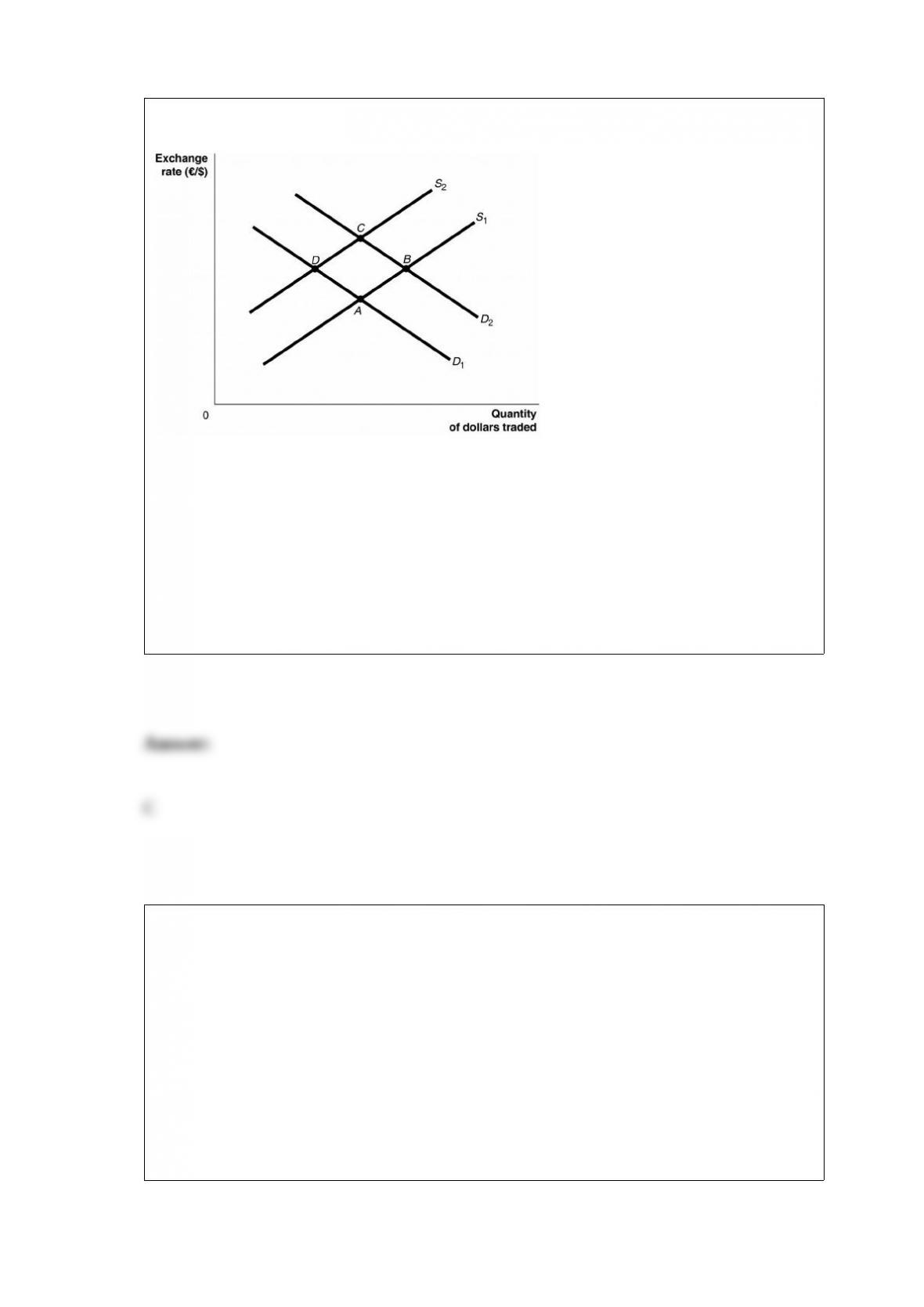
Figure 18-1
Refer to Figure 18-1. The depreciation of the euro is represented as a movement from
A) D to A.
B) C to D.
C) B to C.
D) B to A.
Human capital refers to which of the following?
A) the quantity of goods and services that can be produced by one worker or by one
hour of work
B) the accumulated knowledge and skills workers acquire from education and training
or from their life experiences
C) manufactured goods that are used to produce other goods and services
D) physical equipment that is made by human laborers, not machines
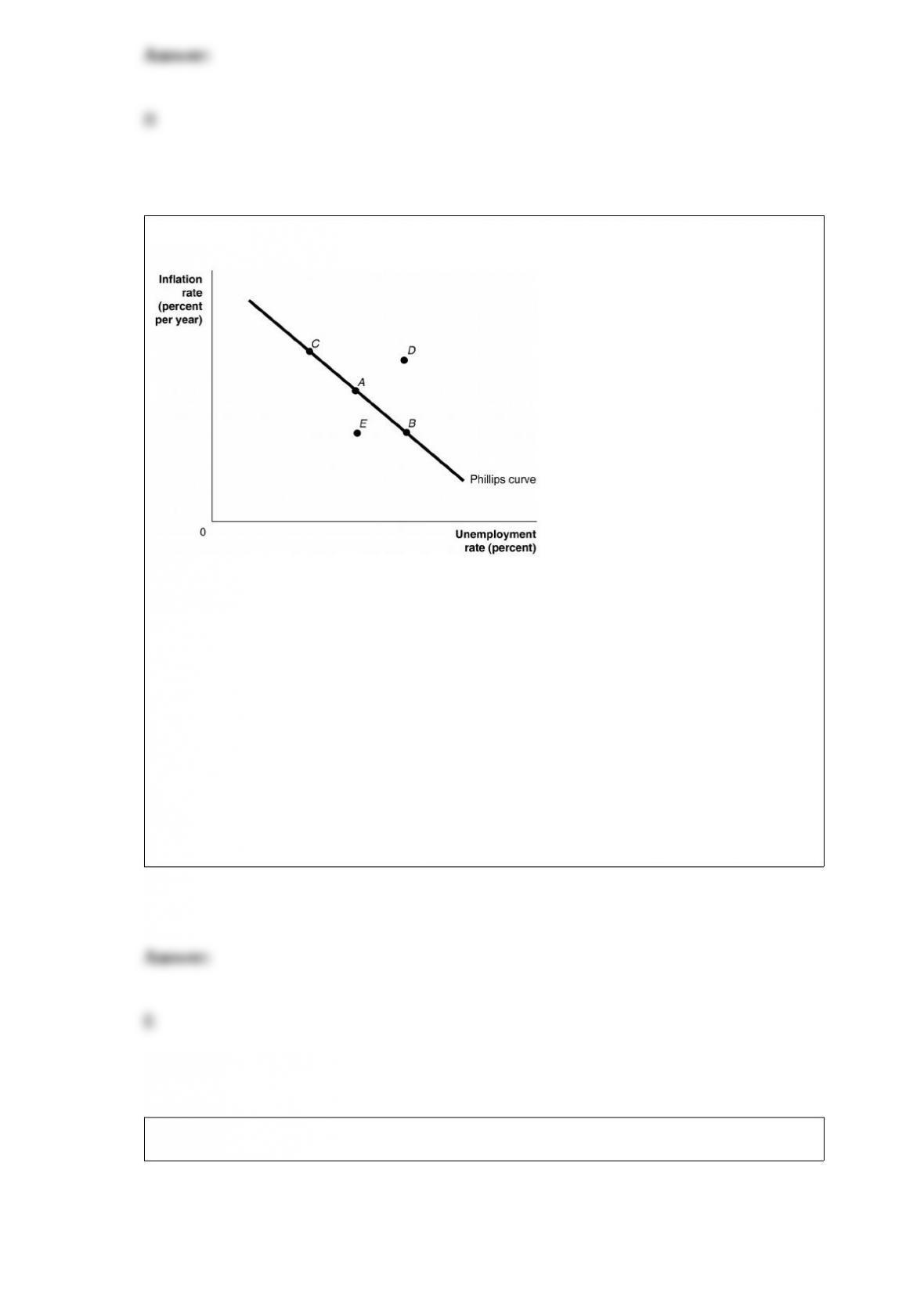
Figure 17-1
Refer to Figure 17-1. Suppose that the economy is currently at point A, and the
unemployment rate at A is the natural rate. What policy would the Federal Reserve
pursue if it wanted the economy to move to point B in the long run?
A) Buy treasury bills.
B) Sell treasury bills.
C) Raise the discount rate.
D) Decrease the money supply.
E) No policy will move the economy to point B in the long run.
Table 1-2
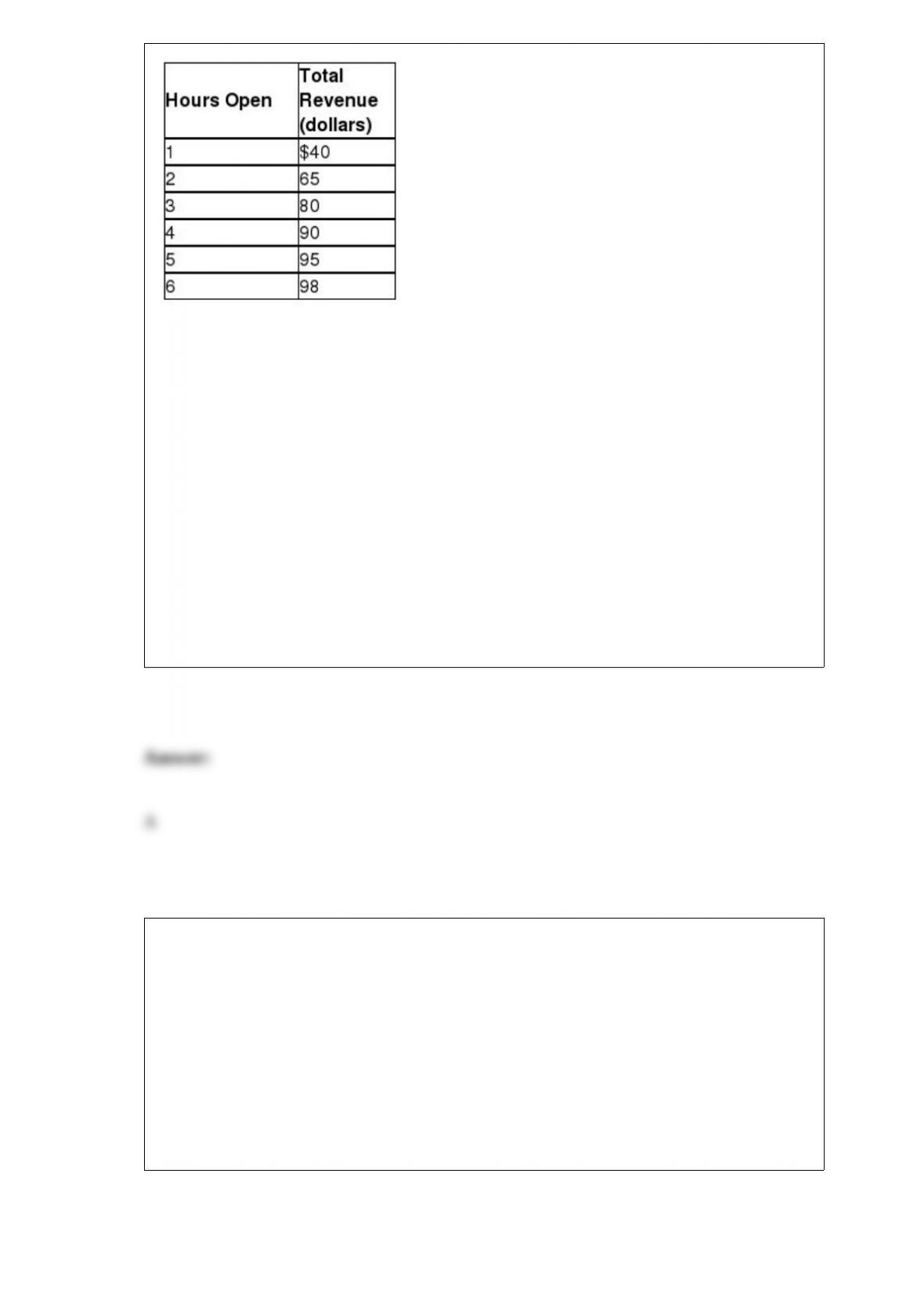
Julius runs a small tailor shop in the city of Bloomfield. He is debating whether he
should extend his hours of operation. Julius figures that his sales revenue will depend
on the number of hours the tailor shop is open as shown in the table above. He would
have to hire a worker for those hours at a wage rate of $18 per hour.
Refer to Table 1-2. What is Julius’s marginal benefit if he decides to stay open for three
hours instead of two hours?
A) $15
B) $25
C) $65
D) $80
An increase in the demand for loanable funds will occur if there is
A) an increase in the real interest rate.
B) a decrease in the real interest rate.
C) an increase in expected profits from firm investment projects.
D) an increase in the nominal interest rate accompanied by an equal increase in
inflation.

In October 2008, Congress passed the ________, under which the Treasury provided
funds to banks in exchange for stock.
A) Bank Rescue Alliance Treaty (BRAT)
B) Mortgage Transfer Agency (MTA)
C) Troubled Asset Relief Program (TARP)
D) Financial Assurance Association (FAA)