
Life expectancy in the U.S.:
a. is the highest in the world
b. is the lowest in the world
c. ranks about 100th in the world
d. ranks about 40th in the world
If marginal cost of an additional unit of output is greater than average cost, then average
cost will rise.
a. True
b. False
If we observe that every increase in income of $120 million generates an increase in
consumption of $80 million, then the simple multiplier is
a. 2/3.
b. 3/2.
c. 2.
d. 3.

e. 8.
Control of a scarce resource or input can serve as an entry barrier.
a. True
b. False
There is essentially no risk of default for U.S. government securities.
a. True
b. False

From the late 1960s to the late 1980s, in the United States SAT scores
a. and graduation rates increased.
b. and graduation rates decreased.
c. and school attendance rates decreased.
d. decreased and school attendance rates increased.
The interest rate is determined by
a. government pronouncements.
b. market forces of supply and demand.
c. banks and lenders.
d. managers of large corporations.
The equation of exchange is an accounting identity that
a. relates the money supply to nominal GDP.
b. equates the demand for money with the supply of money.
c. relates the money supply to real GDP.
d. accounts use to balance assets and liabilities.
Quotas increase the profits of importers but decrease the profits of exporters.
a. True
b. False
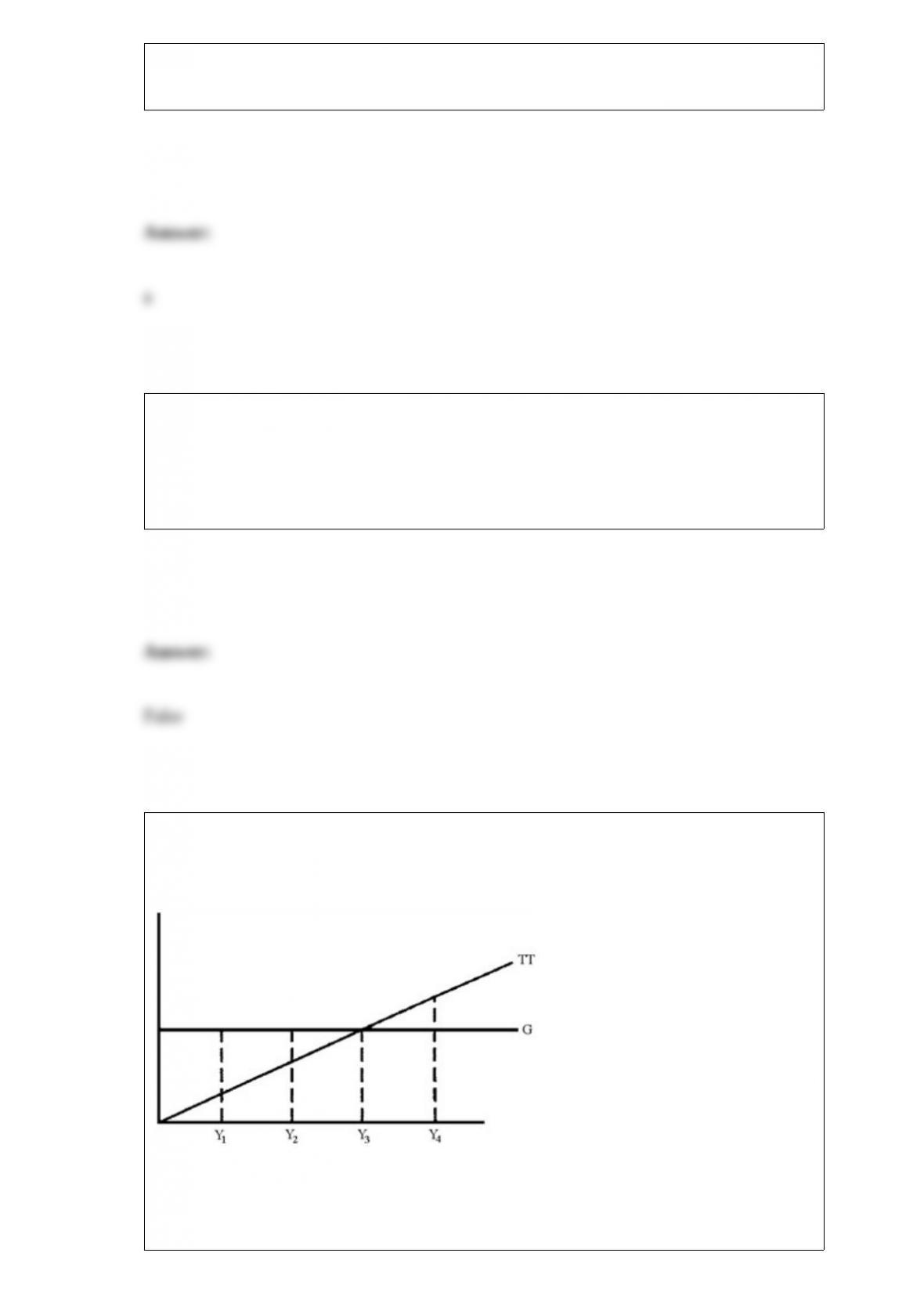
Figure 16-1
In Figure 16-1, there are four levels of income. G is government expenditures and TT is
taxes less transfers. At which level of income does the official budget produce a
surplus?

a. Y4
b. Y3
c. Y2
d. Y1
If actual inflation differs from expected inflation, what is the slope of the aggregate
supply curve?
a. It is horizontal in the short and long run.
b. It is vertical in the short and long run.
c. It is vertical in the short run and upward sloping in the long run.
d. It is upward sloping in the short run and vertical in the long run.
Figure 17-8
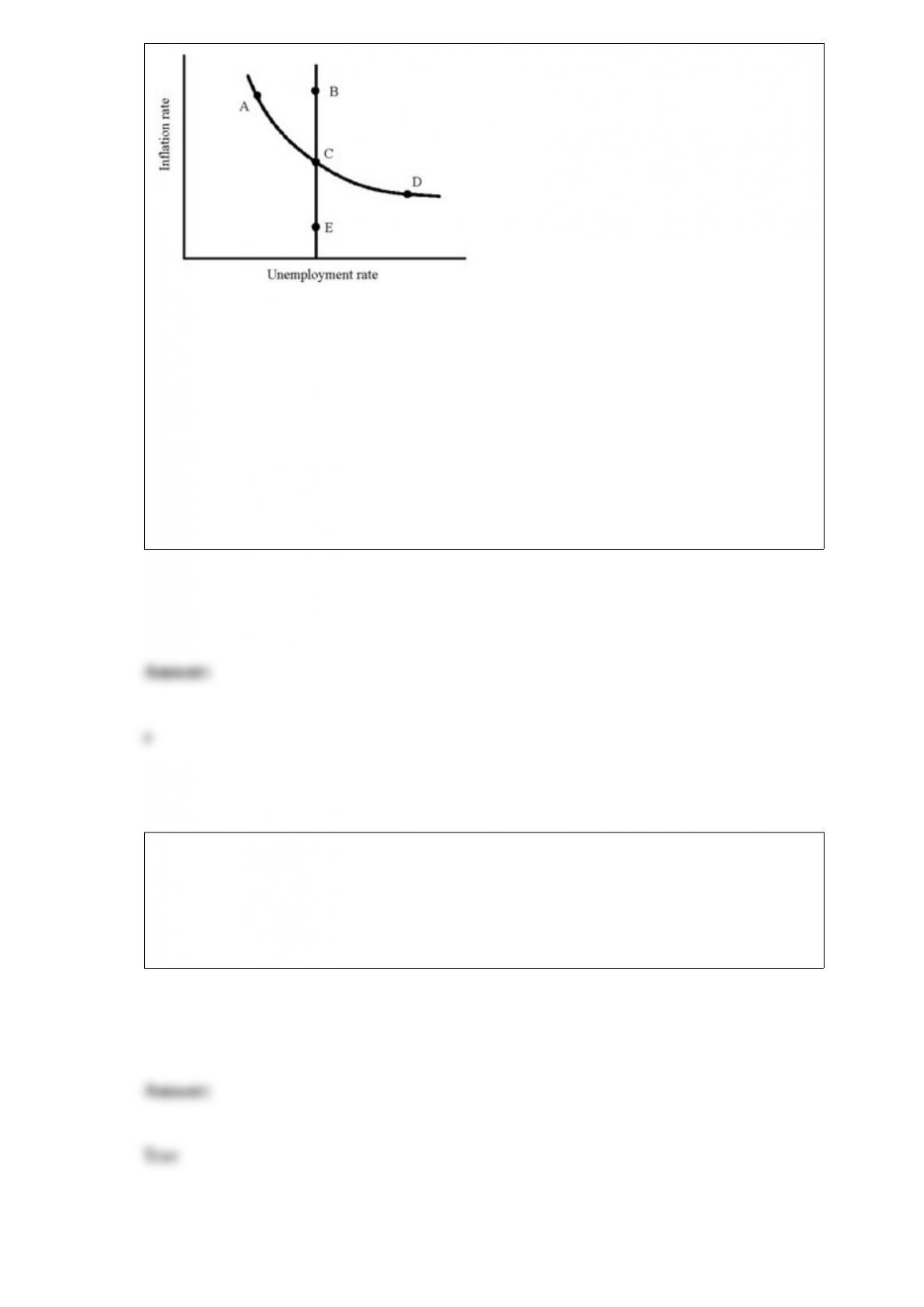
In Figure 17-8, which of the following movements reflects the closing of an inflationary
gap through the economy’s automatic adjustment mechanism?
a. A to B
b. A to C
c. C to E
d. D to E
Cost curves in the long run differ from cost curves in the short run.
a. True
b. False
In the 1960s, U.S. economy experienced
a. a substantial decline in real GDP but limited inflation.
b. a substantial decline in real GDP coupled with significant inflation.
c. substantial real GDP growth coupled with significant inflation.
d. substantial real GDP growth with limited inflation.
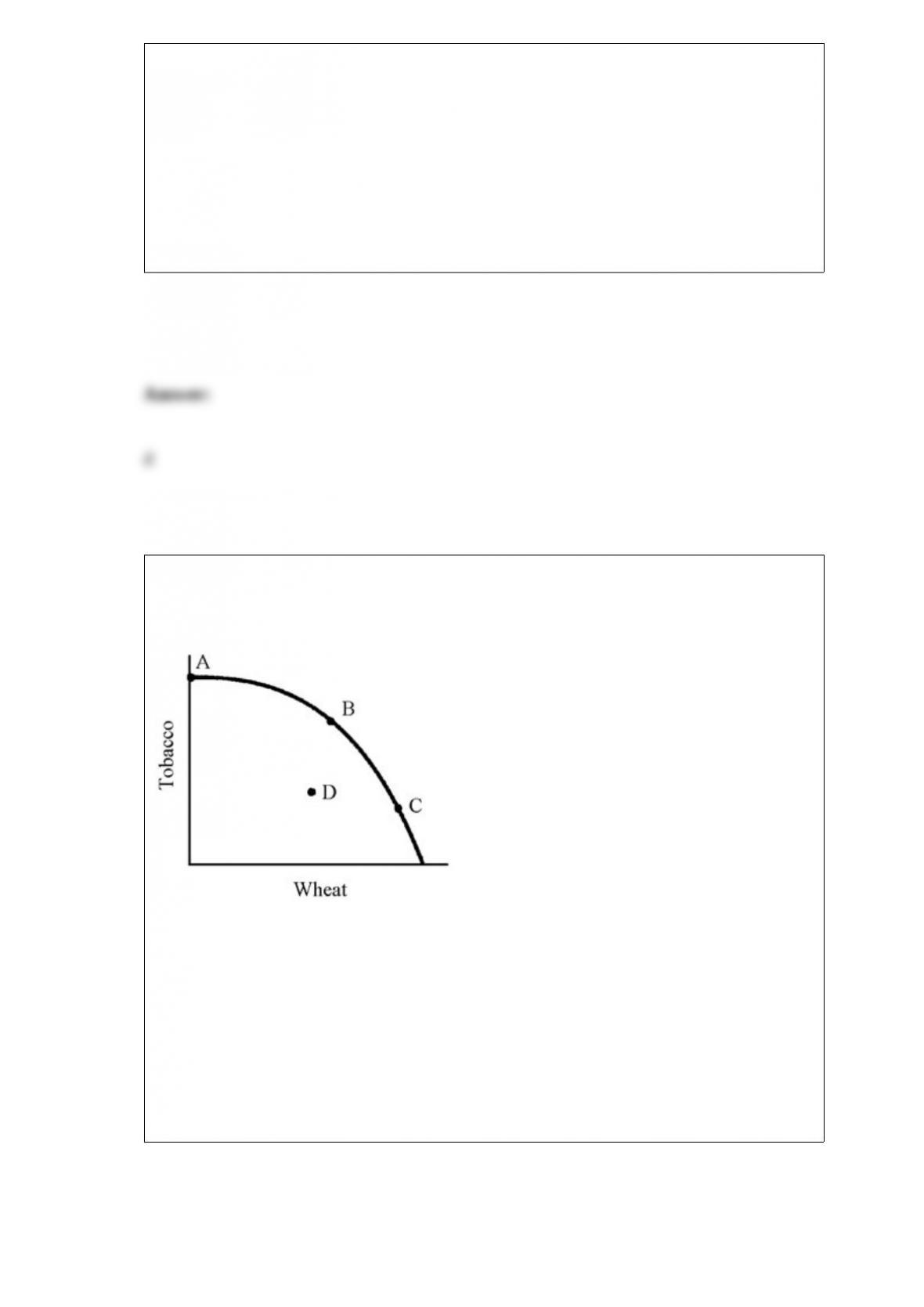
Figure 14-2
In Figure 14-2, which of the points are efficient allocations of resources?
a. A, B, and C
b. B and C only
c. C and B and D
d. B only

The U.S. national debt at the end of fiscal year 2014 was almost
a. $13.5 trillion.
b. $9.0 trillion.
c. $18 trillion.
d. $1.3 trillion.
The measure used to determine whether two products are substitutes or complements is
called
a. price elasticity of demand.
b. income elasticity of demand.
c. cross elasticity of demand.
d. inverse elasticity of demand.

Collective bargaining is a process used by unions and management to settle upon the
terms of a labor contract.
a. True
b. False
An inferior good is one
a. produced by American industries.
b. whose quantity demanded falls when the purchaser’s income rises.
c. ordinarily bought by college students from college-town merchants.
d. suitable for a garage sale.
Aggregate demand and supply curves have been widely used to analyze the
performance of the macroeconomy. Figure 5-3 shows four diagrams that represent
different changes in the macroeconomy. Choose the diagram that best represents the
situations described in the following questions.
Figure 5-3
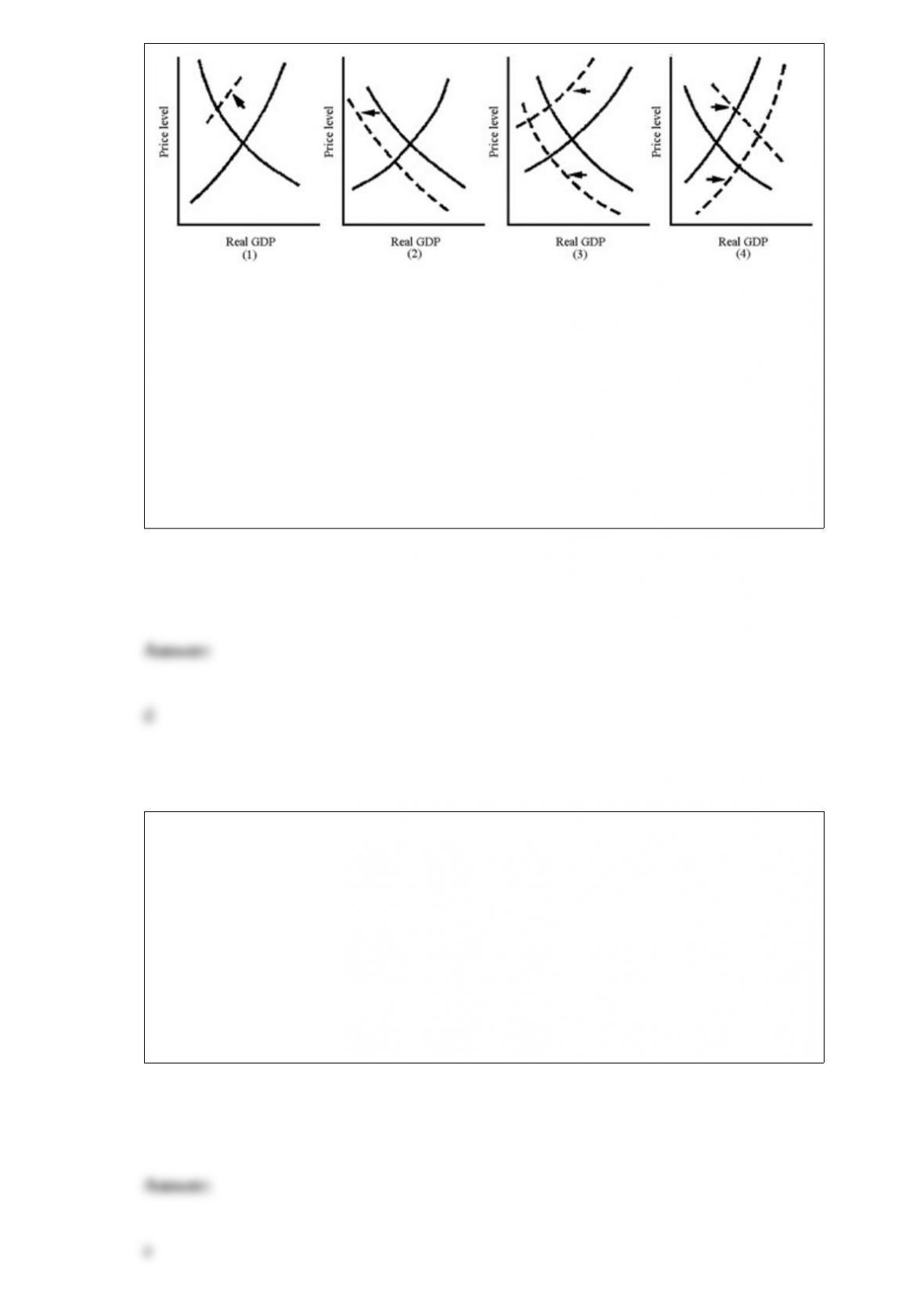
Which graph in Figure 5-3 best represents the favorable macroeconomy of the late
1990s?
a. 1
b. 2
c. 3
d. 4
A central government collected taxes totaling $120 billion in the previous year. It’s
expenditure during the year was roughly the same. This is an example of a
a. balanced budget.
b. surplus budget.
c. deficit budget.
d. zero budget.

If the federal government increases the amount of Social Security benefits for retired
persons, then the
a. consumption schedule will shift upward.
b. aggregate demand curve will shift outward.
c. effect on equilibrium GDP will be the same as a cut in taxes.
d. All of the above are correct.
The FDIC
a. insures most bank deposits for up to $250,000.
b. eliminates the need for bank depositors to run to their bank when they hear bad news
about the bank.
c. has been credited with reducing the number of bank failures since 1933.
d. All of the above are correct.
The introduction of a subsidy in a perfectly competitive marketplace that is originally in
equilibrium will raise total surplus.
a. True
b. False
If orange juice prices double next year, there will be a
a. rightward shift in the demand for grapefruit juice.
b. rightward shift in the supply of grapefruit juice.
c. leftward shift in the supply of grapefruit juice.
d. leftward shift in the demand for grapefruit juice.
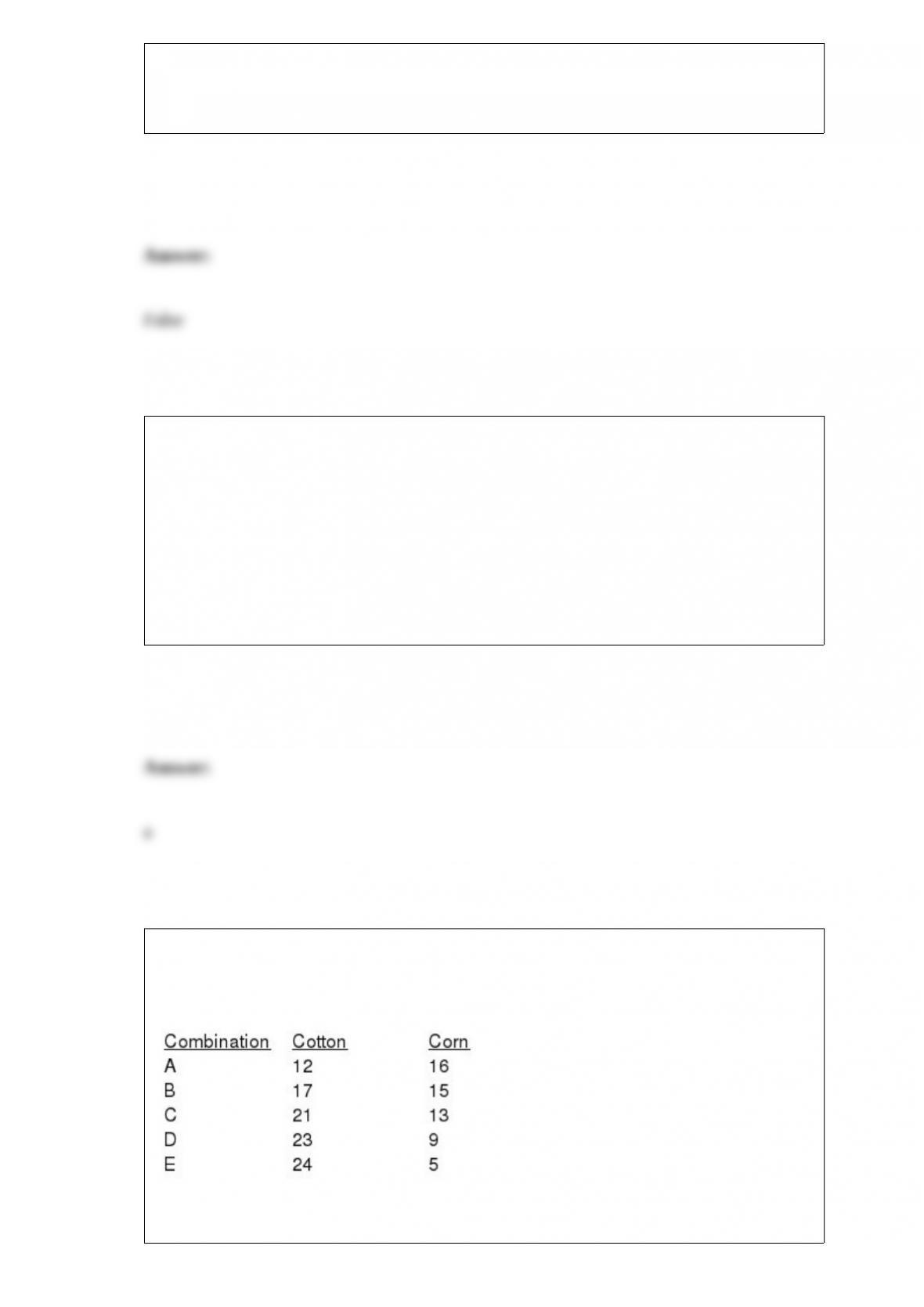
Table 3-2
From the data given in Table 3-2, the opportunity cost of increased cotton in moving

from A to B is
a. 16 units of corn.
b. 31 units of corn.
c. 15 units of corn.
d. 4 units of corn.
e. 1 unit of corn.
The sole owner of a unincorporated business unable to pay its debts:
a. may be sued by the people to whom the business owes money
b. may be forced to pay them out of his own bank account
c. may be forced to sell his personal property to pay those debts
d. all of these are correct
Under a system of free, competitive markets,
a. a society can usually achieve efficiency only at the expense of equality.
b. poverty cannot exist in the long run.

c. employers do not practice statistical discrimination.
d. income is distributed equally across the population.
The concept of economies of scope describes the savings acquired from simultaneous
production of different products.
a. True
b. False
The payroll tax is a
a. progressive tax.
b. neutral tax.
c. regressive tax.
d. proportional tax.

A union acts like a monopoly seller of labor.
a. True
b. False
Social Security payroll taxes are examples of
a. progressive taxation.
b. regressive taxation.
c. proportional taxation.
d. marginal taxes.
For a given price level, a downward shift of the expenditures schedule corresponds to
an
a. inward shift of the aggregate demand curve.

b. outward shift of the aggregate demand curve.
c. outward shift of the aggregate supply curve.
d. inward shift of the aggregate supply curve.
Under perfect competition, the market mechanism, without any government regulation,
is capable of
a. allocating resources efficiently.
b. solving equity problems.
c. making the average cost of labor equal to the average cost of all commodities.
d. making more income available to the poor.
The supply curve shows
a. the same basic information as the demand curve.
b. who will have an opportunity to produce or purchase an item.
c. the quantity produced as a function of the price.
d. plots of what quantities have been sold over the past few weeks or months.