1) If the reserve requirement is 10 percent, how much excess reserves does a bank
acquire when a business deposits a $500 check drawn on another bank?
A.$450
B.$400
C.$5000
D.$550
2) the smallest component of aggregate spending in the united states is:
a.net exports.
b.government purchases.
c.investment.
d.consumption.
3) In 2007, about ____ percent of the U.S. public debt was held by the Federal
government and Federal Reserve.
A.10
B.46
C.62
D.53
4) In a certain year the aggregate amount demanded at the existing price level consists
of $100 billion of consumption, $40 billion of investment, $10 billion of net exports,
and $20 billion of government purchases. Full-employment GDP is $120 billion. To
obtain price level stability under these conditions the government should:
A.increase tax rates and/or reduce government spending.
B.discourage personal saving by reducing the interest rate on government bonds.
C.increase government expenditures.
D.encourage private investment by reducing corporate income taxes.
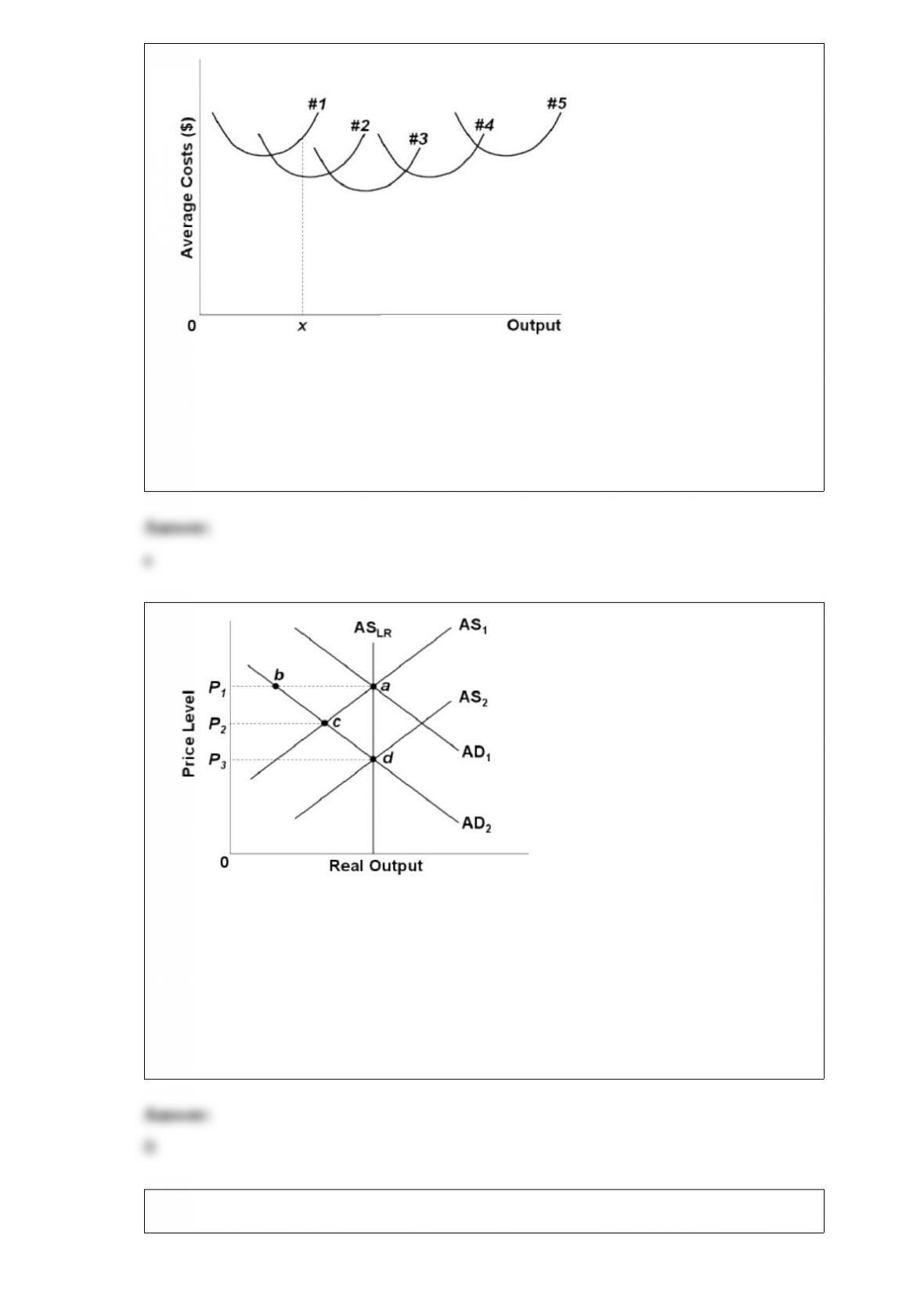
5)
the above diagram shows the short-run average total cost curves for five different plant
sizes of a firm. the shape of each individual curve reflects:
a.increasing returns, followed by diminishing returns.
b.economies of scale, followed by diseconomies of scale.
c.constant costs.
d.increasing costs, followed by decreasing costs.
6)
Refer to the above diagram and assume the economy initially is in equilibrium at point
a. Suppose the aggregate demand declines from AD1 to AD2 and the economy moves
from a to c. In the mainstream view, the resulting decline in the price level need not
shift the short-run aggregate supply curve from AS1 to AS2 because:
A.supply creates its own demand.
B.nominal wages are (at least for a time) inflexible downward.
C.firms misperceive the price-level decline as being permanent.
D.deflation reduces the purchasing power of the dollar.
7)
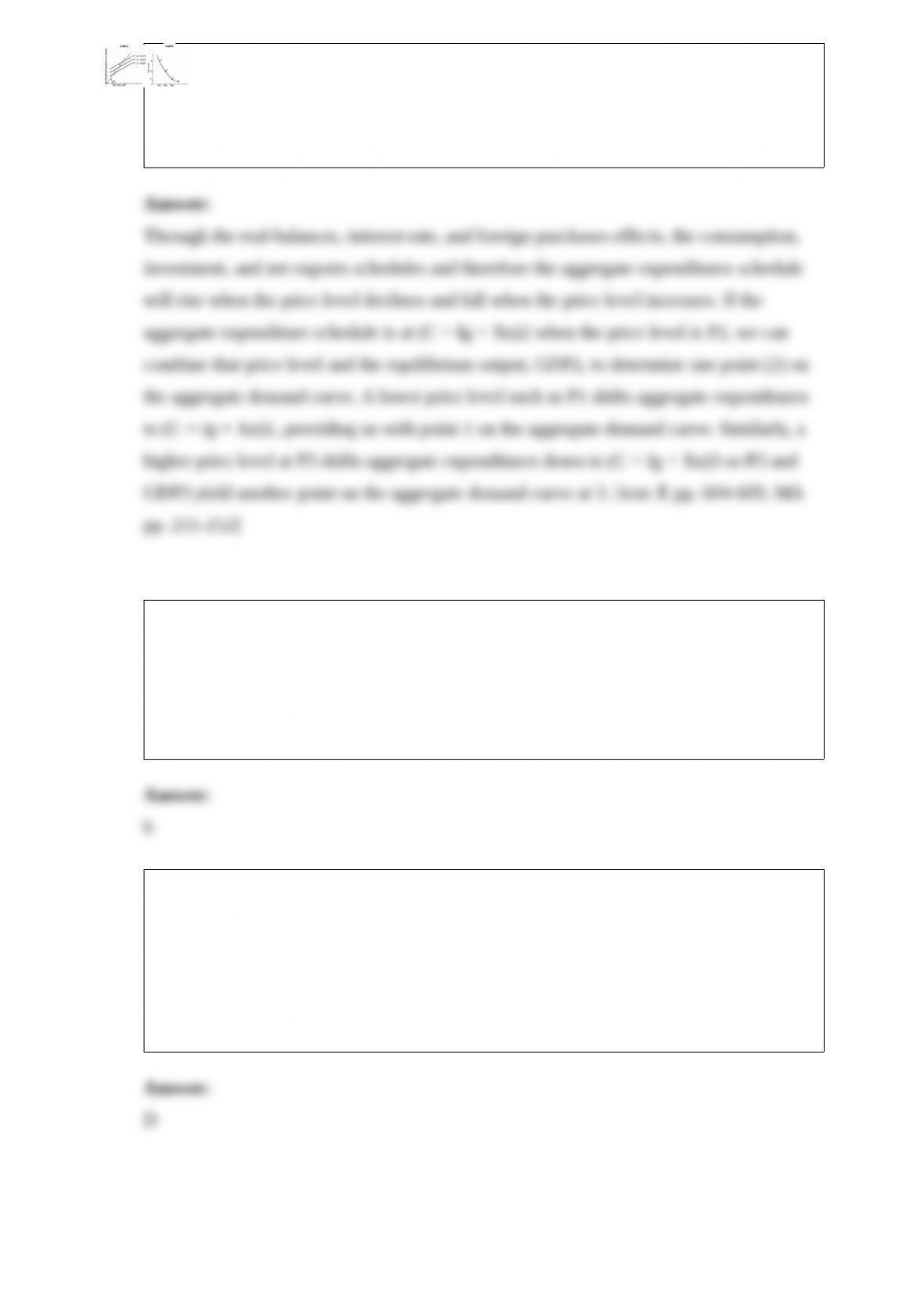
Explain the relationship between the aggregate expenditures model in graph (A) below
and the aggregate demandaggregate supply model in graph (B) below. In other words,
explain how points 1, 2, and 3 are related to points 1, 2, and 3.
8) the invisible hand refers to the:
a.fact that the u.s. tax system redistributes income from rich to poor.
b.notion that, under competition, decisions motivated by self-interest promote the social
interest.
c.tendency of monopolistic sellers to raise prices above competitive levels.
d.fact that government controls the functioning of the market system.
9) Which of the following statements is false?
A.In recent years the United States has had large annual trade deficits in goods and
services.
B.The United States imports some of the same categories of goods as it exports.
C.The United States is the world’s leading exporter in terms of absolute dollar volume.
D.As a percentage of GDP, U.S. exports are the highest among the industrially
advanced nations.
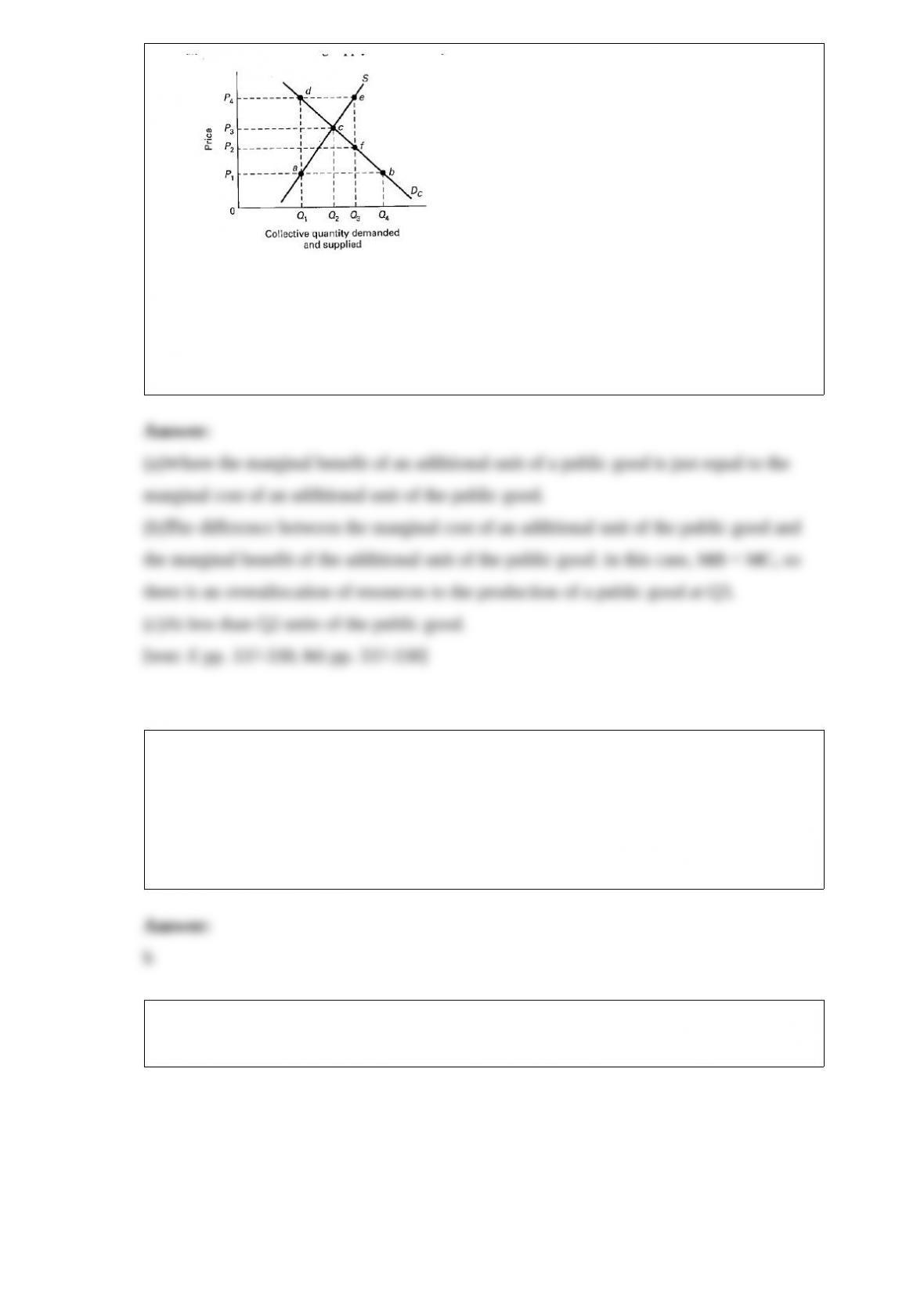
10) The next three questions refer to the below
supply and demand graph for a public good.
(a)What does point c represent?
(b)What does the line segment ef at output Q3 represent?
(c)At what output level is there an underallocation of resources to the production of this
public good?
11) as a percentage of gdp, u.s. health care spending is:
a.higher than that for germany and japan, but lower than that of the united kingdom and
sweden.
b.higher than for any other major industrial country.
c.lower than that for canada.
d.nearly identical to that of the other major industrial nations.
12) answer the next question(s) on the basis of the following data. all figures are in
billions of dollars.
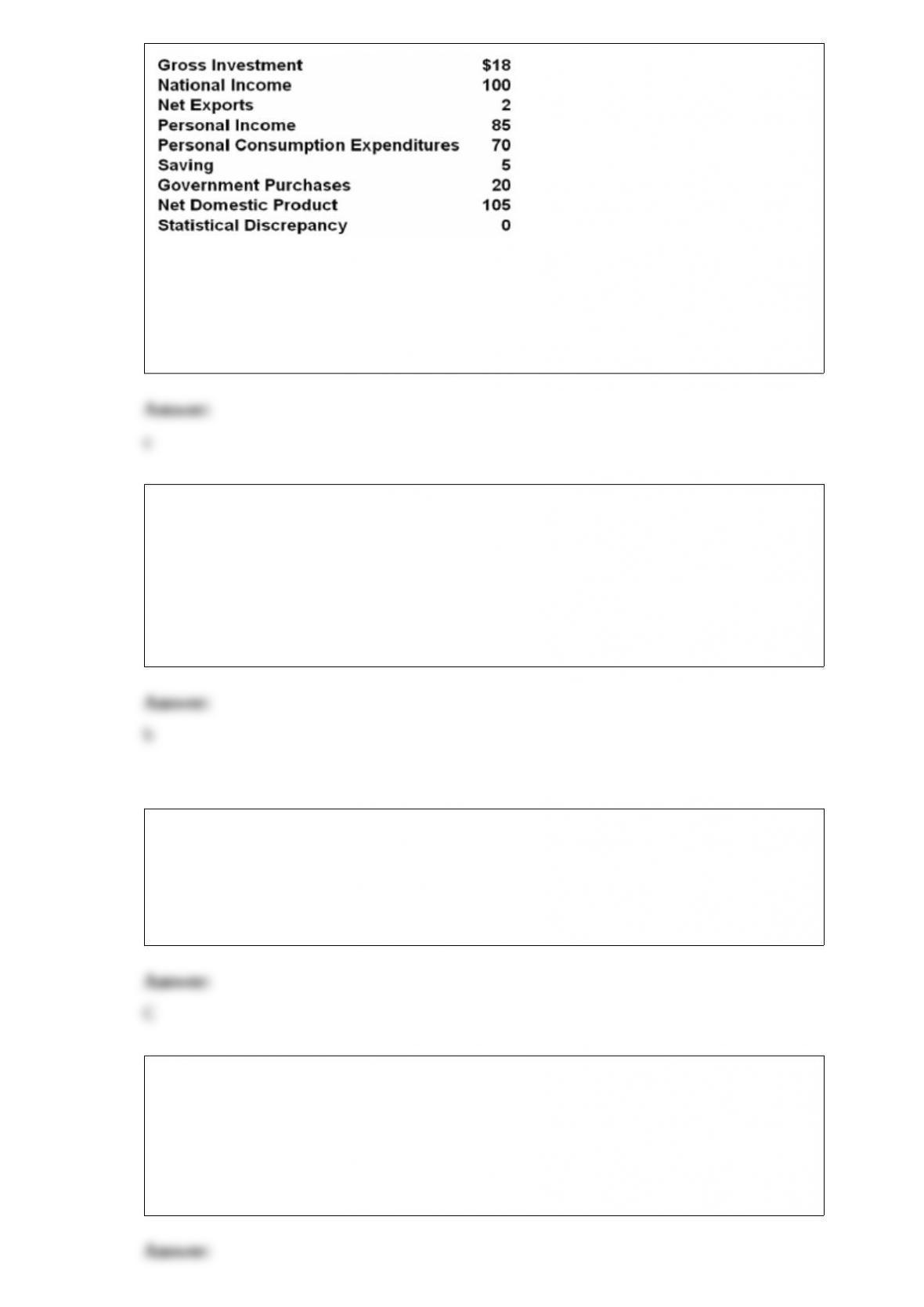
the gross domestic product for the above economy is:
a.$100.
b.$95.
c.$110.
d.$107.
13) assume that kyle is temporarily unemployed because he has voluntarily quit his job
with company a and will begin a better job next week with company b. kyle will be
considered as:
a.cyclically unemployed.
b.frictionally unemployed.
c.secularly unemployed.
d. employed.
14) If the minimum wage is set too high, in some labor markets we can expect to see:
A.a shortage of labor.
B.an increase in on-the-job training.
C.a surplus of labor.
D.a decline in wage costs.
15) Other things equal, we would expect the labor demand curve of a monopolistic
seller to:
A.decline more rapidly than that of a purely competitive seller.
B.decline less rapidly than that of a purely competitive seller.
C.decline at the same rate as that of a purely competitive seller.
D.be more elastic than that of a purely competitive seller.
16) What are four criticisms of social regulation?
17) How does the case of Japan in the late 1990s and early 2000s illustrate the
asymmetry of monetary policy?
18) What issues in U.S. banking precipitated the creation of the Federal Reserve System
in 1913?
19) What is demand-pull inflation?
20) Explain the reasoning behind why the long-run aggregate supply curve is vertical.
21) What is the investment-demand curve?
22) (Consider This) What are some of the policies that have caused the natural rate of
unemployment (NRU) to be so high in Europe? Why hasnt anything been done to
change them?