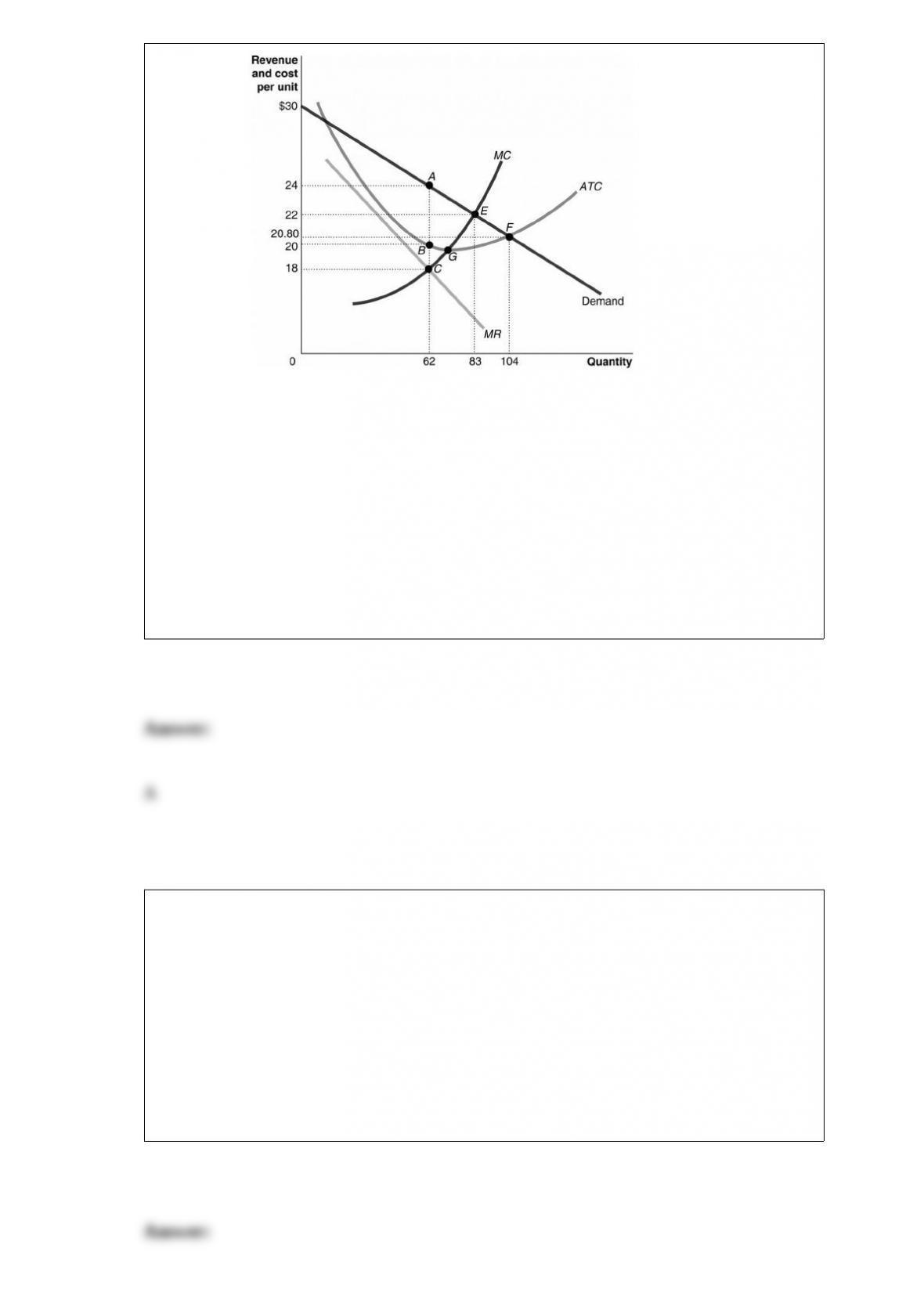
Figure 15-6 Figure 15-6 shows the
cost and demand curves for a monopolist.
The profit-maximizing output and price for the monopolist are
A) output = 62; price = $24.
B) output = 62; price = $18.
C) output = 83; price = $22.
D) output = 104; price = $20.80.
Technological advancements have led to lower prices and an increase in the sale of
color laser printers. How does this affect the market for traditional inkjet printers?
A) The demand curve for inkjet printers shifts to the right.
B) The demand curve for inkjet printers shifts to the left.
C) The quantity of inkjet printers demanded increases.
D) The quantity of inkjet printers demanded decreases.

In an “underground economy,” the production of goods and services
A) is not measured or included in GDP.
B) is not measured but is included in GDP.
C) is measured and included in GDP.
D) is usually too insignificant to be included in GDP.
Article Summary. Over the past two years, the Indian rupee has fallen 26 percent in
value against the U.S. dollar, reaching a record low of 61.80 rupees per dollar in
August 2013. The decline reflects increasing capital outflows and pessimism
regarding the government’s attempts to reverse this trend. The Indian government
was expected to announce potential measures to increase the inflow of capital,
including the possibility of raising debt abroad, raising money from Indians who
live abroad, easing restrictions on overseas borrowing, and raising interest rates.
Critics argue that current and well-entrenched policies deter capital inflow from
investors and corporations, and raising interest rates may reduce confidence in the
economy, which experienced a decade-low growth rate of 5 percent in 2013.
Source: Rafael Nam, “Rupee over 60: Why Indian currency weakness may be here
to stay,” Reuters, August 8, 2013.
All else equal, a depreciation of the Indian rupee relative to a currency such as the U.S.
dollar should ________ Indian exports and ________ imports to India.
A) increase; increase
B) increase; decrease
C) decrease; increase
D) decrease; decrease
What is human capital?
A) labor productivity
B) buildings, equipment, and machinery owned by individuals rather than firms
C) buildings, equipment, and machinery owned by firms
D) the accumulated knowledge and skills that workers acquire from education, training,
and their life experiences
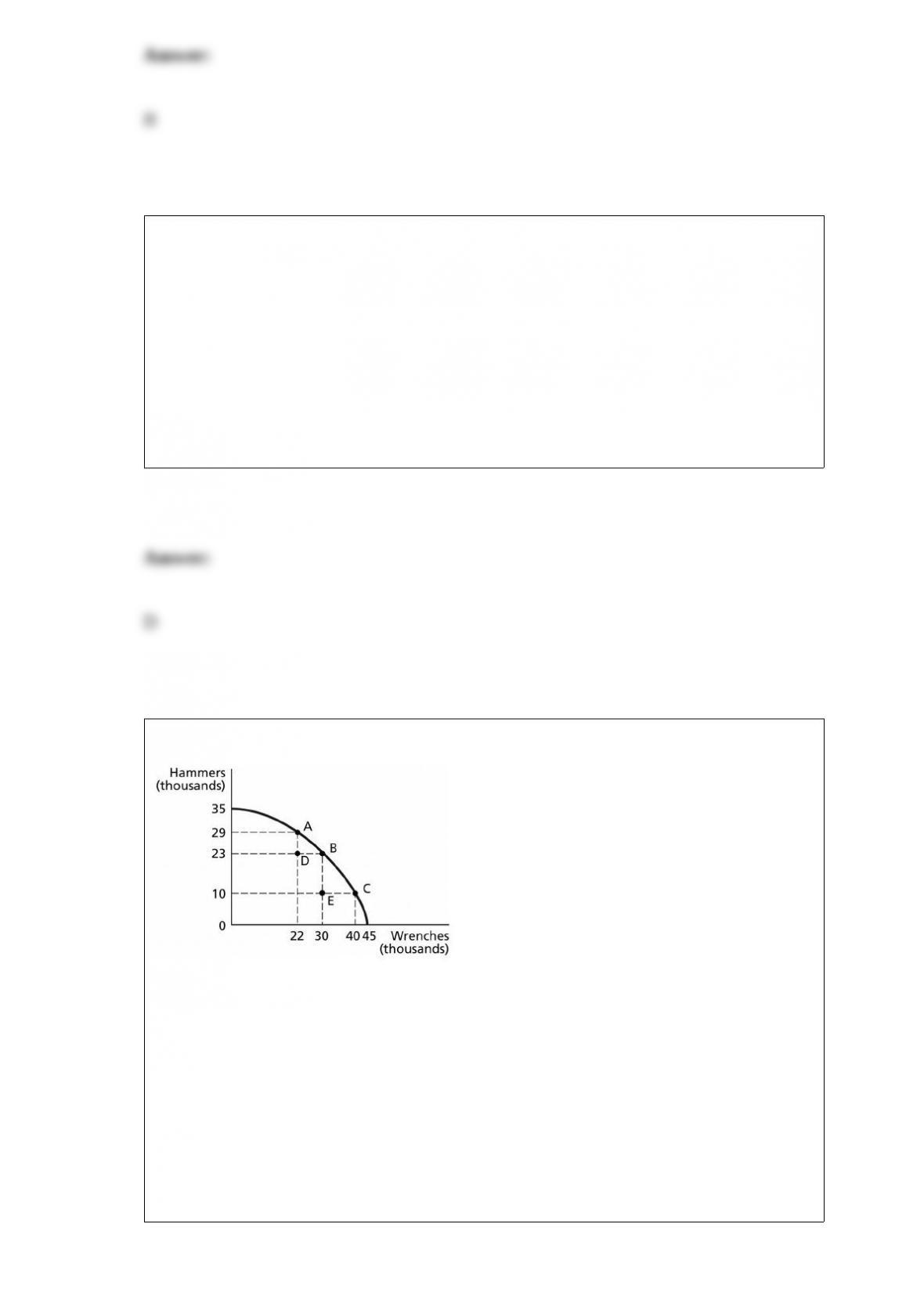
Figure 2-6
If the economy is currently producing at point A, what is the opportunity cost of moving
to point B?
A) 8 thousand wrenches
B) 6 thousand hammers
C) 30 thousand wrenches
D) 23 thousand hammers
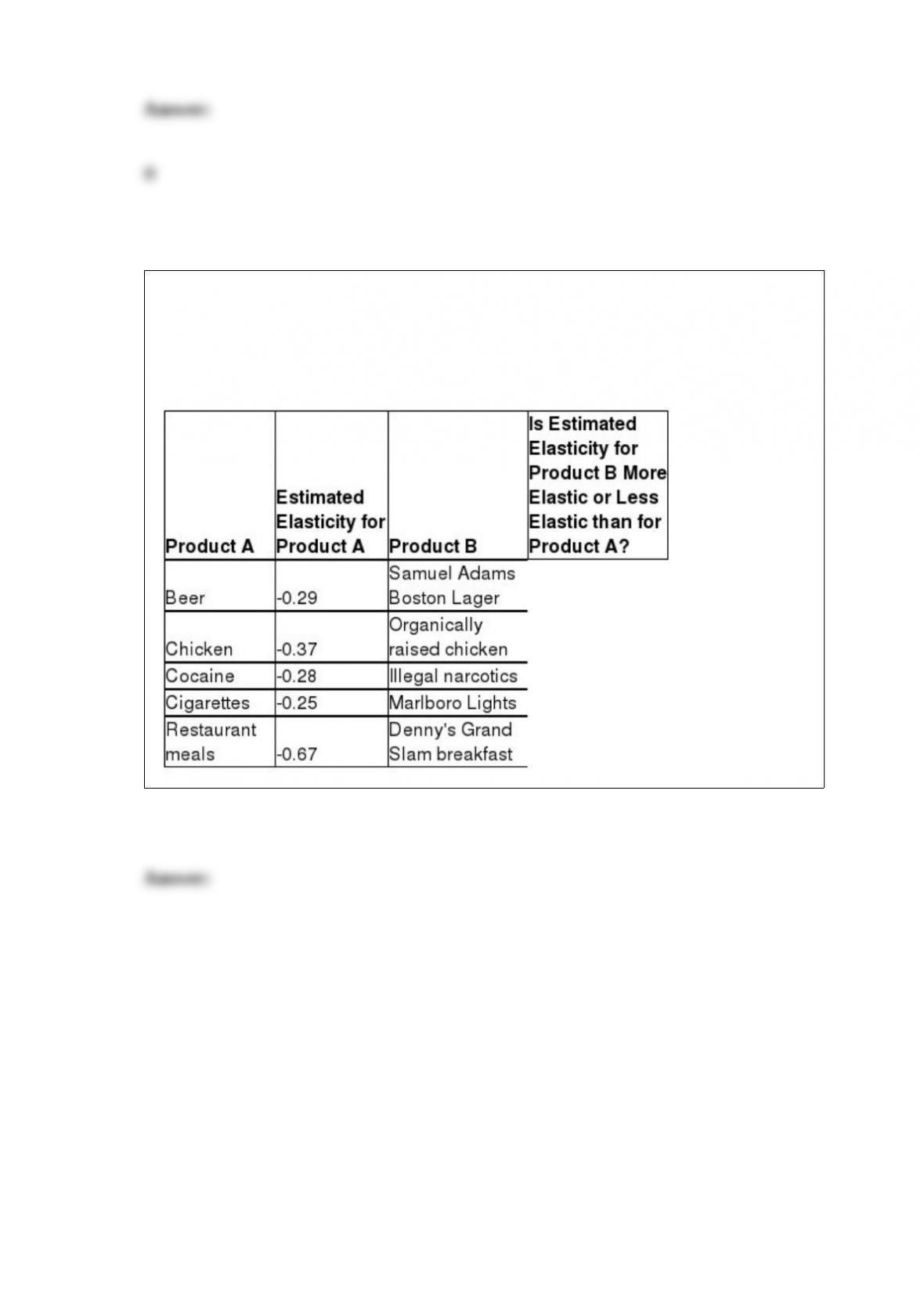
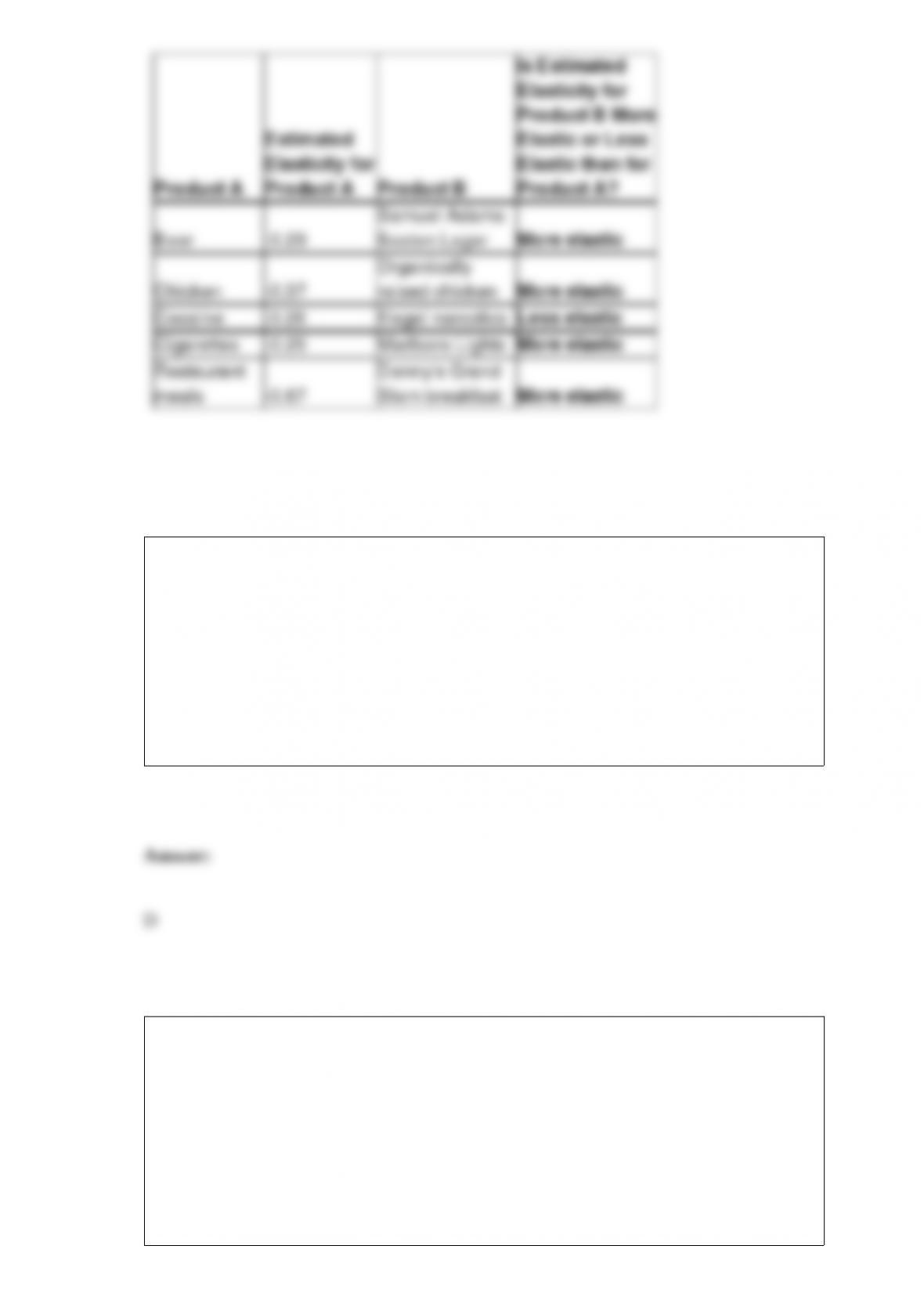
The estimated price elasticities of demand for the products listed in the table as
“Product A” are from Table 6-2 in the text. Indicate whether the products listed as
“Product B” will have a more elastic or less elastic demand than the corresponding
Product A.
Which of the following is a result of a market economy?
A) environmental protection
B) an equal income distribution
C) agreement on equity
D) voluntary exchange
Which of the following correctly describes what the Fed used as monetary targets in the
past?
A) The Fed used M1 and M2 as targets after 1993.
B) The Fed focused on M1 as a target after deregulation of the financial markets.
C) The Fed increased its reliance on interest rate targets since the mid-1990s.
D) After 1980 and before the 1990s, the Fed focused on interest rate targets.
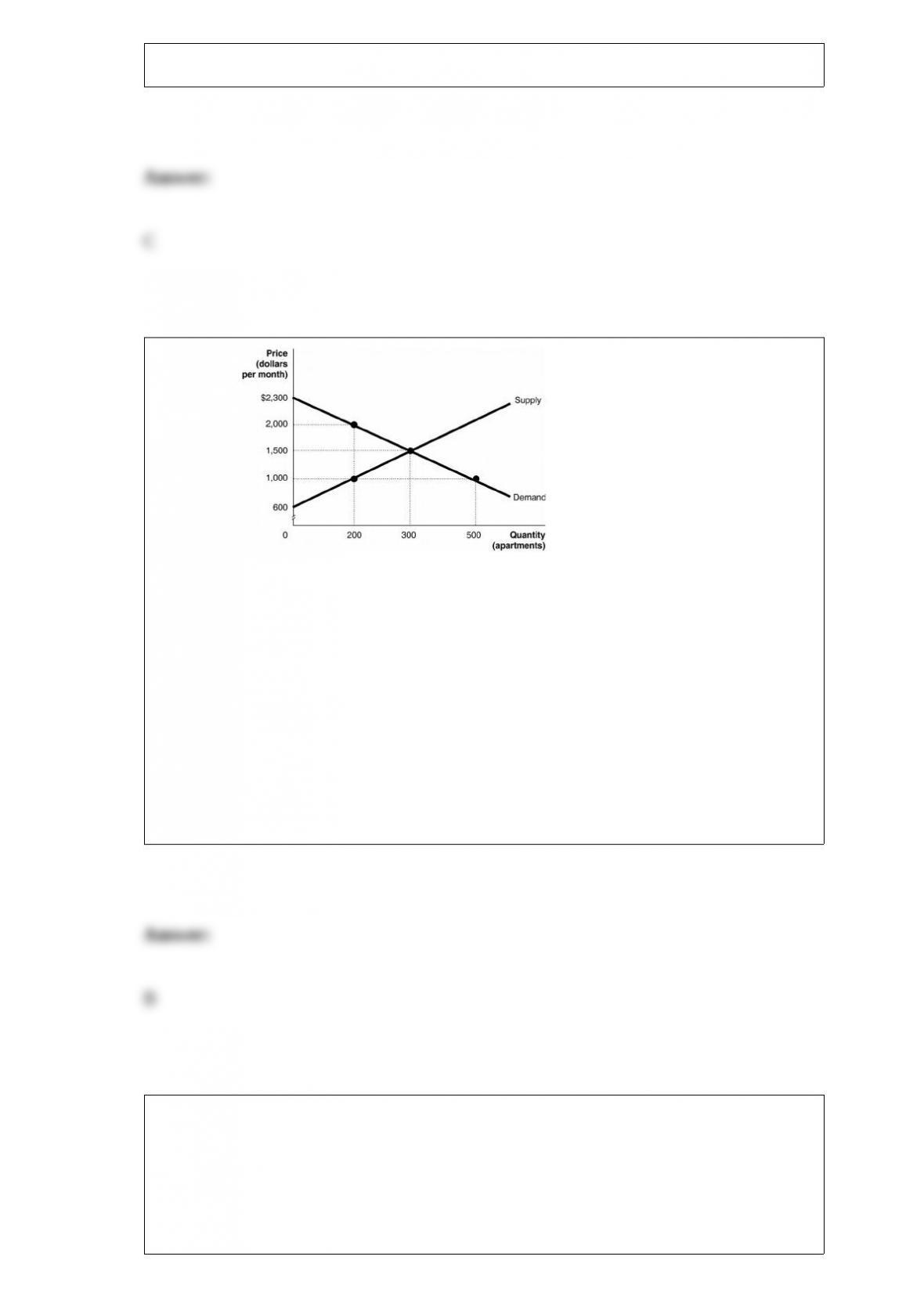
Figure 4-8 Figure 4-8 shows the market for
apartments in Springfield. Recently, the government imposed a rent ceiling of $1,000
per month. Suppose that instead of a rent ceiling, the government imposed a price floor
of $2,000 per month for apartments. What is the value of consumer surplus after the
imposition of the price floor?
A) $6,000
B) $30,000
C) $100,000
D) $240,000
For how long does a patent give a firm the exclusive legal right to a product?
A) 10 years
B) 17 years

C) 20 years
D) 50 years
Suppose the demand curve for a product is horizontal and the supply curve is upward
sloping. If a unit tax is imposed in the market for this product,
A) sellers bear the entire burden of the tax.
B) the tax burden will be shared among the government, buyers and sellers.
C) buyers bear the entire burden of the tax.
D) the tax burden will be shared by buyers and sellers.
Workers expect inflation to fall from 4% to 1% next year. As a result, this should
A) shift the short-run aggregate supply curve to the left.
B) shift the short-run aggregate supply curve to the right.
C) move the economy up along a stationary short-run aggregate supply curve.
D) move the economy down along a stationary short-run aggregate supply curve.
The Wong family consumes 3 pounds of fish and 5 pounds of chicken per month. The
price of fish is $8 per pound and chicken is $4 per pound.
a. What is the amount of income allocated to fish and chicken consumption?
b. What is the price ratio (the price of fish relative to the price of chicken)?
c. Explain the meaning of the price ratio you computed.
d. If the Wongs maximize utility, what is the ratio of the marginal utility of fish to the
marginal utility of chicken?
e. If the price of chicken rises, will the Wong family consume more chicken, less
chicken or the same amount of chicken? Explain your answer using the rule of equal
marginal utility per dollar.
________ is the ease with which a financial security can be exchanged for money.
A) Risk
B) The face value
C) Liquidity
D) The rate of return
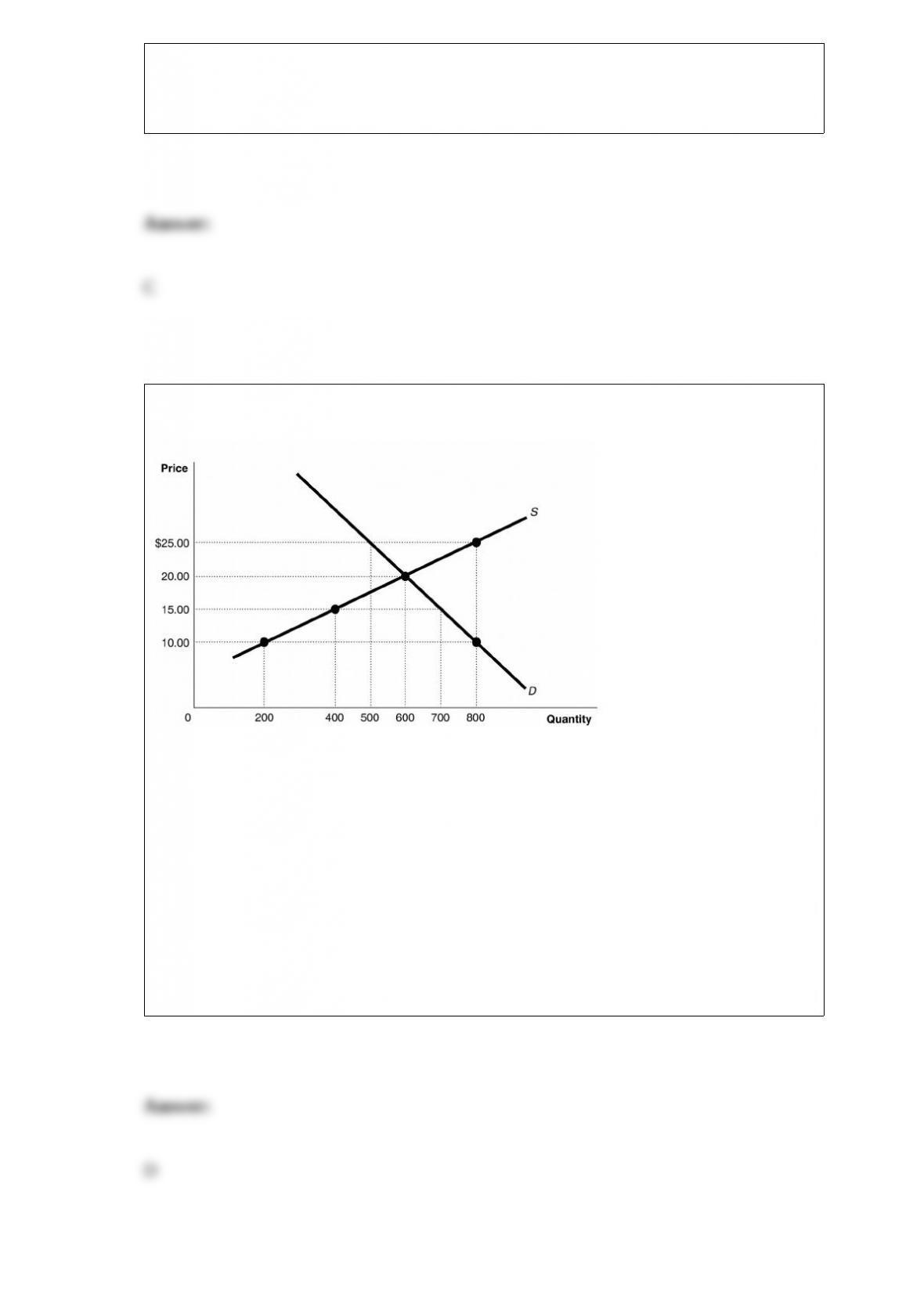
Figure 3-4
If the current market price is $10, the market will achieve equilibrium by
A) a price increase, increasing the supply and decreasing the demand.
B) a price decrease, decreasing the supply and increasing the demand.
C) a price decrease, decreasing the quantity supplied and increasing the quantity
demanded.
D) a price increase, increasing the quantity supplied and decreasing the quantity
demanded.
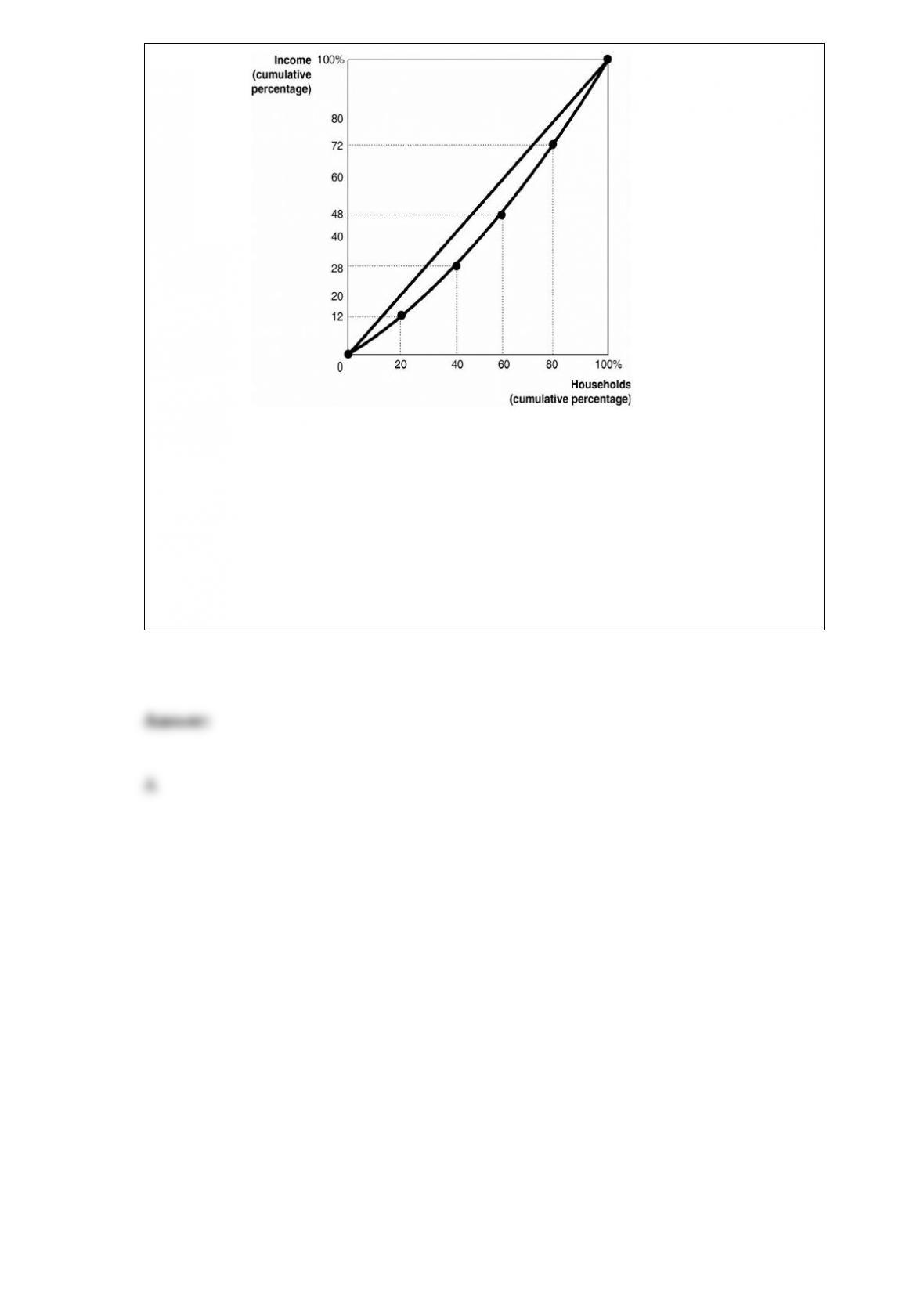
Figure 18-7 Figure 18-7 shows the
Lorenz curve for a hypothetical country. The second highest 20 percent of households
A) earn 24 percent of the society’s total income.
B) earn 28 percent of the society’s total income.
C) earn 42 percent of the society’s total income.
D) earn 72 percent of the society’s total income.