
1) the uruguay round of trade negotiations lowered:
a.trade sanctions levied against south africa
b.trade sanctions levied against the soviet union
c.tariffs, but not nontariff trade barriers
d.tariffs as well as nontariff trade barriers
2) the operations of an mne have little effect on employment in either the host country
or the home country.
a.true
b.false
3) in its transition toward capitalism, by the 1990s china permitted free enterprise as
well as democracy for its people.
a.true
b.false
4) a main advantage of specialization results from:
a.economies of large-scale production
b.the specializing country behaving as a monopoly
c.smaller production runs resulting in lower unit costs
d.high wages paid to foreign workers
5) when considering the effects of transportation costs, the conclusions of our trade
model must be modified. this is because transportation costs result in:
a.lower trade volume, higher import prices, smaller gains from trade
b.lower trade volume, lower import prices, smaller gains from trade
c.higher trade volume, higher import prices, smaller gains from trade
d.higher trade volume, lower import prices, greater gains from trade
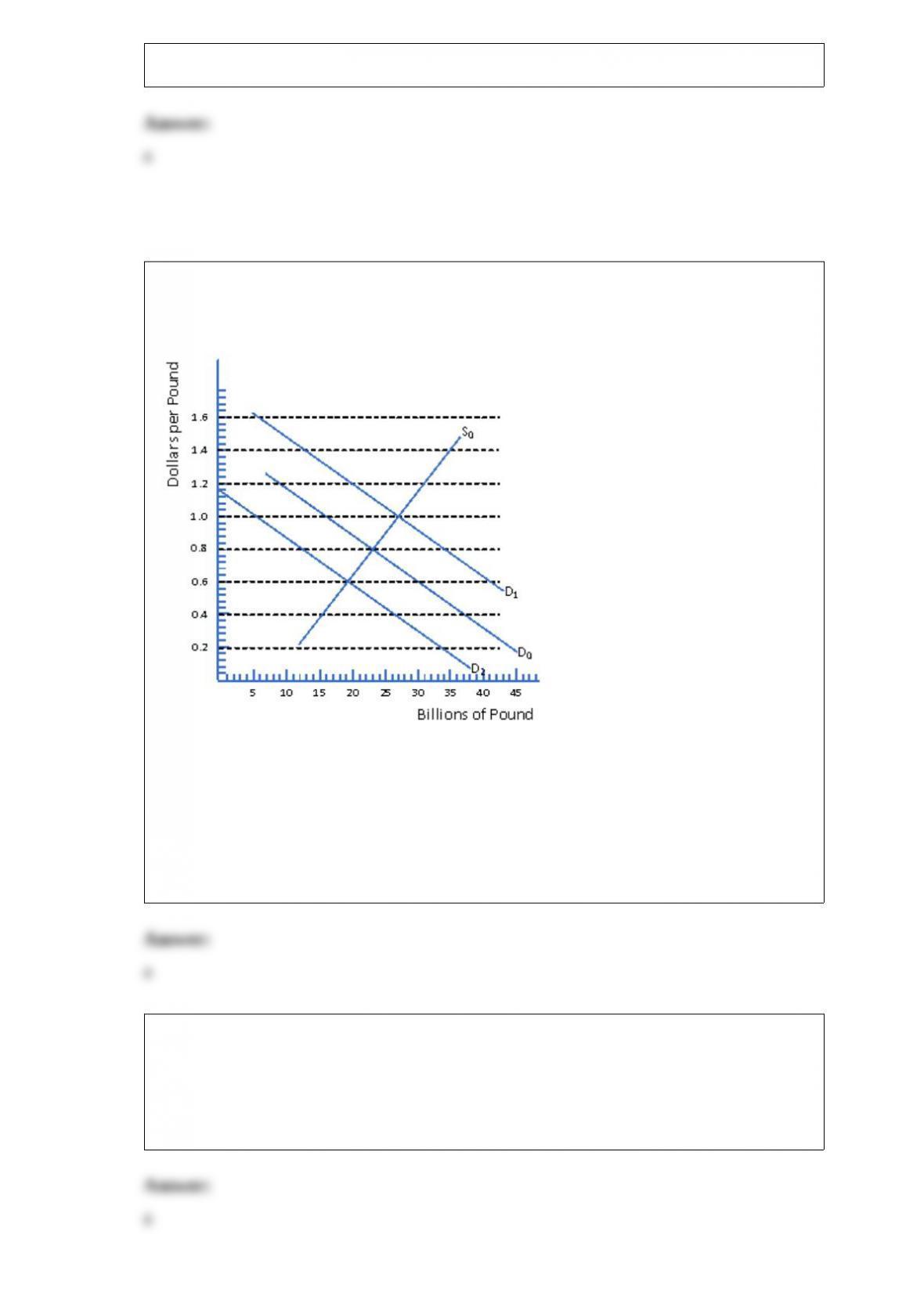
6) figure 15.2market for the british pound
refer to figure 15.2. suppose the demand for pounds increases from d0 to d1. under a
fixed exchange rate system, the u.s. exchange stabilization fund could maintain a fixed
exchange rate of $0.80 per pound by:
a.selling pounds for dollars on the foreign exchange market
b.selling dollars for pounds on the foreign exchange market
c.decreasing u.s. exports, thus decreasing the supply of pounds
d.stimulating u.s. imports, thus increasing the demand for pounds
7) a country that is a net international debtor initially experiences:
a.an augmented savings pool available to finance domestic spending
b.a higher interest rate, which leads to lower domestic investment
c.a loss of funds to trading partners overseas
d.a decrease in its services exports to other countries

8) in a free market, exchange rates are determined by market fundamentals and market
expectations.
a.true
b.false
9) it is widely agreed that import-substitution policies have been a main contributor to
above-average growth rates in developing countries.
a.true
b.false
10) according to the tariff escalation effect, industrial countries apply low tariffs to
imports of finished goods and high tariffs to imports of raw materials.
a.true
b.false
11) figure 5.3 illustrates the apple market for sweden, assumed to be a ‘small” country
that is unable to affect the world price. ssweden is the domestic supply and dsweden is
the domestic demand. ssweden+quota is sweden’s supply schedule with an import
quota.
figure 5.3. sweden’s apple market
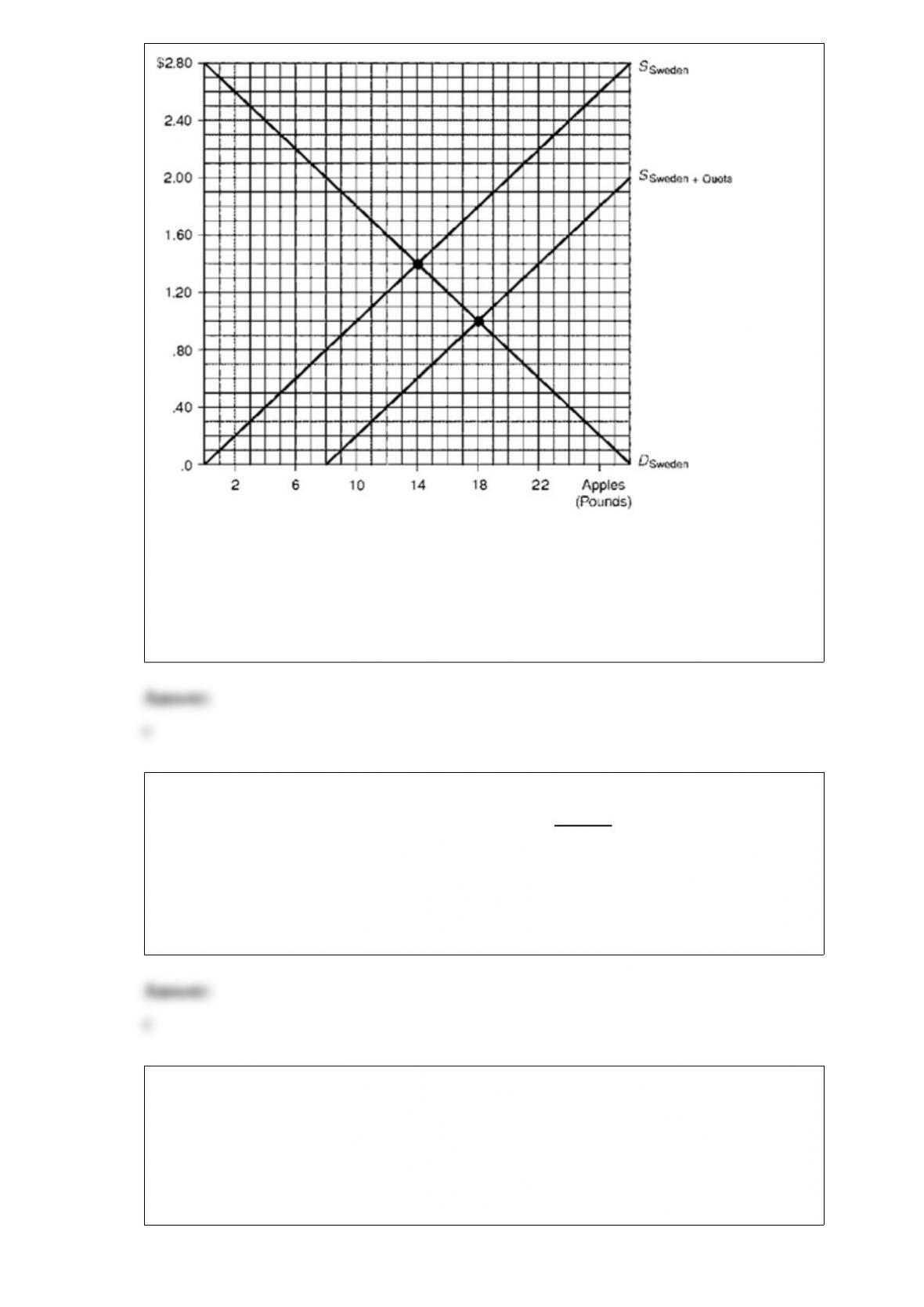
consider figure 5.3. at the free-trade price of $0.60 per pound, sweden’s consumer
surplus totals $____ and producer surplus totals $____.
a.$10.80, $2.40
b.$14.60, $3.90
c.$24.20, $1.80
d.$32.40, $2.30
12) which exchange-rate system involves a “leaning against the wind” strategy in which
short-term fluctuations in exchange rates are reduced without adhering to any particular
exchange rate over the long run?
a.pegged or fixed exchange rates
b.adjustable pegged exchange rates
c.managed floating exchange rates
d.freely floating exchange rates
13) which international reserve asset was officially phased out of the international
monetary system by the united states in the early 1970s?
a.special drawing rights
b.swap agreements
c.general arrangements to borrow
d.gold

14) the united nation conference on trade and development in 1964 was successful in
convincing developing countries to switch from export-led industrialization to
import-substitution industrialization.
a.true
b.false
15) for developing countries, a key factor underlying the instability of primary-product
prices and export receipts is the high price elasticity of demand for products such as tin
and copper.
a.true
b.false
16) assume that general motors employs labor and materials, whose costs are
denominated in dollars, in the production of automobiles. if the dollar’s exchange value
depreciates by 10 percent against the yen, the yen-denominated cost of a gm vehicle
rises by 10 percent.
a.true
b.false
17) producing goods for export produces:
a.jobs
b.income
c.tariffs
d.a and b