
A farm can produce 10,000 bushels of wheat per year with 5 workers and 13,000
bushels with 6 workers. The marginal product of the sixth worker for this farm is:
a. 10,000 bushels.
b. 3,000 bushels.
c. 500 bushels.
d. 23,000 bushels.
Scarcity is a problem:
a. measured by the amount of goods available.
b. of the poor, but not the rich.
c. because human wants are unlimited while resources are limited.
d. only in industrialized economies.
In the long run, monopolistically competitive firms have:
a. excess capacity. c. minimal average costs.
b. positive profits. d. homogeneous production.
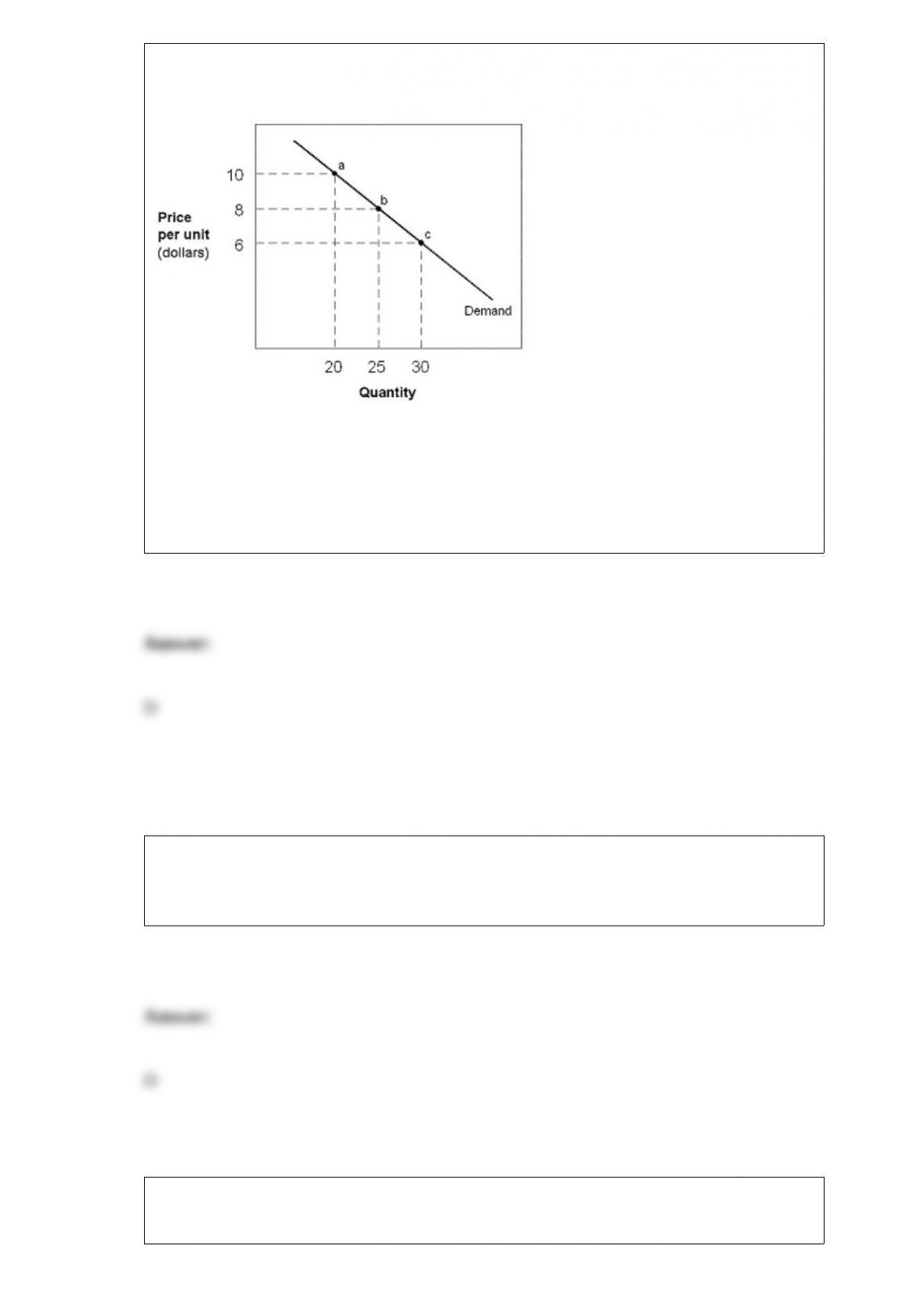
Exhibit 5-1 Demand curve
In Exhibit 5-1, between points b and c, the price elasticity of demand measures
a. 4.27.
b. 1.5.
c. 1.56.
d. 0.636.
e. 0.425.
A tax levied on imported goods is called a(n):
a. excise tax. c. foreign profits tax.
b. quota. d. tariff.
The Yankee Candle Company, in Hatfield, Massachusetts, makes thousands of scented
candles each day. The factory emits the odor of the candles it produces, some of which

smell quite nice. On days when they make strawberry candles the townspeople really
enjoy the smell. On days when they make potpourri scented candles, people close their
windows and don’t go outside. What can we infer about the scented candle market?
a. b and c.
b. Strawberry candles are more expensive than is socially optimum.
c. Potpourri candles are priced too low to be socially optimum.
d. Candle production generates only negative externalities.
e. Candle production technologies are inefficient.
Suppose prices for new homes have risen, yet sales of new homes have also risen. We
can conclude that:
a. the demand for new homes has risen.
b. the law of demand has been violated.
c. new firms have entered the construction industry.
d. construction firms must be facing higher costs.
The profit-maximizing employment level for a monopsonist occurs where:
a. wage = MFC.
b. wage = MRP.
c. price = wage.
d. wage = TWC.
e. MRP = MFC
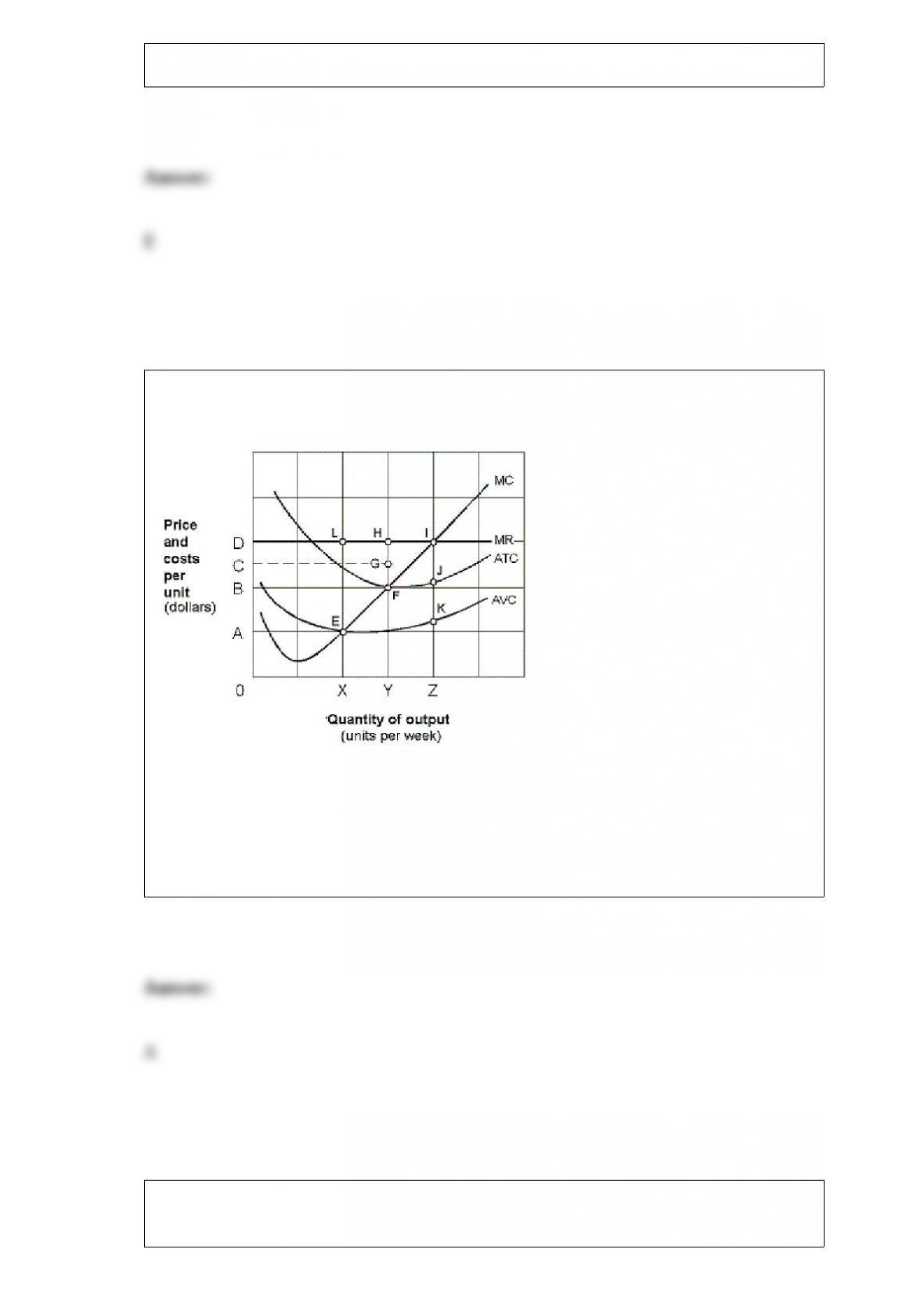
Exhibit 8-12 Marginal revenue and cost per unit curves
As shown in Exhibit 8-12, if the price is OD, the firm’s total revenue at its most
profitable level of output is:
a. OZID.
b. OYHD.
c. OXLD.
d. OYFB.
If demand is price elastic, a decrease in price causes:
a. an increase in total revenue.

b. a decrease in total revenue.
c. no change in total revenue.
d. an increase in quantity, but anything can happen to revenue.
Demand curves are negatively sloped when people buy:
a. less as the price decreases.
b. more as the price increases.
c. the same amount as the price changes.
d. more as the price decreases.
e. less as incomes decrease.
If a fishing boat owner brings 10,000 fish to market and the market price is $7 per fish,
she will have $70,000 in total revenue. If the average variable cost of 10,000 fish is $4
and the fixed cost of the boat is $20,000, what is her profit?
a. $1.
b. $3.
c. $1,000.
d. $3,000.
e. $10,000.

Market equilibrium is:
a. defined as the condition in which there is neither a shortage or surplus.
b. defined as the condition under which the separately formulated plans of buyers and
sellers exactly mesh when tested in the market.
c. represented graphically by the intersection of the supply and demand curves.
d. all of these.
Exhibit 3-3 Demand curves
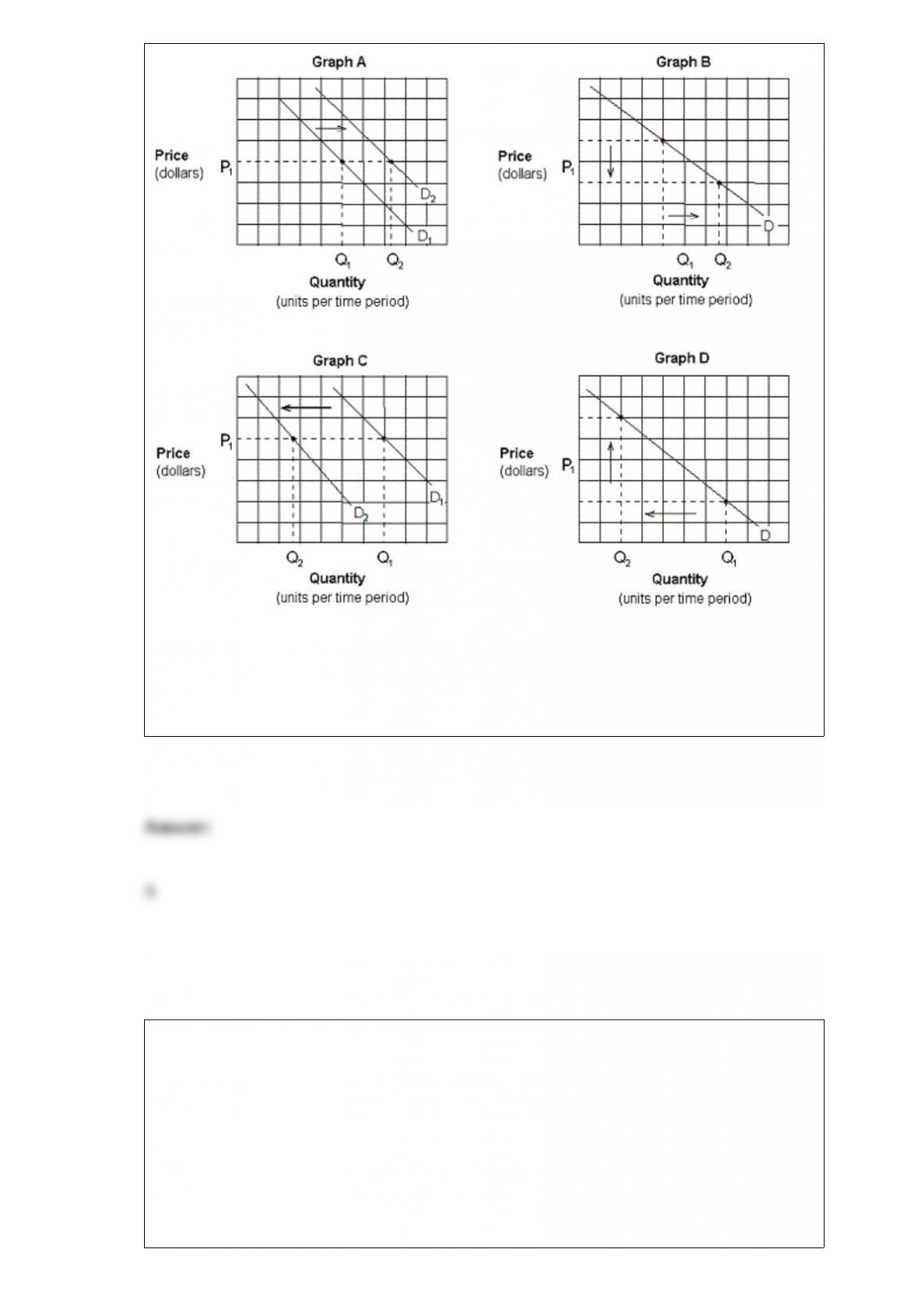
Assume that crackers and soup are complementary goods. Which of the graphs in
Exhibit 3-3 depicts the effect of a promotional discount that decreases the price of
crackers on the demand for soup?
a. Graph A. c. Graph C.
b. Graph B. d. Graph D.
Less-developed countries are poor for all of the following reasons except one. Which
one?
a. They do not produce many goods and services.
b. Labor productivity is low.
c. Investment funds tend to flow abroad

d. Investment in human capital is very low.
e. The labor force is too small.
The Robinson-Patman Act amended and further refined which of the following laws?
a. The Sherman Antitrust Act.
b. The Celler-Kefauver Act.
c. The Clayton Act.
d. The FTC Act.
e. The Herfindahl-Hirschman Act.
Exhibit 11-1
Use the information in the accompanying chart to answer the following question(s). The
firm hires labor competitively and sells its product in a competitive price-taker market.
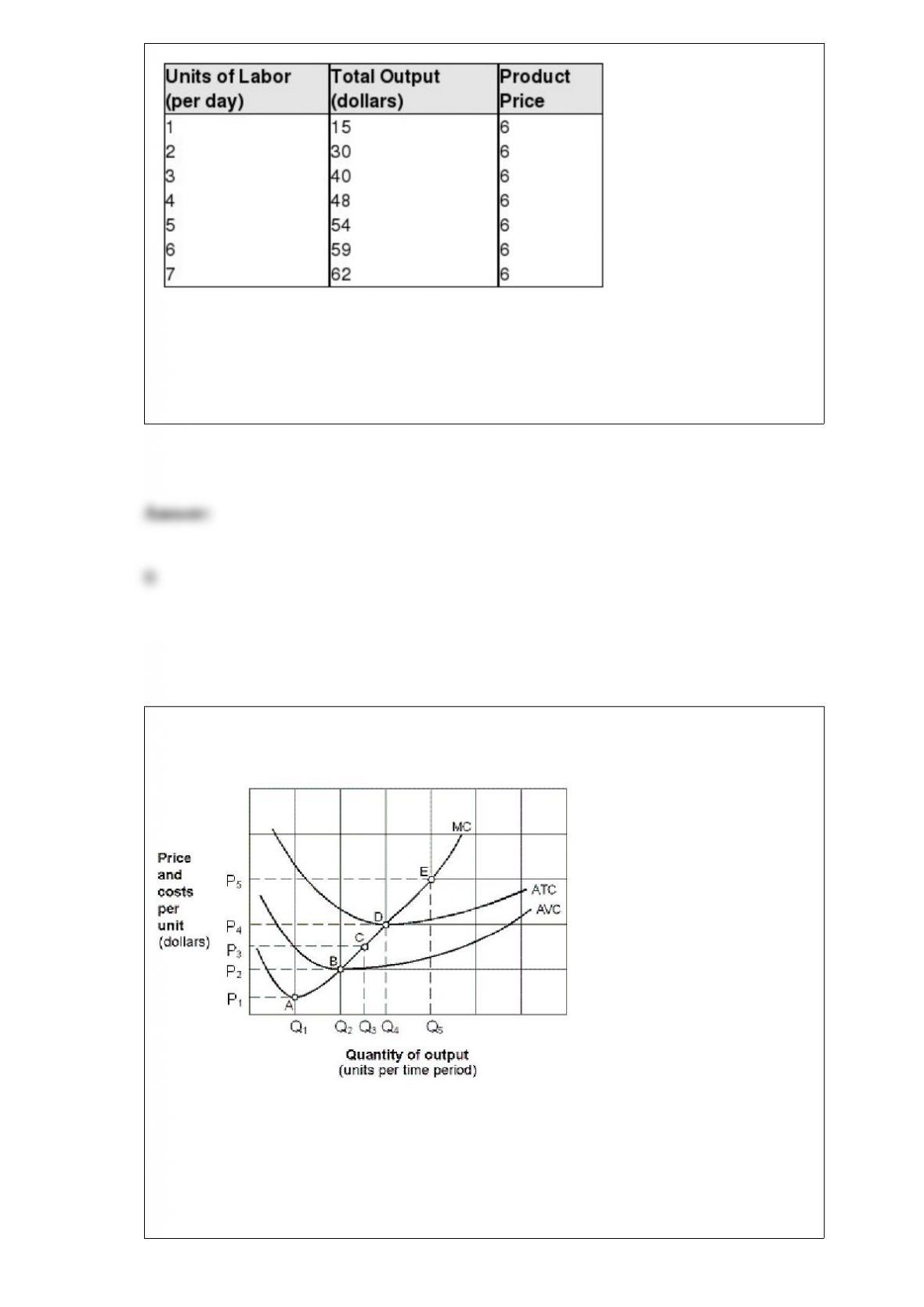
Refer to Exhibit 11-1. What is the marginal revenue product of the fifth unit of labor?
a. $6.
b. $36.
c. residual claim.
d. $324.
Exhibit 8-13 Price and cost per unit curves
In Exhibit 8-13, if the price is P3, total economic profit is maximized or economic loss
minimized at the output:
a. Q1.
b. Q2.
c. Q3.

d. Q4.
e. Q5.
Compared to ideal economic efficiency, when the production of a good generates
external costs, competitive markets will result in an output that is too:
a. large and a price that is too high. c. small and a price that is too high.
b. large and a price that is too low. d. small and a price that is too low.
Which of the following statements is true about monopsony?
a. c and e.
b. c, d, and e.
c. Monopsonists exercise complete buying power.
d. Monopsonists maximize profit by setting MRP = MFC.
e. Monopsonists face the whole labor supply curve.

Comparative advantage indicates that:
a. specialization and exchange will cause trading partners to reduce their joint output.
b. a nation can gain from trade even when it is at an absolute disadvantage in producing
all goods.
c. trade with low-wage countries will pull down the wages of workers in high-wage
countries.
d. all of these.
Adam Smith’s book The Wealth of Nations was published at the time of the:
a. Great Depression. c. U.S. Civil War.
b. U.S. Declaration of Independence. d. War of 1812.