1) The textbook authors apply the metaphor ‘shooting yourself in the foot” to:
A.trade wars and trade boycotts.
B.fixed exchange rates.
C.import quotas.
D.voluntary export restraints.
2) (consider this) gross investment is a:
a.flow, as is depreciation.
b.flow, as is capital.
c.stock, whereas depreciation is a flow.
d.stock, whereas capital is a flow.
3) a pure monopolist is producing an output such that atc = $4, p = $5, mc = $2, and mr
= $3. this firm is realizing:
a.a loss that could be reduced by producing more output.
b.a loss that could be reduced by producing less output.
c.an economic profit that could be increased by producing more output.
d.an economic profit that could be increased by producing less output.
4) Assume that an economy has 5000 workers, each working 2500 hours per year. The
average real output per worker is $
(a)What would the total output or real GDP be?
(b)Suppose in year 2 the number of workers increased to 5500. What would real GDP
be? What would the growth rate be?
(c)Suppose in year 3 the average real output per worker declined to $15. What would
real GDP be? What would the growth rate be?
5)
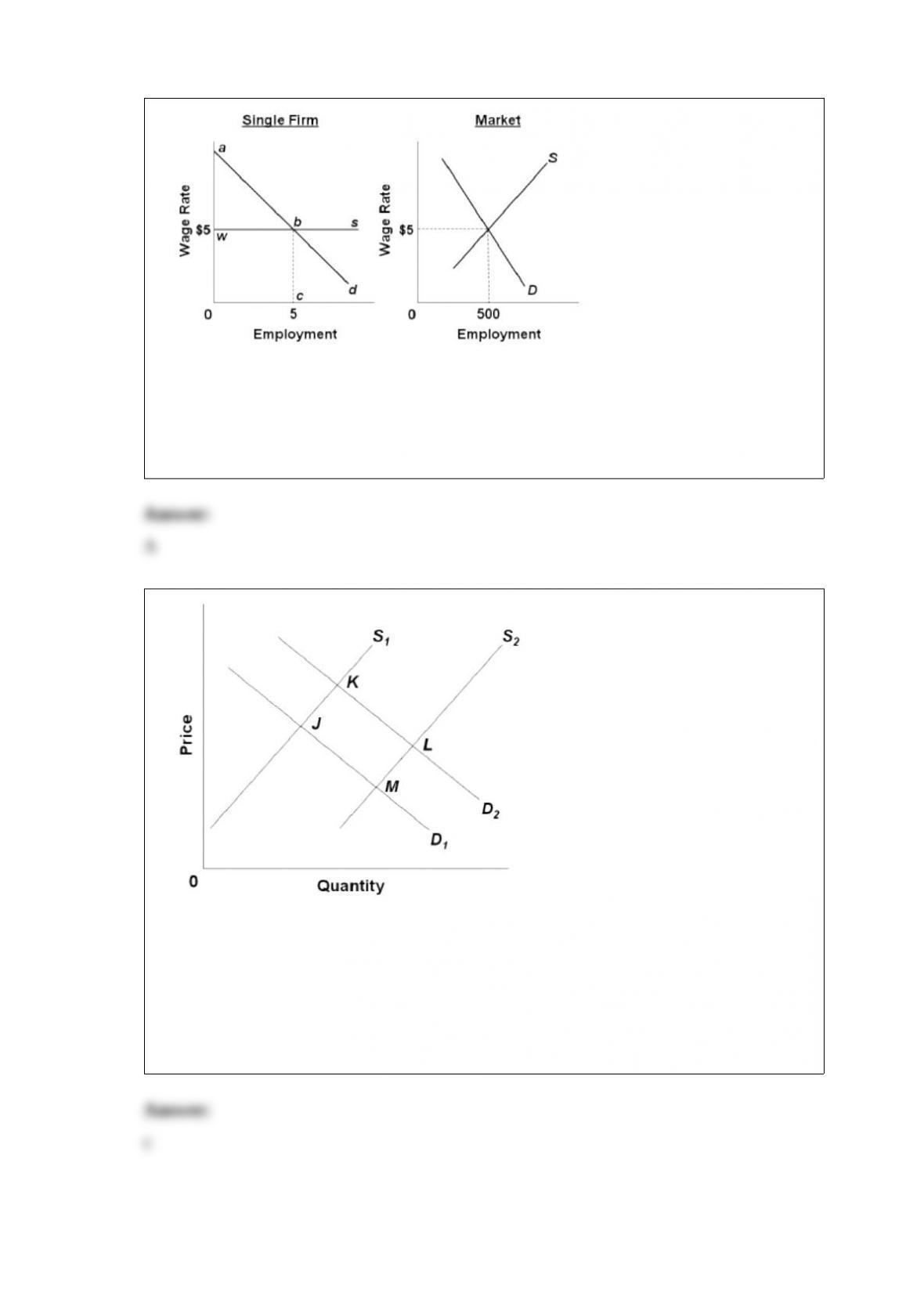
Refer to the above diagrams. The profit-maximizing firm’s total revenue:
A.is 0abc.
B.is 0wbc.
C.is wab.
D.cannot be determined.
6)
refer to the above diagram, in which s1 and d1 represent the original supply and
demand curves and s2 and d2 the new curves. in this market the indicated shift in
demand may have been caused by:
a.a decline in the number of buyers in the market.
b.a decline in the price of a substitute good.
c.an increase in incomes if the product is a normal good.
d.an increase in incomes if the product is an inferior good.
7)
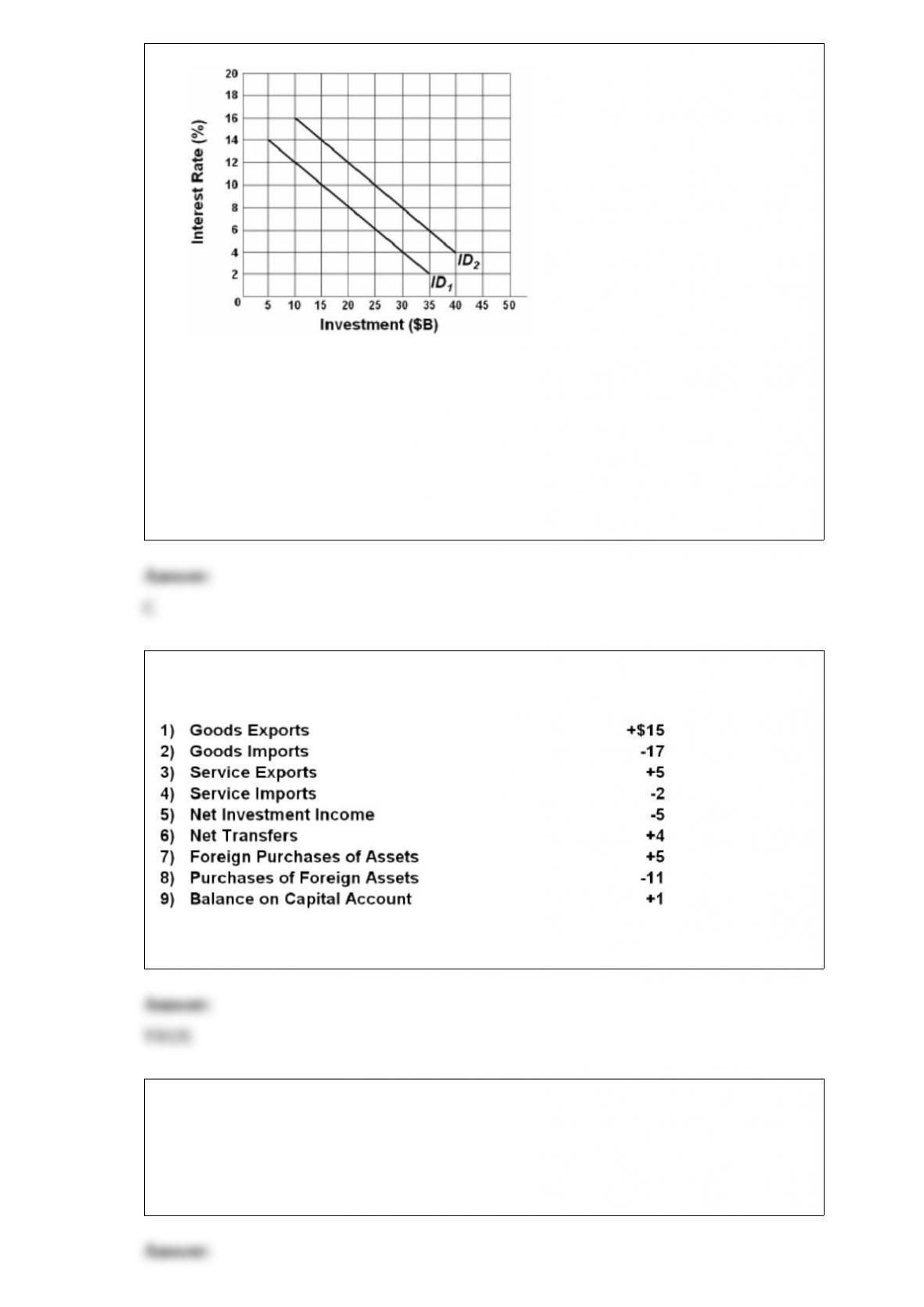
Refer to the above diagram. Initially assume that the investment demand curve is ID1.
The crowding-out effect of a large public debt would be shown as a(n):
A.shift of the investment demand curve from ID1 to ID2.
B.leftward shift of the investment demand curve.
C.increase in the interest rate from 4 percent to 6 percent and a decline in investment
spending of $5 billion.
D.increase in the interest rate from 6 percent to 8 percent and a decline in investment
spending of $40 billion.
8) The following 2008 balance of payments statement for Transylvania. All figures are
in billions of dollars.
Refer to the above data. Transylvania realized a financial and capital account deficit in
2008.
9) the price elasticity of demand is generally:
a.negative, but the minus sign is ignored.
b.positive, but the plus sign is ignored.
c.positive for normal goods and negative for inferior goods.
d.positive because price and quantity demanded are inversely related.
10) which of the following is correct?
a.total output = labor productivity/worker-hours
b.labor productivity = worker-hours/total output
c.total output = worker-hours labor productivity
d.worker-hours = labor productivity total output
11) which of the following is characteristic of a purely competitive seller’s demand
curve?
a.price and marginal revenue are equal at all levels of output.
b.average revenue is less than price.
c.its elasticity coefficient is 1 at all levels of output.
d.it is the same as the market demand curve.
12)
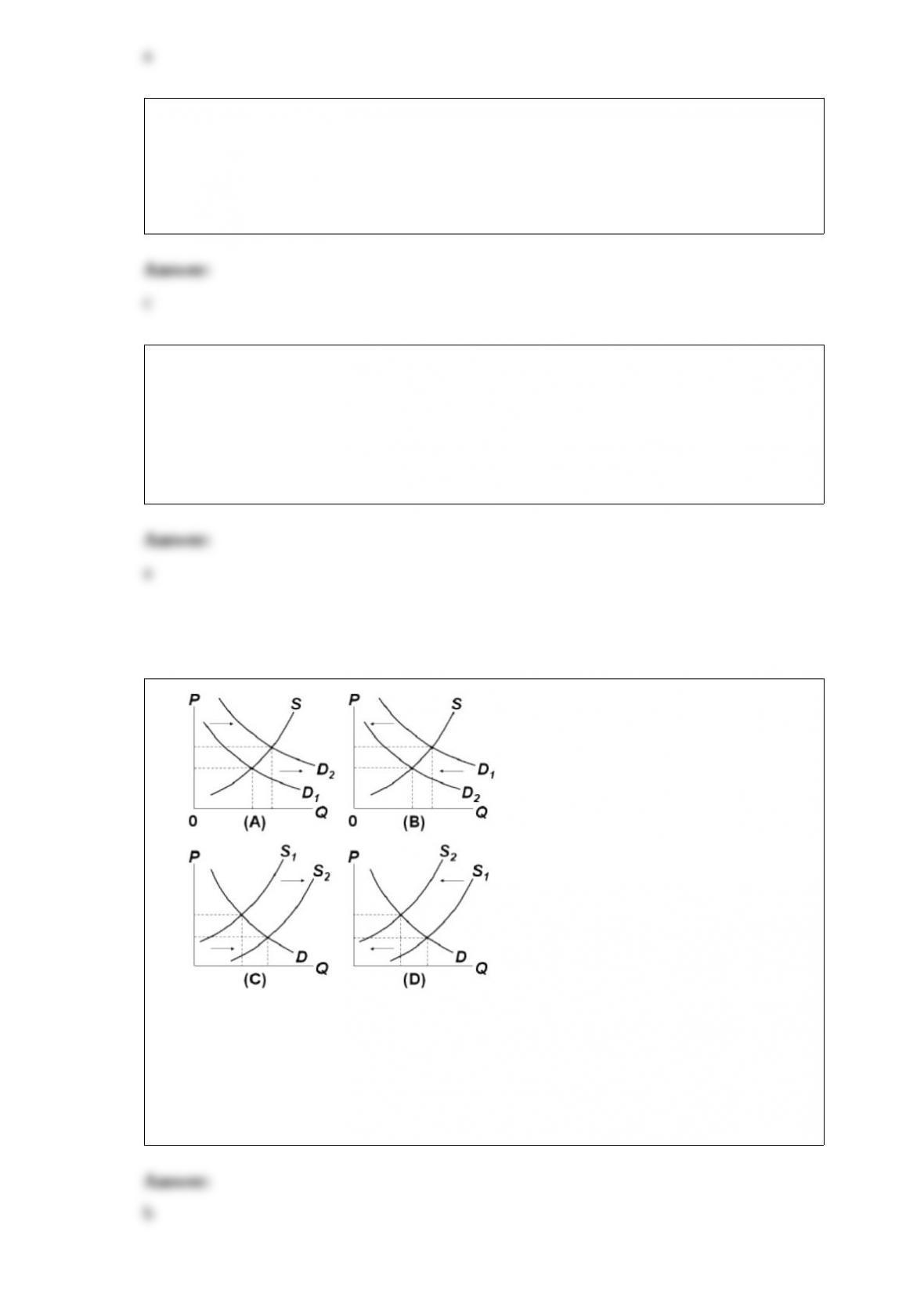
which of the above diagrams illustrate(s) the effect of an increase in the price of
budweiser beer on the market for coors beer?
a.a and c
b.a only.
c.b only.
d.c only.
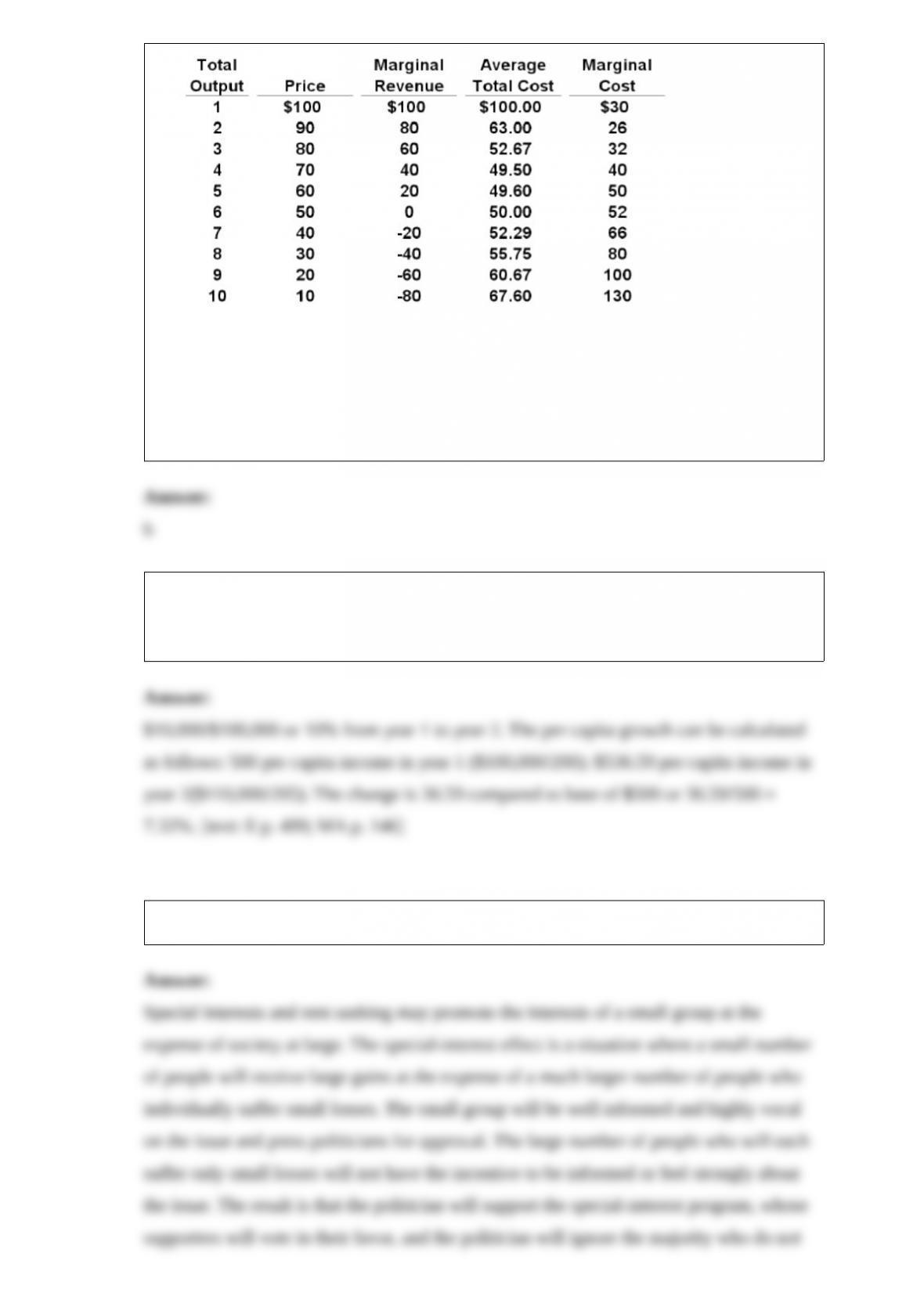
13)
refer to the above data for a nondiscriminating monopolist. this firm will maximize its
profit by producing:
a.3 units.
b.4 units.
c.5 units.
d.6 units.
14) Suppose an economys real GDP is $100,000 in year 1 and $110,000 in year 2. What
is the growth rate of its GDP? Assume that population was 200 in year 1 and 205 in
year 2. What is the growth rate in GDP per capita?
15) Explain the difference between the special interest effect and rent-seeking behavior.
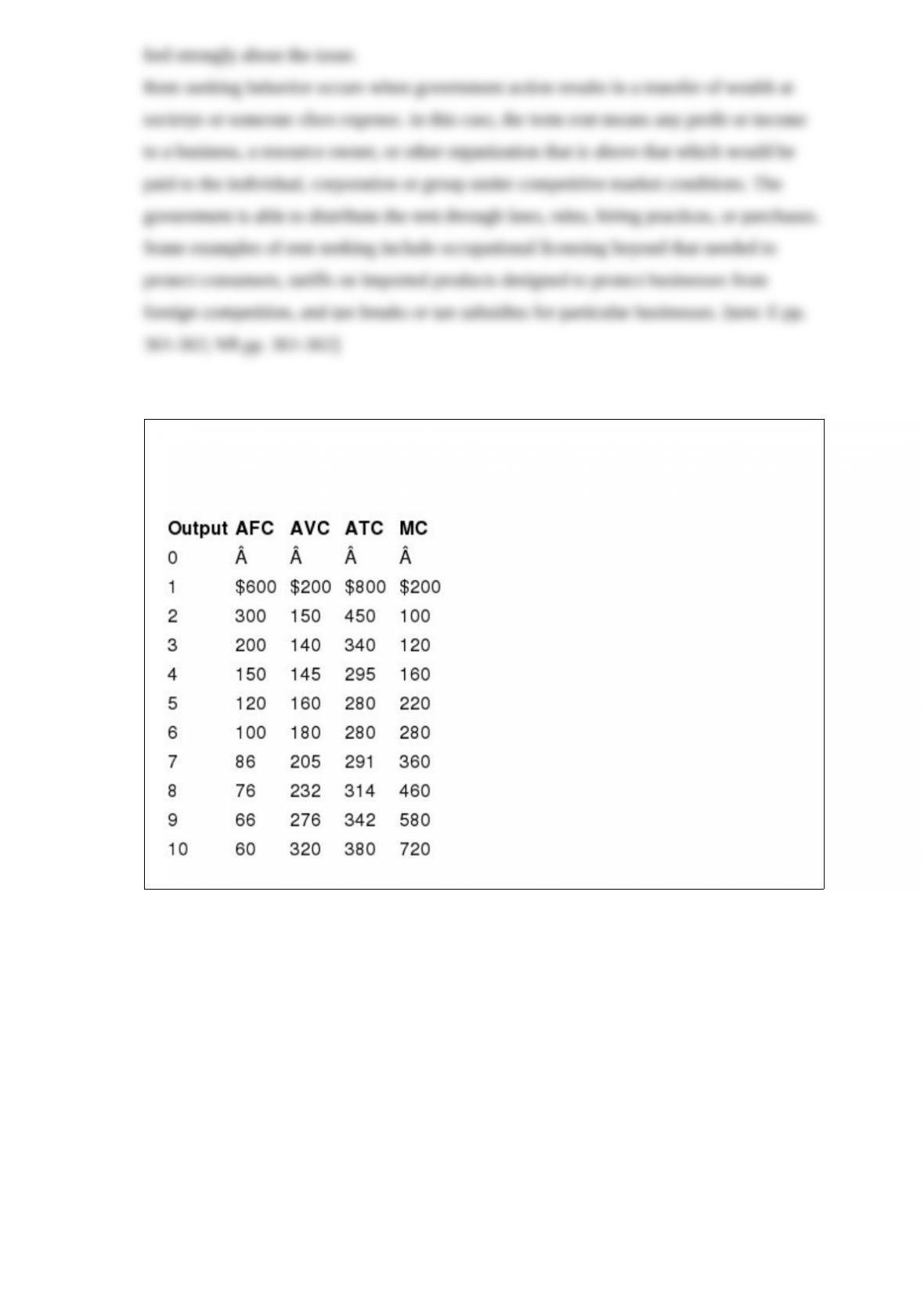
16) Assume that a purely competitive firm has the schedule of average and marginal
costs given in the table below.
•In the table below, complete the supply schedule for the competitive firm and state
what the economic profit will be at each price.
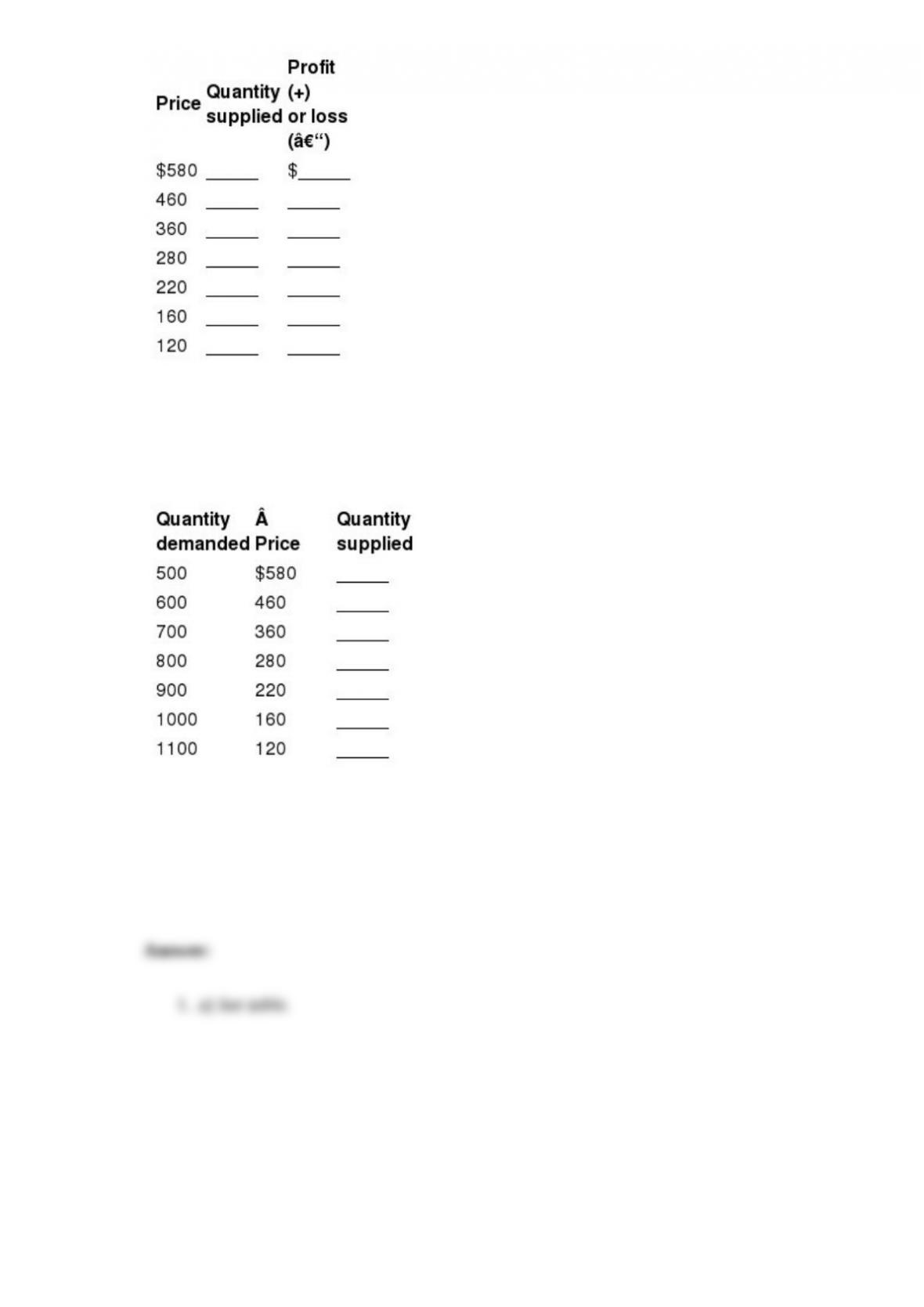
•If there are 100 firms in the industry and all have the same cost schedule, complete
the market supply schedule in the table below.
Answer the following questions: (1) What will the equilibrium price and quantity of
the product be? (2) What will the profits of each firm be? (3) Will firms tend to enter or
leave the industry in the long run? Explain.
17) What is the probable incidence of the personal income tax?
18) What are the advantages and disadvantages of the managed float system of
exchange rates?
19) Use the following bank transactions to develop the banks balance sheet. To start the
bank, owners issue $500,000 in stock to shareholders. Next, they purchase $200,000
worth of equipment and office space to establish the physical location of the bank.
Finally, they open the bank and receive $750,000 in checkable deposits. With these
reserves, they make $600,000 worth of loans.
20) Evaluate this statement: A monopolistically competitive industry would be more
efficient if there were fewer firms.
21) What is the major argument in the case for income equality?
22) How does the use of credible threats or empty threats by firms affect outcomes and
the Nash equilibrium in one-period games?
23) In the current presidential election, one candidate argues: The government is
extremely inefficient. To fix this, government spending should be substantially reduced.
Evaluate this statement.