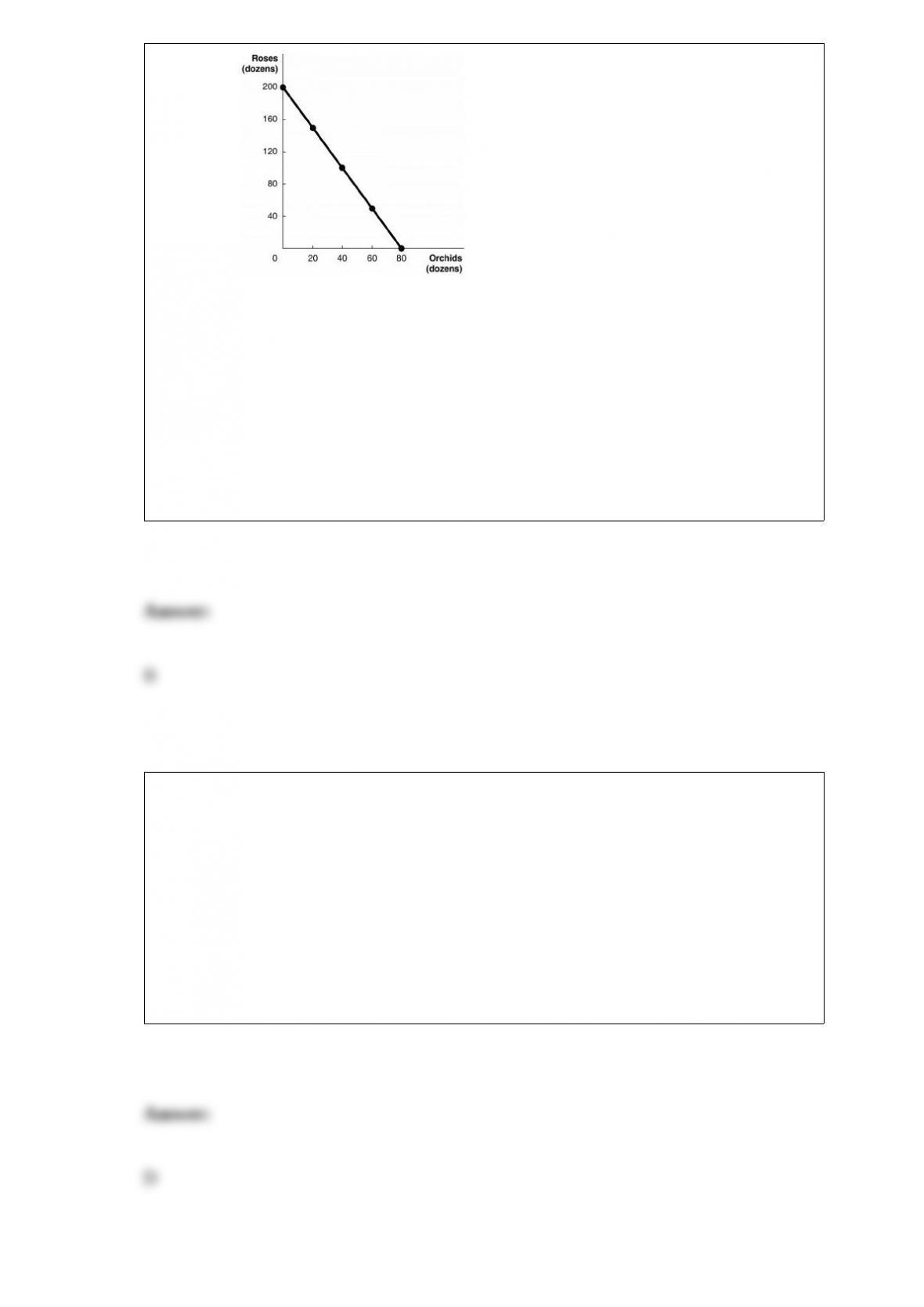
Figure 2-2 Figure 2-2 above shows the production
possibilities frontier for Vidalia, a nation that produces two goods, roses and orchids.
What is the opportunity cost of one dozen orchids?
A) 0.4 dozen roses
B) 2.5 dozen roses
C) 7.25 dozen roses
D) 16 dozen roses
Which of the following did not help Thailand maintain its peg against the dollar in the
1990s?
A) borrowing dollars from the International Monetary Fund in exchange for baht
B) buying baht on the foreign exchange market to support higher demand for the baht
C) increasing domestic interest rates to attract more foreign investors
D) foreigners selling off new investments in Thailand
Of the $840 billion American Recovery and Reinvestment Act stimulus package which
was enacted in 2009, approximately one-third took the form of ________ and
two-thirds took the form of increases in ________.
A) discretionary government spending; transfer payments
B) tax rebates; tax cuts
C) treasury bond purchases; the money supply
D) tax cuts; government expenditures
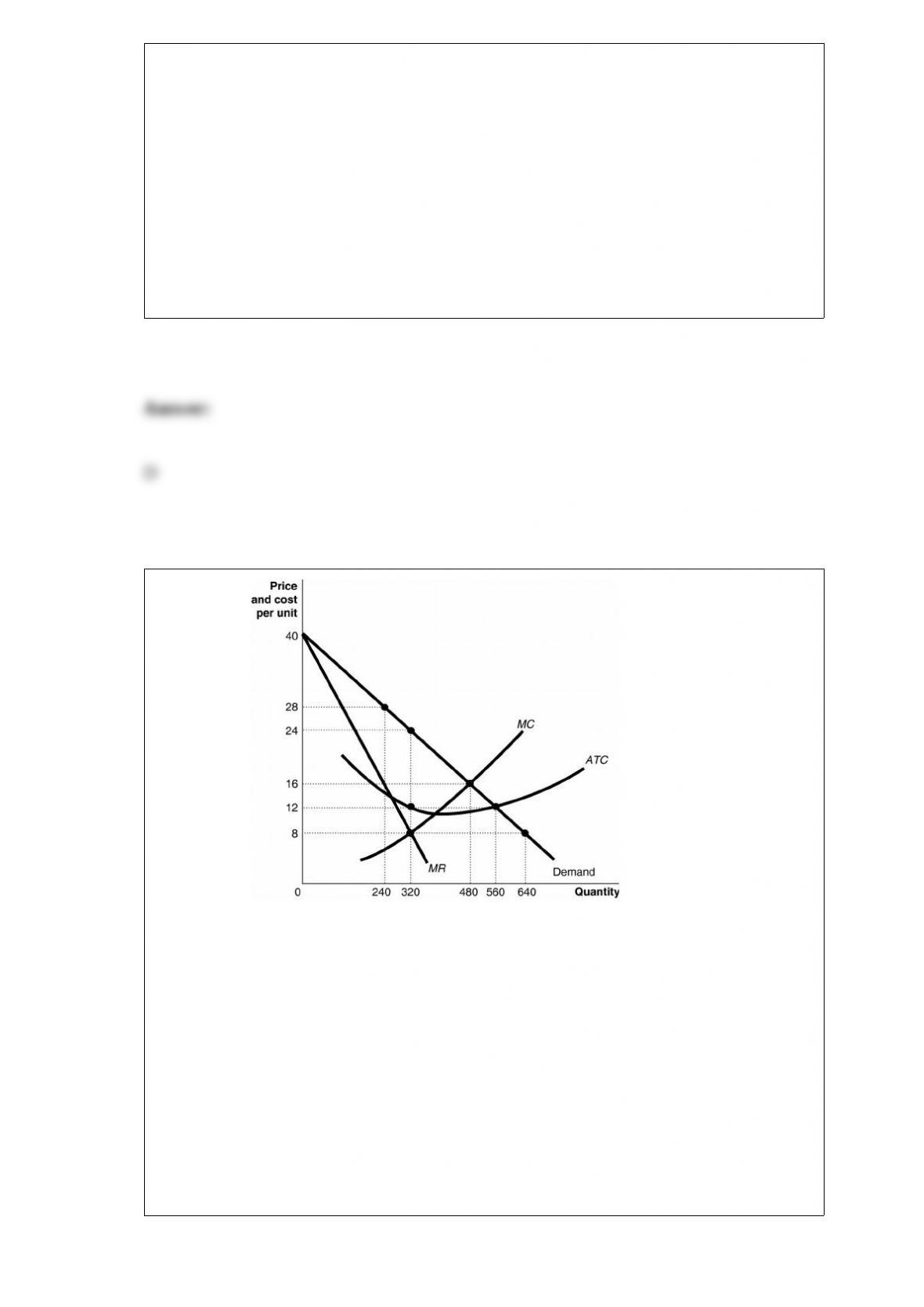
Figure 16-5
Suppose the firm represented in the diagram decides to use a two-part pricing strategy
such that such that it charges a fixed fee and a per-unit price equal to the competitive
price. (This is also called an optimal two-part tariff.) What is the quantity it should
produce?
A) 240 units
B) 320 units
C) 480 units
D) 560 units

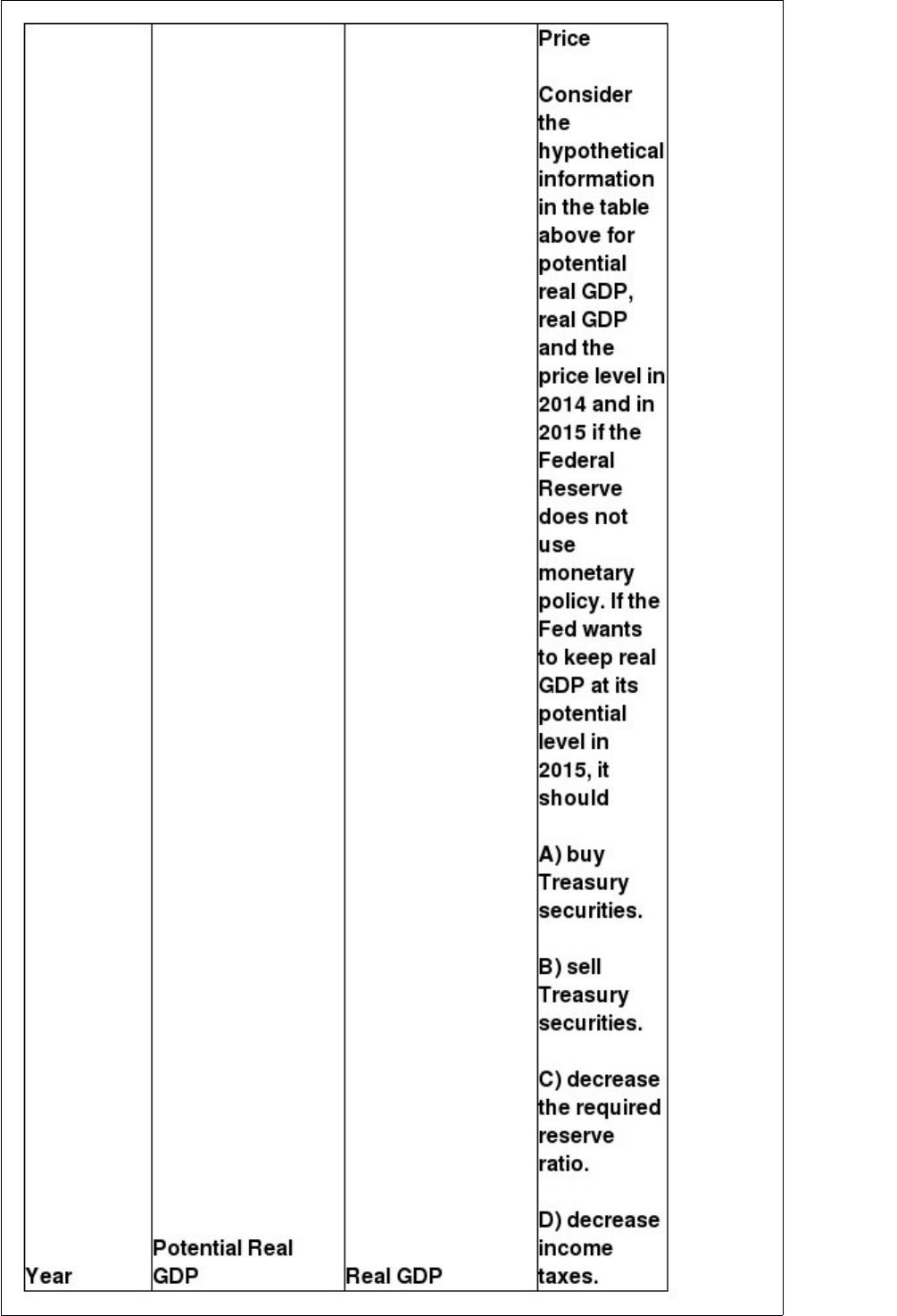
Table 26-3

Article Summary. According to a study by the Center for Neighborhood
Technology, homes located within one-half mile of frequently-used public
transportation held their value much better during the recent housing market
downturn than did those without easy access to public transportation, and the
greater home values reflect greater demand for neighborhoods in close proximity
to public transportation. In addition to higher home values, the study found that
close proximity to public transportation offers lower transportation costs, a wider
variety of travel options, and access to more employment opportunities. Source:
Meg Handley, “Study: Proximity to Public Transit Boosts Home Values,” U.S.
News & World Report, March 22, 2013.
People who do not use public transportation can still benefit from it, as is shown by the
higher home values. As a result, the marginal social benefit from public transportation
is ________ the marginal private benefit to those who use public transportation.
A) equal to
B) greater than
C) less than
D) unrelated to
Suppose that some investors have decided that economic and financial uncertainty have
made the prospect of investing in domestic stock markets more risky than investing in
foreign stock markets, and therefore choose to invest in foreign markets. By using all
available information as they act to achieve their goals, these investors are exemplifying
the economic idea that
A) people are rational.
B) people respond to economic incentives.

C) optimal decisions are made at the margin.
D) equity is more important than efficiency.
When Zynga, the company behind the social games CityVille and Words With Friends,
sold stock to the public for the first time in December 2011, funds were being raised in
a ________ market, and when those newly issued shares are resold to other buyers, the
sales take place in a ________ market.
A) primary; primary
B) primary; secondary
C) secondary; primary
D) secondary; secondary
In the long run,
A) GDP > potential GDP.
B) unemployment is at its natural rate.
C) LRAS and SRAS lie on the same line.
D) the inflation rate is zero.

To calculate GDP by the expenditure method, one must add
A) wages, rents, interest, and profits.
B) consumption spending, investment spending, government spending and net exports.
C) consumption spending, investment spending, government spending and exports.
D) labor, natural resources, entrepreneurship, and capital.
Buyers scrambled to secure stocks of Australian wool following a forecast of an 11
percent decline in wool production. What happens in the Australian wool market as a
result of this announcement?
A) The demand curve for Australian wool shifts to the left in anticipation of higher
prices in the future.
B) The demand curve for Australian wool shifts to the right in anticipation of higher
prices in the future.
C) The quantity of Australian wool demanded increases in anticipation of higher prices
in the future.
D) The quantity of Australian wool demanded decreases in anticipation of lower
quantities in the future.

A normal rate of return refers to the ________ that investors must earn on the funds
they invest in a firm, expressed as a percentage of the amount invested.
A) minimum amount
B) maximum amount
C) total amount
D) profit
What would happen in the market for knee replacement surgery if insurance companies
started to cover a smaller portion of the cost of the surgery, and fewer doctors decide to
enter the field of joint replacement surgery?
A) Demand will decrease, but this will not shift the supply curve.
B) Supply will decrease, but this will not shift the demand curve.
C) Demand and supply will both decrease.
D) Demand will decrease and supply will increase.
If a firm shuts down in the short run,
A) its loss equals zero.
B) its loss equals its fixed cost.
C) it makes zero economic profit.
D) its total revenue is not large enough to cover its fixed cost.
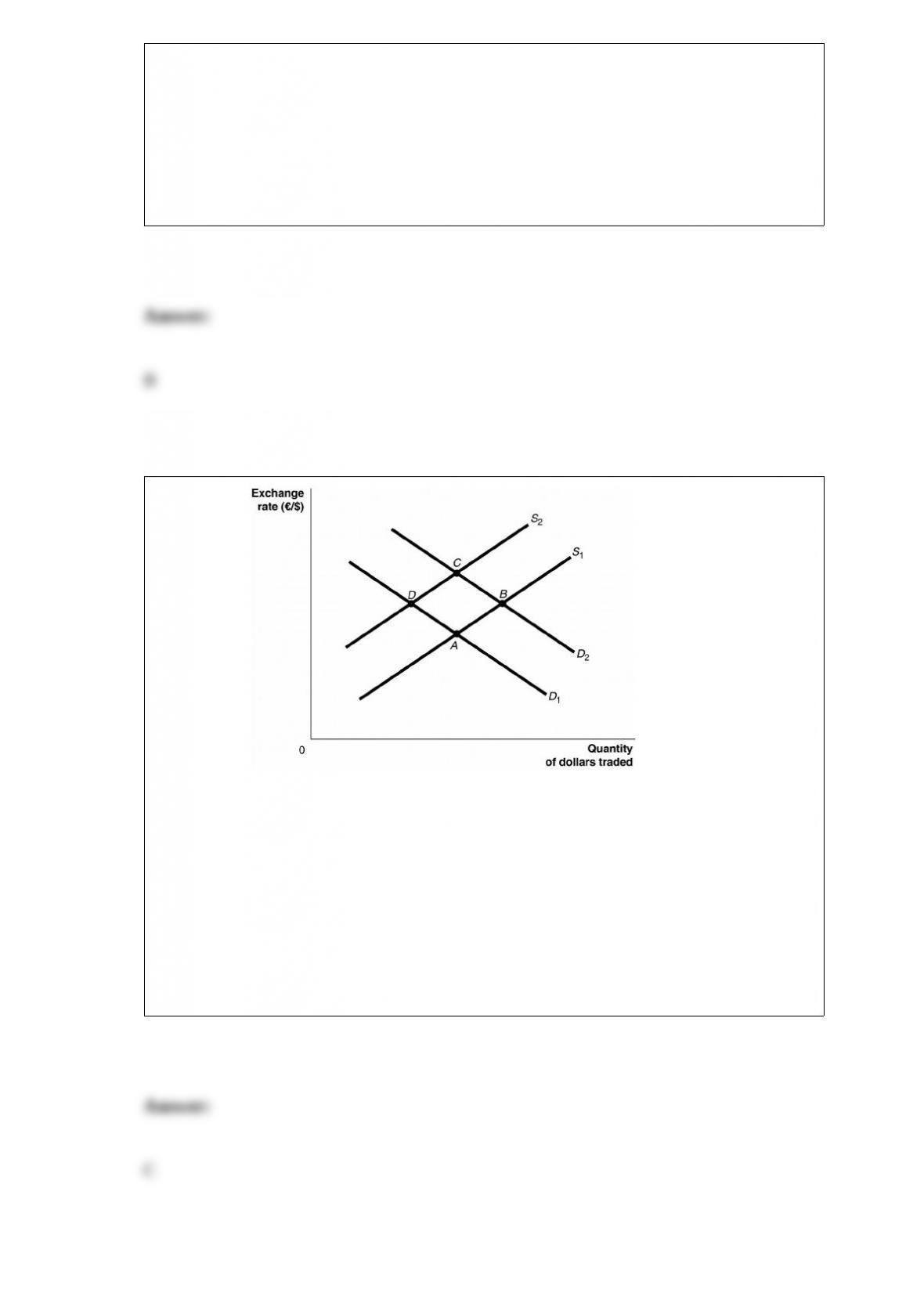
Figure 29-1
The depreciation of the euro is represented as a movement from
A) D to A.
B) C to D.
C) B to C.
D) B to A.

Which of the following would shift the supply curve for energy drinks to the left?
A) a decrease in the expected future price of energy drinks
B) an increase in consumer income (assuming that energy drinks are normal goods)
C) a decrease in the number of firms that produce energy drinks
D) a decrease in the price of an input used to produce energy drinks
Economists assume that rational people
A) never use all available information as they act to achieve their goals.
B) undertake activities that benefit others and hurt themselves.
C) only weigh the benefits and costs of the most desirable alternative actions.
D) respond to economic incentives.
Corruption
A) curtails economic growth.
B) raises the rate of growth as bribes enhance income.
C) is eliminated by foreign direct investment.
D) acts as a magnet for foreign direct investment.