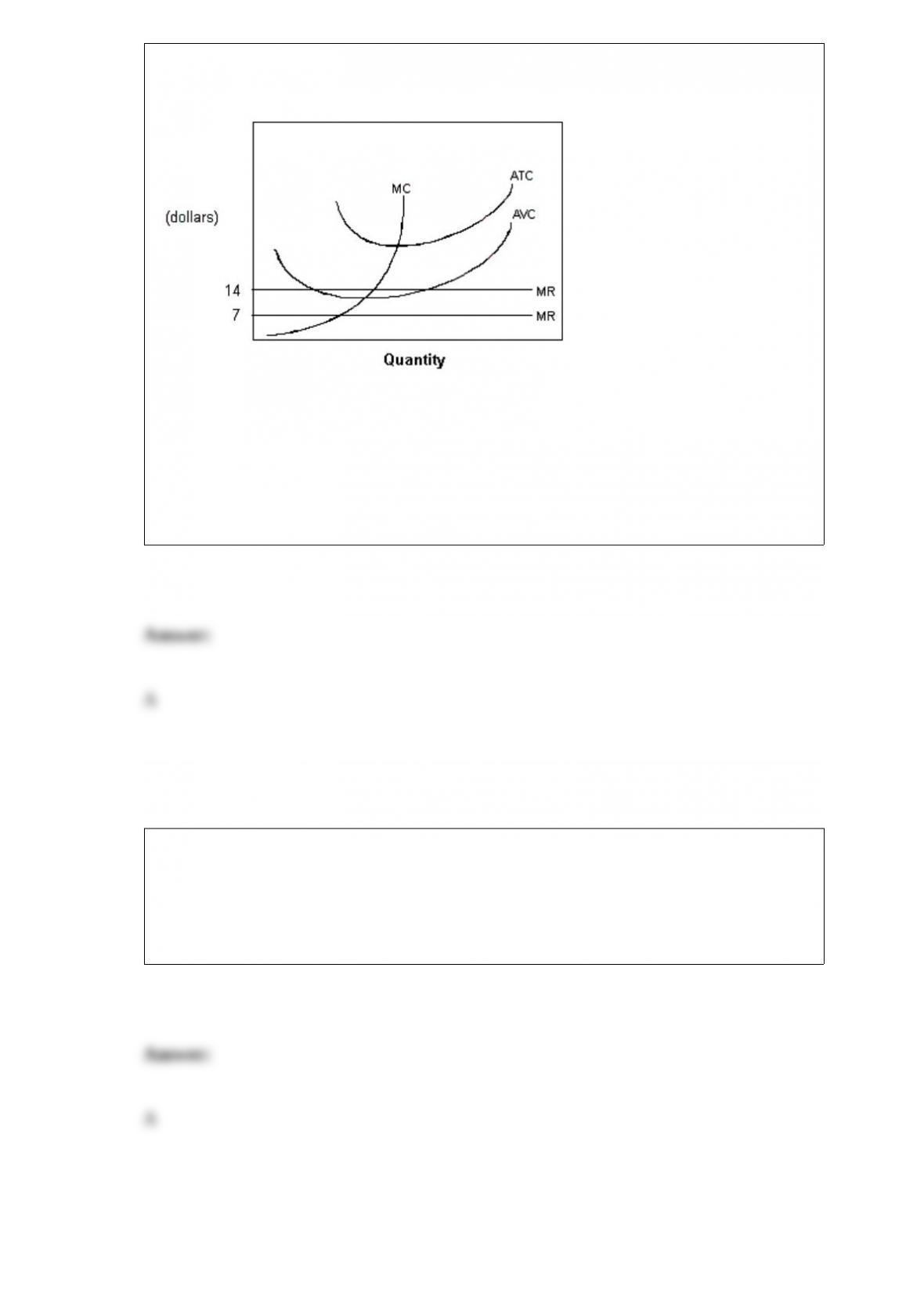
Exhibit 8-9 A firm’s cost and marginal revenue curves
In Exhibit 8-9, product price in this market is fixed at $7. This firm is currently
operating where MR = MC. What do you advise this firm to do?
a. This firm should shut down.
b. This firm could increase profits by increasing output.
c. This firm could increase profits by decreasing output.
d. This firm should continue to operate at its current output.
e. This firm should decrease price.
Constant returns to scale cause the long-run average cost curve to be:
a. horizontal.
b. vertical.
c. upward-sloping.
d. downward-sloping.

Tucker Corporation sells its product for $5.00. Tucker’s industrial engineers have
informed management that hiring one additional worker will increase output by five
units per hour. Tucker should hire the additional worker only if the wage rate is:
a. $5.00 or less per hour.
b. $1.00 or more per hour.
c. $5,000.
d. none of these.
Consider a regulated natural monopoly. If the regulatory commission wants to establish
a fair-return price, then it should set a price ceiling where the demand curve crosses the
monopoly’s long-run:
a. marginal revenue curve. c. marginal cost curve.
b. average revenue curve. d. average cost curve.
The long run is a planning period:
a. during which the firm can vary its plant size.
b. less than six months.
c. less than one year.
d. less than five years.

Deadweight loss is the net loss of:
a. consumer surplus. c. disequilibrium surplus.
b. producer surplus. d. both a and b.
Sam quits his job as an airline pilot and opens his own pilot training school. He was
earning $40,000 as a pilot. He withdraws $10,000 from his savings where he was
earning 6 percent interest and uses the money in his new business. He uses a building
he owns as a hanger and could rent it out for $5,000 per year. He rents a computer for
$1,200, buys office supplies for $500, rents an airplane for $6,000, pays $1,300 for fuel
and maintenance, and hires one worker for $30,000. Sam’s total revenue from pilot
training classes equaled $90,400. Sam’s implicit costs for this year are equal to:
a. $84,400.
b. $39,000.
c. $55,000.
d. $45,600.
e. $40,000.
Which agency was created by Congress in 1914 to investigate and regulate unfair
methods of competition?
a. Department of Justice. c. Interstate Commerce Commission.

b. Federal Trade Commission. d. General Accounting Office.
A monopoly:
a. can increase price and increase output at the same time.
b. can charge any price it wants and still sell all of its output.
c. can sell any output it produces provided it accepts the market price.
d. must lower price in order to increase output.
e. faces a perfectly elastic demand curve.
The three basic categories of resources are land, labor, and:
a. money. c. energy.
b. time. d. capital.
The primary benefits derived from tariffs usually accrue to the:
a. domestic consumers of goods protected by the tariffs.
b. foreign producers of goods protected by the tariffs.
c. domestic producers of export goods.
d. domestic suppliers of goods protected by the tariffs.
One of the main tools used by economists to measure the actual distribution of income
is the:
a. Lorenz curve.
b. Golden Rule.
c. MR = MC rule.
d. MRP = MRC rule.
Market failure can result from market outcomes that:
a. result in too few resources devoted to a good.
b. result in too many resources devoted to a good.
c. may justify government intervention.
d. all of these.
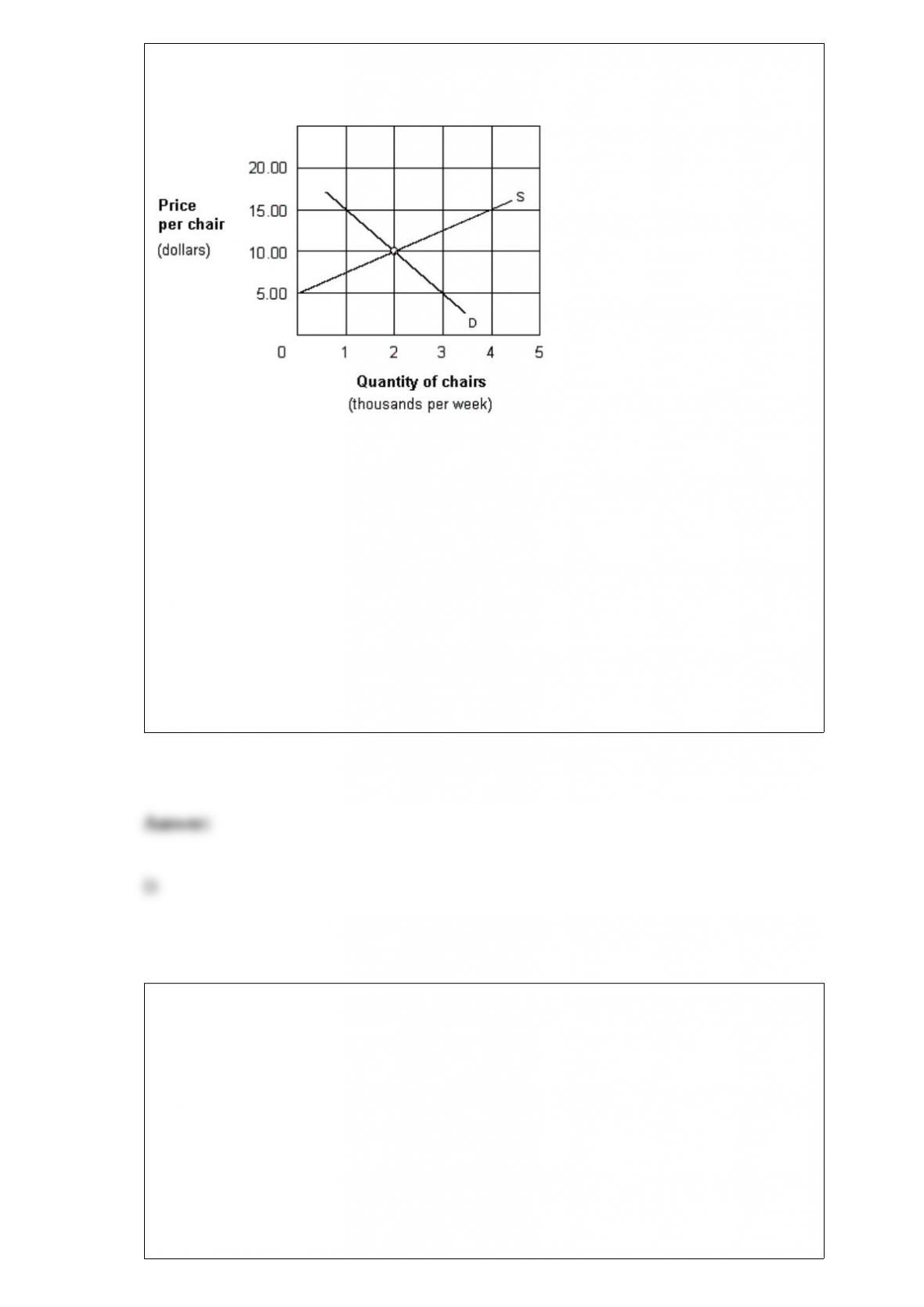
Exhibit 3-16 Supply and demand curves for chairs
In Exhibit 3-16, if the market price of chairs is initially $15, a movement toward
equilibrium would require:
a. no change, because an equilibrium already exists.
b. the price to fall below $15 and both the quantity supplied and the quantity demanded
to fall.
c. the price to remain the same, but the supply curve to shift to the left.
d. the price to fall below $15, the quantity supplied to fall, and the quantity demanded
to rise.
If the equilibrium price of bread is $2 and the government imposes a $1.50 price ceiling
on the price of bread, then:
a. more bread will be produced.
b. there will be a shortage of bread.
c. the demand for bread will decrease.
d. producers will charge $0.50 for bread.
e. $0.50 in tax revenue will be paid for each unit of bread.
Using supply and demand analysis, which of the following is true?
a. The burden of a tax on production cannot be determined on the basis of who actually
pays the tax.
b. The burden of a tax on production is always split evenly between consumers and
sellers.
c. Consumers bear the entire burden of a per unit tax on production.
d. Sellers bear the entire burden of a per unit tax on production.
Marginal utility is measured by:
a. a ray from the origin to a point on the total utility curve.
b. the change in total utility for a 1-unit change in the quantity consumed.
c. total utility divided by total quantity consumed.
d. the first utility minus the last utility.
e. average utility multiplied by the total quantity consumed.

If Microsoft merges with retail stores and computer makers, such that competition is
substantially reduced, it would be in violation of the:
a. Clayton Act.
b. Robinson-Patman Act.
c. Sherman Antitrust Act.
d. Federal Trade Commission Act.
e. Celler-Kefauver Act.
If Jane’s marginal benefit as a consumer in the jeans market is larger than the price of a
pair of jeans:
a. Jane will not purchase any more jeans.
b. Jane can benefit by purchasing more jeans.
c. the opportunity cost of a pair of jeans is lower than the price.
d. Jane will decrease her total utility by purchasing more jeans.
Which of the following is a necessary condition for price discrimination?
a. The seller must be able to divide the markets according to the different price
elasticities of demand.
b. It must be difficult for one buyer to resell to another buyer.
c. Both a and b.
d. Neither a nor b.
According to Adam Smith’s invisible hand doctrine:
a. self-interest best serves the interests of society.
b. laissez faire must be improved by government intervention.
c. producers should serve the best interests of society.
d. only laissez faire mercantilism best serves the interests of society.
The agency in charge of environmental law is the Environmental Protection Agency.
Pure economic profit must be at a maximum for a monopolist who has a level of output
in which total revenue is at a maximum.
Receipt of foreign aid permits less-developed countries to move to a point outside their
production possibilities curve.
The opportunity cost of producing a good or service is the good or service that is
foregone by choosing to produce another good with the same resources in a given
period of time.
What is a firm’s short run supply curve?
Competitive firms frequently use advertising to differentiate their product from their
competitors’ products.

Indifference curves that are farther from the origin are preferable to ones that are closer
to the origin.
A perfectly competitive firm will shut down in the short run when marginal revenue
equals marginal cost at a price less than minimum average variable cost.
Higher milk prices reduce the demand for milk.