
Table 2-13
Table 2-13 shows the output per day of two pet groomers, Tammi and Horace. They can
either devote their time to grooming dogs or bathing cats.
Which of the following statements istrue?
A) Horace has an absolute advantage in both tasks.
B) Tammi has an absolute advantage in both tasks.
C) Horace has an absolute advantage in dog grooming and Tammi in cat bathing.
D) Horace has an absolute advantage in cat bathing and Tammi in dog grooming.
Oligopolies exist and do not attract new rivals because
A) of competition.
B) of barriers to entry.
C) the firms keep profits and prices so low that no rivals are attracted.
D) there can be no product differentiation.
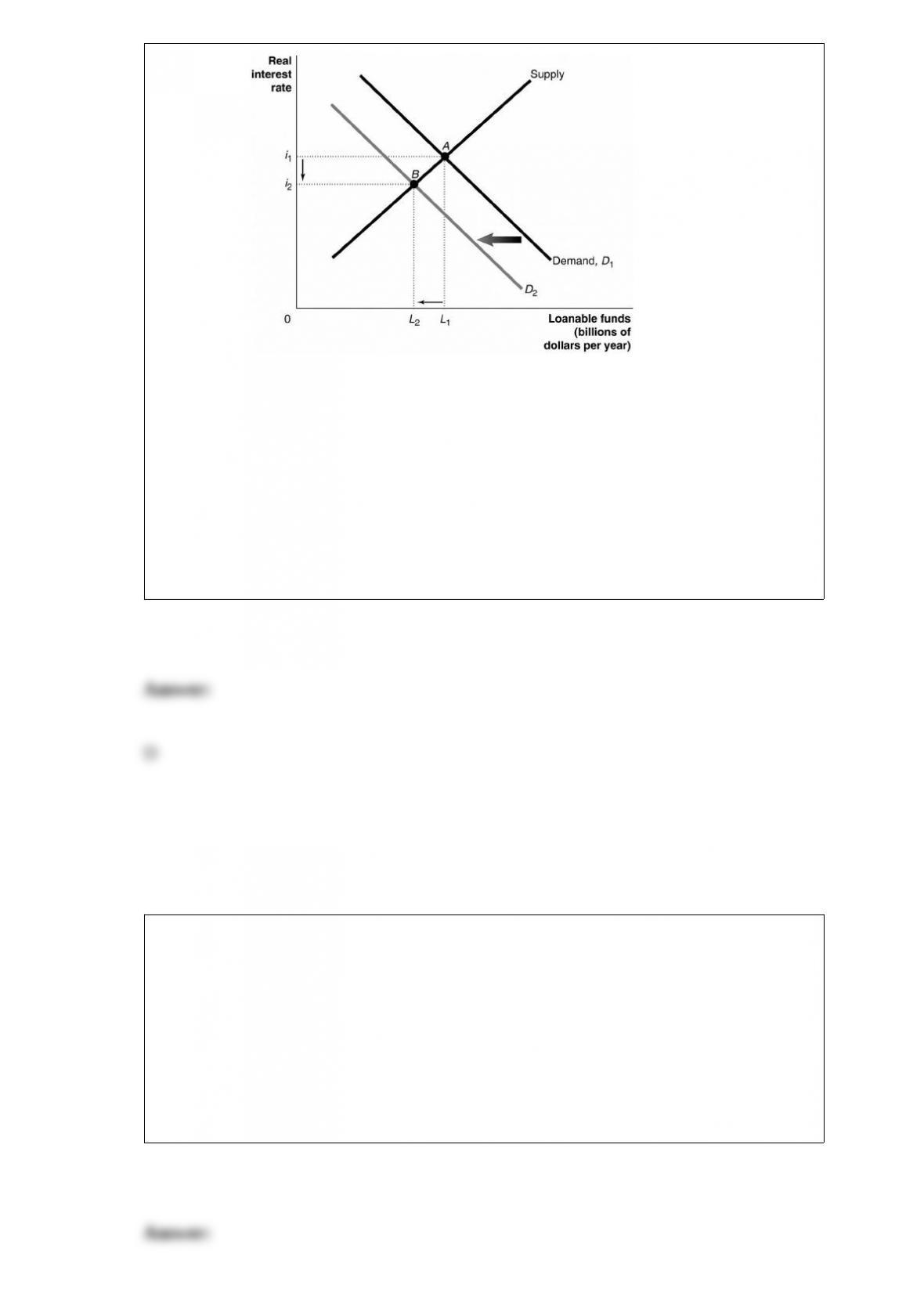
Figure 10-2
Which of the following is consistent with the graph depicted above?
A) An expected expansion increases the profitability of new investment.
B) The government runs a budget surplus.
C) There is a shift from an income tax to a consumption tax.
D) New government regulations decrease the profitability of new investment.
An example of a barrier to entry is
A) product differentiation.
B) high profits.
C) superior technological knowledge.
D) increasing marginal costs

Because Federal Reserve Notes (paper currency) are legal tender,
A) U.S. workers must accept them as payment for labor services.
B) U.S. creditors must accept them in payment of debts.
C) U.S. firms must accept them as payment for goods and services.
D) All of he above are correct.
If workers in nuclear power plants underestimate the true risk of their jobs,
A) employers will pay compensating differential to compensate employees fully for the
risk they have assumed.
B) safety legislation will not make workers better off.
C) the wages of these workers will not be high enough to compensate them fully for the
risk they have assumed.
D) the supply of workers in this occupation will exceed demand.
Empirical evidence from 1960 to 2010 shows that convergence in economic growth is
occurring in which of the following cases?

A) Low-income industrial countries are catching up to high-income industrial countries.
B) Low-income developing countries are catching up to high-income industrial
countries.
C) Low-income industrial countries are catching up to high-income developing
countries.
D) All low-income countries are catching up to all high-income countries.
Which of the following is an example of a compensating wage differential?
A) Nurse anesthetists are paid less than anesthesiologists (who have medical degrees).
B) Workers in a dynamite mine receive higher wages than if they worked in other jobs
that require the same level of skills.
C) In the market for lawyers, top graduates from the top programs earn starting salaries
that are significantly higher than the starting salaries earned by lower-ranked graduates
from the lower-ranked programs.
D) Popular movie stars like George Clooney command much higher salaries than other
talented but lesser-known actors.
Congress passed the Freedom to Farm Act in 1996. What was the purpose of this Act?
A) to encourage more people to become farmers
B) to grant free land to farmers in order to produce crops that were particularly scarce
C) to phase out the use of price ceilings in agricultural markets
D) to phase out price floors and return to a free market in agriculture
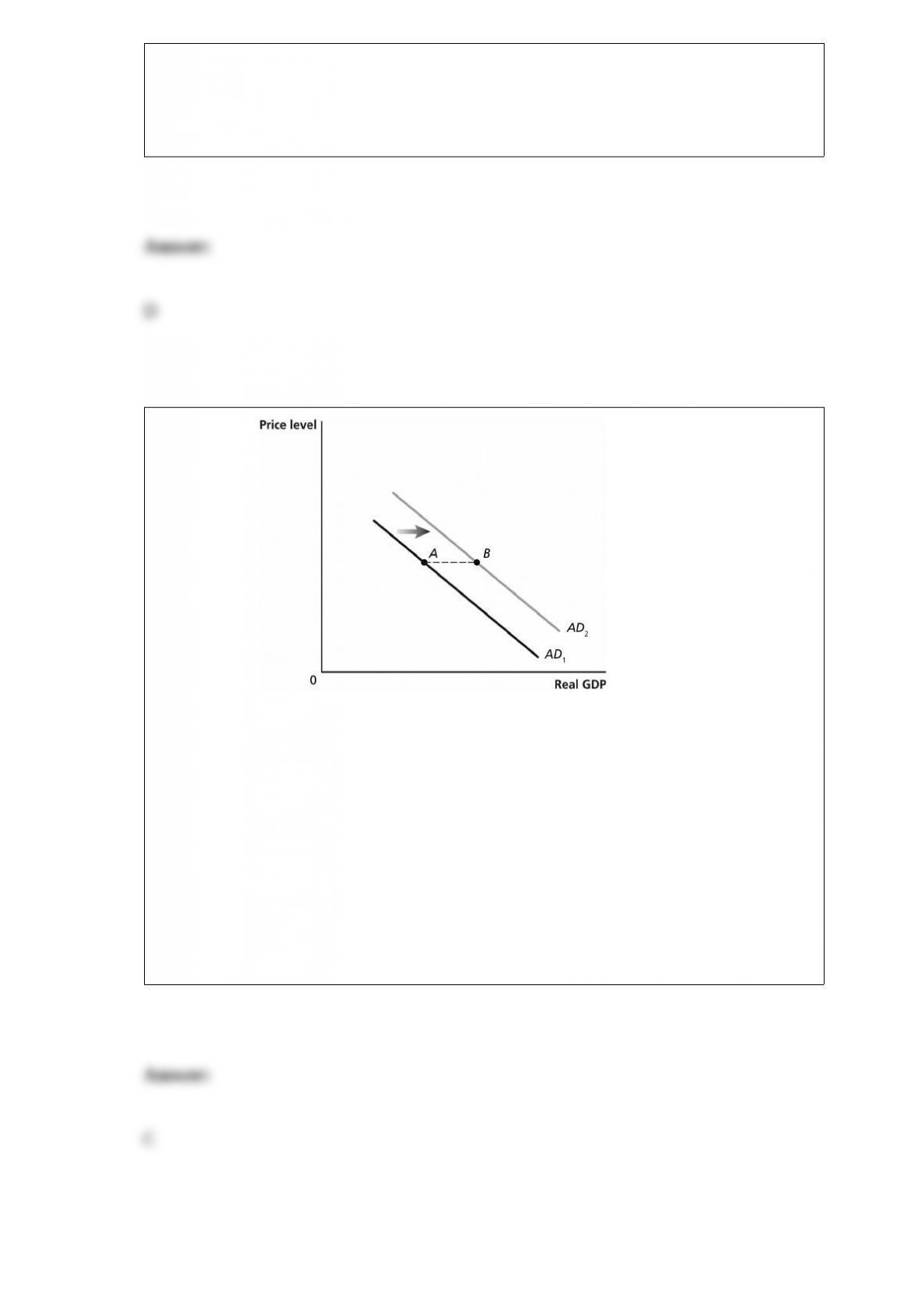
Figure 16-11
If government purchases increase by $100 billion and lead to an ultimate increase in
aggregate demand as shown in the graph below, the difference in real GDP between
point A and point B will be
A) $100 billion.
B) less than $100 billion.
C) more than $100 billion.
D) There is insufficient information given here to draw a conclusion.
Bill owns “Bill’s Home of Blues” a store that specializes in selling CDs and DVDs of
blues musicians of the 1960s and 1970s. Bill took out a loan from his bank to pay for
his store and its initial inventory. Bill pays the bank $900 per week for his loan. The
$900 bank payment
A) is a long-run implicit cost.
B) is a fixed cost.
C) is a short-run implicit cost.
D) is a variable cost.
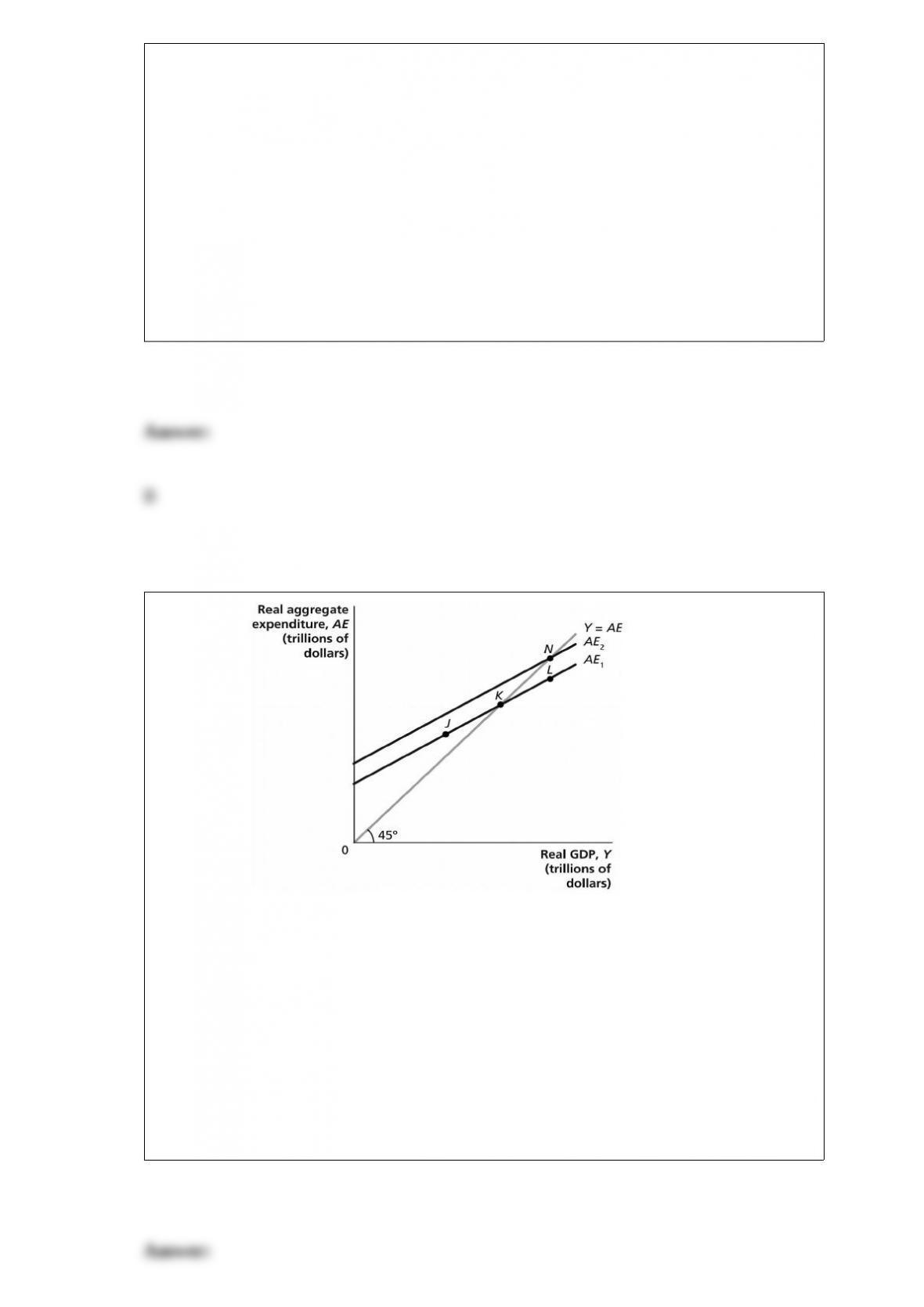
Figure 12-2
If the U.S. economy is currently at point N, which of the following could cause it to
move to point K?
A) Households expect future income to rise.
B) Household wealth falls.
C) The firm’s cash flow rises as profits rise.
D) Government expenditures increase.