
Which of the following is released by platelets in the vicinity of an injury?
A) PDGF
B) MPF
C) cyclin
D) Cdk
P680+ is said to be the strongest biological oxidizing agent. Given its function, why is
this necessary?
A) It is the receptor for the most excited electron in either photosystem of
photosynthesis.
B) It is the molecule that transfers electrons to plastoquinone (Pq) of the electron
transfer system.
C) It transfers its electrons to reduce NADP+ to NADPH.
D) It obtains electrons from the oxygen atom in a water molecule, so it must have a
stronger attraction for electrons than oxygen has.
The organism was found to have two lungs, but the left lung was much smaller than the
right lung. Kelly added that the herpetology instructor had said that in most snakes, the
same condition exists. If the size difference between the lungs in this organism is not a
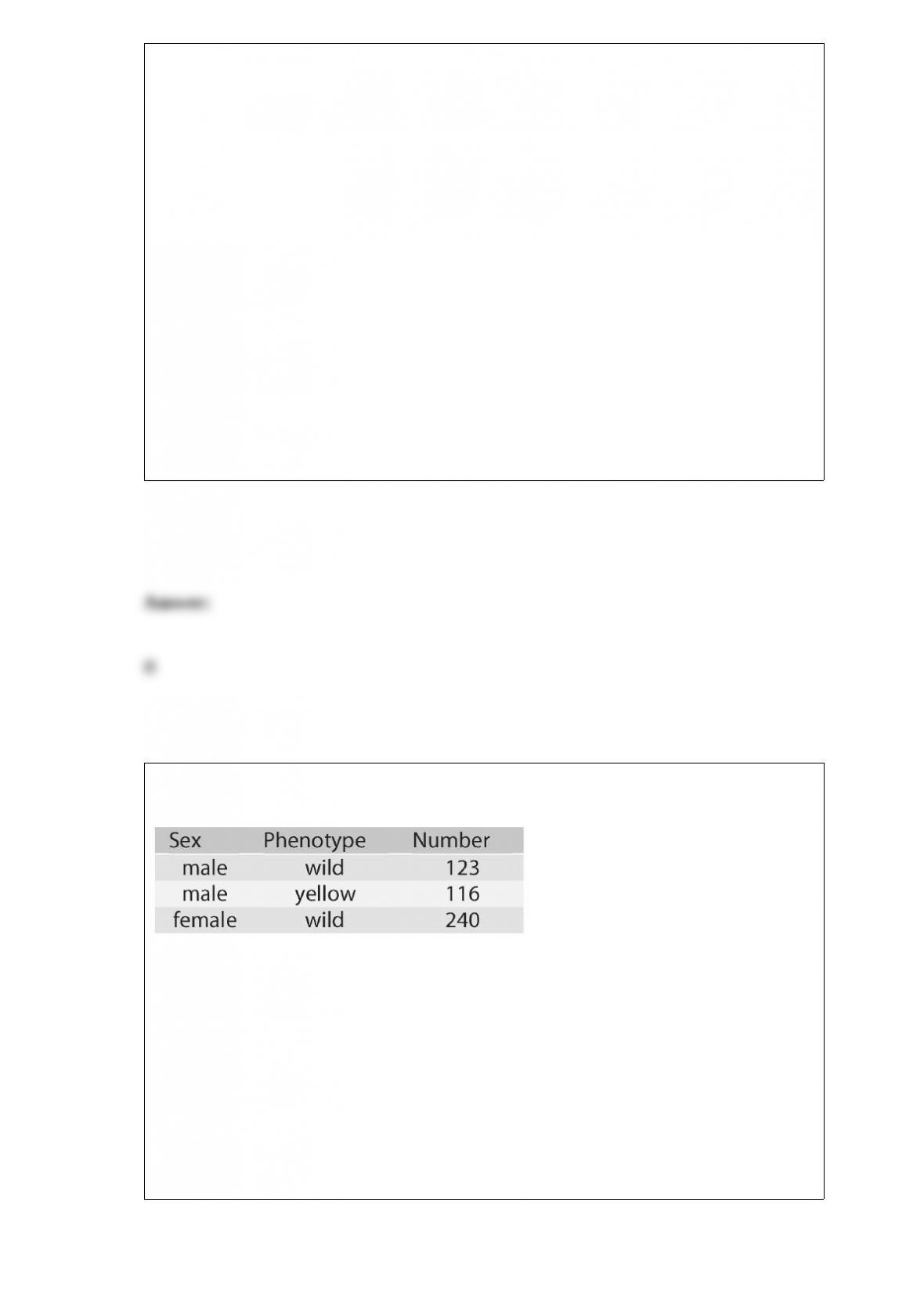
shared ancestral characteristic with its occurrence in snakes, then its existence in this
organism is explained as which of the following?
1. a result of convergent evolution
2. an example of homologous structures
3. a similar adaptation to a shared lifestyle or body plan
4. a result of having identical Hox genes
A) 1 only
B) 1 and 3
C) 2 and 3
D) 3 and 4
Sturtevant provided genetic evidence for the existence of four pairs of chromosomes in
Drosophila in which of these ways?
A) There are four major functional classes of genes in Drosophila.
B) Drosophila genes cluster into four distinct groups of linked genes.
C) The overall number of genes in Drosophila is a multiple of four.
D) Drosophila genes have, on average, four different alleles.

In a Hardy-Weinberg population with two alleles, A and a, that are in equilibrium, the
frequency of allele a is 0.1. What is the frequency of individuals with AA genotype?
A) 0.20
B) 0.32
C) 0.42
D) 0.81
If we were to apply the most recent technique used to fight potato late blight to the fight
against the malarial infection of humans, then we would _____.
A) increase the dosage of the least-expensive antimalarial drug administered to humans
B) introduce a predator of the malarial parasite into infected humans
C) use a “cocktail” of at least three different pesticides against Anopheles mosquitoes
D) insert genes from a Plasmodium-resistant strain of mosquito into Anopheles
mosquitoes

What is the difference between covalent bonds and ionic bonds?
A) Covalent bonds involve the sharing of pairs of electrons between atoms; ionic bonds
involve the sharing of single electrons between atoms.
B) Covalent bonds involve the sharing of electrons between atoms; ionic bonds involve
the electrical attraction between charged atoms.
C) Covalent bonds involve the sharing of electrons between atoms; ionic bonds involve
the sharing of protons between charged atoms.
D) Covalent bonds involve the transfer of electrons between charged atoms; ionic bonds
involve the sharing of electrons between atoms.
The feeding stage of cycliophorans _____.
1. is autotrophic
2. is sessile
3. captures food in a manner similar to that of animals with lophophores
4. shows radial symmetry
A) 1 and 2
B) 1 and 3
C) 2 and 4
D) 1, 2, and 3

Use the following information to answer the question(s) below.
Brown et al. and Morwood et al. reported in 2004 that they had found skeletal remains
of a previously unknown type of hominin, now dubbed Homo floresiensis, on the
Indonesian island of Flores. These hominins were small (approximately 1 meter tall)
with small braincases (approximately 380 cubic centimeters) as compared with other
hominins. The remains of H. floresiensis were found alongside handmade stone tools
and the remains of dwarf elephants that also inhabited the island, suggesting that H.
floresiensis was able both to make tools and to coordinate the hunting of animals much
larger than itself. H. floresiensis is estimated to have lived at the site where the remains
were found from at least 38,000 years ago to 18,000 years ago.
Refer to the paragraph on Brown et al. and Morwood et al. Which would be the most
feasible method of figuring out to which other hominin species H. floresiensis was most
closely related?
A) Compare the type of prey hunted by H. floresiensis to that hunted by each of the
other hominin species.
B) Compare the average body size of H. floresiensis to that of each of the other hominin
species.
C) Compare the skeletal morphology of H. floresiensis to that of each of the other
hominin species.
D) Compare the estimated life span of H. floresiensis to that of each of the other
hominin species.
Linnaeus believed that species remained fixed in the form in which they had been
created. Linnaeus would have been uncomfortable with _____.
A) a hierarchical classification scheme
B) taxonomy
C) phylogenies
D) nested, increasingly inclusive categories of organisms
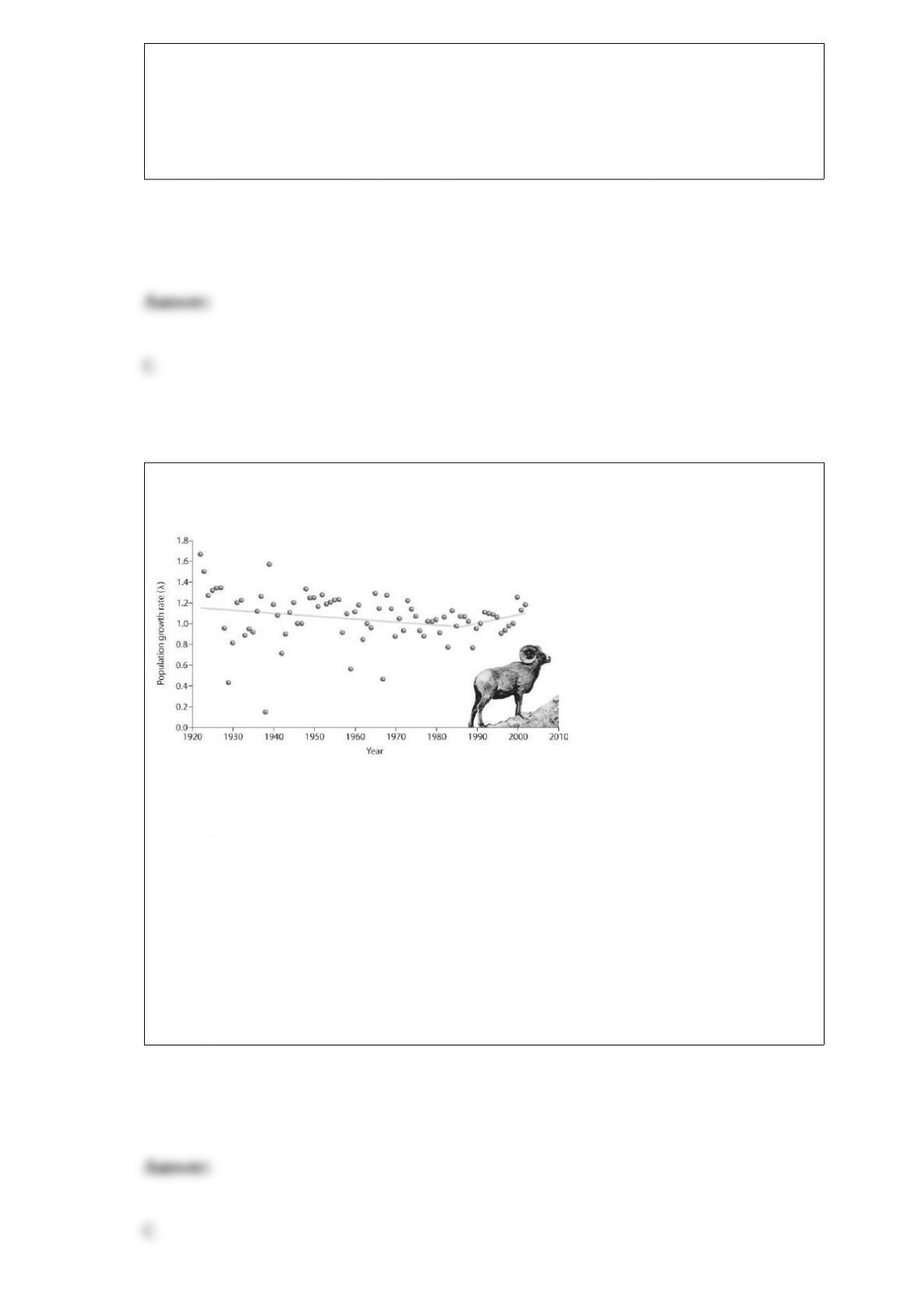
Five new individuals were added to this small population in 1986 and ten more were
added between 1990-1994. According to the figure above, what occurred in this
population after these additions?
A) The population increased exponentially.
B) The population increased in overall numbers.
C) The population growth rate increased.
D) The population continued to decline

If a fossil is encased in a stratum of sedimentary rock without any strata of volcanic
rock (for example, lava or ash) nearby, then it should be _____.
A) easy to determine the absolute age of the fossil, because the radioisotopes in the
sediments will not have been “reset” by the heat of the igneous rocks
B) easy to determine the absolute age of the fossil, because the igneous rocks will not
have physically obstructed the deposition of sediment of a single age next to the fossil
C) difficult to determine the absolute age of the fossil, because the “marker fossils”
common to igneous rock will be absent
D) difficult to determine the absolute age of the fossil, because radiometric dating of
sedimentary rock is less accurate than that of igneous rock
When nucleotides polymerize to form a nucleic acid _____.
A) a covalent bond forms between the sugar of one nucleotide and the phosphate of a
second
B) a hydrogen bond forms between the sugar of one nucleotide and the phosphate of a
second
C) covalent bonds form between the bases of two nucleotides
D) hydrogen bonds form between the bases of two nucleotides

Which of the following statements is FALSE? Saturated fats _____.
A) are more common in animals than in plants
B) have many double bonds in the carbon chains of their fatty acids
C) usually solidify at room temperature
D) contain more hydrogen than unsaturated fats that consist of the same number of
carbon atoms
Which of the following pairs are the best examples of homologous structures?
A) bones in the bat wing and bones in the human forelimb
B) owl wing and hornet wing
C) bat wing and bird wing
D) eyelessness in the Australian mole and eyelessness in the North American mole
In terms of food capture, which sponge cell is most similar to the cnidocyte of a
cnidarian?
A) amoebocyte
B) choanocyte

C) epidermal cell
D) pore cell
Salmon eggs hatch in freshwater. The fish then migrate to the ocean (a hypertonic
solution) and, after several years of feeding and growing, return to freshwater to breed.
How can these organisms make the transition from freshwater to ocean water and back
to freshwater?
A) The rectal gland functions in the ocean water, and chloride cells function in
freshwater.
B) Different gill cells are involved in osmoregulation in freshwater than in salt water.
C) Salmon in freshwater excrete dilute urine, and salmon in salt water secrete
concentrated urine.
D) Their metabolism changes in salt water to degrade electrolytes.
Which of the following might affect the foraging behavior of an animal in the context
of optimal foraging?
I) risk of predation
II) prey size

III) prey defenses
IV) prey density
A) only I and III
B) only II and IV
C) only I, II, and III
D) I, II, III, and IV
Catabolic pathways _____.
A) combine molecules into more energy-rich molecules
B) supply energy, primarily in the form of ATP, for the cell’s work
C) are endergonic
D) are spontaneous and do not need enzyme catalysis
Asexual reproduction results in greater reproductive success than does sexual
reproduction when _____.
A) pathogens are rapidly diversifying

B) there is some potential for rapid overpopulation
C) a species is expanding into diverse geographic settings
D) a species is in stable and favorable environments
Use the following information to answer the question(s) below.
For your internship at the local zoo, you have been assigned to help with the new
orangutan-breeding program. Little is known about orangutan reproductive hormones,
but hormone feedback cycles are often the same in closely related animals. You have
been asked to use your knowledge of the interactions of human reproductive hormones
to recommend injections to promote ovulation in a female orangutan when a visiting
male arrives for a brief breeding visit.
Refer to the paragraph on the orangutan breeding program. Which of the following
hormones would you use if you want to induce ovulation right away?
A) estradiol (estrogen)
B) progesterone
C) luteinizing hormone (LH)
D) human chorionic gonadotropin (hCG)
Why are mycorrhizal fungi superior to plants at acquiring mineral nutrition from the

soil?
A) Hyphae are one hundred to one thousand times larger than plant roots.
B) Hyphae have a smaller surface-area-to-volume ratio than do the hairs on a plant root.
C) Mycelia are able to grow in the direction of food.
D) Fungi secrete extracellular enzymes that can break down large molecules.
Which of the various species concepts distinguishes two species based on the degree of
genetic exchange between their gene pools?
A) phylogenetic
B) ecological
C) biological
D) morphological
The microsporidian Brachiola gambiae parasitizes the mosquito Anopheles gambiae.
Adult female mosquitoes must take blood meals for their eggs to develop, and it is
while they take blood that they transmit malarial parasites to humans. Male mosquitoes
drink flower nectar. If humans are to safely and effectively use Brachiola gambiae as a
biological control to reduce human deaths from malaria, then how many of the
following statements should be true?

1. Brachiola should kill the mosquitoes before the malarial parasite they carry reaches
maturity.
2. The microsporidian should not be harmful to other insects.
3. Microsporidians should infect mosquito larvae, rather than mosquito adults.
4. The subsequent decline in anopheline mosquitoes should not significantly disrupt
human food resources or other food webs.
5. Brachiola must be harmful to male mosquitoes, but not to female mosquitoes.
A) 2 and 5
B) 1, 2, and 4
C) 2, 3, 5
D) 3 and 4
If a patient has an injury in the brain stem, which of the following would be observed?
A) auditory hallucinations
B) visual hallucinations
C) an inability to regulate body temperature
D) an inability to regulate heart function

Researchers found E. coli that had mutation rates one hundred times higher than
normal. Which of the following is the most likely cause of these results?
A) The single-stranded binding proteins were malfunctioning.
B) There were one or more mismatches in the RNA primer.
C) The proofreading mechanism of DNA polymerase was not working properly.
D) The DNA polymerase was unable to add bases to the end of the growing nucleic
acid chain.
Which of the following is a difference between B cells and T cells?
A) One has a major role in antibody production, while the other has a major role in
cytotoxicity.
B) One binds a receptor called BCR (B-cell receptor), while the other recognizes a
receptor called TCR (T-cell receptor).
C) B cells are activated by free-floating antigens in the blood or lymph. T cells are
activated by membrane-bound antigens.
D) T cells are produced in the thymus and B cells are produced in the bone marrow.
Which of the following is generally true of aneuploidies in newborns?
A) A monosomy is more frequent than a trisomy.
B) Monosomy X is the only viable monosomy known to occur in humans.
C) Human aneuploidy usually conveys an adaptive advantage in humans.
D) An aneuploidy resulting in the deletion of a chromosome segment is less serious
than a duplication.
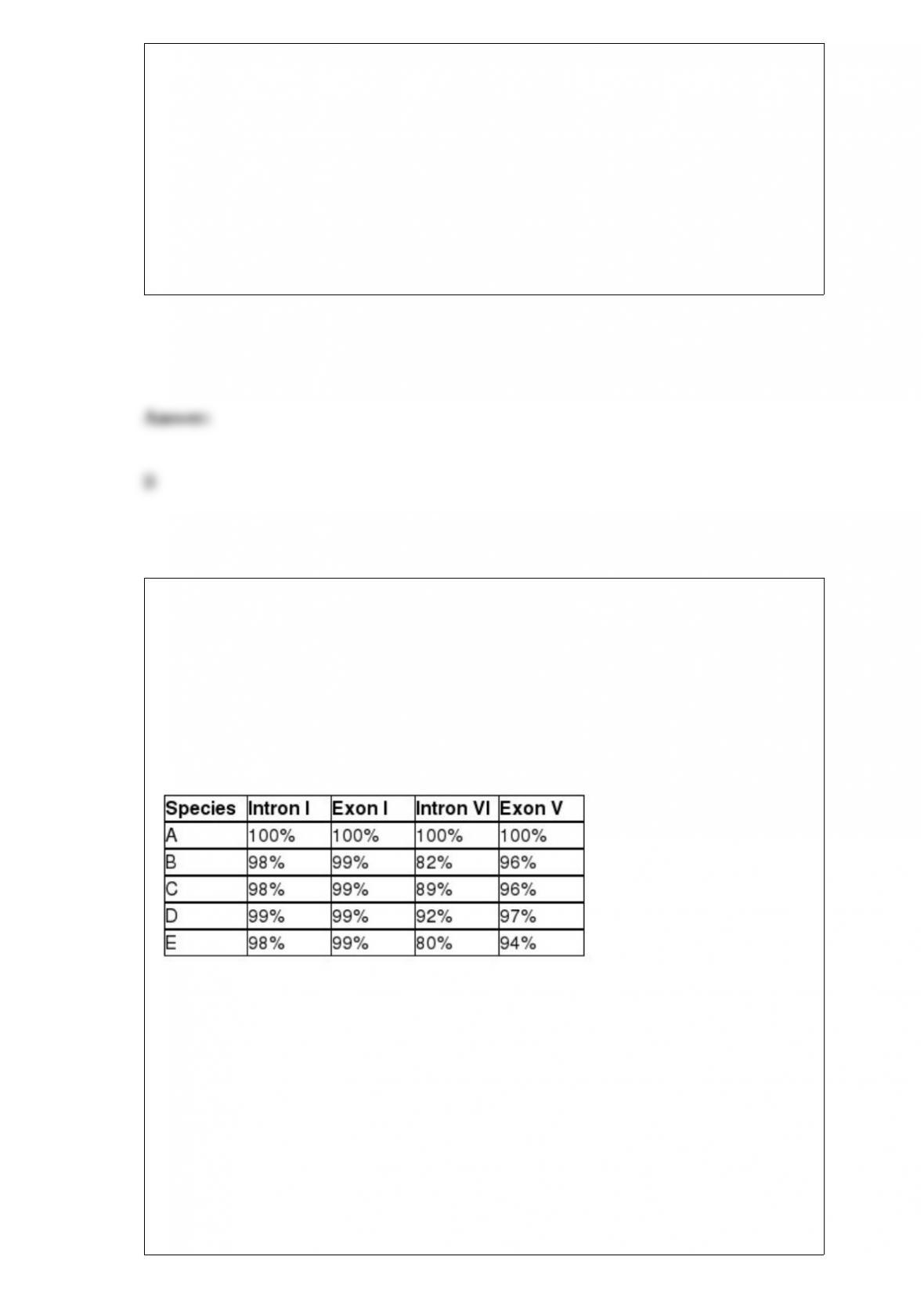
The questions below refer to the following table, which compares the % sequence
homology of four different parts (two introns and two exons) of a gene that is found in
five different eukaryotic species. Each part is numbered to indicate its distance from the
promoter (for example, Intron I is the one closest to the promoter). The data reported
for species A were obtained by comparing DNA from one member of species A to
another member of species A.
% Sequence Homology
Which of these four gene parts should allow the construction of the most accurate
phylogenetic tree, assuming that this is the only part of the gene that has acted as a
reliable molecular clock?
A) Intron I
B) Exon I
C) Intron VI
D) Exon V

Where does the Calvin cycle take place?
A) stroma of the chloroplast
B) thylakoid membrane
C) interior of the thylakoid (thylakoid space)
D) outer membrane of the chloroplast