
The electron transport chains of the light reactions
A) are located in the stroma.
B) shuttle electrons from photosystem II to photosystem I.
C) provide energy for the citric acid cycle.
D) are found on the plasma membrane of mesophyll cells.
You recently sprayed your apartment with insecticide to remove an infestation of
cockroaches. In your kitchen, you noticed some roaches lying on their backs twitching
furiously before they died. This aroused your curiosity, so you decided to investigate
exactly how the insecticide works on the nervous system.
In your research, you discover that the insecticide you used contains a permanent
acetylcholinesterase inhibitor. Acetylcholine is a neurotransmitter that stimulates
skeletal muscle to contract. Acetylcholinesterase removes acetylcholine from the
synapse after the signal is received. Exposure to high pesticide concentrations has a
similar effect on humans, which can also be caused by exposure to the nerve gas Sarin
and other chemical agents.
Since pesticides affect humans in a manner similar to that of roaches, it would be valid
to conclude that
A) acetylcholinesterase affects the DNA of all animals.
B) the mechanism of stimulating skeletal muscle contraction must be similar in humans
and roaches.
C) pesticides are more harmful to roaches than humans.
D) the terminal end of the axon releases acetylcholine in roaches, but not in humans.

The first organisms on Earth were very small, but now when you look around you see
many large organisms. Which of the following is the best explanation for this
observation?
A) Evolution tends toward larger and larger organisms.
B) There were many steps necessary to go from small cells to large organisms.
C) Organisms got larger because they needed to be larger in order to use resources more
efficiently.
D) The goal of evolution is to produce the largest organisms possible.
Why does a DNA strand grow only in the 5′ to 3′ direction?
A) because DNA polymerases can only add nucleotides to the 3′ end of the growing
molecule
B) because DNA polymerases can only add nucleotides to the 5′ end of the growing
molecule
C) because the DNA molecule only unwinds in the 5′ to 3′ direction
D) because DNA polymerase requires the addition of a starter nucleotide at the 5′ end
Which of the following statements regarding mitosis and meiosis is false?
A) Mitosis provides for growth and tissue repair.
B) Meiosis provides for asexual reproduction.
C) In mitosis, the chromosomes replicate only once in the preceding interphase.
D) All the events unique to meiosis occur during meiosis I.
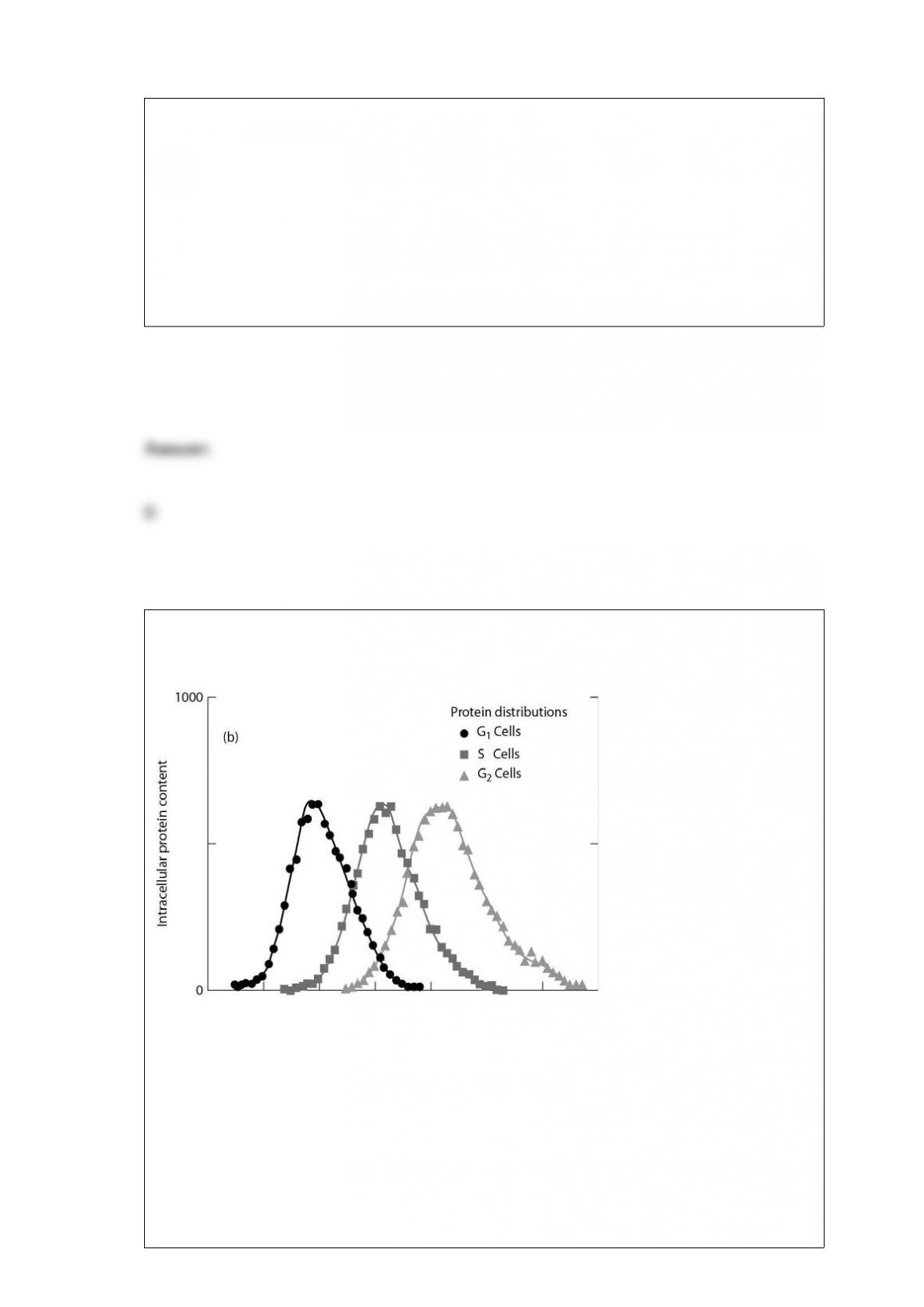
Much of the intracellular structure of a eukaryote cell is involved in protein synthesis.
The figure shows the amounts of protein in cells at different parts of the cell cycle
between two cell divisions. G1 is a stage just after the cell has divided, and G2 is the
stage just before the cell divides again. S is a stage when the cell is synthesizing
material such as DNA, mitochondria, and other organelles.
The technique used to produce the data displayed might be useful for a cancer biologist
who wishes to

A) determine whether a drug can prevent cell division.
B) determine the effect of a drug on microtubule assembly.
C) determine the effect of drugs on protein synthesis at various times in the cell cycle.
D) determine the effect of a drug on mitochondrial function.
Which of the following particles are found in the nucleus of an atom?
A) protons and neutrons
B) protons and electrons
C) only protons
D) only electrons
Arsenic is a poison that binds to a molecule needed to build acetyl CoA. Based on this
information, which part of cellular respiration would be stopped if arsenic were
ingested?
A) glycolysis
B) citric acid cycle
C) electron transport chain

D) ATP synthase
Which of the following statements about microarrays is false?
A) Microarrays enable scientists to determine the activity of thousands of genes at once.
B) Microarrays use tiny portions of double-stranded RNA fragments from a large
number of genes.
C) Microarrays are used to determine which genes are active in different tissues or in
tissues of different states of health.
D) Microarrays use fluorescently labeled cDNA molecules to identify particular genes
expressed at a particular time.
Cyanobacteria
A) are photosynthetic archaea.
B) are eukaryotes and are the earliest type of algae.
C) are chemoautotrophs.
D) are the only prokaryotes with plantlike oxygen-generating photosynthesis.
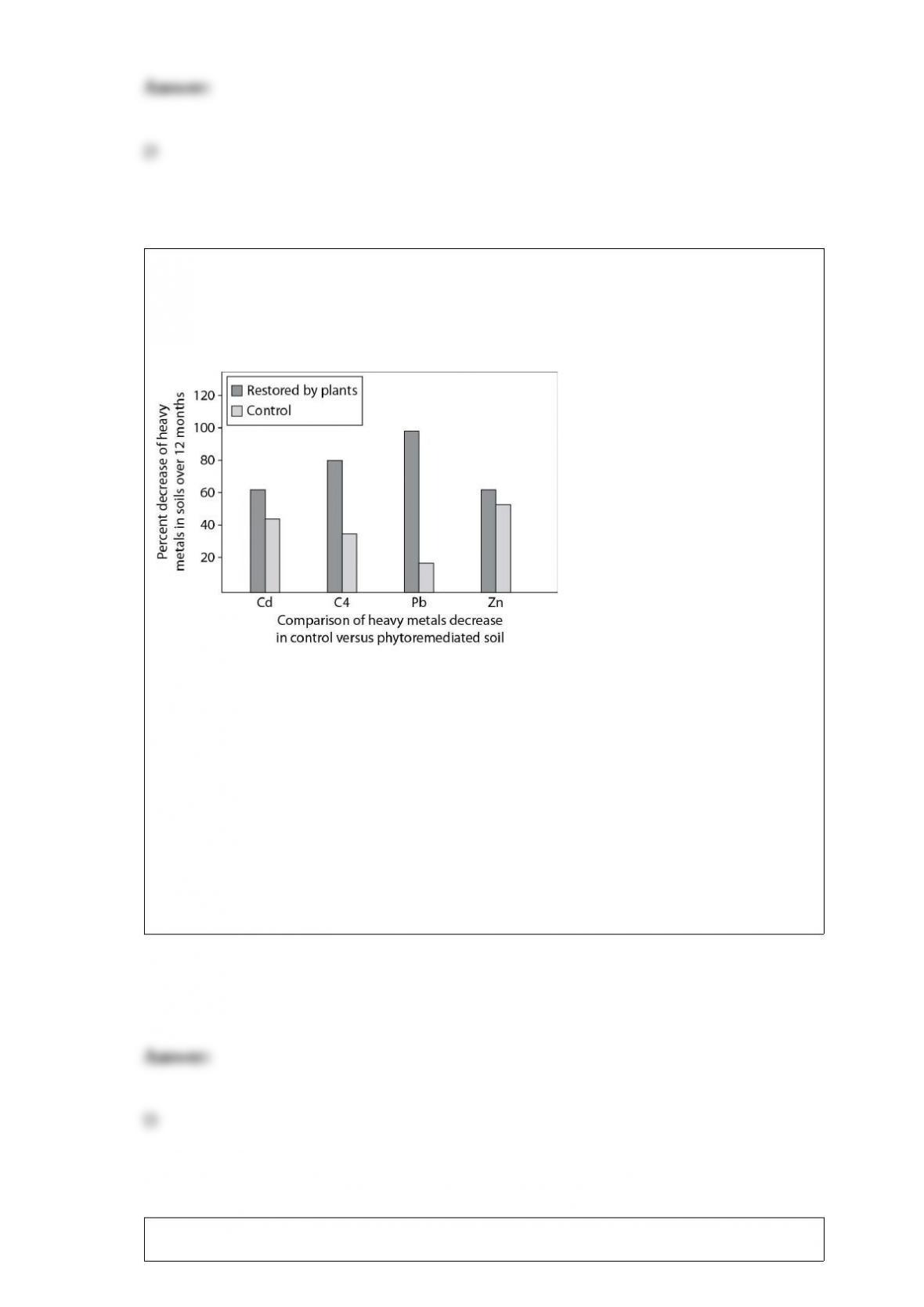
Plants are sometimes used for phytoremediation in areas where the soil has been
contaminated with heavy metals. Suppose the Acme Remediation Company is
proposing to remediate a contaminated area that you wish to restore. Acme presents you
with the following data as evidence of their company’s ability to remediate soil.
The CEO of Acme Remediation Company is always trying to improve the company’s
effectiveness by keeping up with current research. Which of the following research
topics should have the highest priority for that research?
A) comparison of plant species’ tolerance of clay versus sandy soils
B) comparison of plant species’ ability to live in dry versus moist soils
C) comparison of plant species’ tolerance of heavy metals in soils
D) comparison of plant species’ bioaccumulation of metal ions
The stroma is the

A) thick fluid enclosed by the inner chloroplast membrane.
B) watery fluid enclosed by the inner membrane of a mitochondrion.
C) space between the inner and outer membranes of a chloroplast.
D) space between the inner and outer membranes of a mitochondrion.
A single base mutation occurs in a gene that codes for a protein due to an error in DNA
replication. Which of the following outcomes would possibly not occur?
A) The mutation results in improved, the same, or diminished protein function.
B) The mutation results in a longer or shorter protein or a protein of the same length.
C) The mutation results in a human disease such as sickle-cell disease.
D) The mutation results in mRNA being made from the protein.
Using the genetic code below, what protein sequence does the RNA sequence
CUAGCUCGAUAUCUC code for?
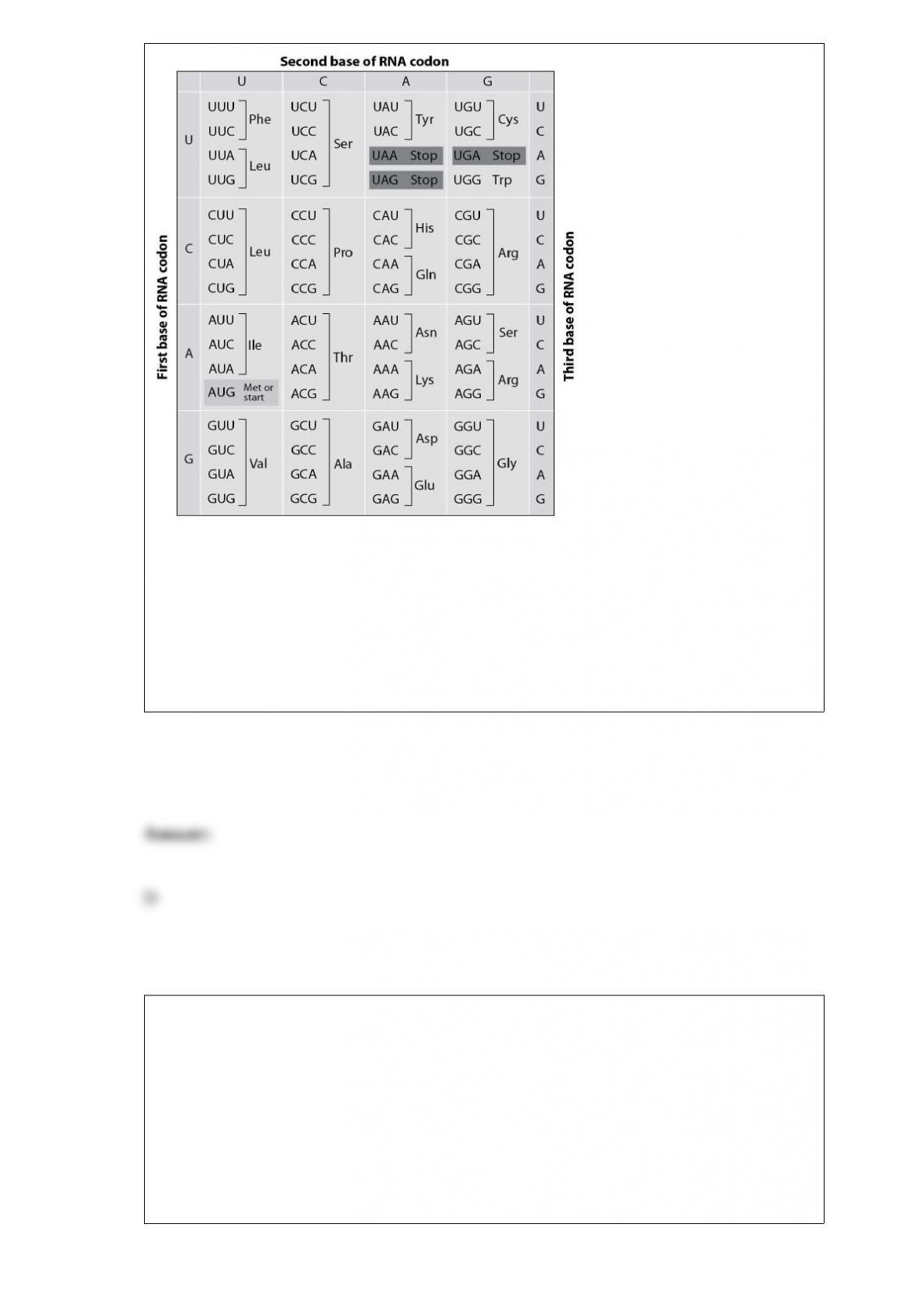
A) Asp – Ala – Arg – Ile- Leu
B) Val – Arg – Ala – Phe – Stop
C) Leu – Gly – Tyr – Ala Leu
D) Leu – Ala – Arg – Tyr – Leu
Both mitosis and meiosis are preceded by
A) prometaphase.
B) interphase.
C) prophase.
D) telophase.
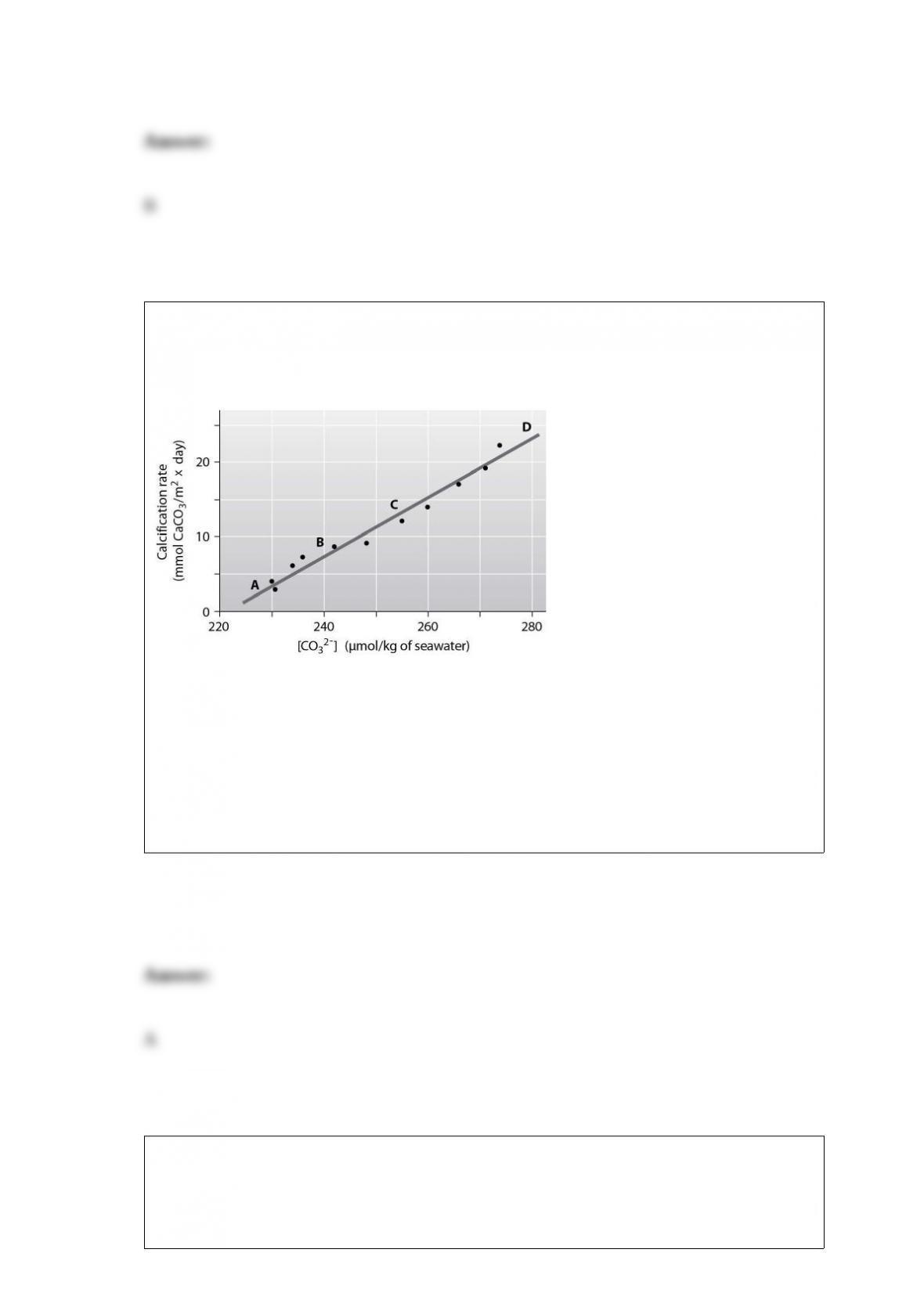
Below is a figure from an experiment that was performed to measure the effect of
carbonate ion (CO3
2-) concentration on the calcification (growth) rate of coral reefs. At
which point on the graph is the ocean pH the lowest?
A) A
B) B
C) C
D) D
Adaptation to terrestrial life involved major evolutionary changes. The change from gill
breathing to lung breathing was accompanied by important changes in the
A) reproductive system.

B) cardiovascular system.
C) manufacture of blood cells.
D) association of blood and interstitial fluid.
Which of the following animals has an endoskeleton made entirely of cartilage?
A) bullfrog
B) mackerel
C) nurse shark
D) robin
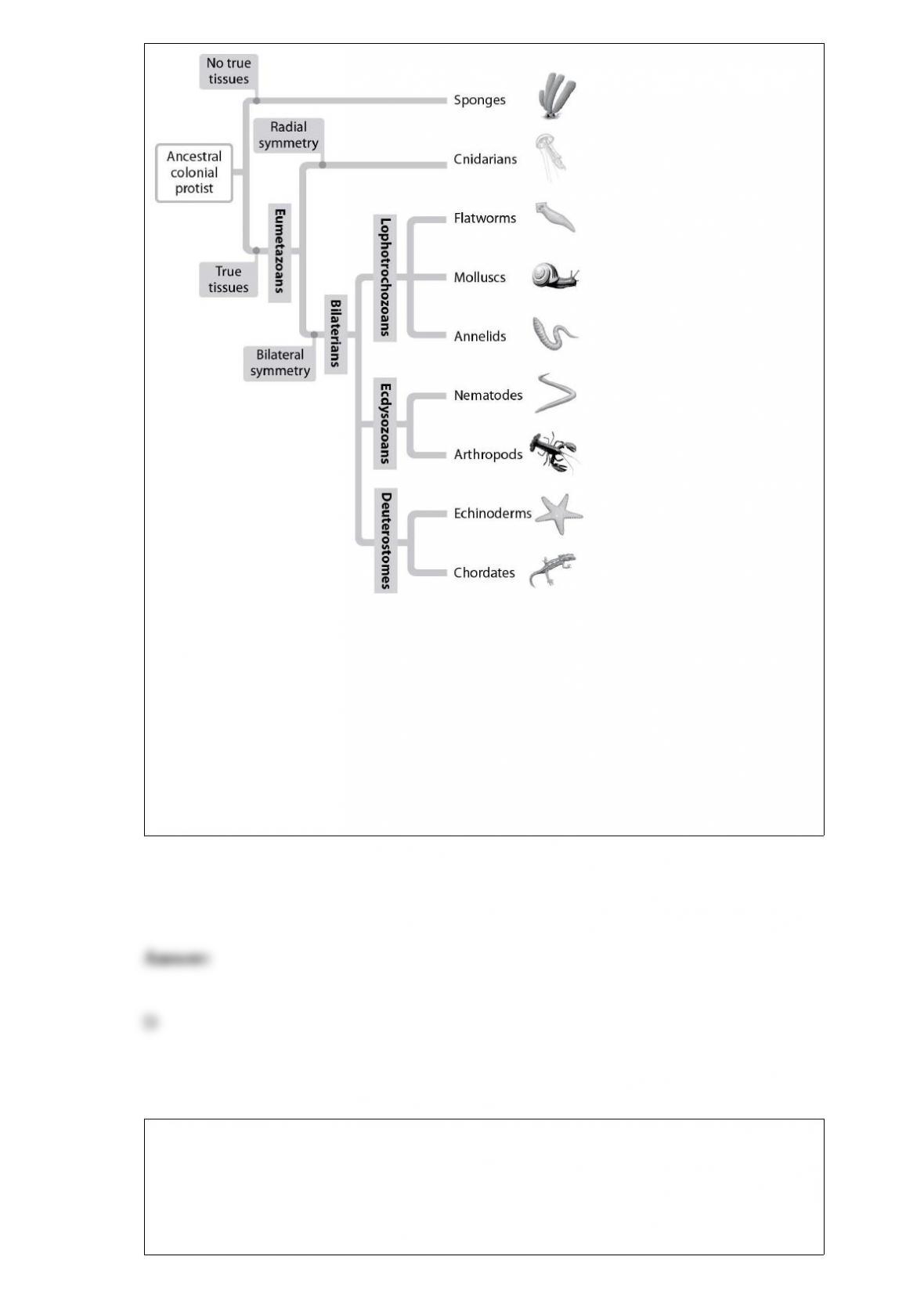
Which phyla of animals are most closely related?
A) Chordates and Nematodes
B) Flatworms and Molluscs
C) Sponges and Chordates
D) Arthropods and Annelids
Oxidation is the ________, and reduction is the ________.
A) gain of electrons; loss of electrons
B) loss of electrons; gain of electrons

C) gain of oxygen; loss of oxygen
D) gain of protons; loss of protons
When the concentration of glucose in the blood rises following digestion of a meal,
what is the hormonal response?
A) Levels of both glucagon and insulin increase.
B) More glucagon is released.
C) More insulin is released.
D) Neither glucagon nor insulin is released.
After reading the paragraph below, answer the questions that follow.
While DNA microarrays can be used to determine whether or not a gene is expressed in
a cell, quantitative polymerase chain reaction (qPCR) can be used to measure the extent
of gene expression in cells and tissues. To perform qPCR, mRNA is extracted from cells
and reverse transcribed to complementary DNA (cDNA). Using fluorescent DNA
molecules that recognize specific gene sequences and DNA polymerase, copies of the
gene sequence of interest are made. After the copies are made, a fluorescent detector
measures the intensity of the fluorescent signal, which is proportional to the number of
mRNA transcripts in the cell and corresponds to the level of gene expression in the cell.
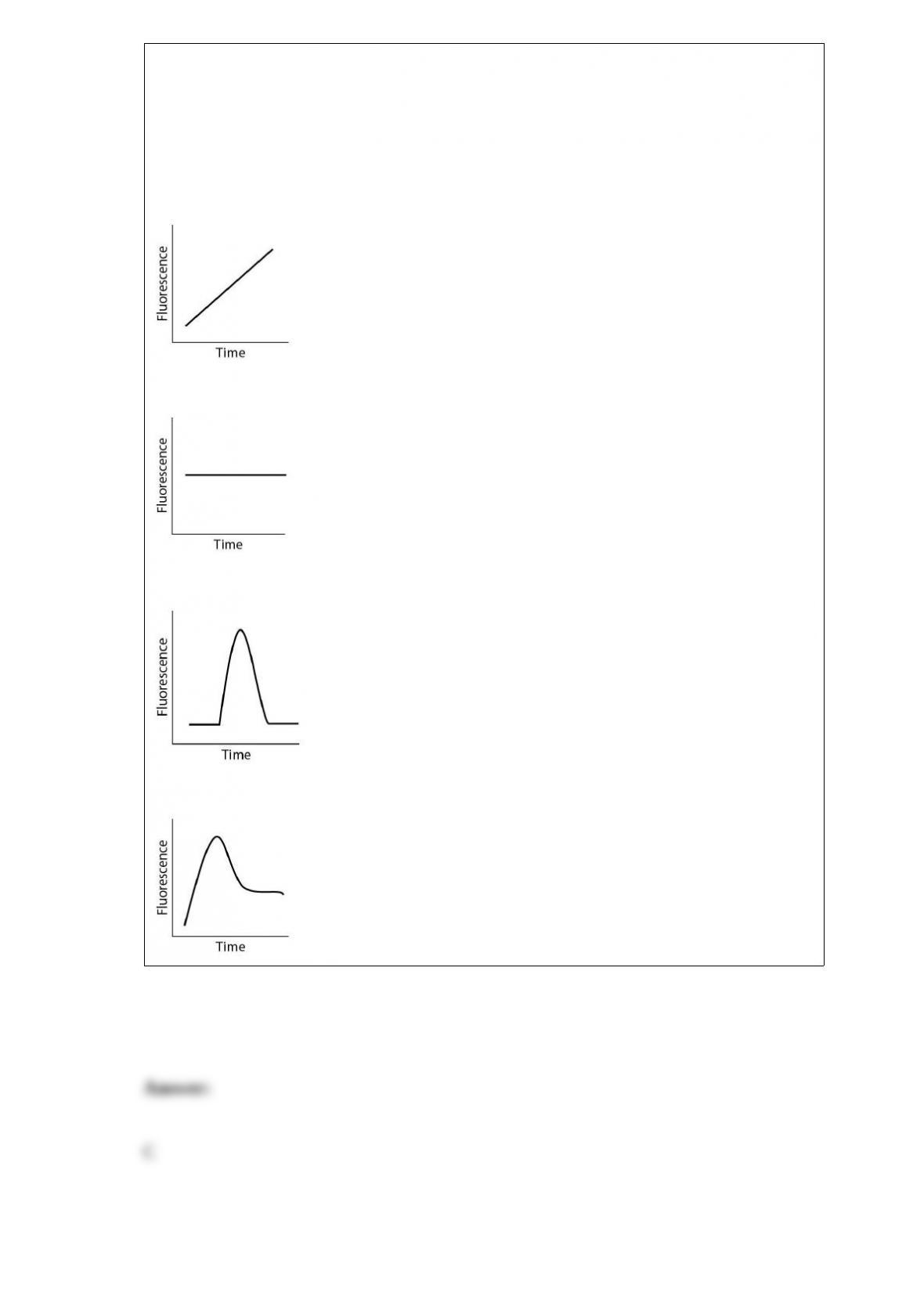
A pancreatic cell normally produces low levels of the protein insulin, but after a meal it
produces large levels of insulin before returning to its initial state. Which of the
following figures would represent qPCR data obtained from a pancreatic cell that went
through this cycle?
A)
B)
C)
D)

Which of the following statements regarding proteomics is true?
A) Proteomics is the study of protein interaction within a cell.
B) Proteomics involves the complete analysis of the prokaryotes.
C) Proteomics is the systematic study of the full set of proteins encoded by a genome.
D) Proteomics and genomics allow scientists to study life in an ever-increasing
reductive approach.
Androgens stimulate
A) the female reproductive system.
B) growth of breasts in mammals.
C) growth of facial hair in humans.
D) ovulation.
To enhance heat loss, humans sweat; this is an adaptation known as
A) insulation.
B) evaporative cooling.

C) irradiation.
D) conduction.
Which of the following occurs in the sexual reproduction phase of the fungus life
cycle?
A) Hyphae of two different mating types fuse.
B) Diploid nuclei form, undergo meiosis, and produce haploid spores.
C) Heterokaryotic cells separate to re-create the original haploid hyphae.
D) Spores germinate and form a haploid mycelium.
Which of the following enzymes catalyzes the production of a strand of RNA from
DNA?
A) RNA polymerase
B) RNA ligase
C) a ribozyme
D) tRNA

An advantage of human testes being positioned in an external sac rather than in the
abdominal cavity is that
A) the distance that that semen must travel during ejaculation is shortened.
B) the distance that sperm must swim during insemination is shortened.
C) the testes can be kept cooler than the body’s interior.
D) the testes can enlarge during sexual maturation.
Which of the following statements about Parkinson’s disease is true?
A) Parkinson’s disease can be cured with injections of serotonin.
B) Parkinson’s disease results from the death of neurons in the cerebellum.
C) Parkinson’s disease is a motor disorder, affecting physical movements of the body.
D) Parkinson’s disease is age-related, decreasing in frequency as people age.

Which of the following statements about fish gills is true?
A) They have a large surface area.
B) Because of their efficiency, they only need a small surface area.
C) They have a poor blood supply.
D) Like lungs, they have an exhale/inhale function.
One neurotransmitter associated with sleep, mood, attention, and learning is
A) acetylcholine.
B) nitric oxide.
C) epinephrine.
D) serotonin.