
Which factor most likely caused animals and plants in India to differ greatly from
species in nearby southeast Asia?
A) The climates of the two regions are similar.
B) India is in the process of separating from the rest of Asia.
C) Life in India was wiped out by ancient volcanic eruptions.
D) India was a separate continent until forty-five million years ago.
A simple nervous system _____.
A) must include chemical senses, mechanoreception, and vision
B) includes a minimum of twelve effector neurons
C) has information flow in only one direction: away from an integrating center
D) includes sensory information, an integrating center, and effectors
Most scientists agree that global warming is underway; thus, it is important to know
how plants respond to heat stress. Which of the following would be a useful line of
inquiry to try and improve plant response and survival to heat stress?
A) the production of heat-stable carbohydrates

B) increased production of heat-shock proteins
C) the opening of stomata to increase evaporational heat loss
D) protoplast fusion experiments with xerophytic plants
Caffeine is an inhibitor of phosphodiesterase. Therefore, the cells of a person who has
recently consumed coffee would have increased levels of _____.
A) phosphorylated proteins
B) cAMP
C) adenylyl cyclase
D) activated G proteins
Nitrogenase, the enzyme that catalyzes nitrogen fixation, is inhibited whenever free
oxygen (O2) reaches a critical concentration. Consequently, nitrogen fixation cannot
occur in cells wherein photosynthesis produces free O2. Consider the colonial aquatic
cyanobacterium, Anabaena, whose heterocytes are described as having “a thickened
cell wall that restricts entry of O2 produced by neighboring cells. Intracellular
connections allow heterocysts to transport fixed nitrogen to neighboring cells in
exchange for carbohydrates.”
Think about this description of the colonial aquatic cyanobacterium, Anabaena. What

two questions below are important for understanding how nitrogen (N2) enters
heterocysts, and how oxygen (O2) is kept out of heterocysts?
1. If carbohydrates can enter the heterocysts from neighboring cells via the
“intracellular connections,” how is it that O2 doesn’t also enter via this route?
2. If the cell walls of Anabaena photosynthetic cells are permeable to O2 and carbon
dioxide (CO2), are they also permeable to N2?
3. If the nuclei of the photosynthetic cells contain the genes that code for nitrogen
fixation, how can these cells fail to perform nitrogen fixation?
4. If the nuclei of the heterocysts contain the genes that code for photosynthesis, how
can these cells fail to perform photosynthesis?
5. If the cell walls of Anabaena heterocysts are permeable to N2, how is it that N2
doesn’t diffuse out of the heterocysts before it can be fixed?
6. If the thick cell walls of Anabaena heterocysts exclude entry of oxygen gas, how is it
that they don’t also exclude the entry of nitrogen gas?
A) 1 and 3
B) 1 and 6
C) 2 and 5
D) 4 and 6
In the mid-1900s, the Soviet geneticist Lysenko believed that his winter wheat plants,
exposed to increasingly colder temperatures, would eventually give rise to more
cold-tolerant winter wheat. Lysenko’s attempts in this regard were most in agreement
with the ideas of _____.
A) Cuvier
B) Lamarck

C) Darwin
D) Lyell
Portal blood vessels connect two capillary beds found in the _____.
A) hypothalamus and thalamus
B) anterior pituitary and posterior pituitary
C) hypothalamus and anterior pituitary
D) posterior pituitary and thyroid gland
The blind spot in the human retina is the location that has the collected axons of _____.
A) ganglion cells
B) bipolar cells
C) primary visual cortex
D) lateral geniculate nuclei
Which of the following lines of evidence would best support your assertion that a
particular plant is an angiosperm?
A) It produces seeds.
B) It retains its fertilized egg within its archaegonium.
C) It lacks gametangia.
D) It undergoes alternation of generations.
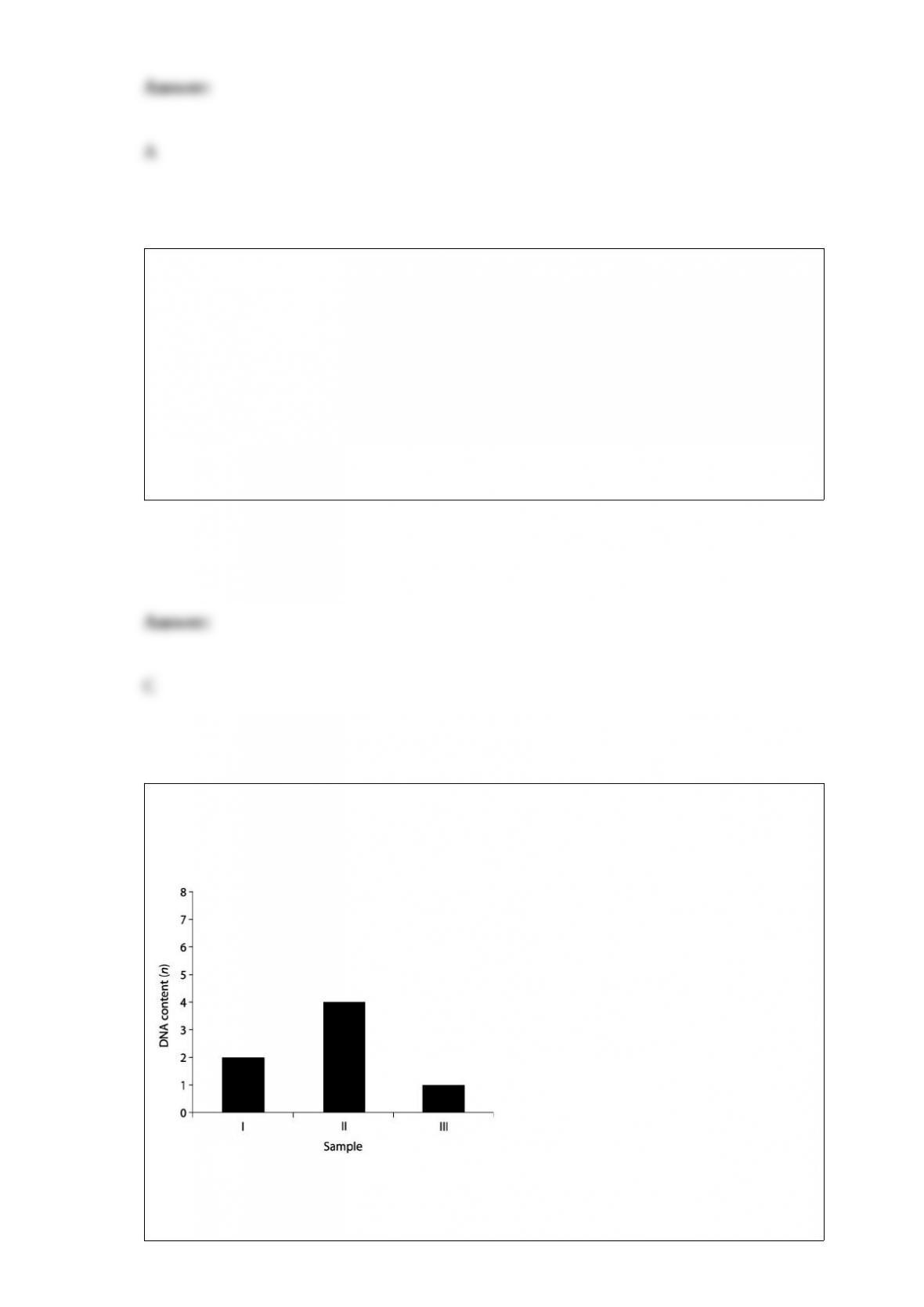
You have isolated DNA from three different cell types of the same organism,
determined the relative DNA content for each type, and plotted the results on the graph
shown in the figure below. Refer to the graph to answer the following question(s).
Which sample might represent an animal cell in the G2 phase of the cell cycle?

A) I
B) II
C) III
D) both I and II
Movement (wildlife) corridors can be harmful to certain species because they _____.
A) increase inbreeding
B) spread disease and parasites
C) increase genetic diversity
D) allow seasonal migration
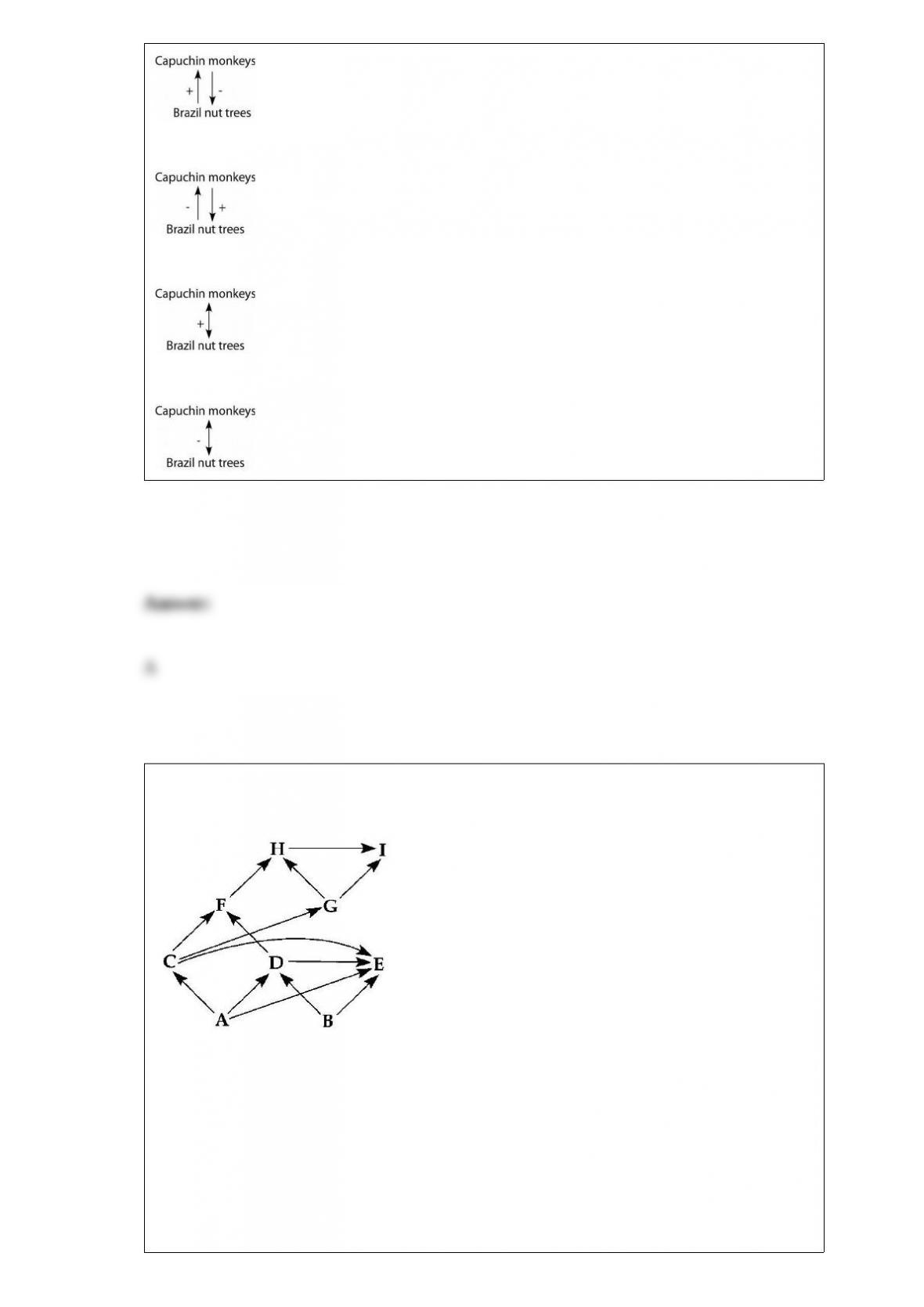
Ecologists often build models to depict the relationships between organisms. In such
models, an arrow is used to link two organisms in a relationship. The arrowhead is next
to the organism that is affected. If the effect is positive, the arrow is labeled with (+),
and if negative, then the label is (-). Capuchin monkeys have been known to use rocks
to smash open the fruits of Brazil nut trees. On the rare occasions when this has been
observed, the monkeys consume all of the Brazil nuts. Thus, which of the following
correctly depicts the relationship between capuchin monkeys and Brazil nut trees?
A)
B)
C)
D)
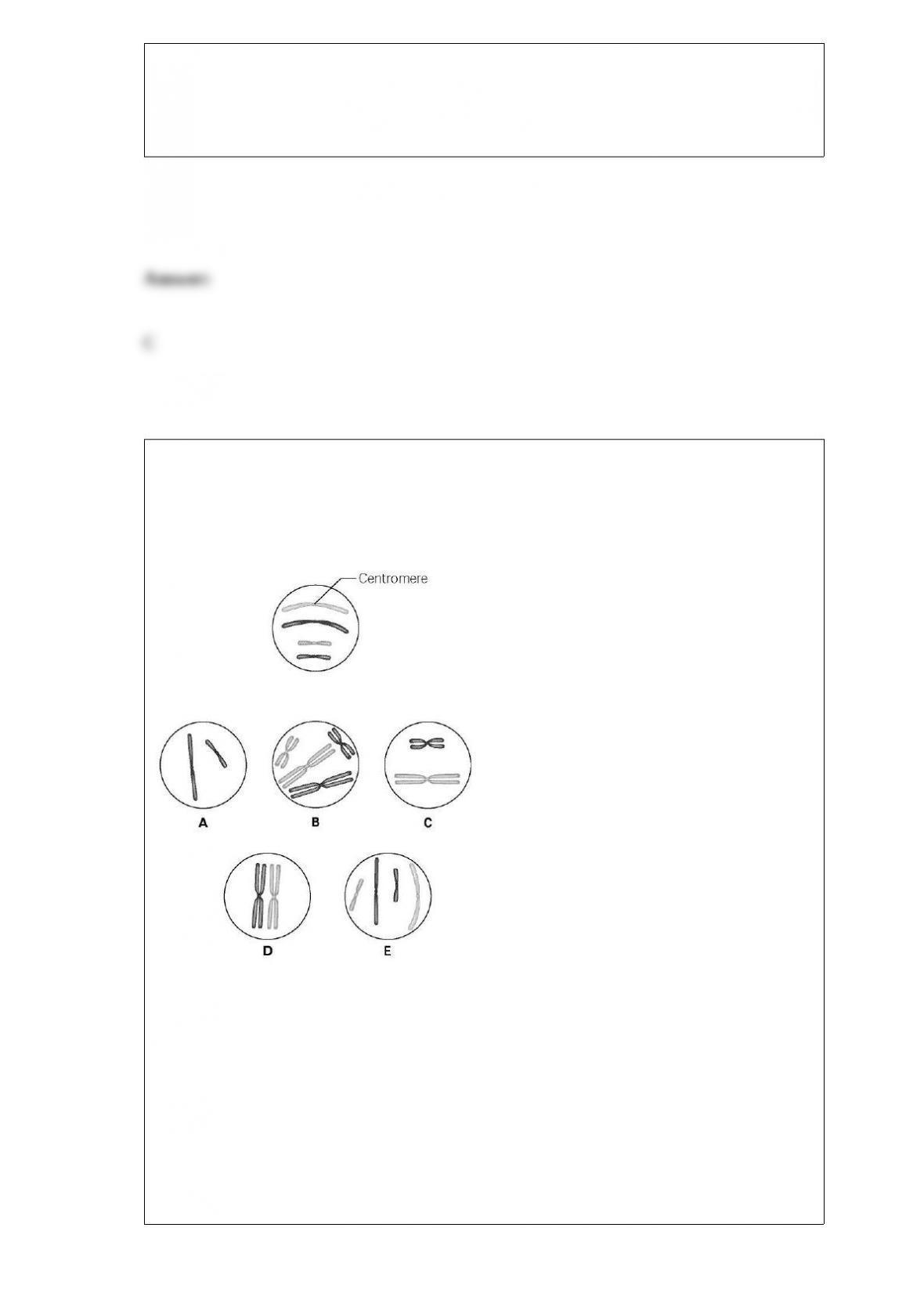
Diagram of a food web (arrows represent energy flow and letters represent species)
If the figure above represents a terrestrial food web, the combined biomass of C + D
would probably be _____.
A) greater than the biomass of A
B) greater than the biomass of B
C) less than the biomass of A + B
D) less than the biomass of E
The unlettered circle at the top of the figure shows a diploid nucleus with four
chromosomes that have not yet replicated. There are two pairs of homologous
chromosomes, one long and the other short. One haploid set is black, and the other is
gray. The circles labeled A to E show various combinations of these chromosomes.
If the cell whose nuclear material is shown in the accompanying figure continues
toward completion of mitosis, which of the following events would occur next?
A) spindle fiber formation
B) nuclear envelope breakdown
C) formation of telophase nuclei
D) synthesis of chromatids

For biologists studying a large flatworm population in the lab, which Hardy-Weinberg
condition is most difficult to meet?
A) no selection
B) no genetic drift
C) no gene flow
D) no mutation
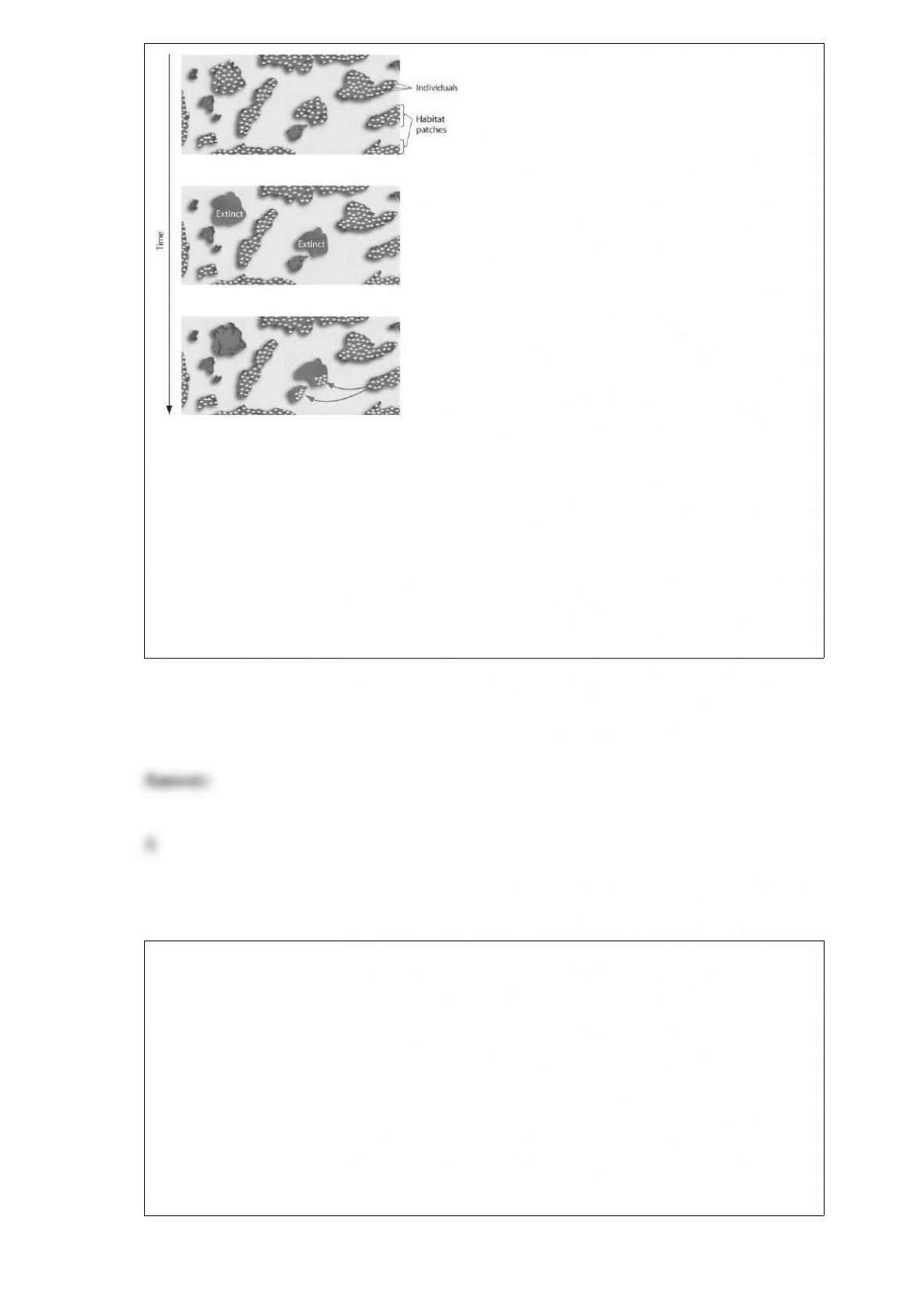
The figure above represents the dynamics of _____.
A) metapopulations
B) extinction
C) emigration
D) both extinction and emigration
The leaflike appendages of moss gametophytes may be one to two cell layers thick.
Consequently, which of the following is LEAST likely to be found associated with such
appendages?
A) cuticle
B) phenolics
C) stomata
D) peroxisomes

You are given the task of designing an aquatic protist that is a primary producer. It
cannot swim on its own, yet must stay in well-lit surface waters. It must be resistant to
physical damage from wave action. It should be most similar to a(n) _____.
A) diatom
B) dinoflagellate
C) apicomplexan
D) red alga
Which structure is the site of the synthesis of proteins that may be exported from the
cell?
A) rough ER
B) plasmodesmata
C) Golgi vesicles
D) free cytoplasmic ribosomes

The regulation of body temperature derives from the activity of the _____.
A) cerebrum
B) cerebellum
C) thalamus
D) hypothalamus
In a particular case of secondary succession, three species of wild grass all invaded a
field. By the second season, a single species dominated the field. A possible factor in
this secondary succession was _____.
A) equilibrium
B) immigration
C) inhibition
D) parasitism
Nucleotides can be radiolabeled before they are incorporated into newly forming DNA
and, therefore, can be assayed to track their incorporation. In a set of experiments, a

studentfaculty research team used labeled T nucleotides and introduced these into the
culture of dividing human cells at specific times.
Which of the following questions might be answered by using the method described?
A) How many cells are produced by the culture per hour?
B) What is the length of the S phase of the cell cycle?
C) How many picograms of DNA are made per cell cycle?
D) When do spindle fibers attach to chromosomes?
A recessive allele on the X chromosome is responsible for red-green color blindness in
humans. A woman with normal vision whose father is color blind marries a color-blind
male. What is the probability that this couple’s first son will be color blind?
A) 1/4
B) 1/2
C) 2/3
D) 3/4
The questions below refer to the following evolutionary tree, in which the horizontal
axis represents time (present time is on the far right) and the vertical axis represents
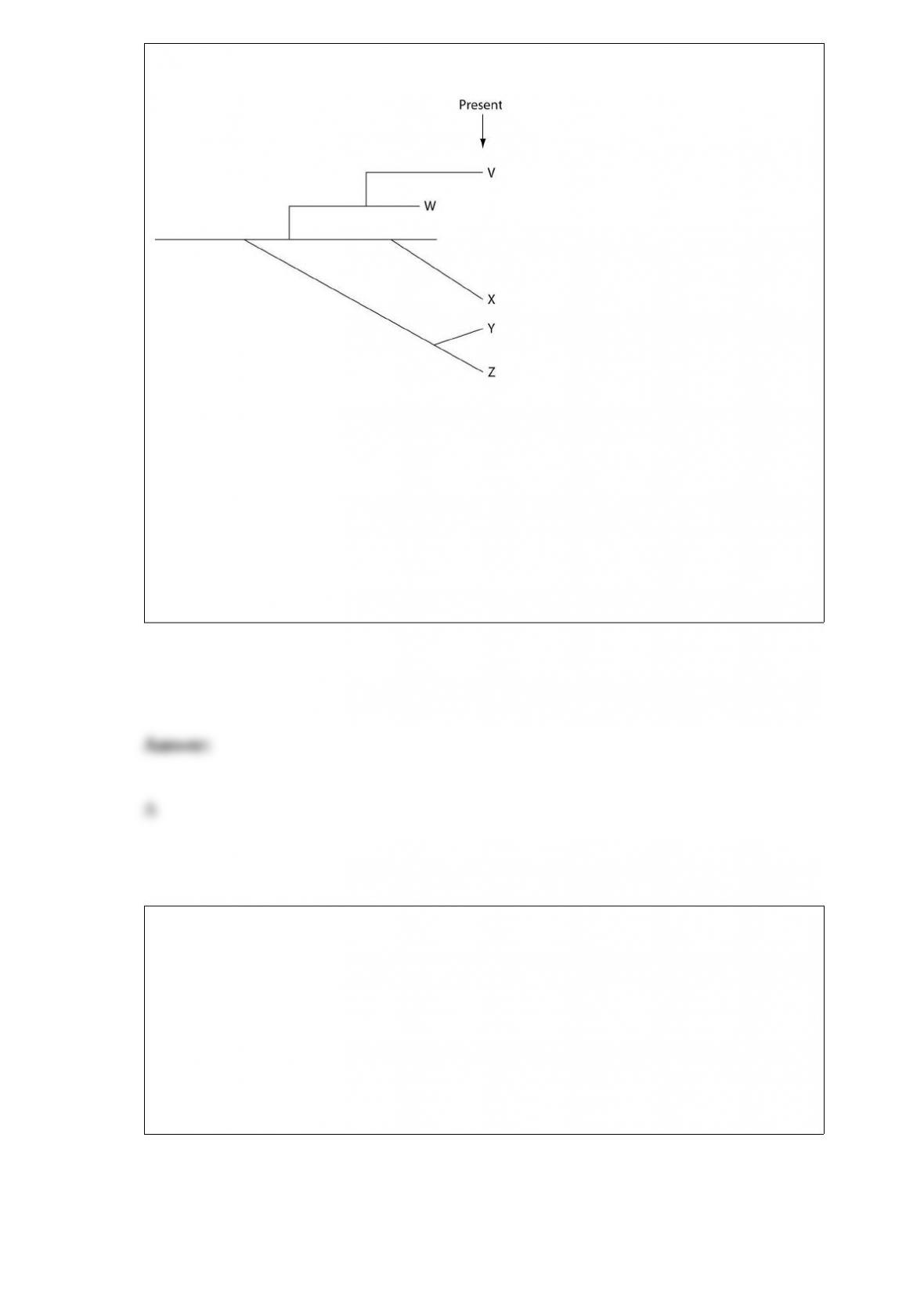
morphological change.
Which species is most closely related to species W?
A) V is most closely related to species W.
B) X is most closely related to species W.
C) Y and Z are equally closely related to W.
D) It is not possible to say from this tree.
For the duration of meiosis I, each chromosome _____.
A) is paired with a homologous chromosome
B) consists of two sister chromatids joined by a centromere
C) consists of a single strand of DNA
D) is joined with its homologous pair to form a synaptonemal complex

What was the main reason the honeybees switched from the “round dance” to the
“waggle dance”?
A) The waggle dance communicates the presence of nectar.
B) The preferred food source was farther away.
C) The round dance uses too much energy.
D) The round dance did not communicate the quality of the food.
How might a change of one amino acid at a site, distant from the active site of an
enzyme, alter an enzyme’s substrate specificity?
A) by changing the enzyme’s stability
B) by changing the shape of an enzyme
C) by changing the enzyme’s pH optimum
D) An amino acid change away from the active site cannot alter the enzyme’s substrate
specificity.

What soil composition would be best for availability of nutrients, water, and root
development?
A) equal amounts of sand, clay, and humus
B) higher proportion of humus, lower amounts of clay and sand
C) higher proportion of clay, lower amounts of humus and sand
D) higher proportion of sand, lower amount of humus and clay
Asexual reproduction results in greater reproductive success than does sexual
reproduction when _____.
A) pathogens are rapidly diversifying
B) there is some potential for rapid overpopulation
C) a species is expanding into diverse geographic settings
D) a species is in stable and favorable environments
Use the survivorship curves in the figure below to answer the following questions.
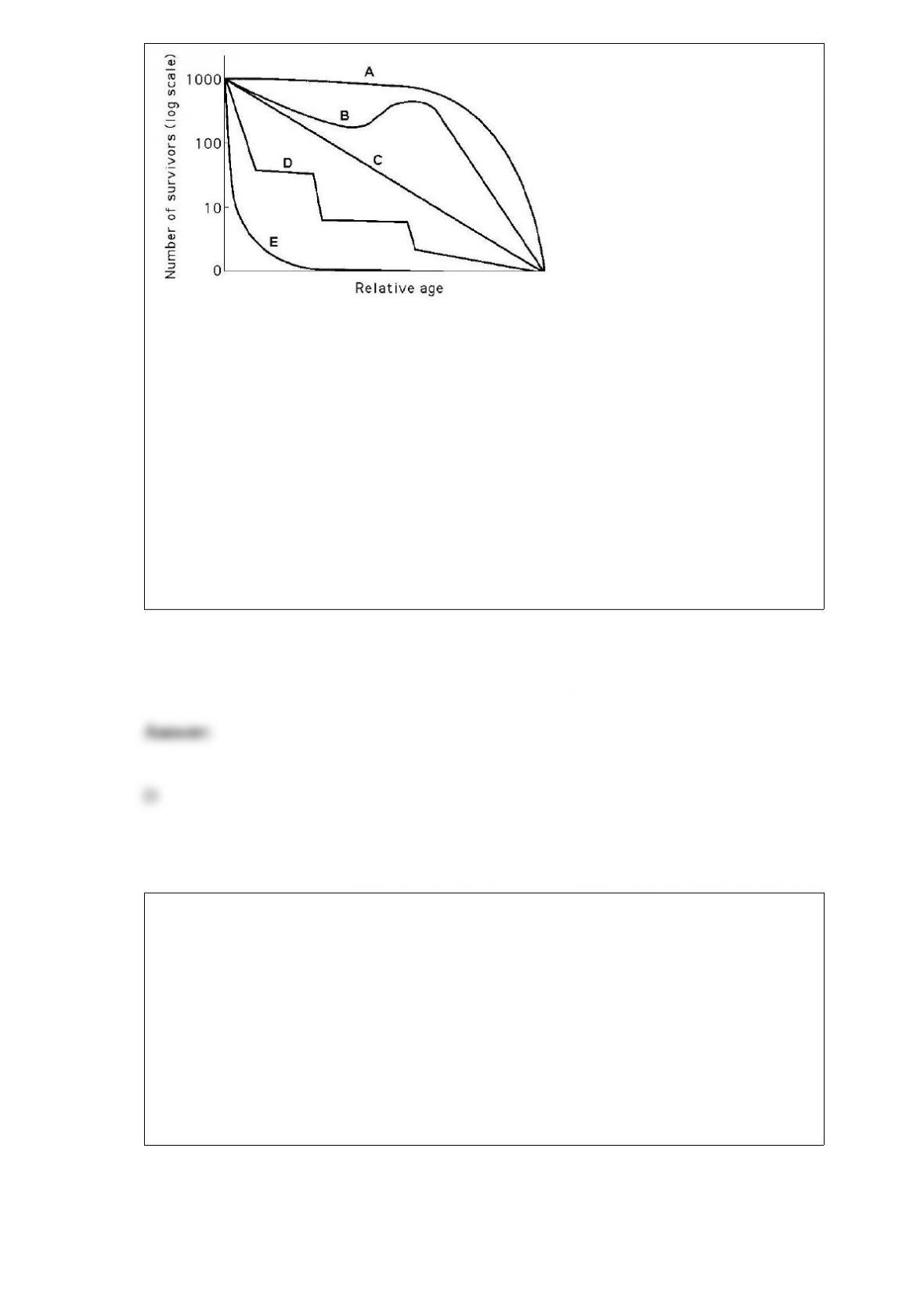
Refer to the figure above. Which statement best explains survivorship curve B?
A) It is likely a species that provides little postnatal care, but lots of care for offspring
during midlife as indicated by increased survivorship.
B) This curve is likely for a species that produces lots of offspring, only a few of which
are expected to survive.
C) It is likely a species where no individuals in the cohort die when they are at 60-70%
relative age.
D) Survivorship can only decrease; therefore, this curve could not happen in nature.
Which of the following events takes place in the electron transport chain?
A) the breakdown of glucose into two pyruvate molecules
B) the breakdown of an acetyl group to carbon dioxide
C) the extraction of energy from high-energy electrons remaining from glycolysis and
the citric acid cycle
D) substrate-level phosphorylation

Particular receptor tyrosine kinases (RTKs) that promote excessive cell division are
found at high levels on various cancer cells. A protein, Herceptin, has been found to
bind to an RTK known as HER2. HER2 is sometimes excessive in cancer cells. This
information can now be utilized in breast cancer treatment if which of the following is
true?
A) if HER2, administered by injection, causes cell division
B) if the patient’s cancer cells have excessive levels of HER2
C) if the patient’s genome codes for the HER2 receptor
D) if the patient has RTKs only in cancer cells
Historically inaccurate diagnosis of acid reflux disorders and gastric ulcers has been
improved by _____.
A) pH monitoring
B) X-ray technology
C) screening for H. pylori infections
D) sonography