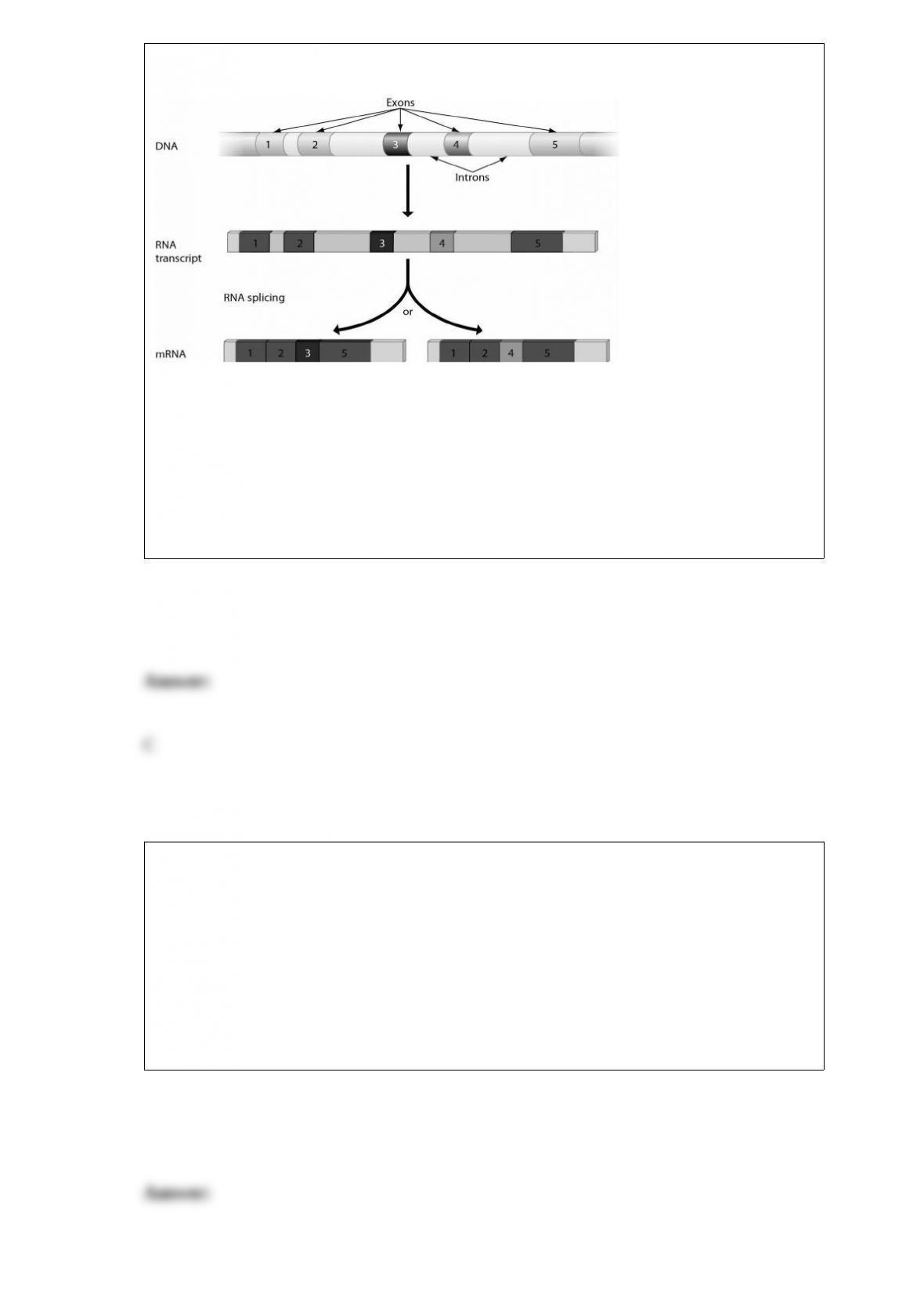
The figure below illustrates ________.
A) transcription factors
B) activators
C) alternative RNA splicing
D) protein activation
Digestion begins in the ________.
A) oral cavity
B) esophagus
C) pharynx
D) stomach

Sustainable development ________.
I) will require making difficult decisions regarding the environment and lifestyle
II) must be achieved if the human species is to survive
III) will require global, multinational cooperation
A) I only
B) II only
C) III only
D) I, II, and III
Where in the cell does glycolysis occur?
A) cytoplasm
B) endoplasmic reticulum (ER)
C) within the fluid just inside the inner mitochondrial membrane
D) between the inner and outer mitochondrial membrane
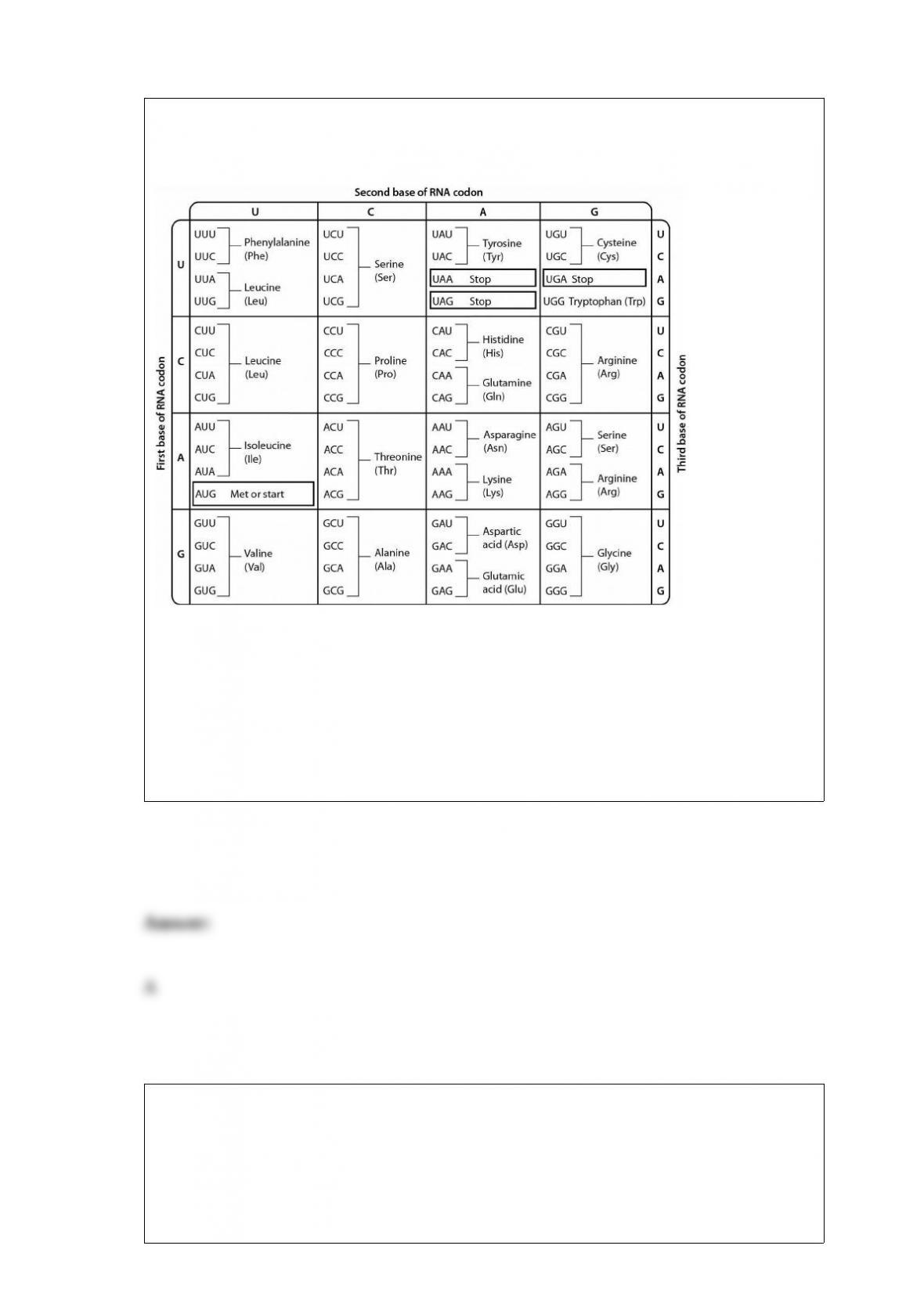
Examine the genetic code table shown below. The codon AGC codes for the amino acid
________.
A) serine
B) arginine
C) threonine
D) alanine
If one strand of a DNA double helix has the sequence GTCCAT, what is the sequence of
the other strand?
A) ACTTGC
B) TGAACG

C) CAGGTA
D) CAGGUA
Which of these is NOT a legal or physical disadvantage of current reproductive
technologies?
A) Babies born as a result of In Vitro Fertilization have significantly higher rates of
autism.
B) Surgery is necessary to remove eggs for In Vitro Fertilization.
C) Hormone injections to promote ovulation may cause the birth of multiples.
D) It is sometimes unclear how current law applies to babies born through current
reproductive technologies.
Read the following scenario to answer the questions that follow.
In order to test the susceptibility of bacteria to an antibiotic, a common laboratory test
called the Bauer-Kirby Disk Diffusion test is used. First, a petri dish (a shallow,
circular, transparent dish with a flat lid) is partially filled with nutrient-enriched agar (a
gelatinous material). The nutrients encourage growth of specific bacterial species. The
agar is poured as liquid but then typically solidifies to a soft consistency. Once the agar
is set, a “lawn” of bacteria is spread such that a thin layer covers the top of the agar.
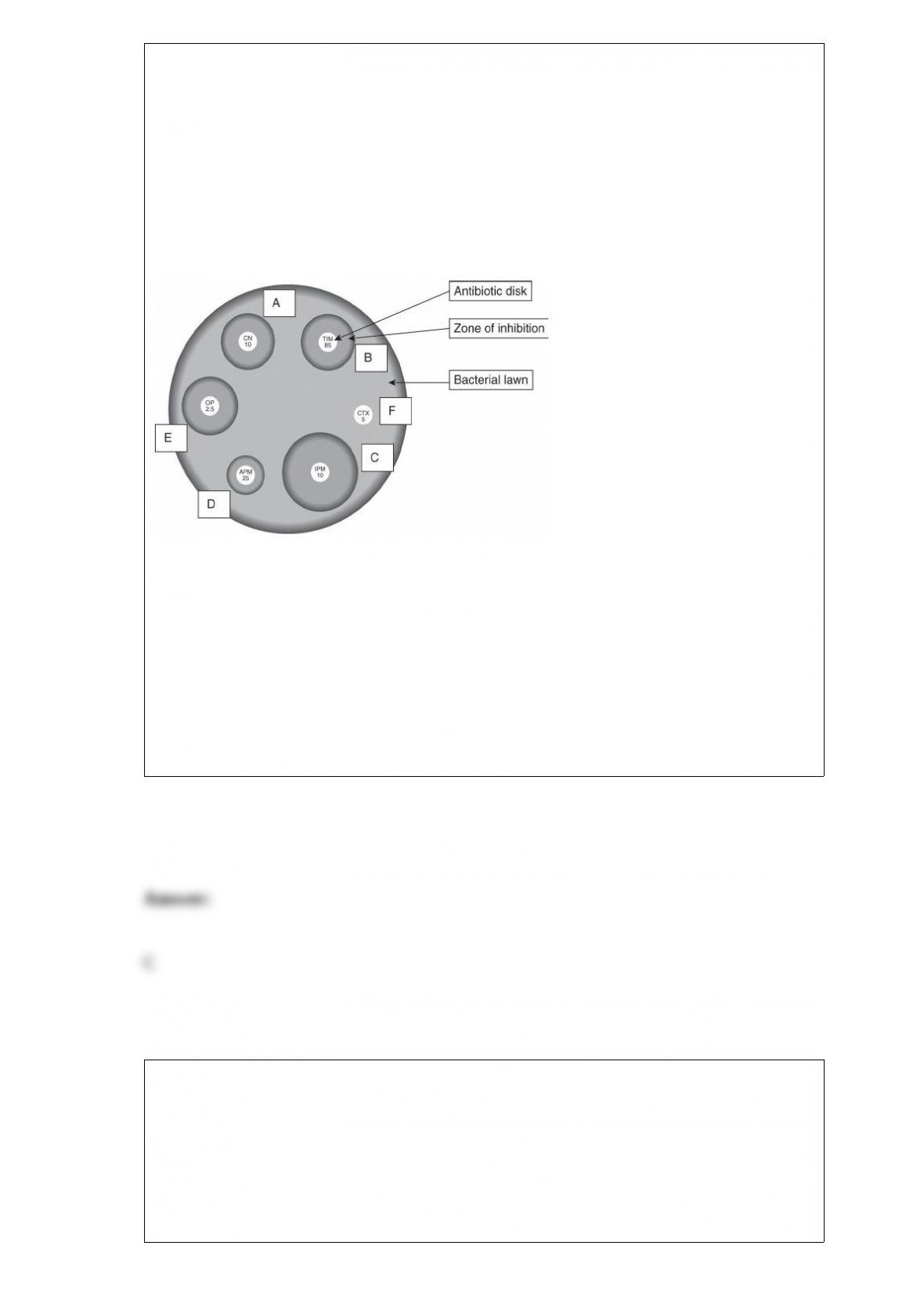
Antibiotics are then applied to the lawn in a small dose, often through small saturated
paper disks. The dish is typically incubated for 2448 hours and then observed for
susceptibility. If the antibiotic is effective, it will kill the bacteria and leave a clear area
called the “zone of inhibition” due to inhibited bacterial growth. The area starts at the
source of the antibiotic and radiates outward. Scientists measure the diameter of the
zone and then compare it to an established “cutoff value” for a zone specific to
antibiotic/organism combinations. A large zone of inhibition in comparison to the
standard indicates susceptibility while a small or no zone indicates resistance. Consider
the following image, and answer the questions that follow:
What can you conclude about the susceptibility of the bacteria to the antibiotics?
A) The bacteria are more susceptible to antibiotic A than antibiotic C.
B) The bacteria are more susceptible to antibiotic D than antibiotic B.
C) The bacteria are more susceptible to antibiotic C than antibiotic E.
D) The bacteria are more susceptible to antibiotic D than antibiotic A.
Spherical bacteria that occur in clusters are ________.
A) streptococci
B) bacilli
C) spirochetes
D) staphylococci
Which of the following is found in both cellular respiration and in the light reactions of
photosynthesis?
A) citric acid cycle
B) glycolysis
C) Calvin cycle
D) electron transport chain
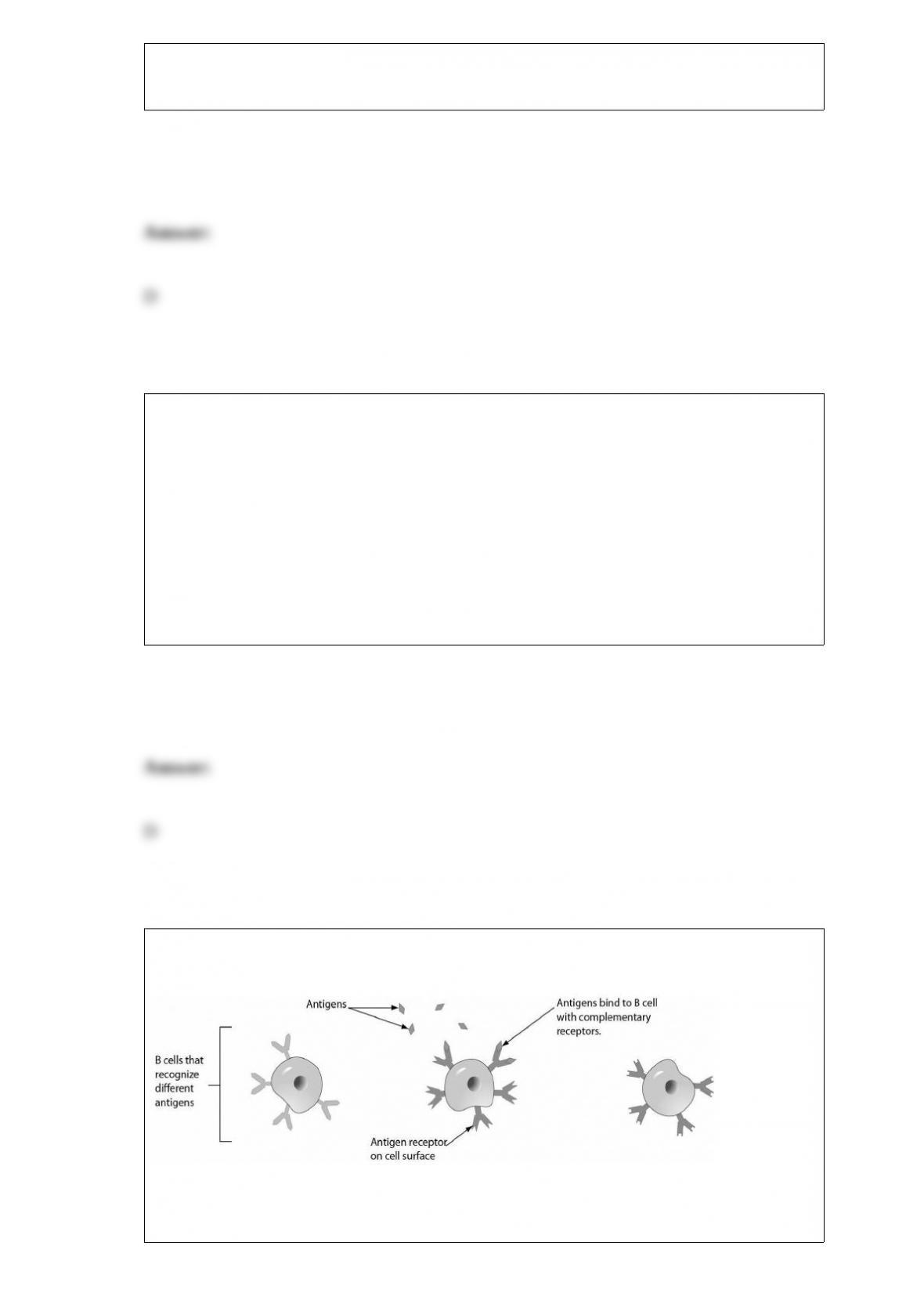
Three B cells are shown in the figure. Which of these B cells will begin to grow, divide,
and differentiate further?
A) only the B cell on the left

B) only the B cell in the middle
C) only the B cell on the right
D) all three B cells
CAM plants conserve water by ________.
A) opening their stomata only at night
B) incorporating CO2 into RuBP
C) keeping their stomata closed at night
D) running the Calvin cycle at night
Please read the following scenario to answer the following questions.
Osteoporosis is a disease characterized by loss of bone mass and an increased
susceptibility to bone fractures. It threatens more than half of all Americans over the
age of 50. Women are about four times more likely to suffer from the disease than men.
Osteoporosis may progress undetected until bones become so weak that they break
during common activities. Prevention of osteoporosis includes regular weight-bearing
exercise, recommended intake of calcium and vitamin D, and avoidance of smoking
and excessive alcohol.

Calcium levels are regulated by antagonistic hormones. This is likely because
________.
A) calcium has to be produced by the body and that production must be regulated
B) bone formation occurs only during puberty when many other hormones are present,
thus careful regulation is necessary
C) both too much and too little calcium can have disastrous effects on the body, thus the
levels need tight regulation
D) calcium is needed to repair bone fractures, so antagonistic hormones make sure it is
available when needed
Of the following, which is the earliest step in the formation of fossil fuels?
A) subjecting organic matter to extreme pressure
B) flooding swamps with seawater
C) incomplete decomposition of organic matter
D) subjecting organic matter to extreme heat
What name is given to the open ocean?
A) pelagic realm

B) intertidal zone
C) benthic realm
D) photic zone
Bile from the liver is stored in the ________ before entering the intestine.
A) pancreas
B) gallbladder
C) large intestine
D) bile duct
Which of the following is a function of the kidneys?
I) elimination of urea
II) reabsorption of valuable solutes
III) reabsorbing water
A) I

B) II
C) III
D) all of the above
Please refer to the following art of the cross-sections of two trees to answer the
following questions.
These trees most likely grew in an environment with ________.
A) constant cold temperatures
B) constant warm temperatures
C) alternating warm and cold seasons
D) It is not possible to predict the temperatures of the trees’ environment.

________ may destroy infected body cells.
A) Phagocytic cells
B) Helper T cells
C) Natural killer cells
D) Cytotoxic T cells
What are grana?
A) thick fluids inside chloroplasts
B) convolutions of the inner chloroplast membrane
C) stacks of membranous sacs
D) pigments found in chloroplasts
Read the following scenario to answer the following question(s).
Biomedical scientists have recently developed an anticancer drug delivery system that
sneaks the anticancer drug into cancer cells before releasing it. They were able to do
this by using two sets of liposomes. An anticancer drug (Doxorubicin (Dox)) bound to
DNA molecules was added into one set of liposomes (type A), and a high concentration
of ATP molecules were added to the other set of liposomes (type B). The drug is
inactive when bound to DNA molecules. Researchers inject both types of liposomes (A
and B) into cancer cells, and upon doing so their contents are released. The ATP
molecules (from liposome type A) bind to the DNA molecules (from liposome type B)
and activate the drug, thus inducing cell death and decreasing tumor size.
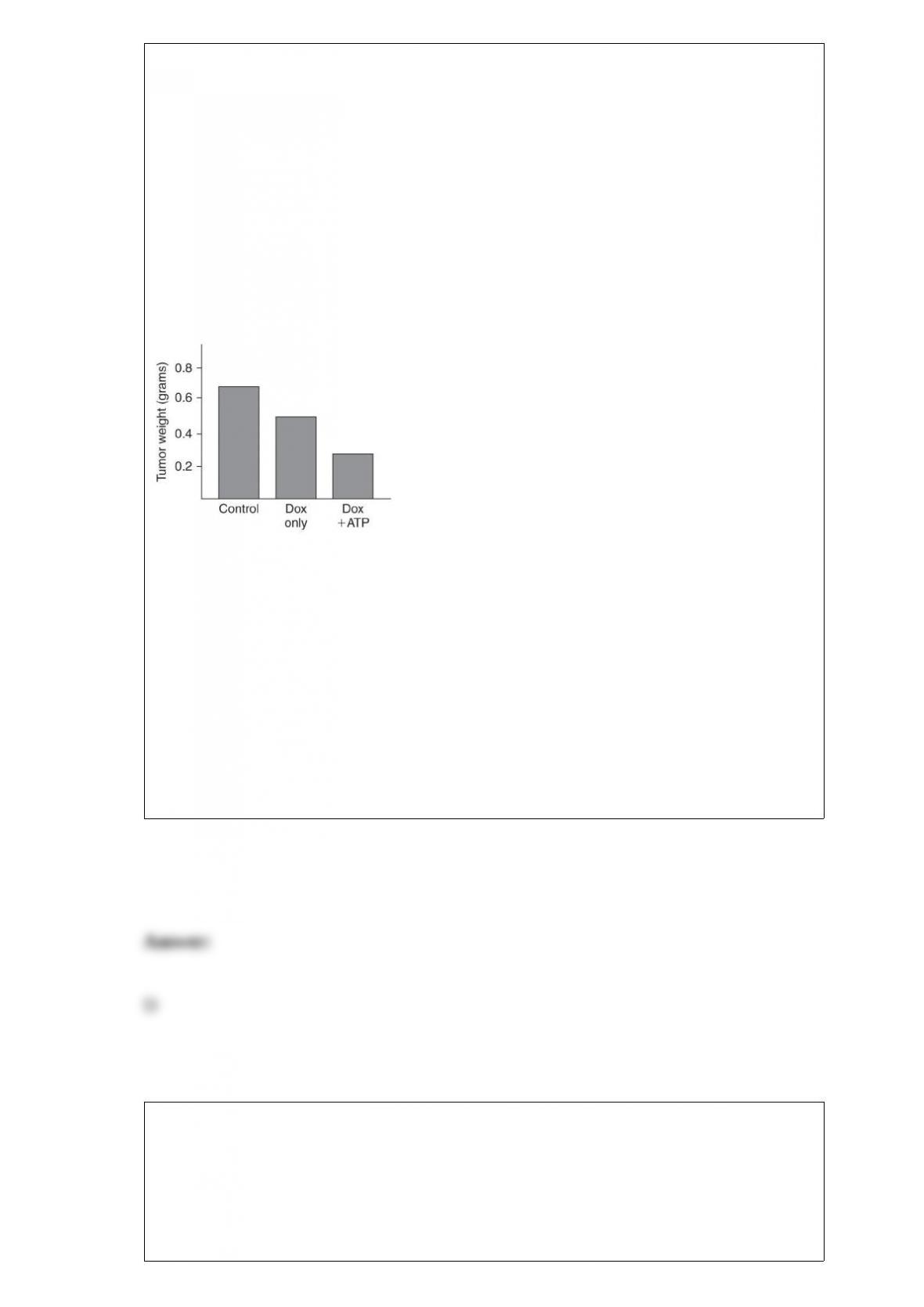
Mice with breast cancer tumors were treated with this liposome system to test the
effectiveness of the drug. The scientists performed three trials one with both types of
liposomes (Dox + ATP), one with just the drug (Dox only), and one with a salt solution
(control). Examine the figure below and answer the following questions.
Why did tumor size decrease in the Dox only experiment to a lesser extent than the Dox
+ ATP experiment?
A) ATP is actually the drug that is killing the cancer cells, not Dox.
B) Dox is always active in cancer cells, so it should be able to kill some cells without
ATP.
C) When ATP is lacking, not as much Dox can enter the cell via facilitated diffusion.
D) There is some ATP in the cancer cells normally, which acts to activate Dox.
Please read the following paragraph and answer the following questions.
Amanda’s parents realized that her body was not developing properly about the time she
was 12 years old. She was shorter than most of her friends and was not going through
changes normally associated with female puberty. They took her to a doctor who

initially diagnosed Amanda with Turner Syndrome because of her physical features. He
ordered a karyotype that confirmed his diagnosis. Amanda was born with only one X
chromosome. Although there is no specific cure, the doctor was able to treat her and
correct some of the problems associated with the condition. For example, she received
growth hormone to improve her growth and estrogen to help her develop the physical
changes of puberty.
If only some, but not all, of Amanda’s somatic (body) cells had only one X
chromosome, this could indicate that an error occurred ________.
A) during mitosis leading to the sperm or egg that came together to form Amanda
B) during meiosis in the first cell division of the original cell that was Amanda (the
zygote)
C) during meiosis which occurred in Amanda’s ovaries
D) during mitosis which occurred at a multicellular stage of Amanda’s development
________ is(are) responsible for more cancers than any other carcinogen.
A) Asbestos
B) UV radiation
C) Tobacco
D) X-rays

Integrated pest management ________.
A) favors overwhelming a pest with chemical pesticides
B) advocates total eradication of pest species
C) aims to keep pest populations on an exponential growth curve
D) advocates mixed-species plantings and rotating crops
Read the following scenario to answer the following questions.
The North American beaver is a large rodent that builds dams to convert freshwater
streams into ponds. Beavers build their dams out of trees, which they cut down using
their front teeth. Beavers also eat the leaves and bark of trees, as well as the starchy
roots of water lilies.
Water lily shoots and roots have very little structural support because this support is not
needed in aquatic habitats. What structures would you be LEAST likely to see in a water
lily stem?
A) epidermis
B) parenchyma
C) sclerenchyma
D) tracheids

Which of the following cell types are specifically responsible for the cytotoxic T cell
response?
A) T cells
B) B cells
C) natural killer cells
D) phagocytic cells
The ecological footprint of the United States ________.
A) is about the same as the global average
B) is lower than the global average
C) shows that Americans consume a disproportionate amount of food and fuel
D) shows that its population size is increasing slowly
Which one of the following statements is TRUE?
A) Natural selection works on variation already present in a population.

B) Natural selection works on nonheritable traits.
C) Individuals evolve through natural selection.
D) Individual organisms evolve structures that they need.
Three very popular strawberry cultivars grown by farmers in the United States are
Earliglow, Ozark Beauty, and Tristar. Earliglow produces all of its fruit in the early
summer (June-bearing). Ozark Beauty produces fruit from mid to late summer
(everbearing). Tristar produces fruit all summer long, starting when conditions become
favorable for flowering and fruit production. What is the best classification for these
three strawberry cultivars?
A) Earliglow: long night; Ozark Beauty: short night; Tristar: night neutral
B) Earliglow: short night; Ozark Beauty: short night; Tristar: night neutral
C) Earliglow: night neutral; Ozark Beauty: short night; Tristar: long night
D) Earliglow: short night; Ozark Beauty: long night; Tristar: long neutral
Which of the following best describes substances that enter a plant through the root
system?
A) They are dissolved in water.
B) They are obtained from the air.

C) They are organic molecules.
D) They are brought in through stomata.
Which of the following hormones can make a person susceptible to infection when
administered for too long as a drug?
A) glucagon
B) growth hormone
C) glucocorticoids
D) antidiuretic hormone
________ are the dominant herbivores of savanna ecosystems.
A) Antelopes
B) Zebras
C) Buffalo
D) Insects

Use the following information to answer the following questions.
There are many diseases of the digestive system. Sjgren’s syndrome is an autoimmune
disease that destroys tear ducts and salivary glands. In megaesophagus, peristalsis fails
to occur properly and the esophagus is enlarged. In achlorhydria (also called
“hypochlorhydria”) production of gastric acid is absent or low. When a person has
diverticulitis, feces are trapped in small pouches of the large intestine, and cause
infection. Infected portions of the large intestine can swell and block the large intestine.
In exocrine pancreatic insufficiency, there is a progressive loss of pancreatic cells that
make digestive enzymes. In gallstone cholestasis, bile cannot flow from the liver to the
duodenum.
Exocrine pancreatic insufficiency would show symptoms most similar to______.
A) Sjgren’s syndrome
B) megaesophagus
C) diverticulitis
D) celiac disease
Consider the following figure. It illustrates that a single amino acid substitution in the
hemoglobin gene ________.

A) always involves adenine and uracil
B) may alter a protein so that it no longer functions properly
C) is a silent mutation
D) causes a nonsense mutation
What is the likely effect of pruning a plant at the dotted line?
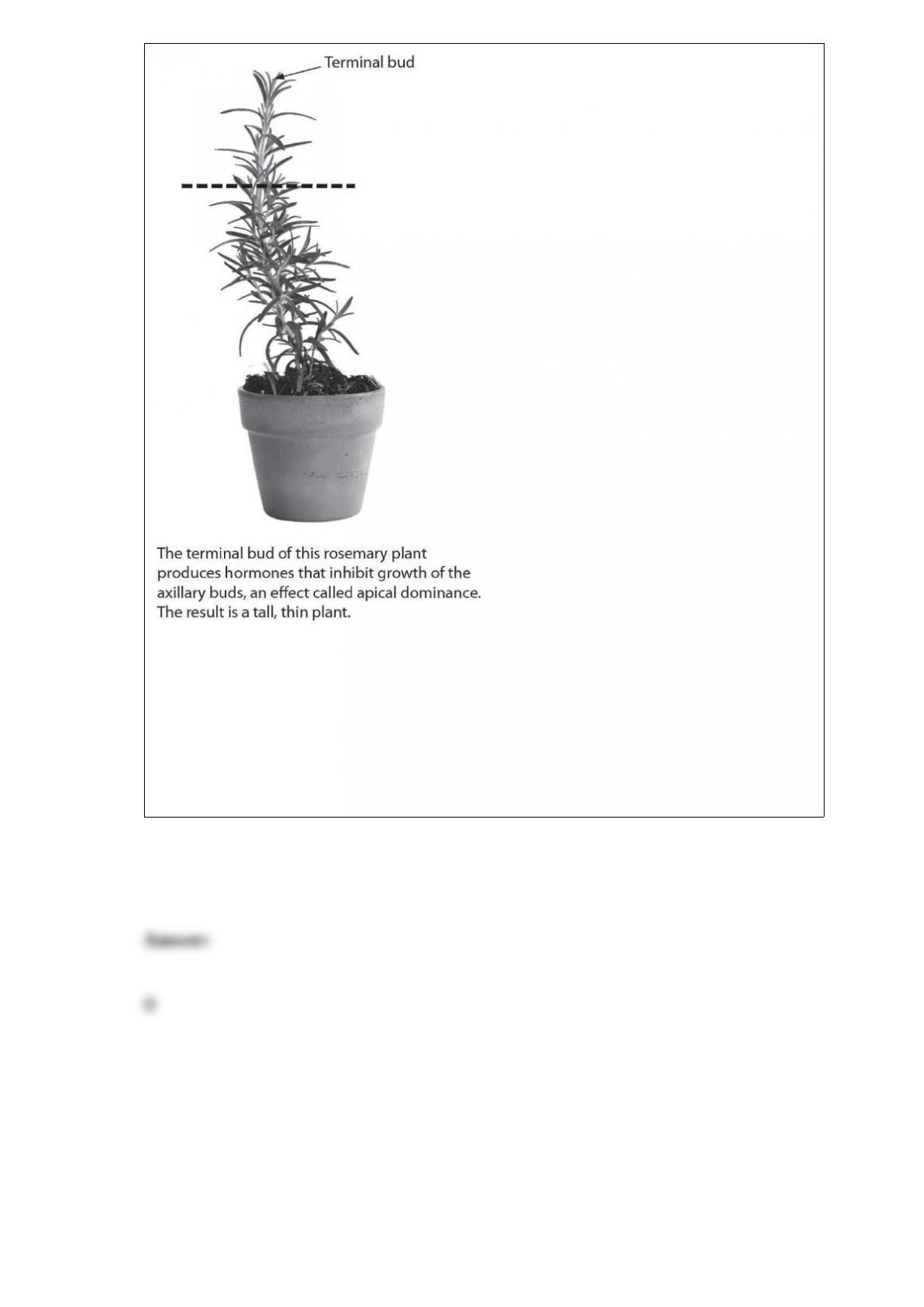
A) The plant will grow taller.
B) The plant will grow bushier.
C) The plant will produce flowers.
D) The plant will grow more roots.