
1) match the items below with their descriptions:
art-based; matching
use figures a, b and c to identify the three most common prokaryote shapes.
1> figure b a. spirochetes or spirilla
2> figure a b. cocci
3> figure c c. bacilli
2) the enzyme that breaks down acetylcholine within the synaptic cleft is
a. acetylcholinesterase.
b. monoamine oxidase.
c. gaba.
d. lipase.
e. maltase.
3) the sense of rotational equilibrium is accomplished by hair cells found in the
a. cochlear duct.
b. outer ear.
c. middle ear.
d. ampullae.
e. organ of corti.
4) which of the following treatments can benefit from the use of monoclonal
antibodies?
a. determining if a woman is pregnant or not.
b. diagnosis of respiratory tract infections in young children.
c. detection and treatment of various forms of breast cancer.
d. all of these treatments can benefit from the use of monoclonal antibodies.

5) how many molecules of water are used to degrade this polypeptide, using hydrolysis
reactions, into its constituent amino acids:
alanine-leucine-tryptophane-glycine-valine-alanine?
a. six
b. five
c. one
d. seven
6) _______ are to ribosomes as lipids are to _________.
a. carbohydrates; rough endoplasmic reticulum
b. nucleoli; lysosomes
c. sugars; peroxisomes
d. proteins; smooth endoplasmic reticulum
7) interkinesis is different from interphase in which way?
a. interkinesis occurs after a cell finishes a nuclear division.
b. interkinesis is the stage that precedes a prophase stage.
c. interphase involves dna replication and interkinesis does not.
d. interkinesis can be variable in length.
8) g3p (glyceraldehyde 3 phosphate) is used by plants for all of the following except the
formation of
a. fatty acids.
b. amino acids.
c. oxygen.
d. sucrose.
9) the tubular structure that moves food by peristalsis from the mouth to the stomach is
the

a. epiglottis.
b. trachea.
c. tongue.
d. esophagus.
e. glottis.
10) a derived trait of land plants is the presence of small openings that allow gaseous
exchange between the plant and its environment. these structures are called
a. cuticles.
b. stomata.
c. thallus.
d. rhizoids.
11) birds and insects both have wings, but we do not consider this similarity as evidence
of relatedness because
a. bird wings function on different physics principles of lift.
b. insect wings are vestigial.
c. the wings are not homologous structures with a common ancestral origin.
d. they did not evolve in the same region or live at the same time period.
e. there is no fossil link between these groups.
12) the nitrogenous waste material of an embryo that accumulates inside the eggshell of
a bird or reptile is
a. urea.
b. uric acid.
c. amino acid.
d. ammonia.
e. uracil.
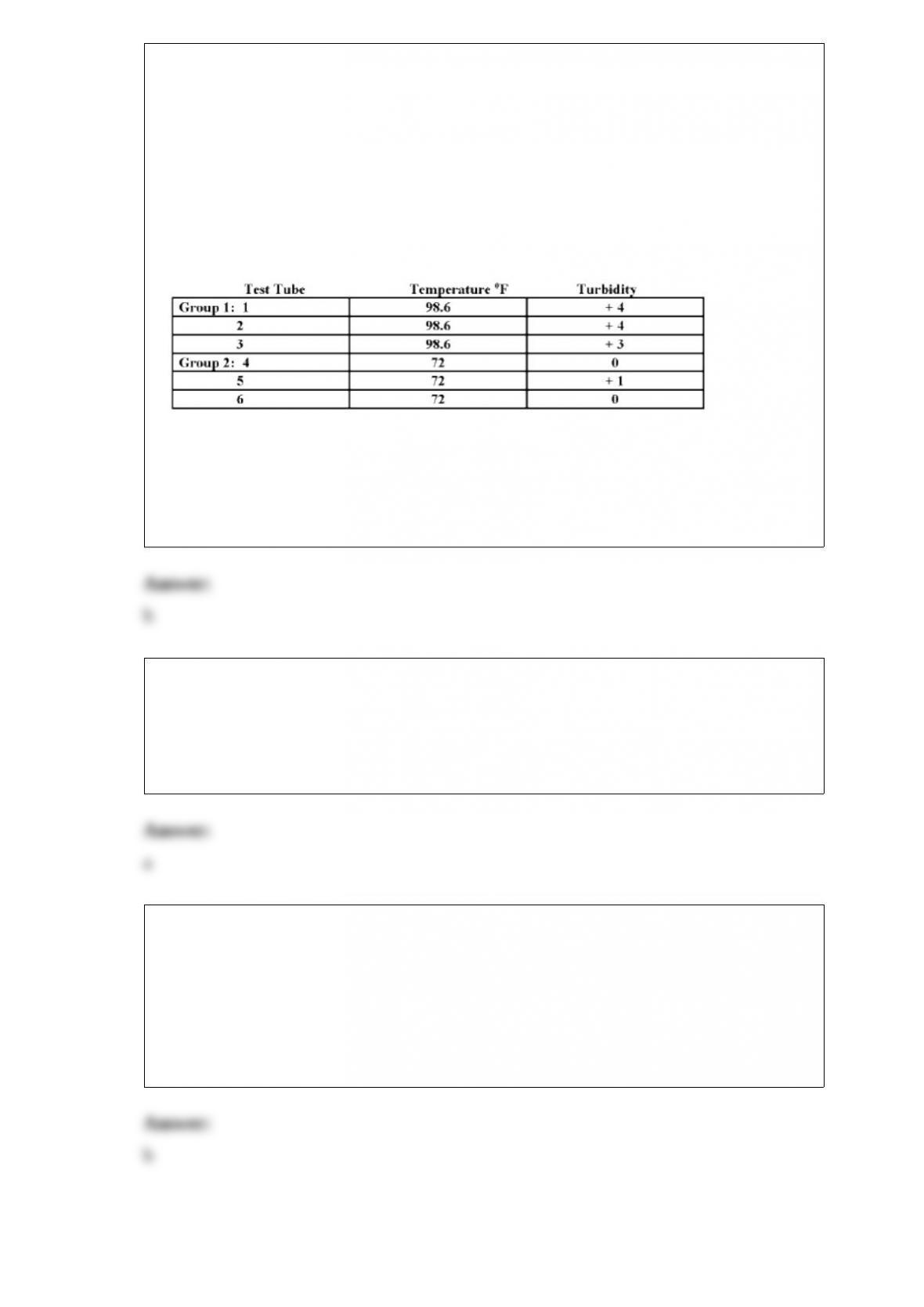
13) dr. james isolated staphylococcus aureus, a type of bacteria, from the leg wound of
a ten year old boy. he suspected these bacteria would grow better at body temperature
than room temperature (72f), but thought that he should collect data to support his
thinking. dr. james introduced the same number of staphylococcus bacteria into each of
six test tubes containing the same type and amount of nutrient broth. three test tubes
were incubated at 98.6f (group 1), while three test tubes (group 2) sat at 72f. after 24
hours, dr. james compared the turbidity (indicative of growth) of all six tubes and rated
each on a scale of 0 – 4. 0 indicates no turbidity (no growth), while 4 indicates high
turbidity (high growth). the following data was collected:
the dependent (responding) variable in this experiment is:
a. the temperature
b. growth of bacteria, as indicated by the turbidity in the test tubes
c. the time that the test tubes were allowed to sit
d. amount of initial inoculum, or number of bacteria introduced into each test tube
14) which of the following statements applies to mitosis but not to cytokinesis?
a. it contains a checkpoint that will evaluate the quality of the cell
b. requires a large amount of atp in order for the cellular mechanisms to function
c. if it is disrupted it can lead to an abnormal cell
d. it results in two daughter cells that are half the size of the original cell
15) the digestive juices found in the stomach include
a. insulin and bile.
b. pepsin and hydrochloric acid.
c. sodium bicarbonate and hydrochloric acid.
d. pancreatic and salivary amylase.
e. trypsin and maltase.

16) lamarck’s inheritance of acquired characteristics included the idea that
a. there is a natural force in all living things that pushes them toward perfection.
b. local catastrophes cause mass extinctions of species.
c. species are only produced through special creation.
d. species are fixed and unchanging over time.
17) a very highly soluble nitrogenous waste, excreted into water by bony fishes, aquatic
invertebrates, and aquatic amphibians, is
a. urea.
b. uric acid.
c. amino acid.
d. ammonia.
e. uracil.