
Recent genetic studies of the structure of microsporidian genomes, as well as the
sequences of their tubulin genes and the gene for RNA polymerase II, indicate that
microsporidians are closely related to the fungi. Microsporidians lack flagella,
centrioles, peroxisomes, and mitochondria (although they do have degenerate
mitochondria, called mitosomes). They have the smallest genome of any eukaryote, and
it is a genome that changes quickly. The genome is contained within two haploid nuclei.
All microsporidians are obligate intracellular parasites. They use a unique organelle
called a polar filament to gain access to the cells of their hosts. One species causes
chronic diarrhea in AIDS patients. Another parasitizes Anopheles gambiae, the
mosquito that transmits a fatal form of malaria to humans.
Given the eukaryotic structures they lack, it should be expected that microsporidians
also lack _____.
A) the “9 + 2 pattern” of microtubules
B) centrosomes
C) lysosomes
D) nuclei
Zoonotic disease _____.
A) is caused by suborganismal pathogens such as viruses, viroids, and prions only
B) is caused by pathogens that are transferred from other animals to humans by direct
contact or by means of a vector
C) can only be spread from animals to humans through direct contact
D) can only be transferred from animals to humans by means of an intermediate host

Most of the water taken up by a plant is_____.
A) used as a solvent
B) used as a hydrogen source in photosynthesis
C) lost during transpiration
D) used to keep cells turgid
In a hypothetical situation, the genes for sex pilus construction and for tetracycline
resistance are located on the same plasmid within a particular bacterium. If this
bacterium readily performs conjugation involving a copy of this plasmid, then the result
should be the _____.
A) temporary possession by this bacterium of a completely diploid genome
B) rapid spread of tetracycline resistance to other bacteria in that habitat
C) subsequent loss of tetracycline resistance from this bacterium
D) production of endospores among the bacterium’s progeny

The plasma membrane of the sea urchin egg _____.
A) is outside of the fertilization membrane
B) releases calcium, which initiates the cortical reaction
C) has receptor molecules that are specific for binding acrosomal proteins
D) is a mesh of proteins crossing through the cytosol of the egg
What is the primary function of the Calvin cycle?
A) use NADPH to release carbon dioxide
B) split water and release oxygen
C) transport RuBP out of the chloroplast
D) synthesize simple sugars from carbon dioxide
E. coli cells typically make most of their ATP by metabolizing glucose. Under the
conditions of this experiment, as time passed, E. coli generation times should be _____.
A) the same as in the typical environment
B) faster than in the typical environment

C) slower than in the typical environment
In a tide pool, a student encounters an organism with a hard outer covering that contains
much calcium carbonate, an open circulatory system, and gills. The organism could
potentially be a crab, a shrimp, a barnacle, or a bivalve. The presence of which of the
following structures would allow for the most certain identification of the organism?
A) a mantle
B) a heart
C) a body cavity
D) a filter-feeding apparatus
Alternative RNA splicing _____.
A) is a mechanism for increasing the rate of translation
B) can allow the production of proteins of different sizes and functions from a single
mRNA
C) can allow the production of similar proteins from different RNAs
D) increases the rate of transcription

Which endocrine disorder is correctly matched with the malfunctioning gland?
A) dwarfism the adrenal cortex
B) gigantism the anterior pituitary gland
C) goiter the adrenal medulla
D) diabetes mellitus the parathyroid glands
If an adult person has a faulty version of the human analog to ced-4 of the nematode,
which of the following is most likely to result?
A) activation of a developmental pathway found in the worm but not in humans
B) a form of cancer in which there is insufficient apoptosis
C) formation of molecular pores in the mitochondrial outer membrane
D) excess skin loss
Given the parents AABBCc x AabbCc, assume simple dominance for each trait and
independent assortment. What proportion of the progeny will be expected to
phenotypically resemble the first parent with genotype AABBCc?
A) 1/4
B) 3/4
C) 3/8
D) 1
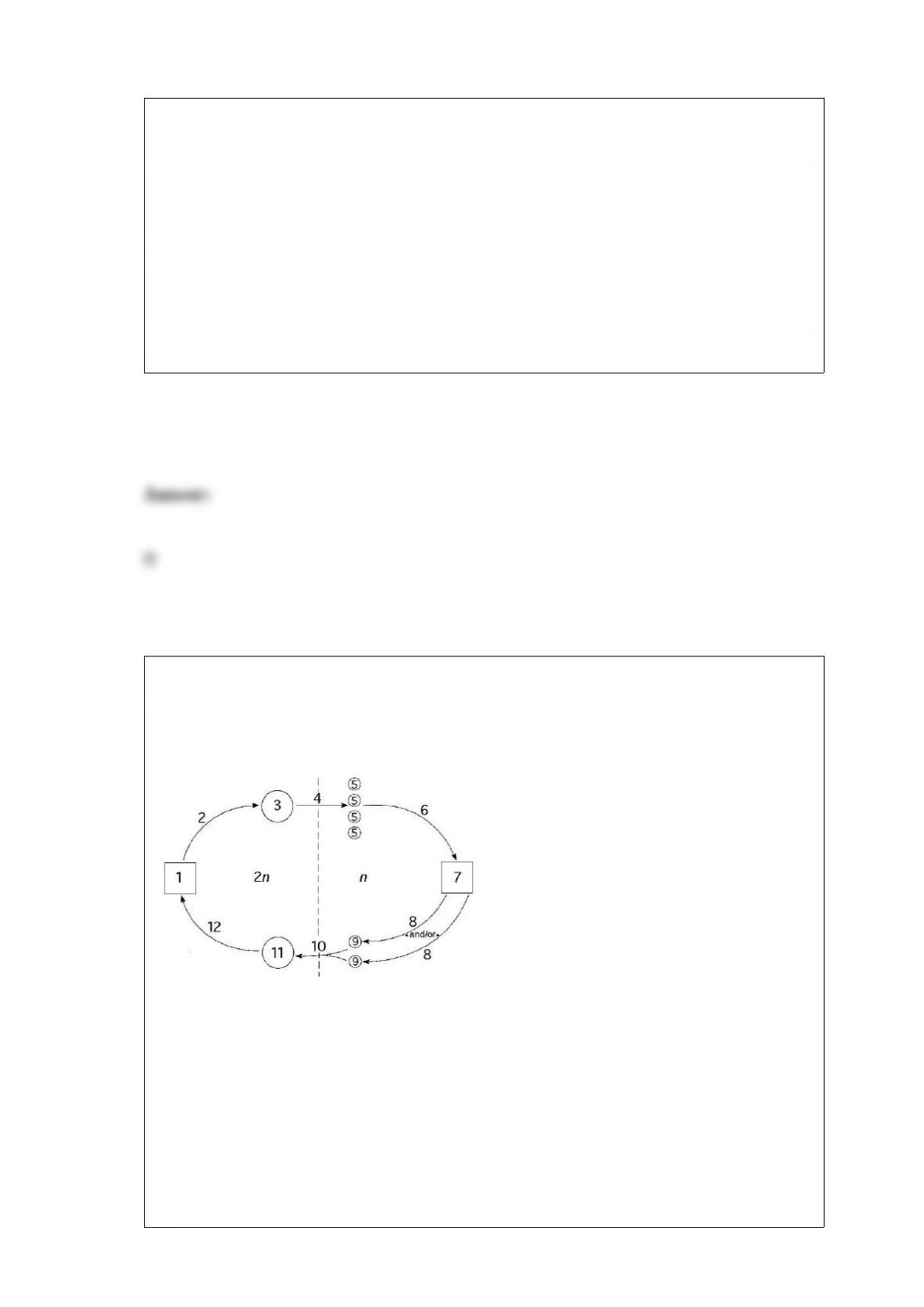
The following questions refer to the generalized life cycle for land plants shown in the
figure below. Each number within a circle or square represents a specific plant or plant
part, and each number over an arrow represents either meiosis, mitosis, or fertilization.
Which number represents a megaspore mother cell in the figure above?
A) 1
B) 3
C) 5
D) 7

Which of the following causes populations to shift most quickly from an exponential to
a logistic population growth?
A) favorable climatic conditions
B) removal of predators
C) decreased death rate
D) competition for resources
A large seaweed that floats freely on the surface of deep bodies of water would be
expected to lack which of the following?
A) thalli
B) bladders
C) holdfasts
D) gel-forming polysaccharides

Which of the following statements about quorum sensing is FALSE? Quorum sensing
_____.
A) is cell-cell communication in eukaryotes
B) is species specific
C) may result in biofilm formation
D) is particularly well studied because of its medical importance
Phospholipids and triglycerides both _____.
A) contain serine or some other organic compound
B) have three fatty acids
C) have a glycerol backbone
D) have a phosphate
Taxol is an anticancer drug extracted from the Pacific yew tree. In animal cells, Taxol

disrupts microtubule formation. Surprisingly, this stops mitosis. Specifically, Taxol
must affect _____.
A) the structure of the mitotic spindle
B) anaphase
C) formation of the centrioles
D) chromatid assembly
Females of many insect species, including honeybee queens, can store gametes shed by
their mating partners in _____.
A) their nests
B) the abdominal tract
C) the uterus
D) the spermatheca
Which of the following is a correct description of the fate of the germ layers?
A) The mesoderm gives rise to the notochord.
B) The endoderm gives rise to the hair follicles.

C) The ectoderm gives rise to the liver.
D) The mesoderm gives rise to the lungs.
When we compare animal development to plant development, we find that _____.
A) plant cells, but not animal cells, migrate during morphogenesis
B) animal cells, but not plant cells, migrate during morphogenesis
C) plant cells and animal cells migrate extensively during morphogenesis
D) neither plant cells nor animal cells migrate during morphogenesis
A cell with membrane-bound proteins that selectively bind a specific hormone is called
that hormone’s _____.
A) secretory cell
B) endocrine cell
C) target cell
D) regulatory cell
When you eat Brussels sprouts, you are eating _____.
A) immature flowers
B) large axillary buds
C) petioles
D) storage leaves
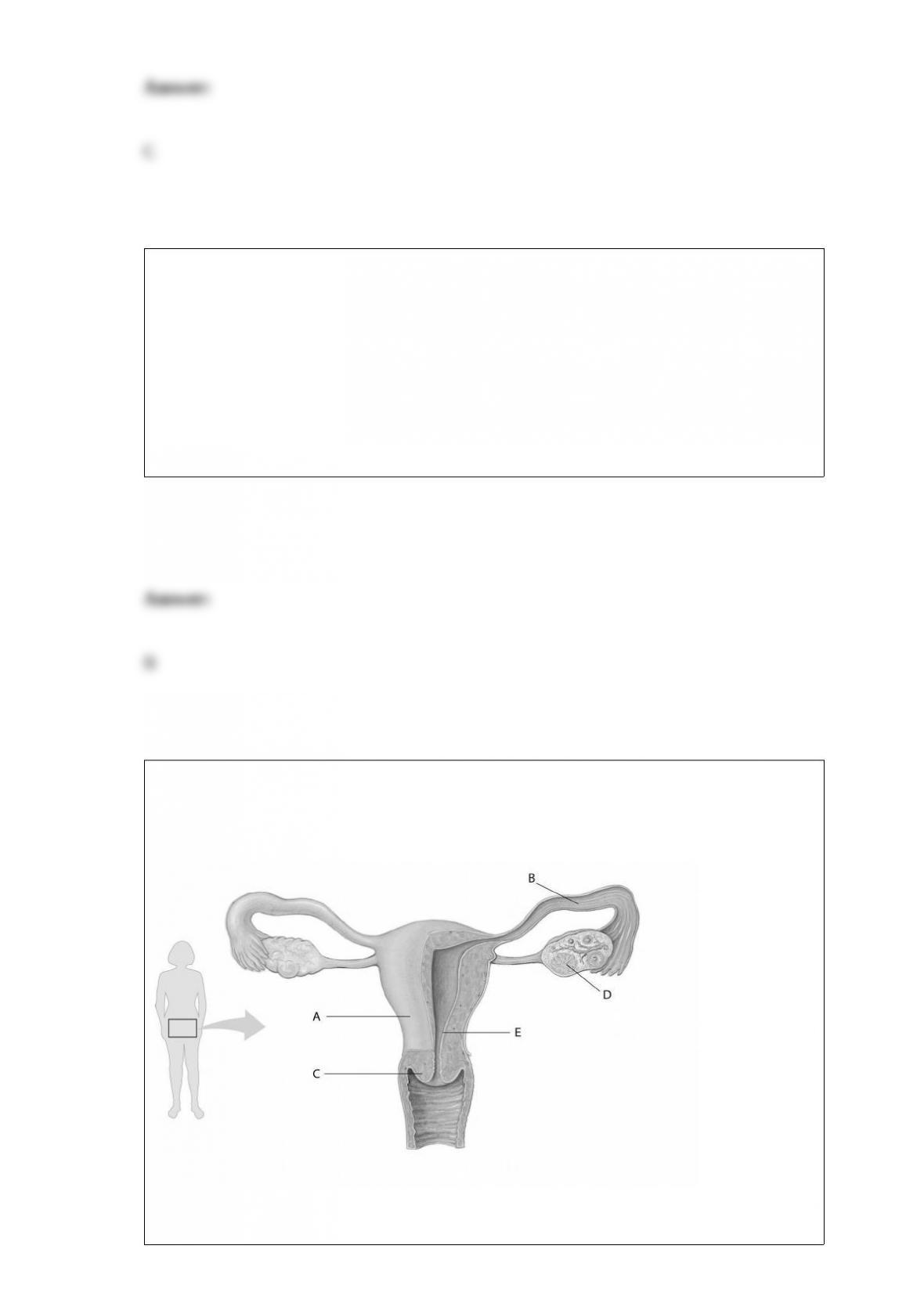
Refer to the following figure, which diagrams the reproductive anatomy of the human
female, to answer the question(s) below.
In the above figure, which letter points to the cervix?
A) A
B) B
C) C
D) D
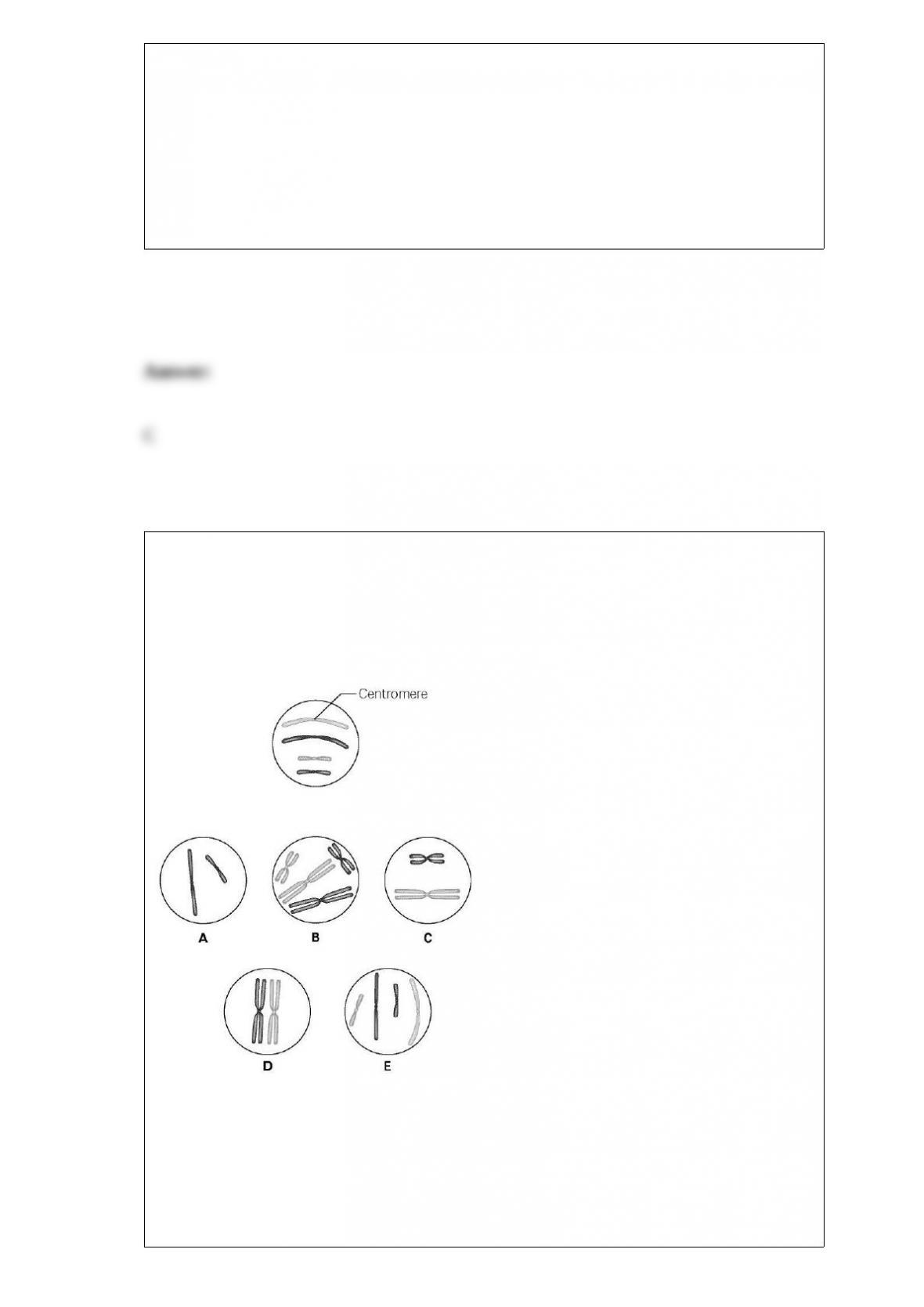
The unlettered circle at the top of the figure shows a diploid nucleus with four
chromosomes that have not yet replicated. There are two pairs of homologous
chromosomes, one long and the other short. One haploid set is black, and the other is
gray. The circles labeled A to E show various combinations of these chromosomes.
What is the correct chromosomal condition at prometaphase of mitosis?
A) B
B) C

C) D
D) E
For many years scientists believed that almost all animal lineages burst into being
during the Cambrian era (just after the end of the Precambrian super eon). However,
there have been many recent findings of animal-like fossils and “trace fossils” (fossils
of an animal-like organisms movement) from the late Precambrian. Which of the
following best explains why it took so long to realize there was animal-like life in the
Precambrian?
A) Animals from the late Precambrian had soft bodies.
B) There were many hard-shelled animals in the Cambrian.
C) The global climate was such that there was poor fossilization in the Precambrian.
D) There were very few animals during this period.
Although the membrane of a “resting” neuron is highly permeable to potassium ions, its
membrane potential does not exactly match the equilibrium potential for potassium
because the neuronal membrane is also _____.
A) slightly permeable to sodium ions
B) fully permeable to calcium ions
C) impermeable to sodium ions
D) highly permeable to chloride ions
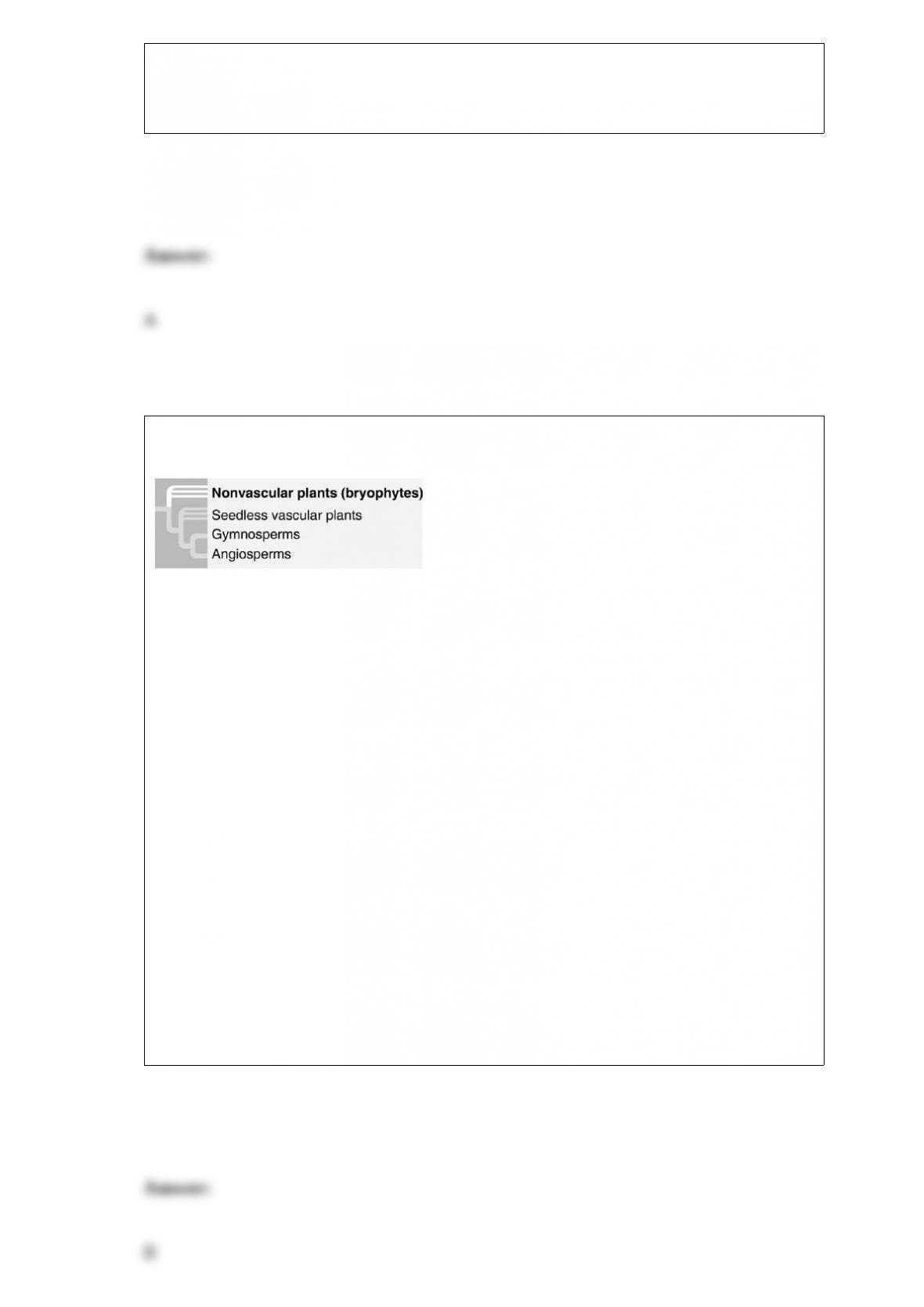
Based upon the figure above, the phylogenetic tree _____.
1. depicts uncertainty about whether the bryophytes or the vascular plants evolved first
2. depicts an evolutionary hypothesis
3. includes polytomies
4. shows that members of the phylum Pterophyta are the closest living relatives to the
seed plants
5. indicates that seeds are a shared ancestral character of all vascular plants
A) 1 and 2
B) 2 and 3
C) 1, 2, and 3
D) 1, 2, and 4
Environmental cues that influence the timing of reproduction generally do so by _____.
A) increasing the body temperature
B) providing access to water for external fertilization
C) increasing ambient temperature most favorable for sex
D) direct effects on hormonal control mechanisms

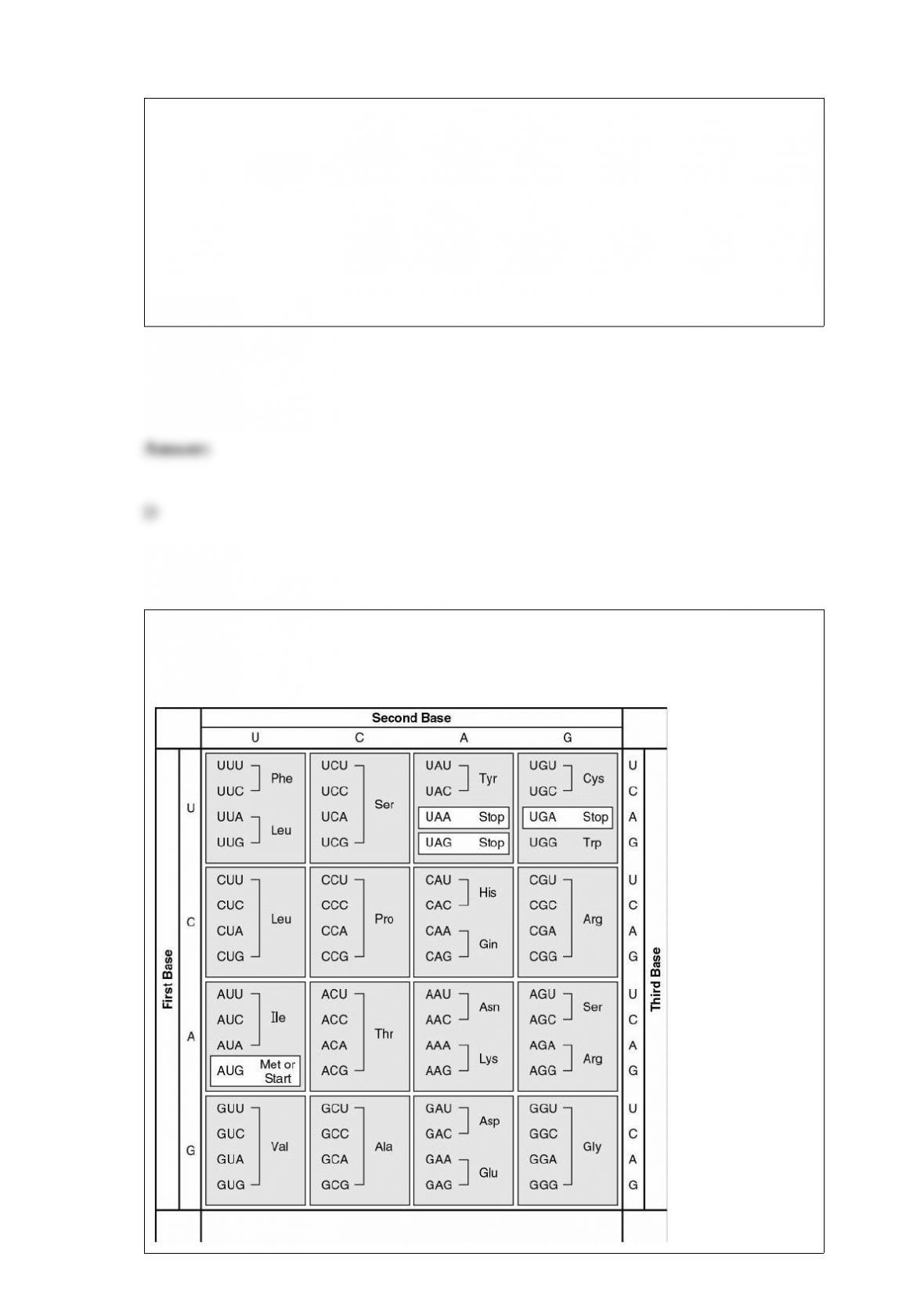
Refer to the figure above. What would the anticodon be for a tRNA that transports
phenylalanine to a ribosome?
A) UUU
B) AAA
C) TTT
D) CCC
What was an early selective advantage of a coelom in animals? A coelom _____.
A) contributed to a hydrostatic skeleton, allowing greater range of motion
B) was a more efficient digestive system
C) allowed cephalization and the formation of a cerebral ganglion
D) allowed asexual and sexual reproduction
Stamens, sepals, petals, carpels, and pinecone scales are all _____.
A) female reproductive parts
B) capable of photosynthesis

C) modified leaves
D) found on flowers
In the structural organization of many eukaryotic genes, individual exons may be
related to which of the following?
A) the sequence of the intron that immediately precedes each exon
B) the number of polypeptides making up the functional protein
C) the various domains of the polypeptide product
D) the number of start sites for transcription