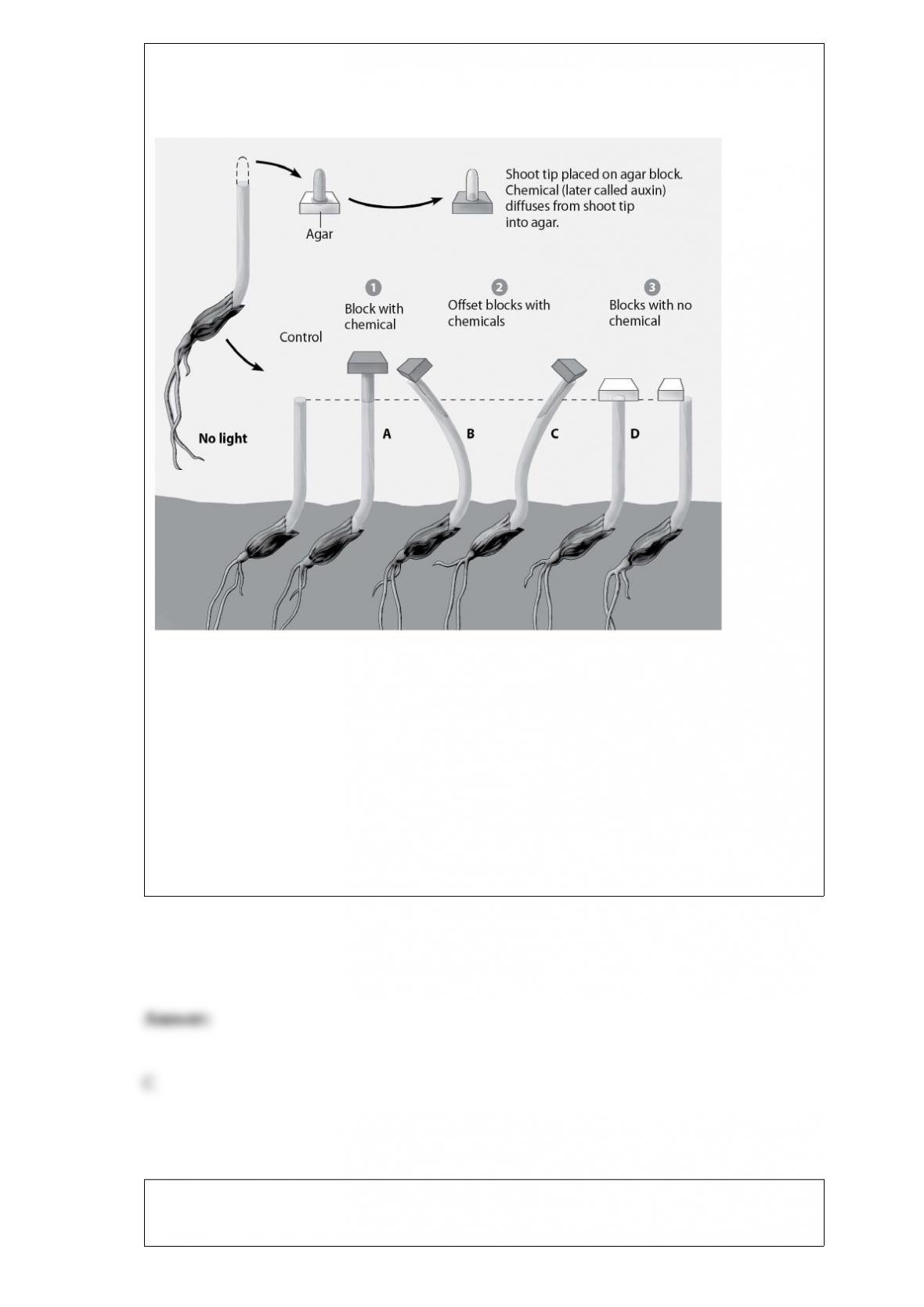
In the figure, the shoot emerged through the soil toward the light rather than growing
down in the direction of the roots due to
A) thigmotropism.
B) phototropism.
C) gravitropism.
D) circadian rhythm.
Which of the following statements regarding diffusion is false?
A) Diffusion is a result of the thermal energy of atoms and molecules.
B) Diffusion requires no input of energy into the system.
C) Diffusion occurs when particles spread from areas where they are less concentrated
to areas where they are more concentrated.
D) Diffusion occurs even after equilibrium is reached and no net change is apparent.
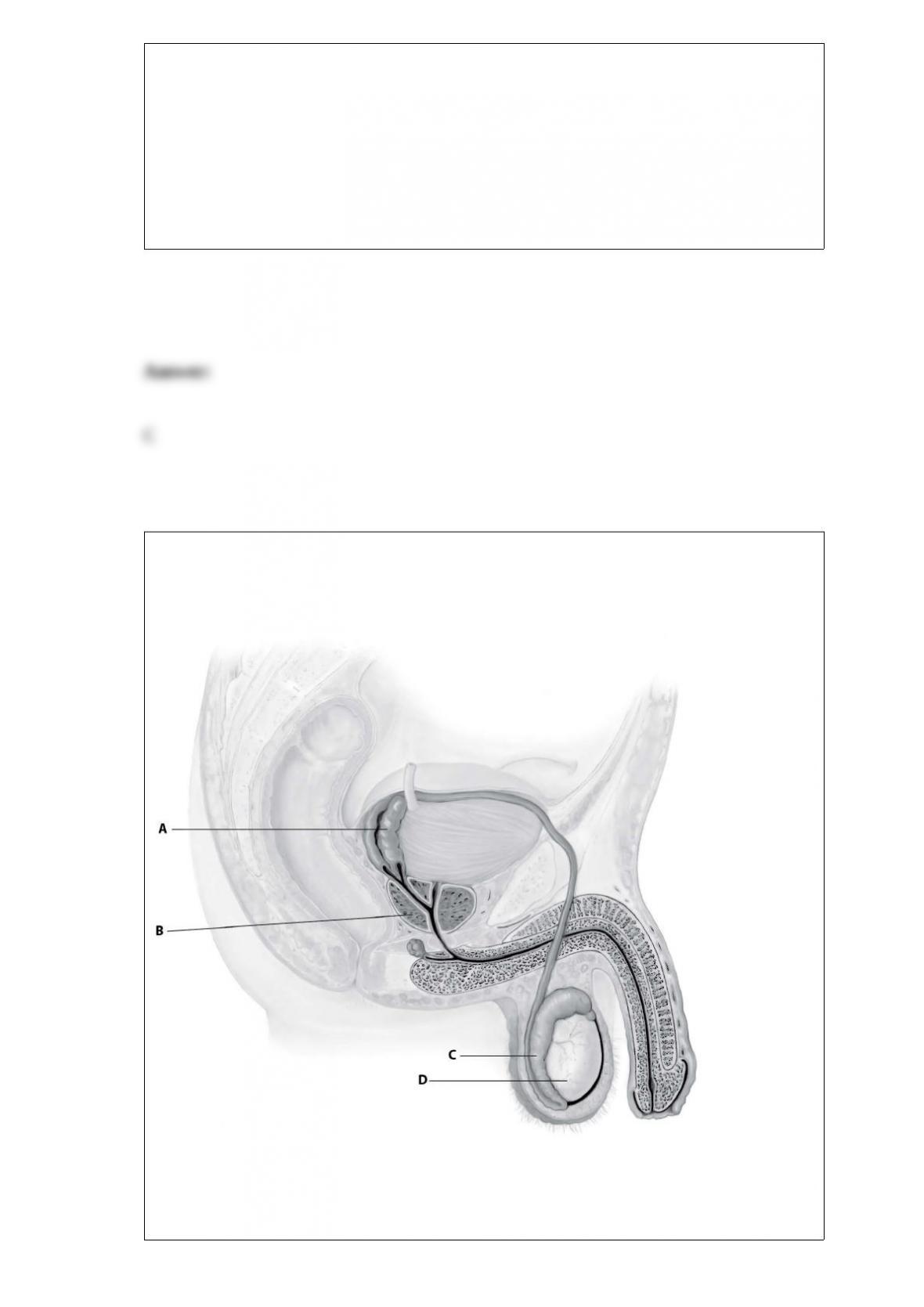
Which part of this figure depicting the human male reproductive system is the
epididymis?
A) part A
B) part B

C) part C
D) part D
Which of the following animals is an ape?
A) New World monkey
B) Old World monkey
C) orangutan
D) tarsier
In plant research labs, plants are often grown in light-proof chambers where the hours
of light and dark are carefully controlled. A new researcher goes into a chamber and
accidentally turns on the light during the “dark” period. What is likely to happen?
A) If the plants are short day plants, there will be no impact.
B) If the researcher can quickly produce a flash of far-red light and close the door, there
will be no impact.
C) If the plants are not yet flowering, there will be no impact.
D) If the light is only red light and not far-red light, there will be no impact.

Which of the following choices best describes a plasma cell?
A) It is a differentiated T cell.
B) It is a differentiated B cell.
C) It responds to an antigen and differentiates into a B cell.
D) It is produced during a primary immune response, persists, and multiplies in
response to a reappearance of the antigen.
What is the node of a plant stem?
A) the point of leaf attachment
B) the point of apical dominance
C) the area between the shoots and the roots
D) a small pore where gases are exchanged

An elk herd is observed over many generations. Most of the full-grown bull elk have
antlers of nearly the same size, although a few have antlers that are significantly larger
or smaller than this average size. The average antler size remains constant over the
generations. Which of the following effects probably accounts for this situation?
A) directional selection
B) stabilizing selection
C) a bottleneck effect that resulted in low genetic diversity
D) a high rate of gene flow
Which of the following groups includes both spiders and horseshoe crabs?
A) millipedes
B) crustaceans
C) chelicerates
D) insects
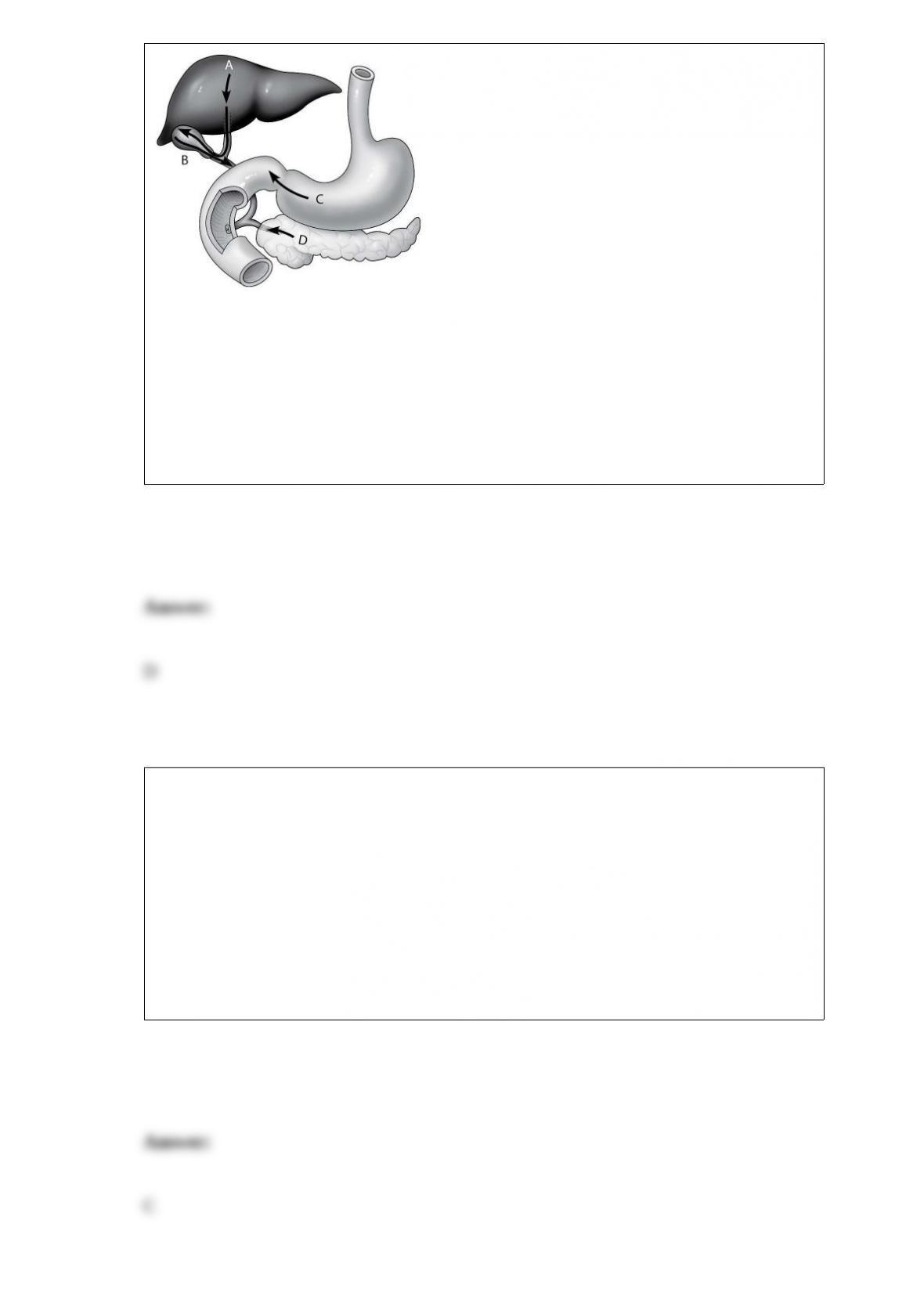
Which arrow shows the release of digestive enzymes by the pancreas?
A) arrow A
B) arrow B
C) arrow C
D) arrow D
The liquid part of the blood that consists of water, salts, and dissolved proteins is known
as
A) interstitial fluid.
B) lymph.
C) plasma.
D) platelets.

The mucus-producing cells that line the stomach
A) increase the surface of the stomach for faster digestion.
B) stimulate production of hydrochloric acid.
C) lubricate and protect the stomach lining.
D) move food upward in the stomach to prolong digestion.
Craniates are chordates that all possess
A) a head.
B) jaws.
C) a vertebral column.
D) amniotic eggs.
A researcher who detects a higher-than-normal amount of interferon in a laboratory rat
would correctly conclude that
A) the rat has, or recently had, a viral infection.

B) cancerous cells are present in the rat.
C) the rat’s diet is deficient in calcium.
D) monocytes are differentiating into macrophages in the rat’s bloodstream.
Neurotransmitters that open Na+ channels and trigger action potentials in receiving cells
are called
A) inhibitory.
B) cross-linked.
C) excitatory.
D) obligatory.
Based on the figure below, answer the questions that follow.
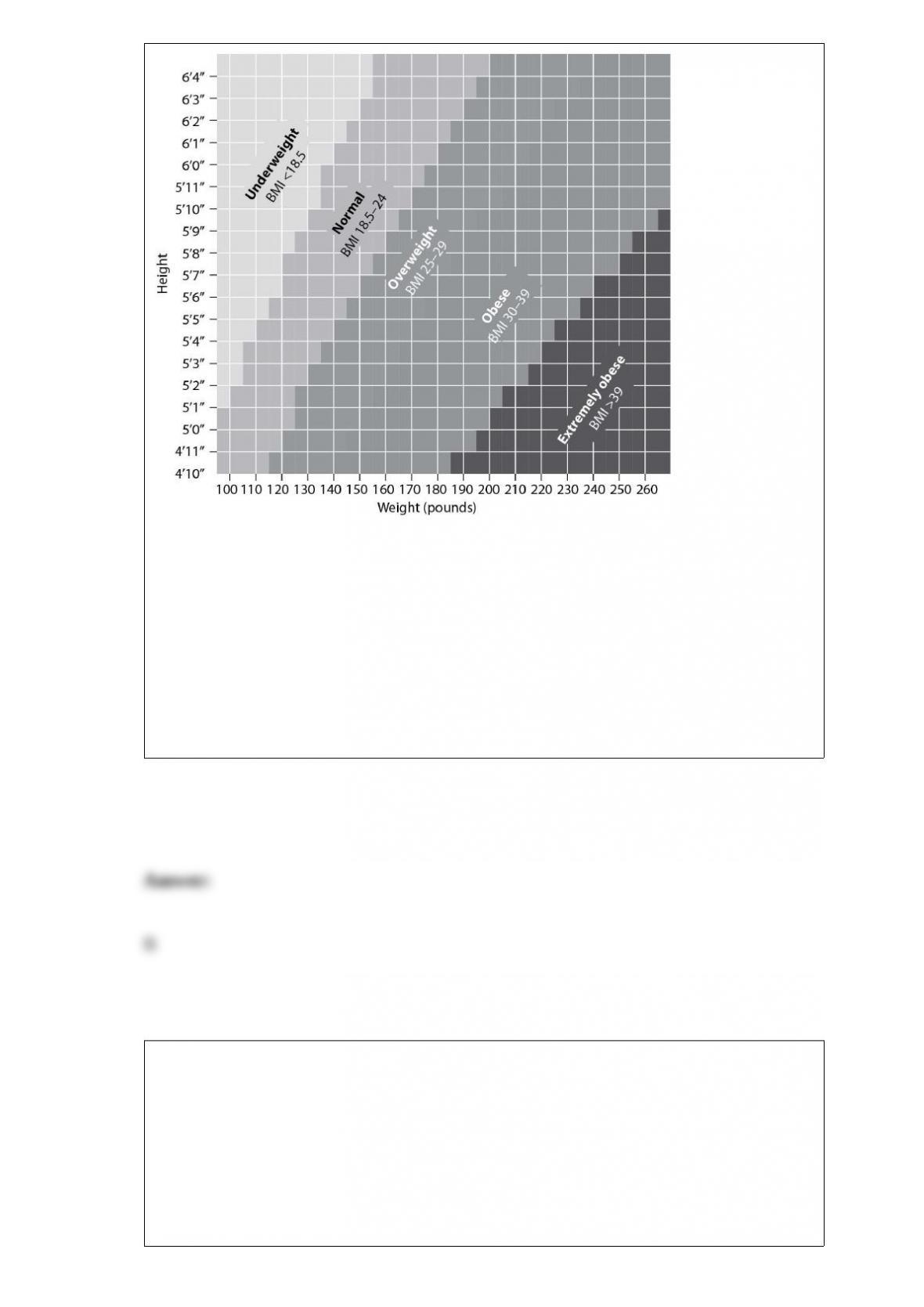
A person who is 5′ 7″ and weighs 170 pounds would be considered
A) normal.
B) overweight.
C) obese.
D) extremely obese.
Compared to a solution of pH 3, a solution of pH 1 is
A) 100 times more acidic.
B) 10 times more acidic.
C) 10 times more basic.

D) 100 times more basic.
The end products of the citric acid cycle include all of the following except
A) CO2.
B) pyruvate.
C) ATP.
D) FADH2.
The vertebrate group that describes all jawed vertebrates with two pairs of limbs is the
A) craniates.
B) amniotes.
C) tetrapods.
D) mammals.
Which of the following studies is a meta-analysis?
A) a study that examined a link between nitrogen in the soil and yellowing of leaves
B) a study that summarized research reports from many laboratories around the world
indicating a relationship between a diet high in plants and colon cancer
C) a study that reported on seed germination rates at many different temperatures
D) a study that related transpiration rates in a number of different plants to weather
conditions over many areas in North America.
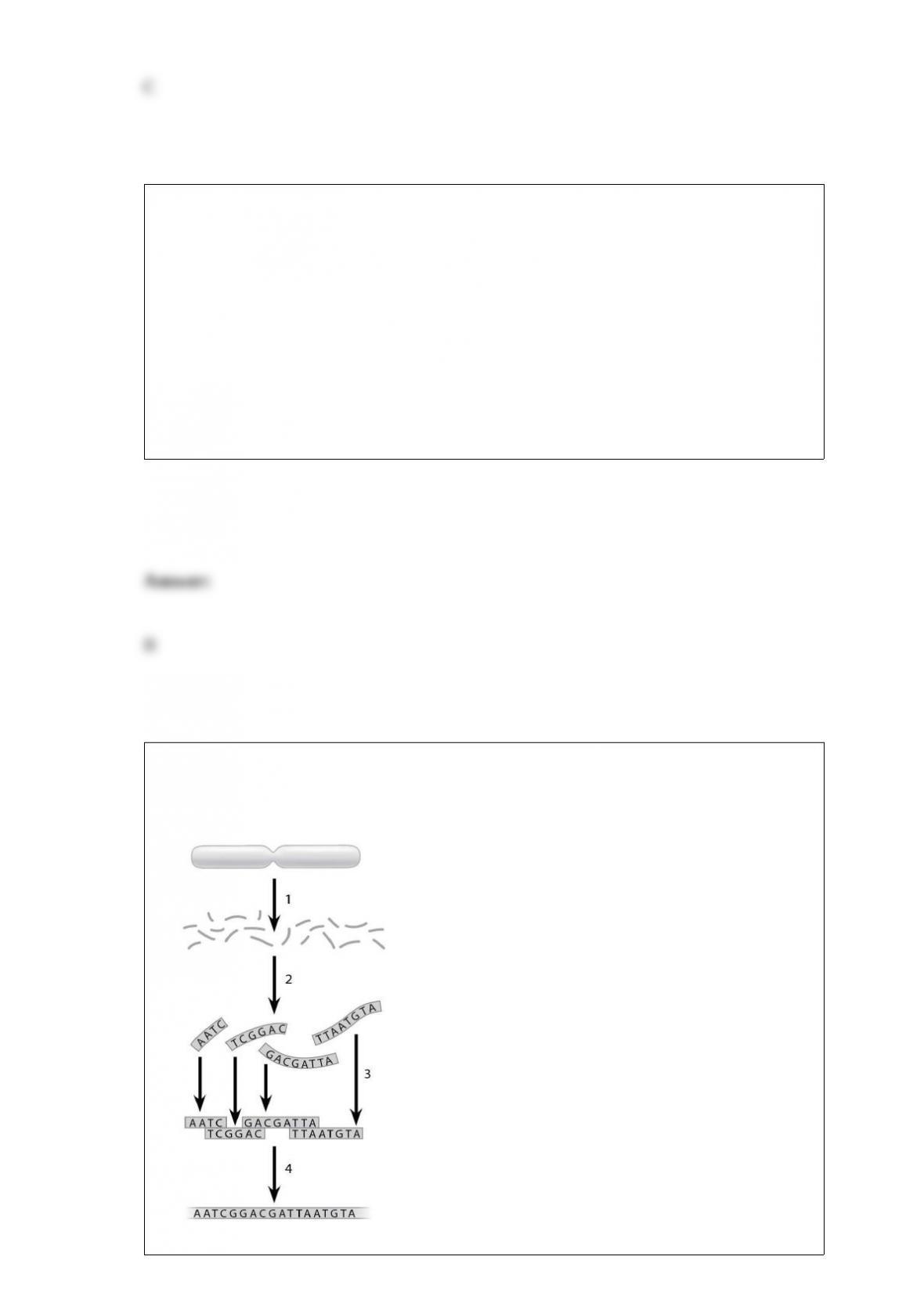
Below is a figure depicting the whole-genome shotgun method. Which step is most
similar to a step used when preparing a genomic library?

A) step 1
B) step 2
C) step 3
D) step 4
Two populations that have been separated by a river are most likely to become separate
species if
A) fur color is different in the two populations.
B) genes controlling ear development become different so that members of one
population have much longer ears than the other.
C) genes controlling molecules on the surface of the sperm that bind with egg receptors
are different in the two populations.
D) feeding habits are different in the two populations.
In accordance with the principle of parsimony, scientists prefer
A) phylogenetic trees that minimize the number of evolutionary changes.
B) phylogenetic trees in which adaptations repeatedly arise, disappear, and reappear.

C) phylogenetic trees with many small clades to those with a few major clades.
D) the Linnaean system of nomenclature to the use of common names.
Which of the following are not included among the eumetazoans that have true tissues?
A) sea stars (Echinodermata)
B) earthworms (Annelida)
C) sea anemones (Cnidaria)
D) sponges (Porifera)
A student taking a plant physiology class is interested in investigating what will happen
if the apical bud is removed from a growing plant and supplementary hormones are
introduced.
He set up his experiment with two groups of plants of the same species. In groups A and
B, the apical buds were removed and the cut apical ends were wrapped with
hormone-impregnated cotton. The plants were observed over a five-week period for
growth and development. In group A, many axillary buds and leaves appeared along the
sides of the stem, but the plants had minimal root growth. In group B, minimal growth
occurred in the shoot and roots, and no axillary buds formed.
What hormone was in the cotton used to wrap the apical ends of the group A plants?

A) cytokinin
B) giberellin
C) ethylene
D) auxin
The antibiotic oligomycin works by inhibiting ATP synthase. You would expect that
A) there will be an increase in ATP production.
B) H+ will accumulate in the intermembrane space.
C) H+ will accumulate in the mitochondrial matrix.
D) NAD+ and FAD will pick up the extra H+.
An important function of the bones in the skeleton is to
A) provide a source of ATP.
B) generate hormones.
C) add weight.

D) support the body.
Consider an animal that exchanges gases through its skin. Which of the following body
shapes would provide the most surface area for gas exchange?
A) a flat rectangle with sides measuring 3 inches and 4 inches
B) a flat square with sides measuring 2 inches each
C) a flat rectangle with sides measuring 2 inches and 9 inches
D) a flat square with sides measuring 4 inches each
All of Earth that is inhabited by life is called the
A) atmosphere.
B) ecosystem.
C) biosphere.
D) biome.

If the time it takes to go around the loop is 1 second, what is the cardiac output in units
of liters per minute?
A) 3.9 L/min
B) 4.2 L/min
C) 7.0 L/min
D) 8.1 L/min
Which of the following statements is true for all types of passive transport?
A) Proteins are needed to transport molecules across the membrane.
B) The concentration gradient is the driving force.
C) Only small polar molecules are able to cross the plasma membrane.
D) Ions never cross the plasma membrane by passive transport.

The earliest known land plants date to the
A) Precambrian.
B) Ordovician (early Paleozoic era).
C) Carboniferous (late Paleozoic era).
D) Jurassic (Mesozoic era).
Which animals are ectothermic?
A) frogs and mammals
B) lizards and birds
C) turtles and lizards
D) birds and mammals