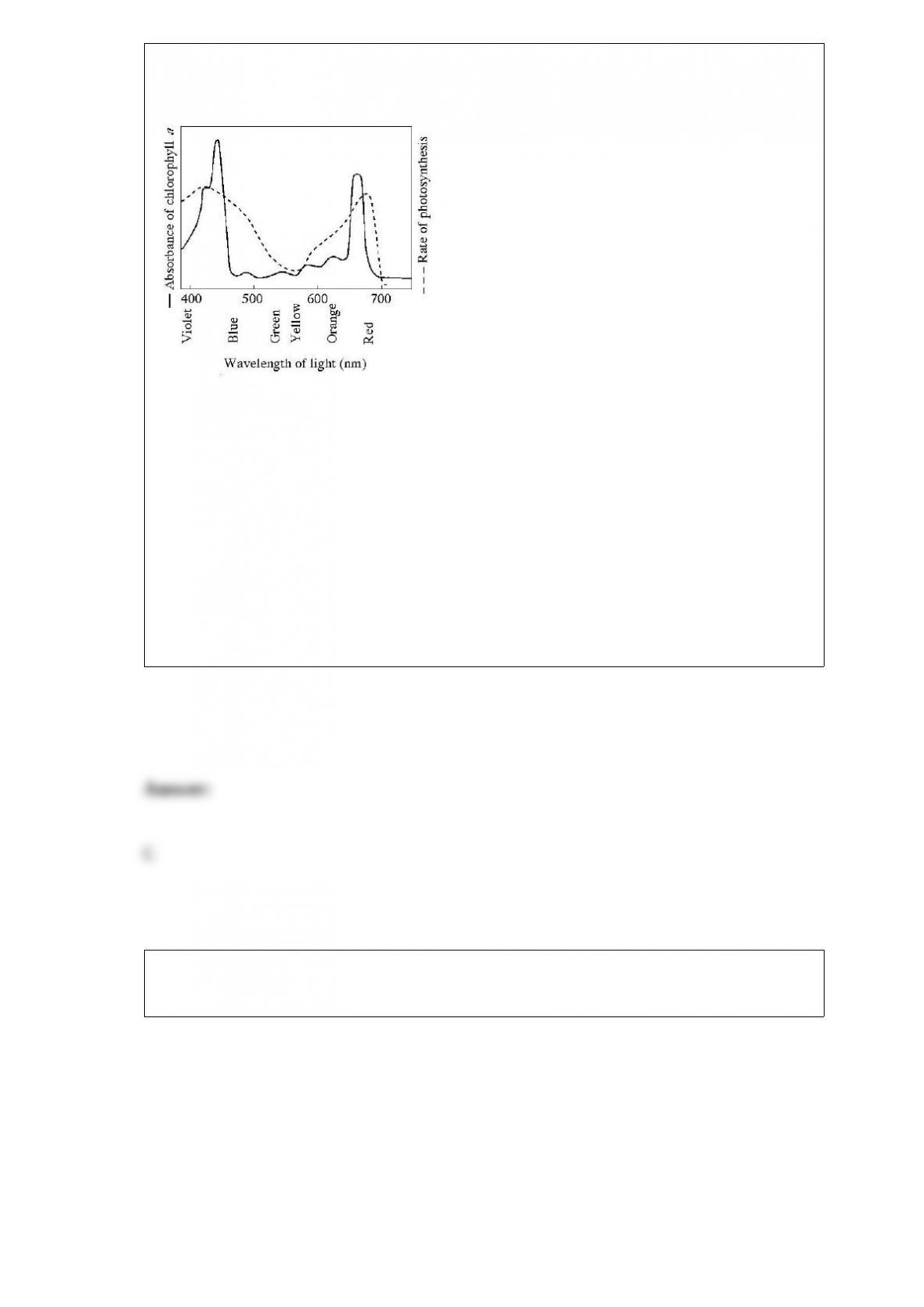
The figure shows the absorption spectrum for chlorophyll a and the action spectrum for
photosynthesis. Why are they different?
A) Green and yellow wavelengths inhibit the absorption of red and blue wavelengths.
B) Oxygen given off during photosynthesis interferes with the absorption of light.
C) Other pigments absorb light in addition to chlorophyll a.
D) Aerobic bacteria take up oxygen, which changes the measurement of the rate of
photosynthesis.
The following table depicts characteristics of five prokaryotic species (A-E). Use the
information in the table to answer the question(s) below
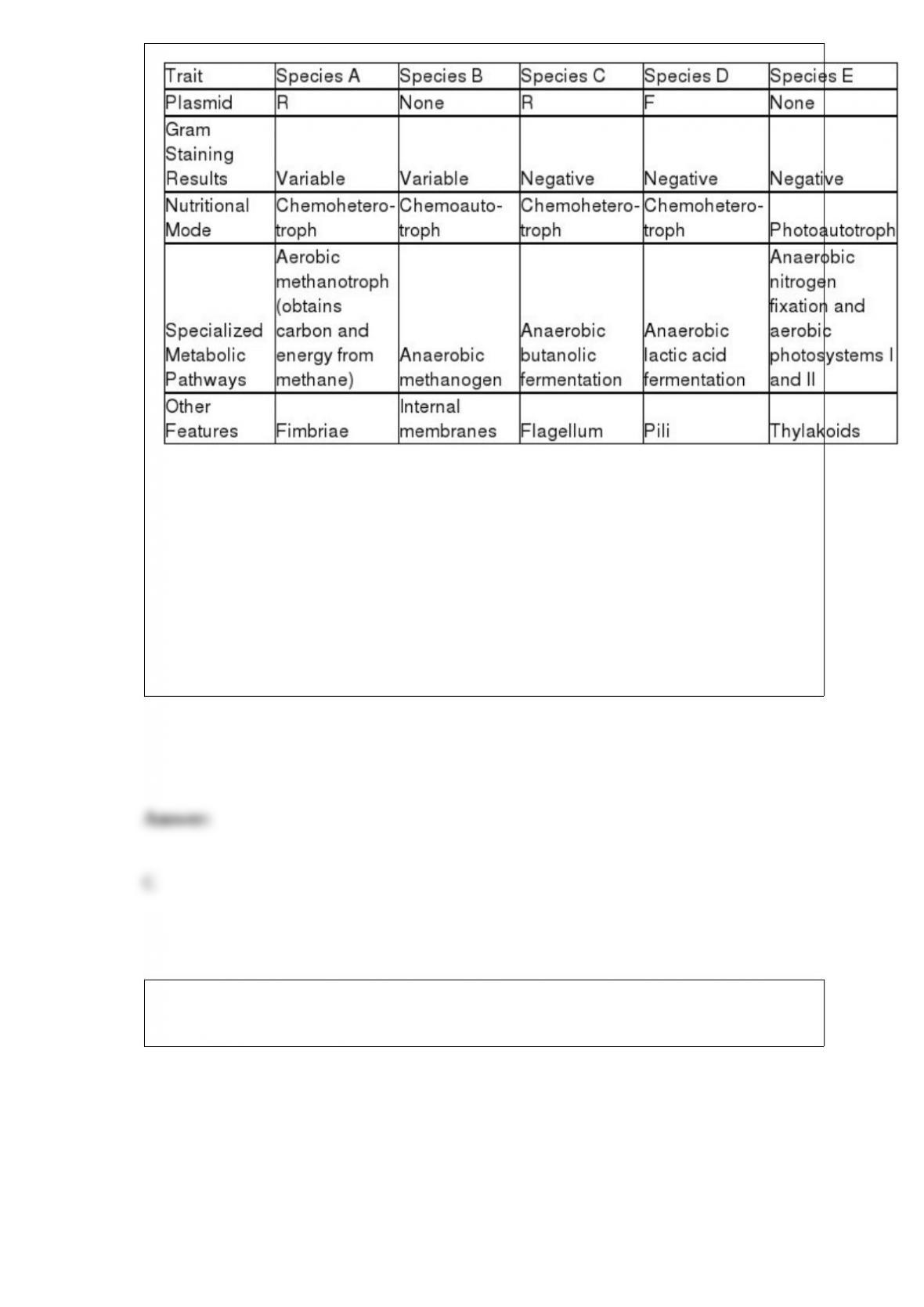
Which species are capable of directed movement?
A) species A
B) species B
C) species C
D) species D
The following questions are based on the 15 molecules illustrated in the accompanying
figure. Each molecule may be used once, more than once, or not at all.
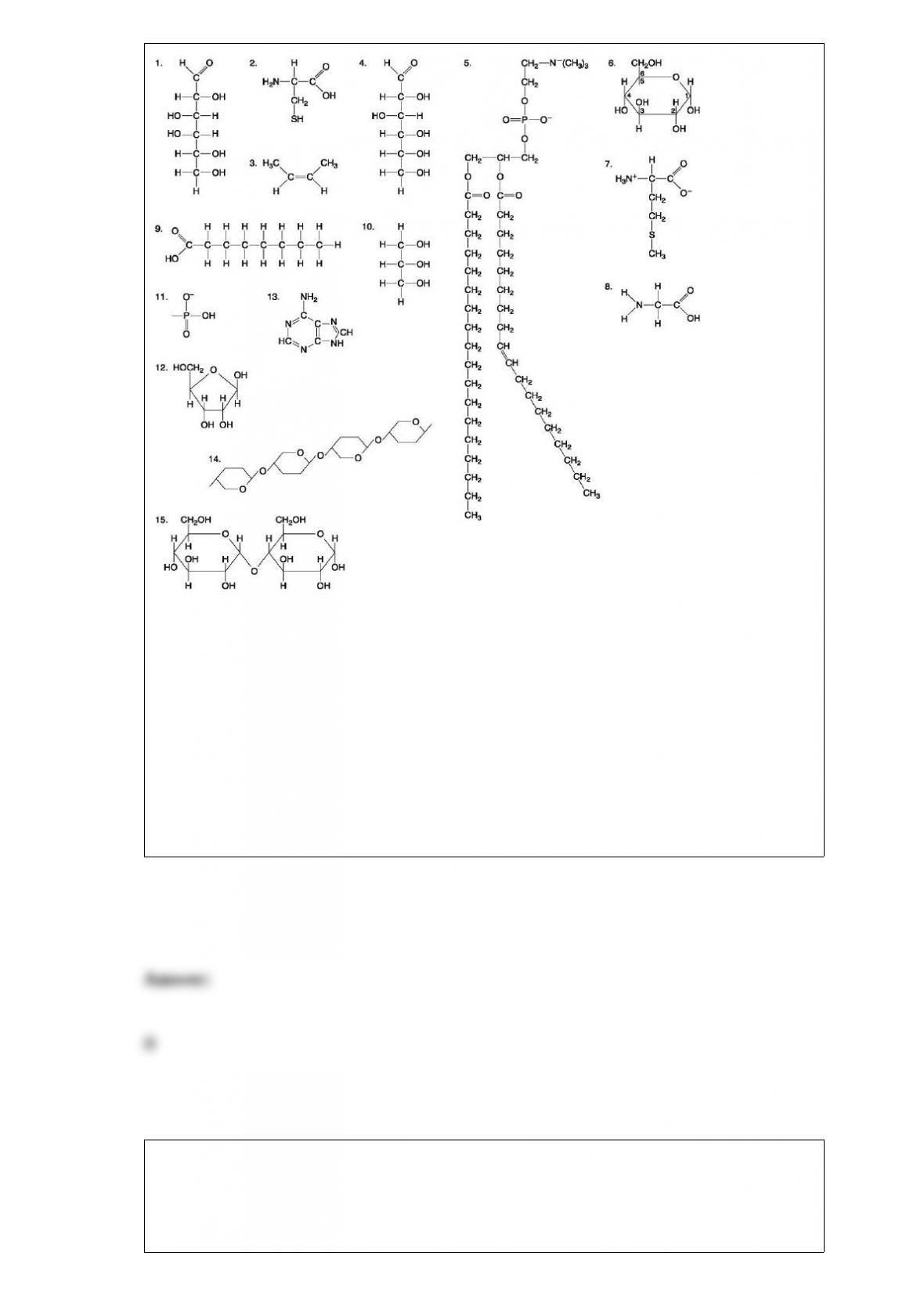
Which molecule has both hydrophilic and hydrophobic properties and is found in
plasma membranes?
A) 1
B) 5
C) 12
D) 14
You decide to study two species of birds, both of which form monogamous pairs (one
male and one female). In species 1, you find that the eggs in a pair’s nest are in fact
almost always the offspring of that pair. In species 2, you are surprised to find that
many of the eggs in a nest were actually fathered by males of neighboring pairs.

Apparently, mating outside of monogamous pairings is widespread in species 2. Given
this information, what would be the logical prediction to make before comparing testes
size of males of the two species?
A) Testes of species 1 are larger than testes of species 2.
B) Testes of species 2 are larger than testes of species 1.
C) There is no relationship between this observation and the size of testes.
Which of the following structures are correctly paired?
A) forebrain cerebellum
B) midbrain cerebrum
C) hindbrain cerebellum
D) brainstem anterior pituitary gland
Which of the following criteria have to be met for a species to qualify as invasive?
A) endemic to the area, spreads rapidly, and displaces foreign species
B) introduced to a new area, spreads rapidly, and displaces native species
C) introduced to a new area, spreads rapidly, and displaces other invasive species

D) endemic to the area, spreads slowly, and displaces native species
In what way do the membranes of a eukaryotic cell vary?
A) Phospholipids are found only in certain membranes.
B) Certain proteins are unique to each membrane.
C) Only certain membranes of the cell are selectively permeable.
D) Some membranes have hydrophobic surfaces exposed to the cytoplasm, while others
have hydrophilic surfaces facing the cytoplasm.
The sea slug Pteraeolidia ianthina (P. ianthina) can harbor living dinoflagellates
(photosynthetic protists) in its skin. These endosymbiotic dinoflagellates reproduce
quickly enough to maintain their populations. Low populations do not affect the sea
slugs very much, but high populations (> 5 x 10⁵ cells/mg of sea slug protein) can
promote sea slug survival.
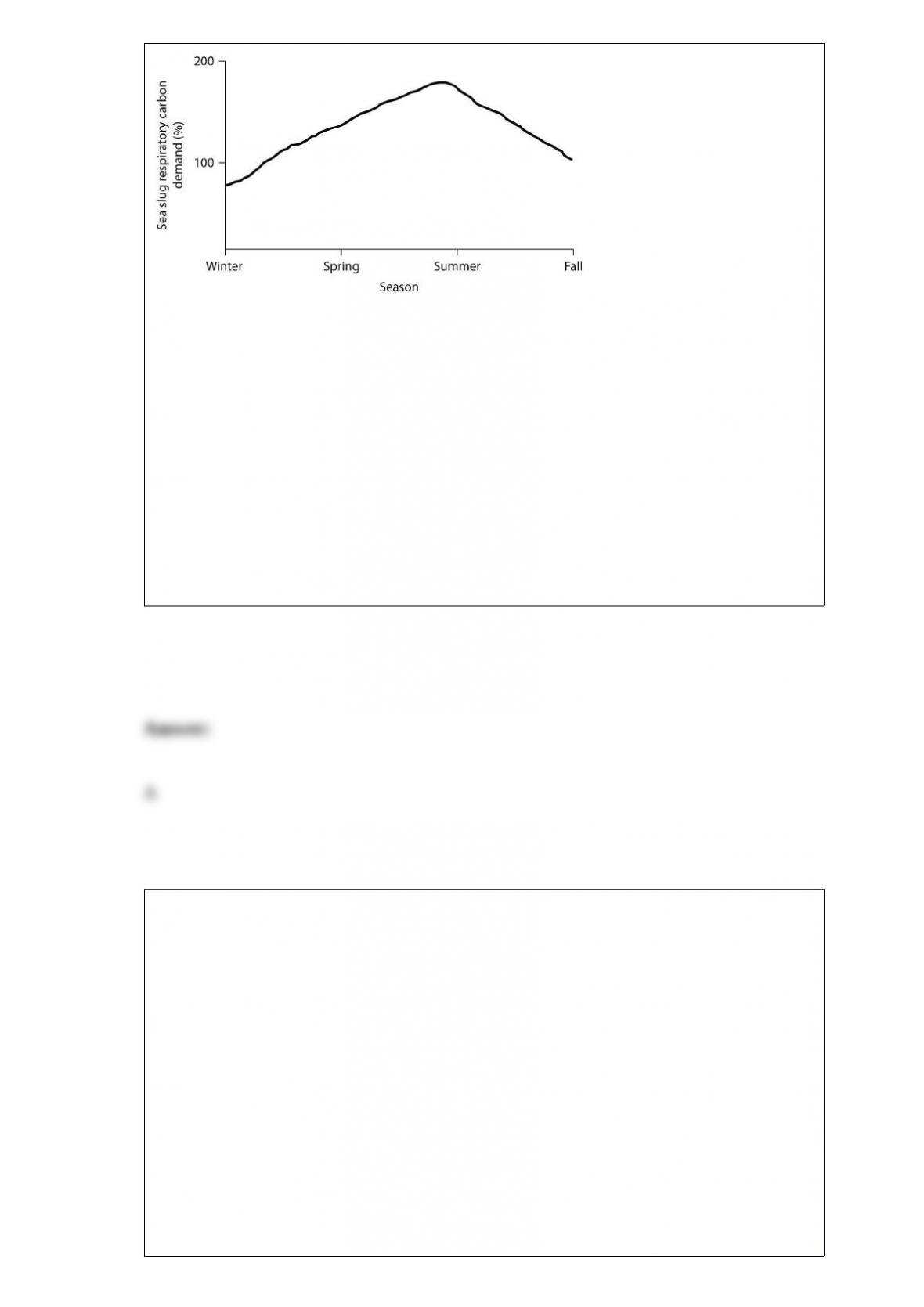
Percent of sea slug respiratory carbon demand provided by indwelling dinoflagellates.
According to the graph, during which season(s) of the year is the relationship between
the sea slug and its dinoflagellates closest to being commensal?
A) winter
B) spring
C) summer
D) spring and summer
In 2009, a flu pandemic was believed to have originated when viral transmission
occurred from pig to human, thereby earning the designation, ‘swine flu.” Although pigs
are thought to have been the breeding ground for the 2009 virus, sequences from bird,
pig, and human viruses were all found within this newly identified virus. What is the
most likely explanation of why this virus contained sequences from bird, pig, and
human viruses?
A) The virus was descended from a common ancestor of bird, pig, and human flu
viruses.
B) The infected individuals happened to be infected with all three virus types.
C) Related viruses can undergo genetic recombination if the RNA genomes mix and
match during viral assembly.

D) The human was likely infected with various bacterial strains that contained all three
RNA viruses.
The protostome developmental sequence arose just once in evolutionary history,
resulting in two main subgroupsLophotrochozoa and Ecdysozoa. What does this finding
suggest?
A) These two subgroups have a common ancestor that was a deuterostome.
B) The protostomes are a polyphyletic group.
C) Division of these two groups occurred after the protostome developmental sequence
appeared.
D) The lophotrochozoans are monophyletic.
Through a microscope, you can see a cell plate beginning to develop across the middle
of a cell and nuclei forming on either side of the cell plate. This cell is most likely
_____.
A) an animal cell in the process of cytokinesis
B) a plant cell in the process of cytokinesis
C) an animal cell in the S phase of the cell cycle
D) a plant cell in metaphase

A stickleback fish will attack a fish model as long as the model has red coloring. What
animal behavior idea is manifested by this observation?
A) sign stimulus
B) cognition
C) imprinting
D) classical conditioning
In large scale, genome-wide association studies in humans we look for _____.
A) lengthy sequences that might be shared by most members of a population
B) SNPs where one allele is found more often in persons with a particular disorder than
in healthy controls
C) SNPs where one allele is found in families with particular introns sequence
D) SNPs where one allele is found in two or more adjacent genes

Which of the following correctly describes a difference between spermatogenesis and
oogenesis?
A) Spermatogenesis results in four mature sperm cells, while oogenesis results in one
mature egg cell.
B) Spermatogenesis results in one mature sperm cell, while oogenesis results in four
mature egg cells.
C) In spermatogenesis, mitosis occurs twice and meiosis once, while in oogenesis,
mitosis occurs once and meiosis twice.
D) Spermatogenesis results in four mature sperm cells, while oogenesis results in one
mature egg cell. In spermatogenesis, mitosis occurs twice and meiosis once, while in
oogenesis, mitosis occurs once and meiosis twice.
Upon witnessing a robber hold up a convenience store at gunpoint, which of the
following reactions would your nervous system initiate?
A) increased heartbeat
B) constriction of airways
C) constriction of pupils
D) decreased heartbeat

Air masses formed over the Pacific Ocean are moved by prevailing westerlies where
they encounter extensive north-south mountain ranges, such as the Sierra Nevada and
the Cascades. Which statement best describes the outcome of this encounter between a
landform and an air mass?
A) The cool, moist Pacific air heats up as it rises, releasing its precipitation as it passes
the tops of the mountains. This warm, now dry air cools as it descends on the leeward
side of the range.
B) The warm, moist Pacific air rises and cools, releasing precipitation as it moves up
the windward side of the range. This cool, now dry air mass heats up as it descends on
the leeward side of the range.
C) The cool, dry Pacific air heats up and picks up moisture from evaporation of the
snowcapped peaks of the mountain range, releasing this moisture as precipitation when
the air cools while descending on the leeward side of the range.
D) These air masses are blocked by the mountain ranges, producing high annual
amounts of precipitation on the windward sides of these mountain ranges.
The opening of stomata is thought to involve _____.
A) an increase in the solute concentration of the guard cells
B) active transport of water out of the guard cells
C) decreased turgor pressure in guard cells
D) movement of K+ from the guard cells

Which process in the nephron is LEAST selective?
A) filtration
B) reabsorption
C) active transport
D) secretion
It is believed that the coelacanths and lungfish represent a crucial link between other
fishes and tetrapods. What is the major feature in these fish in support of this
hypothesis?
A) Like amphibians, they are tied to the water for reproduction.
B) Their fins have skeletal and muscular structures similar to amphibian limbs.
C) They have highly evolved nervous and circulatory systems.
D) They have lungs and are able to breathe air when water is scarce.

Transcription in eukaryotes requires which of the following in addition to RNA
polymerase?
A) start and stop codons
B) ribosomes and tRNA
C) several transcription factors
D) aminoacyl-tRNA synthetase
For a repressible operon to be transcribed, which of the following must occur?
A) A corepressor must be present.
B) RNA polymerase and the active repressor must be present.
C) RNA polymerase must bind to the promoter, and the repressor must be inactive.
D) RNA polymerase must not occupy the promoter, and the repressor must be inactive.
_____ prevents seeds from germinating until conditions are favorable for the growth of
the plant.
A) Ethylene
B) Zeaxanthin

C) Gibberellin
D) Abscisic acid
Which of the following statements correctly describes the normal tonicity conditions for
typical plant and animal cells? The animal cell is in _____.
A) a hypotonic solution, and the plant cell is in an isotonic solution
B) an isotonic solution, and the plant cell is in a hypertonic solution
C) a hypertonic solution, and the plant cell is in an isotonic solution
D) an isotonic solution, and the plant cell is in a hypotonic solution
Branching points at the root of the eukaryotic phylogenetic tree
A) reveal that unikonts are derived from the SAR clade
B) suggest that Archaeplastids were the first eukaryotes
C) strongly suggest that fungi are more closely related to plants than animals
D) are presently unclear

For several decades now, amphibian species worldwide have been in decline. A
significant proportion of the decline seems to be due to the spread of the chytrid fungus,
Batrachochytrium dendrobatidis (Bd). Chytrid sporangia reside within the epidermal
cells of infected animals, animals that consequently show areas of sloughed skin. They
can also be lethargic, which is expressed through failure to hide and failure to flee. The
infection cycle typically takes four to five days, at the end of which zoospores are
released from sporangia into the environment. In some amphibian species, mortality
rates approach 100%; other species seem able to survive the infection.
Sexual reproduction has not been observed in Bd. If its morphology and genetics did
not identify it as a chytridiomycete, then to which fungal group would Bd be assigned?
A) zygomycetes
B) glomeromycetes
C) basidiomycetes
D) deuteromycetes
Imagine that you are managing a large game ranch. You know from historical accounts
that a species of deer used to live there, but they have been extirpated. After doing some
research to determine what might be an appropriately sized founding population, you
reintroduce them. You then watch the population increase for several generations, and
graph the number of individuals (vertical axis) against the number of generations
(horizontal axis). With no natural predators impacting the population, the graph will
likely appear as _____.
A) a diagonal line, getting higher with each generation

B) an “S” that ends with a vertical line
C) an upside-down “U”
D) a “J,” increasing with each generation
Lateral inhibition via amacrine cells in the mammalian retina _____.
A) underlies habituation of vision
B) enhances visual contrast
C) prevents bleaching in bright light
D) recycles neurotransmitter molecules
Retaining the zygote on the living gametophyte of land plants _____.
A) protects the zygote from herbivores
B) evolved concurrently with pollen
C) helps in dispersal of the zygote
D) allows it to be nourished by the parent plant

During exponential growth, a population always _____.
A) grows at its maximum per capita rate
B) quickly reaches its carrying capacity
C) cycles through time
D) loses some individuals to emigration
All types of muscle tissue have _____.
A) striated banding patterns seen under the microscope
B) cells that lengthen when appropriately stimulated
C) a response that can be consciously controlled
D) interactions between actin and myosin

You find a green organism in a pond near your house and believe it is a plant, not an
alga. The mystery organism is most likely a plant and not an alga if it _____.
A) contains chloroplasts
B) is surrounded by a cuticle
C) does not contain vascular tissue
D) has cell walls that are comprised largely of cellulose
In liver cells, the inner mitochondrial membranes are about five times the area of the
outer mitochondrial membranes. What purpose must this serve?
A) It allows for an increased rate of glycolysis.
B) It allows for an increased rate of the citric acid cycle.
C) It increases the surface for oxidative phosphorylation.
D) It increases the surface for substrate-level phosphorylation.
Which of the following is the correct sequence of blood flow in birds and mammals?
A) left ventricle → aorta → lungs → systemic circulation
B) vena cava → right atrium → right ventricle → pulmonary vein

C) pulmonary vein → left atrium → left ventricle → pulmonary circuit
D) vena cava → right atrium → right ventricle → pulmonary artery
A woman is found to have forty-seven chromosomes, including three X chromosomes.
Which of the following describes her expected phenotype?
A) a female with masculine characteristics such as facial hair
B) an apparent male who is sterile
C) healthy female of slightly above-average height
D) a sterile female