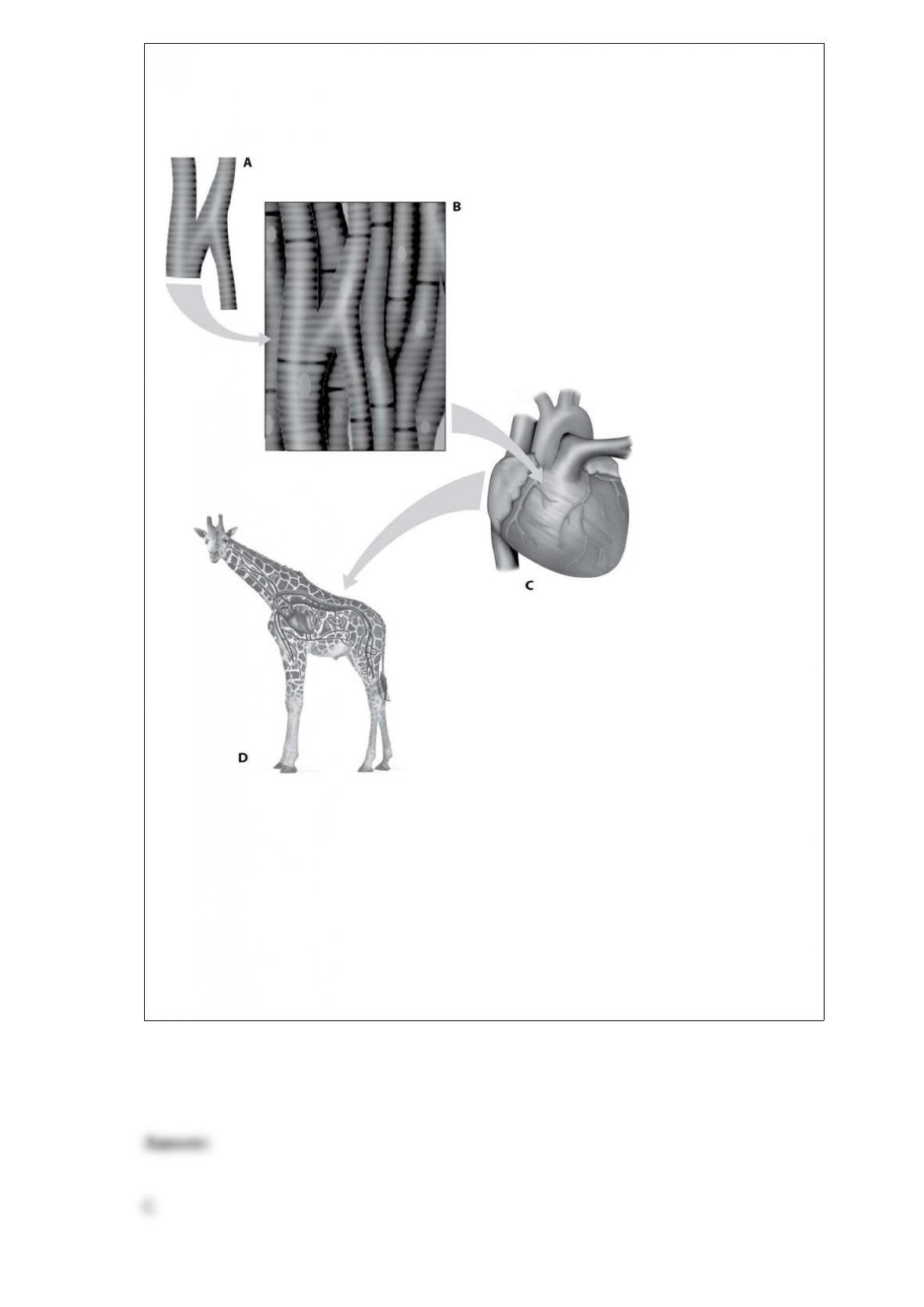
Use the figure below to answer the questions that follow.
Which part of the figure above shows an organ?
A) part A
B) part B
C) part C
D) part D

A mutant protist is found in which some mitochondria lack an inner mitochondrial
membrane. Which of the following pathways would be completely disrupted in these
mitochondria?
A) oxidative phosphorylation
B) alcoholic fermentation
C) glycolysis
D) biosynthesis
The neurotransmitter found at the synapse between nerves and human skeletal muscle
cells is
A) acetylcholine.
B) epinephrine.
C) dopamine.
D) serotonin.
California condors, large, predatory birds that were previously on the edge of
extinction, have benefited from a program that raises birds in captivity and then releases

them into the wild. The reintroduction program, however, is having variable success.
Which of the following would have been a surprise to wildlife biologists who, after
successfully breeding and raising condors, were reintroducing the condors to the wild
following a precipitous decline in their number in the 1970s? (In 1982 there were only
19 condors in the wild.)
A) Twelve of 19 nests had no hatchlings, and nests of the coastal population had shell
fragments 34% thinner than those of condor populations more inland.
B) Only some of the released condors fed on marine mammals; others fed on carcasses
of animals as different as wolves and cows.
C) Sea otter and sea lion populations declined in areas where the condors were released.
D) Reintroduced condors laid the same number of eggs as condor pairs in captivity.
If, in one population of pupfish all of the individuals have a blood pigment that is
extraordinarily effective at carrying oxygen, but this trait is not seen in any of the other
populations, what likely happened?
A) Because oxygen was low where these pupfish lived, a new allele for an effective
blood pigment arose.
B) This population was lucky to have an individual with a random mutation for an
effective blood pigment, and the frequency of this allele was increased in subsequent
generations through natural selection.
C) The ancestral population probably had this type of blood pigment, but it was lost
through genetic drift in the other 29 populations.
D) The other populations did not need this pigment, so they did not evolve it.

In a hypotonic solution, an animal cell will
A) lyse.
B) experience turgor.
C) neither gain nor lose water.
D) shrivel.
Botulinum toxin (Botox) produced by certain bacteria will
A) prevent enzymatic breakdown of neurotransmitters.
B) cause continual contraction of smooth muscle.
C) initiate an increase in the strength of a transmitted signal.
D) inhibit the release of acetylcholine.
The forward-facing eyes shared by all primates help them in
A) manipulating small objects.
B) depth perception as they navigate through forests.
C) swinging from tree branches.
D) seeing in the dark.
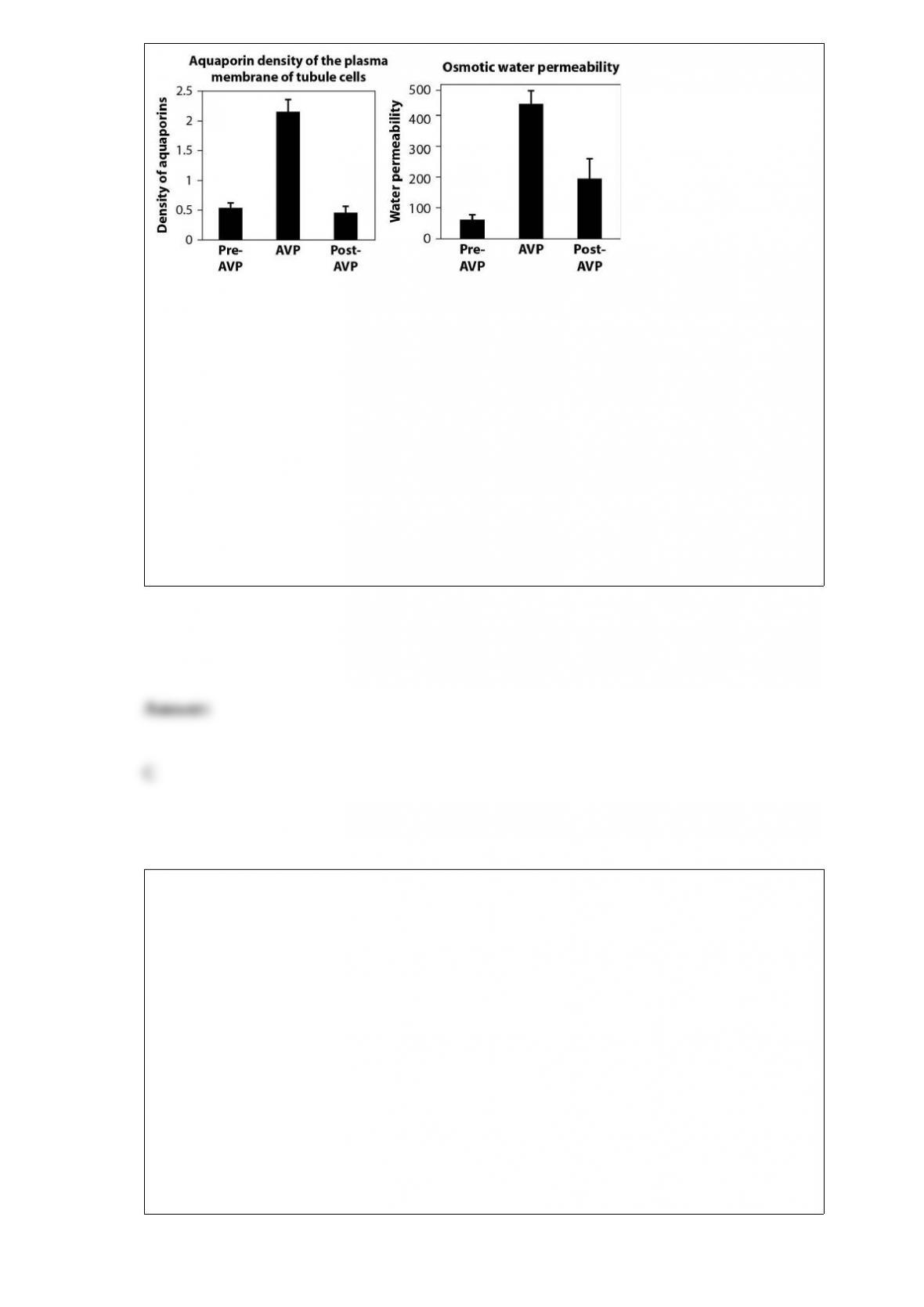
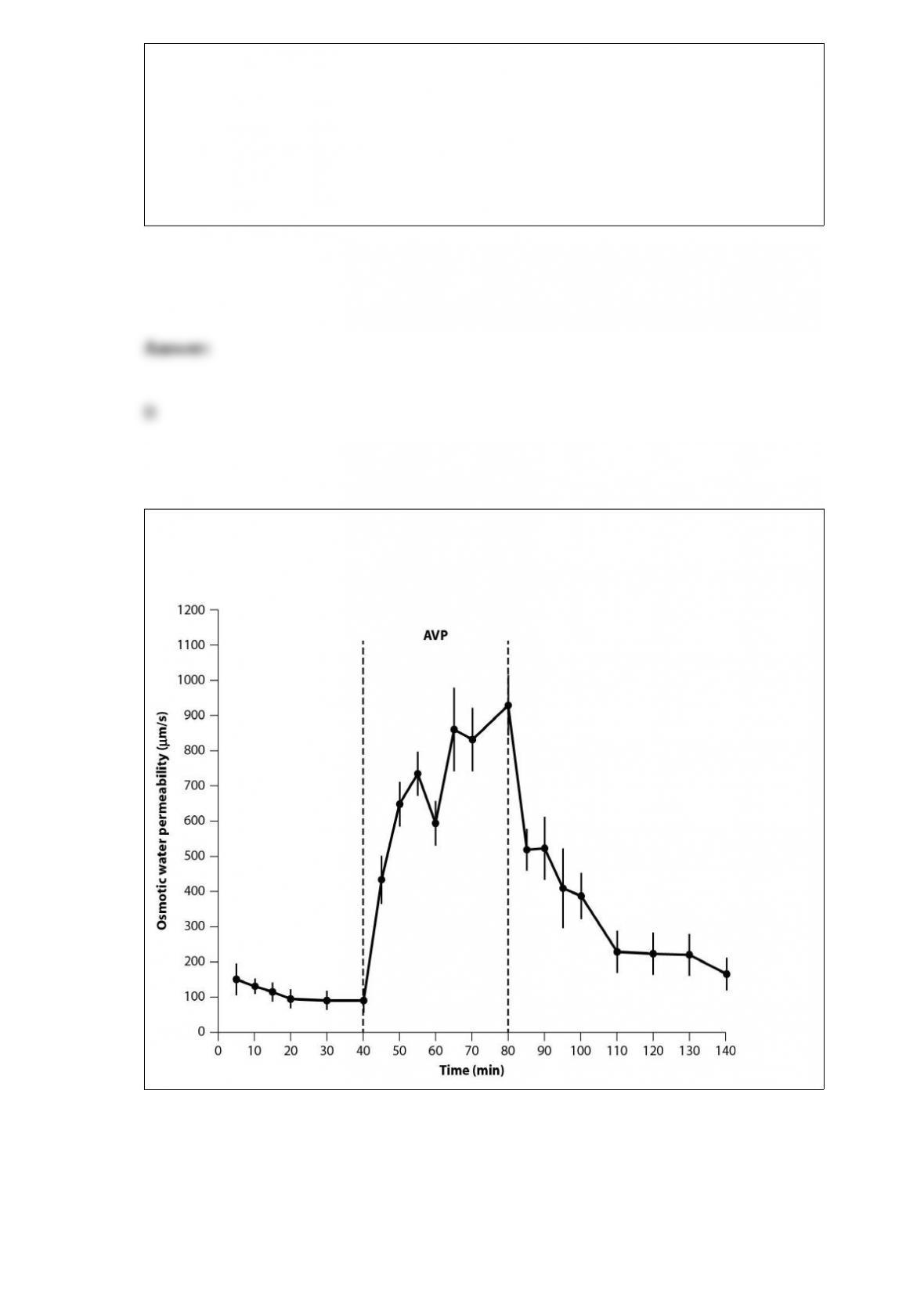
The following questions relate to the three figures above, which indicate how the
tubules in the kidney respond to the administration of the hormone vasopressin.
The density of the aquaporins in the presence of vasopressin was approximately
A) half as much as before the administration of vasopressin.
B) twice as much as before the administration of vasopressin.
C) four times as much as before the administration of vasopressin.
D) unchanged by the administration of vasopressin.
Many rats were tested for their ability to learn to navigate a maze. The average number
of errors, for a total of 14 trials, was 64 per rat. The rats that made the fewest errors
were bred to each other, and the offspring were tested in a similar way. This process
was repeated for seven generations, at which point the average number of errors for 14
trials was 36. This experiment demonstrates that
A) learned behavior cannot be inherited.
B) maze-learning ability has a genetic basis.
C) maze-learning ability depends mainly on early contact with adept parents.
D) natural selection has a role in the evolution of fixed action patterns but not in the
evolution of behavior involving learning.

Conjugation, transformation, and transduction are all ways that bacteria
A) reduce their DNA content.
B) increase the amount of RNA in the cytoplasm.
C) increase their genetic diversity.
D) alter their oxygen requirements.
Biotechnology
A) is a modern scientific discipline that has existed for only a few decades.
B) is strictly concerned with the manipulation of DNA.
C) has been around since the dawn of civilization.
D) is generally considered more harmful than valuable to society.

Cross-fostering experiments with Norway rat pups showed that in their response to
stress,
A) environment was the critical factor, not genetics.
B) genetics was the only important factor.
C) both genetics and the environment played a clear role.
D) cross-fostered pups resembled their biological mothers more than their foster
mothers.
Glycolysis is the first step of cellular respiration, in which glucose is used to generate
ATP to power the cell. The major chemical reaction that takes place in glycolysis
(ignoring some other reactants and products) is the conversion of glucose (C6H12O6) to
pyruvate (C3H4O3) and hydrogen ions (H+). Using this information, what is the correct
equation for the glycolysis chemical reaction?
A) C6H12O6 → C3H4O3 + H+
B) C6H12O6 → 2 C3H4O3 + 2 H+
C) C6H12O6 → 2 C3H4O3 + H+
D) 2 C6H12O6 → C3H4O3 + 2 H+

A muscle fiber from the latissimus dorsi (one of the back muscles) of a chimpanzee has
a lot of mitochondria and myoglobin and can generate relatively little force. Which type
of muscle fiber is being described?
A) a fast, fatigue-resistant fiber
B) a fast, fatigue-susceptible fiber
C) a slow, fatigue-resistant fiber
D) a slow, fatigue-susceptible fiber
A leiomyoma is a benign tumor that affects smooth muscle. A large tumor of this type
might be predicted to
A) impair a patient’s ability to walk.
B) result in heart problems.
C) cause uterine pain in female patients.
D) do all of the above.
Which of the following is essentially the opposite of pleiotropy?
A) incomplete dominance

B) codominance
C) multiple alleles
D) polygenic inheritance
The stomata found on fossil plants can be a reliable way to measure past carbon dioxide
levels. Normally, fossil plants with high density of stomata indicate ________ carbon
dioxide levels and fossil plants with only a few stomata indicate ________ carbon
dioxide levels.
A) low; high
B) high; high
C) low; low
D) high; low
Gel electrophoresis sorts DNA molecules on the basis of their
A) nucleotide sequence.
B) ability to bind to mRNA.
C) solubility in the gel.

D) size.
The only cells that can correctly attach sugars to proteins to form glycoprotein products
are
A) yeast cells.
B) E. coli cells.
C) mammalian cells.
D) algal cells.
A technique called flow cytometry is used by scientists and researchers to count or sort
cells based on specific properties. By labeling cellular DNA with a fluorescent dye,
flow cytometry can sort cells based on the amount of DNA present, thereby making it
possible to distinguish between cells that are in different stages of the cell cycle. Flow
cytometry is especially useful to the medical community because it can help with the
diagnosis of certain types of cancers.
Below is a typical set of data that you might obtain when running a flow cytometry
experiment using a sample of healthy skin cells. Use this figure to help you answer the
following questions.
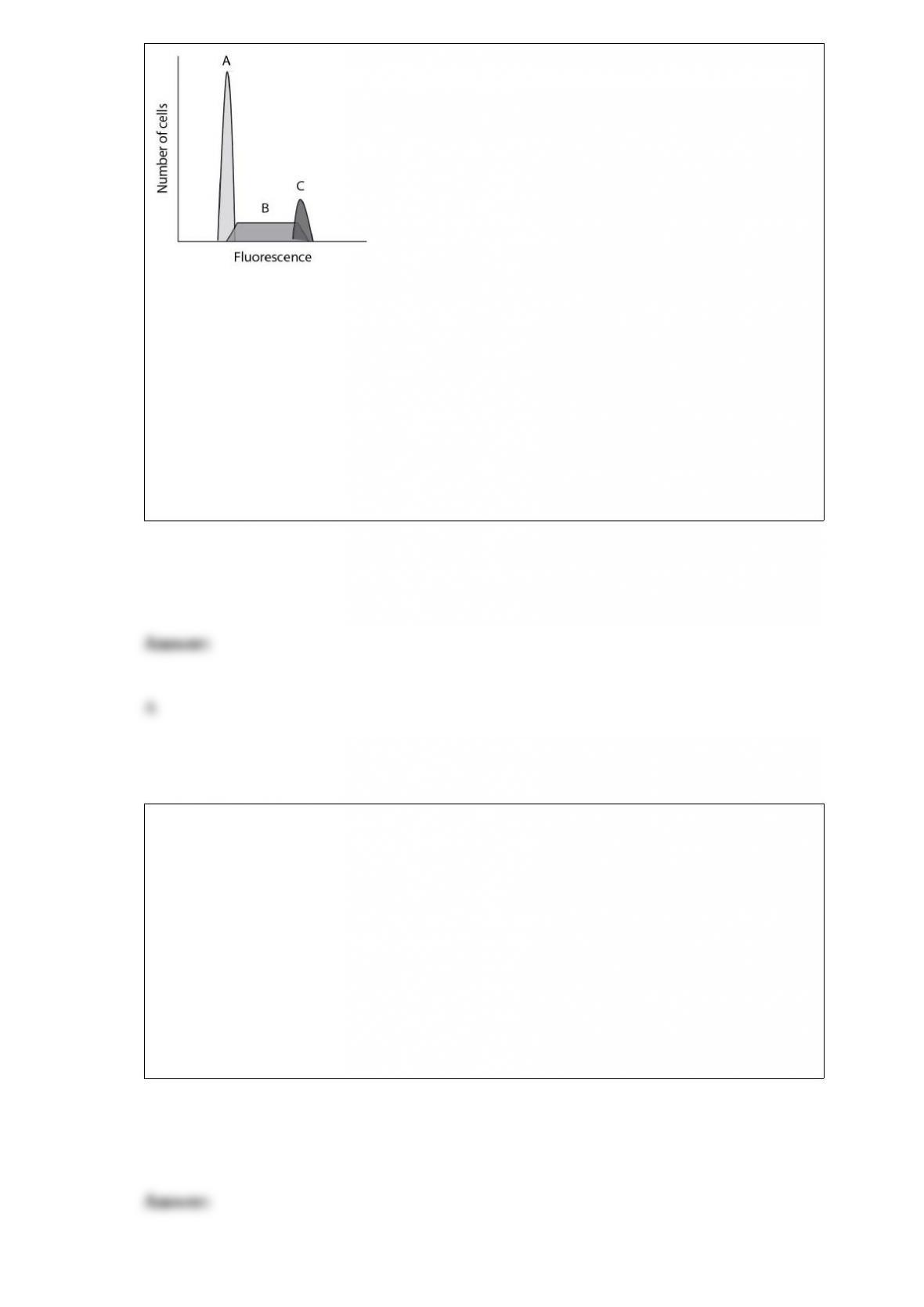
In this sample of cells, what stage of the cell cycle are most of the cells in?
A) G1
B) S
C) G2
D) mitosis
Tomato seeds are often consumed by birds or other organisms and then dispersed
through their feces. However, when tomatoes rot on the vine, organisms may not
consume them. How would tomato seeds likely disperse in this situation?
A) When the tomato rots, it drops to the ground and the seeds fall in the soil.
B) Summer rains carry the seeds to a new area.
C) Windy conditions carry the seeds to a new area.
D) The tomato disperses its seeds as spores.

Except near hydrothermal vents, the communities of the oceanic aphotic zone get their
energy mainly from
A) photosynthesis by local phytoplankton.
B) photosynthesis by local zooplankton.
C) oxidation of sulfur by sulfur bacteria.
D) organic matter sinking from the photic zone.
Which of the following statements regarding natural selection isfalse?
A) Natural selection depends on the local environment at the current time.
B) Natural selection starts with the creation of new alleles that are directed toward
improving an organism’s fitness.
C) Natural selection and evolutionary change can occur in a short period of time (a few
generations).
D) Natural selection can be observed working in organisms alive today.

As a scientist employed by the FDA, you’ve been asked to sit on a panel to evaluate a
pharmaceutical company’s application for approval of a new weight loss drug called Fat
Away. The company has submitted a report summarizing the results of their animal and
human testing. In the report, it was noted that Fat Away works by affecting the electron
transport chain. It decreases the synthesis of ATP by making the mitochondrial
membrane permeable to H+, which allows H+ to leak from the intermembrane space to
the mitochondrial matrix. This effect leads to weight loss.
Fat Away prevents ATP from being made by
A) destroying the H+ gradient that allows ATP synthase to work.
B) preventing glycolysis from occurring.
C) preventing the conversion of NADH to NAD+.
D) slowing down the citric acid cycle.
Which of the following processes involves heat exchange between an animal and its
environment?
A) irradiation
B) convection
C) induction
D) evaporation

Which of the following lists the events leading to leaf fall in deciduous trees in the
correct order?
A) formation of abscission layer, increase in ethylene levels, decrease in auxin levels
B) shortening days, increase in ethylene production, formation of abscission layer
C) shortening days, formation of abscission layer, decrease in ethylene levels
D) decrease in ethylene levels, shortening days, formation of abscission layer
Diabetes mellitus is a metabolic disease that is characterized by the buildup of glucose
in the blood, or hyperglycemia. Diabetes results either from the pancreas not being able
to produce the hormone insulin (type 1 diabetes) or if the body’s cells become resistant
to insulin (type 2 diabetes). Insulin is a protein that binds to receptors on cell surfaces to
allow glucose to enter the cell.
In order to manage the disease, type 1 diabetics require frequent insulin injections. Until
the 1970s, insulin was obtained from processing the pancreases of large mammals such
as cows and pigs; it was then purified for medicinal use. This all changed in the 1970s
with the advent of recombinant DNA technology, which allows scientists to insert genes
from other species into bacterial plasmids and have bacteria produce proteins from
these other species’ genes. In 1978, the gene that codes for human insulin was added to
a bacterial plasmid and bacteria were used to produce human insulin. These bacteria
acted as mini-factories that produced human insulin for type 1 diabetes patients. Today,
the production of human insulin from bacteria is commonplace and is a multibillion
dollar market for pharmaceutical companies.
In order for bacterial cells to be able to produce the human insulin protein, which of the
following donot have to be true?
A) Bacteria and humans have to use the same genetic code.
B) Bacterial RNA polymerases have to recognize human promoters.
C) Bacterial ribosomes have to recognize human start and stop codons.

D) Bacteria have to have a gene for a bacterial form of insulin.
The intimate, mutually beneficial association formed between a fungus and the root of a
plant is called a
A) sporophyte.
B) mycorrhiza.
C) hypha.
D) mycelium.
Which of the following statements regarding sickle-cell disease is false?
A) Persons who are heterozygous for sickle-cell disease are also resistant to malaria.
B) Sickle-cell disease causes white blood cells to be sickle-shaped.
C) All of the symptoms of sickle-cell disease result from the actions of just one allele.
D) About one in 10 African Americans is a carrier of sickle-cell disease.