
The eyes and the respiratory tract are both protected against infections by _____.
A) interferons produced by immune cells
B) the secretion of complement proteins
C) the release of slightly alkaline secretions
D) the secretion of lysozyme onto their surfaces
Based on electron configuration, which of the elements in the figure above would
exhibit a chemical behavior most like that of oxygen?
A) carbon
B) nitrogen
C) sulfur
D) phosphorus
Halobacterium has a photosynthetic membrane that appears purple. Its photosynthetic
action spectrum is the inverse of the action spectrum for green plants. (That is, the
Halobacterium action spectrum has a peak where the green plant action spectrum has a
trough.) What wavelengths of light do the Halobacterium photosynthetic pigments
absorb?
A) red and yellow
B) blue, green, and red
C) green and yellow
D) blue and red
Use the following information to answer the questions below.
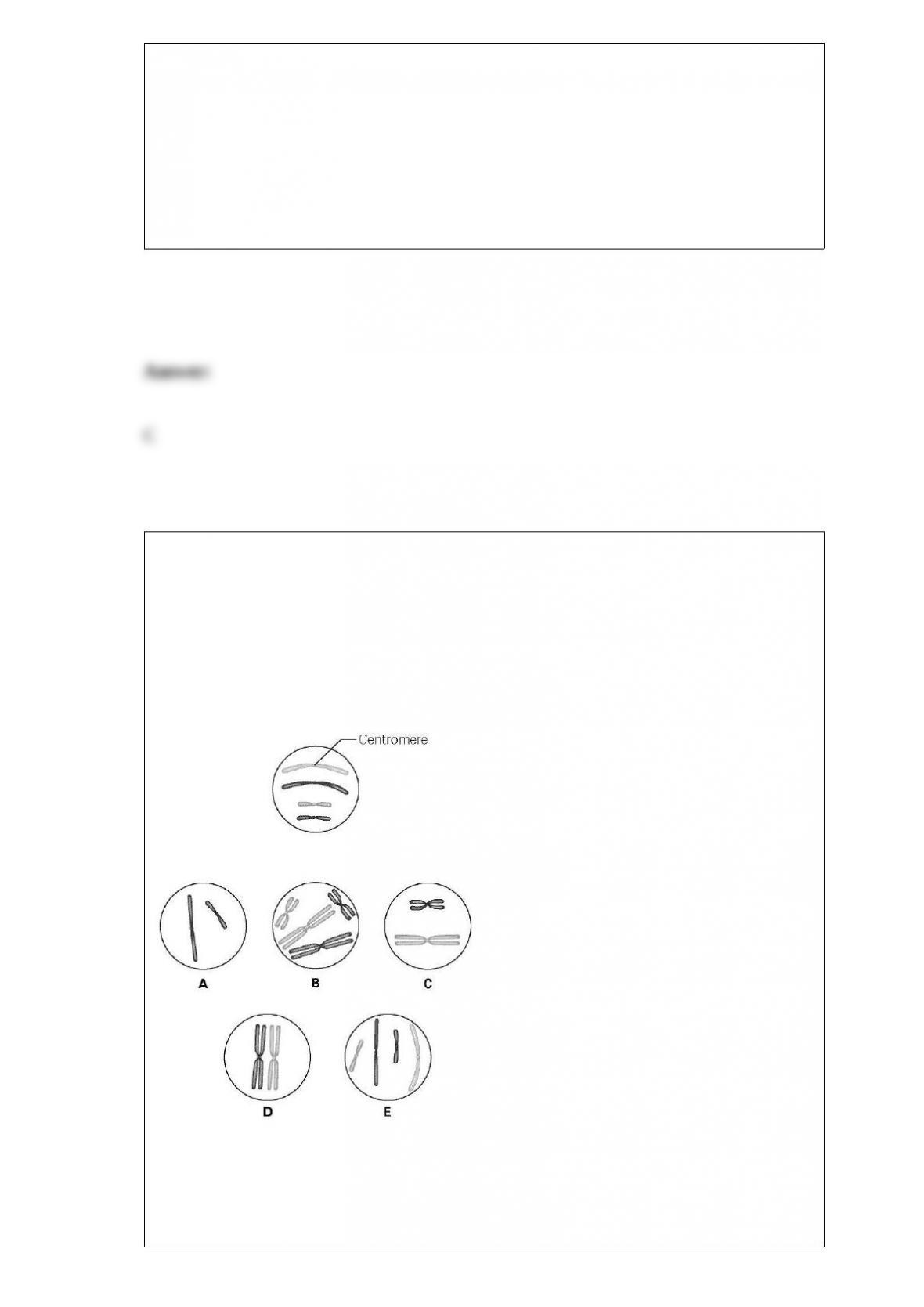
The unlettered circle at the top of the figure shows a diploid nucleus with four
chromosomes that have not yet replicated. There are two pairs of homologous
chromosomes, one long and the other short. One haploid set is black, and the other is
gray. The circles labeled A to E show various combinations of these chromosomes.
What is the correct chromosomal condition at prometaphase of mitosis?
A) B

B) C
C) D
D) E
Which of the following occurs in the cytosol of a eukaryotic cell?
A) glycolysis and fermentation
B) fermentation and chemiosmosis
C) oxidation of pyruvate to acetyl CoA
D) citric acid cycle
The heart rate decreases in response to the arrival of _____.
A) acetylcholine
B) endorphin
C) nitric oxide
D) gamma-aminobutyric acid (GABA)

In general, liverworts have a cuticle and pores. However, some species do not have
pores. What would you predict concerning the cuticle of these species and why?
A) The cuticle would be the same as in those species with pores.
B) The cuticle would be thicker than in those species with pores.
C) The cuticle would be thinner than in those species with pores.
Which listing of geological periods is in the correct order, from oldest to most recent?
A) Cambrian, Devonian, Permian, Cretaceous
B) Devonian, Cambrian, Permian, Cretaceous
C) Cambrian, Permian, Devonian, Cretaceous
D) Permian, Cambrian, Cretaceous, Devonian

An elephant and a mouse are running in full sunlight, and both overheat by the same
amount above their normal body temperatures. When they move into the shade and rest,
which animal will cool down faster?
A) The elephant will because it has the higher surface-area-to-volume ratio.
B) The elephant will because it has the lower surface-area-to-volume ratio.
C) The mouse will because it has the higher surface-area-to-volume ratio.
D) They will cool at the same rate because they overheated by the same amount.
The crucian carp (Carassius carassius) is a Northern European freshwater fish often
inhabiting ponds that become hypoxic (have reduced oxygen levels) and even anoxic
(have no oxygen) when the surface freezes during the winter. Surprisingly, when
oxygen levels are normal, these fish lack the lamellae that provide a large surface area
for gas exchange between water and blood: their gills are smooth. Yet when the level of
oxygen in the water falls, the gill morphology undergoes a change: packing cells stop
dividing and programmed cell death is induced, exposing gill lamellae that were buried
in other tissue. With lamellae exposed, the gills have increased surface area for gas
exchange. These changes in gill lamellar profile are reversible: investigators observed
that the gills return to their normal structure within seven days after returning the fish to
well-oxygenated water. (Jrund Sollid, Paula De Angelis, Kristian Gundersen, and Gran
E. Nilsson. 2003. Hypoxia induces adaptive and reversible gross morphological
changes in crucian carp gills. Journal of Experimental Biology 206:3667-73.)
Refer to the paragraph on crucian carp. Gills serve multiple functions in fish in addition
to gas exchange. Given the large surface area of gills with lamellae, what is the most
likely explanation for why crucian carp cover protruding lamellae in their gills when
levels of oxygen are normal?
A) to prevent loss of heat to the surrounding water
B) to prevent loss of ions to the surrounding water
C) to prevent protein loss to the surrounding water
D) to prevent loss of oxygen to the surrounding water

What does the term insoluble fiber refer to on food packages?
A) cellulose
B) polypeptides
C) starch
D) amylopectin
If you place a small piece of a cracker on your tongue, what would you expect to
happen?
A) The vitamins in the cracker are immediately absorbed.
B) Salivary amylase degrades the starch from the cracker into glucose.
C) The proteins in the cracker begin to be digested.
D) The flavor becomes less noticeable because the sugars are digested.

What can proteomics reveal that genomics cannot?
A) the number of genes characteristic of a species
B) the patterns of alternative splicing
C) the set of proteins present within a cell or tissue type
D) the movement of transposable elements within the genome
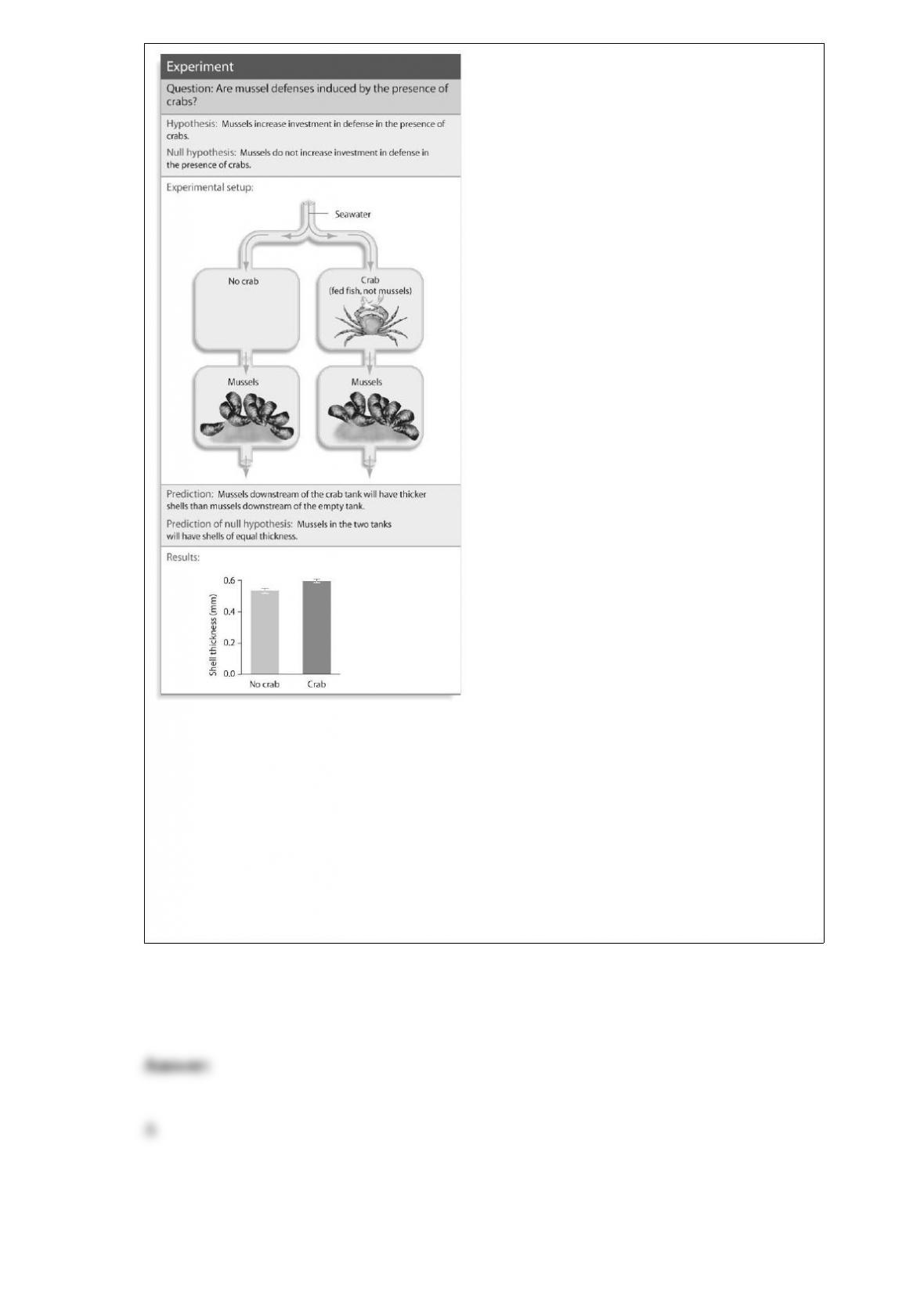
What conclusion can you draw from the figure above?
A) Without direct contact, mussels can sense the presence of crabs.
B) Mussels can sense the presence of crabs only visually.
C) Mussels are increasing their shell thickness in response to water current.
D) Crabs hunt for mussels by focusing on the chemicals they emit into the water.

Lactose, a sugar in milk, is composed of one glucose molecule joined by a glycosidic
linkage to one galactose molecule. How is lactose classified?
A) as a hexose
B) as a monosaccharide
C) as a disaccharide
D) as a polysaccharide
Use this model of a eukaryotic transcript to answer the following question(s).
E = exon and I = intron
UTR E1 I1 E2 I2 E3 I3 E4 UTR
Which components of the previous molecule will also be found in mRNA in the
cytosol?
A) UTR I1 I2 I3 UTR
B) E1 E2 E3 E4
C) UTR E1 E2 E3 E4 UTR
D) E1 I1 E2 I2 E3 I3 E4
Two true-breeding stocks of pea plants are crossed. One parent has red, axial flowers
and the other has white, terminal flowers; all F1 individuals have red, axial flowers. The
genes for flower color and location assort independently. Among the F2 offspring, what
is the probability of plants with white axial flowers?
A) 9/16
B) 1/16
C) 3/16
D) 1/4
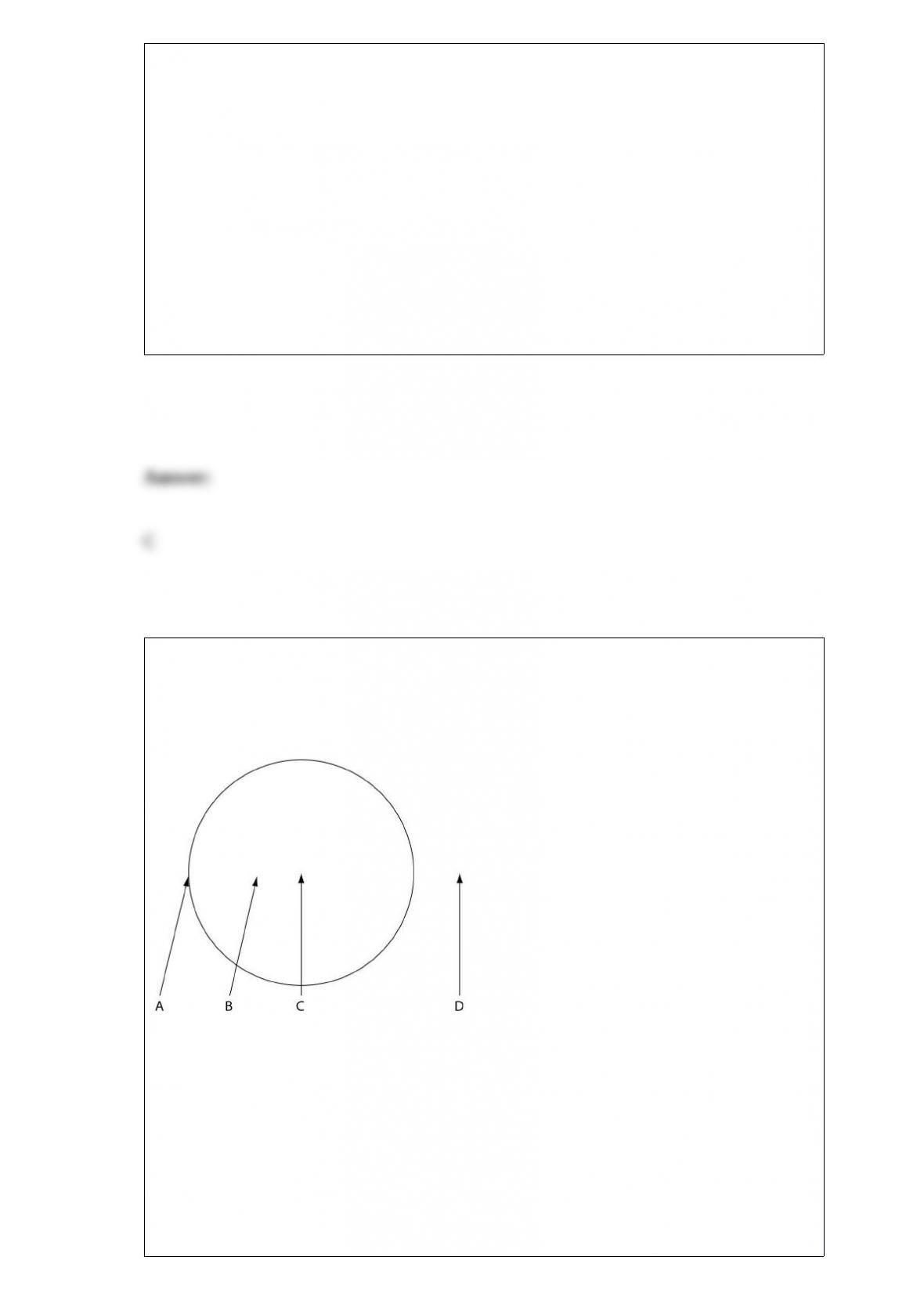
The following figure depicts the outline of a large fairy ring that has appeared overnight
in an open meadow, as viewed from above. The fairy ring represents the furthest
advance of this mycelium through the soil. Locations A-D are all 0.5 meters below the
soil surface.
In which of the following human mycoses should one expect to find a growth pattern
most similar to that of the mycelium that produced the fairy ring?
A) skin mycoses
B) coccidiomycosis (lung infection)
C) systemic (bloodborne) Candida infection
D) Sporothrix infection of lymphatic vessels
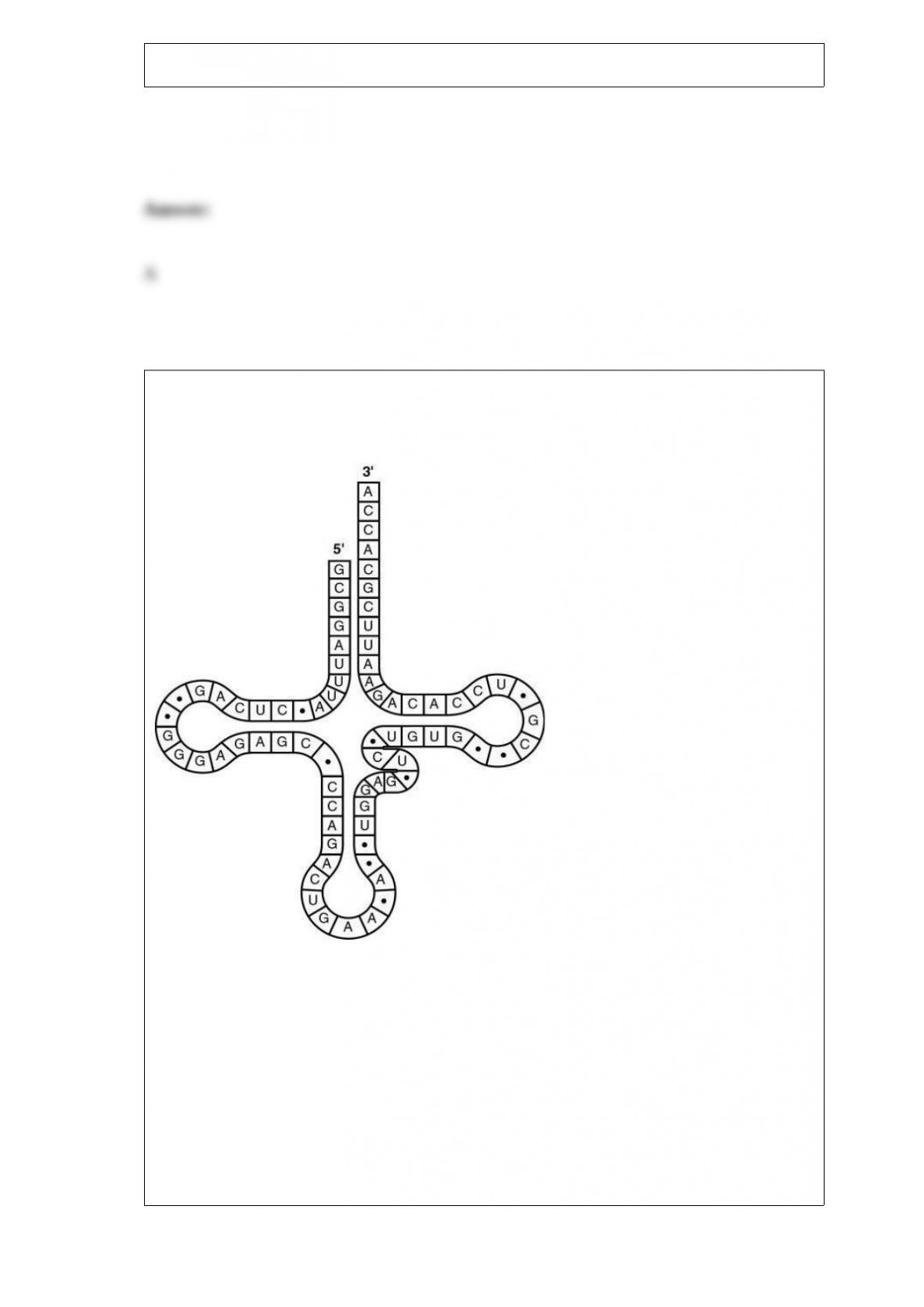
What type of bonding is responsible for maintaining the shape of the tRNA molecule
shown in the figure above?
A) ionic bonding between phosphates
B) hydrogen bonding between base pairs
C) van der Waals interactions between hydrogen atoms
D) peptide bonding between amino acids

Not long ago, it was believed that a count of the number of protein-coding genes would
provide a count of the number of proteins produced in any given eukaryotic species.
This is incorrect, largely due to the discovery of widespread _____.
A) chromatin condensation control
B) transcriptional control
C) alternative splicing
D) translational control
In a lactating mammal, the two hormones that promote milk synthesis and milk release,
respectively, are _____.
A) prolactin and calcitonin
B) prolactin and oxytocin
C) follicle-stimulating hormone and luteinizing hormone
D) luteinizing hormone and oxytocin

Which level of ecological study focuses the most on abiotic factors?
A) speciation ecology
B) population ecology
C) community ecology
D) ecosystem ecology
Which of the following describes the ability of a single allele to have multiple
phenotypic effects?
A) incomplete dominance
B) multiple alleles
C) pleiotropy
D) epistasis
The following experiment is used for the corresponding question(s).
A researcher discovered a species of moth that lays its eggs on oak trees. Eggs are laid
at two distinct times of the year: early in spring when the oak trees are flowering and in
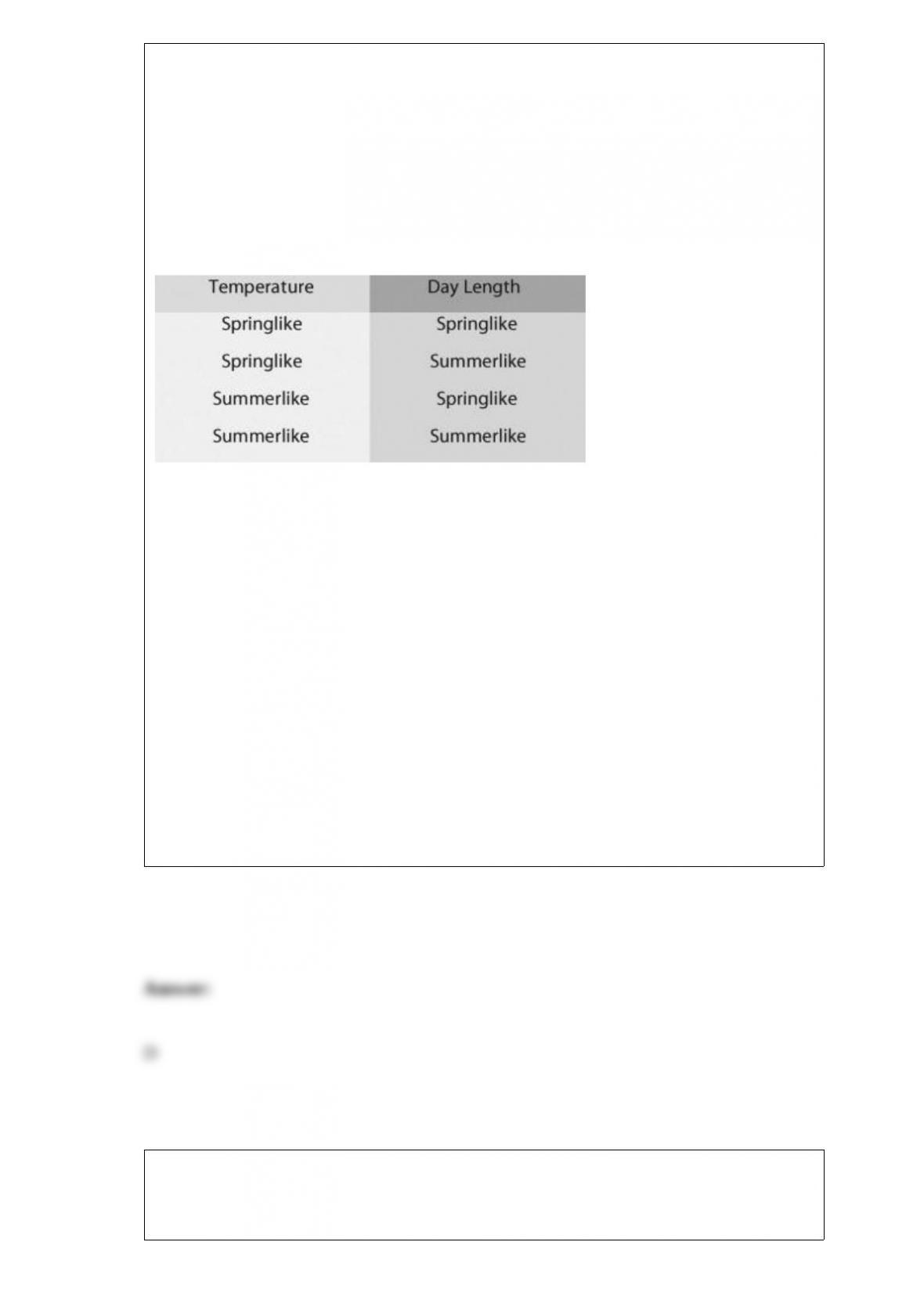
midsummer when flowering is past. Caterpillars from eggs that hatch in spring feed on
oak flowers and look like oak flowers. But caterpillars that hatch in summer feed on
oak leaves and look like oak twigs.
How does the same population of moths produce such different-looking caterpillars on
the same trees? To answer this question, the biologist caught many female moths from
the same population and collected their eggs. He put at least one egg from each female
into eight identical cups. The eggs hatched, and at least two larvae from each female
were maintained in one of the four temperature and light conditions listed below.
In each of the four environments, one of the caterpillars was fed oak flowers, the other
oak leaves. Thus, there were a total of eight treatment groups (4 environments 2 diets).
Refer to the accompanying figure. Recall that eggs from the same female were exposed
to each of the eight treatments used. This aspect of the experimental design tested
which of the following hypotheses?
A) The longer day lengths of summer trigger the development of twig-like caterpillars.
B) Differences in air pressure, due to elevation, trigger the development of different
types of caterpillars.
C) Differences in diet trigger the development of different types of caterpillars.
D) The differences are genetic. A female will either produce all flowerlike caterpillars
or all twig-like caterpillars.
Although the membrane of a “resting” neuron is highly permeable to potassium ions, its
membrane potential does not exactly match the equilibrium potential for potassium
because the neuronal membrane is also _____.

A) slightly permeable to sodium ions
B) fully permeable to calcium ions
C) impermeable to sodium ions
D) highly permeable to chloride ions
Centromeres split and sister chromatids migrate to opposite poles in meiosis _____.
A) anaphase I
B) telophase I
C) anaphase II
D) telophase II
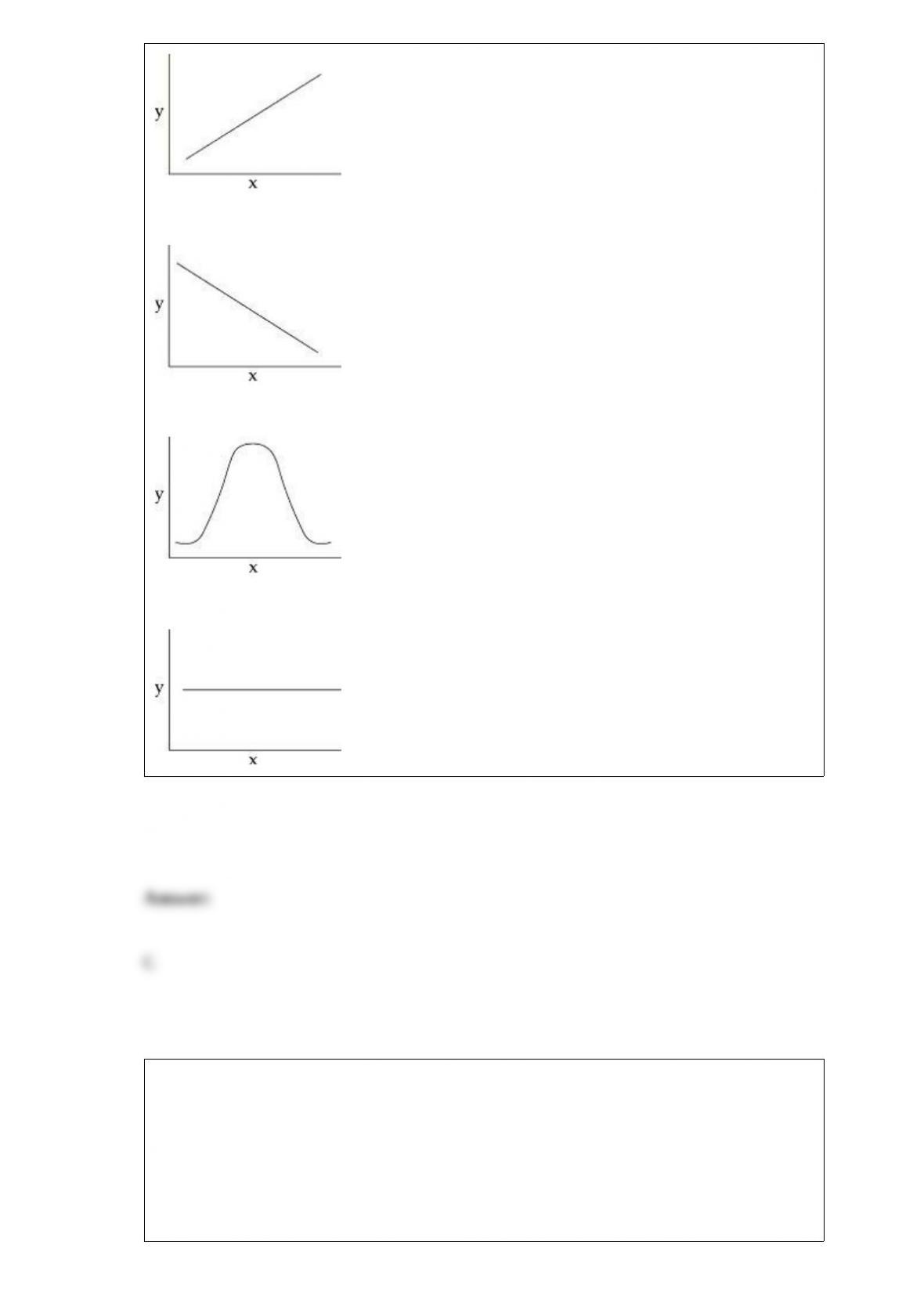
You collect data on the effect of pH on the function of the enzyme catalase in human
cells. Which of the following graphs would you expect?
A)
B)
C)
D)
Which of the following is the best description of an atom’s physical structure?
A) An atom is a solid mass of material.
B) The particles that form an atom are equidistant from each other.
C) Atoms are little bubbles of space with mass concentrated at the center of the bubble.

D) Atoms are little bubbles of space with mass concentrated on the outside surface of
the bubble.
Which of the following could qualify as a top-down control on a grassland community?
A) limitation of plant biomass by rainfall amount
B) influence of temperature on competition among plants
C) influence of soil nutrients on the abundance of grasses versus wildflowers
D) effect of grazing intensity by bison on plant species diversity
A fish swimming into an estuary from a river would have which of the following as its
greatest physiological challenge?
A) The high water flow would make the fish expend more energy.
B) The low oxygen content would give the fish difficulty in swimming aerobically.
C) The temperature change would stress the fish by denaturing its proteins.
D) The change in water solute content would challenge the osmotic balance of the fish.