Cell membranes are said to be ________ because they allow some substances to pass
but not others.
A) impermeable
B) doubly amphipathic
C) hydrophilic
D) selectively permeable
E) hydrophobic
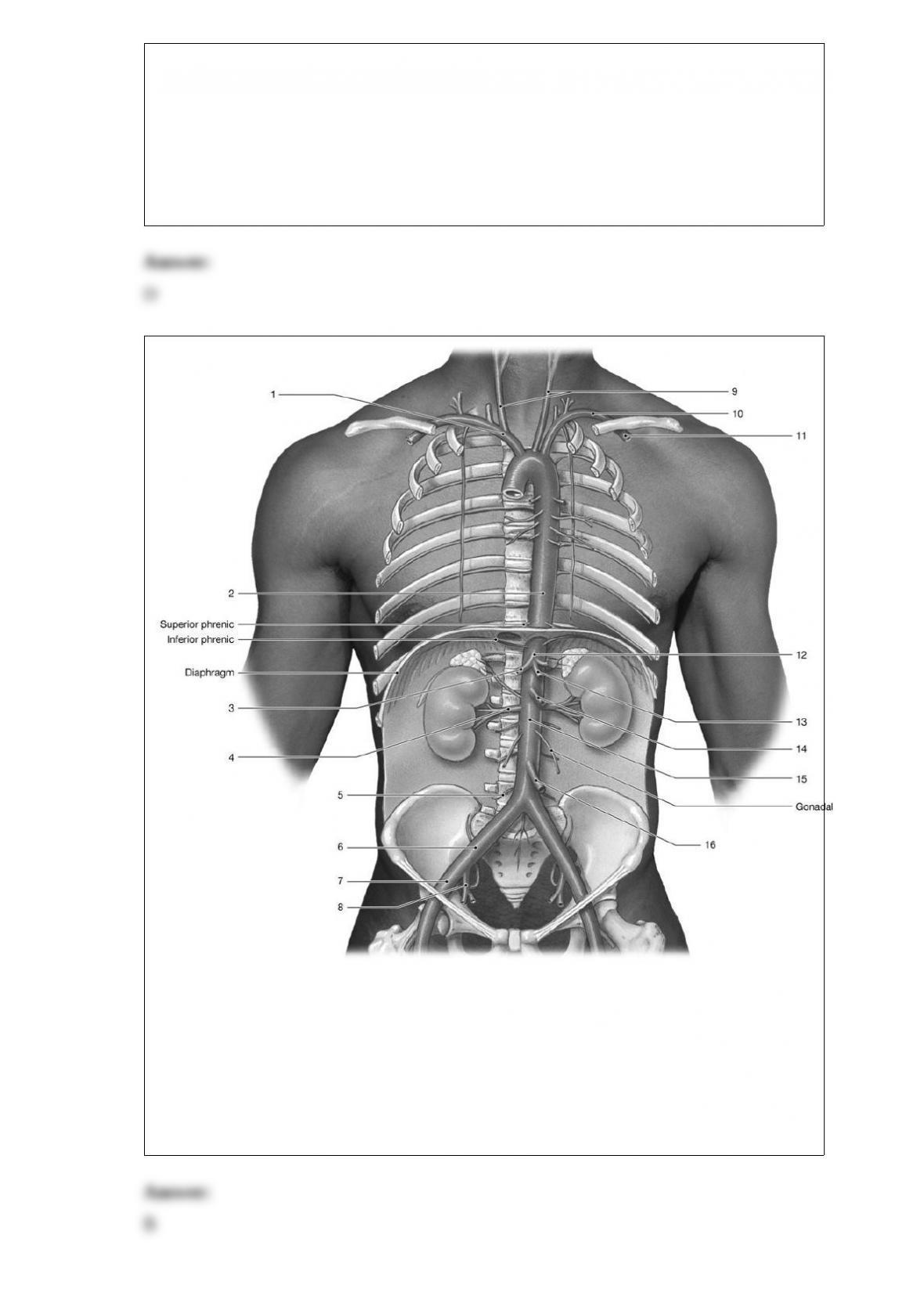
Figure 21-1 Arteries
Identify the artery labeled “16.”
A) axillary
B) inferior mesenteric
C) celiac
D) superior mesenteric
E) splenic
To return CSF to circulation, arachnoid granulations extend into the
A) subarachnoid space.
B) superior sagittal sinus.
C) carotid canal.
D) inferior sagittal sinus.
E) jugular foramen.
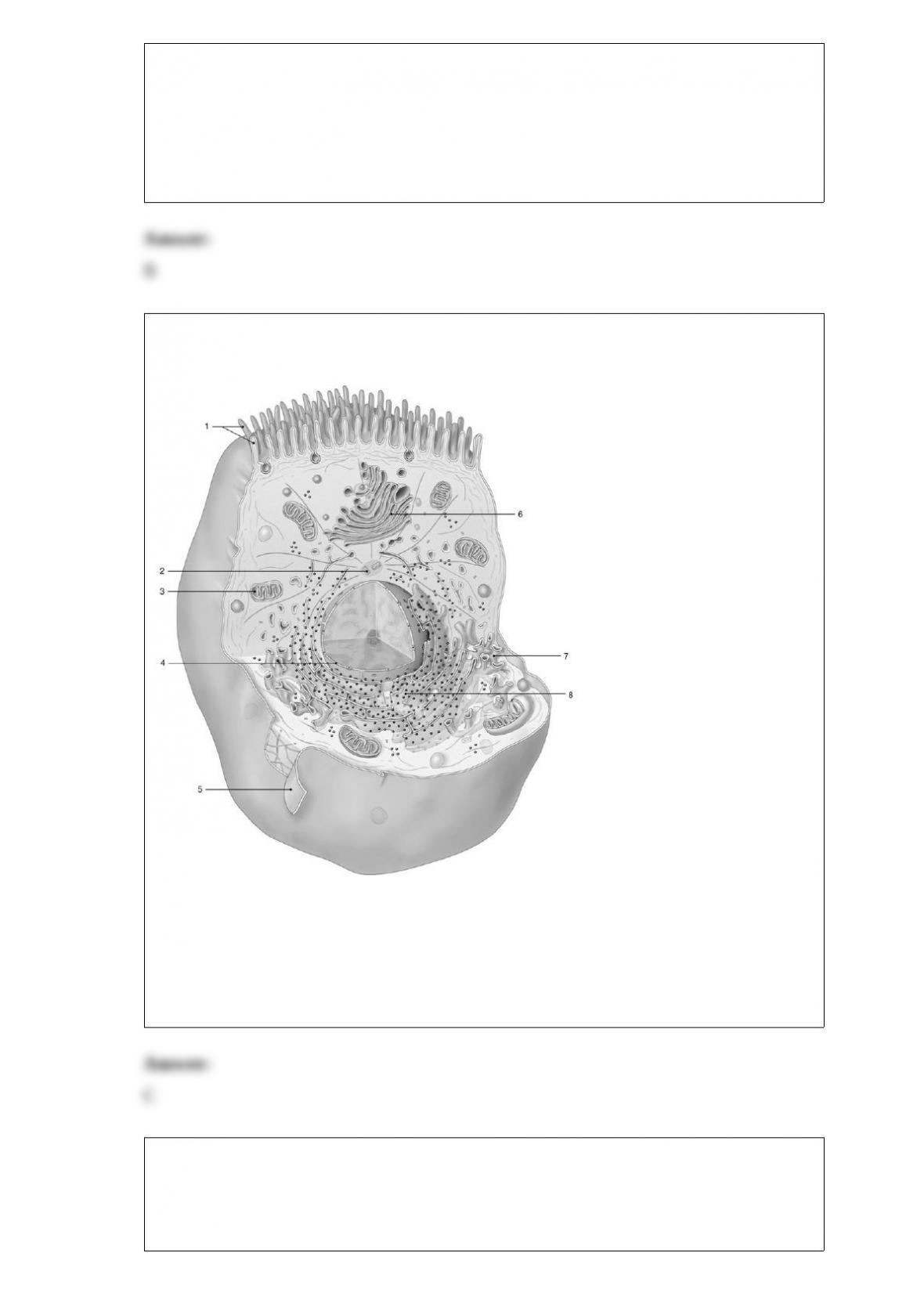
Which structure produces ATP for the cell?
Figure 3-1 The Anatomy of a Representative Cell
A) 1
B) 2
C) 3
D) 5
E) 6
A functional group is best described as reoccurring clusters of
A) elements that occur in a salt and that can neither be hydrolyzed nor dehydrated.
B) atoms that form the main reactive area for a particular compound.
C) atoms that function in the body even if temperatures and pH reach extreme values.
D) elements that form at high pH and who can successfully resist the action of buffers.
E) amino acids in a globular protein such as hemoglobin, immunoglobulins, and
albumins.
Plasminogen is converted to its active form by an enzyme called
A) tissue plasminogen activator.
B) papain.
C) fibrinolysin.
D) prothrombin.
E) polymerase.
A fine tubular wire mesh called a ________ may be inserted into a coronary vessel,
holding it open.
A) angioplast
B) stent
C) angiogram
D) keyhole
E) catheter
Which of the following statements is true about the pancreas?
A) The pancreas is tucked into the curvature of the small intestine, underneath the
stomach.
B) The pancreas produces enzymes for breakdown of foods.
C) The main hormonal function of the pancreas is control of blood sugar.
D) The pancreas affect’s the functions of the liver.
E) All of the answers are correct.
Given the following approximate values, calculate the molecular weight for NaCl.
Atomic number for Na: 11, Atomic weight for Na: 23 g/mol, Atomic number for Cl: 17,
Atomic weight for Cl: 35 g/mol, Boiling point for Cl: -34 °C
A) 11 g/mol
B) 28 g/mol
C) 34 g/mol
D) 40 g/mol
E) 58 g/mol
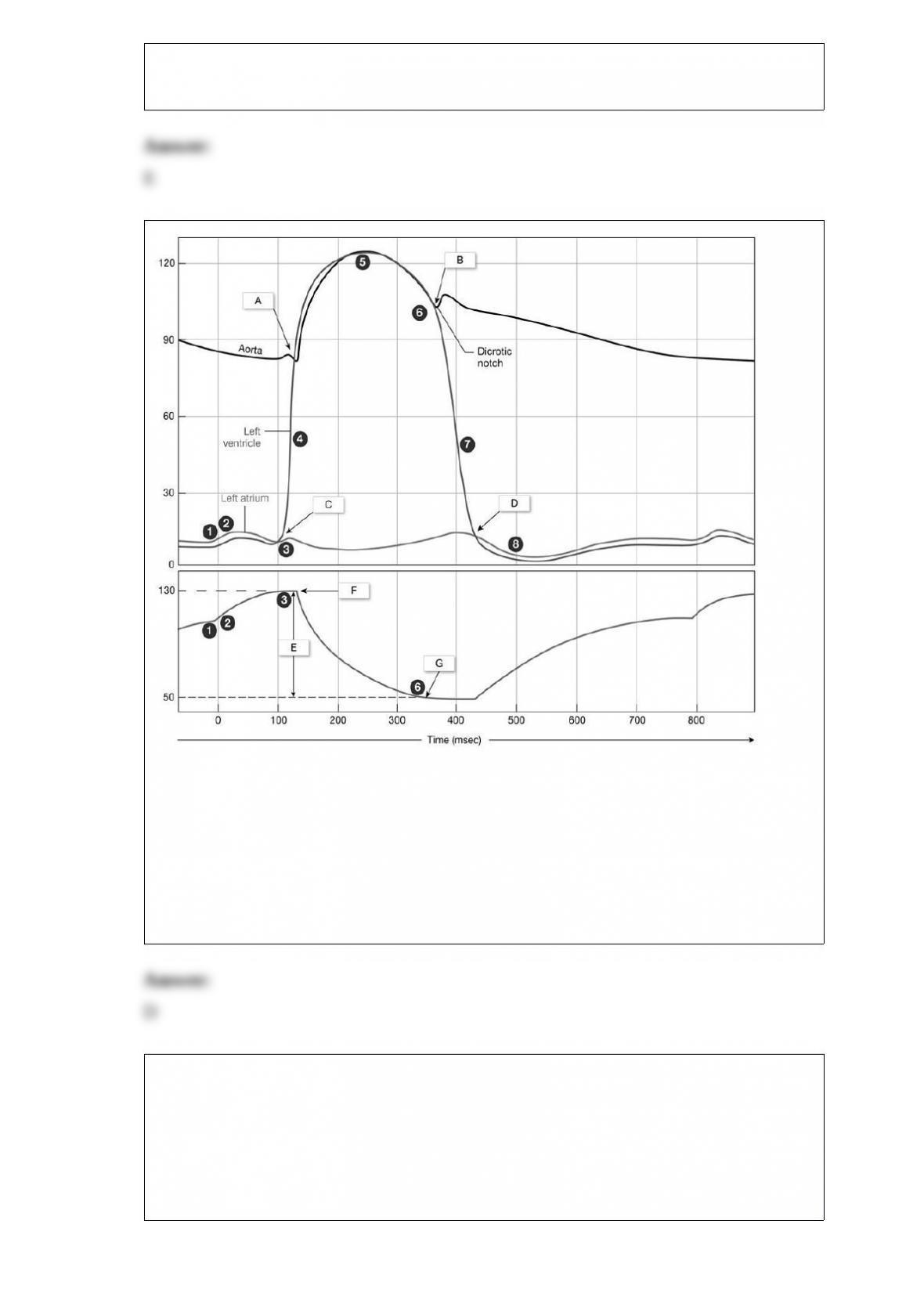
Figure 20-2 Cardiac Cycle
What occurs at the area labeled “B” on the graph?
A) Ventricular ejection occurs.
B) AV valve closes.
C) Semilunar valve opens.
D) Semilunar valve closes.
E) AV valve opens.
A vitamin obtained that is a coenzyme in amino acid and lipid metabolism is
A) pyridoxine (B6).
B) thiamine.
C) riboflavin.
D) folic acid (folate).
E) niacin.
Functions of the nasal cavity include all of the following except
A) filtering the air.
B) warming the air.
C) humidifying the air.
D) housing tonsils.
E) housing olfactory receptors.
The inner portion of the suprarenal gland is the
A) cortex.
B) interstitial tissue.
C) medulla.
D) stroma.
E) capsule.
The three functions of synovial fluid are nutrient distribution, shock absorption, and
A) stabilization.
B) lubrication.
C) padding.
D) strengthening.
E) enzyme secretion.
An autonomic plexus involves
A) both sympathetic and parasympathetic fibers.
B) ganglia within the abdominal and thoracic cavities.
C) nerve networks.
D) the solar plexus.
E) All of the answers are correct.
The olfactory organ consists of the ________ and the lamina propria.
A) gustatory cells
B) basilar membrane
C) olfactory epithelium
D) hippocampus
E) ethmoid bone
The consistent pattern of hormonal and physiological responses to stresses of different
kinds is called ________ syndrome.
A) malabsorption
B) serotonin
C) general adaptation
D) Prader-Willi
E) afferent loop
Four signs useful for determining if a suspicious mark on the skin is melanoma follow
the ABCD mnemonic. Which pairing is incorrect?
A) A – asymmetry
B) B – border
C) C – circumference
D) D – diameter
E) They are all correct