Which of the following can be a function for intrinsically disordered protein sequences?
A.High-specificity binding to other proteins
B.Cell signaling through covalent modification of the protein sequence
C.Tethering to hold interacting proteins in close proximity
D.Formation of a diffusion barrier from a dense network of such sequences
E.All of the above
You have studied mutations in a transcription regulatory protein from Bacillus subtilis
by an in vivo reporter gene assay carried out in Escherichia coli. The cis-regulatory
sequence that the protein normally recognizes was inserted upstream of a gene
encoding an enzyme that can produce a visible blue product. E. coli cells were then
transformed with the reporter construct along with the gene encoding one of the various
mutant forms of the transcription regulatory protein. Since the transcription regulatory
protein is an inhibitor, the colonies turn blue only when the mutant protein is
nonfunctional and unable to inhibit gene expression. Interestingly, you have identified a
number of “cold-sensitive” loss-of-function mutations that show the mutant phenotype
at 220C but not at 370C. Which of the following correctly describes the phenotype of
these cold-sensitive mutants?
A.Their colonies turn blue at permissive (low) temperatures.
B.Their colonies turn blue at permissive (high) temperatures.
C.Their colonies turn blue at nonpermissive (low) temperatures.
D.Their colonies turn blue at nonpermissive (high) temperatures.
What are the products of deamination of cytosine and 5-methyl cytosine, respectively?
A.Thymine and uracil
B.Thymine in both cases
C.Uracil and thymine
D.Uracil in both cases
E.Xanthine and hypoxanthine
Indicate whether ordinary agarose-gel electrophoresis (A), polyacrylamide-gel
electrophoresis (P), or pulsed-field gel electrophoresis (F) is used to better separate each
of the following DNA molecules. Your answer would be a three-letter string composed
of letters A, P, and F only, e.g. APF.
( )Small DNA oligonucleotides such as hybridization probes and PCR primers
( )Plasmid DNA
( )Bacterial chromosomes
Mutant Saccharomyces cerevisiae cells that lack the gene encoding securin can divide
more or less normally by mitosis, without significant chromosome segregation defects.
Cells harboring a nondegradable version of securin, on the other hand, arrest in
metaphase as expected, since they cannot activate separase to enter anaphase. Similarly,
cells lacking Cdc20 arrest in metaphase, since they cannot activate APC/C. Finally,
cells lacking both securin and Cdc20 arrest in anaphase: they manage to separate sister
chromatids, but do not progress much further. These results suggest that in wild-type
cells, …
A.degradation of securin is necessary to trigger sister-chromatid separation.
B.degradation of securin is sufficient to trigger sister-chromatid separation.
C.Cdc20-APC/C is NOT necessary for sister-chromatid separation.
D.Cdc20-APC/C is NOT necessary for later events in anaphase.
E.All of the above.
How is centrosome duplication similar to DNA replication?
A.They both use a semiconservative mechanism.
B.They are initiated at around the same time in the cell cycle, near the G1/S transition.
C.They are both controlled in such a way that they replicate once and only once per cell
cycle.
D.They are both separated from their sister copies in mitosis.
E.All of the above.
In the following schematic drawing, in which direction (1 or 2) is the keratocyte
migrating? What is the approximate length of the cell indicated by the bar on the left?
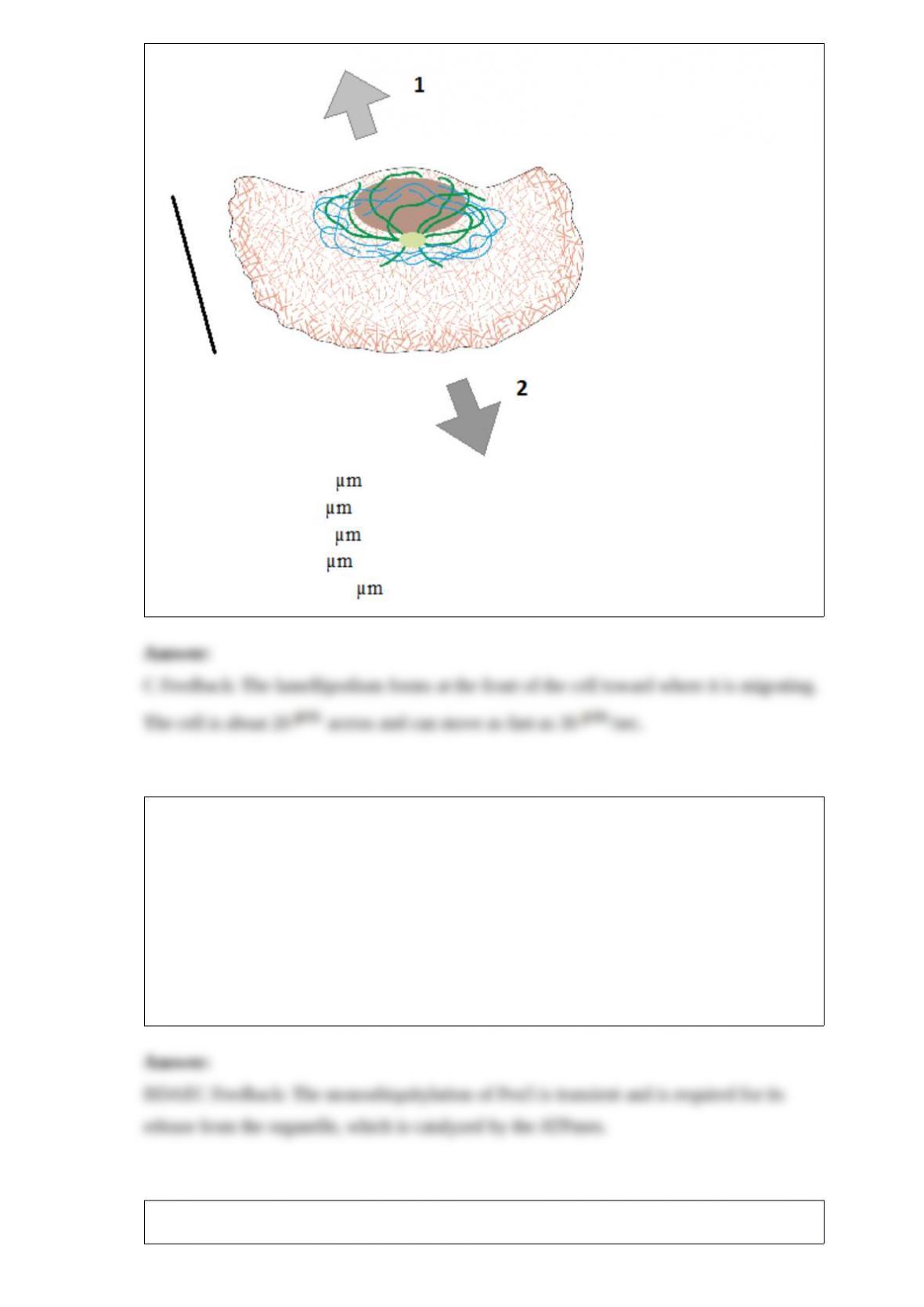
A.Direction 1; about 20
B.Direction 1; about 2
C.Direction 2; about 20
D.Direction 2; about 2
E.Either direction; about 2
Sort the following events as they occur during the peroxisomal protein import cycle,
starting with the release of cargo from Pex5. Your answer would be a five-letter string
composed of letters A to E only, e.g. ABEDC.
(A)Pex5 deubiquitylation
(B)Pex5 ubiquitylation
(C)Docking and translocation of the cargo protein along with Pex5
(D)Pex5 export from the peroxisome with the help of ATPases Pex1 and Pex6
(E)Pex5 binding to a cargo protein containing a C-terminal peroxisomal targeting
sequence
This protein is present at every replication fork and prevents DNA polymerase from
dissociating, but does not impede the rapid movement of the enzyme. Which of the
following is true regarding this protein?
A.It self-assembles onto DNA at the replication fork.
B.It is assembled on DNA as soon as DNA polymerase runs into a double-strand region
of DNA.
C.Its assembly normally follows the synthesis of a new primer by the DNA primase.
D.It disassembles from DNA as soon as DNA polymerase runs into a double-strand
region.
E.All of the above.
Neuromuscular junctions of vertebrates are special types of chemical synapses formed
from close association between motor neuron axon terminals and muscle fibers. A thin
layer of basal lamina separates the two cell membranes at the neuromuscular junction
and is important for its organization and maintenance. Which of the following would
you NOT expect to find in the basal lamina in these structures?
A.Nidogen
B.Laminin
C.Type I collagen
D.Type IV collagen
E.Perlecan
Which of the following better describes cross-presentation of protein antigens by
professional antigen-presenting cells to TC cells?
A.Presentation of intracellular antigens by class I MHC proteins
B.Presentation of intracellular antigens by class II MHC proteins
C.Presentation of extracellular antigens by class I MHC proteins
D.Presentation of extracellular antigens by class II MHC proteins
In most mammalian cells, low M-cyclin protein levels are maintained during G1 phase.
What is mainly responsible for maintaining these low levels?
A.Cdc20-APC/C
B.Cdh1-APC/C
C.Skp2-SCF
D.²-trCP-SCF
E.p27
Which of the following proteins is NOT in the same superfamily as the other four? The
other four share an overall architecture composed of seven closely-packed
transmembrane helices.
A.Bacteriorhodopsin
B.Channelrhodopsin
C.G-protein-coupled receptor
D.Aquaporin
E.Rhodopsin
Your friend has cut a 3000-nucleotide-pair circular plasmid with either or both
restriction enzymes A and B, and has separated the digestion products by
electrophoresis. The results are shown in the schematic drawing below, with the
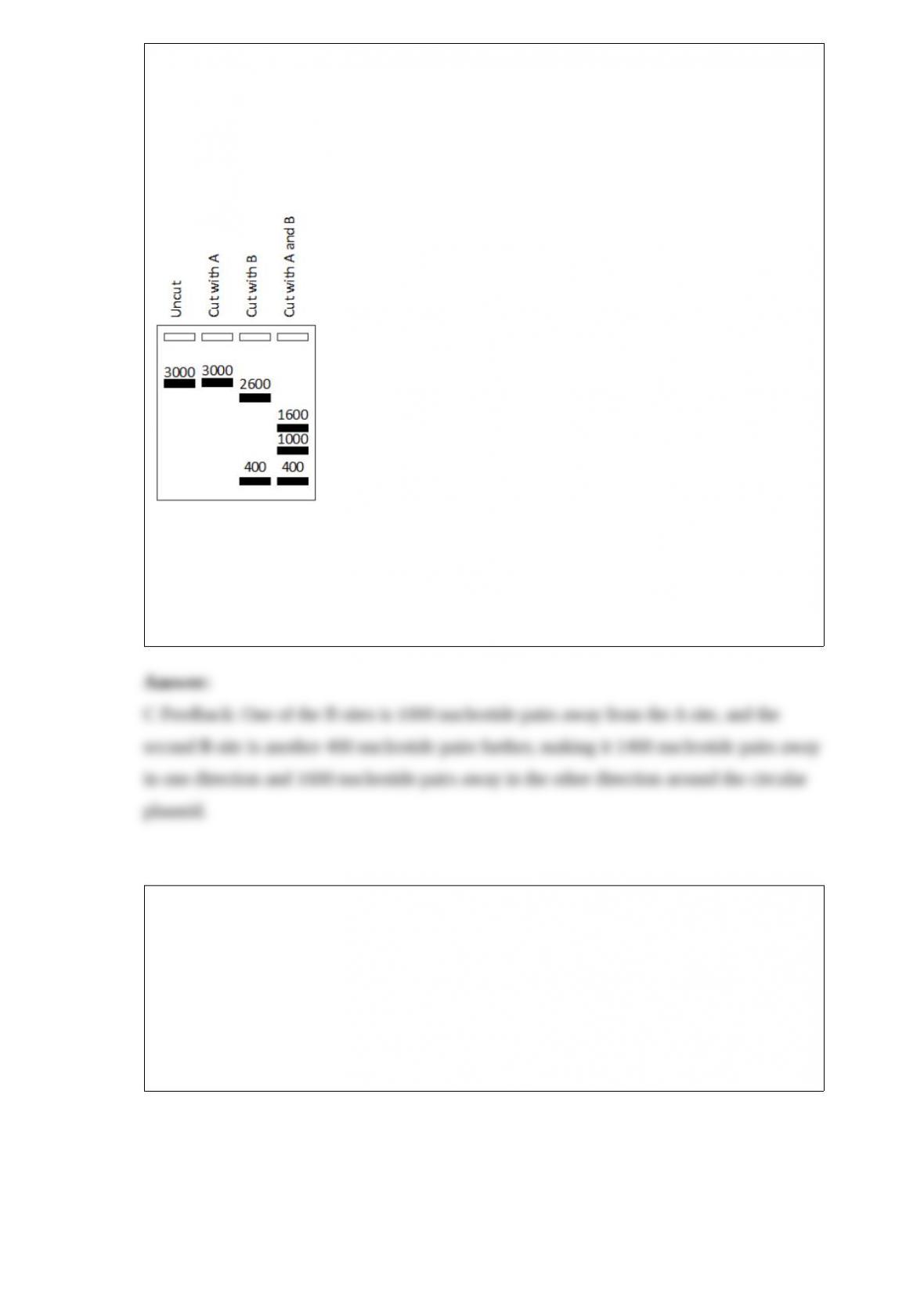
approximate size of the fragments indicated above each band. Based on these results,
what is the closest distance (in nucleotide pairs) between an A restriction site and a B
restriction site on this plasmid?
A.400
B.600
C.1000
D.1200
E.1600
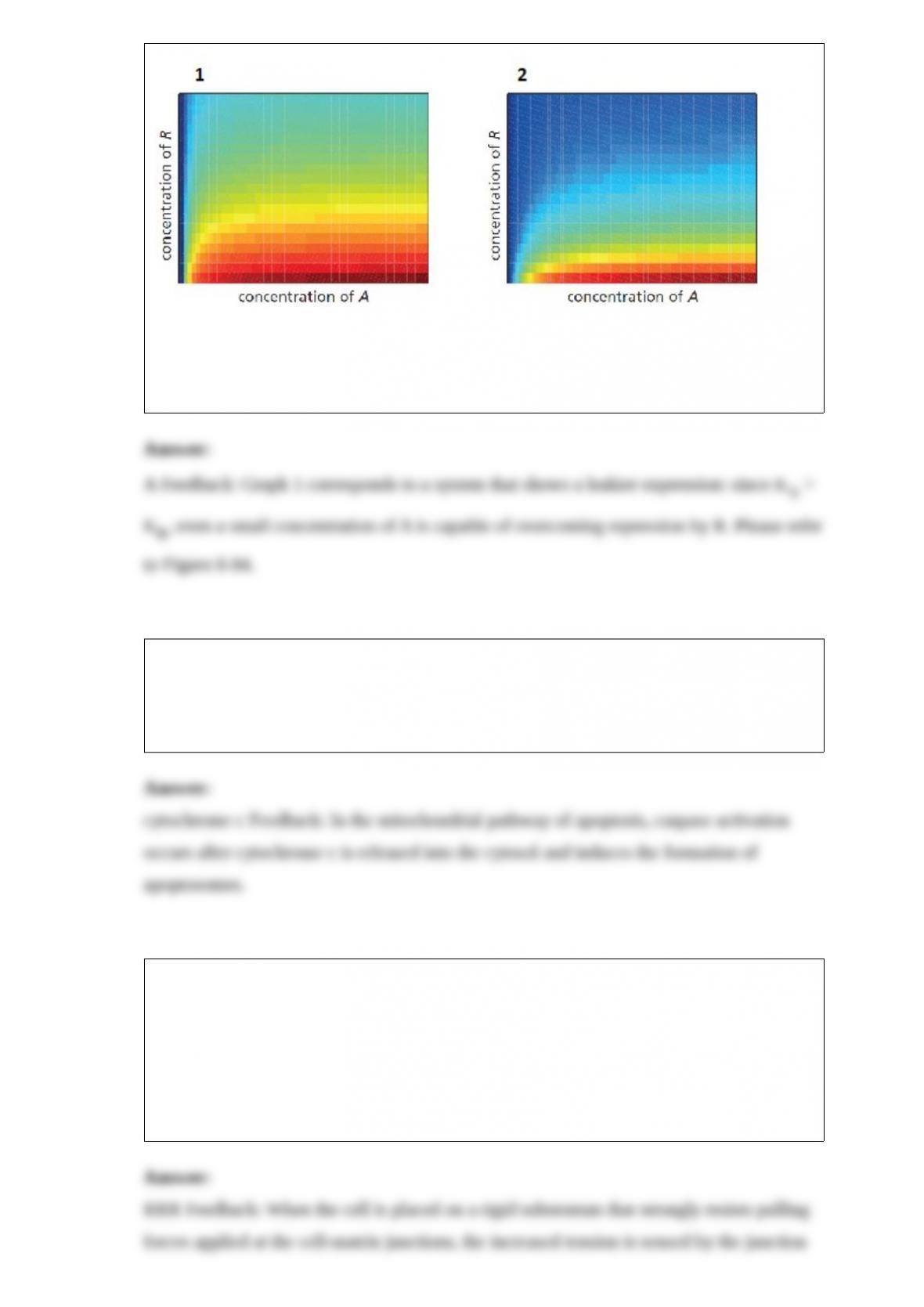
The quantitative output of a gene depends in part on the relative affinities of
transcription regulators. In the following graphs, the red color indicates high gene
expression and blue color indicates low gene expression. The expression level is plotted
as a function of the concentrations of two transcription regulatory proteins, an activator
(A) and a repressor (R). Every other parameter being identical, which graph
corresponds to a system where the affinity of protein A for the cis-regulatory sequences
is higher than that of protein R? Which graph corresponds to a system that shows a
“leakier” expression?
A.Graph 1; Graph 1
B.Graph 1; Graph 2
C.Graph 2; Graph 1
D.Graph 2; Graph 2
Fill in the blank: In the intrinsic pathway of apoptosis, a protein called … is released
from the mitochondria into the cytosol and binds to the adaptor protein Apaf1, causing
it to oligomerize into a wheel-like assembly called an apoptosome, which then recruits
initiator caspase-9 proteins.
A cell’s response is not the same when placed on a rigid compared to a soft matrix.
Indicate whether each of the following is expected to occur in a cell that is placed on a
rigid matrix (R) or a soft matrix (S). Your answer would be a three-letter string
composed of letters R and S only, e.g. RSR.
( )More tension is generated in cell-matrix contacts.
( )More vinculin proteins would bind to the C-terminal tail of talin.
( )More actin filaments are recruited to the site of cell-matrix adhesion.
Genetic screens for enhancers and suppressors of temperature-sensitive loss-of-function
mutations in sevenless (sev) in Drosophila melanogaster led to the discovery of some
other genes involved in the Ras€MAP-kinase pathway. Would you expect
loss-of-function mutations in genes encoding each of the following proteins to be an
enhancer (E) or suppressor (S) of sev? An enhancer mutation exacerbates the effect of
the original mutation, whereas a suppressor mutation alleviates it. Note that
loss-of-function mutations can be just partial defects and not necessarily null mutations.
Your answer would be a four-letter string composed of letters E and S only, e.g. EEEE.
( )Sos
( )Ras
( )Ras-GAP
( )Raf
Fill in the blank in the following paragraph regarding plant hormones. DO NOT use
abbreviations.
“As simple a signaling molecule as it is, … is also a key regulator of plant physiology. It
can promote processes such as fruit ripening, flower opening, and leaf abscission; it can
also be produced in response to various types of stress including drought, flooding, and
bacterial and viral infections.”
Fill in the blank in the following paragraph regarding plant cell cultures. Do not use
abbreviations.
“Plant cells can be easily rendered totipotent to give rise to all plant tissues on their
own. This can be done by culturing a plant tissue in sterile nutrient media to produce an
amorphous cell mass called a ___”
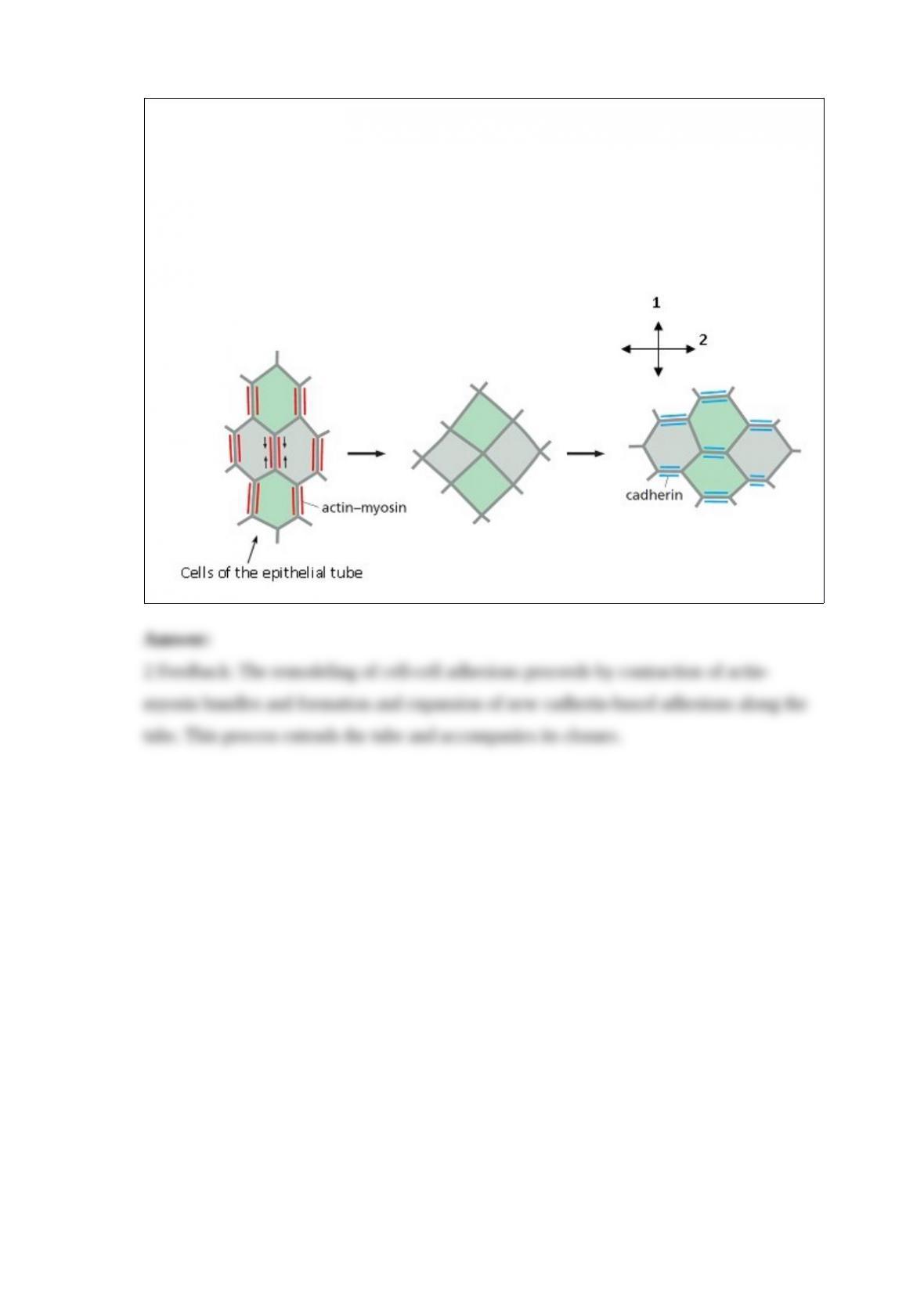
Consider a sheet of epithelial tissue that invaginates to form a tube along the
anterior-posterior axis of a developing vertebrate embryo. The tube is then closed
concomitant with a “convergence and extension” process similar to that observed in
germ-band extension in Drosophila melanogaster. During this process, the tube
elongates and narrows before pinching off from the sheet. Which axis (1 or 2) in the
following schematic drawing of the tube cells do you think corresponds to the
anterior-posterior axis? Write down 1 or 2 as your answer.