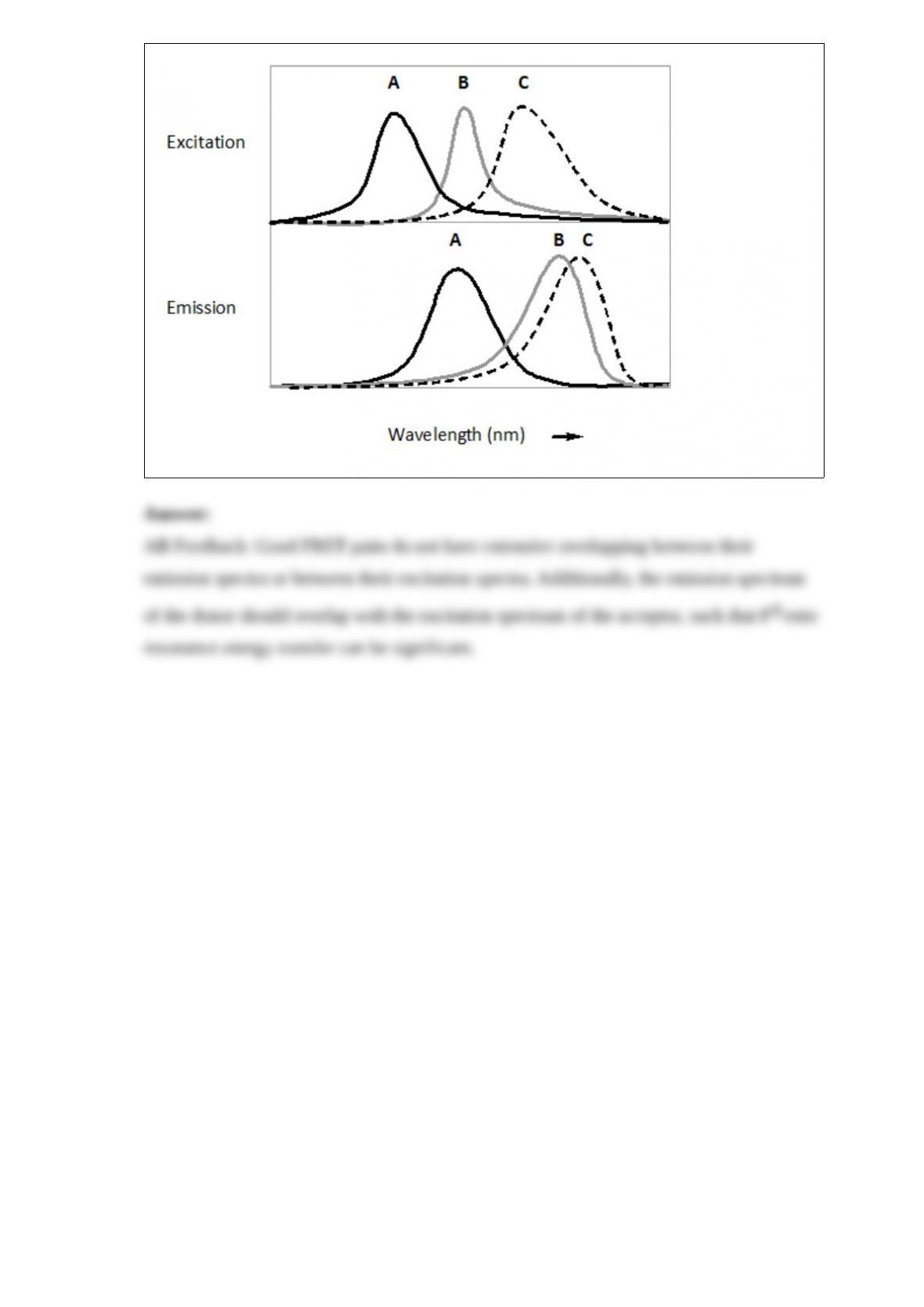
The chemical compound PMA is a potent stimulator of the epithelial-mesenchymal
transition in epithelial cells. The activity of two of the following types of proteins is
typically up-regulated in epithelial cells treated with PMA, while that of the other two is
mainly down-regulated. Choose the two proteins whose activity you think is stimulated
by PMA. Your answer would be a two-letter string composed of letters A to D only in
alphabetical order, e.g. BC.
(A)Cadherin
(B)Connexin
(C)Matrix metalloprotease
(D)Integrin
Stromal cell-derived factor 1 (SDF1) is a secreted protein that plays a major role in
guiding the migration of various cells during development. It binds to a
G-protein-coupled receptor on the surface of the migrating cell, which in turn activates
a trimeric G protein containing a Gi subunit. Pertussis toxin (PTX) modifies and
inactivates the Gi subunit. What would you expect to observe if migrating cells are
treated with PTX?
A.They migrate toward the source of SDF1.
B.They migrate away from the source of SDF1.
C.They migrate in a certain direction chosen randomly.
D.They move in small steps in random directions.
E.They lose their motility.
Comparing the genomes of present-day mitochondria or chloroplasts with the genomes
of their corresponding bacteria reveals that these organelles do not have many of the
genes that are essential for their function. For instance, they lack the many genes that
are required for DNA replication. What has happened to these genes?
A.They have been lost during evolution, since the organelles no longer rely on DNA
replication.
B.The required genes are kept in the nucleus, but many have evolved by gene transfer
from the organelle.
C.These genes have undergone mutations and have changed beyond recognition, but are
still present in the organelle.
D.The organelles do not replicate their DNA; they import new DNA from the nucleus.
E.The required genes are on plasmids that are separate from the organelle’s genome.
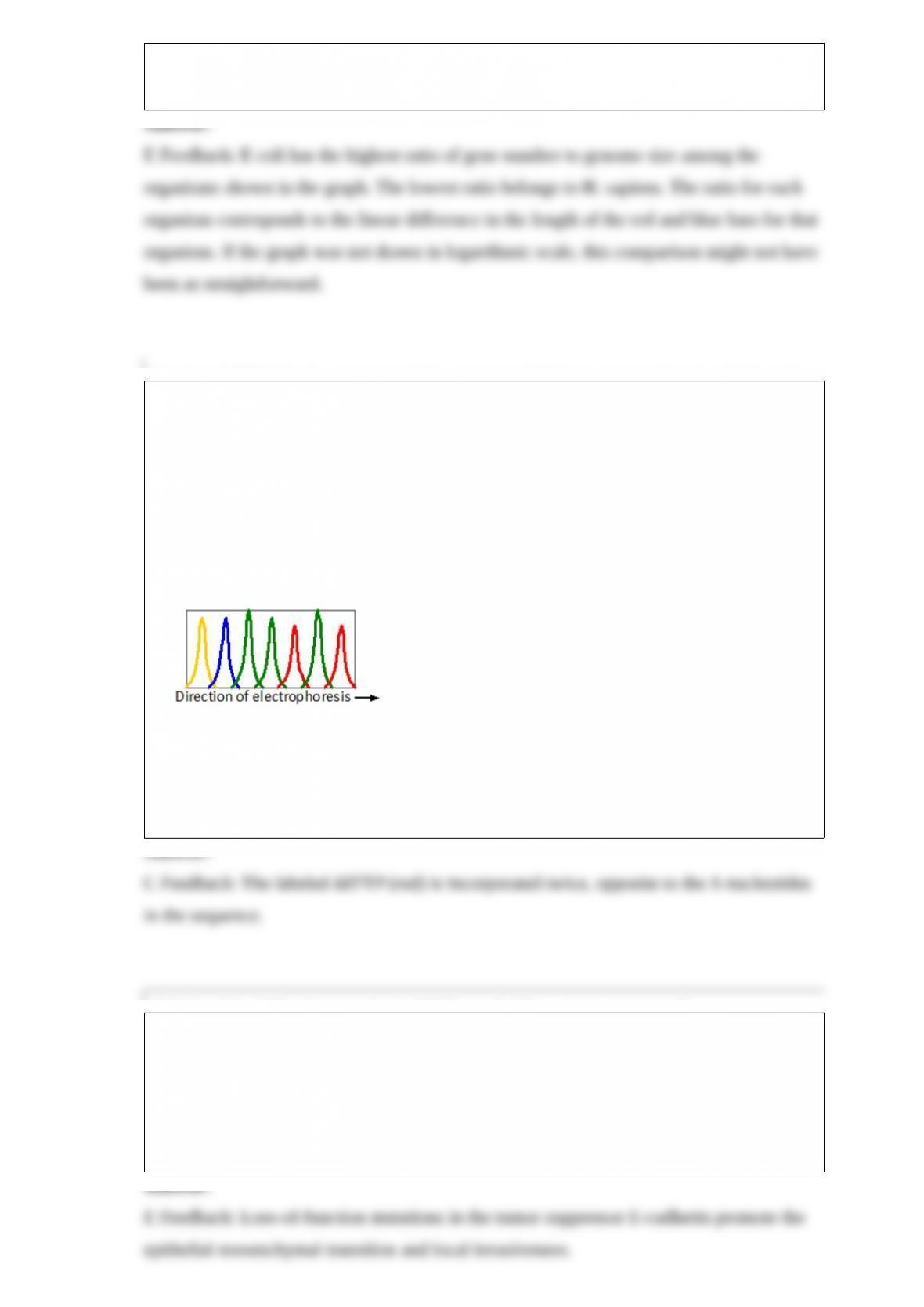
A piece of DNA has been sequenced by automated dideoxy sequencing, in which each
dideoxyribonucleoside triphosphate was labeled with a fluorescent tag of a different
color. The data corresponding to a small segment with the sequence 5′-TGCCACA-3′ is
shown in the following diagram. Knowing that ddGTP has been labeled with green
fluorescence, what color do you think was the fluorescent tag used to label ddTTP in
the sequencing experiment?
A.Blue
B.Green
C.Red
D.Yellow
Which of the following proteins is NOT encoded by a proto-oncogene?
A.Src
B.Ras
C.EGF receptor
D.Myc
E.E-cadherin
Consider two kinesin motor proteins at the mitotic spindle midzone: kinesin-5 is a
tetrameric motor that walks toward the plus end of both microtubules to which it is
attached via its motor domains; kinesin-14, on the other hand, walks toward the minus
end of one microtubule while it is attached to another microtubule via its tail domain.
How do these motors affect the length of the spindle?
A.They both work to shorten the spindle.
B.Kinesin-5 works to shorten the spindle whereas kinesin-14 works to lengthen it.
C.Kinesin-5 works to lengthen the spindle whereas kinesin-14 works to shorten it.
D.They both work to lengthen the spindle.
The turnover number for an enzyme is equivalent to the number of substrate molecules
processed per second per enzyme molecule. To a test tube containing a 100 mM
concentration of its substrate, you have added an enzyme at a final concentration of 10
, and have measured the rate of the reaction to be approximately 500 /sec. If the
Km for the binding of the enzyme to this substrate is about 100 mM, what is the
turnover number?
A.100
B.500
C.1000
D.5000
E.10,000
What features do Cajal bodies, interchromatin granule clusters, and nucleoli have in
common?
A.High permeability to the surrounding nucleoplasm
B.A network of macromolecules bound together by covalent linkages
C.A lipid bilayer membrane
D.The same set of RNA and protein molecules
E.The same size
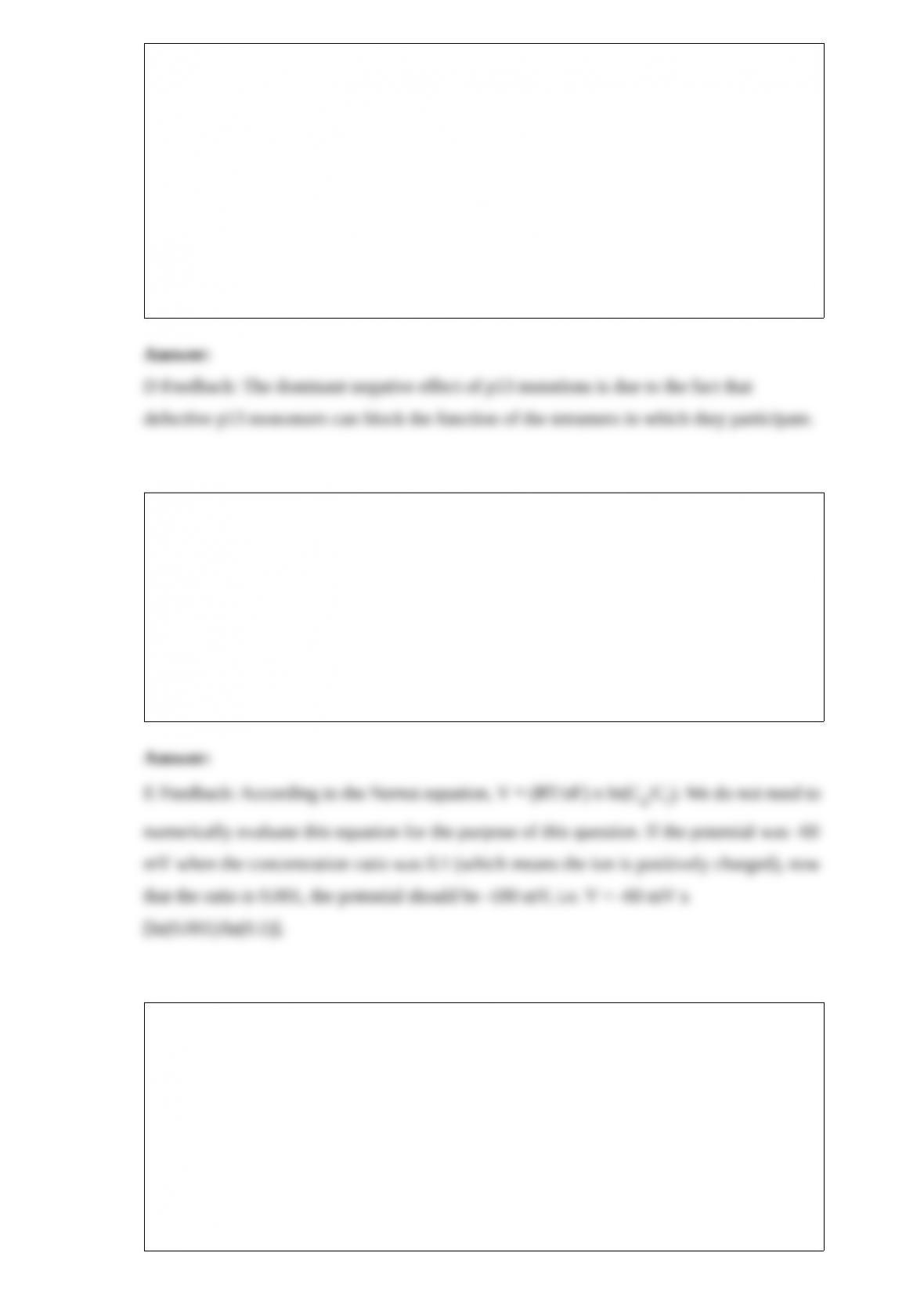
You mated male and female heterozygous Oct4 knockout mice to study the function of
this important gene. Among the progeny, one-third were homozygous wild type and the
rest were heterozygous. You then repeated the cross, but this time you genotyped
several embryos at different stages of early development and grouped them as either
homozygous wild type (+/+), heterozygous (+/-), or homozygous null (-/-). You have
summarized your results in the following table, in which the number of embryos in
different groups and at different developmental stages are presented. According to these
results, complete loss of Oct4 is ___
A.NOT lethal.
B.synthetic lethal.
C.zygotic lethal.
D.embryonic lethal.
The effect of the deletion of one copy of the gene encoding p53 is different from the
effects caused by other p53 mutations. For example, some loss-of-function mutations in
the DNA-binding domain of p53 cripple its function as a transcription regulator. Such a
mutation in only one copy of the p53 gene can be enough to confer a p53
loss-of-function phenotype, even when the other copy of the gene on the homologous
chromosome is wild type. This is because …
A.p53 is a proto-oncogene.
B.these mutations are recessive.
C.p53 is a tumor suppressor.
D.p53 forms a tetramer.
E.p53 can induce apoptosis.
The Nernst equilibrium potential for an ion that is 10 times more concentrated in the
cytosol compared to the extracellular fluid is about -60 mV. How much would the
potential be if the extracellular concentration decreases 100-fold with no change in the
intracellular concentration?
A.-6000 mV
B.-6 mV
C.-600 mV
D.-20 mV
E.-180 mV
Some feed-forward motifs are capable of generating a brief pulse of gene activation in
response to a sustained input signal: in such motifs, the signal activates an activator (A)
and a repressor (R), both of which control the expression of the same gene. The
quantitative output of the gene depends in part on the relative affinities of A and R for
binding to the cis-regulatory sequences of the target gene. Under which of the following
conditions is a brief pulse of gene activation observed in response to a sustained input
signal? KA and KR are the association constants for A and R, respectively.
A.KA = KR
B.KA << KR
C.KA >> KR
D.KAKR > 1
Five major types of chromatin were identified in studies performed on Drosophila
melanogaster cells, although much more remains to be learned about chromatin
diversity and dynamics. Which of the following is correct regarding these findings in
Drosophila?
A.These results were obtained using the 3C technique, which determines the positions
of loops in the chromatin.
B.According to these results, there are four types of heterochromatin and only one type
of euchromatin.
C.The Polycomb form of chromatin belongs to the euchromatin type.
D.In addition to these five major types of chromatin, there seem to be additional minor
types as well.
E.The pattern of chromatin types in the chromosomes is constant across the different
cell types in a multicellular organism.
What is the end product of glycolysis in the cytoplasm of eukaryotic cells? How many
carbon atoms does the molecule have?
A.Acetyl CoA; it has two carbon atoms attached to coenzyme A
B.Phosphoenolpyruvate; it has three carbon atoms
C.Glucose 6-phosphate; it has six carbon atoms
D.Pyruvate; it has three carbon atoms
E.Glyceraldehyde 3-phosphate; it has three carbon atoms
After having cereal and nut mix for breakfast, your friend realizes that the mix contains
a nut to which she is allergic. Soon afterward, symptoms of an allergic reaction start to
appear, and she is going to take an antihistamine pill to alleviate them. During the
allergic reaction in her body, …
A.mast cells synthesize and secrete IgE antibodies into the blood.
B.the allergen molecules bind to IgE antibodies that are bound to Fc receptors on the
surface of basophils and mast cells.
C.histamine and other amines are recognized by IgE antibodies.
D.histamine binds to mast cells and induces IgE production.
E.All of the above.
Indicate true (T) and false (F) statements below about the human genome. Your answer
would be a six-letter string composed of letters T and F only, e.g. FTFFFT.
( )Only about 1.5% of the human genome is highly conserved.
( )Almost half of our genome is composed of repetitive sequences.
( )Genes occupy almost a quarter of the genome.
( )There are roughly as many pseudogenes in the human genome as functional genes.
( )Transposable elements occupy almost 10% of our genome.
( )On average, exons comprise 1.5% of our genes.
The following schematic diagram shows the activation of M-Cdk in mitosis. Indicate
which proteins below correspond to those indicated as A to D in the diagram. Your
answer would be a four-letter string composed of letters A to D only, e.g. BACD.
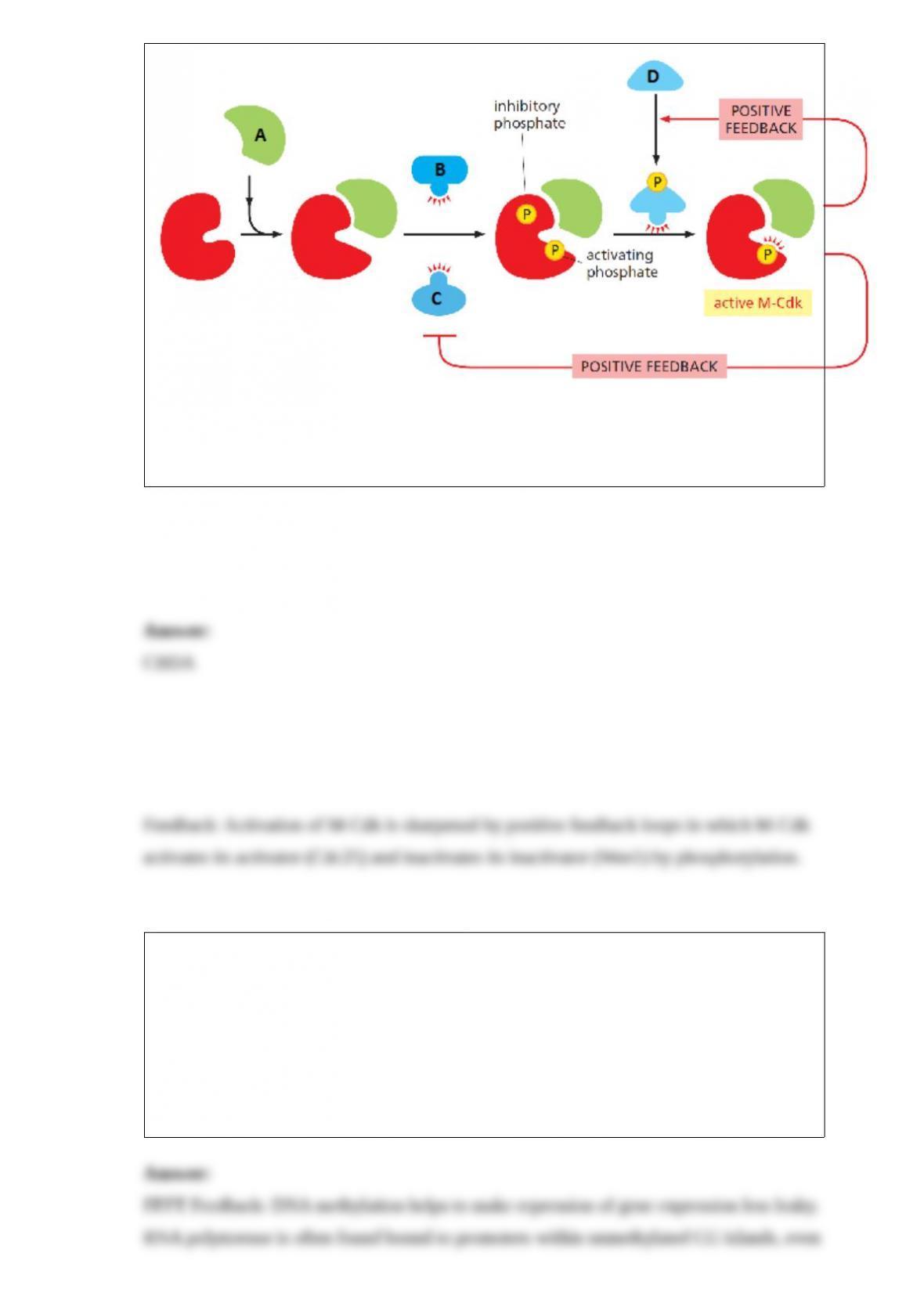
( )Wee1
( )CAK
( )Cdc25
( )M-cyclin
Indicate true (T) and false (F) statements below regarding DNA methylation in humans.
Your answer would be a four-letter string composed of letters T and F only, e.g. TTTF.
( )DNA methylation makes repression of gene expression “leakier.”
( )DNA methylation at the promoter region is usually an indication of active
transcription.
( )CG islands are nonpermissive for RNA polymerase assembly.
( )The dinucleotide 5′-GC-3′ is much more common than 5′-CG-3′ in the human
genome.
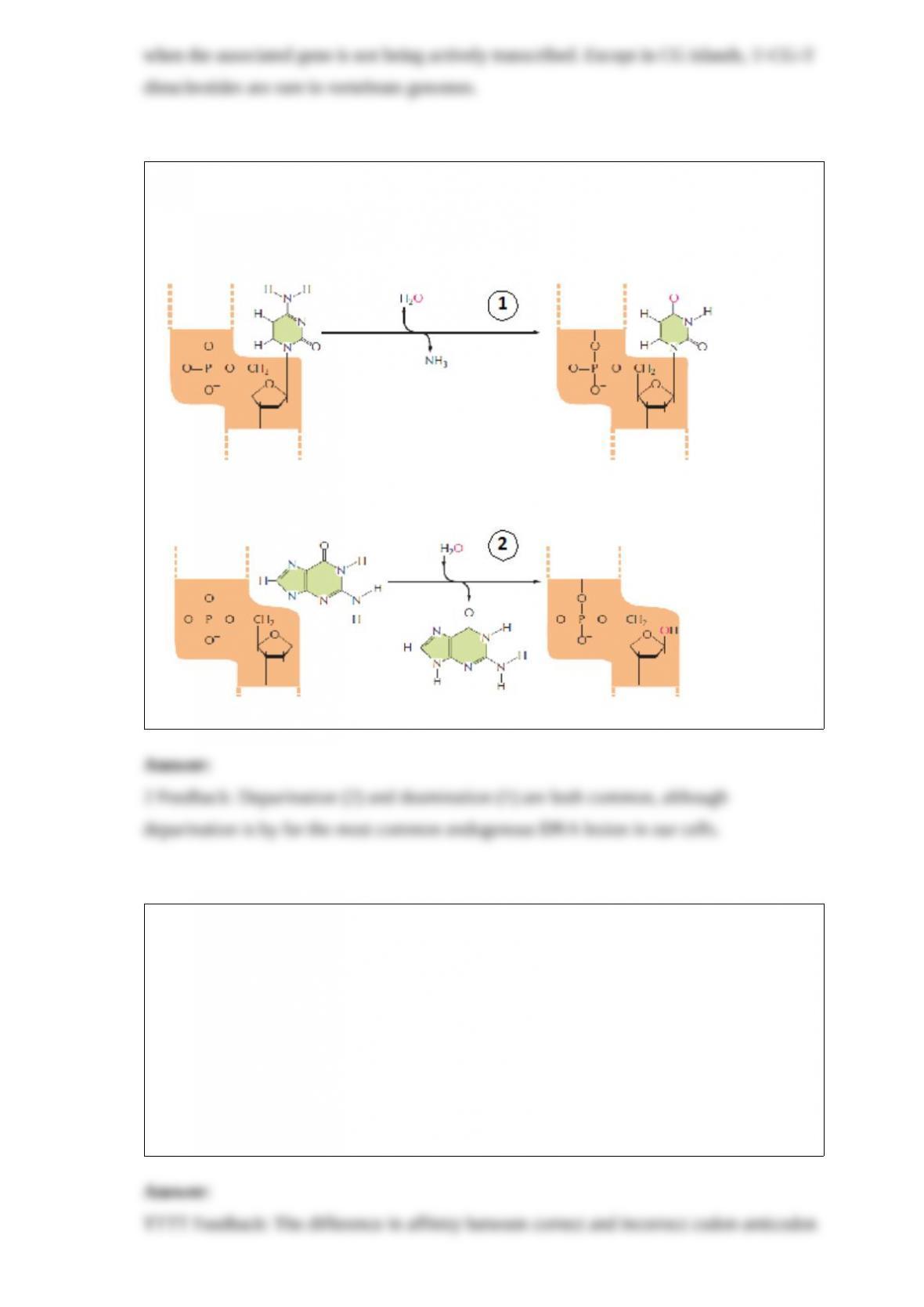
Examples of two general types of DNA damage are shown in the following drawing.
Which type of damage (1 or 2) is more common in our cells?
Indicate true (T) and false (F) statements below regarding the accuracy of translation by
the ribosome. Your answer would be a four-letter string composed of letters T and F
only, e.g. TFFF.
( )The difference in the binding affinity of a codon to a correct versus incorrect
anticodon CANNOT by itself account for the high accuracy of translation.
( )GTP hydrolysis by EF-Tu both speeds up translation and increases its accuracy.
( )The ribosome can detect correct Watson-Crick base-pairing between the codon and
anticodon in the A site, and consequently trigger GTP hydrolysis by EF-Tu.
( )Even after GTP hydrolysis by EF-Tu, the ribosome can prevent wrong amino acid
incorporation by kinetic proofreading.
Indicate true (T) and false (F) statements below regarding superresolution fluorescence
microscopy. Your answer would be a four-letter string composed of letters T and F only,
e.g. FFFF.
( )Resolutions of 5 nm or better can be readily achieved by superresolution fluorescence
techniques.
( )SIM overcomes the limit imposed by the diffraction of light by a computational
analysis on images obtained from interference patterns.
( )PALM and STORM techniques reduce the width (or ‘spread”) of the point spread
function.
( )Success of STED depends on fluorescence probes that are reversibly switched off and
on.
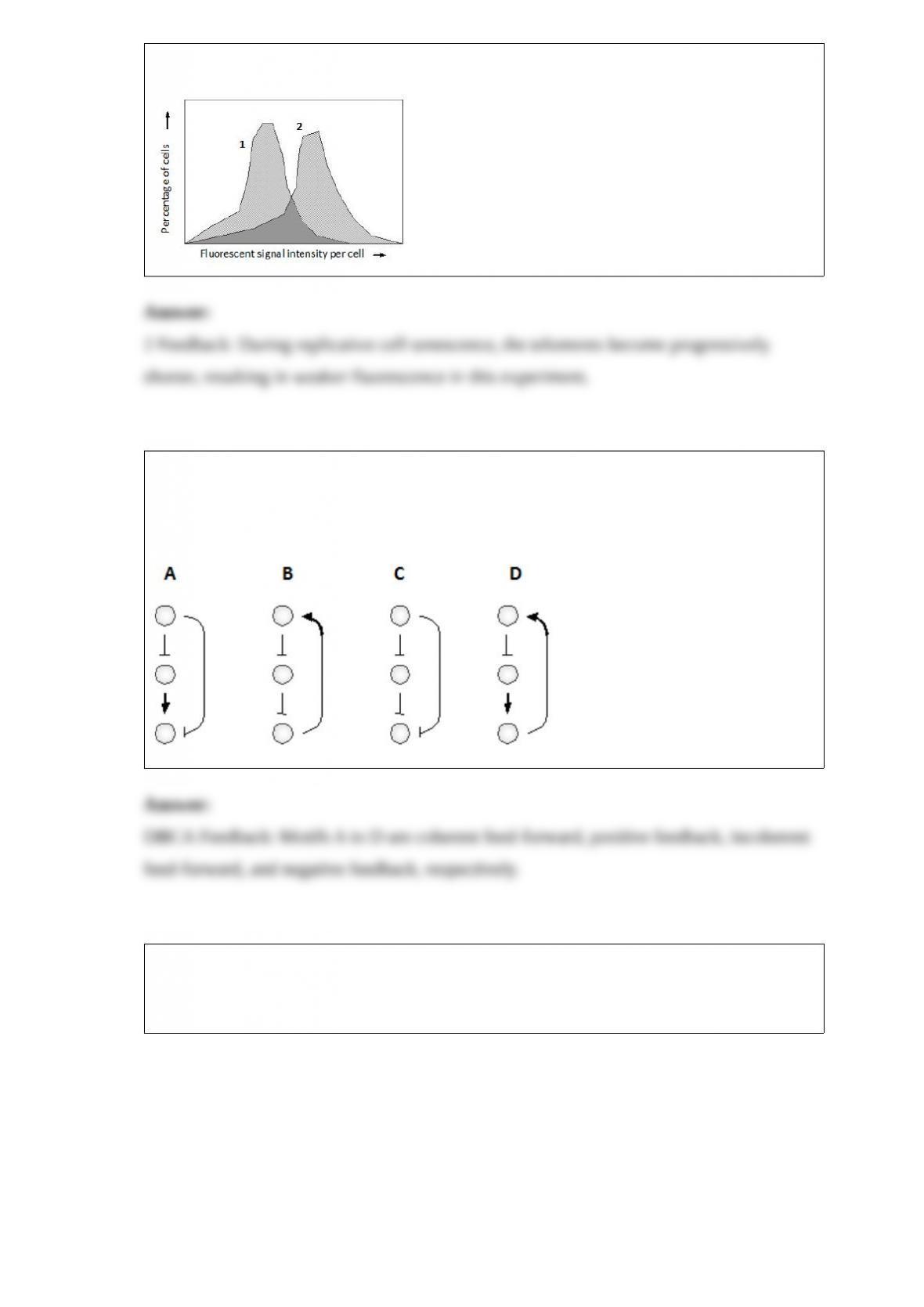
You have used a variation of fluorescence in situ hybridization (FISH) called
flow-FISH. In this technique, DNA probes are labeled with fluorescence and hybridized
to their targets inside the cells in a tissue. The cells are then sorted using a
fluorescence-activated cell sorter based on their fluorescent signal intensity. The probes
in your experiment are designed to hybridize to human telomeric sequences at the ends
of the chromosomes. You perform flow-FISH using these probes on two human cell
types, an early primary fibroblast culture and a late secondary culture that is showing
the signs of replicative cell senescence. The sorting results are presented in the
following histograms. Which histogram (1 or 2) would you expect to correspond to the
primary culture?
Indicate which of the following network motifs represent negative feedback, positive
feedback, incoherent feed-forward, and coherent feed-forward, respectively. Your
answer would be a four-letter string composed of letters A to D only, e.g. BACD.
Given the absorption and emission spectra of three fluorescent dyes in the simplified
diagrams below, which pair of dyes is better suited for a fluorescence resonance energy
transfer (FRET) study? Write down AB, BC, or AC as your answer.