
The following questions refer to the figure below, which shows an outcrop of
sedimentary rock whose strata are labeled A-D.
If x indicates the location of fossils of two closely related species, then fossils of their
most-recent common ancestor are most likely to occur in which stratum?
A) A
B) B
C) C
D) D
Rank the following one-base point mutations (from most likely to least likely) with
respect to their likelihood of affecting the structure of the corresponding polypeptide.
1. insertion mutation deep within an intron
2. substitution mutation at the third position of an exonic codon
3. substitution mutation at the second position of an exonic codon
4. deletion mutation within the first exon of the gene
A) 1, 2, 3, 4
B) 4, 3, 2, 1
C) 2, 1, 4, 3
D) 3, 1, 4, 2

Which of the following cells have reduced or very little active telomerase activity?
A) most normal somatic cells
B) most normal germ cells
C) most cancer cells
The vegetal pole of a frog zygote differs from the animal pole in that _____.
A) the vegetal pole has a higher concentration of yolk
B) the blastomeres originate only in the vegetal pole
C) the vegetal pole cells undergo mitosis, but not cytokinesis
D) the polar bodies bud from this region

Regardless of where in the world a vineyard is located, for the winery to produce a
Burgundy, it must use varietal grapes that originated in Burgundy, France. The most
effective way for a new California grower to plant a vineyard to produce Burgundy is
to_____.
A) plant seeds obtained from French varietal Burgundy grapes
B) transplant varietal Burgundy plants from France
C) acquire a tissue culture of varietal Burgundy grapes from France
D) graft varietal Burgundy grape scions onto native (Californian) root stocks
Archegonia _____.
A) are the sites where male gametes are produced
B) may contain sporophyte embryos
C) have the same function as sporangia
D) make asexual reproductive structures
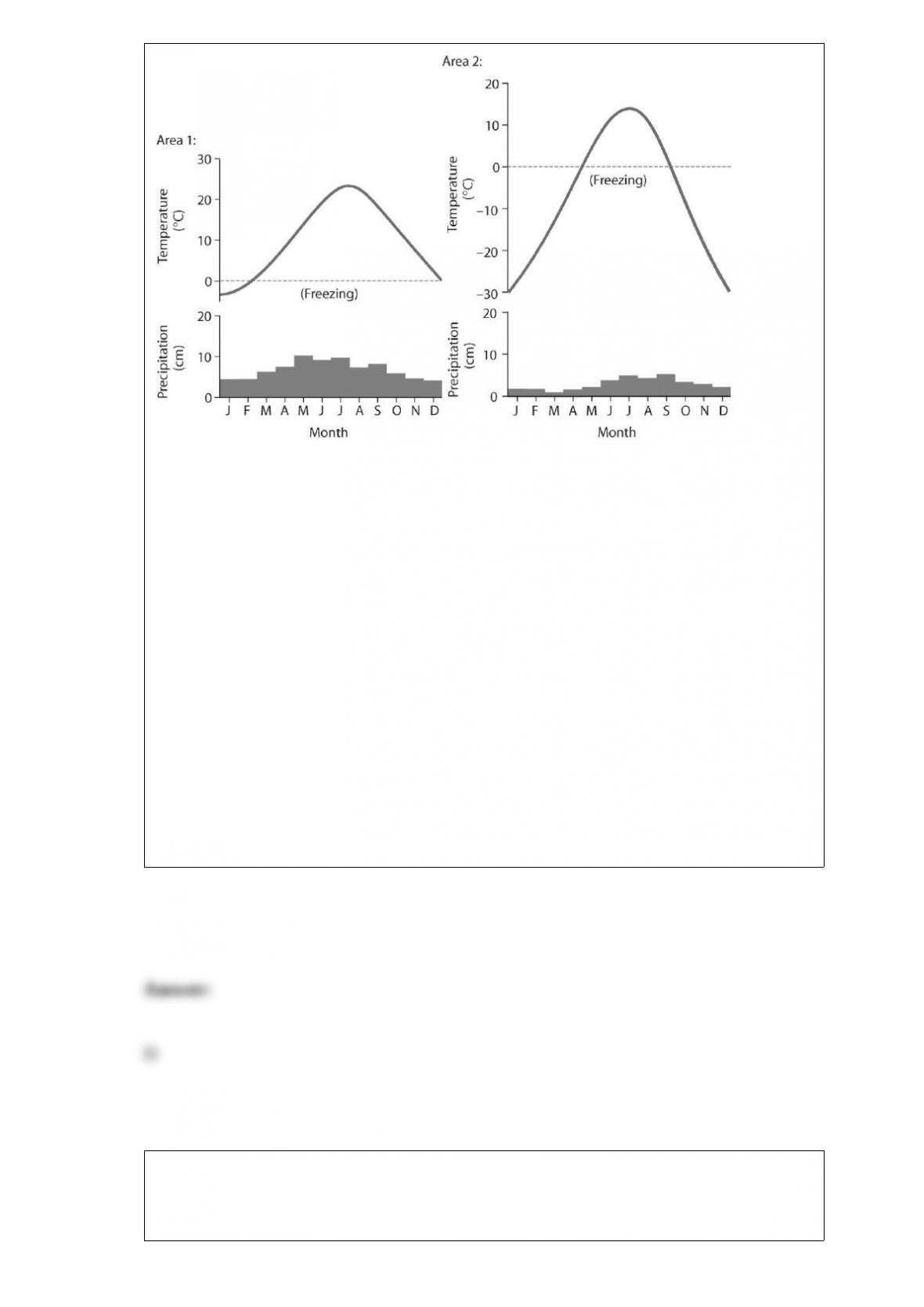
Based on the data in the figure above, which of the following statements are correct?
I) Area 1 has more average precipitation than Area 2.
II) Area 1 has a higher average temperature than Area 2.
III) Both areas have low variation in monthly precipitation.
IV) Area 2 has a lower annual temperature variation compared to Area 1.
A) only I and III
B) only II and IV
C) only II, III, and IV
D) only I, II, and III
Which of the following investigations would shed the most light on the future
distribution of organisms in temperate regions that are faced with climate change?

A) Remove, to the mineral soil, all of the organisms from an experimental plot and
monitor the colonization of the area over time in terms of both species diversity and
abundance.
B) Look at the climatic changes that occurred since the last Ice Age and how species
redistributed as glaciers melted, then make predictions on future distribution in species
based on past trends.
C) Compare and contrast the flora and fauna of warm/cold/dry/wet climates to shed
light on how they evolved to be suited to their present-day environment.
D) Quantify the impact of man’s activities on present-day populations of threatened and
endangered species to assess the rate of extirpation and extinction.
You have captured a number of rats from a wild population and quickly surmise with
tests that they are very good at avoiding food with poisons. What would best explain
this observation?
A) Rats are probably just intelligent enough to avoid poison.
B) Rats may experience a large variety of toxins in their environment and learn to avoid
them.
C) Rats are taught by their parents to test small bits of food first and then return later if
the food seems safe.
D) Rats may be able to tolerate large amounts of poison.

Viruses _____.
A) manufacture their own ATP, proteins, and nucleic acids
B) use the host cell to copy themselves and make viral proteins
C) use the host cell to copy themselves and then viruses synthesize their own proteins
D) metabolize food and produce their own ATP
Which of the following contributed to the dust bowl in the American southwest during
the 1930s?
I) overgrazing by cattle
II) clear-cutting of forest trees
III) plowing of native grasses
IV) lack of soil moisture
A) I and II
B) II, III, and IV
C) I, III, and IV
D) I, II, III, IV
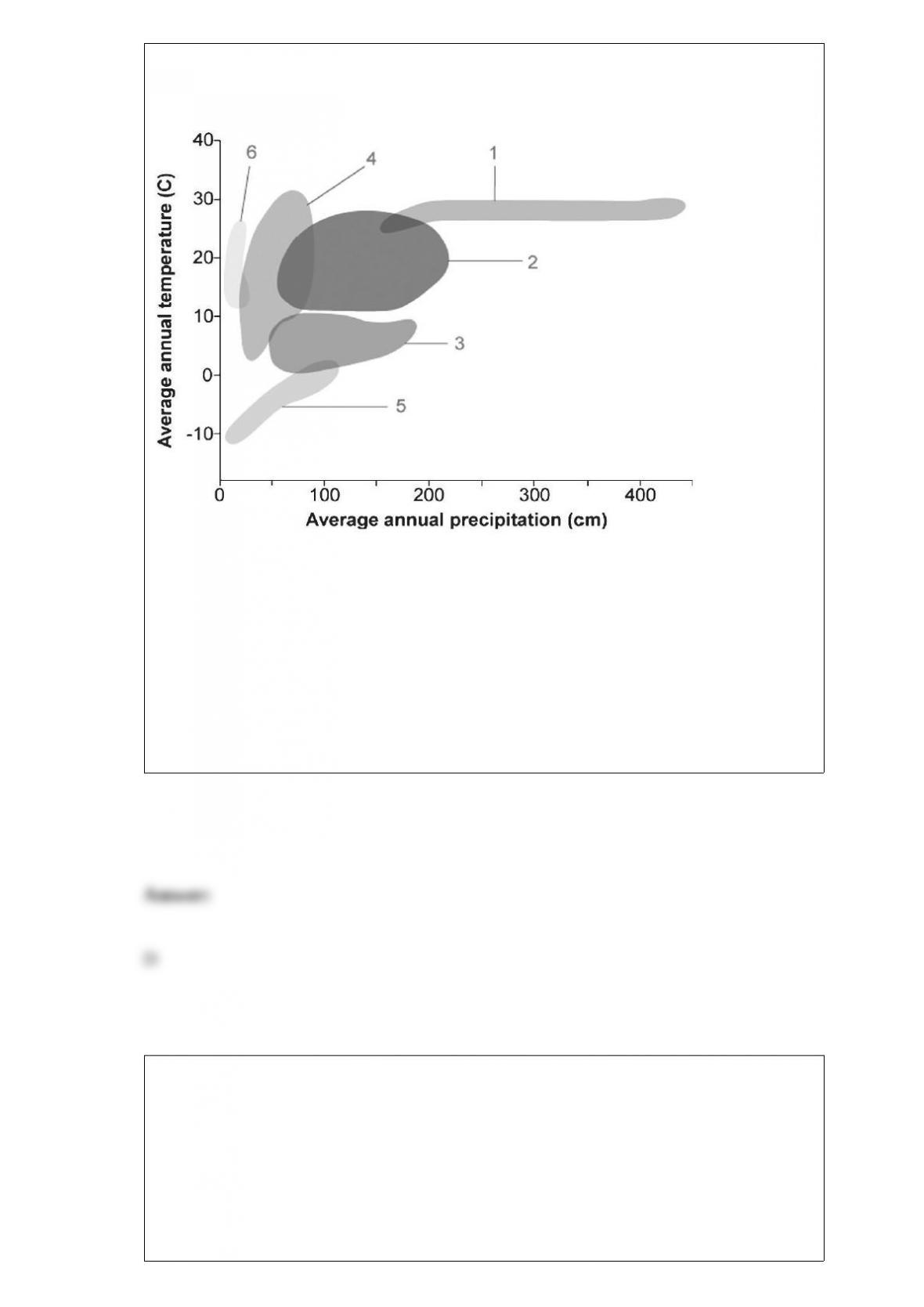
In the figure above, which number would designate the arctic tundra biome?
A) 2
B) 3
C) 4
D) 5
Food being digested in the stomach is in a highly acidic environment. When the food is
released from the stomach into the small intestine, why is the environment no longer
acidic?
A) Secretin increases the flow of bicarbonate ions from the pancreas into the small
intestine to neutralize the stomach acid.
B) Enterokinase activates trypsinogen, thus neutralizing the stomach acid.

C) Bile salts from the gallbladder neutralize the stomach acid.
D) When pepsinogen activates pepsin, one result is the neutralization of stomach acid in
the stomach.
If the direction of Earth’s rotation reversed, the most predictable effect would be _____.
A) a big change in the length of the year
B) winds blowing from west to east along the equator
C) a loss of seasonal variation at high latitudes
D) the elimination of ocean currents
Both the volume and the surface area for three different cells were measured. These
values are listed in the following table:
Using data from the table above, select the best explanation for why that cell will be
able to eliminate waste most efficiently?

A) Cell 1 since it has the smallest volume and will not produce as much waste as the
other cells.
B) Cell 2 since it has the highest surface area-to-volume ratio which facilitates the
exchange of materials between a cell and its environment.
C) Cell 3 since it has the largest surface area which will enable it to eliminate all of its
wastes quickly.
D) Cell 3 because it is big enough to allow wastes to easily diffuse through the plasma
membrane.
Over time, the movement of people on Earth has steadily increased. This has altered the
course of human evolution by increasing _____.
A) nonrandom mating
B) geographic isolation
C) genetic drift
D) gene flow
What is the only type of chemical signal that does not alter the physiology of the animal
producing that signal?

A) neural
B) paracrine
C) neuroendocrine
D) pheromones
The main purpose of wildlife (movement) corridors is to _____.
A) slow down the introduction of new individuals of a species
B) slowly introduce a species to a new preserve
C) create more edge habitat
D) connect two otherwise isolated populations
Carbonic anhydrase inhibitors cause less movement of carbonic acid toward carbon
dioxide production and are used as a prophylactic treatment of altitude sickness.
Altitude sickness occurs when a hiker ascends to altitudes where the density of oxygen
is low. How does this decrease the symptoms of high altitude sickness?
A) The excess hydrogen ions are excreted in the urine and the resulting loss of acidity
increases respiration rate.
B) The excess bicarbonate ions are excreted in the urine and the resulting loss of blood
pressure increases respiration rate.
C) The excess bicarbonate ions are excreted in the urine and the resulting increase in
blood acidity leads to an increase in ventilation.
D) The excess bicarbonate ions in the blood increase the affinity of hemoglobin for
oxygen.
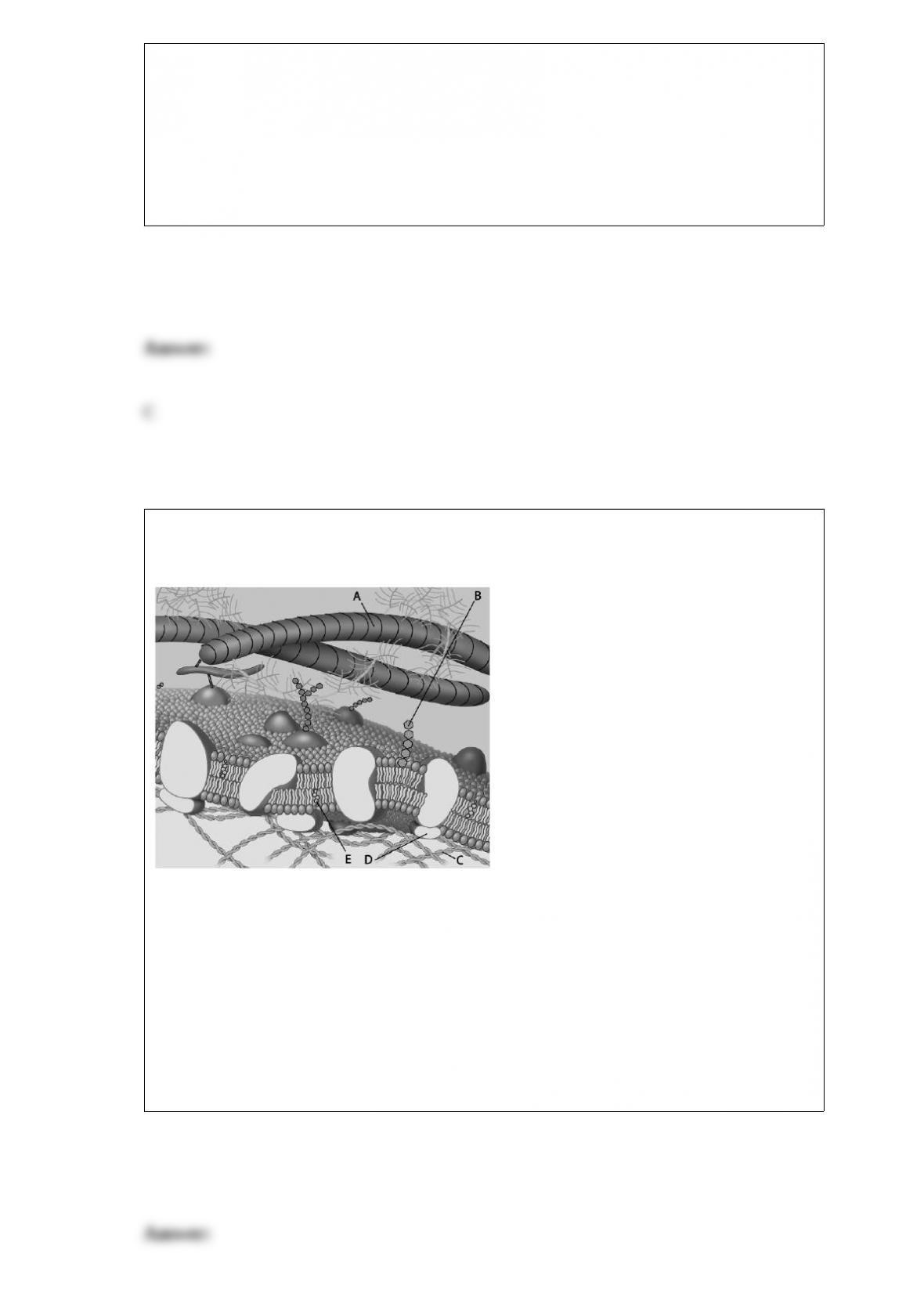
Which component is cholesterol?
A) B
B) C
C) D
D) E
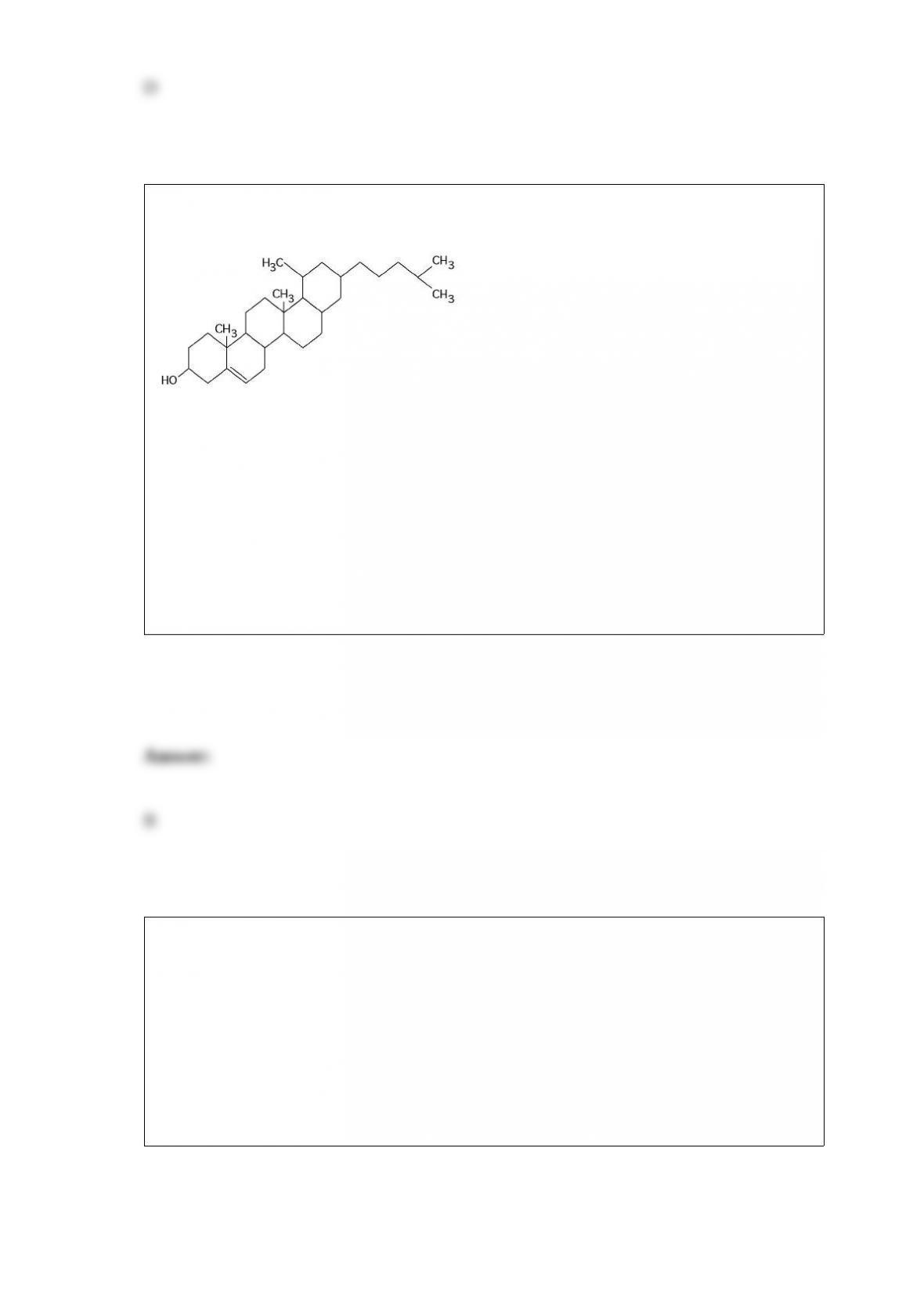
The molecule shown the accompanying figure is a _____.
A) fatty acid
B) steroid
C) protein
D) phospholipid
The multicellular condition of animals and fungi seems to have arisen _____.
A) due to common ancestry
B) by convergent evolution
C) by inheritance of acquired traits
D) by serial endosymbioses

In what way are elements in the same column of the periodic table the same? They have
the same number of _____.
A) protons
B) electrons when neutral
C) electrons in their valence shells when neutral
D) electron shells when neutral
Terry catches a ray-finned fish from the ocean and notices that attached to its flank is an
equally long, snakelike organism. The attached organism has no external segmentation,
no scales, a round mouth surrounded by a sucker, and two small eyes. Terry thinks it
might be a marine leech, a hagfish, or a lamprey.
Terry saved some of the tooth-like objects within the hagfish’s round mouth to analyze
their composition in his mentor’s biochemistry research lab. Terry will find that they are
composed of the same protein found in tetrapod _____.
A) skin
B) teeth
C) bones
D) cartilage

Which of the following is a correct association?
A) kinase activity and the addition of a tyrosine
B) phosphodiesterase activity and the removal of phosphate groups
C) GTPase activity and hydrolysis of GTP to GDP
D) adenylyl cyclase activity and the conversion of cAMP to AMP
What is a telomere?
A) the mechanism that holds two sister chromatids together
B) DNA replication during telophase
C) the site of origin of DNA replication
D) the ends of linear chromosomes

Why is net primary production (NPP) a more useful measurement to an ecosystem
ecologist than gross primary production (GPP)?
A) NPP can be expressed in energy/unit of area/unit of time.
B) NPP can be expressed in terms of carbon fixed by photosynthesis for an entire
ecosystem.
C) NPP represents the stored chemical energy that is available to consumers in the
ecosystem.
D) NPP shows the rate at which the standing crop is utilized by consumers.
Suppose an experimenter becomes proficient with a technique that allows her to move
DNA sequences within a prokaryotic genome.
If she moves the promoter for the lac operon to the region between the beta
galactosidase (lacZ) gene and the permease (lacY) gene, which of the following would
be likely?
A) The three structural genes will be expressed normally.
B) RNA polymerase will no longer transcribe permease.
C) The operon will still transcribe the lacZ and lacY genes, but the mRNA will not be
translated.
D) Beta galactosidase will not be produced.

Recall the caterpillar experiment in which caterpillars born in the spring looked like
flowers, and caterpillars born in the summer looked like twigs. What is the most likely
selective advantage for this difference in body shape?
A) Looking like their food sources allows the caterpillars to move through their
environment more efficiently.
B) Development into the adult moth form is faster for caterpillars shaped like twigs
than like flowers.
C) Looking like their food source lets the caterpillars blend into their surroundings,
reducing predation.
D) Looking like their food source will increase the caterpillars’ feeding efficiency; this
would increase their growth rate and survival rate.
Hydrophobic substances such as vegetable oil are _____.
A) nonpolar substances that repel water molecules
B) nonpolar substances that have an attraction for water molecules
C) polar substances that repel water molecules
D) polar substances that have an affinity for water
Which of the following effects can occur because of the high surface tension of water?

A) Lakes cannot freeze solid in winter, despite low temperatures.
B) A raft spider can walk across the surface of a small pond.
C) Organisms can resist temperature changes, although they give off heat due to
chemical reactions.
D) Sweat can evaporate from the skin, helping to keep people from overheating.
What is thought to be the correct sequence of these events, from earliest to most recent,
in the evolution of life on Earth?
1. origin of mitochondria
2. origin of multicellular eukaryotes
3. origin of chloroplasts
4. origin of cyanobacteria
5. origin of fungal-plant symbioses
A) 4, 3, 2, 1, 5
B) 4, 1, 2, 3, 5
C) 4, 1, 3, 2, 5
D) 4, 3, 1, 5, 2

If all individuals in the last remaining population of a particular bird species were all
highly related, which type of diversity would be of greatest concern when planning to
keep the species from going extinct?
I ) genetic diversity
II) species diversity
III) ecosystem diversity
A) only I
B) only II
C) only III
D) only II and III
Assuming independent assortment for all gene pairs, what is the probability that the
following parents, AABbCc x AaBbCc, will produce an AaBbCc offspring?
A) 1/2
B) 1/16
C) 1/8
D) 3/4

An excretory system that is partly based on the filtration of fluid under high hydrostatic
pressure is the _____.
A) flame bulb system of flatworms
B) protonephridia of rotifers
C) Malpighian tubules of insects
D) kidneys of vertebrates