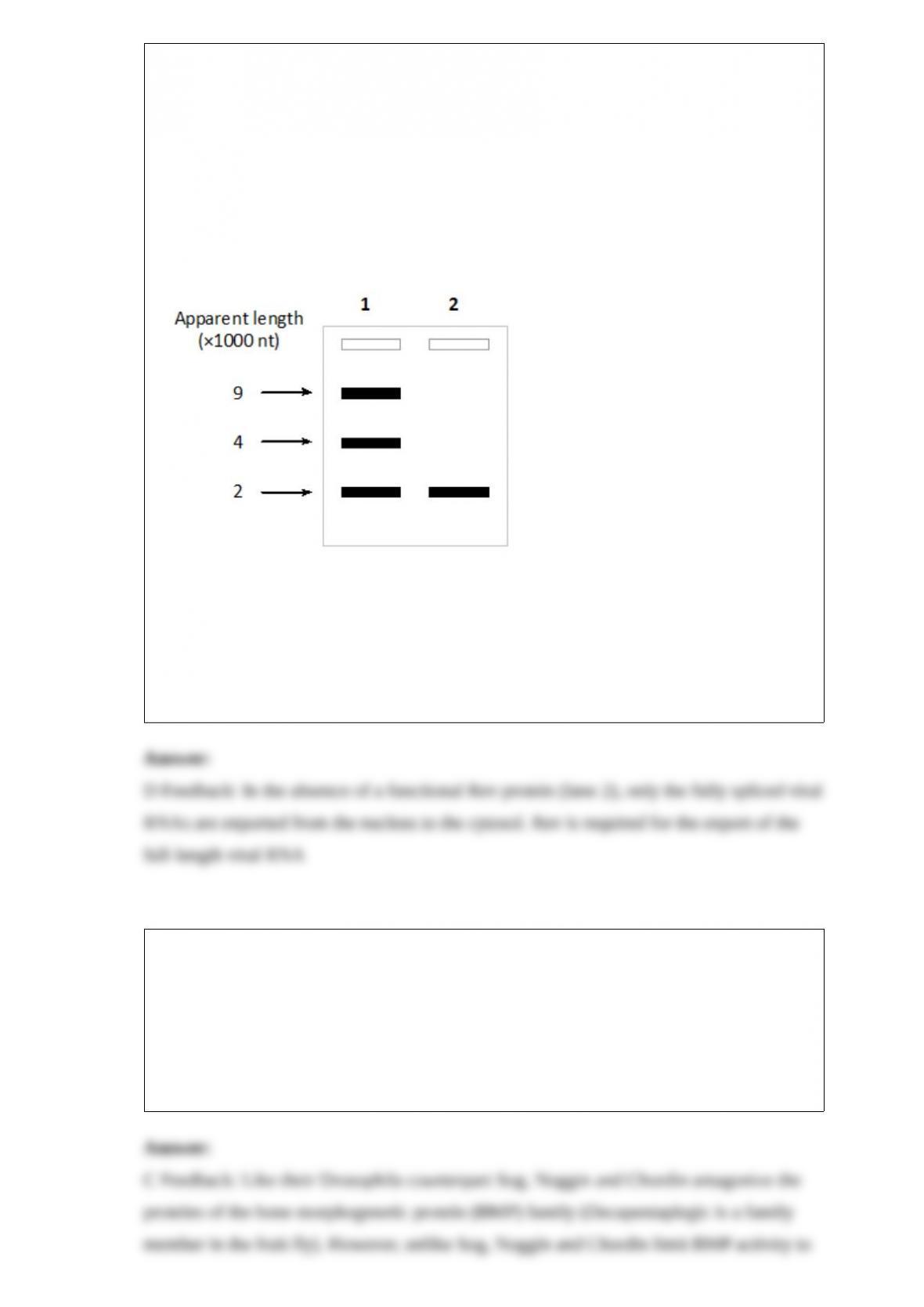
A researcher studying the human immunodeficiency virus (HIV) has infected human T
cells with wild-type or Rev-deficient viruses. She extracts cytoplasmic RNA from the
cells and separates each isolated RNA mixture by agarose-gel electrophoresis. She then
uses northern analysis using HIV-specific probes to identify those bands that contain
viral RNA. The results are presented in the following schematic drawing. Which lane (1
or 2) corresponds to cells infected with the Rev-deficient virus? What is the size of the
full-length HIV genome?
A.Lane 1; about 9000 nucleotides
B.Lane 1; about 4000 nucleotides
C.Lane 1; about 2000 nucleotides
D.Lane 2; about 9000 nucleotides
E.Lane 2; about 2000 nucleotides
The role of Chordin and Noggin in patterning in developing vertebrates is equivalent to
that of …(1) in Drosophila. They are secreted from the …(2) pole and antagonize the
activity of bone morphogenetic factors that are secreted throughout the embryo.
A.1: Decapentaplegic; 2: dorsal
B.1: Decapentaplegic; 2: ventral
C.1: Short gastrulation; 2: dorsal
D.1: Short gastrulation; 2: ventral
A potassium channel conducts K+ ions several orders of magnitude better than Na+
ions, because ___
A.the Na+ ion is too large to pass through the channel pore.
B.the hydrated Na+ ion occupies a larger volume compared to the hydrated K+ ion, and
is too large to pass through the channel pore.
C.the Na+ ion is too small to interact with the channel in a way that facilitates the loss
of water from the ion.
D.the Na+ ion cannot bind to the high-affinity K+-binding sites in the channel pore.
It is a model organism used to study various cell processes such as regulation of the
eukaryotic cell cycle. Mutants are available for every gene in its exceptionally small
genome. It can live indefinitely in either a haploid or a diploid state. Which of the
following describes this organism?
A.It can reproduce only asexually.
B.It is a fungus.
C.It lacks a cell wall.
D.Its cell cycle is typically much slower than that of human cells.
E.All of the above
Which equation better describes the steady-state concentration of a protein (X) that is
regulated by the simple binding of a transcription repressor (R) to its cis-regulatory
DNA sequences? is the transcription rate, m is the translation rate, K is the
association constant in the binding of R to the regulatory sequences, and X is the mean
lifetime of the protein X.
A. / (1 + K[R])
B. / (1 + [R])
C. K / (1 + K[R])
D. [R] / (1 + K[R])
E. [R] / (K + [R])
In the dendritic networks of actin filaments in lamellipodia, nucleation of actin
polymerization is mostly performed by …
A.ERM proteins
B.WASp proteins
C.Formin
D.Arp 2/3 complex
E. -TuRC
An increasing number of lymphomas are being treated with ‘stem-cell transplantation”
therapy that is composed of the following overall steps. Sort these steps into the correct
order. Your answer would be a three-letter string composed of letters A to C only, e.g.
BAC.
(A)Injection of cells into the blood
(B)Harvesting and isolating selected cells from the patient’s bone marrow
(C)Heavy x-ray irradiation of the patient
What is the function of RNA-dependent RNA polymerases in RNAi?
A.They prevent the spread of the RNAi pathway by replicating the target RNAs.
B.They help amplify the RNAi response by replicating the target RNAs.
C.They produce additional copies of the siRNAs to ensure that the RNAi response is
sustained and spread.
D.They are viral proteins that prevent the spread of RNAi by preferentially replicating
siRNA sponges.
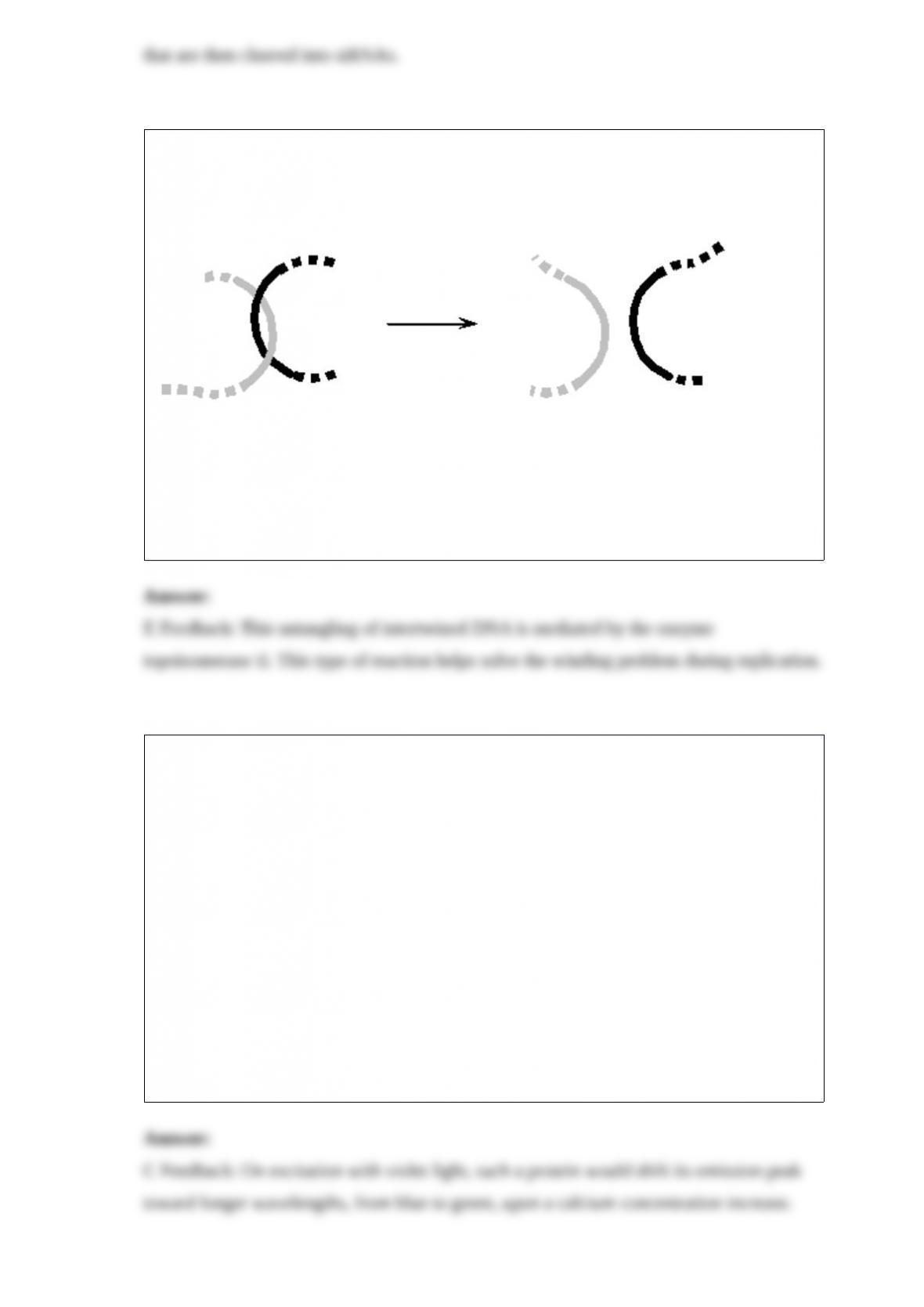
In the following schematic drawing, two DNA molecules are shown before and after the
action of a protein that is also involved in the process of DNA replication. What is this
protein called?
A.DNA ligase
B.DNA helicase
C.DNA polymerase I
D.DNA topoisomerase I
E.DNA topoisomerase II
Consider an engineered chimeric protein made from fusion of three proteins: a blue
fluorescent protein (BFP), a calmodulin-binding peptide, and a green fluorescent
protein (GFP). Calmodulin is an abundant calcium-binding protein in eukaryotes. Once
bound to calcium ions, it can recognize the calmodulin-binding peptide in the fusion
protein, change conformation, wrap around the peptide, and bring the BFP and GFP
components in close proximity. This results in fluorescence resonance energy transfer
(FRET) between BFP and GFP. Accordingly, the fusion protein ___
A.is a luminescent ion-sensitive indicator that red-shifts its emission wavelength in the
presence of calcium.
B.is a luminescent ion-sensitive indicator that increases its emission in the presence of
calcium.
C.is a genetically encoded calcium indicator that red-shifts its emission wavelength in
the presence of calcium.
D.is a genetically encoded calcium indicator that increases its emission in the presence
of calcium.
A chromatin “reader complex” ___
A.is always coupled to a “writer complex” and spreads specific chromatin
modifications.
B.can recognize any histone code.
C.binds tightly to the chromatin only when a specific set of histone marks is present.
D.can only bind to a single specific histone mark.
E.has at least five protein subunits.
Many viruses have large capsids in the form of a hollow sphere, made of hundreds of
identical protein subunits. What are the advantages of having coats made of several
copies of only a few subunits?
A.Assembly can be readily regulated.
B.Disassembly can be readily regulated.
C.It requires a smaller amount of genetic information.
D.The effect of mistakes in protein synthesis on the overall assembly is minimized.
E.All of the above.
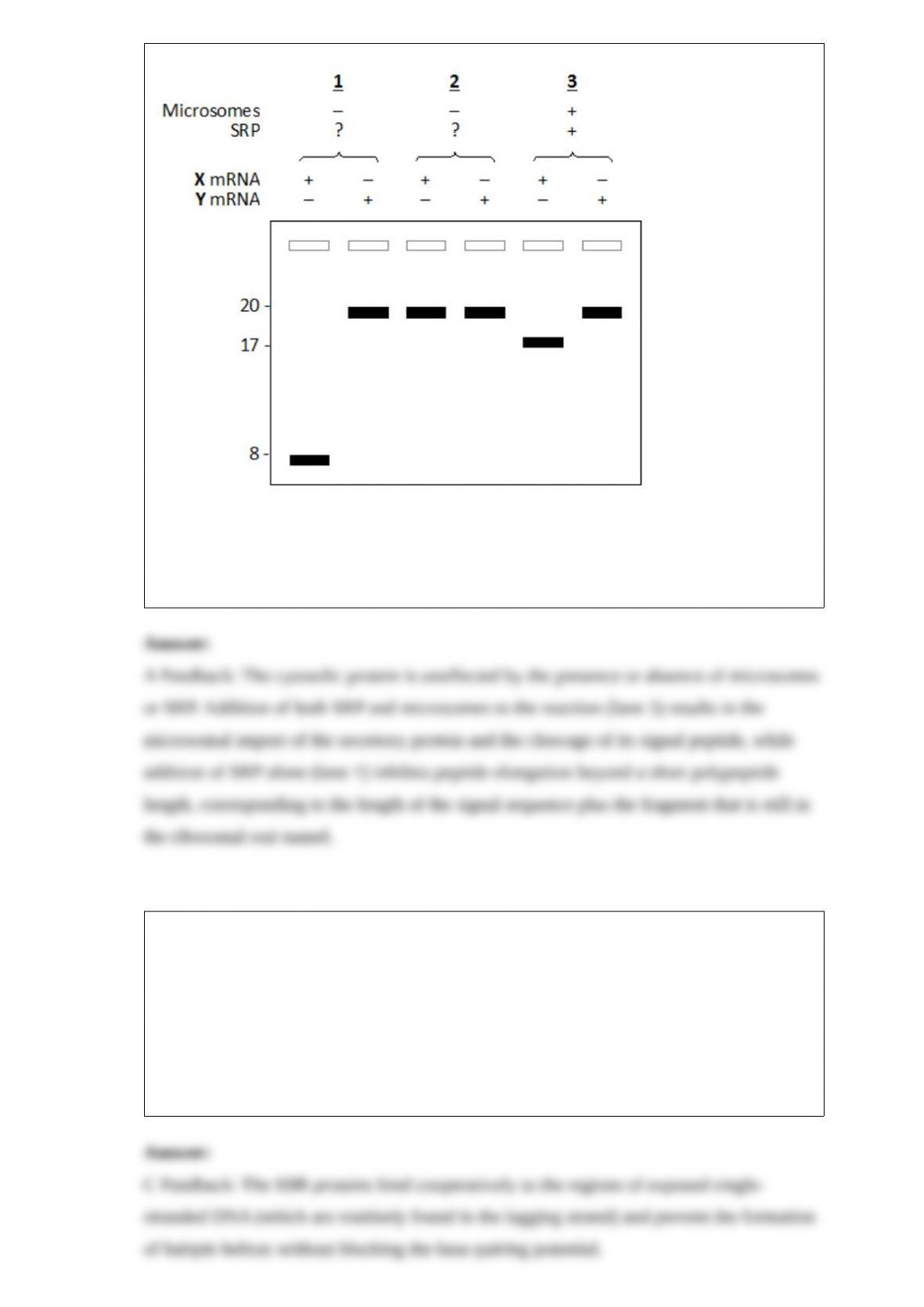
You set up an in vitro translation system containing the entire translation machinery but
devoid of any component of the endoplasmic reticulum (ER) targeting machinery. To
this system, you can add mRNA encoding either a 20 kD secretory protein or a 20 kD
cytosolic protein. You perform in vitro translation in the presence of radioactively
labeled methionine, with or without the addition of saturating amounts of SRP or
microsomes, as indicated below. After separating the protein products by SDS-PAGE,
and visualizing the radioactivity by autoradiography, you obtain the following results.
The presence or absence of each component in the reaction is indicated at the top of the
corresponding lane(s) by + and -, respectively. The numbers on the left indicate the
apparent molecular mass (x1000) of spots on the gel. Which protein (X or Y) is the
secretory protein? Which of the reactions (1 or 2) contained SRP?
A.X; 1
B.X; 2
C.Y; 1
D.Y; 2
During DNA replication, the single-strand DNA-binding (SSB) proteins ___
A.are generally found more on the leading strand than the lagging strand.
B.bind cooperatively to single-stranded DNA and cover the bases to prevent
base-pairing.
C.prevent the folding of the single-stranded DNA.
D.bind cooperatively to short hairpin helices that readily form in the single-stranded
DNA.
E.All of the above.
In SDS-PAGE of proteins, ___
A.the proteins are unfolded while being separated.
B.the proteins are separated by size, mostly independent of their native charge.
C.large proteins move more slowly.
D.an ionic detergent is used.
E.All of the above.
Indicate true (T) and false (F) statements below regarding the human microbiota. Your
answer would be a four-letter string composed of letters T and F only, e.g. TFTT.
( )The number of human cells in our body is greater than the number of bacterial,
fungal, and protozoan cells of our normal flora.
( )There are far more genes in our microbiome than in our own genome.
( )Infectious diseases currently cause more human deaths than cardiovascular diseases
and cancers combined.
( )All of the microorganisms that constitute the normal flora are nonpathogens.
Which of the following is true regarding fibril-associated collagens such as type IX
collagen?
A.They aggregate with one another to form long fibrils in the extracellular space.
B.They lack the triple-stranded helical structure found in other collagens.
C.They are more flexible than collagens of types I to IV.
D.They are the most common among collagens.
E.All of the above.
Phosphorylation of a protein by a protein kinase ___
A.adds two positive charges to the protein.
B.activates the protein.
C.deactivates the protein.
D.can create a binding site for other proteins.
E.requires the hydrolysis of two molecules of ATP per phosphorylated residue.
Which of the following proteins or protein complexes is directly required for the
targeting of mitochondrial inner membrane multipass proteins, such as metabolite
transporters, whose signal sequence is normally not cleaved after import?
A.TIM22
B.TIM23
C.OXA
D.Mia40
E.SAM
Indicate true (T) and false (F) statements below regarding bacterial and viral evolution.
Your answer would be a four-letter string composed of letters T and F only, e.g. FFFT.
( )Bacteria that reside in natural soil that has not been deliberately exposed to
antibiotics are normally sensitive to any antibiotic.
( )Whereas bacterial and eukaryotic pathogens evade the immune response mainly by
genetic recombination, antigenic variation in most viruses occurs by error-prone
replication mechanisms.
( )If an antibiotic targets a vital bacterial protein that cannot be altered in any way to
become antibiotic-resistant and functional at the same time, the bacteria would never
develop resistance to the antibiotic.
( )It is impossible to develop effective vaccines against viral infections, since viruses
evolve very rapidly.
Cancer-related genes can be classified into two major groups. Proto-oncogenes encode
proteins that normally act in promoting cell growth and proliferation. Gain-of-function
mutations in proto-oncogenes can therefore transform the cells into a cancerous state.
Tumor suppressor genes, on the other hand, encode proteins that normally function to
keep cell proliferation in check. Thus, loss-of-function mutations in tumor suppressors
can lead to cancer by eliminating the inhibitory effect of these genes. Mutations in
genes encoding the components of the canonical Wnt signaling pathway are commonly
found in colorectal tumors. Indicate whether the gene for each of the following is a
proto-oncogene (P) or tumor suppressor (T). Your answer would be a four-letter string
composed of letters P and T only, e.g. PPPP.
( )Wnt
( )APC
( )Axin
( )²-Catenin
Indicate if each of the following statements is true (T) or false (F). Your answer would
be a five-letter string composed of letters T and F only, e.g. FFTFF.
( ) Animals ultimately depend on bacteria for fixation of the atmospheric nitrogen.
( ) If one finds animals in an isolated ecosystem, there should be photosynthetic
organisms in that ecosystem as well.
( ) Carbon fixation can be carried out by bacteria only.
( ) All eukaryotes are organotrophs.
( ) Compared to eukaryotic cells, prokaryotes show greater biochemical diversity.
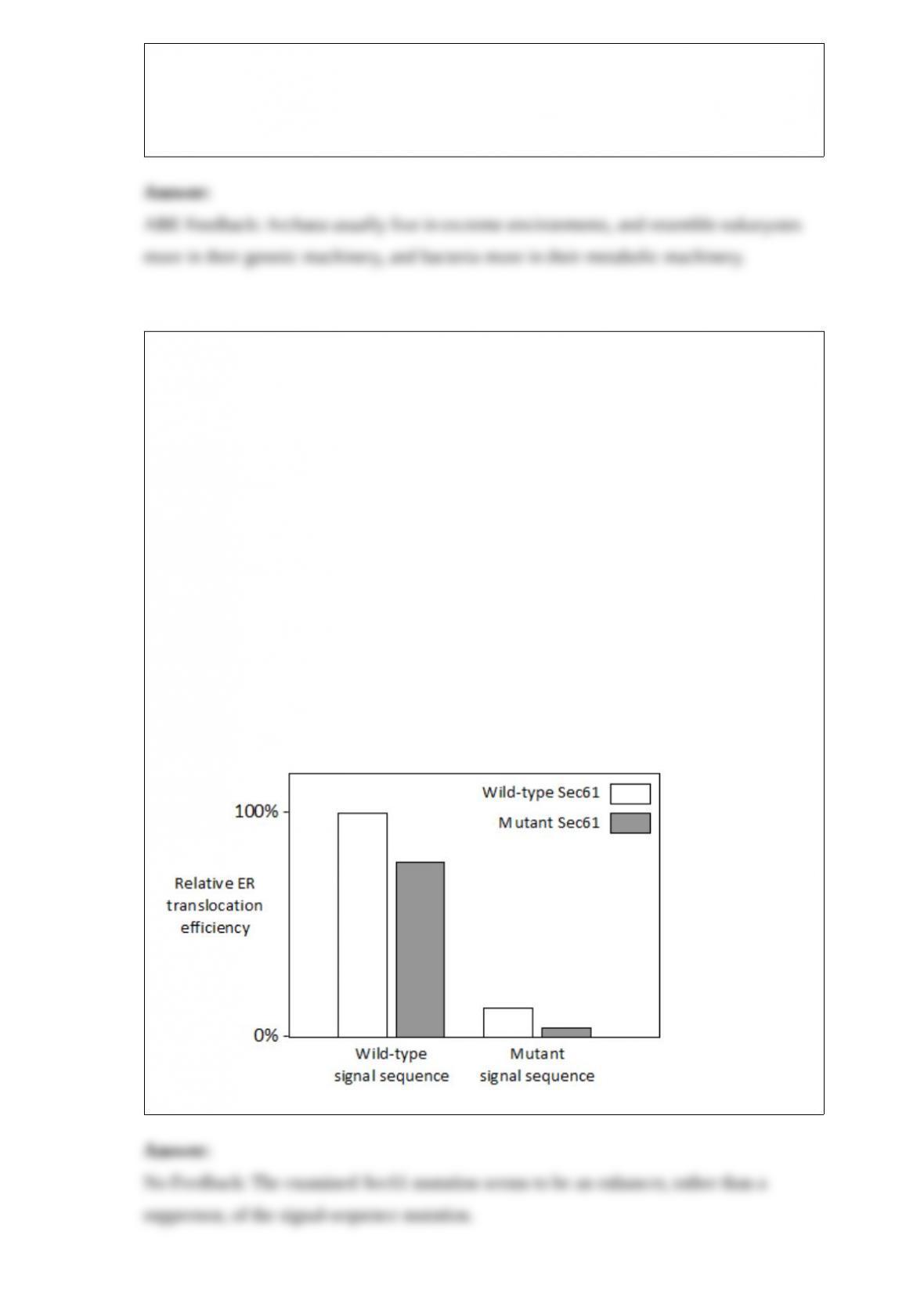
The signal-recognition particle is not the only factor that evaluates the authenticity of
endoplasmic reticulum (ER) signal sequences in proteins. The Sec61 complex is also
able to recognize the signal sequences and “opens” after binding to them. Even single
point mutations within the signal sequence of a protein can render the protein unable to
enter the ER efficiently, as the Sec61 complex does not readily open in response to the
mutant sequence. However, ‘suppressor” mutations in genes encoding components of
the translocation pathway, including the Sec61 subunits, can partially restore the
wild-type localization of proteins with mutant signal sequences. Many such suppressor
mutations (also called prl mutations) map to or near the “plug” domain in the Sec61
translocon. These mutations, including the deletion of the entire plug, generally result in
destabilization of the closed conformation of the translocon and favor its open
conformation. Your friend has mutated a certain residue in the plug domain of the yeast
Sec61. She has just finished measuring the translocation efficiency of an ER protein
with either a wild-type or a mutant (defective) signal sequence, either in wild-type or in
her Sec61-mutant cells, and has obtained the following results. Based on these early
results, does her Sec61 mutation show a prl phenotype? Write down Yes or No as your
answer.
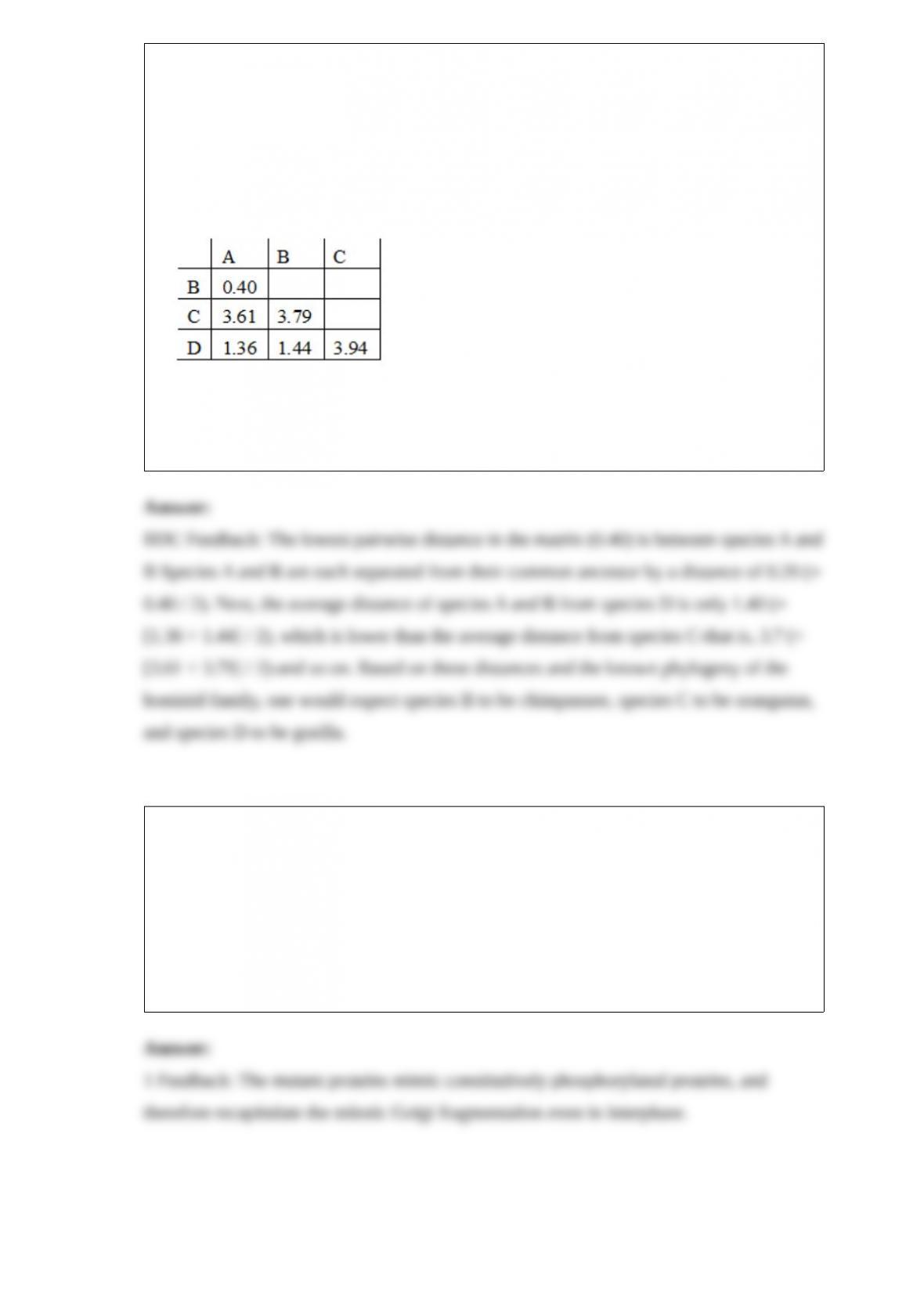
Phylogenetic trees based on nucleotide or amino acid sequences can be constructed
using various algorithms. One simple algorithm is based on a matrix of pairwise genetic
distances (divergences) calculated after multiple alignment of the sequences. Imagine
you have aligned a particular gene from different hominids (humans and the great apes),
and have estimated the normalized number of nucleotide substitutions that have
occurred in this gene in each pair of organisms since their divergence from their last
common ancestor. You have obtained the following distance matrix.
If species A in the distance matrix represents human, indicate which of the other species
(B to D) represents chimpanzee, gorilla, and orangutan, respectively. Your answer
would be a three-letter string composed of letters B, C, and D only, e.g. DCB.
Aspartic acid residues resemble phosphorylated serine residues in proteins and also
carry a similar negative charge. As a result, a protein in which serine residues are
mutated to aspartic acid residues may mimic the function of the corresponding
wild-type protein when those serines are phosphorylated. Given that phosphorylation on
serine residues in a number of Golgi matrix proteins occurs during mitosis, would you
expect that mutation of these serines to aspartic acids would prevent Golgi stack
formation in interphase (1) or prevent Golgi dispersion in mitosis (2)? Write down 1 or
2 as your answer.