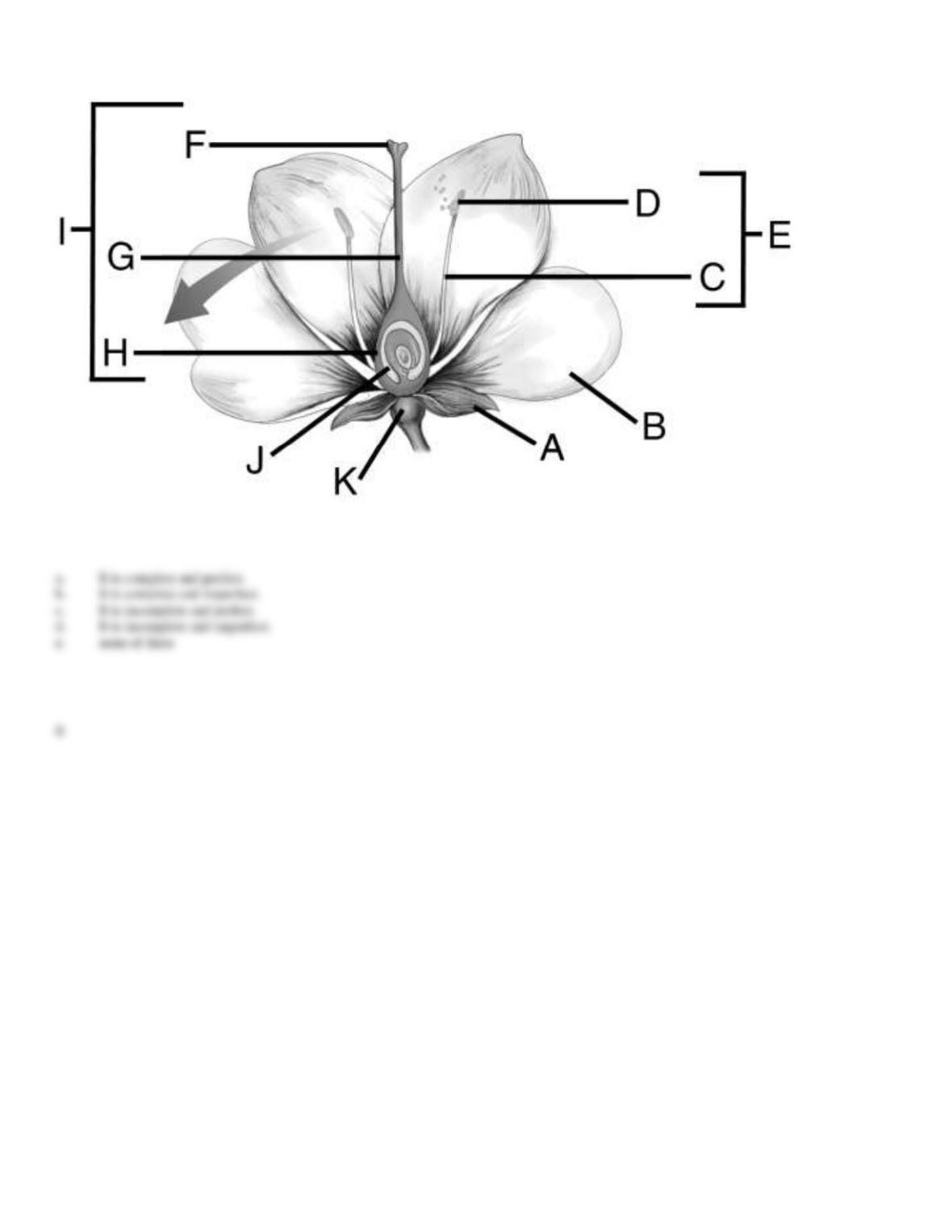
73. Figure 9-1
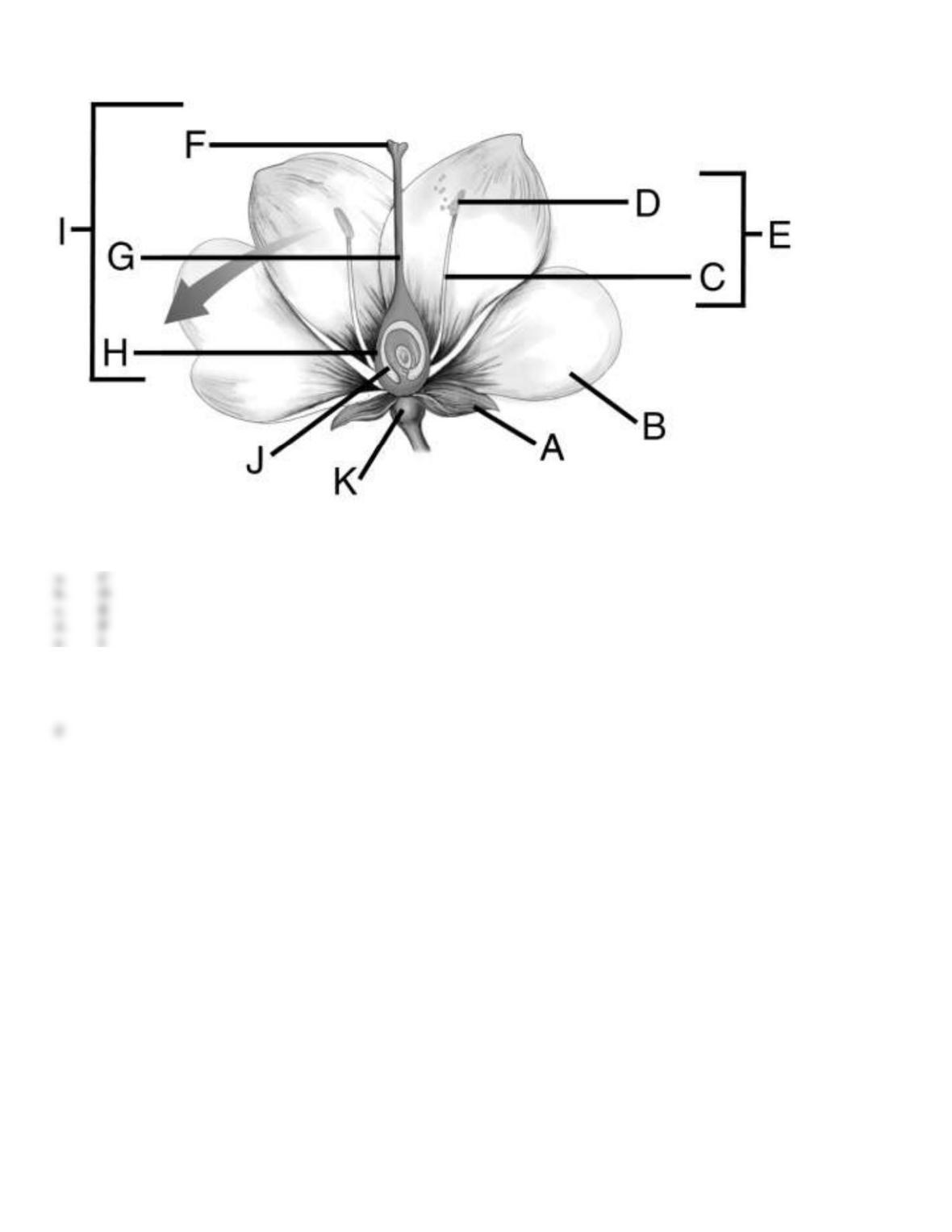
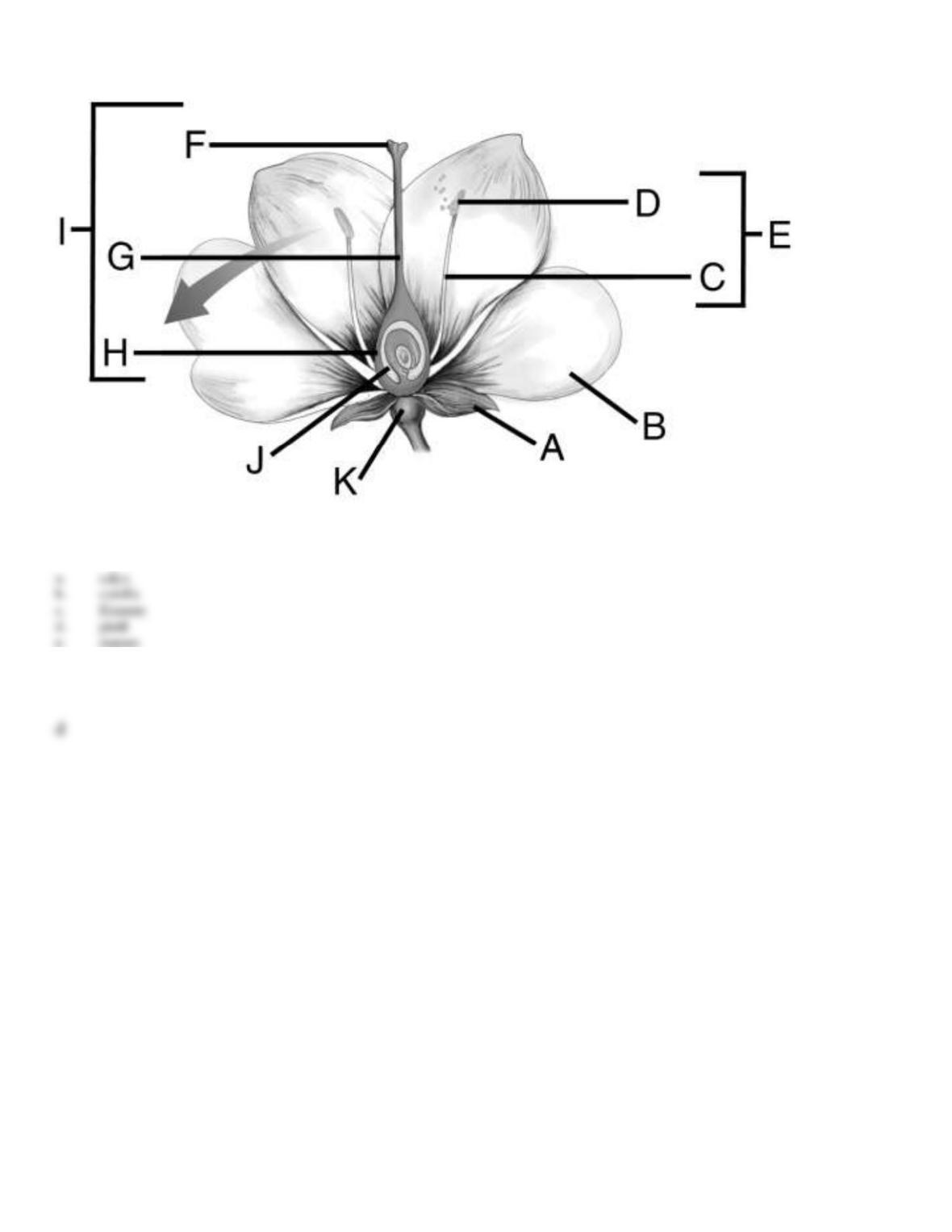
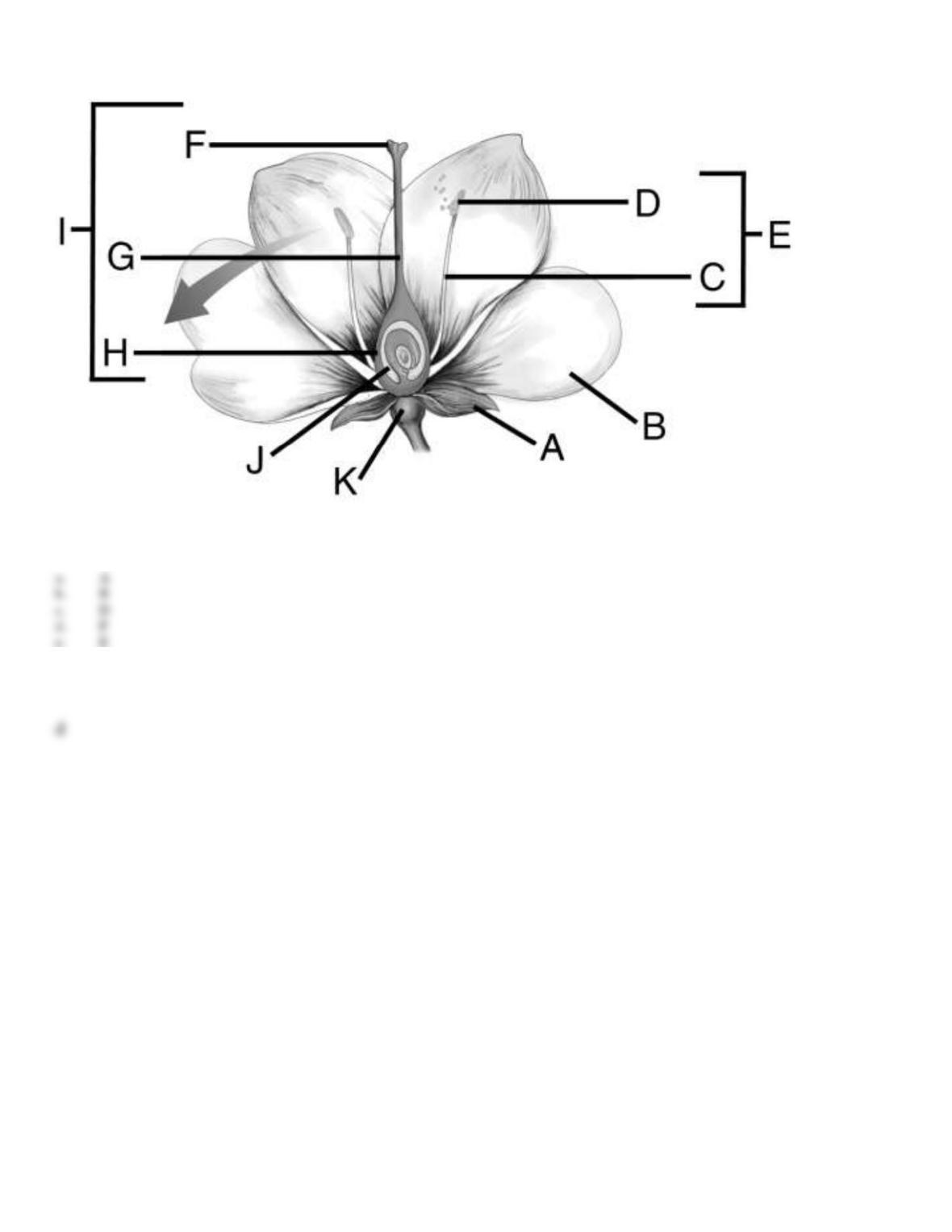
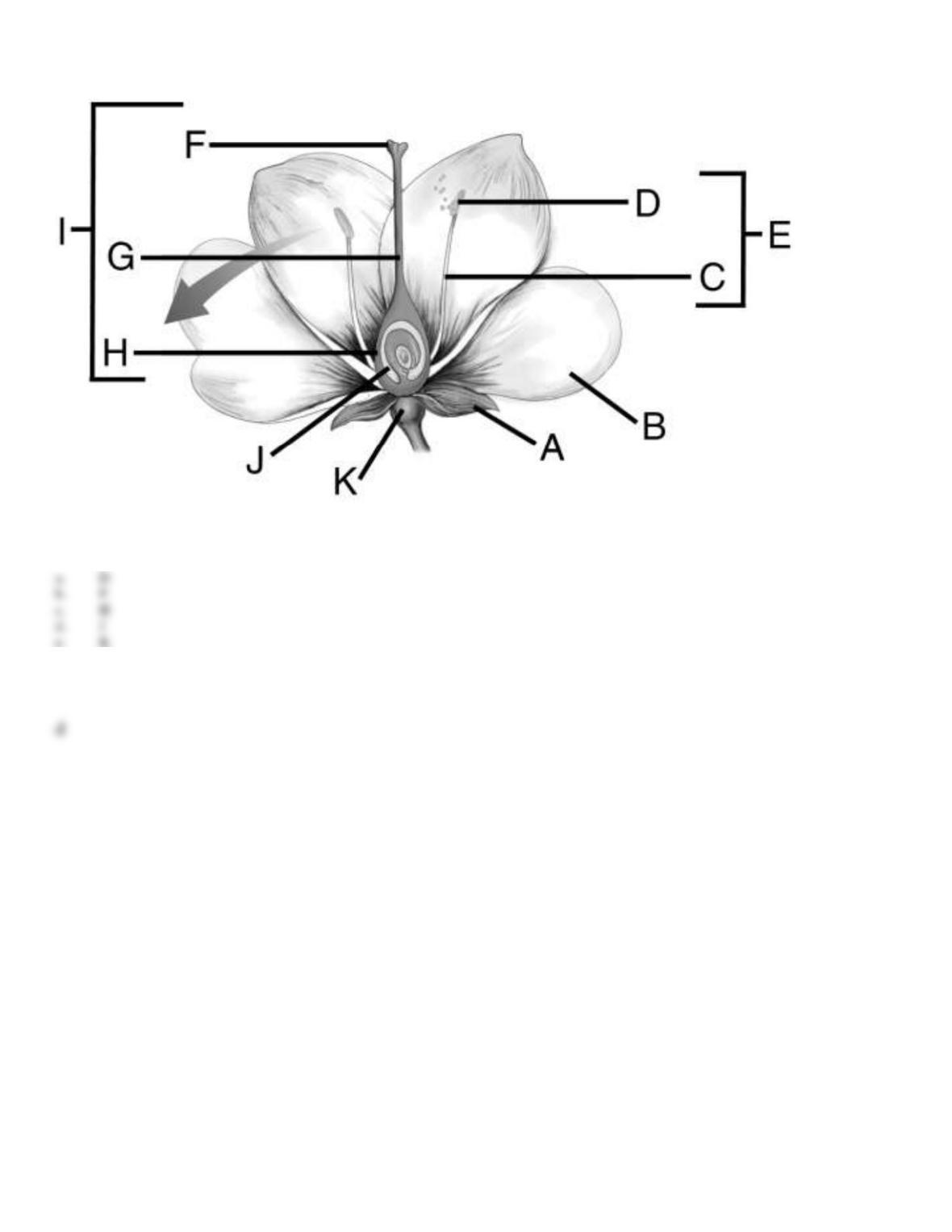
Refer to Figure 9-1. Which of the following is TRUE about this flower?
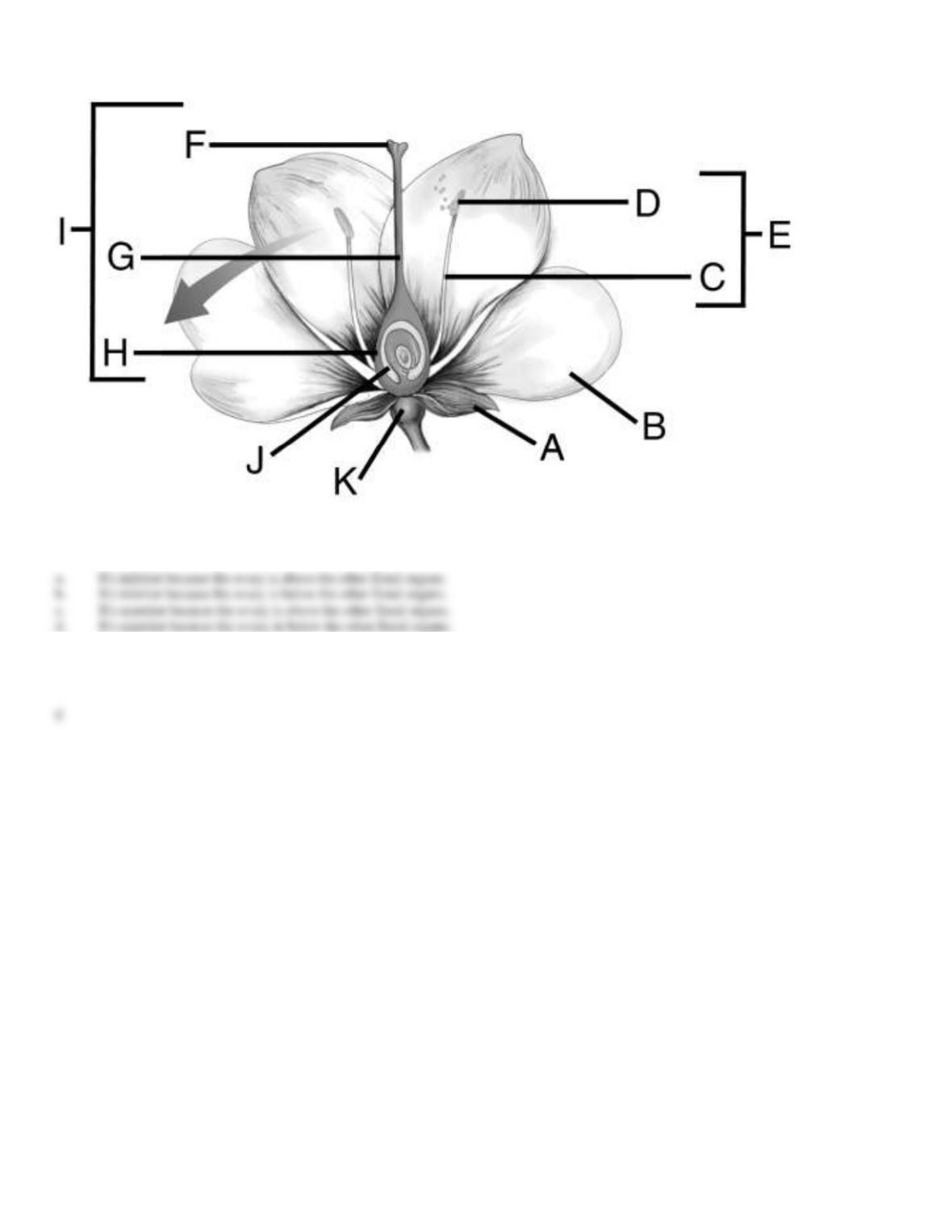
74. Figure 9-1
Refer to Figure 9-1. Is the ovary in this flower inferior or superior? How do you know?
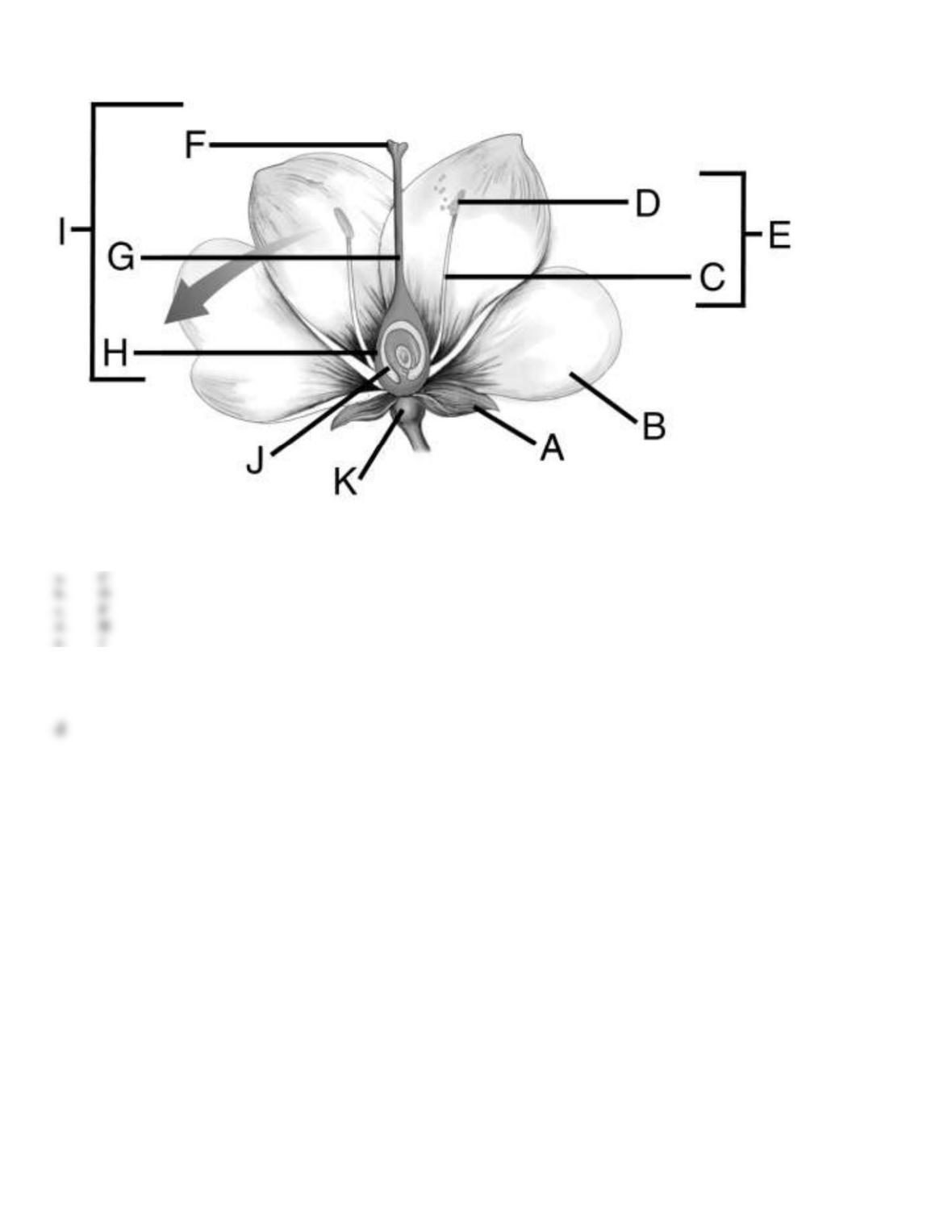
75. Figure 9-1
Refer to Figure 9-1. Which of these structures contains the egg?
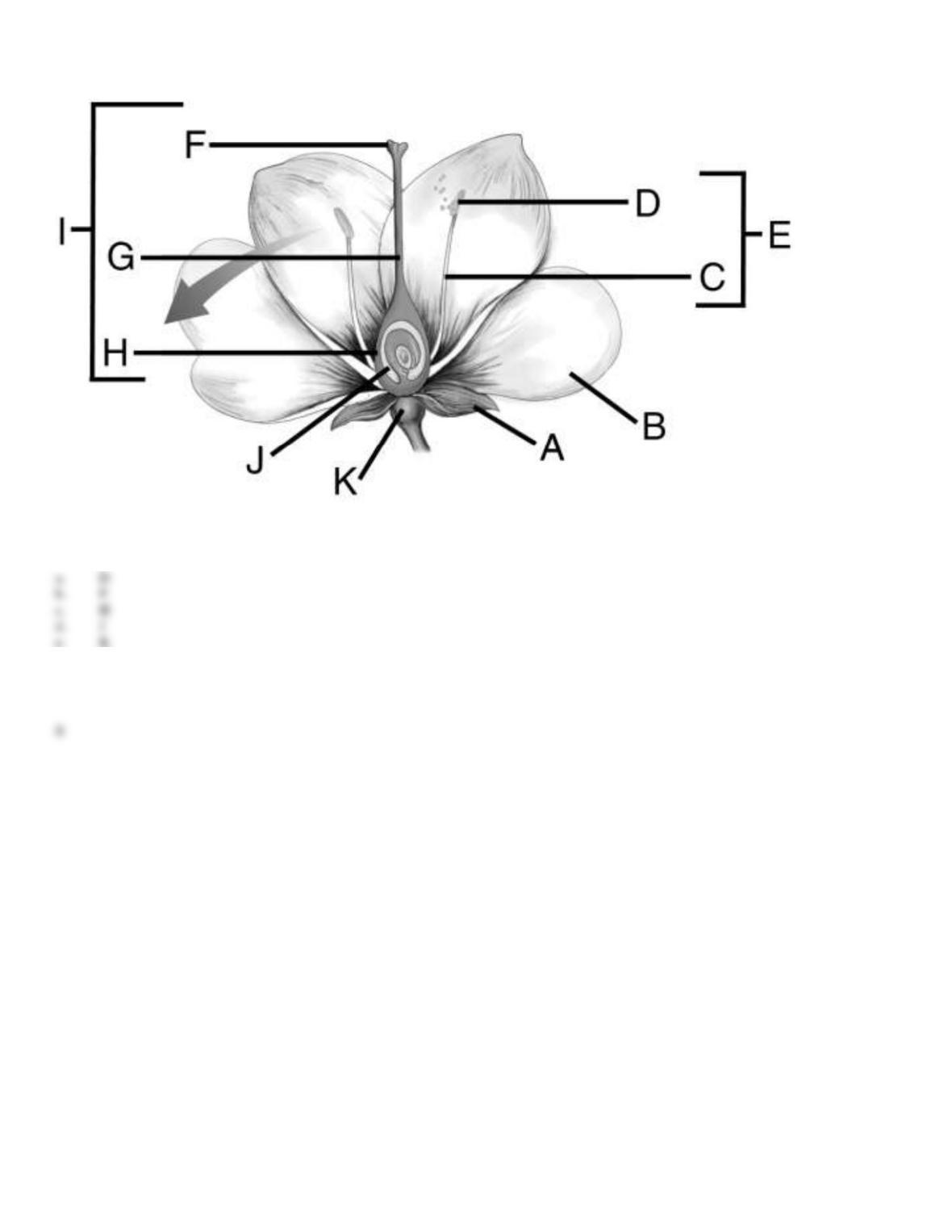
76. Figure 9-1
Refer to Figure 9-1. Which of these structures produces pollen?
77. Figure 9-1
Refer to Figure 9-1. Which structure is the stamen?
78. Figure 9-1
Refer to Figure 9-1. What structure is I?
79. Figure 9-1
Refer to Figure 9-1. On which structure does the pollen land during pollination?
80. Figure 9-1
Refer to Figure 9-1. Which structure, when fertilized, becomes the seed?
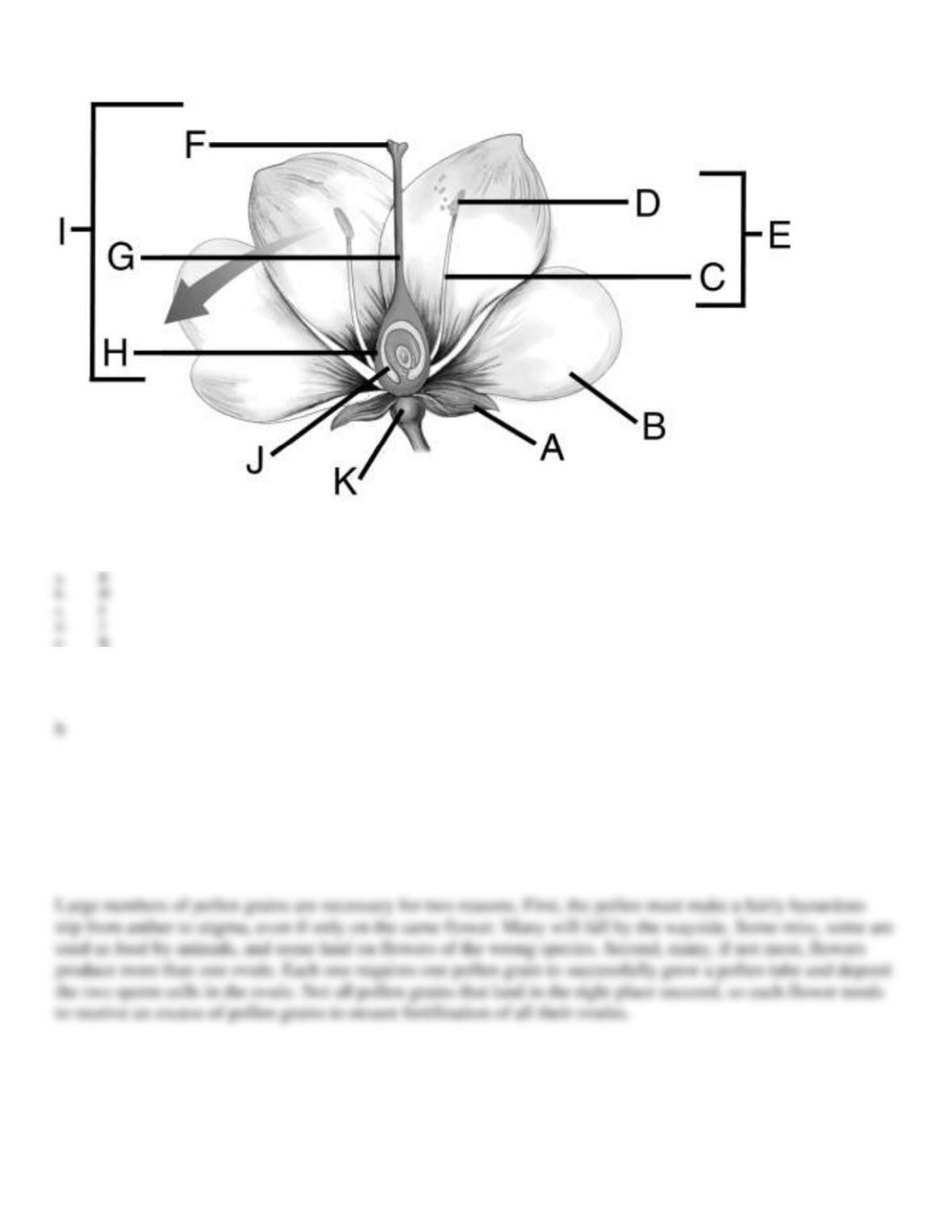
81. Figure 9-1
Refer to Figure 9-1. Which structure, following fertilization, becomes the fruit?
82. It takes only one pollen grain to initiate the development of an ovule into a seed, yet a single flower may
produce many thousands of pollen grains. Why do you suppose such huge numbers of pollen grains are
necessary?
83. What is the difference between an incomplete flower and an imperfect flower?
84. Describe the general characteristics of a bird-pollinated flower.
85. Distinguish between a fruit and a seed.
86. What adaptations do seeds and fruits have for dispersal by animals?
87. Describe the characteristic pattern of growth seen in young plants when germination takes place. Contrast
eudicots and monocots.